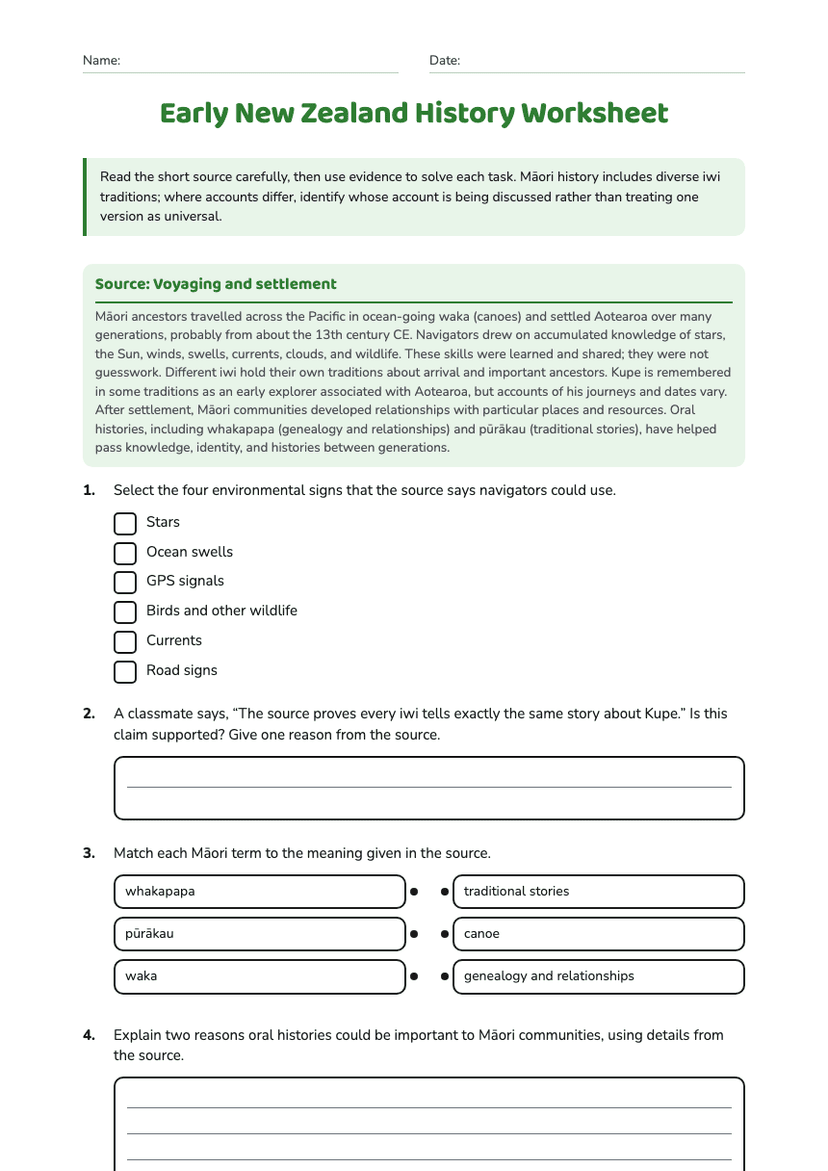
Ancient Prophets Study Worksheet
A free social sciences worksheet ready for your classroom. Open in Kuraplan to grab the print-ready PDF, customize it for your students, or generate a fresh version in seconds.
Ancient Prophets Study Worksheet
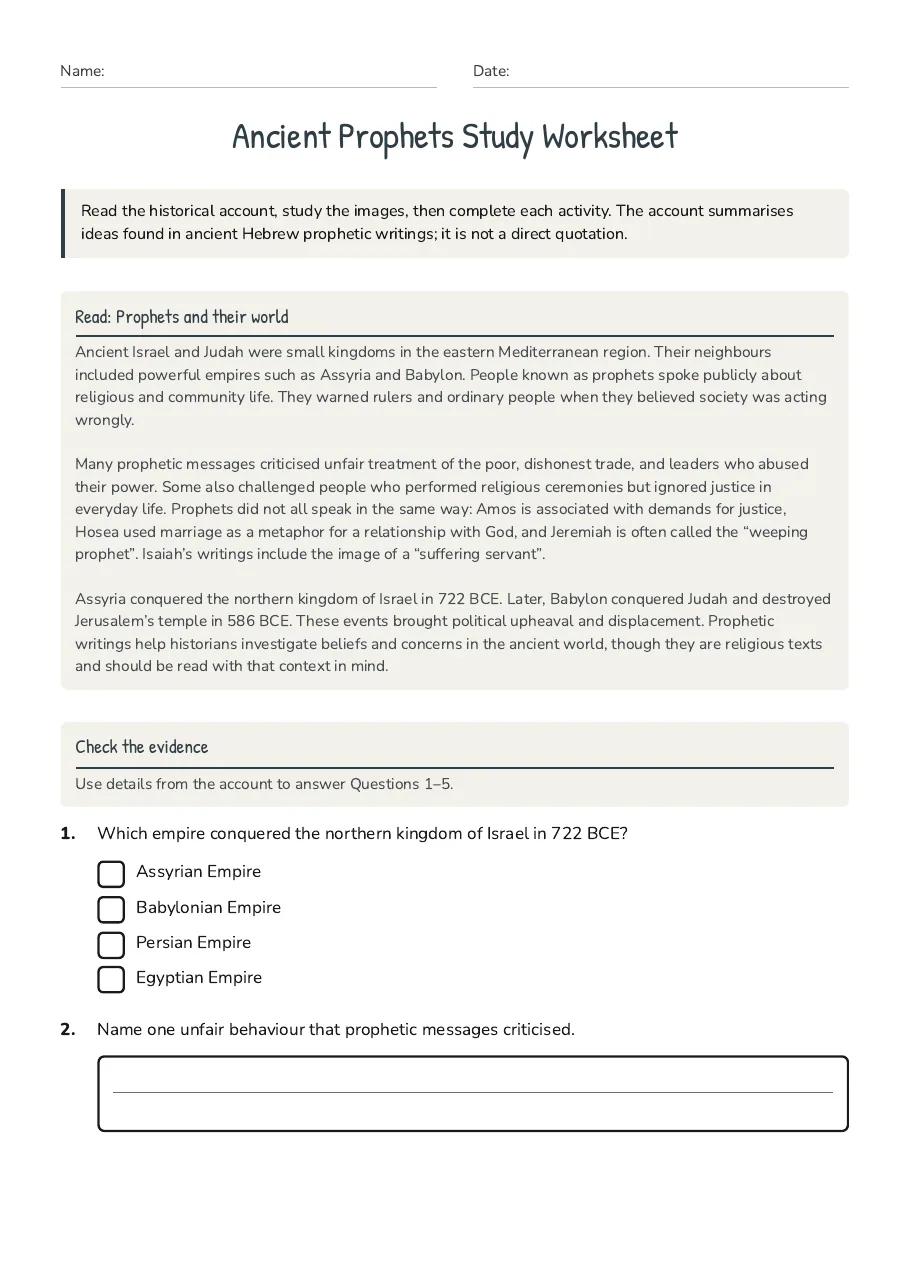
Read: Prophets and their world
Ancient Israel and Judah were small kingdoms in the eastern Mediterranean region. Their neighbours included powerful empires such as Assyria and Babylon. People known as prophets spoke publicly about religious and community life. They warned rulers and ordinary people when they believed society was acting wrongly. Many prophetic messages criticised unfair treatment of the poor, dishonest trade, and leaders who abused their power. Some also challenged people who performed religious ceremonies but ignored justice in everyday life. Prophets did not all speak in the same way: Amos is associated with demands for justice, Hosea used marriage as a metaphor for a relationship with God, and Jeremiah is often called the “weeping prophet”. Isaiah’s writings include the image of a “suffering servant”. Assyria conquered the northern kingdom of Israel in 722 BCE. Later, Babylon conquered Judah and destroyed Jerusalem’s temple in 586 BCE. These events brought political upheaval and displacement. Prophetic writings help historians investigate beliefs and concerns in the ancient world, though they are religious texts and should be read with that context in mind.
Check the evidence
Use details from the account to answer Questions 1–5.
- Assyrian Empire
- Babylonian Empire
- Persian Empire
- Egyptian Empire
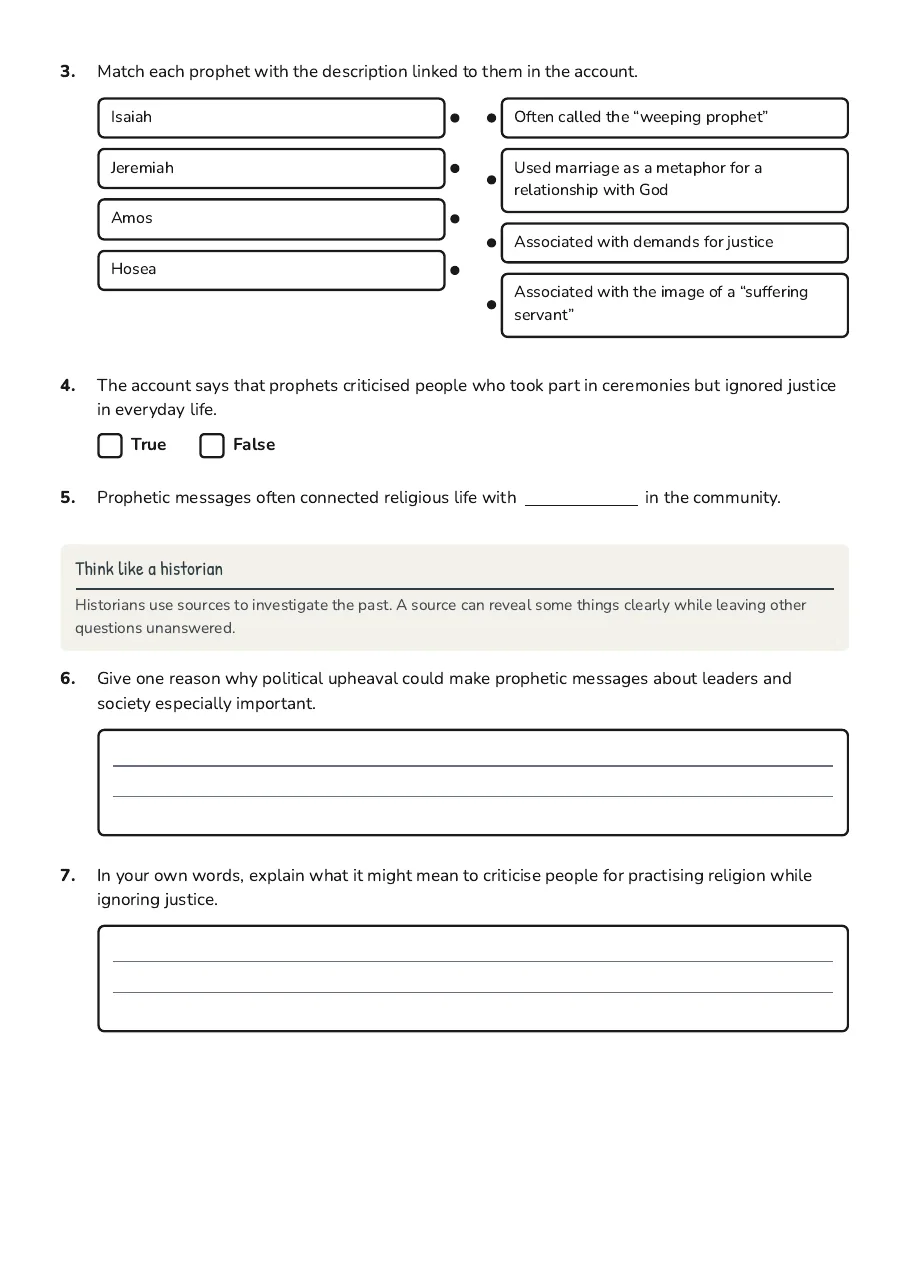
- Isaiah
- Jeremiah
- Amos
- Hosea
- Often called the “weeping prophet”
- Used marriage as a metaphor for a relationship with God
- Associated with demands for justice
- Associated with the image of a “suffering servant”
Think like a historian
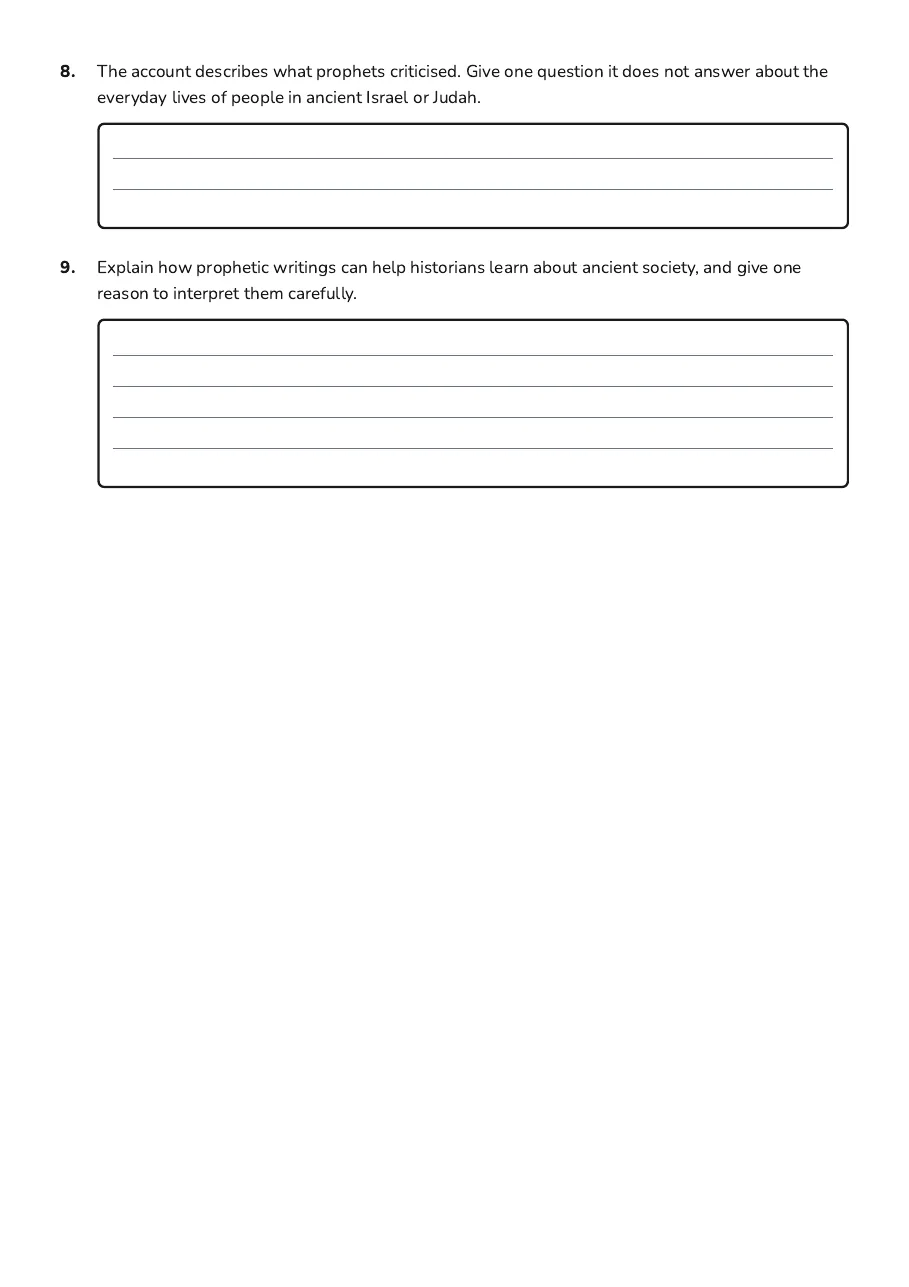
Historians use sources to investigate the past. A source can reveal some things clearly while leaving other questions unanswered.
3 printable pages
Page 1
Page 2
Page 3
About This Worksheet
Free in Kuraplan
Sign up free, grab the PDF, and customize it for your class.
Print-Ready
Formatted for standard paper. Clean layout, easy to read.
AI-Generated
Created with Kuraplan's AI, designed for real classroom use.
For Teachers & Parents
Use in classrooms, for homework, tutoring, or homeschool.
Need a custom version of this worksheet?
Kuraplan's AI generates custom worksheets in seconds — differentiated for every learner, aligned to your curriculum.
Generate Custom Worksheets — FreeMore Social Sciences Worksheets
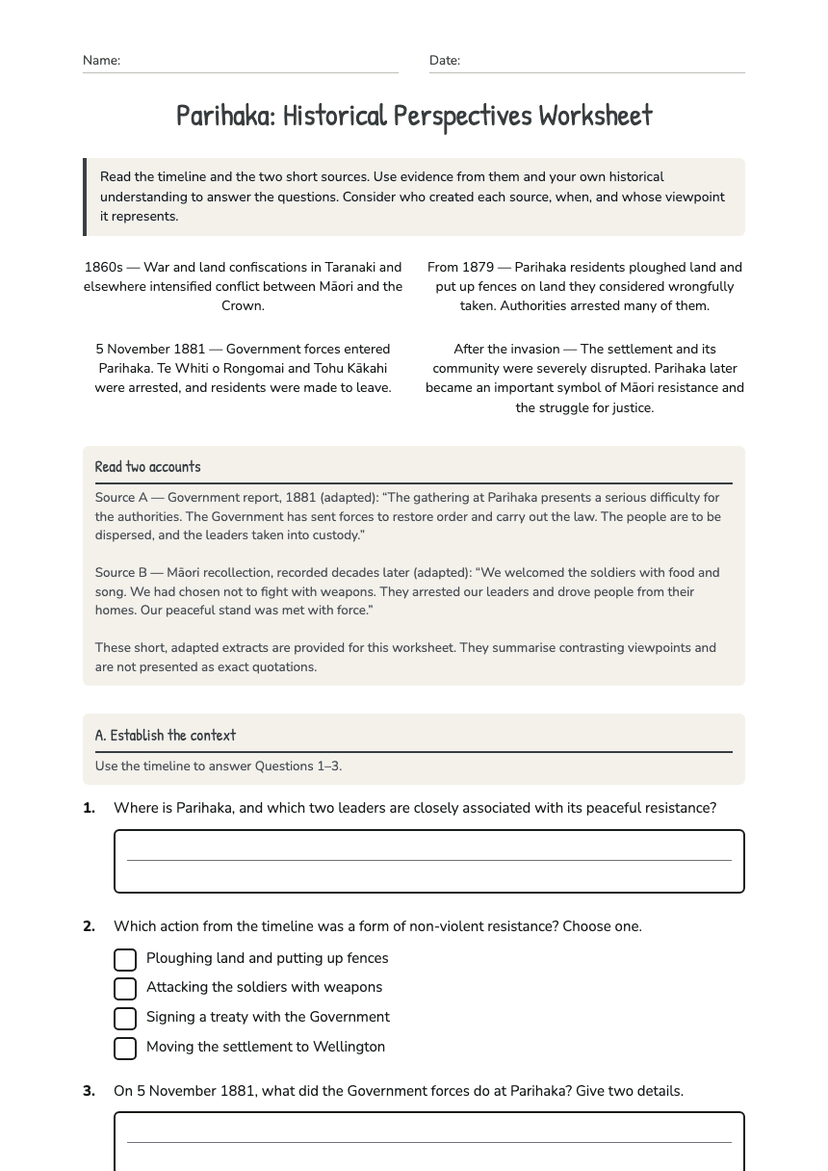
Parihaka: Historical Perspectives Worksheet
Free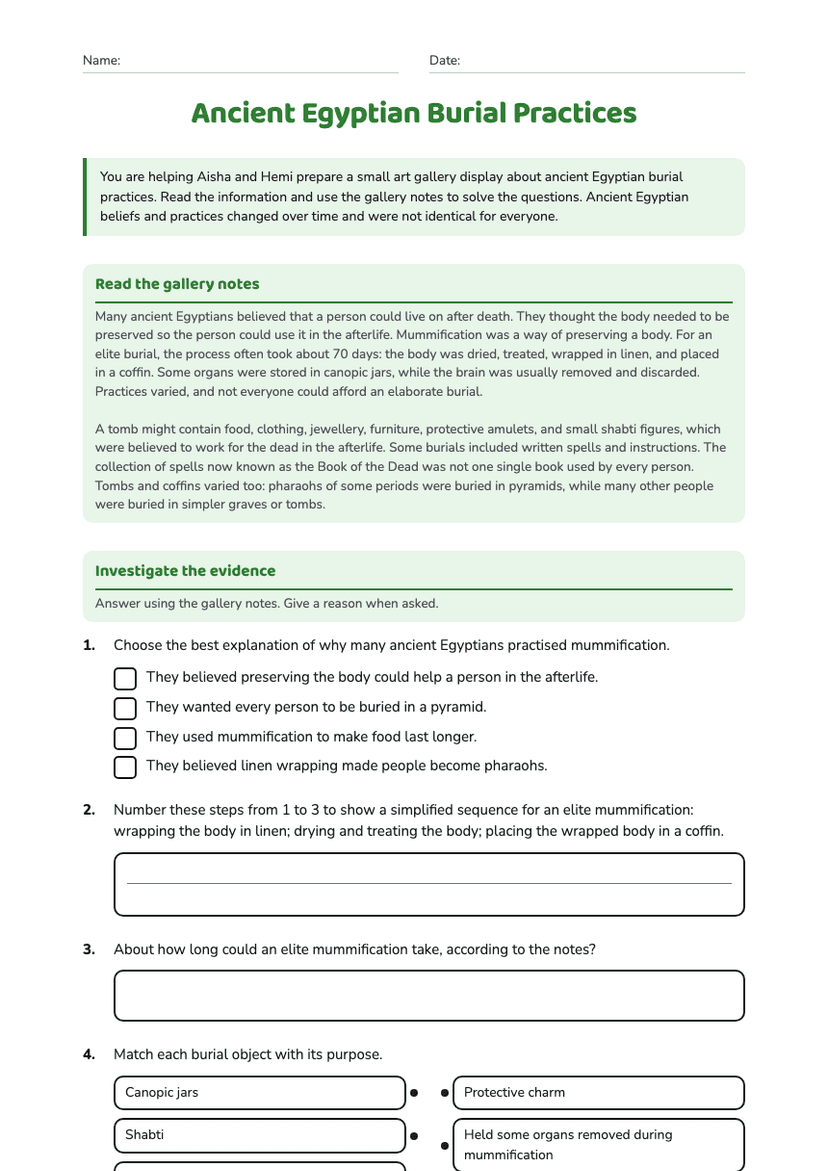
Ancient Egyptian Burial Practices
Free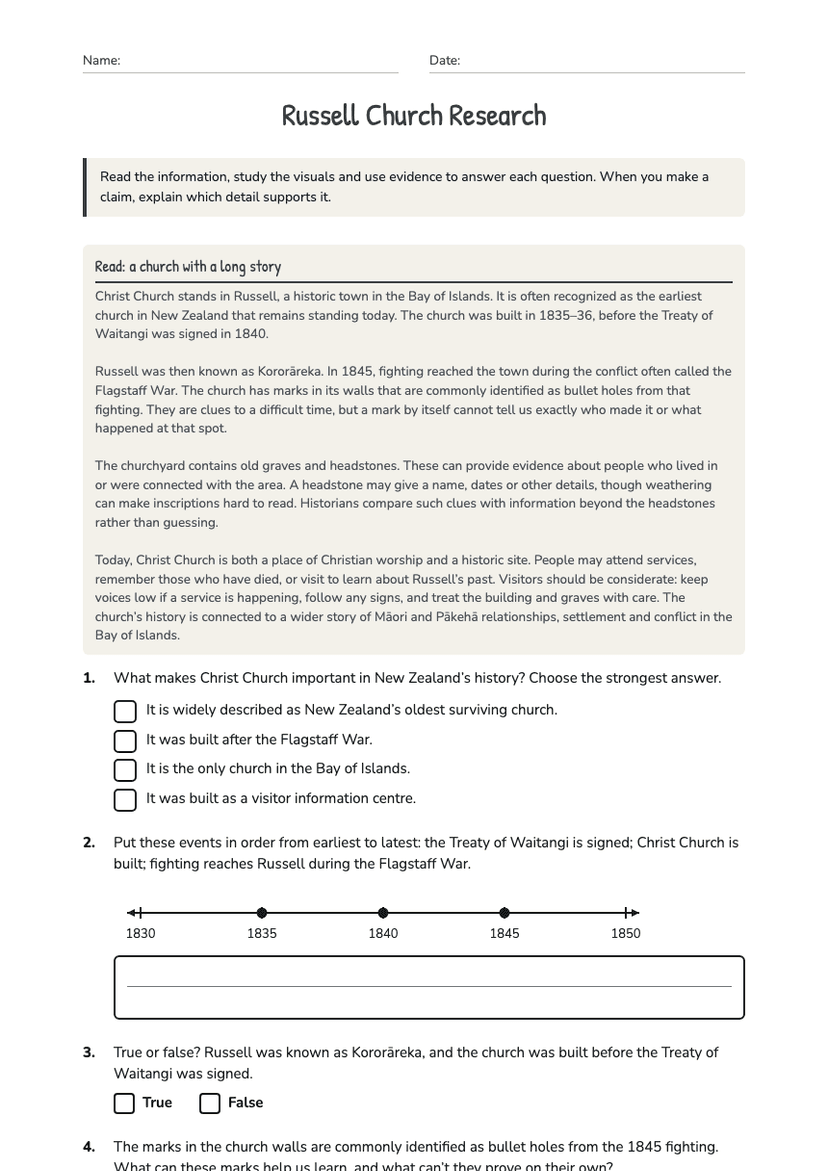
Russell Church Research
Free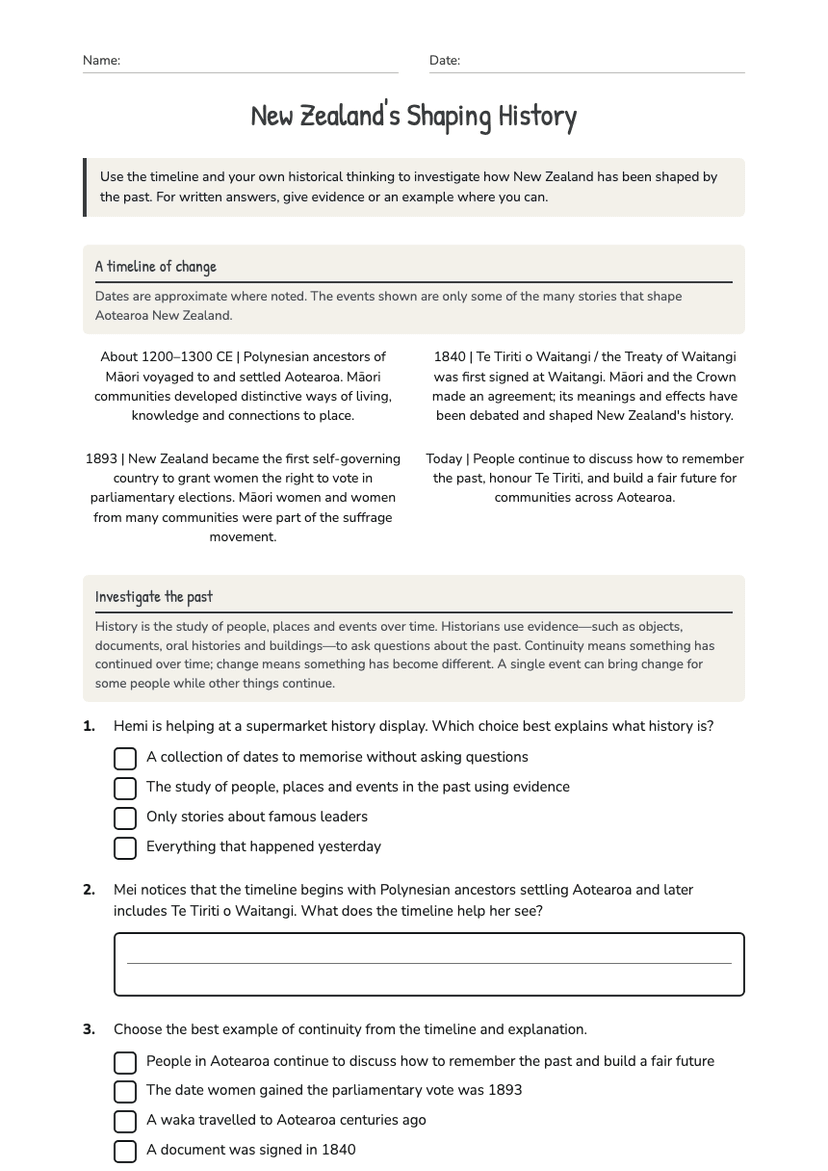
New Zealand's Shaping History
Free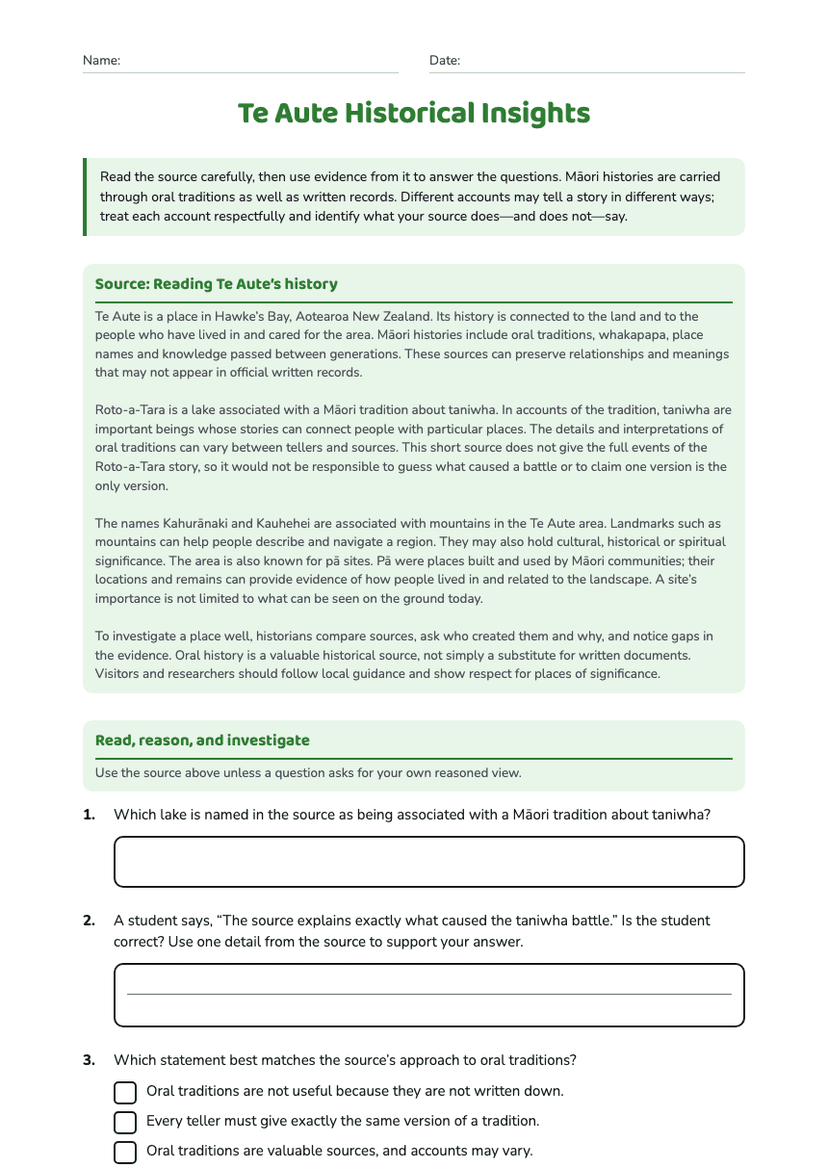
Te Aute Historical Insights
Free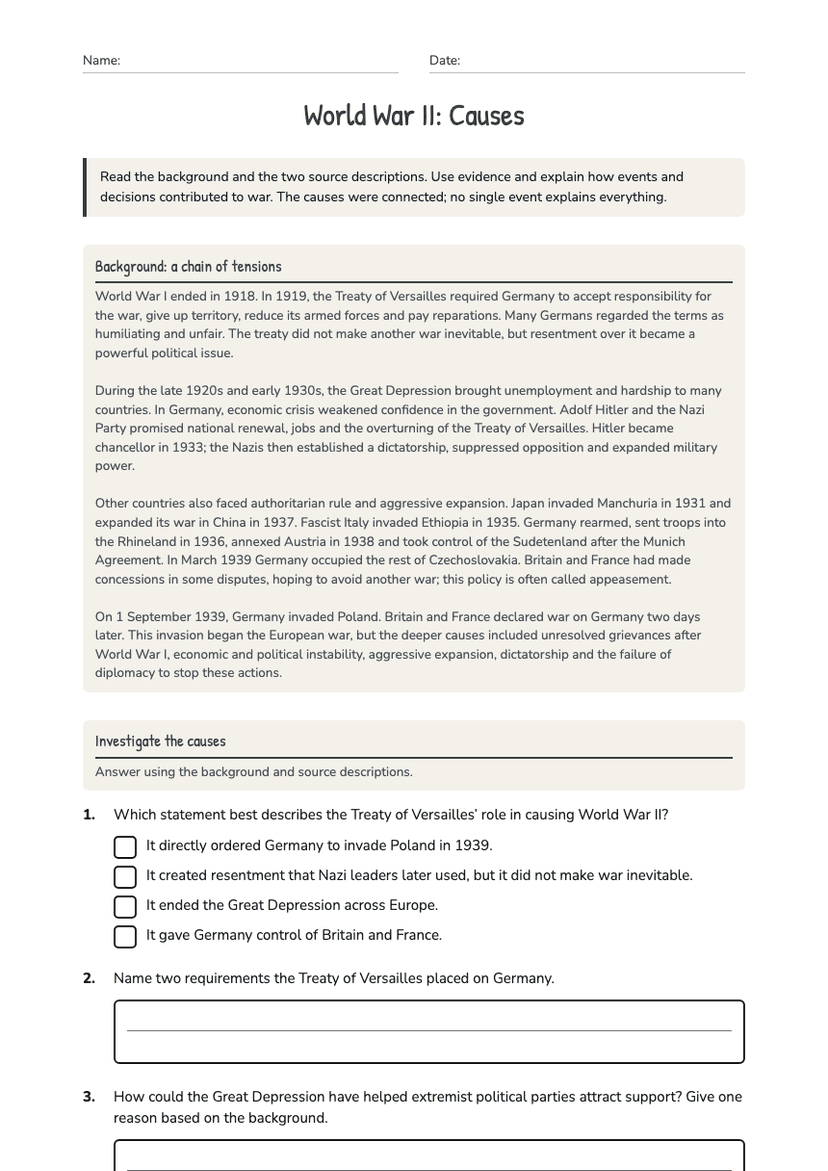
World War II: Causes
Free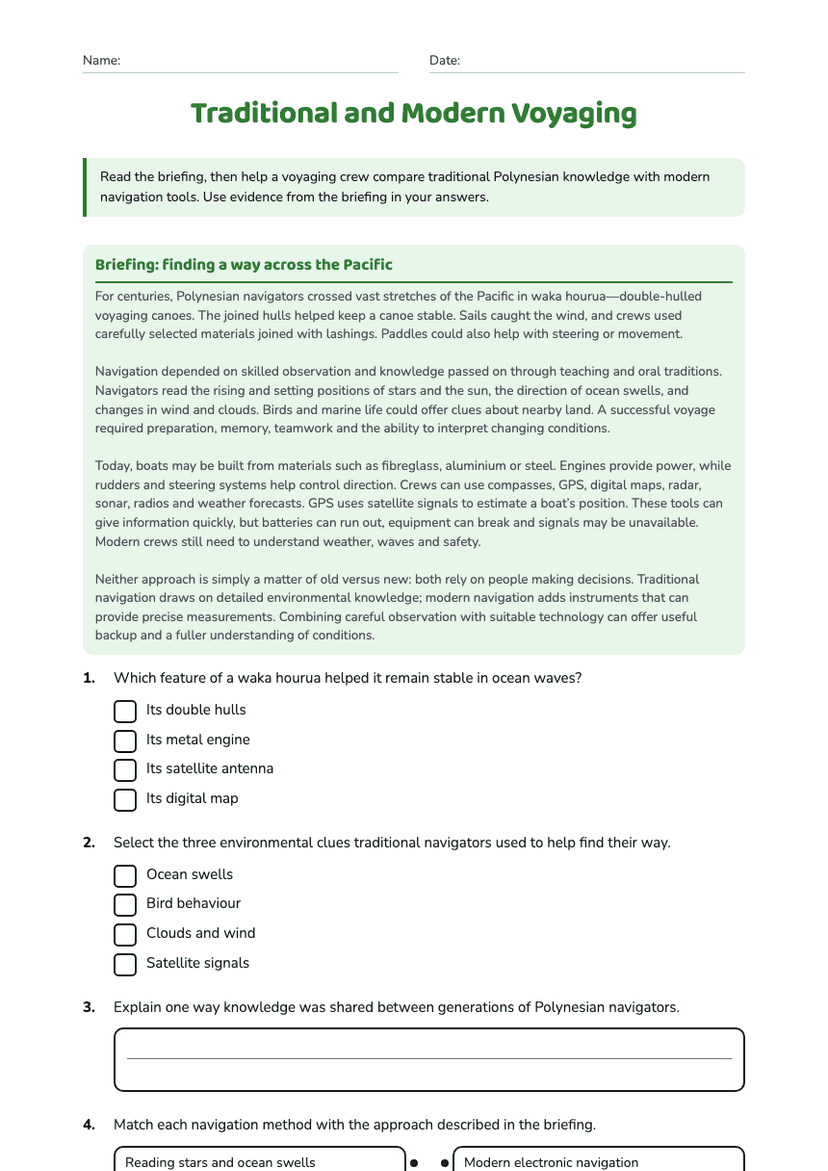
Traditional and Modern Voyaging
Free