Anglo-Saxon Research Notes
A free english worksheet ready for your classroom. Open in Kuraplan to grab the print-ready PDF, customize it for your students, or generate a fresh version in seconds.
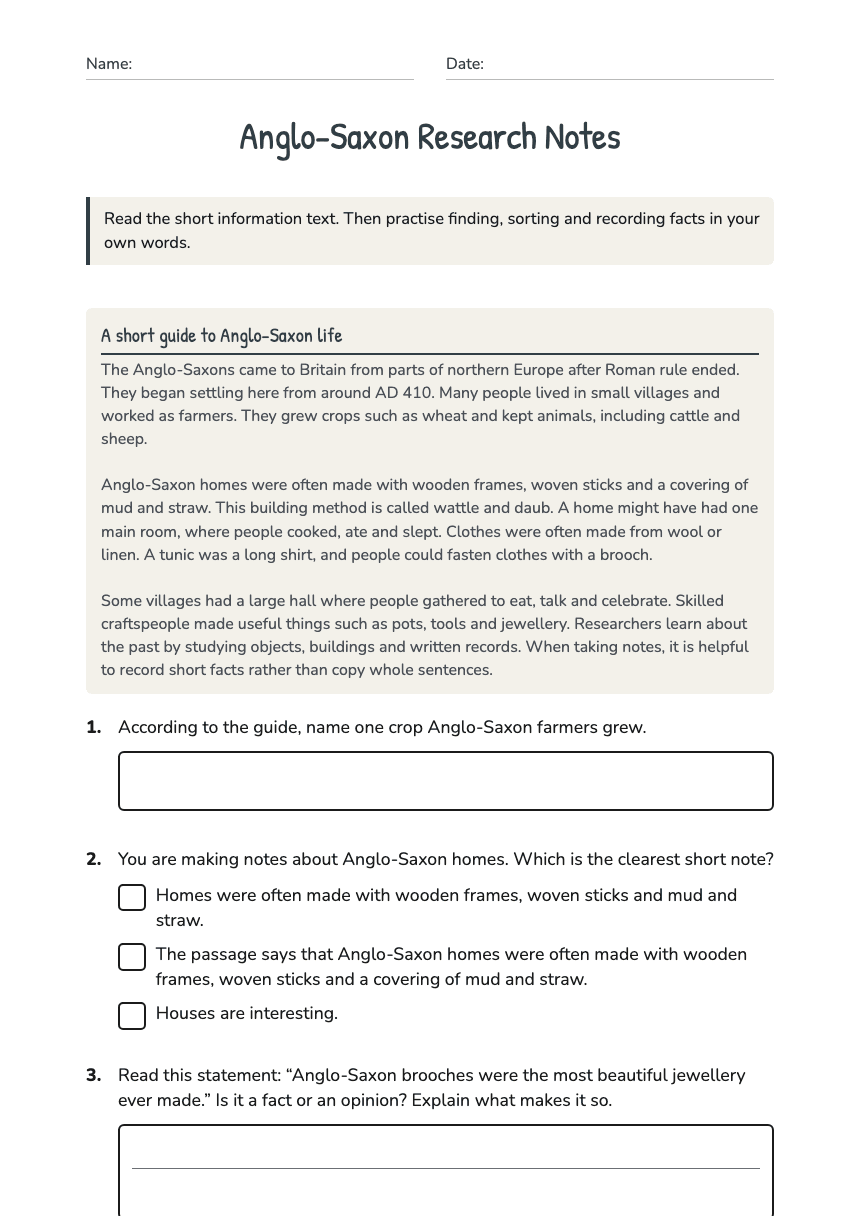
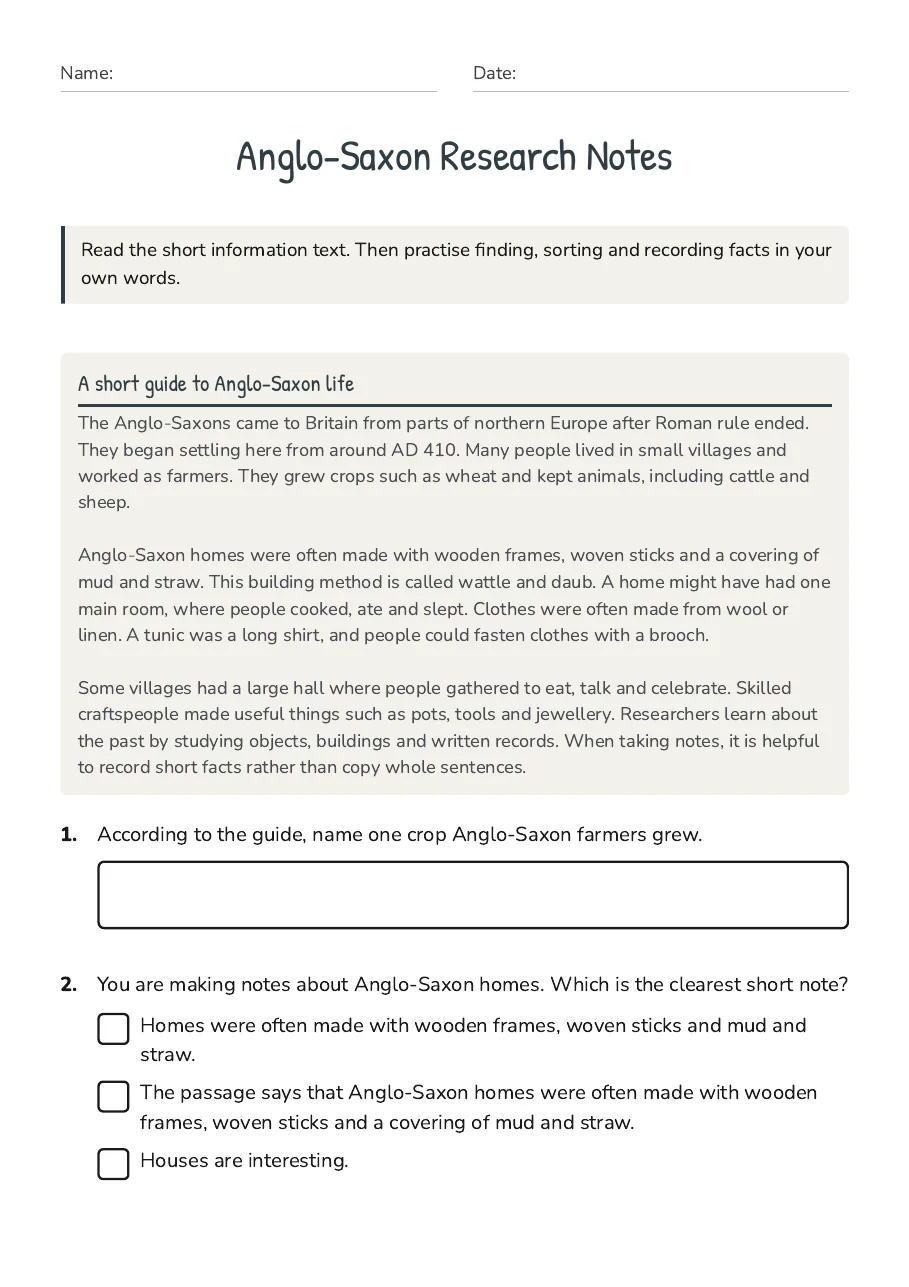
Anglo-Saxon Research Notes
A short guide to Anglo-Saxon life
The Anglo-Saxons came to Britain from parts of northern Europe after Roman rule ended. They began settling here from around AD 410. Many people lived in small villages and worked as farmers. They grew crops such as wheat and kept animals, including cattle and sheep. Anglo-Saxon homes were often made with wooden frames, woven sticks and a covering of mud and straw. This building method is called wattle and daub. A home might have had one main room, where people cooked, ate and slept. Clothes were often made from wool or linen. A tunic was a long shirt, and people could fasten clothes with a brooch. Some villages had a large hall where people gathered to eat, talk and celebrate. Skilled craftspeople made useful things such as pots, tools and jewellery. Researchers learn about the past by studying objects, buildings and written records. When taking notes, it is helpful to record short facts rather than copy whole sentences.
- Homes were often made with wooden frames, woven sticks and mud and straw.
- The passage says that Anglo-Saxon homes were often made with wooden frames, woven sticks and a covering of mud and straw.
- Houses are interesting.
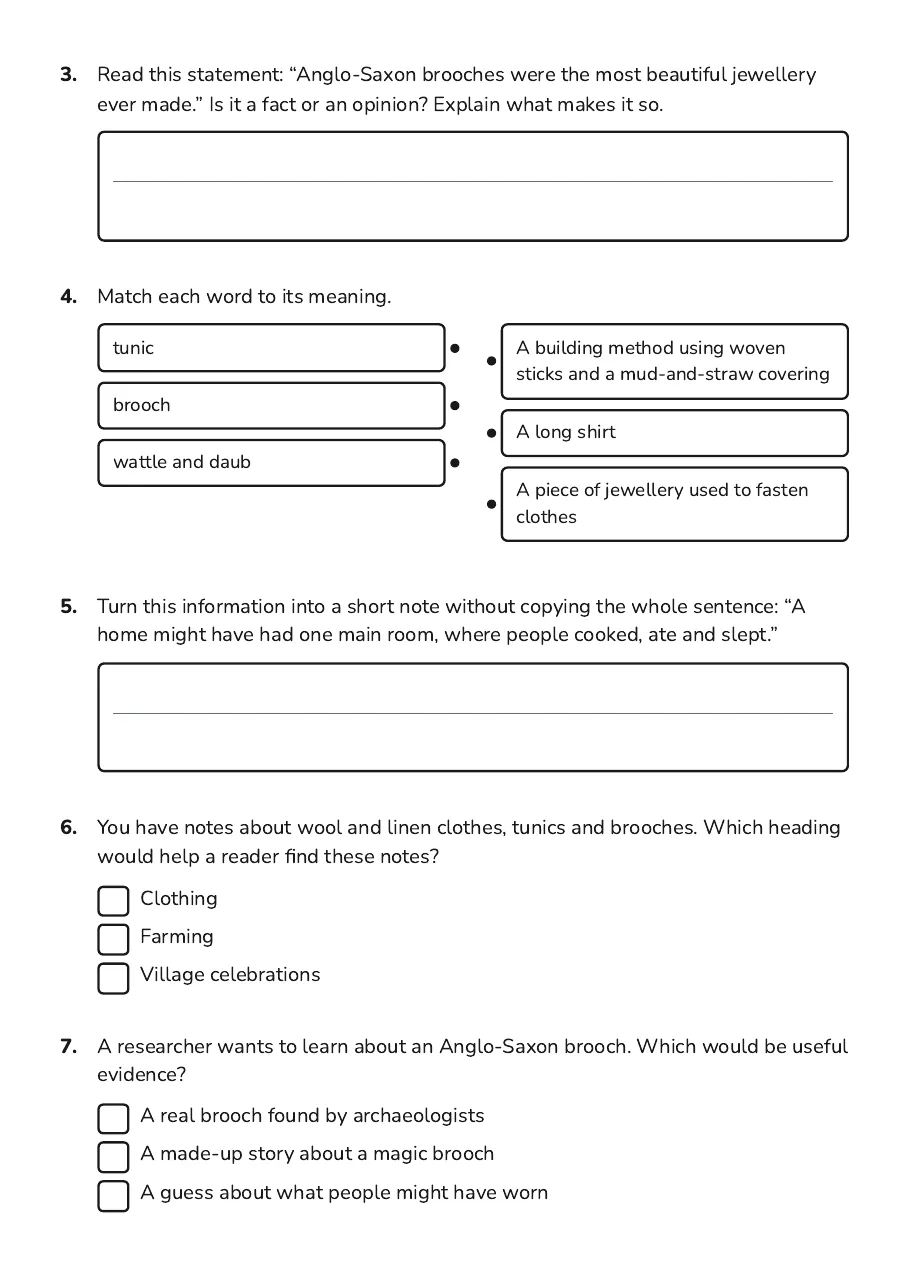
- tunic
- brooch
- wattle and daub
- A building method using woven sticks and a mud-and-straw covering
- A long shirt
- A piece of jewellery used to fasten clothes
- Clothing
- Farming
- Village celebrations
- A real brooch found by archaeologists
- A made-up story about a magic brooch
- A guess about what people might have worn
3 printable pages
Page 1
Page 2
Page 3
About This Worksheet
Free in Kuraplan
Sign up free, grab the PDF, and customize it for your class.
Print-Ready
Formatted for standard paper. Clean layout, easy to read.
AI-Generated
Created with Kuraplan's AI, designed for real classroom use.
For Teachers & Parents
Use in classrooms, for homework, tutoring, or homeschool.
Need a custom version of this worksheet?
Kuraplan's AI generates custom worksheets in seconds — differentiated for every learner, aligned to your curriculum.
Generate Custom Worksheets — Free