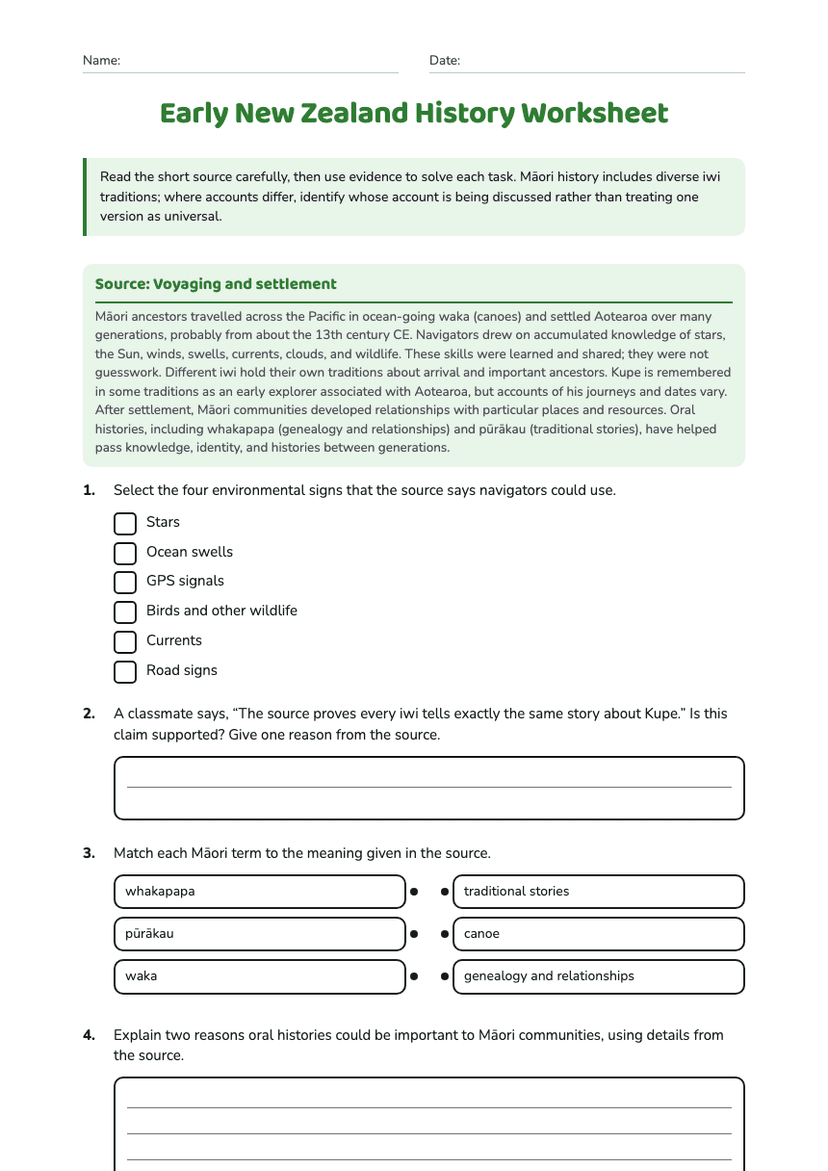
Aotearoa Historical Events Research
A free social sciences worksheet ready for your classroom. Open in Kuraplan to grab the print-ready PDF, customize it for your students, or generate a fresh version in seconds.
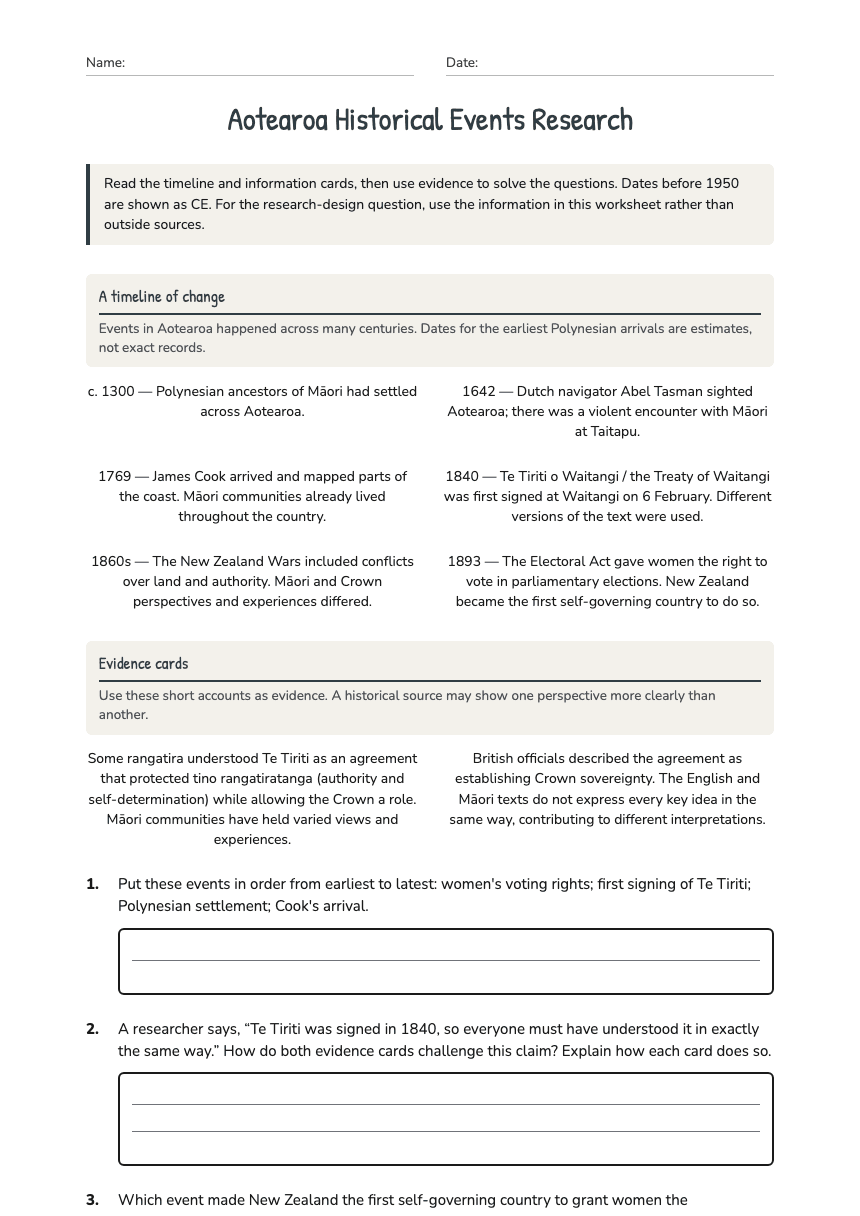
Aotearoa Historical Events Research
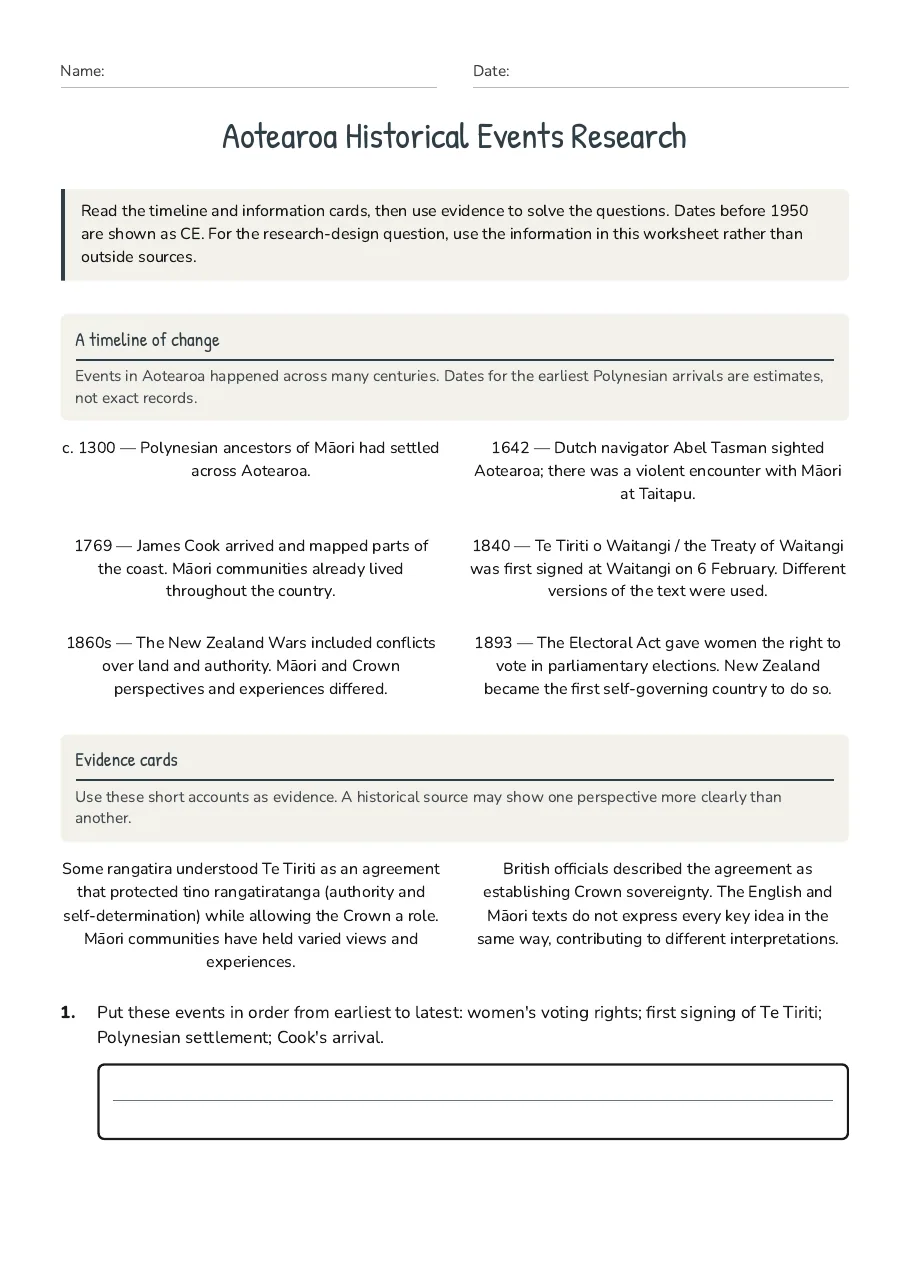
A timeline of change
Events in Aotearoa happened across many centuries. Dates for the earliest Polynesian arrivals are estimates, not exact records.
c. 1300 — Polynesian ancestors of Māori had settled across Aotearoa.
1642 — Dutch navigator Abel Tasman sighted Aotearoa; there was a violent encounter with Māori at Taitapu.
1769 — James Cook arrived and mapped parts of the coast. Māori communities already lived throughout the country.
1840 — Te Tiriti o Waitangi / the Treaty of Waitangi was first signed at Waitangi on 6 February. Different versions of the text were used.
1860s — The New Zealand Wars included conflicts over land and authority. Māori and Crown perspectives and experiences differed.
1893 — The Electoral Act gave women the right to vote in parliamentary elections. New Zealand became the first self-governing country to do so.
Evidence cards
Use these short accounts as evidence. A historical source may show one perspective more clearly than another.
Some rangatira understood Te Tiriti as an agreement that protected tino rangatiratanga (authority and self-determination) while allowing the Crown a role. Māori communities have held varied views and experiences.
British officials described the agreement as establishing Crown sovereignty. The English and Māori texts do not express every key idea in the same way, contributing to different interpretations.
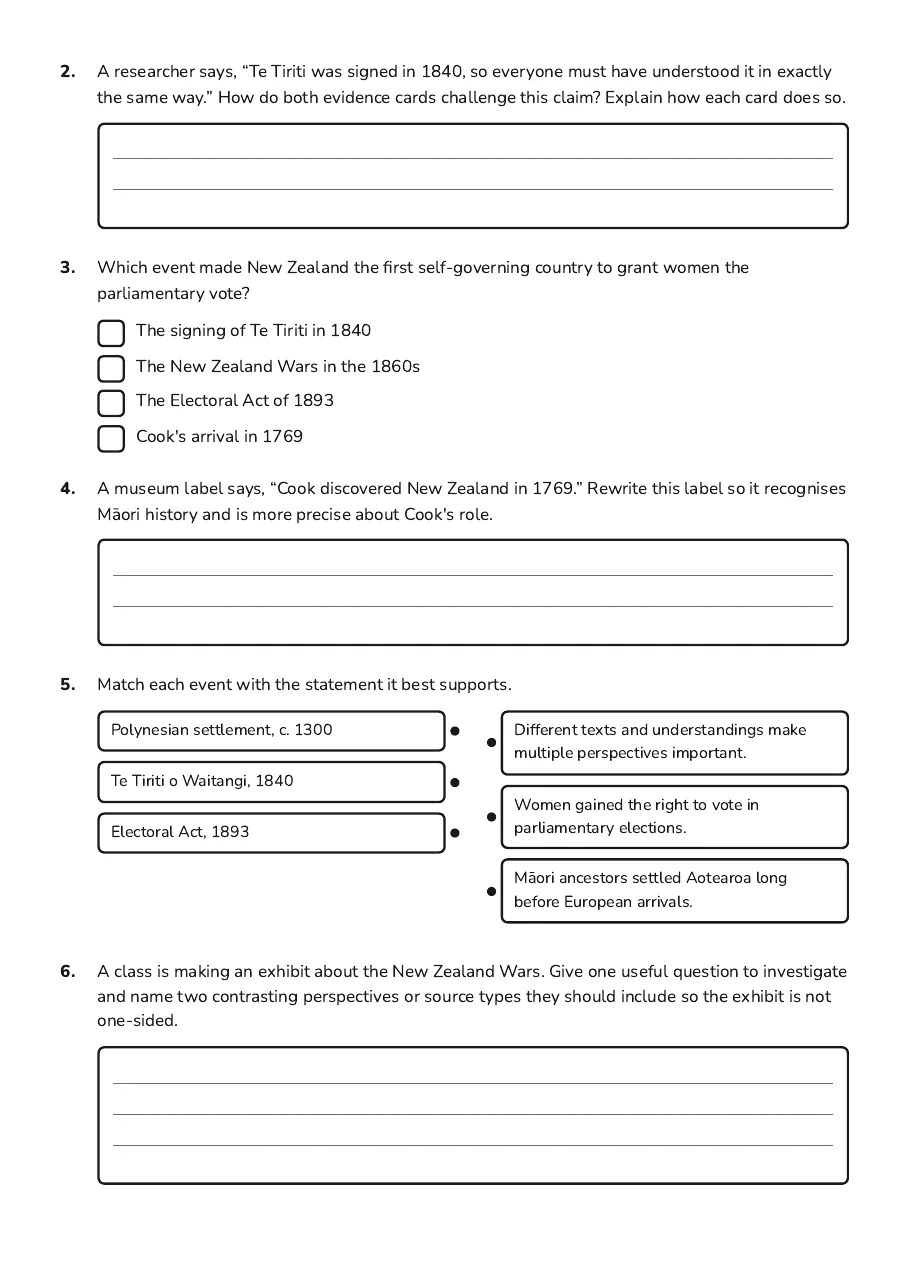
- The signing of Te Tiriti in 1840
- The New Zealand Wars in the 1860s
- The Electoral Act of 1893
- Cook's arrival in 1769
- Polynesian settlement, c. 1300
- Te Tiriti o Waitangi, 1840
- Electoral Act, 1893
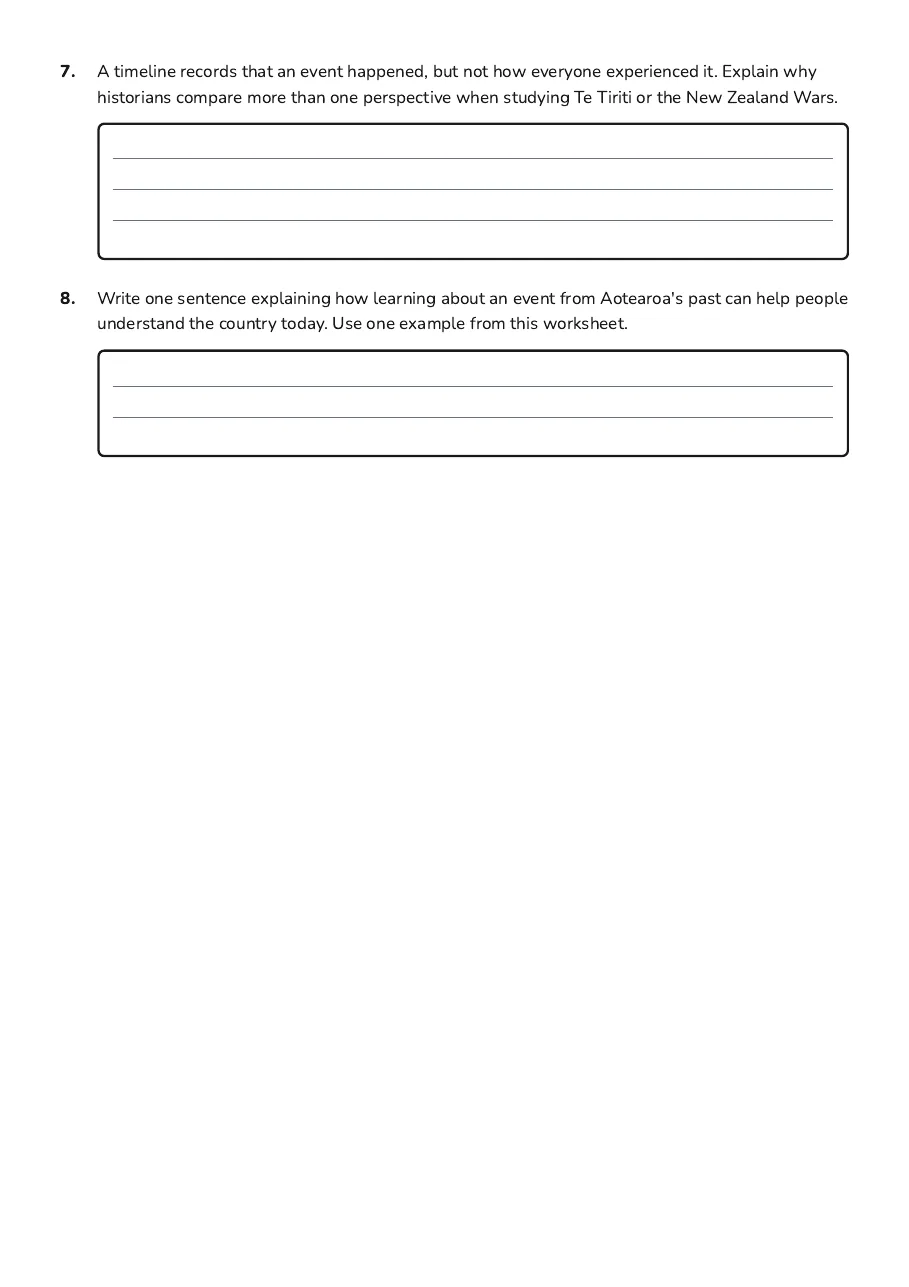
- Different texts and understandings make multiple perspectives important.
- Women gained the right to vote in parliamentary elections.
- Māori ancestors settled Aotearoa long before European arrivals.
3 printable pages
Page 1
Page 2
Page 3
About This Worksheet
Free in Kuraplan
Sign up free, grab the PDF, and customize it for your class.
Print-Ready
Formatted for standard paper. Clean layout, easy to read.
AI-Generated
Created with Kuraplan's AI, designed for real classroom use.
For Teachers & Parents
Use in classrooms, for homework, tutoring, or homeschool.
Need a custom version of this worksheet?
Kuraplan's AI generates custom worksheets in seconds — differentiated for every learner, aligned to your curriculum.
Generate Custom Worksheets — FreeMore Social Sciences Worksheets
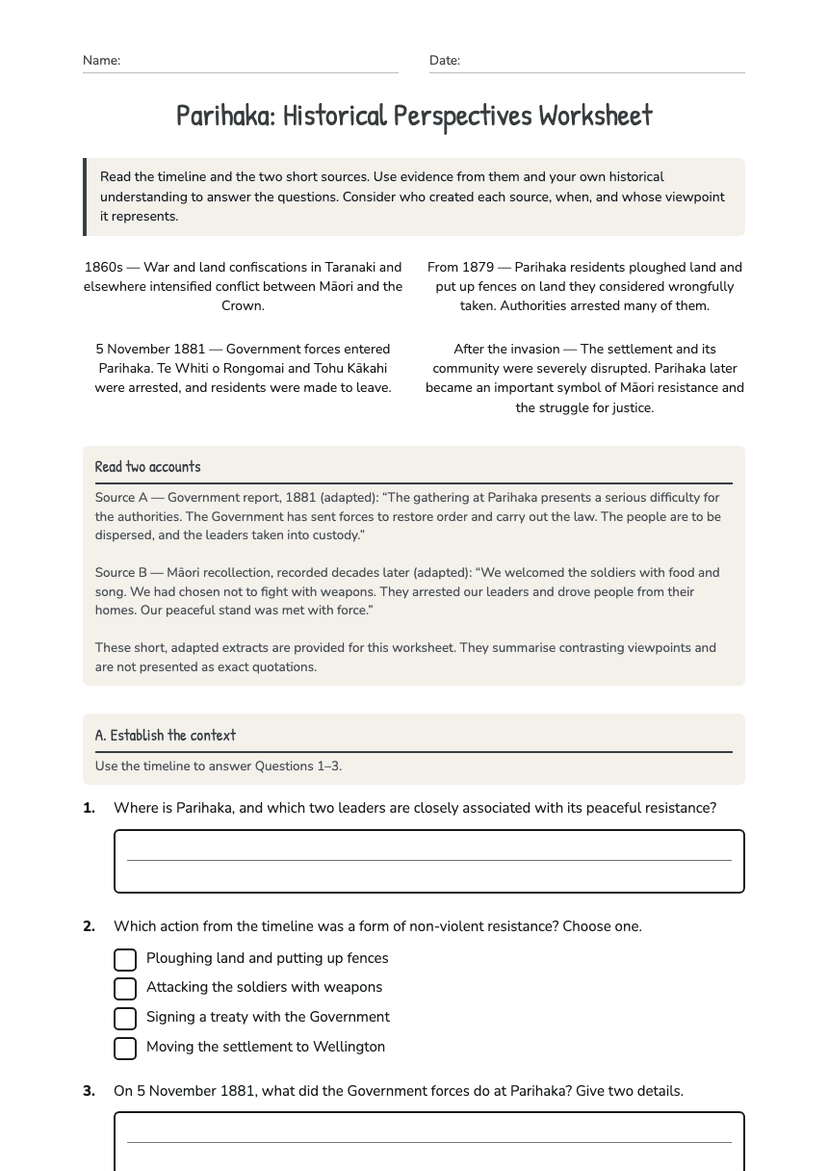
Parihaka: Historical Perspectives Worksheet
Free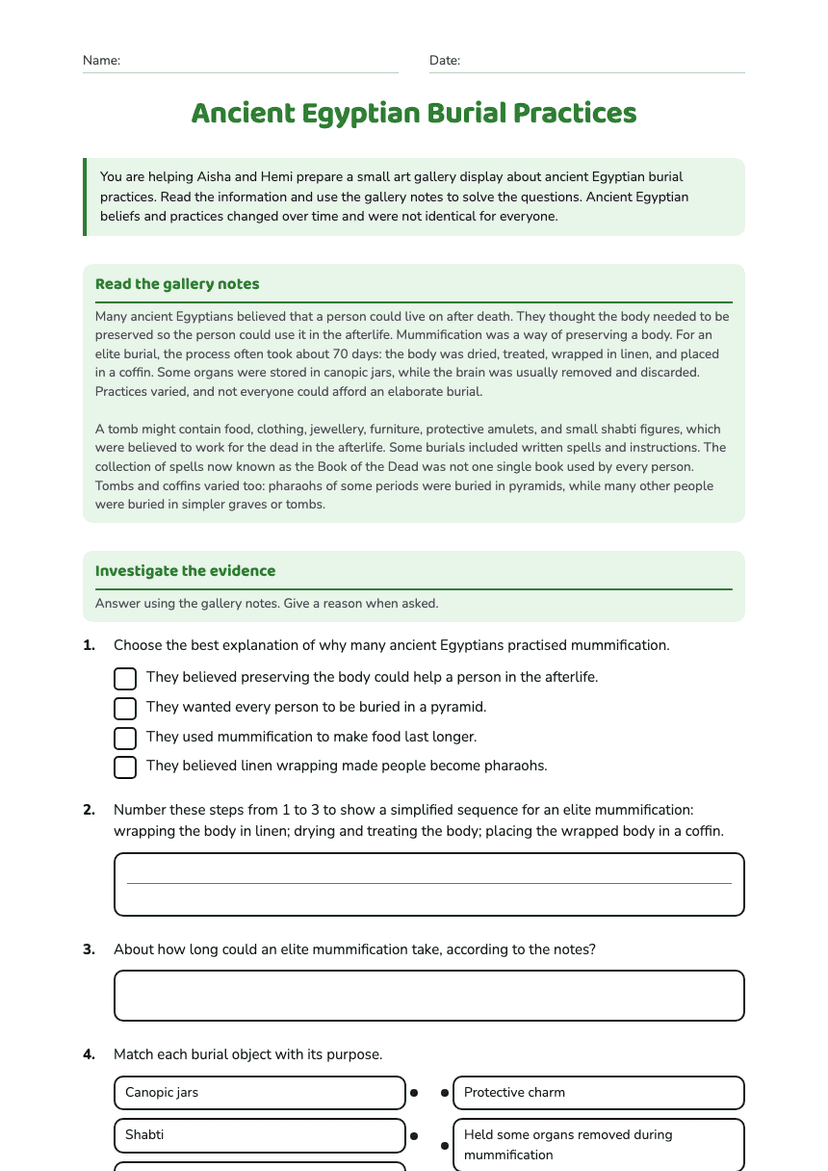
Ancient Egyptian Burial Practices
Free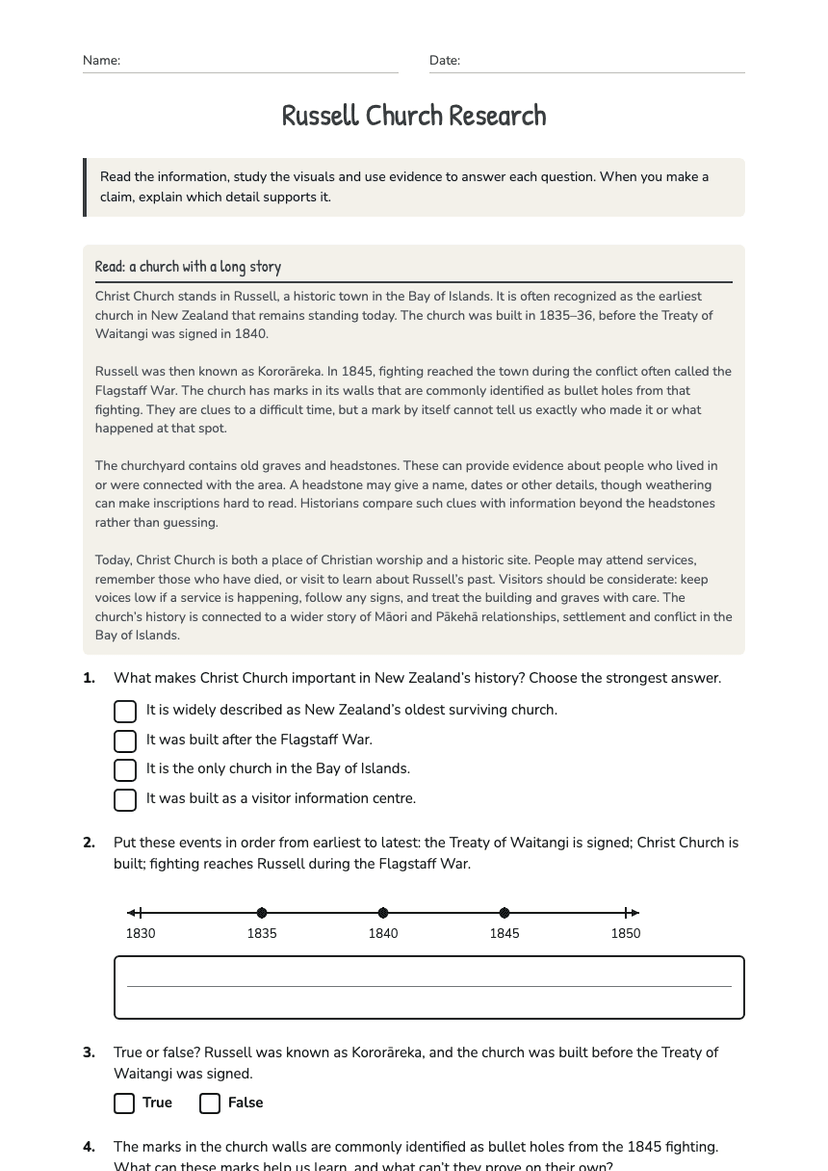
Russell Church Research
Free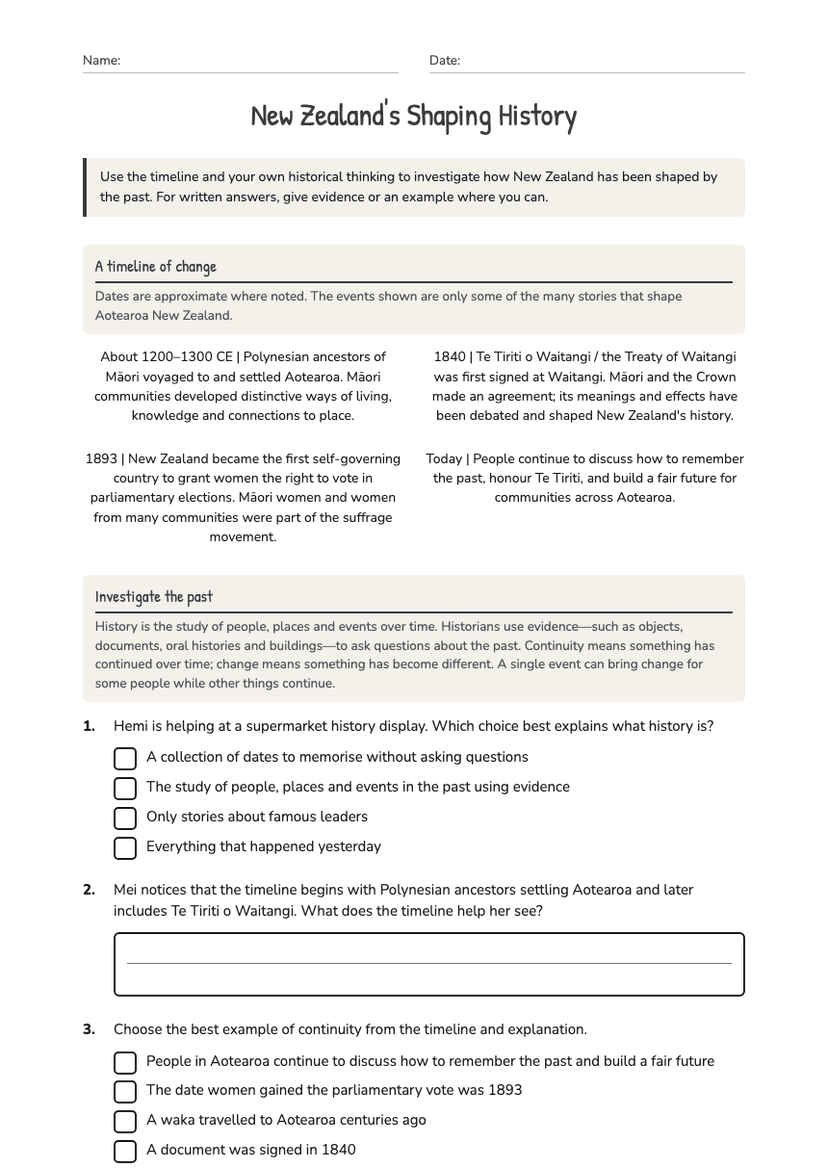
New Zealand's Shaping History
Free
Te Aute Historical Insights
Free
World War II: Causes
Free
Traditional and Modern Voyaging
Free