Artistic Expression Exploration
A free art worksheet ready for your classroom. Open in Kuraplan to grab the print-ready PDF, customize it for your students, or generate a fresh version in seconds.

Artistic Expression Exploration
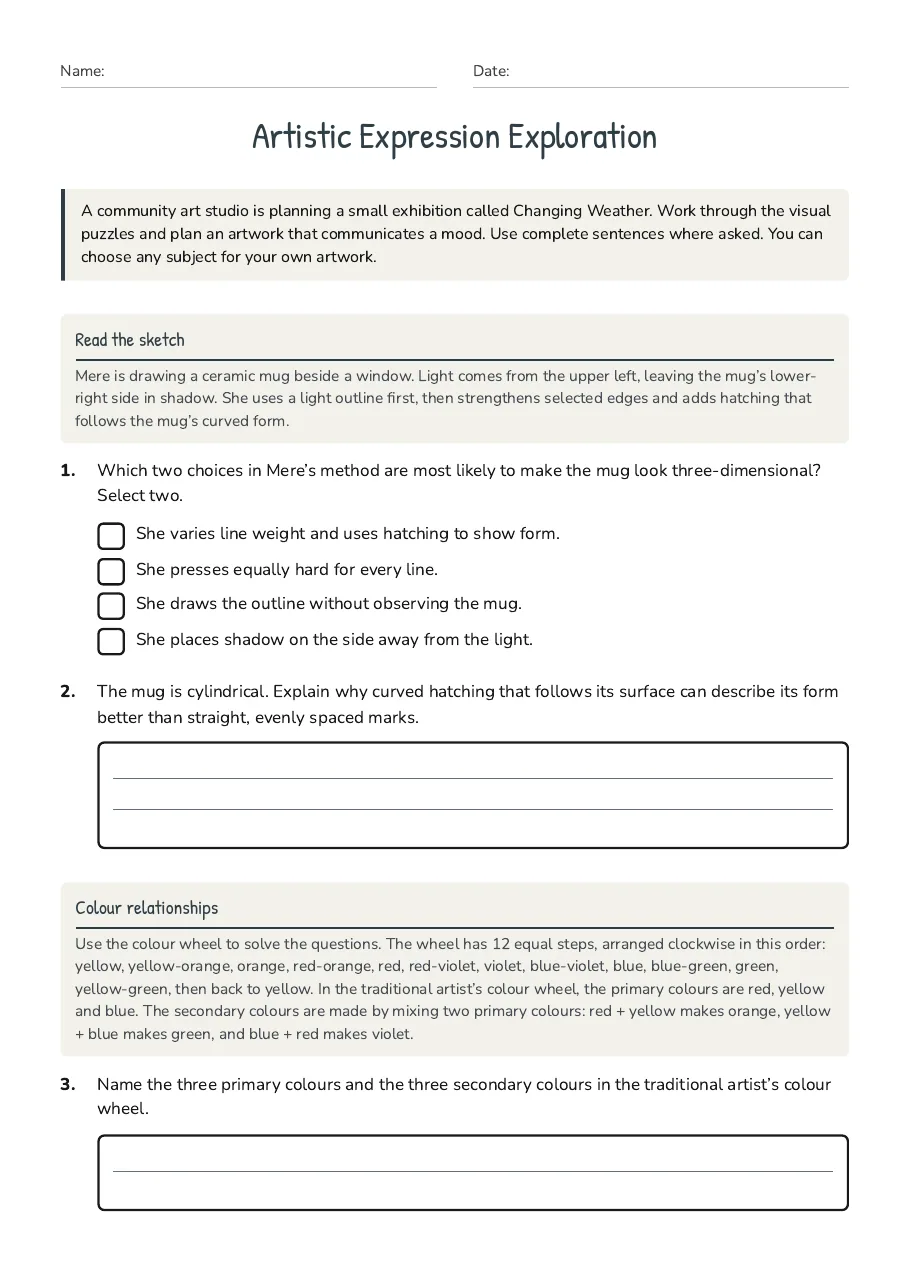
Read the sketch
Mere is drawing a ceramic mug beside a window. Light comes from the upper left, leaving the mug’s lower-right side in shadow. She uses a light outline first, then strengthens selected edges and adds hatching that follows the mug’s curved form.
- She varies line weight and uses hatching to show form.
- She presses equally hard for every line.
- She draws the outline without observing the mug.
- She places shadow on the side away from the light.
Colour relationships
Use the colour wheel to solve the questions. The wheel has 12 equal steps, arranged clockwise in this order: yellow, yellow-orange, orange, red-orange, red, red-violet, violet, blue-violet, blue, blue-green, green, yellow-green, then back to yellow. In the traditional artist’s colour wheel, the primary colours are red, yellow and blue. The secondary colours are made by mixing two primary colours: red + yellow makes orange, yellow + blue makes green, and blue + red makes violet.
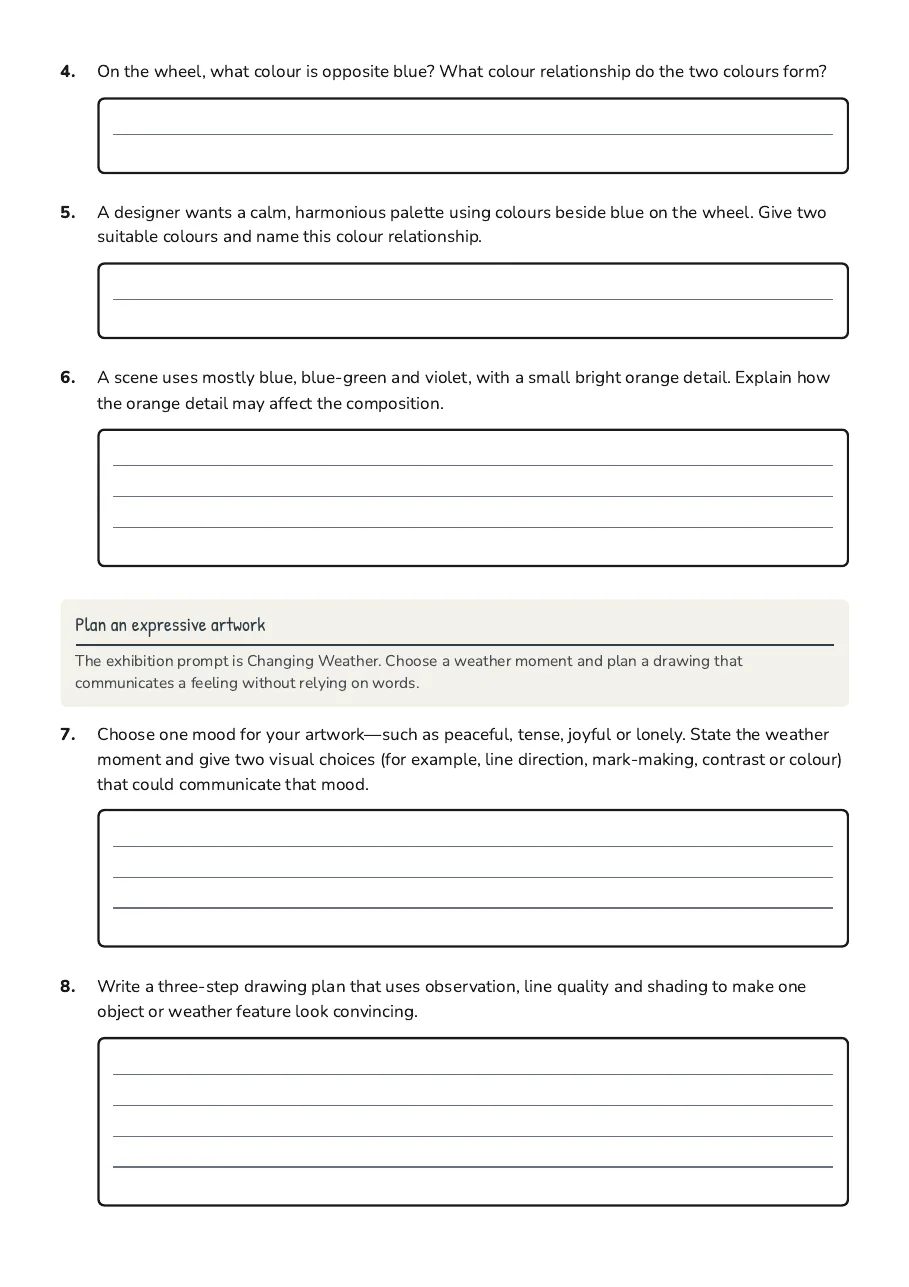
Plan an expressive artwork
The exhibition prompt is Changing Weather. Choose a weather moment and plan a drawing that communicates a feeling without relying on words.
3 printable pages
Page 1
Page 2
Page 3
About This Worksheet
Free in Kuraplan
Sign up free, grab the PDF, and customize it for your class.
Print-Ready
Formatted for standard paper. Clean layout, easy to read.
AI-Generated
Created with Kuraplan's AI, designed for real classroom use.
For Teachers & Parents
Use in classrooms, for homework, tutoring, or homeschool.
Need a custom version of this worksheet?
Kuraplan's AI generates custom worksheets in seconds — differentiated for every learner, aligned to your curriculum.
Generate Custom Worksheets — FreeMore Art Worksheets
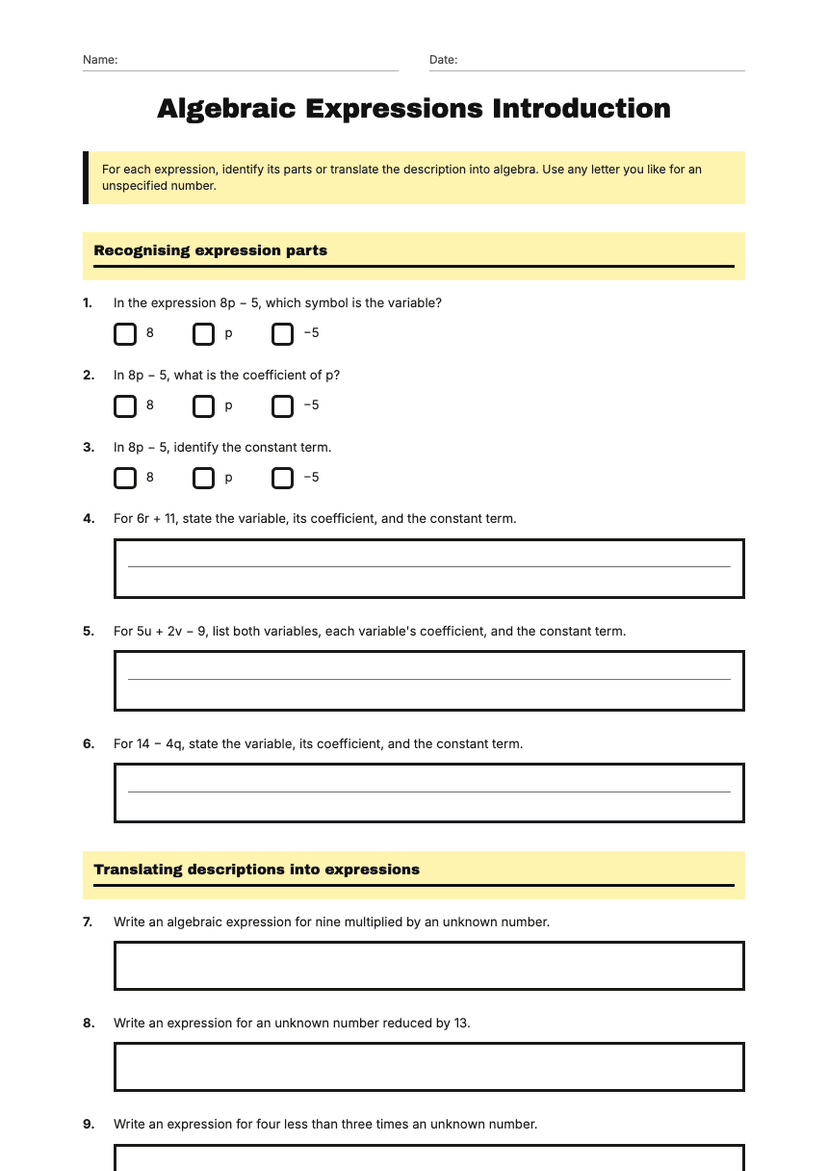
Algebraic Expressions Introduction
Free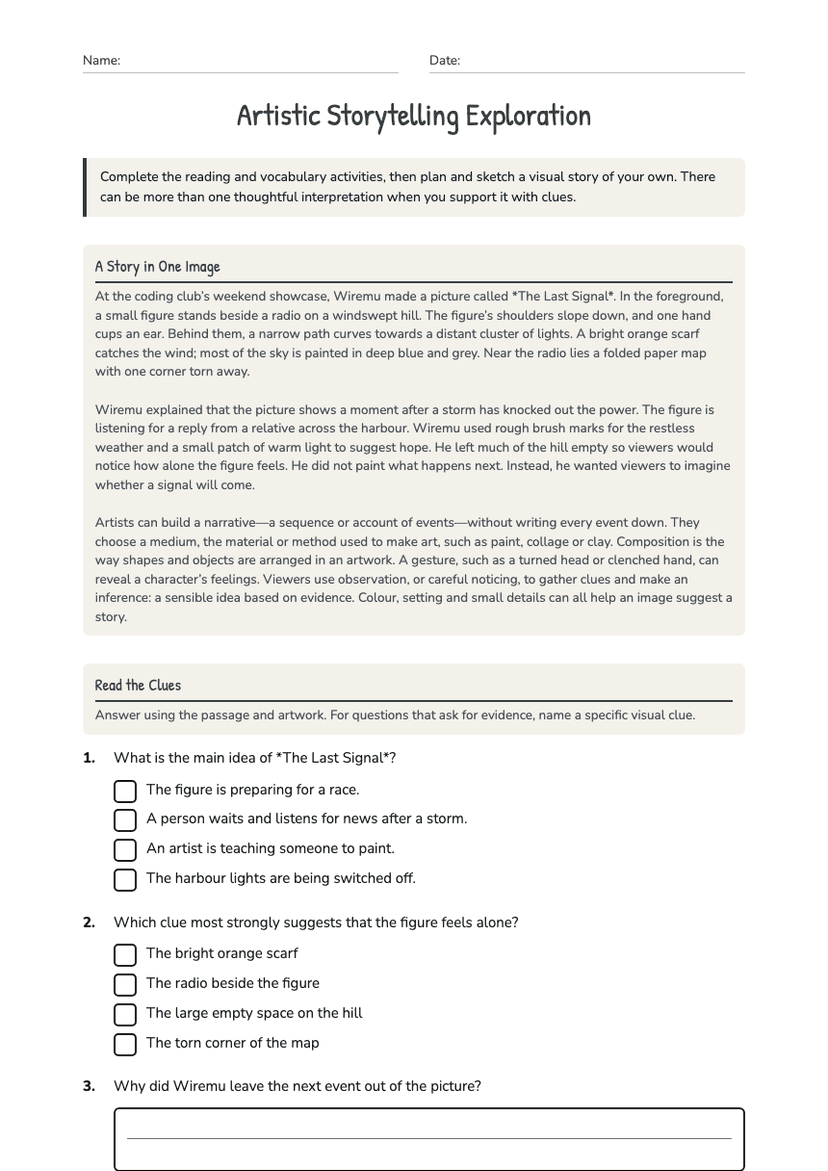
Artistic Storytelling Exploration
Free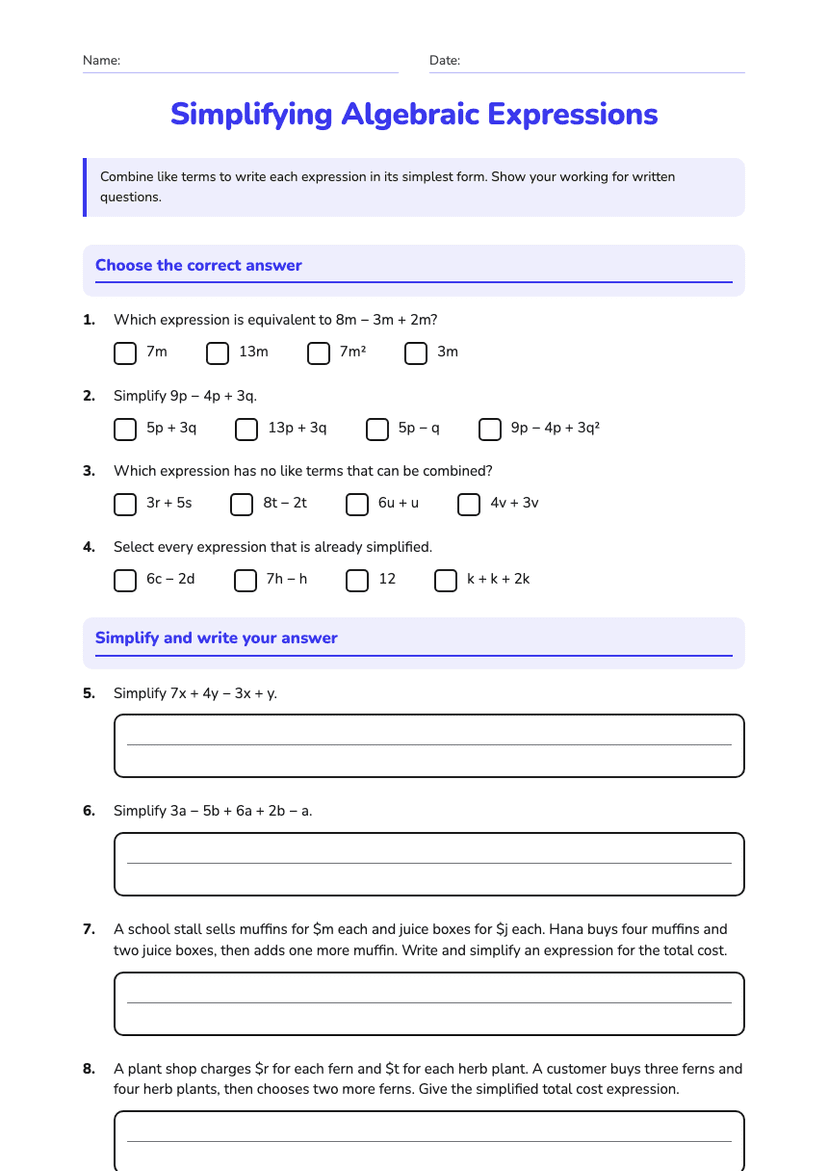
Simplifying Algebraic Expressions
Free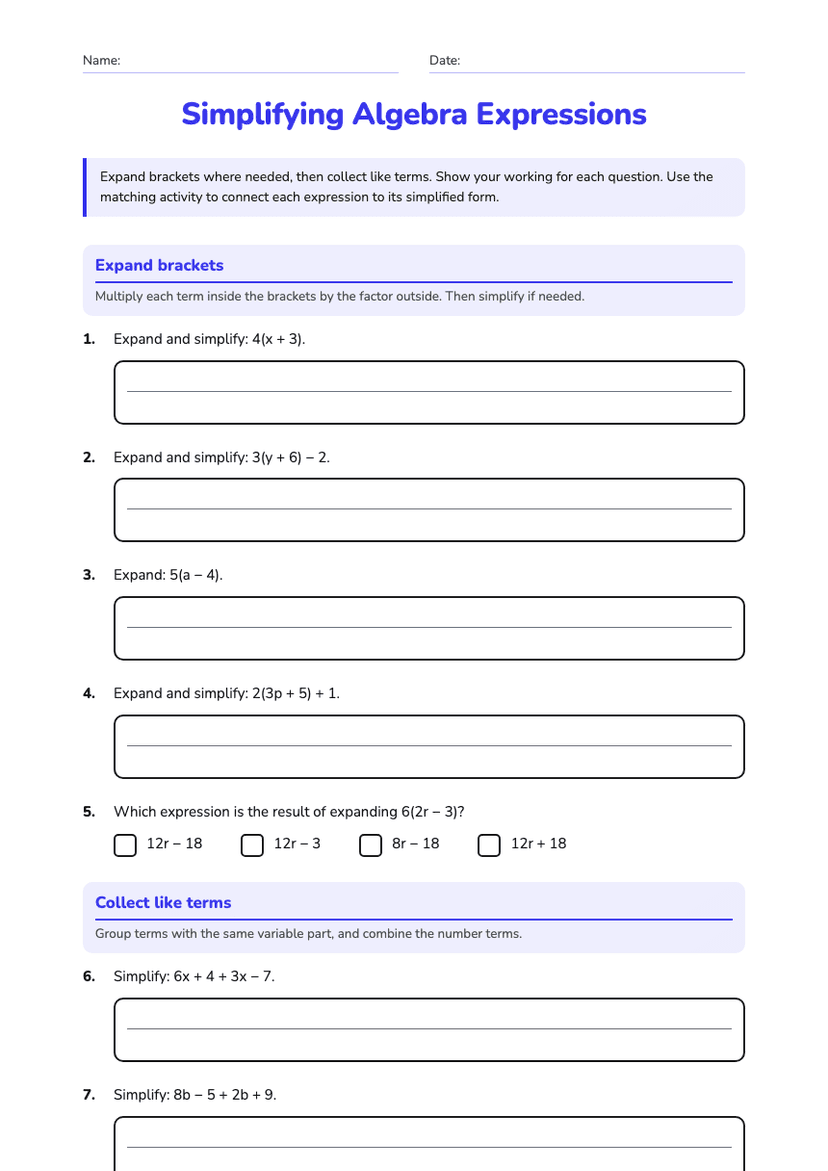
Simplifying Algebra Expressions
Free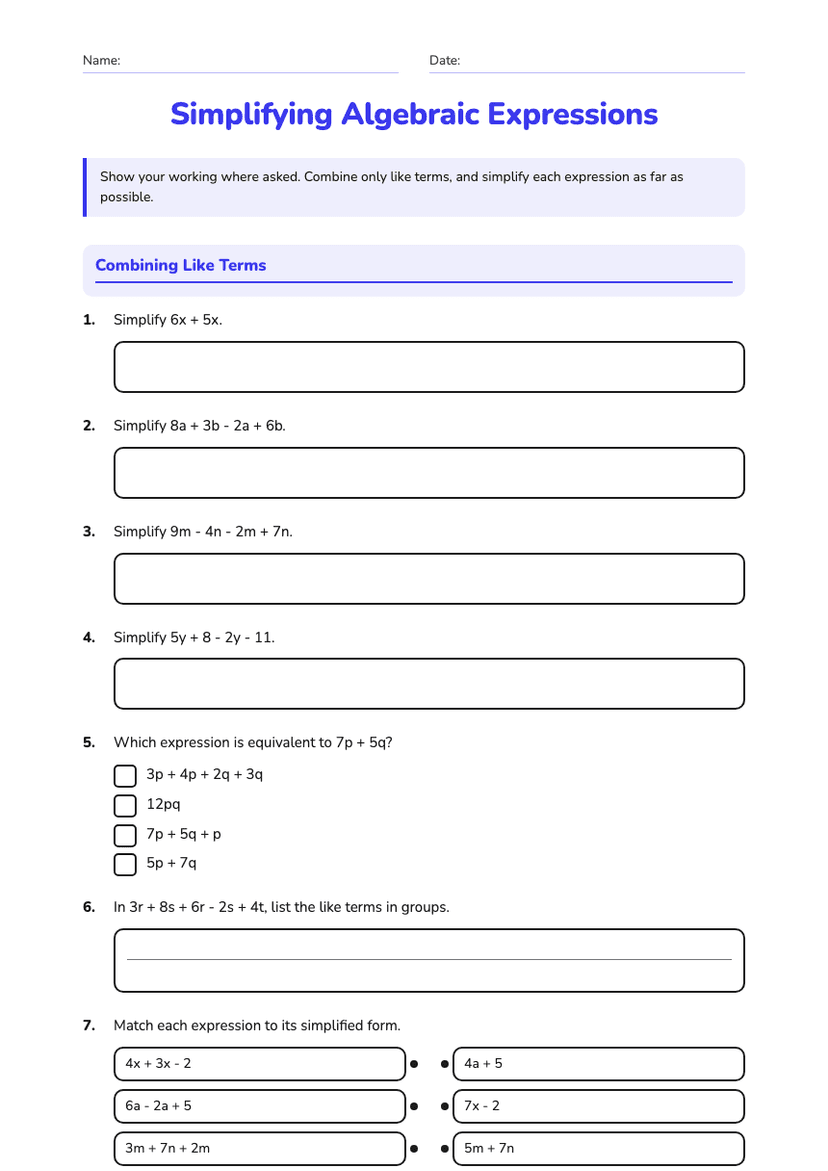
Simplifying Algebraic Expressions
Free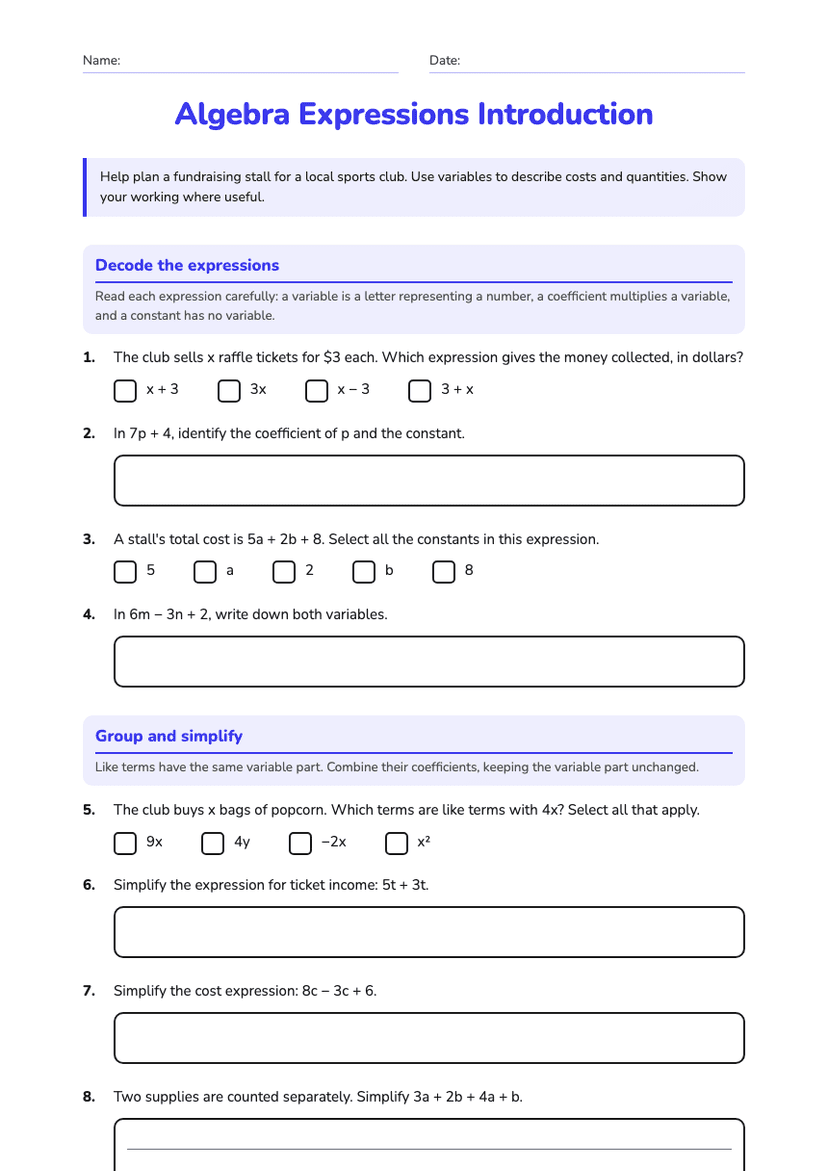
Algebra Expressions Introduction
Free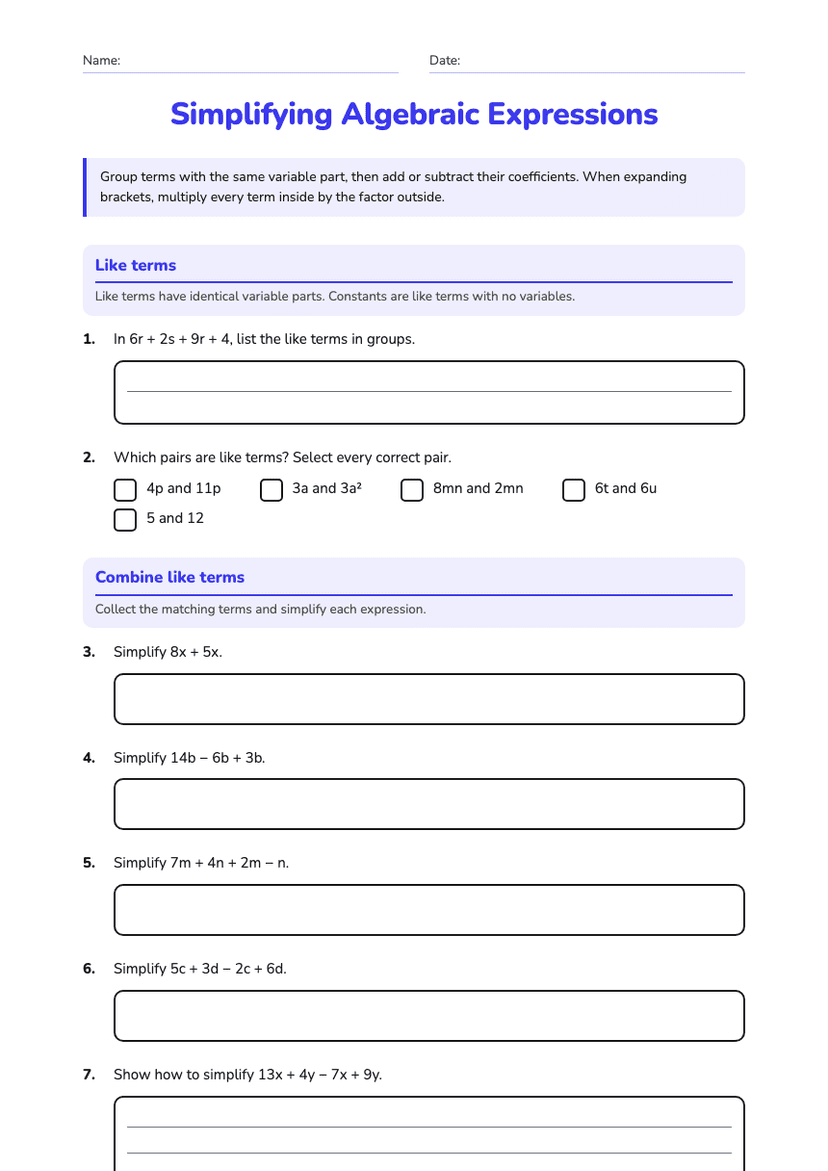
Simplifying Algebraic Expressions
Free