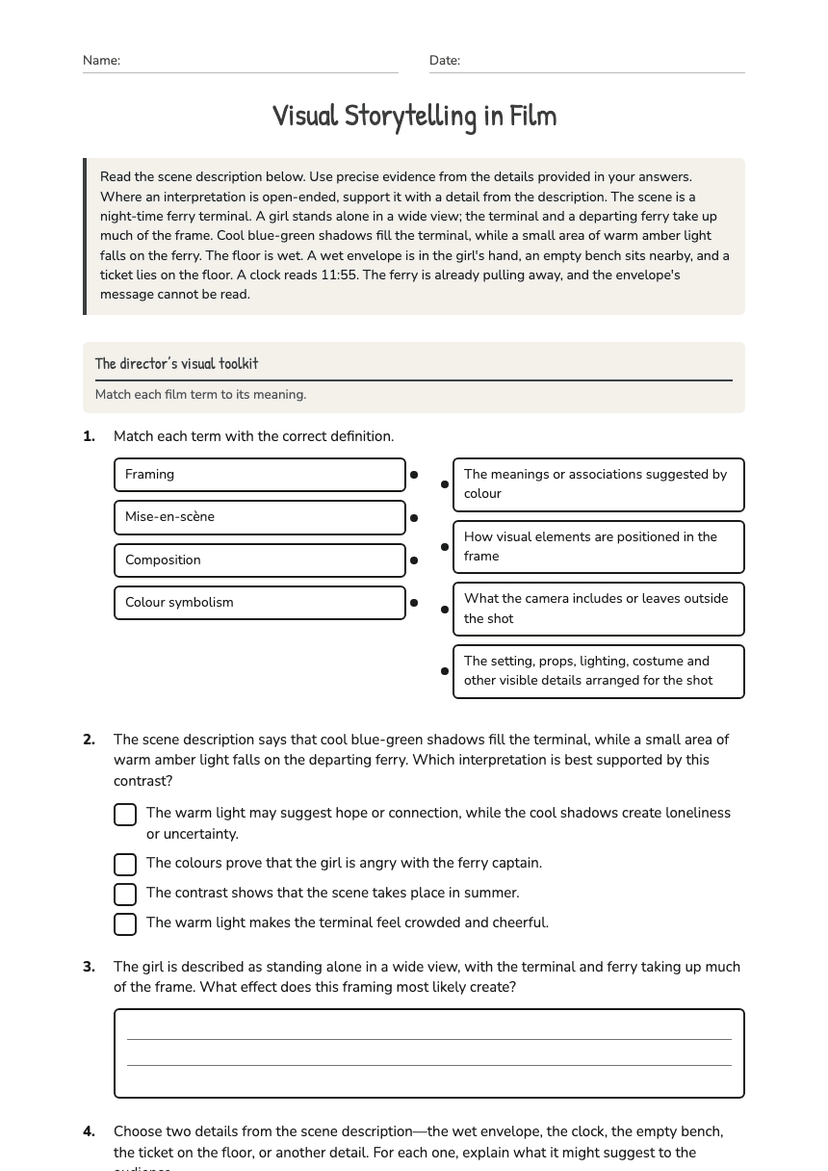
Artistic Storytelling Exploration
A free art worksheet ready for your classroom. Open in Kuraplan to grab the print-ready PDF, customize it for your students, or generate a fresh version in seconds.

Artistic Storytelling Exploration
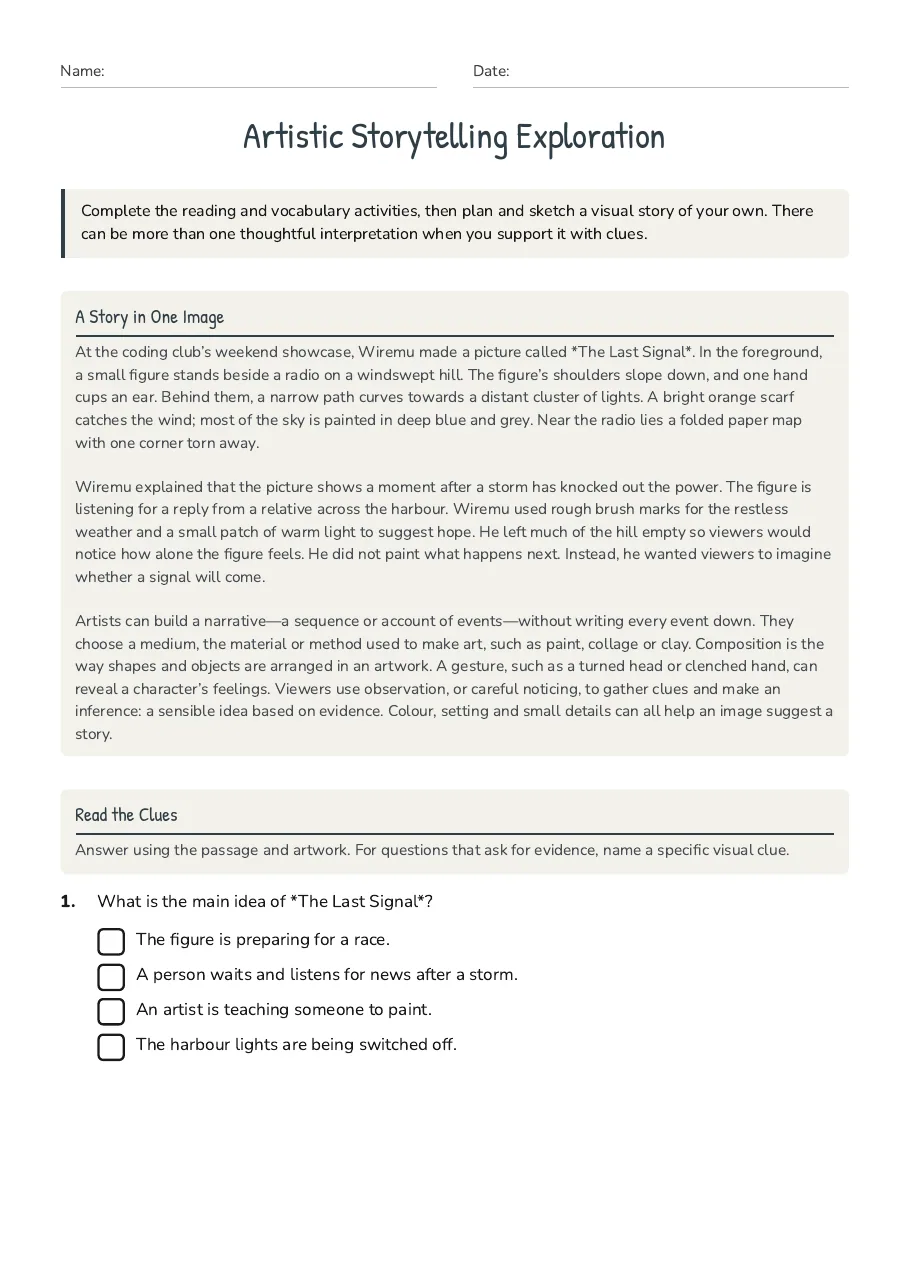
A Story in One Image
At the coding club’s weekend showcase, Wiremu made a picture called *The Last Signal*. In the foreground, a small figure stands beside a radio on a windswept hill. The figure’s shoulders slope down, and one hand cups an ear. Behind them, a narrow path curves towards a distant cluster of lights. A bright orange scarf catches the wind; most of the sky is painted in deep blue and grey. Near the radio lies a folded paper map with one corner torn away. Wiremu explained that the picture shows a moment after a storm has knocked out the power. The figure is listening for a reply from a relative across the harbour. Wiremu used rough brush marks for the restless weather and a small patch of warm light to suggest hope. He left much of the hill empty so viewers would notice how alone the figure feels. He did not paint what happens next. Instead, he wanted viewers to imagine whether a signal will come. Artists can build a narrative—a sequence or account of events—without writing every event down. They choose a medium, the material or method used to make art, such as paint, collage or clay. Composition is the way shapes and objects are arranged in an artwork. A gesture, such as a turned head or clenched hand, can reveal a character’s feelings. Viewers use observation, or careful noticing, to gather clues and make an inference: a sensible idea based on evidence. Colour, setting and small details can all help an image suggest a story.
Read the Clues
Answer using the passage and artwork. For questions that ask for evidence, name a specific visual clue.
- The figure is preparing for a race.
- A person waits and listens for news after a storm.
- An artist is teaching someone to paint.
- The harbour lights are being switched off.
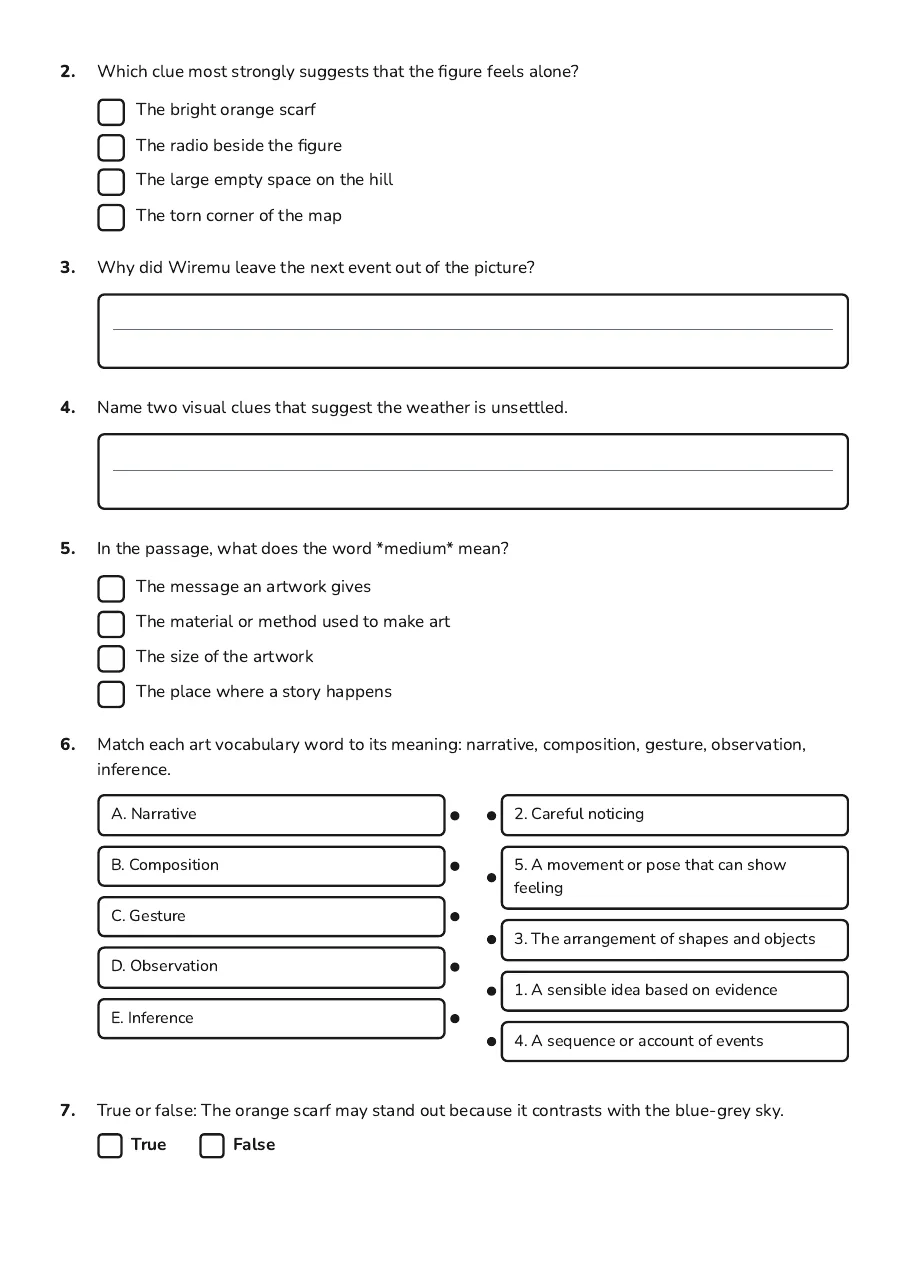
- The bright orange scarf
- The radio beside the figure
- The large empty space on the hill
- The torn corner of the map
- The message an artwork gives
- The material or method used to make art
- The size of the artwork
- The place where a story happens
- A. Narrative
- B. Composition
- C. Gesture
- D. Observation
- E. Inference
- 2. Careful noticing
- 5. A movement or pose that can show feeling
- 3. The arrangement of shapes and objects
- 1. A sensible idea based on evidence
- 4. A sequence or account of events
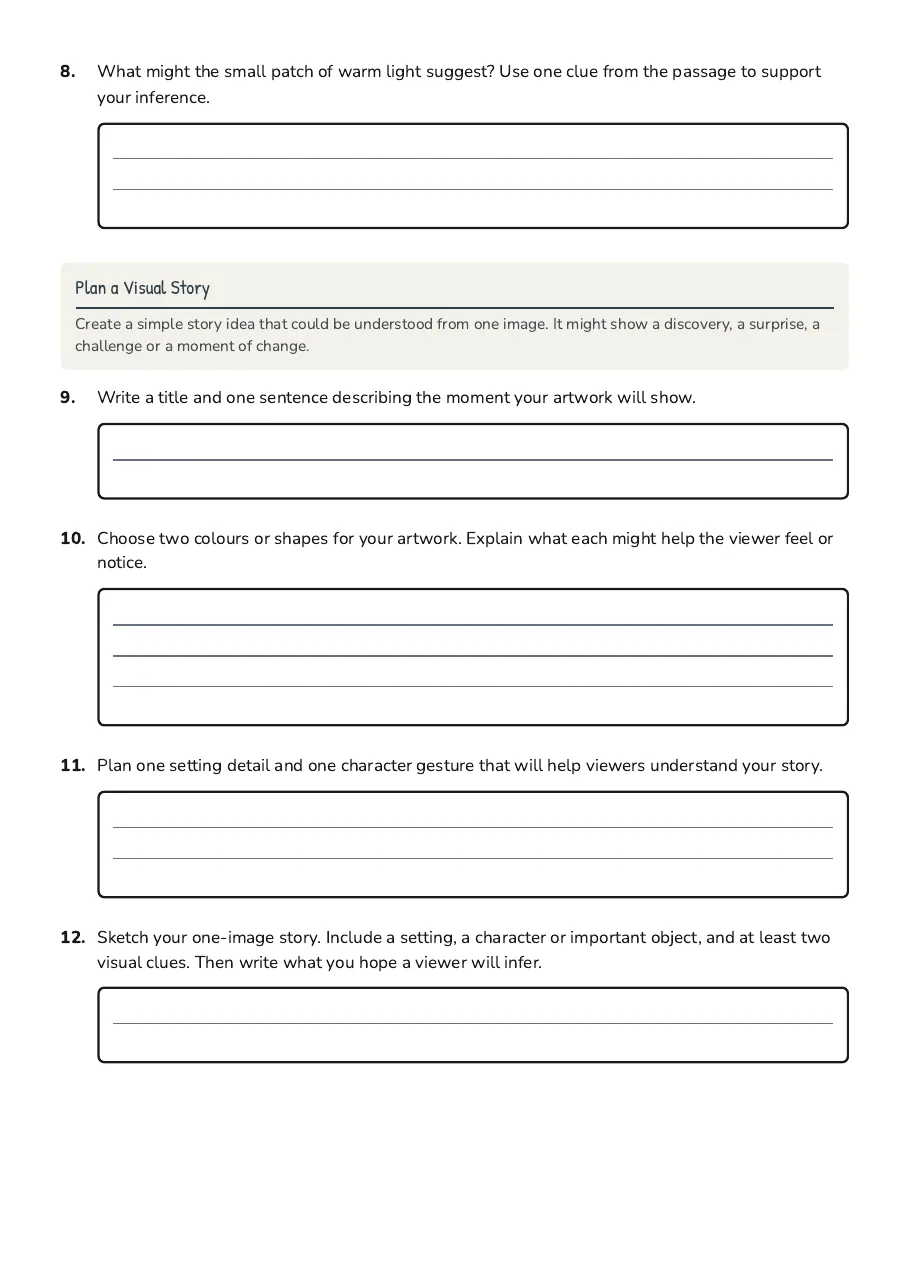
Plan a Visual Story
Create a simple story idea that could be understood from one image. It might show a discovery, a surprise, a challenge or a moment of change.
4 printable pages
Page 1
Page 2
Page 3
Page 4
About This Worksheet
Free in Kuraplan
Sign up free, grab the PDF, and customize it for your class.
Print-Ready
Formatted for standard paper. Clean layout, easy to read.
AI-Generated
Created with Kuraplan's AI, designed for real classroom use.
For Teachers & Parents
Use in classrooms, for homework, tutoring, or homeschool.
Need a custom version of this worksheet?
Kuraplan's AI generates custom worksheets in seconds — differentiated for every learner, aligned to your curriculum.
Generate Custom Worksheets — FreeMore Art Worksheets
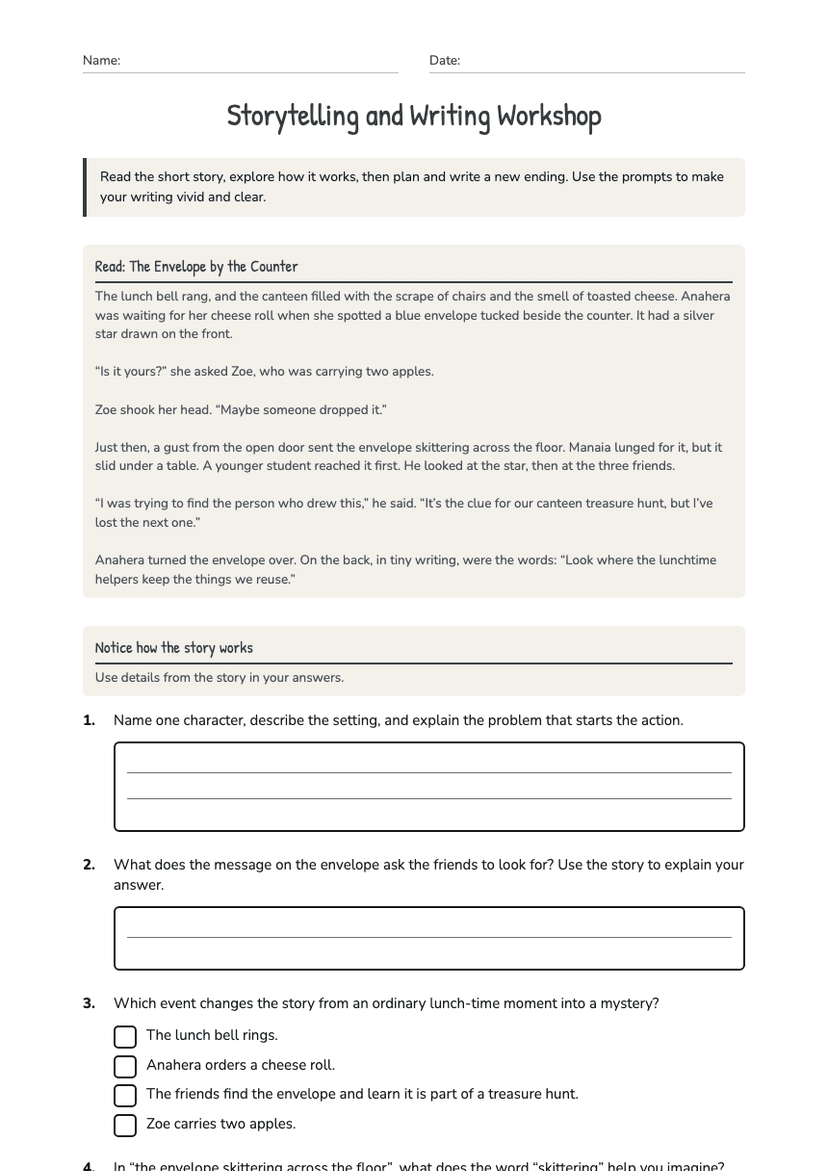
Storytelling and Writing Workshop
Free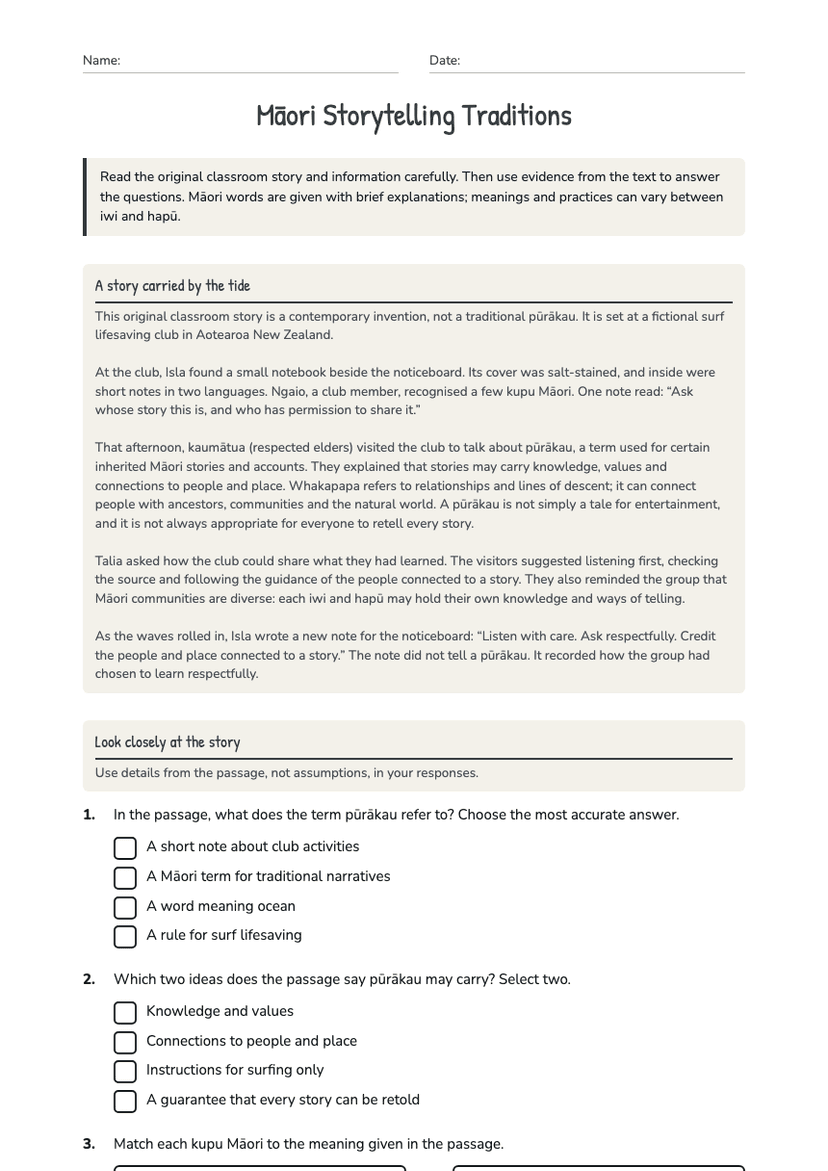
Māori Storytelling Traditions
Free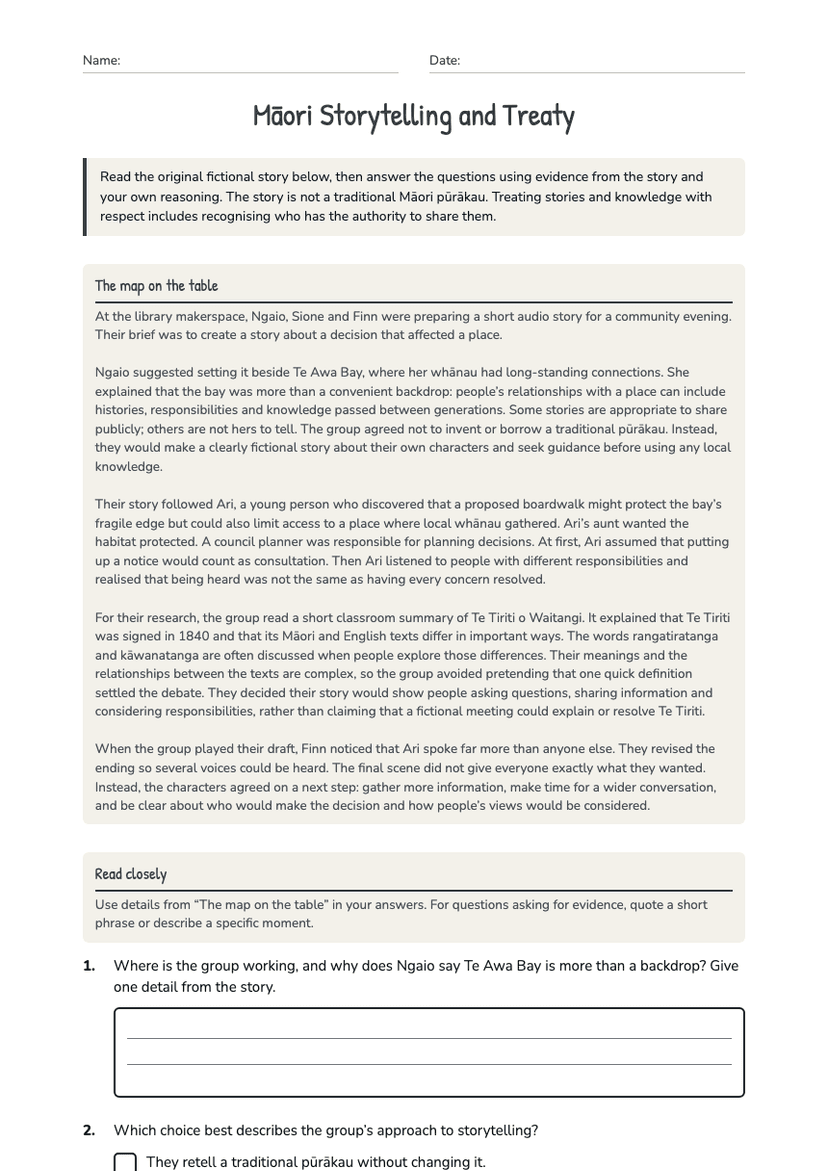
Māori Storytelling and Treaty
Free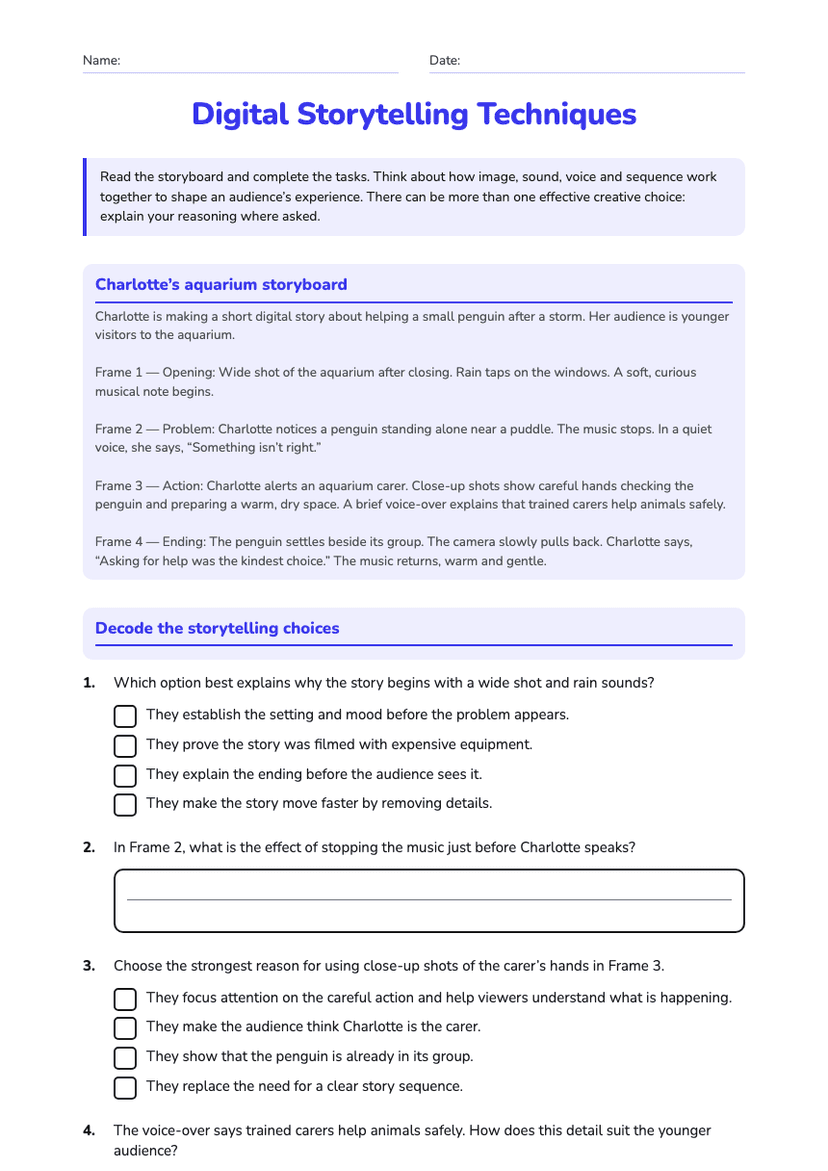
Digital Storytelling Techniques
Free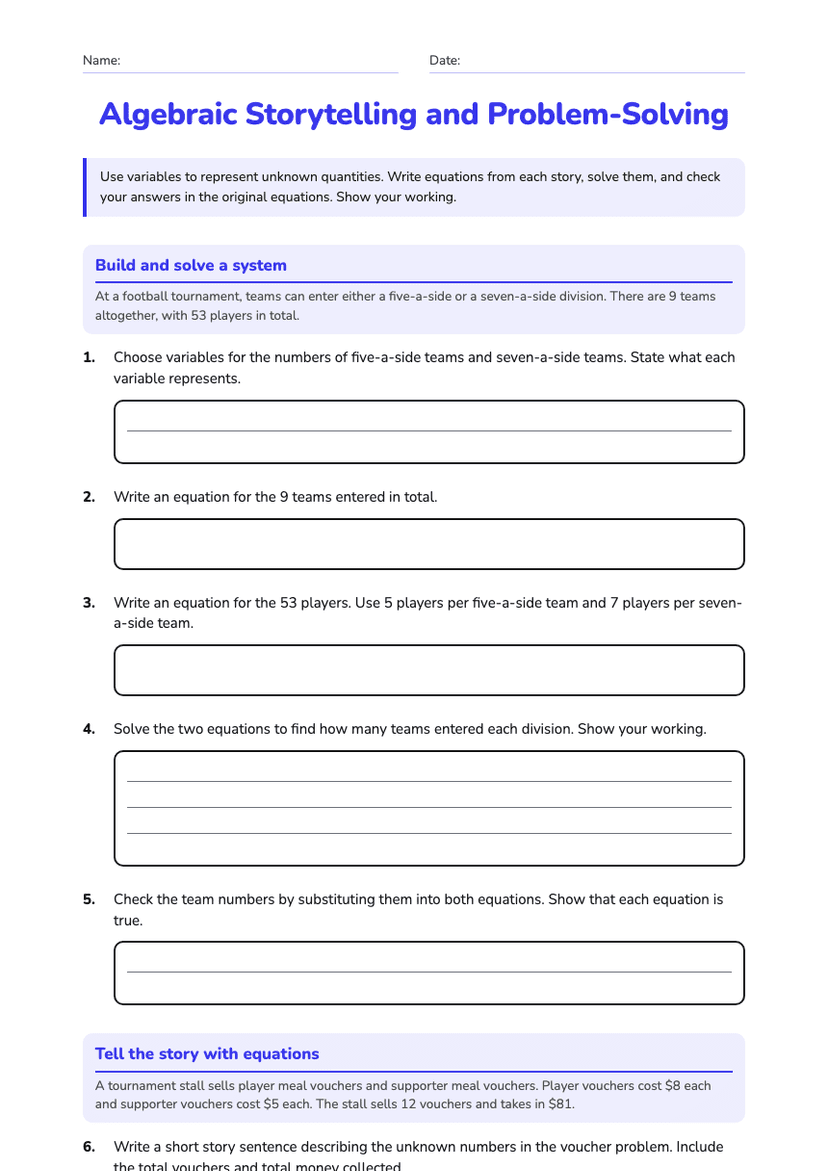
Algebraic Storytelling and Problem-Solving
Free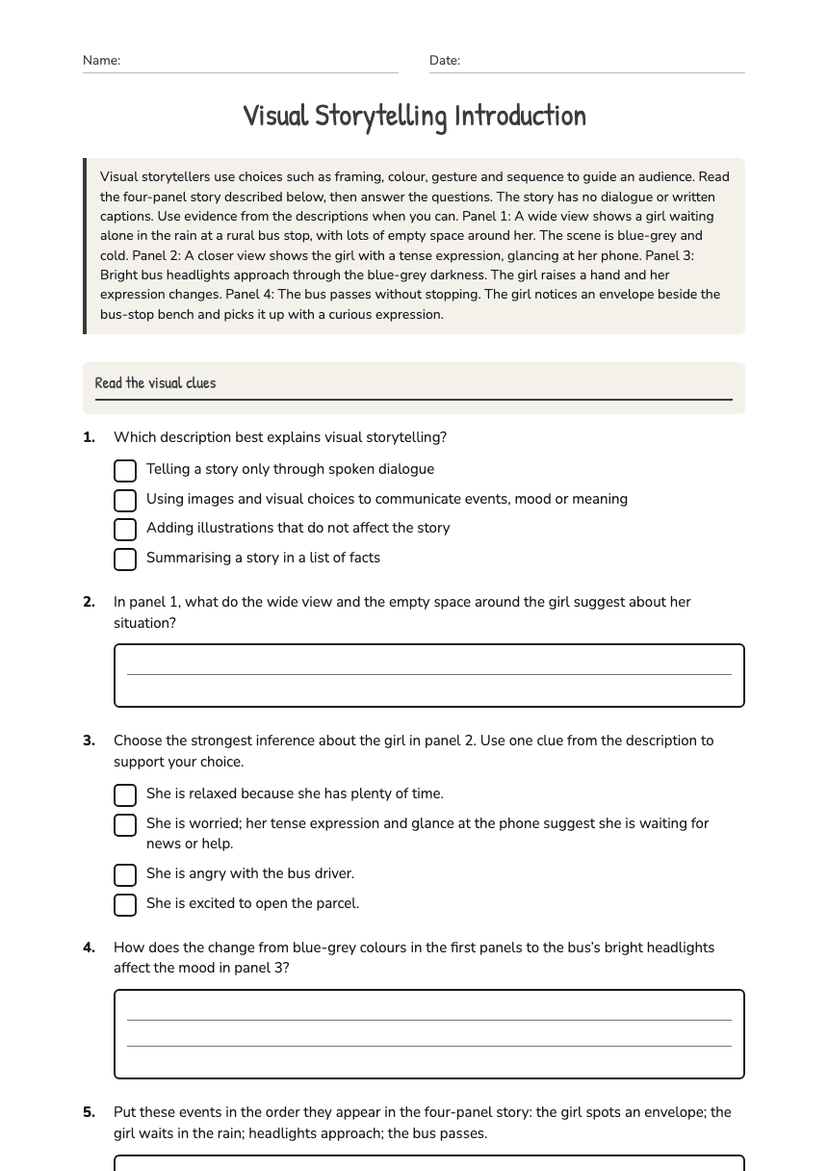
Visual Storytelling Introduction
Free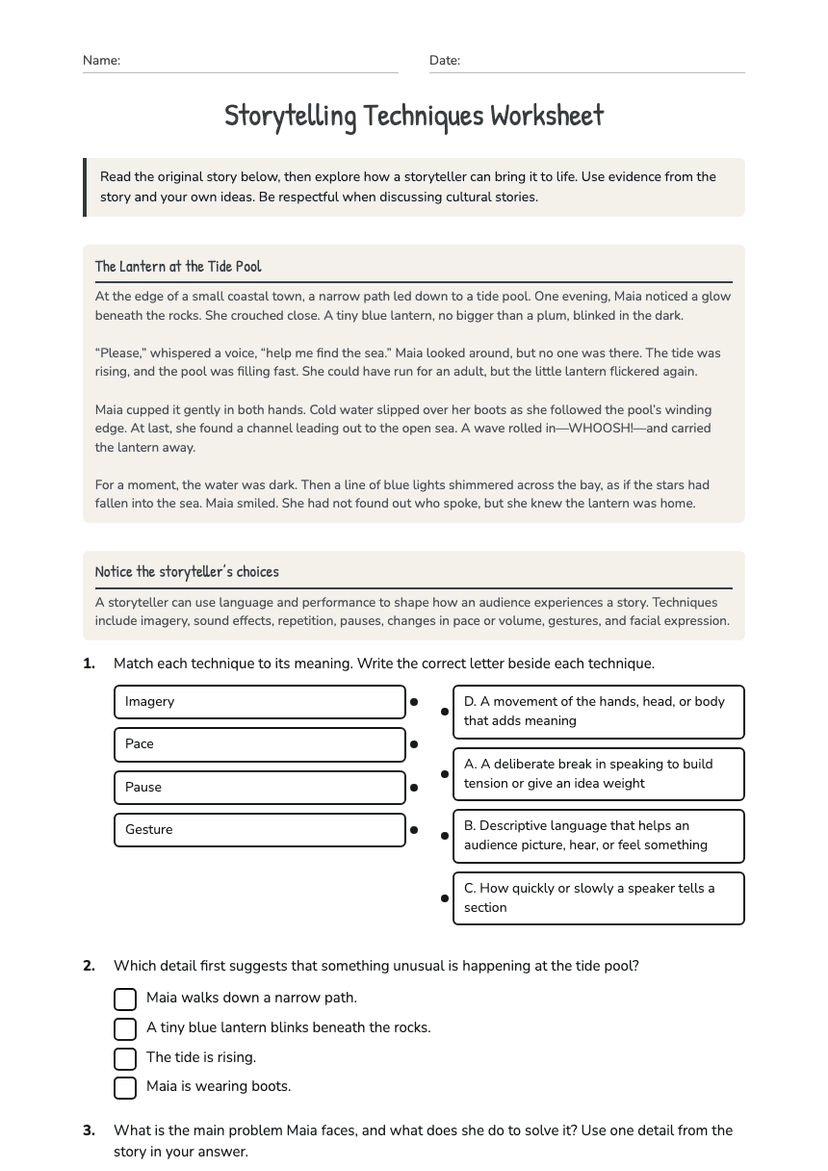
Storytelling Techniques Worksheet
Free