Atomic Structure Knowledge Check
A free science worksheet ready for your classroom. Open in Kuraplan to grab the print-ready PDF, customize it for your students, or generate a fresh version in seconds.
Atomic Structure Knowledge Check
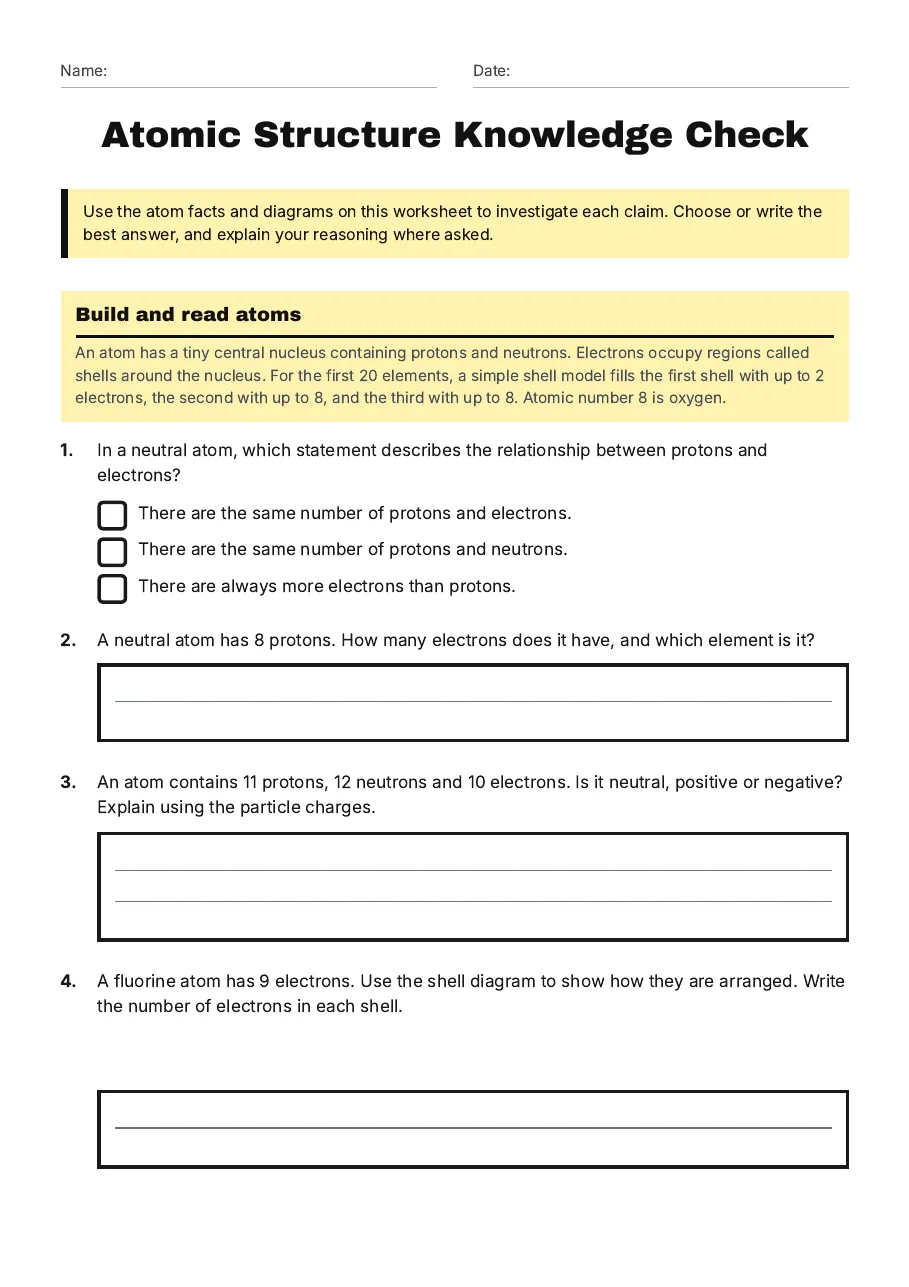
Build and read atoms
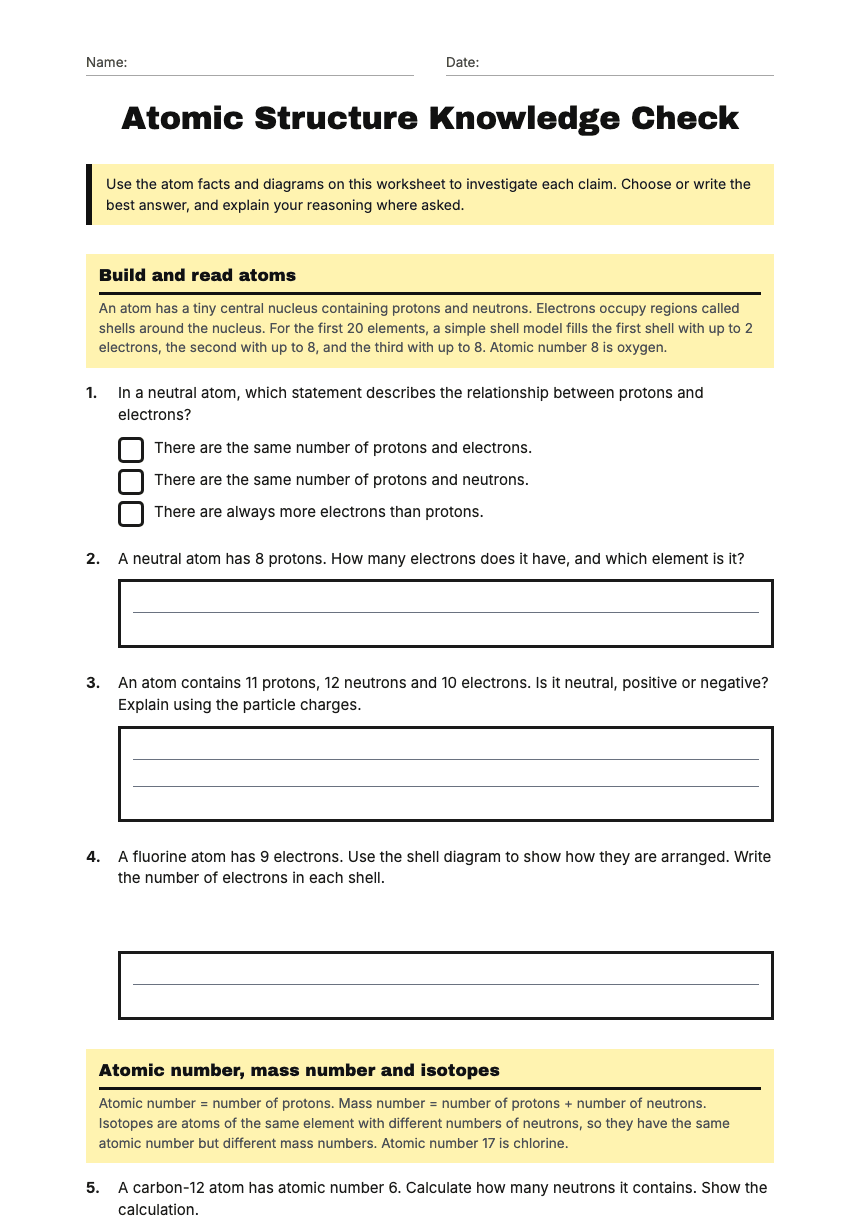
An atom has a tiny central nucleus containing protons and neutrons. Electrons occupy regions called shells around the nucleus. For the first 20 elements, a simple shell model fills the first shell with up to 2 electrons, the second with up to 8, and the third with up to 8. Atomic number 8 is oxygen.
- There are the same number of protons and electrons.
- There are the same number of protons and neutrons.
- There are always more electrons than protons.
Atomic number, mass number and isotopes
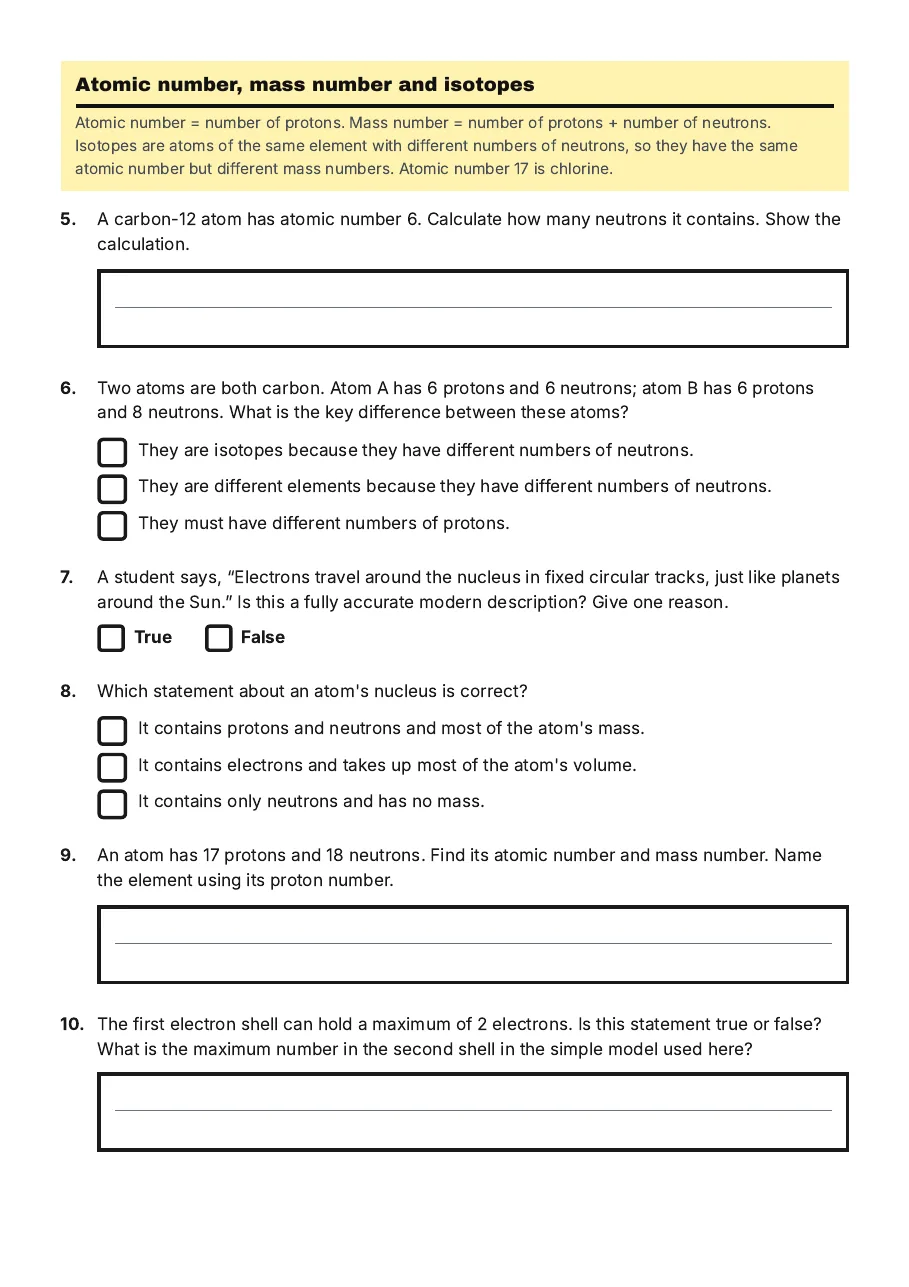
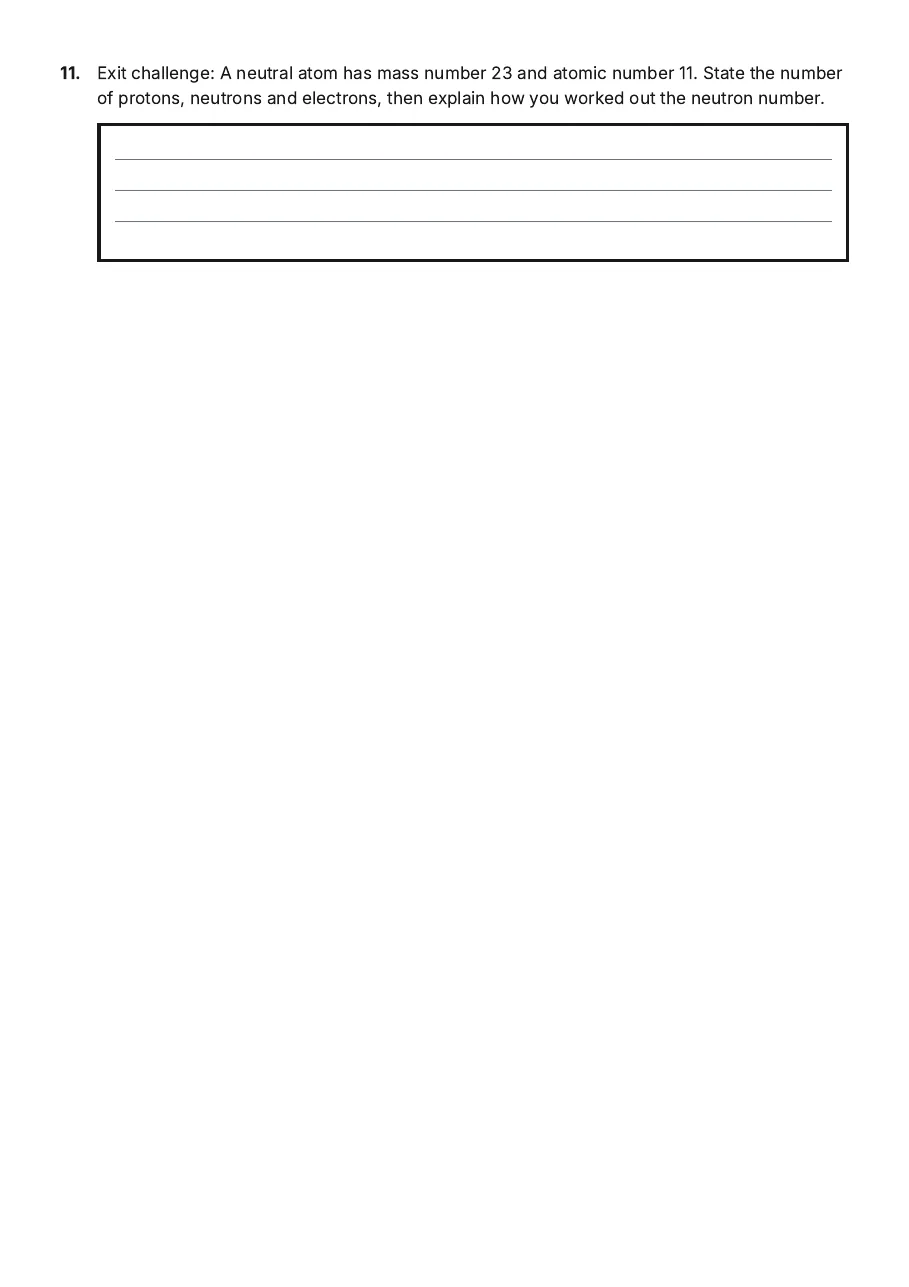
Atomic number = number of protons. Mass number = number of protons + number of neutrons. Isotopes are atoms of the same element with different numbers of neutrons, so they have the same atomic number but different mass numbers. Atomic number 17 is chlorine.
- They are isotopes because they have different numbers of neutrons.
- They are different elements because they have different numbers of neutrons.
- They must have different numbers of protons.
- It contains protons and neutrons and most of the atom's mass.
- It contains electrons and takes up most of the atom's volume.
- It contains only neutrons and has no mass.
3 printable pages
Page 1
Page 2
Page 3
About This Worksheet
Free in Kuraplan
Sign up free, grab the PDF, and customize it for your class.
Print-Ready
Formatted for standard paper. Clean layout, easy to read.
AI-Generated
Created with Kuraplan's AI, designed for real classroom use.
For Teachers & Parents
Use in classrooms, for homework, tutoring, or homeschool.
Need a custom version of this worksheet?
Kuraplan's AI generates custom worksheets in seconds — differentiated for every learner, aligned to your curriculum.
Generate Custom Worksheets — FreeMore Science Worksheets
Elements & Compounds Worksheet
Free
Elements and Compounds Worksheet
Free
Isotopes and Radiation Quiz
Free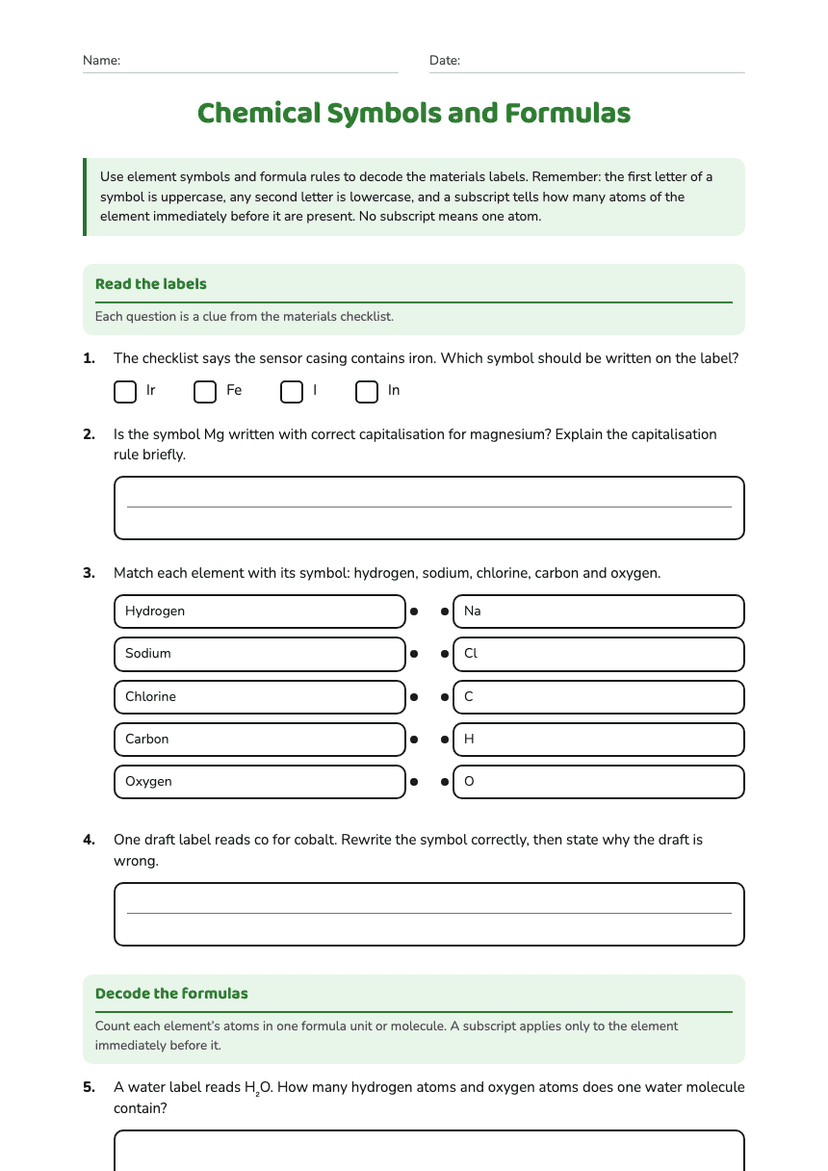
Chemical Symbols and Formulas
Free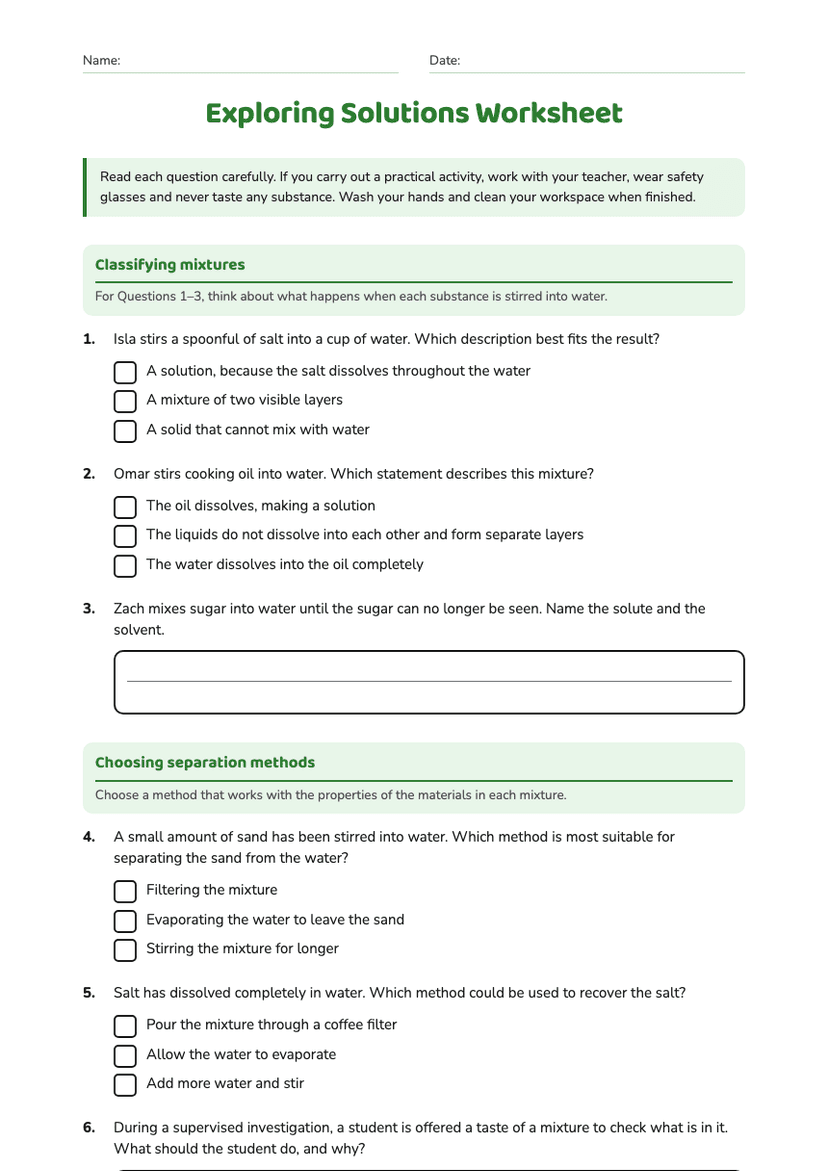
Exploring Solutions Worksheet
Free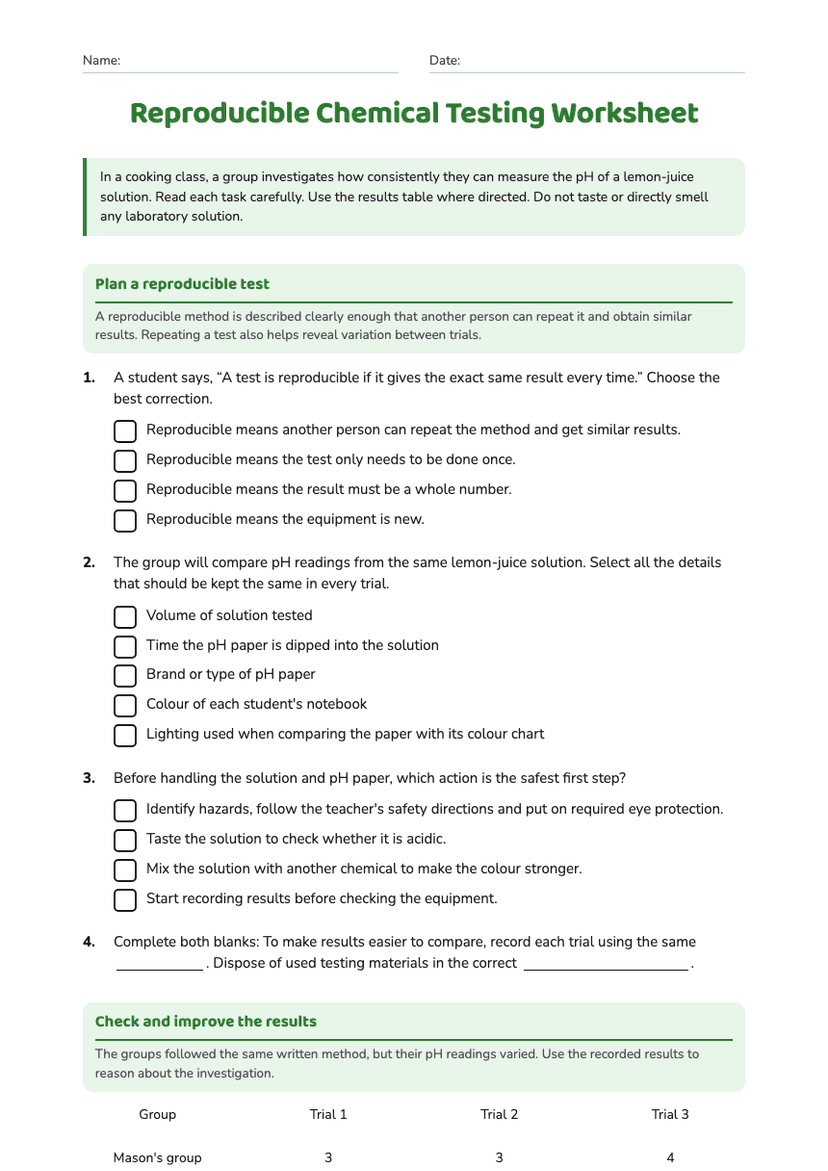
Reproducible Chemical Testing Worksheet
Free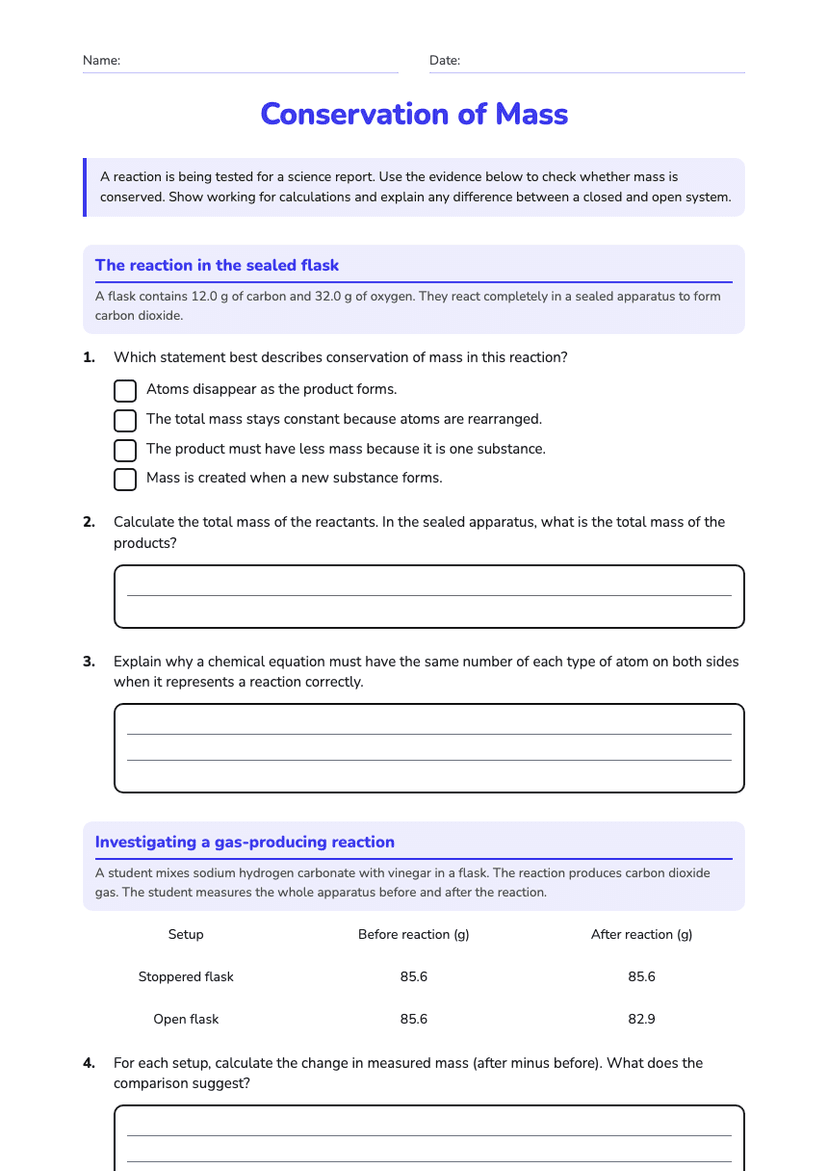
Conservation of Mass
Free