Auslan Cultural Practices
A free languages worksheet ready for your classroom. Open in Kuraplan to grab the print-ready PDF, customize it for your students, or generate a fresh version in seconds.
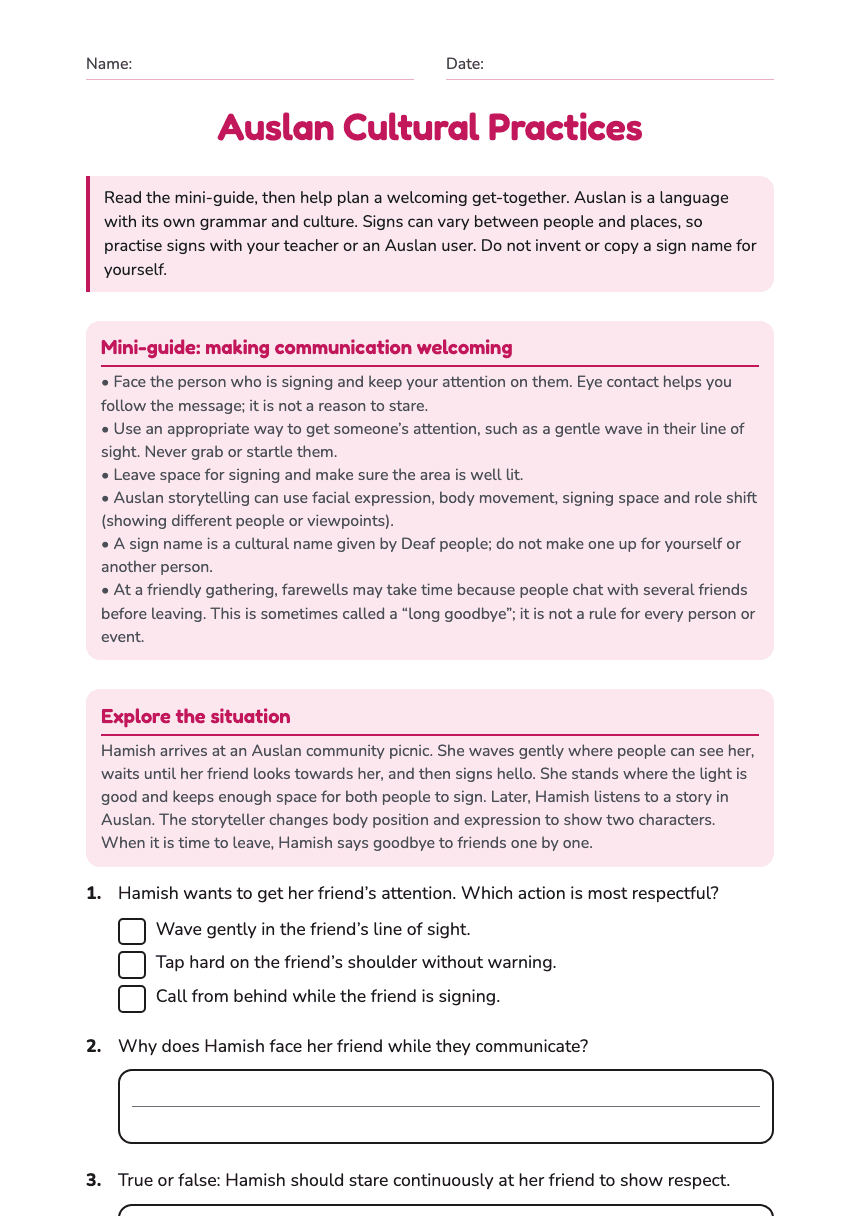
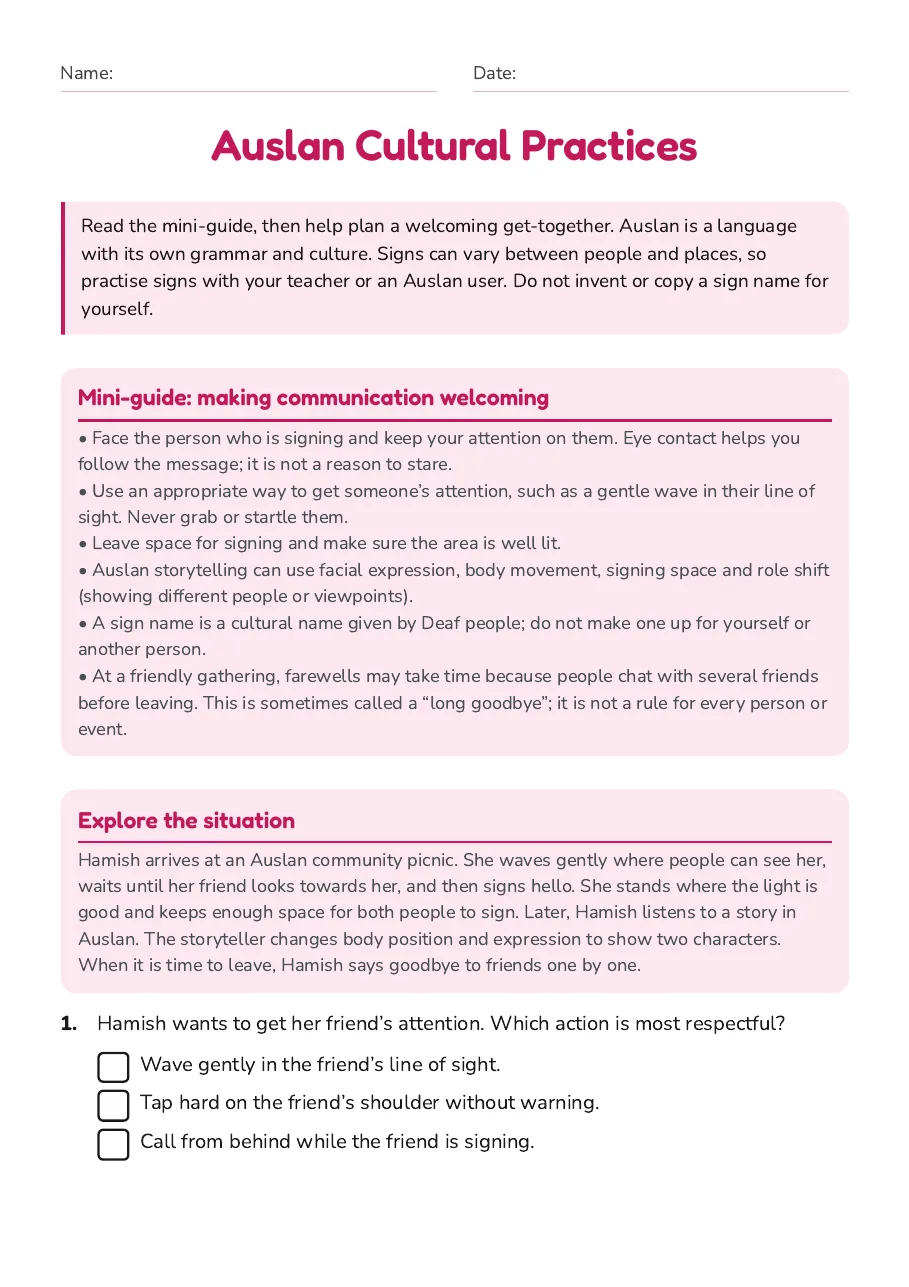
Auslan Cultural Practices
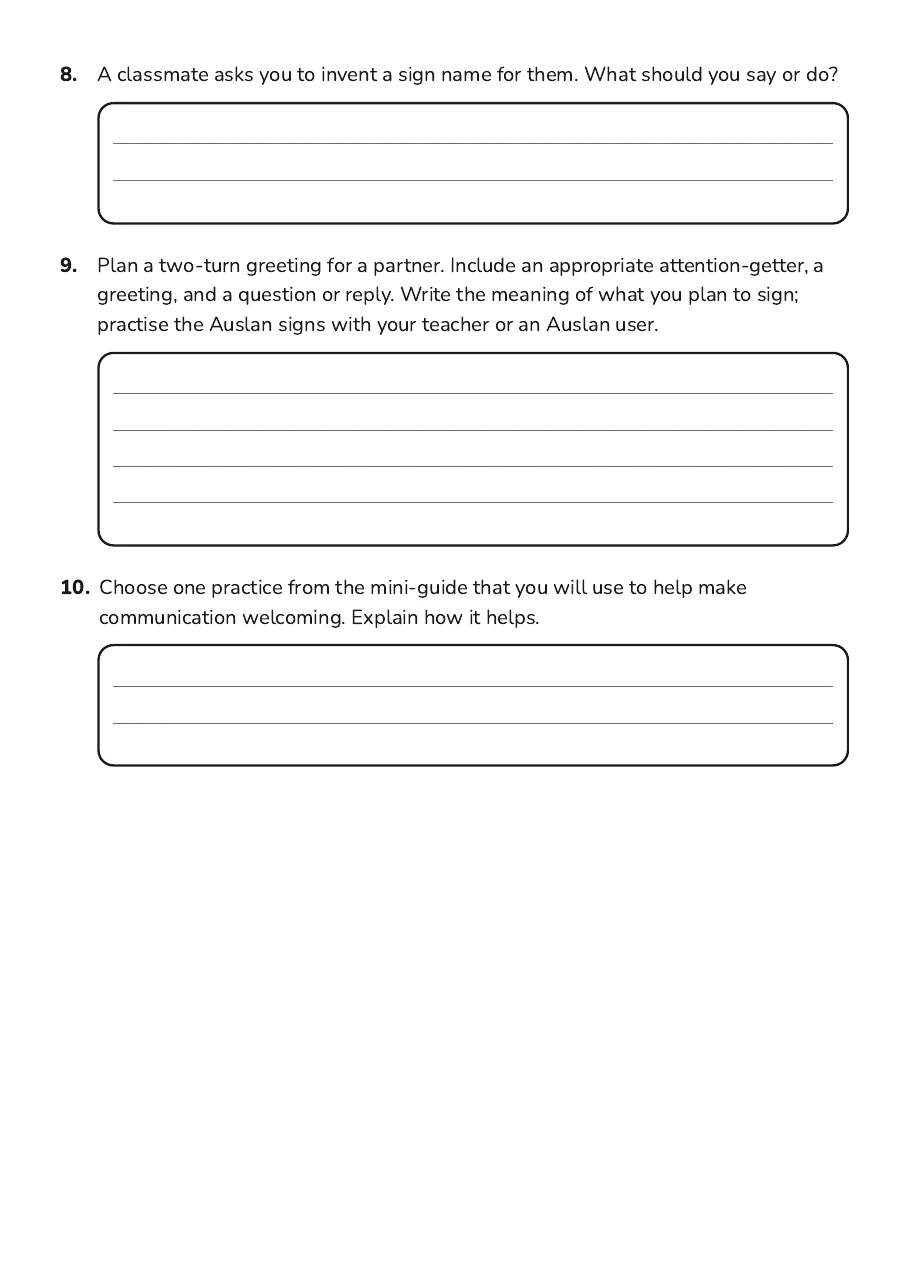
Mini-guide: making communication welcoming
• Face the person who is signing and keep your attention on them. Eye contact helps you follow the message; it is not a reason to stare. • Use an appropriate way to get someone’s attention, such as a gentle wave in their line of sight. Never grab or startle them. • Leave space for signing and make sure the area is well lit. • Auslan storytelling can use facial expression, body movement, signing space and role shift (showing different people or viewpoints). • A sign name is a cultural name given by Deaf people; do not make one up for yourself or another person. • At a friendly gathering, farewells may take time because people chat with several friends before leaving. This is sometimes called a “long goodbye”; it is not a rule for every person or event.
Explore the situation
Hamish arrives at an Auslan community picnic. She waves gently where people can see her, waits until her friend looks towards her, and then signs hello. She stands where the light is good and keeps enough space for both people to sign. Later, Hamish listens to a story in Auslan. The storyteller changes body position and expression to show two characters. When it is time to leave, Hamish says goodbye to friends one by one.
- Wave gently in the friend’s line of sight.
- Tap hard on the friend’s shoulder without warning.
- Call from behind while the friend is signing.
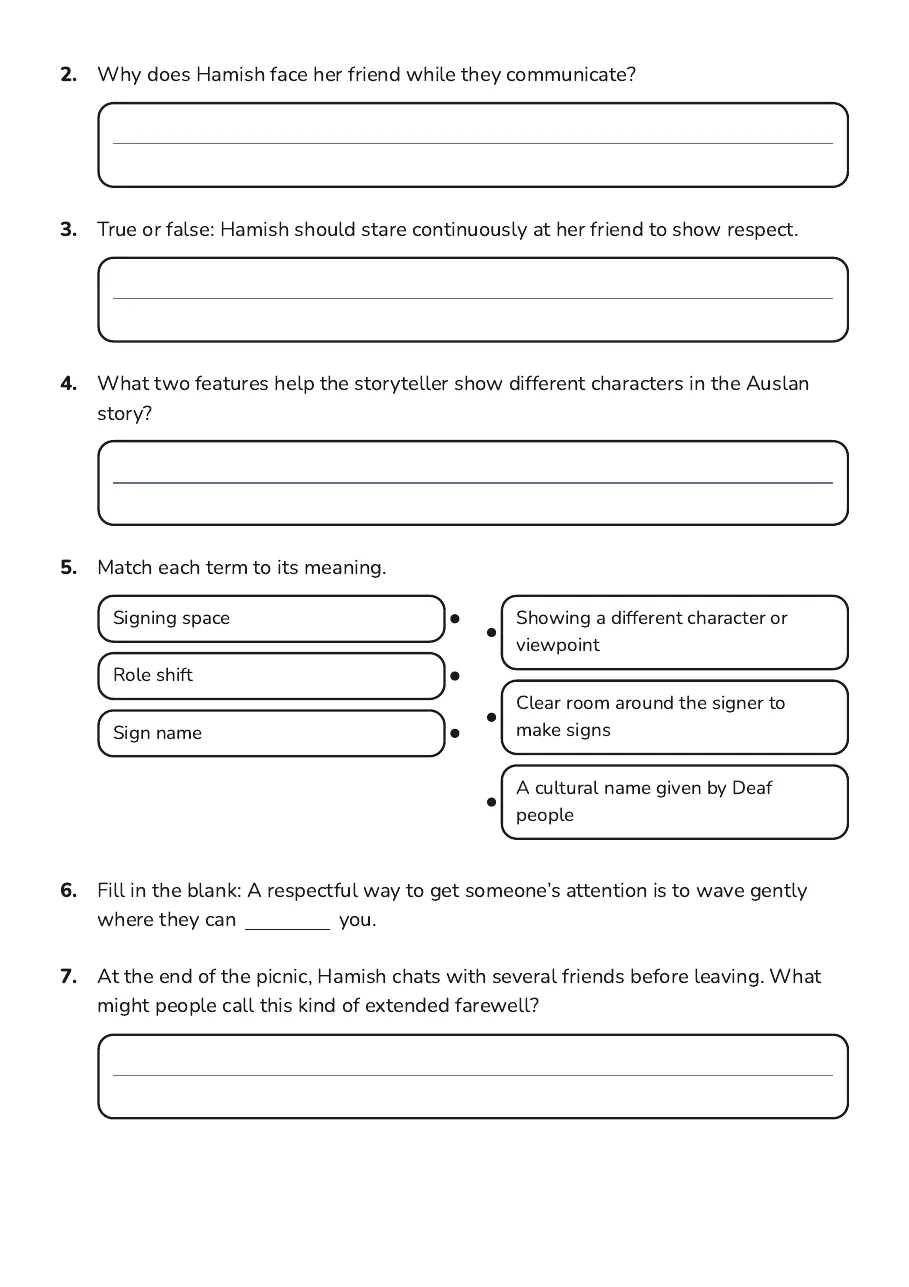
- Signing space
- Role shift
- Sign name
- Showing a different character or viewpoint
- Clear room around the signer to make signs
- A cultural name given by Deaf people
3 printable pages
Page 1
Page 2
Page 3
About This Worksheet
Free in Kuraplan
Sign up free, grab the PDF, and customize it for your class.
Print-Ready
Formatted for standard paper. Clean layout, easy to read.
AI-Generated
Created with Kuraplan's AI, designed for real classroom use.
For Teachers & Parents
Use in classrooms, for homework, tutoring, or homeschool.
Need a custom version of this worksheet?
Kuraplan's AI generates custom worksheets in seconds — differentiated for every learner, aligned to your curriculum.
Generate Custom Worksheets — FreeMore Languages Worksheets
Indigenous Water Cultural Significance
Free
Auslan Greetings Practice
Free
Auslan Daily Activity Verbs
Free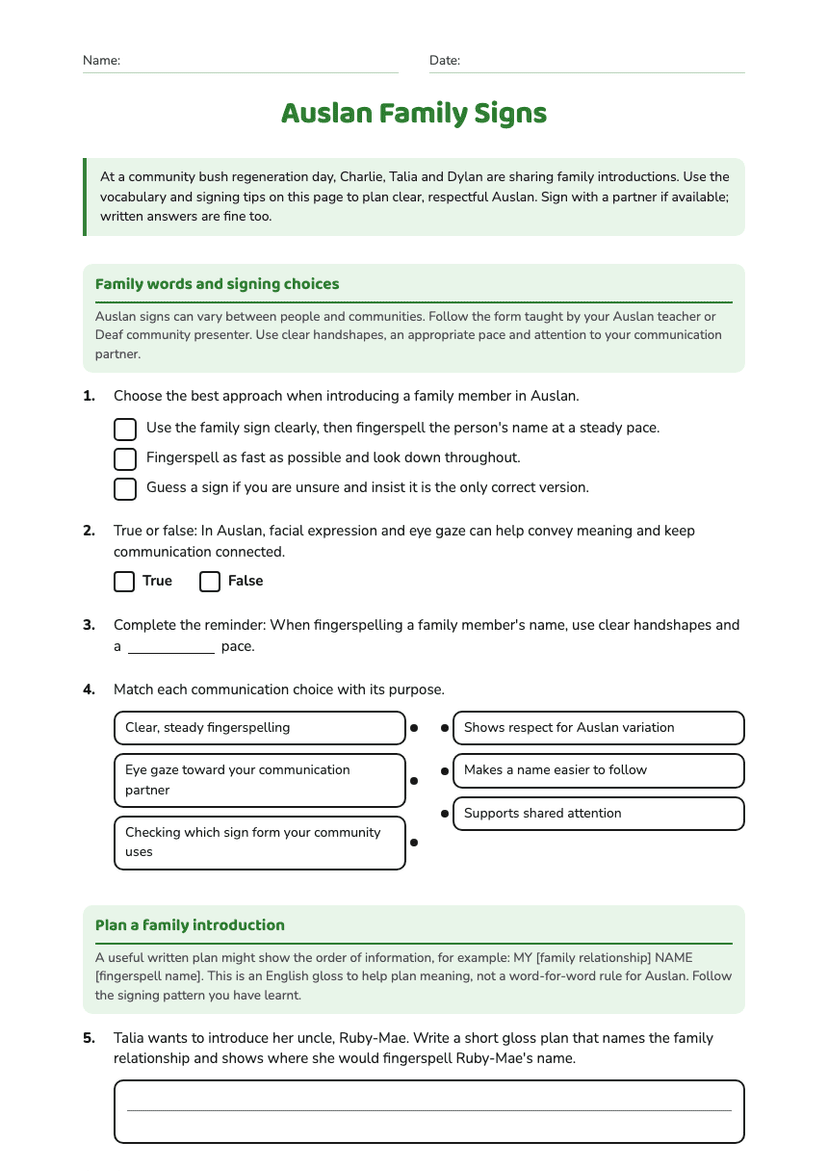
Auslan Family Signs
Free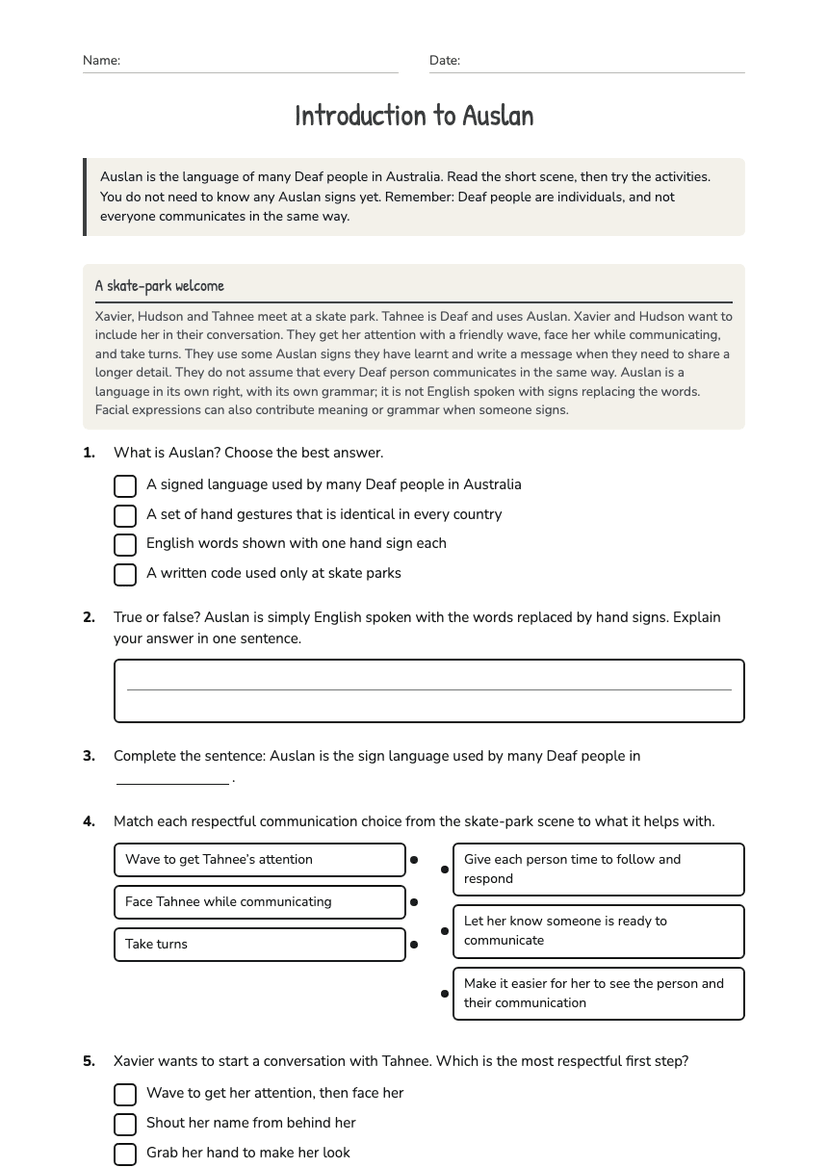
Introduction to Auslan
Free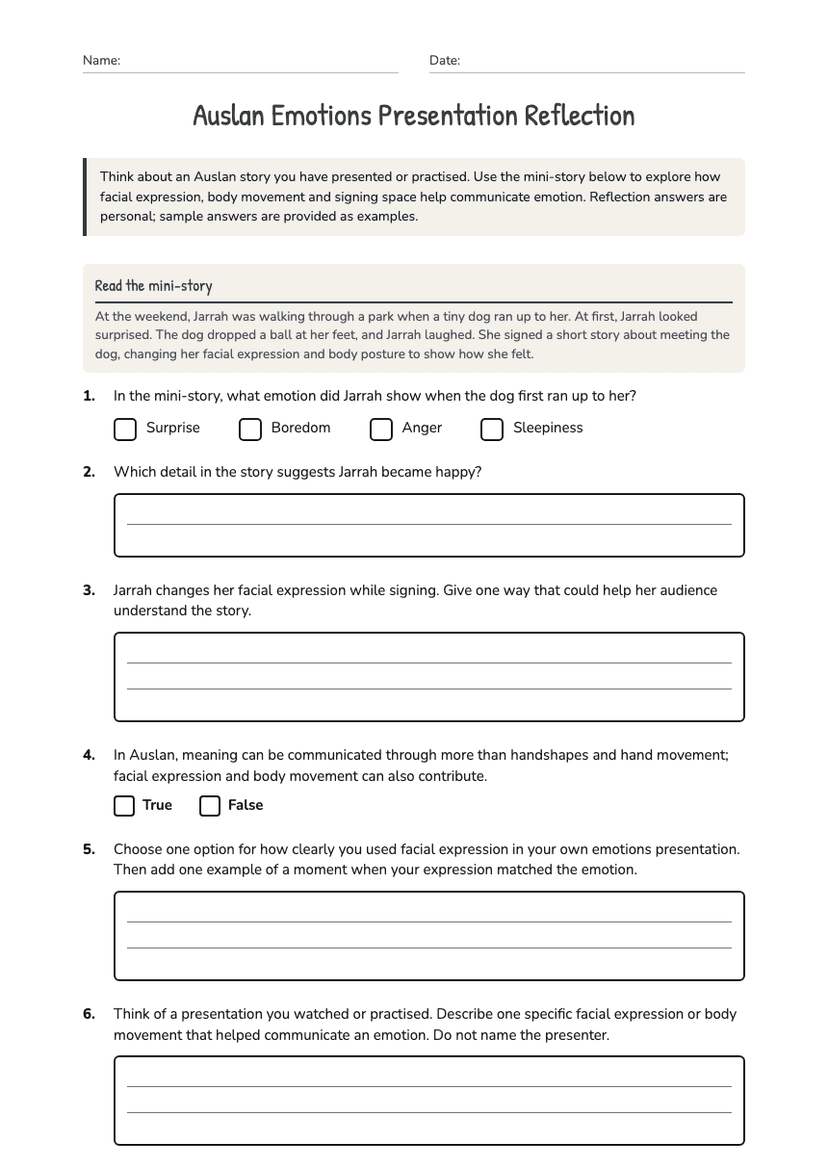
Auslan Emotions Presentation Reflection
Free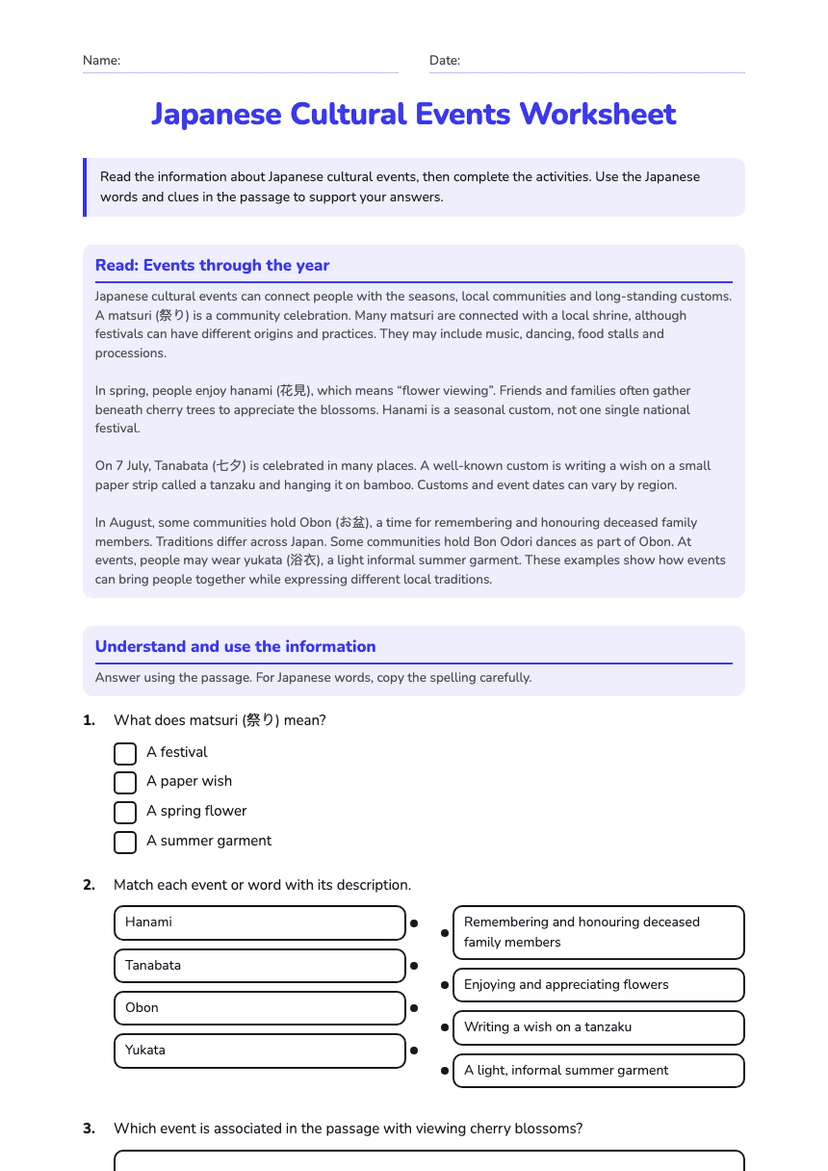
Japanese Cultural Events Worksheet
Free