Berlin Wall History
A free social sciences worksheet ready for your classroom. Open in Kuraplan to grab the print-ready PDF, customize it for your students, or generate a fresh version in seconds.
Berlin Wall History
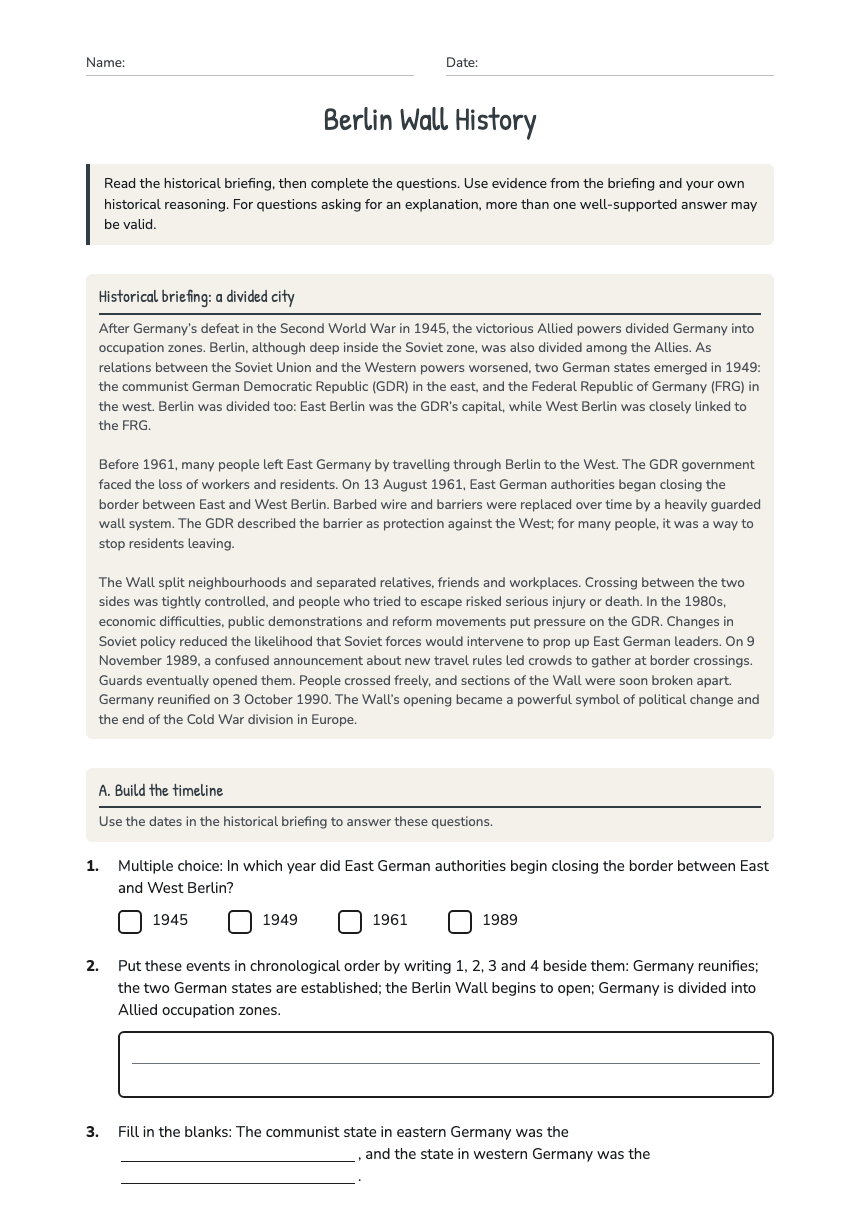
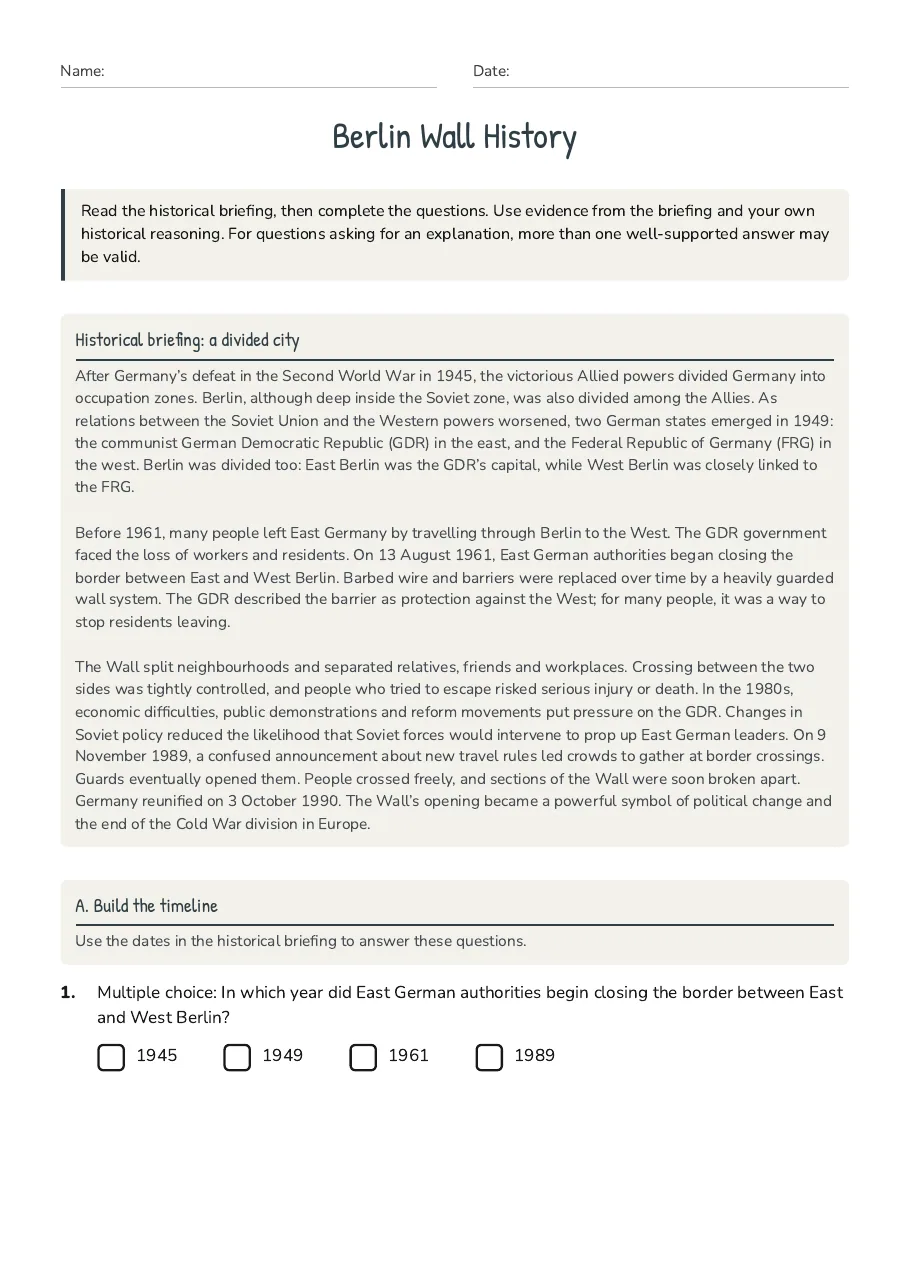
Historical briefing: a divided city
After Germany’s defeat in the Second World War in 1945, the victorious Allied powers divided Germany into occupation zones. Berlin, although deep inside the Soviet zone, was also divided among the Allies. As relations between the Soviet Union and the Western powers worsened, two German states emerged in 1949: the communist German Democratic Republic (GDR) in the east, and the Federal Republic of Germany (FRG) in the west. Berlin was divided too: East Berlin was the GDR’s capital, while West Berlin was closely linked to the FRG. Before 1961, many people left East Germany by travelling through Berlin to the West. The GDR government faced the loss of workers and residents. On 13 August 1961, East German authorities began closing the border between East and West Berlin. Barbed wire and barriers were replaced over time by a heavily guarded wall system. The GDR described the barrier as protection against the West; for many people, it was a way to stop residents leaving. The Wall split neighbourhoods and separated relatives, friends and workplaces. Crossing between the two sides was tightly controlled, and people who tried to escape risked serious injury or death. In the 1980s, economic difficulties, public demonstrations and reform movements put pressure on the GDR. Changes in Soviet policy reduced the likelihood that Soviet forces would intervene to prop up East German leaders. On 9 November 1989, a confused announcement about new travel rules led crowds to gather at border crossings. Guards eventually opened them. People crossed freely, and sections of the Wall were soon broken apart. Germany reunified on 3 October 1990. The Wall’s opening became a powerful symbol of political change and the end of the Cold War division in Europe.
A. Build the timeline
Use the dates in the historical briefing to answer these questions.
- 1945
- 1949
- 1961
- 1989
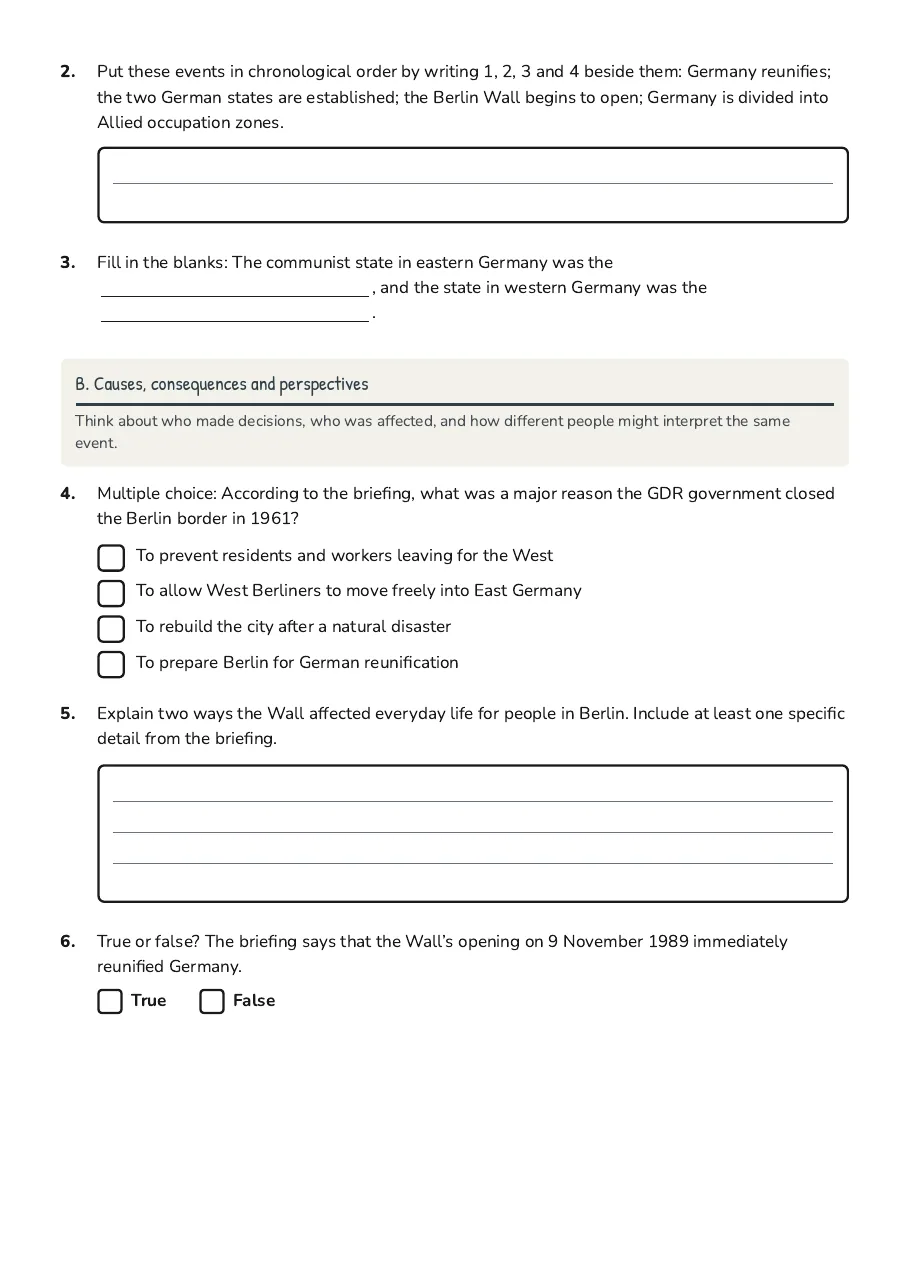
B. Causes, consequences and perspectives
Think about who made decisions, who was affected, and how different people might interpret the same event.
- To prevent residents and workers leaving for the West
- To allow West Berliners to move freely into East Germany
- To rebuild the city after a natural disaster
- To prepare Berlin for German reunification
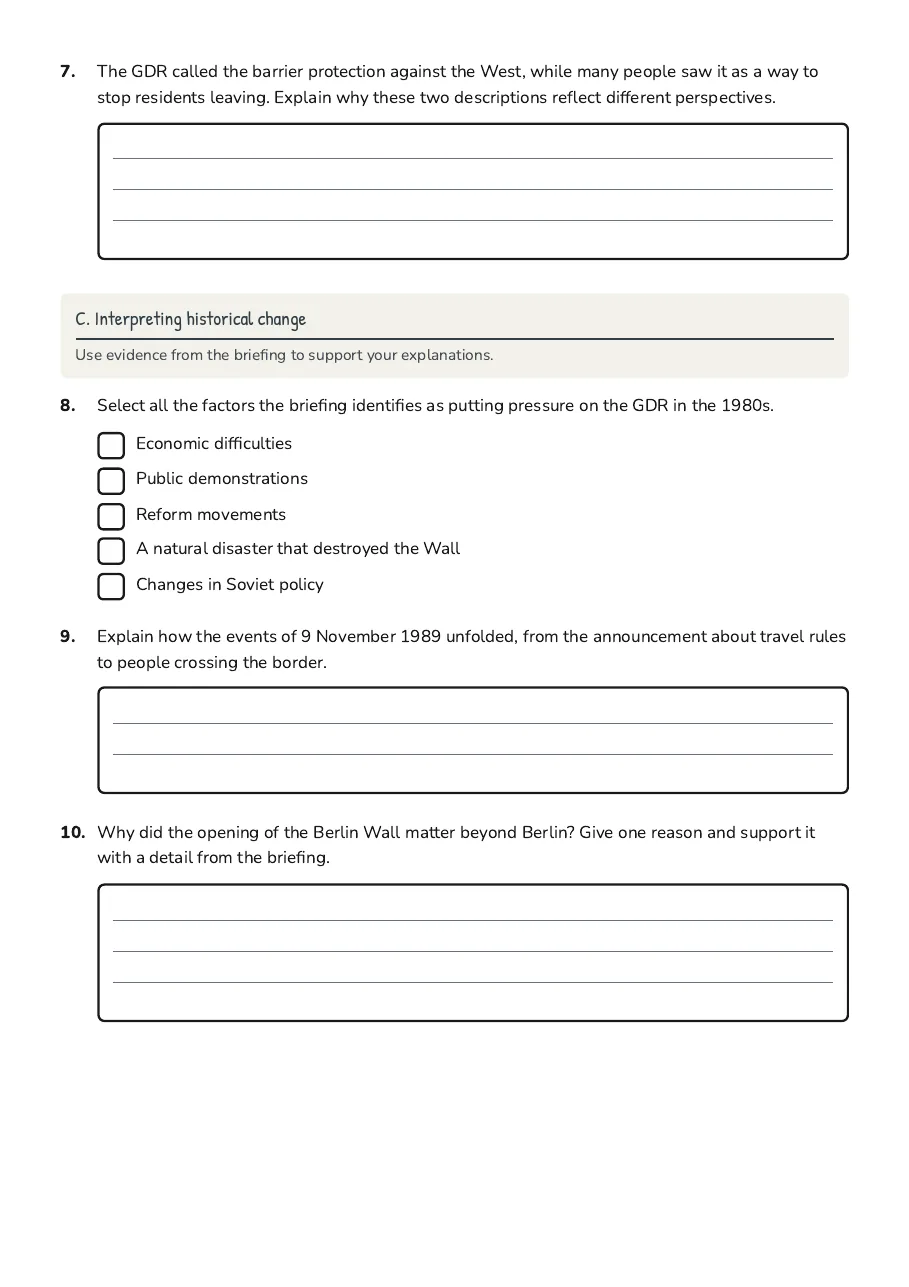
C. Interpreting historical change
Use evidence from the briefing to support your explanations.
- Economic difficulties
- Public demonstrations
- Reform movements
- A natural disaster that destroyed the Wall
- Changes in Soviet policy
3 printable pages
Page 1
Page 2
Page 3
About This Worksheet
Free in Kuraplan
Sign up free, grab the PDF, and customize it for your class.
Print-Ready
Formatted for standard paper. Clean layout, easy to read.
AI-Generated
Created with Kuraplan's AI, designed for real classroom use.
For Teachers & Parents
Use in classrooms, for homework, tutoring, or homeschool.
Need a custom version of this worksheet?
Kuraplan's AI generates custom worksheets in seconds — differentiated for every learner, aligned to your curriculum.
Generate Custom Worksheets — FreeMore Social Sciences Worksheets
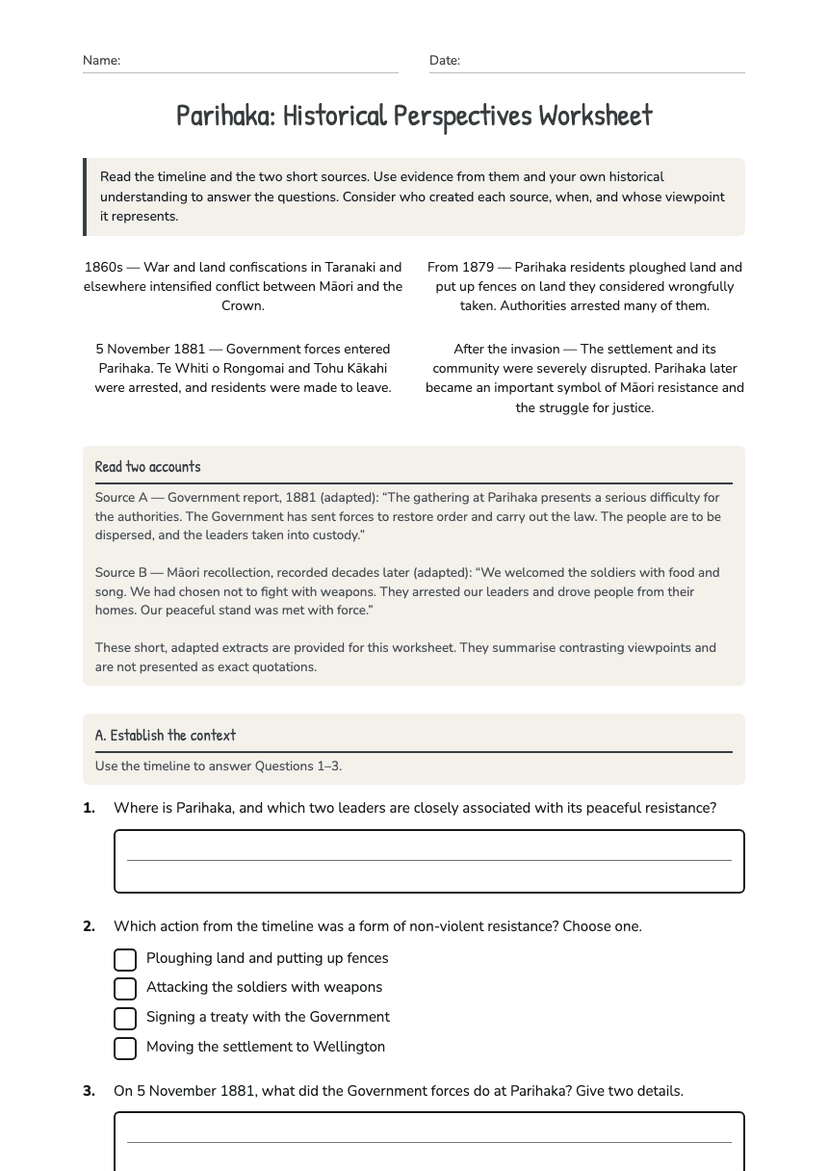
Parihaka: Historical Perspectives Worksheet
Free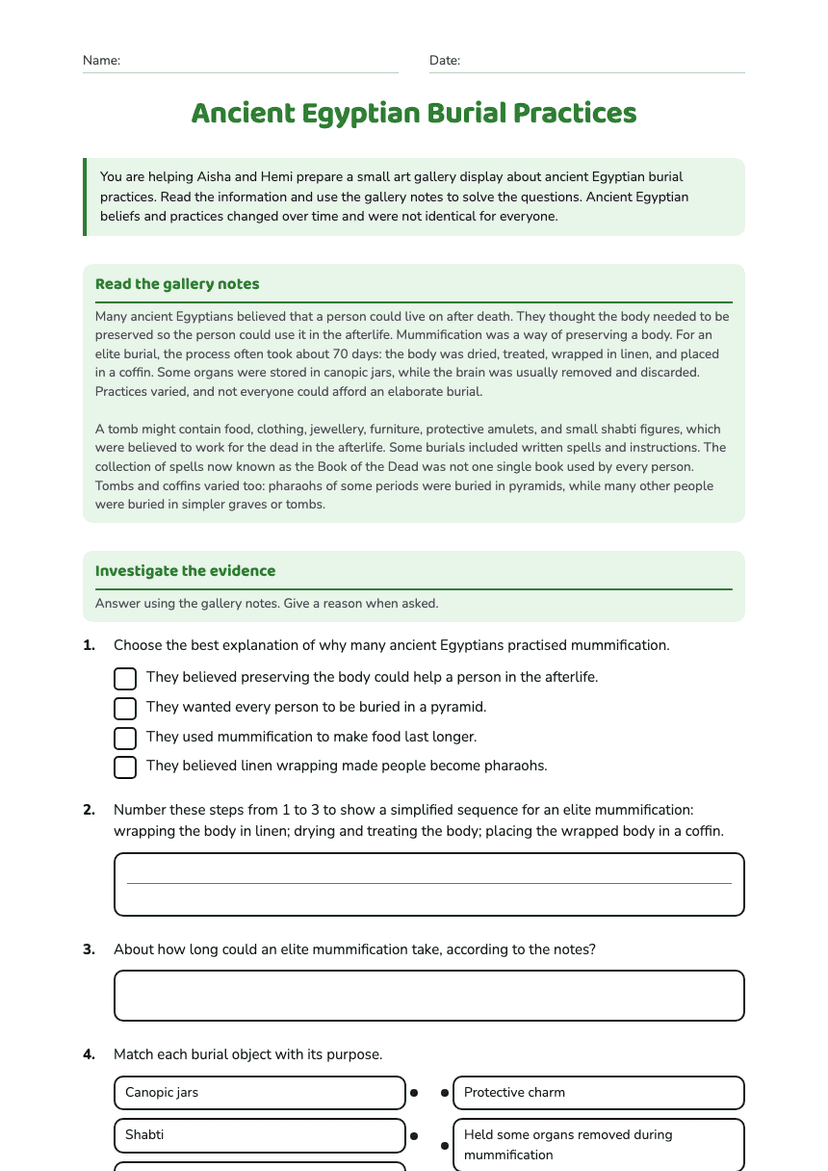
Ancient Egyptian Burial Practices
Free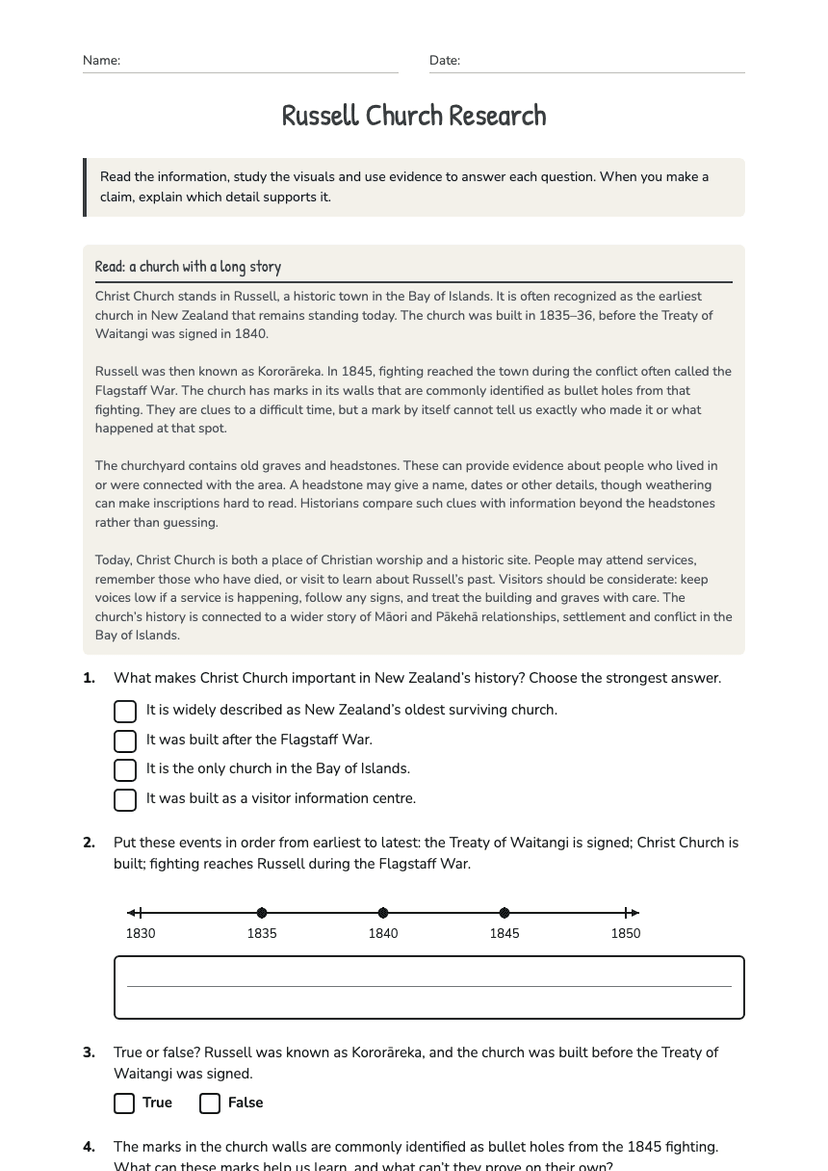
Russell Church Research
Free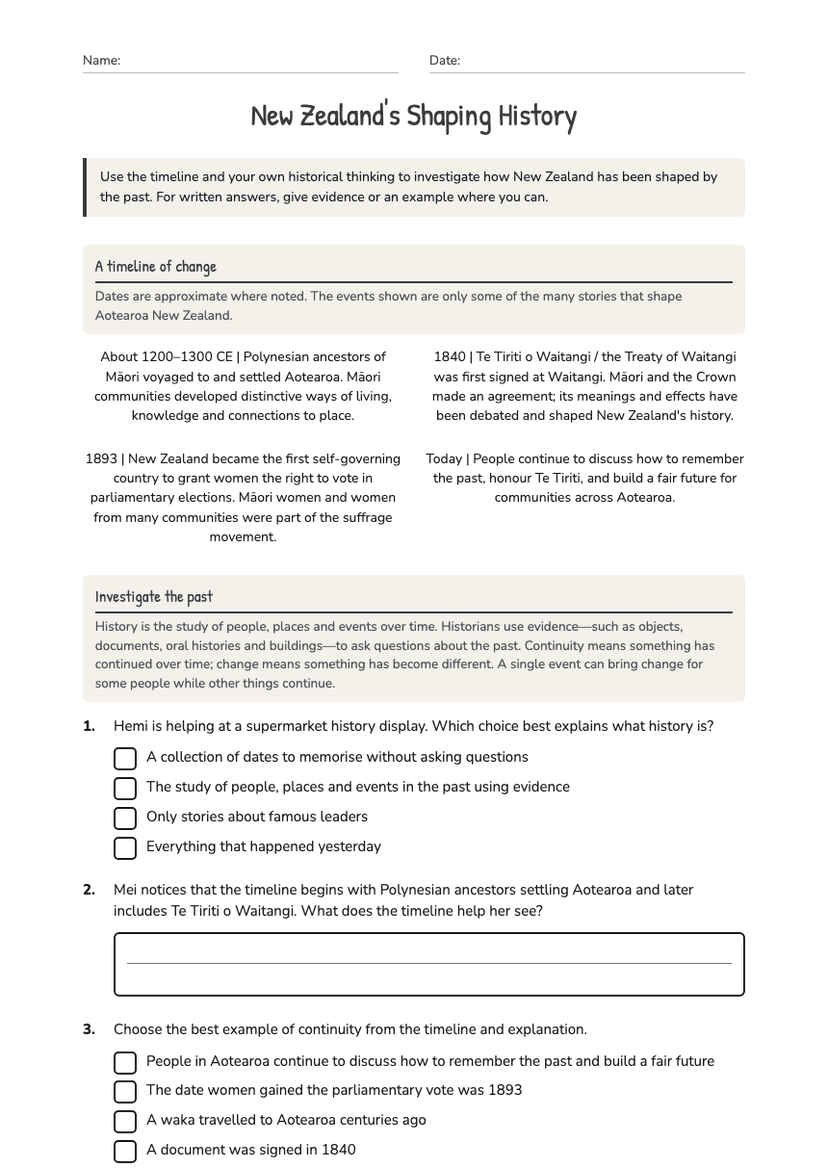
New Zealand's Shaping History
Free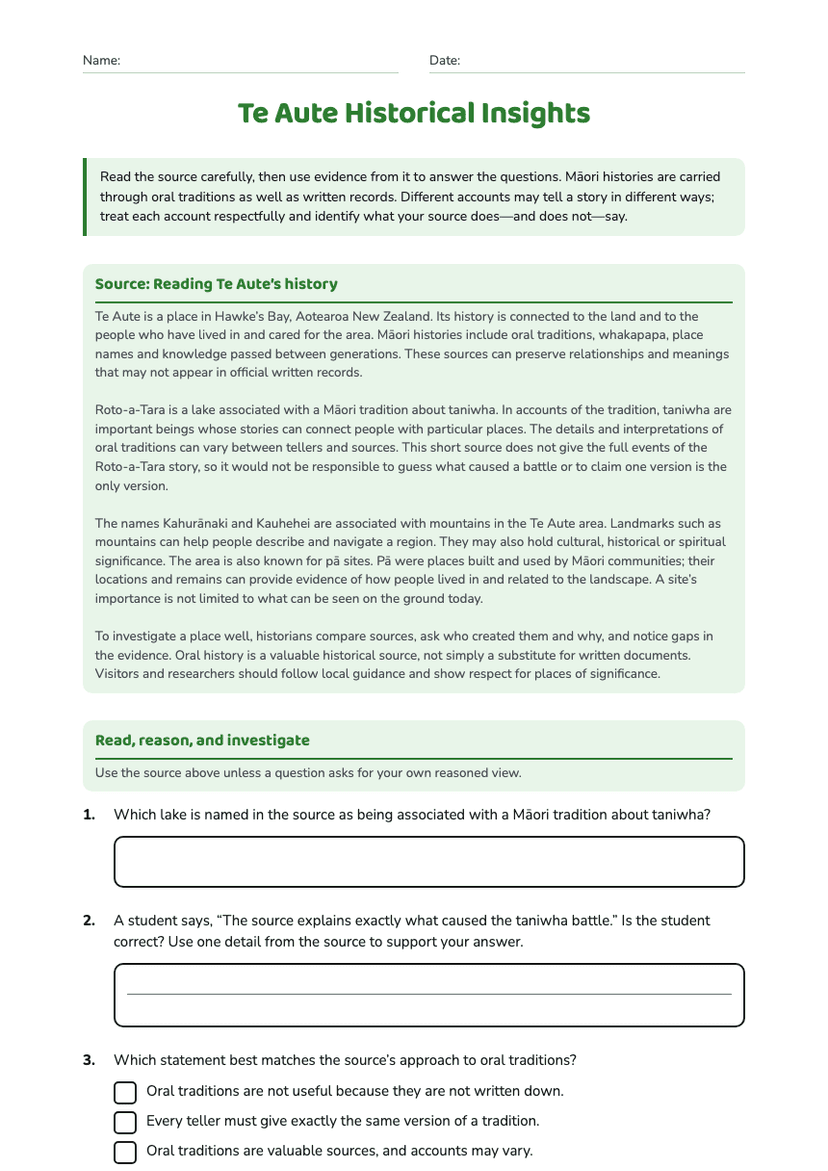
Te Aute Historical Insights
Free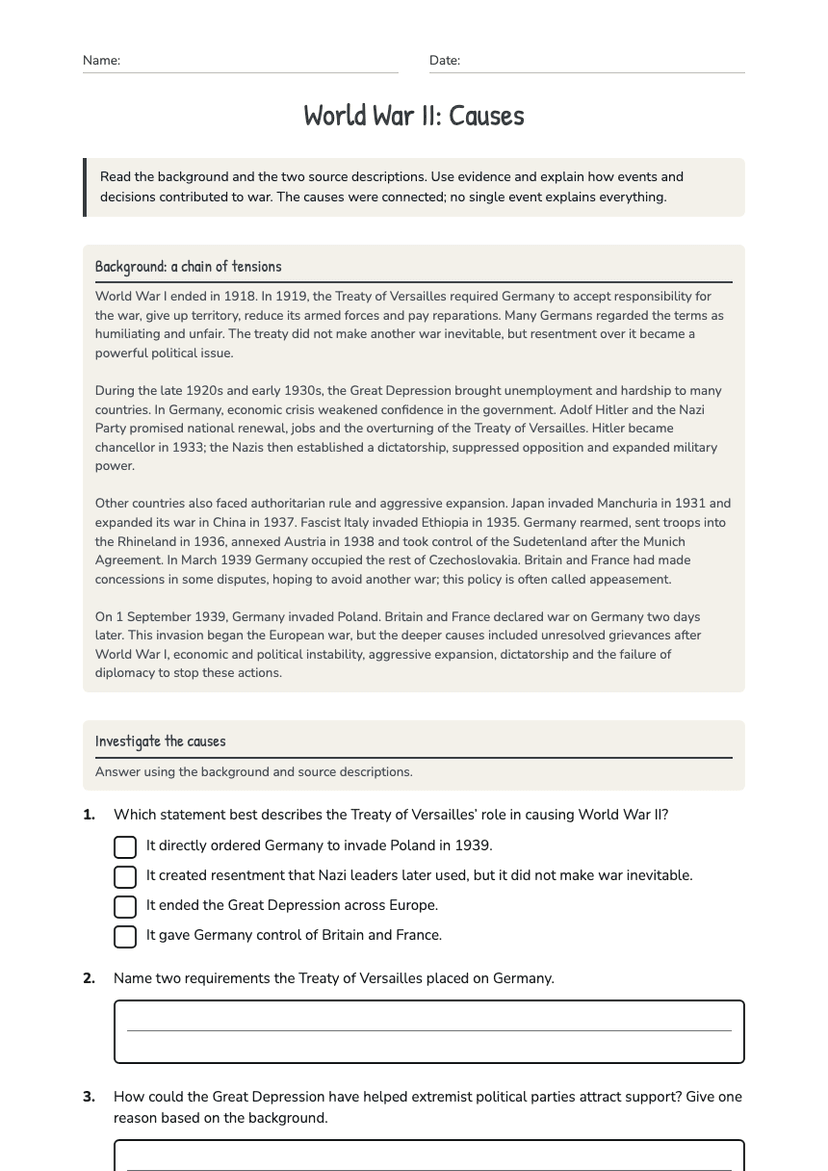
World War II: Causes
Free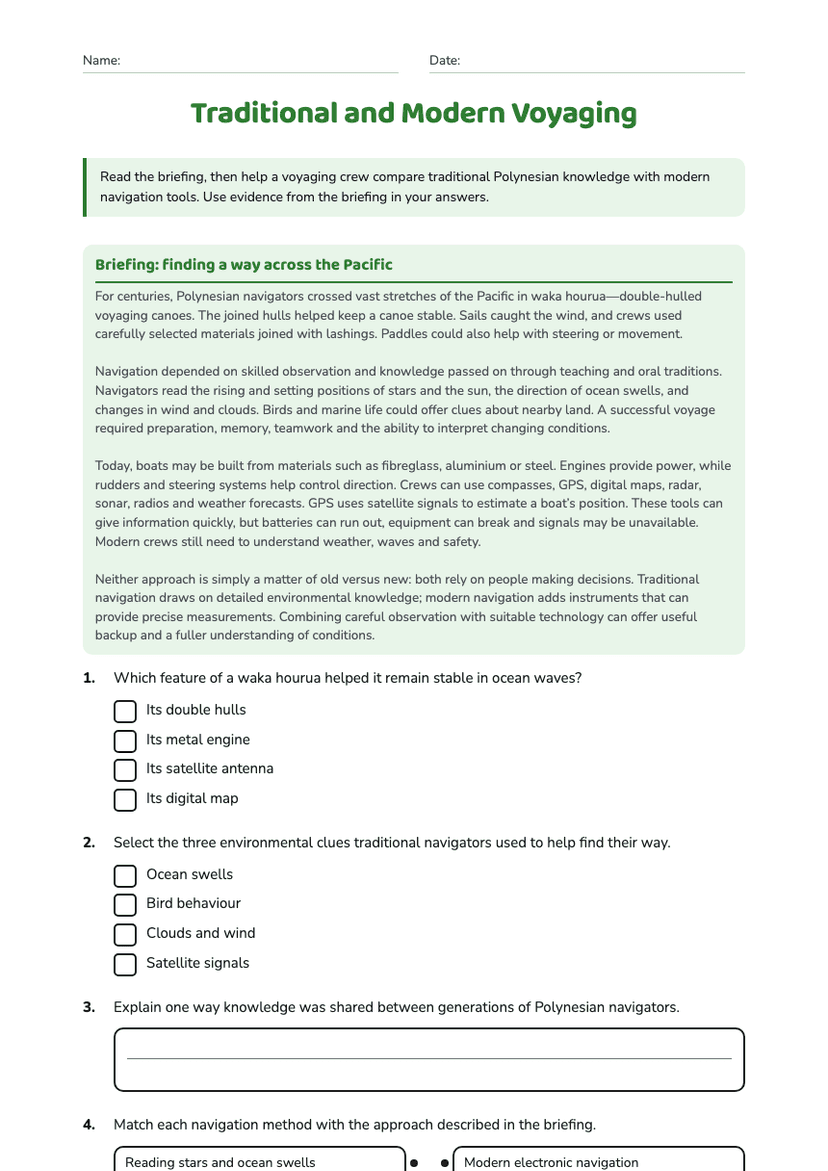
Traditional and Modern Voyaging
Free