Breastfeeding History and Culture
A free social sciences worksheet ready for your classroom. Open in Kuraplan to grab the print-ready PDF, customize it for your students, or generate a fresh version in seconds.
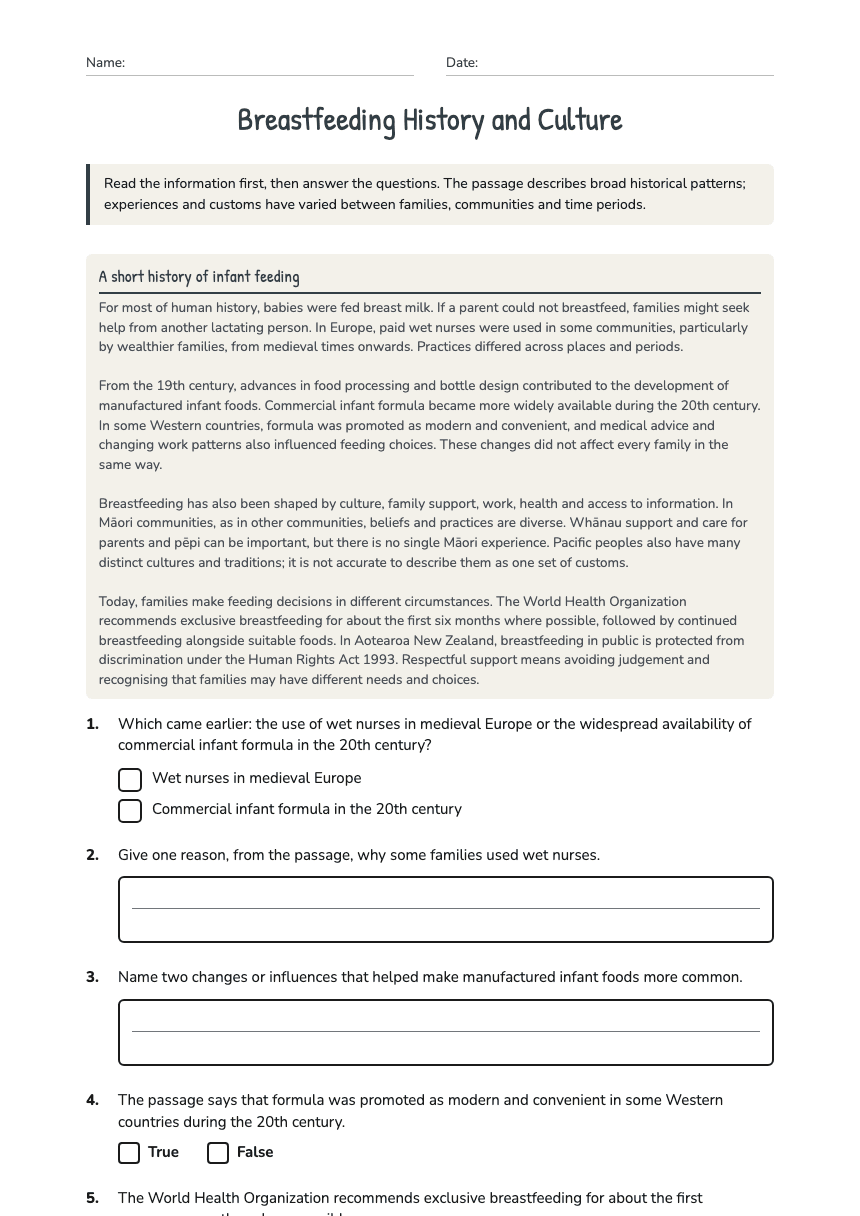
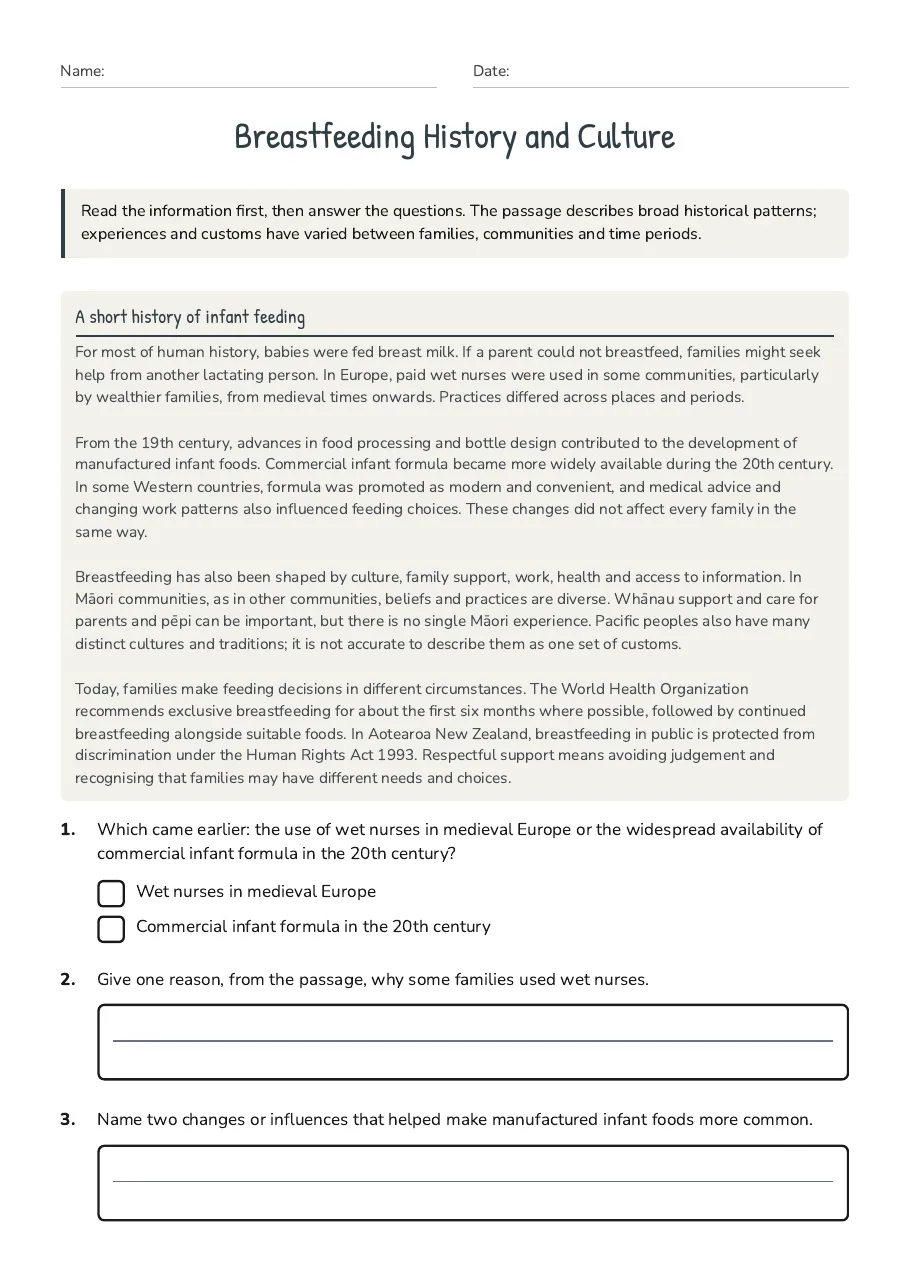
Breastfeeding History and Culture
A short history of infant feeding
For most of human history, babies were fed breast milk. If a parent could not breastfeed, families might seek help from another lactating person. In Europe, paid wet nurses were used in some communities, particularly by wealthier families, from medieval times onwards. Practices differed across places and periods. From the 19th century, advances in food processing and bottle design contributed to the development of manufactured infant foods. Commercial infant formula became more widely available during the 20th century. In some Western countries, formula was promoted as modern and convenient, and medical advice and changing work patterns also influenced feeding choices. These changes did not affect every family in the same way. Breastfeeding has also been shaped by culture, family support, work, health and access to information. In Māori communities, as in other communities, beliefs and practices are diverse. Whānau support and care for parents and pēpi can be important, but there is no single Māori experience. Pacific peoples also have many distinct cultures and traditions; it is not accurate to describe them as one set of customs. Today, families make feeding decisions in different circumstances. The World Health Organization recommends exclusive breastfeeding for about the first six months where possible, followed by continued breastfeeding alongside suitable foods. In Aotearoa New Zealand, breastfeeding in public is protected from discrimination under the Human Rights Act 1993. Respectful support means avoiding judgement and recognising that families may have different needs and choices.
- Wet nurses in medieval Europe
- Commercial infant formula in the 20th century
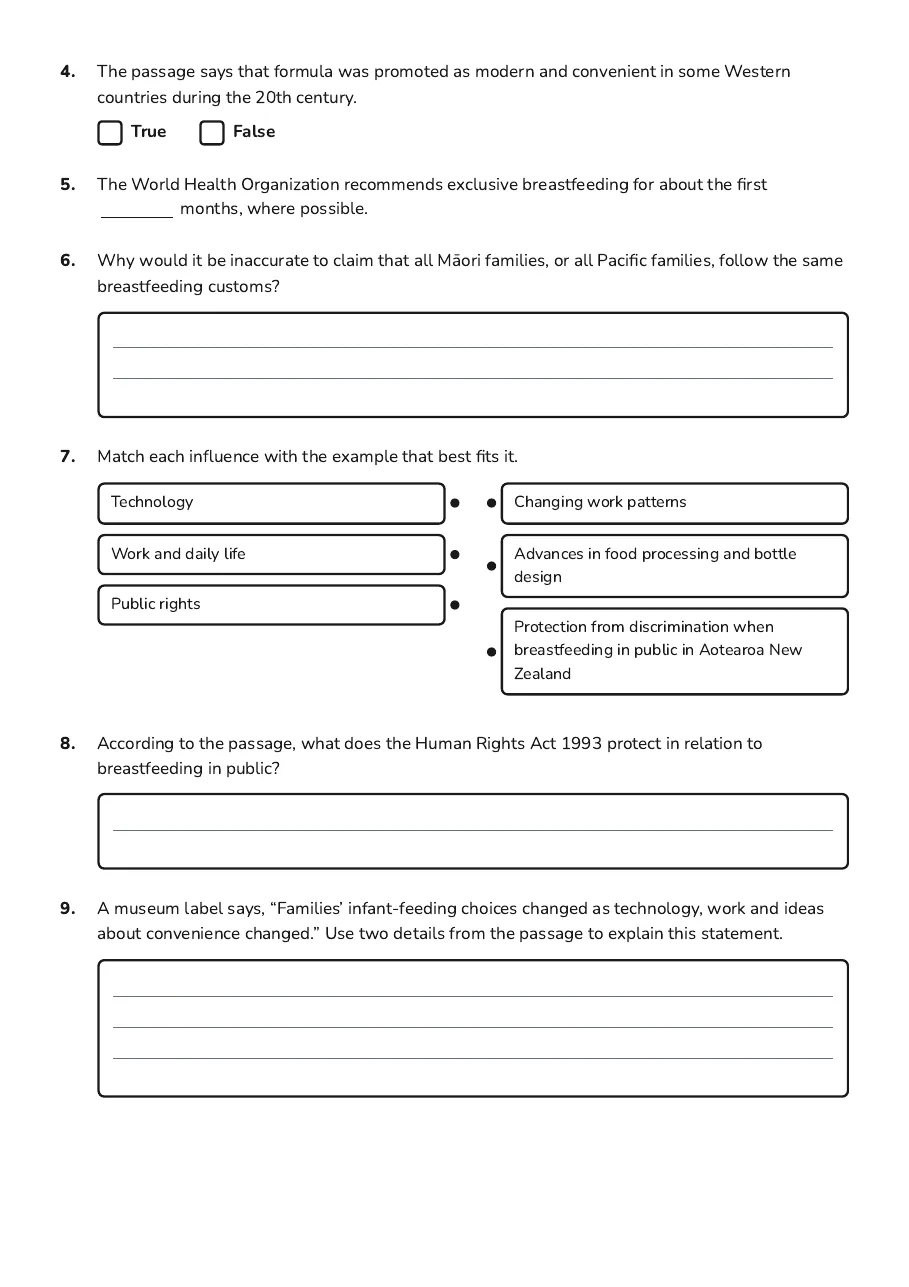
- Technology
- Work and daily life
- Public rights
- Changing work patterns
- Advances in food processing and bottle design
- Protection from discrimination when breastfeeding in public in Aotearoa New Zealand
3 printable pages
Page 1
Page 2

Page 3
About This Worksheet
Free in Kuraplan
Sign up free, grab the PDF, and customize it for your class.
Print-Ready
Formatted for standard paper. Clean layout, easy to read.
AI-Generated
Created with Kuraplan's AI, designed for real classroom use.
For Teachers & Parents
Use in classrooms, for homework, tutoring, or homeschool.
Need a custom version of this worksheet?
Kuraplan's AI generates custom worksheets in seconds — differentiated for every learner, aligned to your curriculum.
Generate Custom Worksheets — FreeMore Social Sciences Worksheets
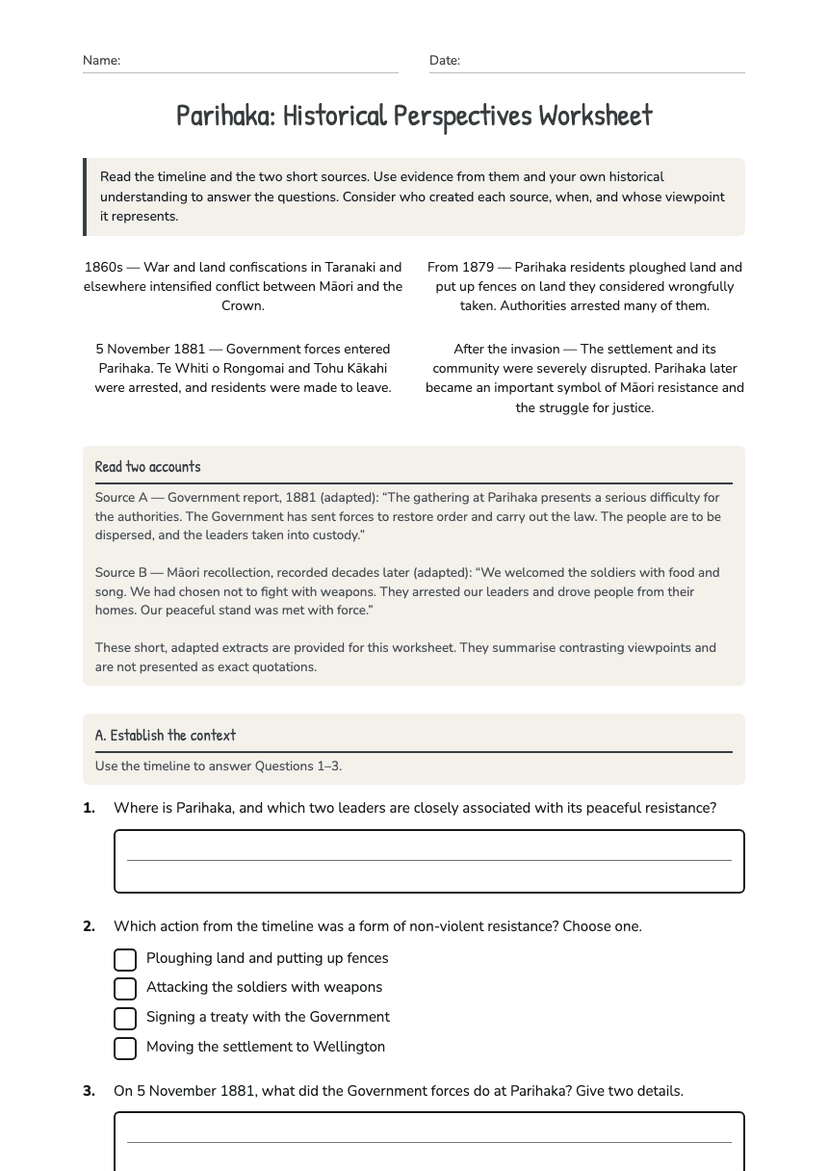
Parihaka: Historical Perspectives Worksheet
Free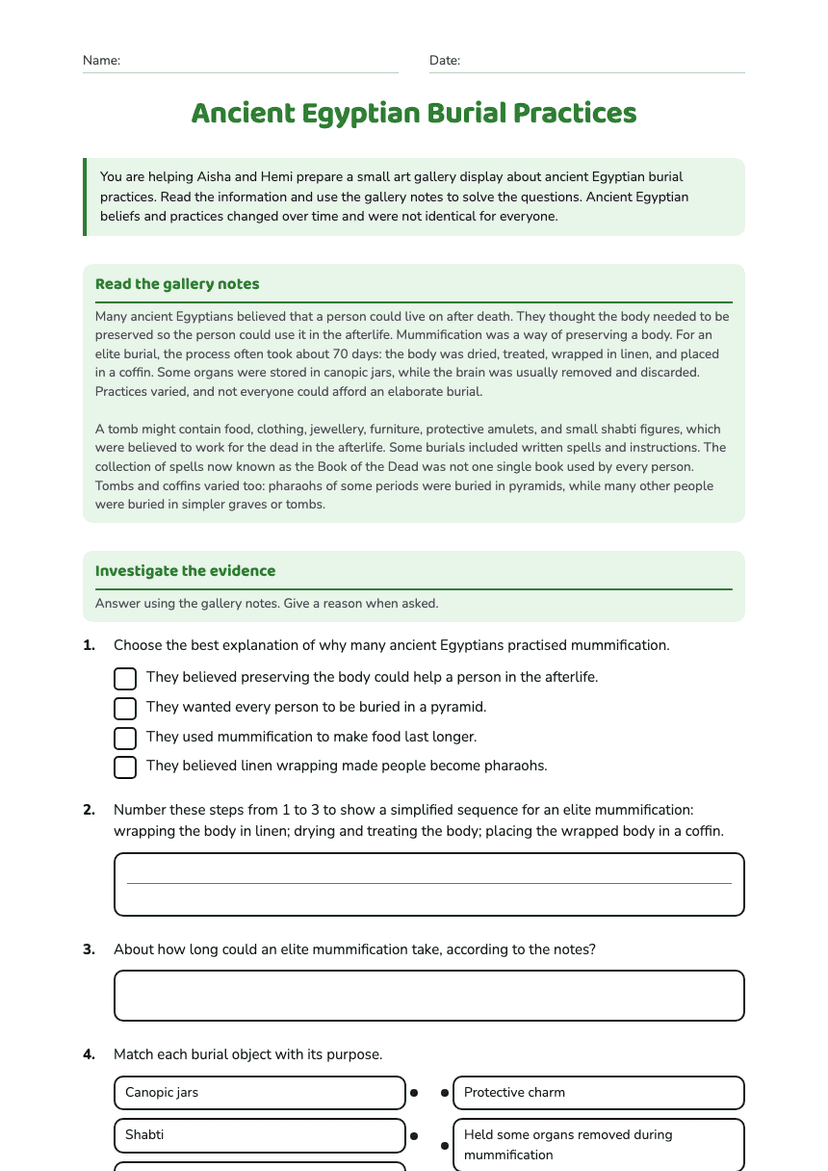
Ancient Egyptian Burial Practices
Free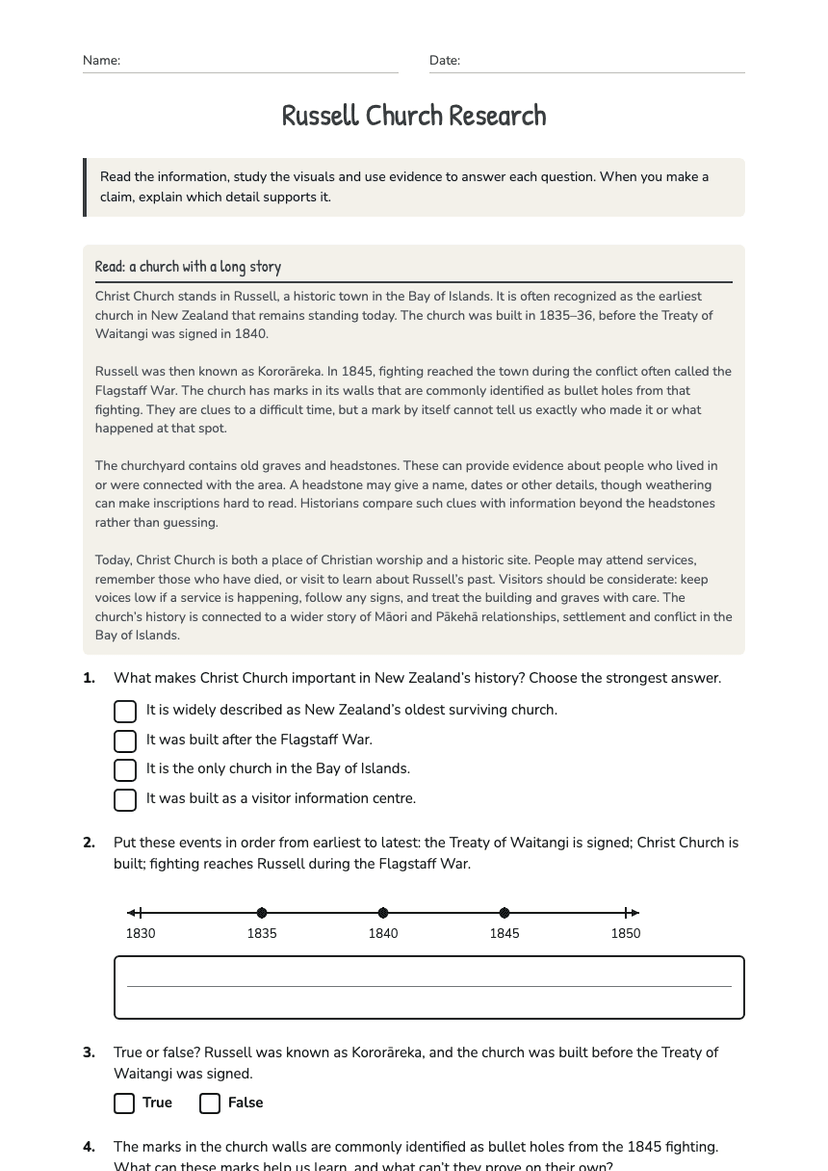
Russell Church Research
Free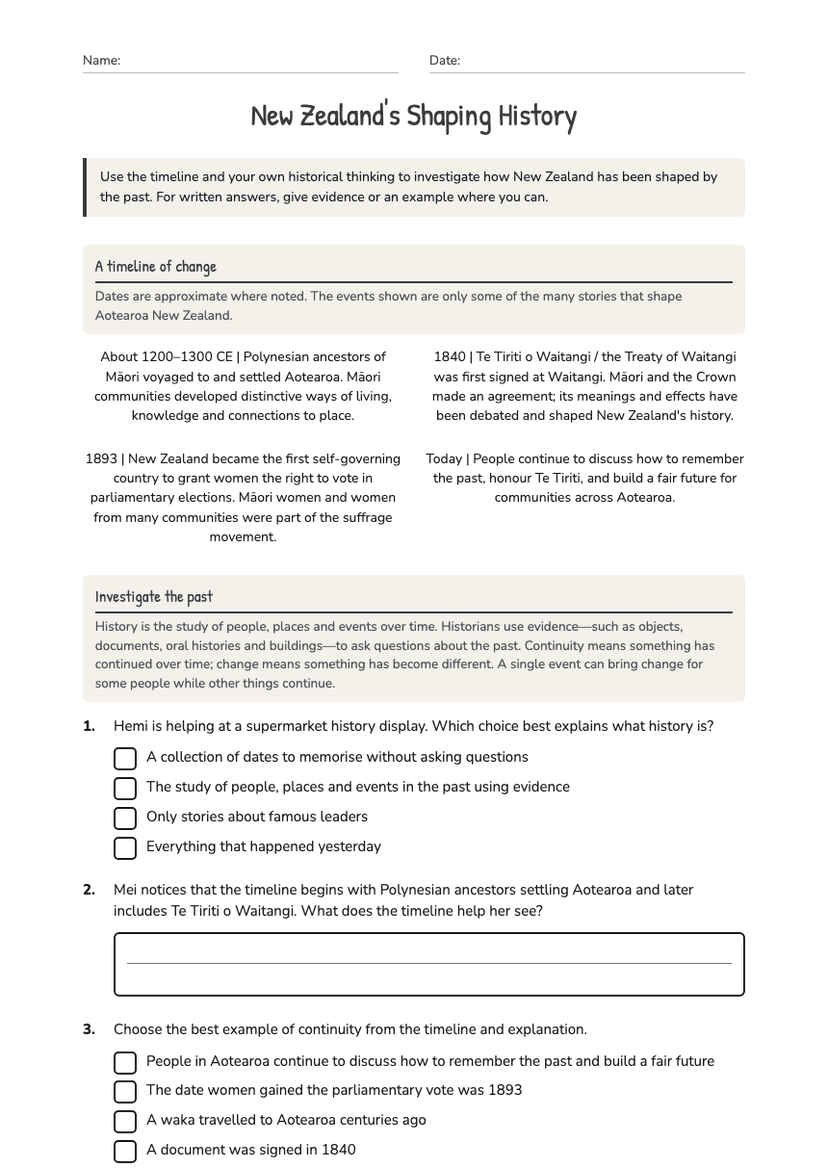
New Zealand's Shaping History
Free
Te Aute Historical Insights
Free
World War II: Causes
Free
Traditional and Modern Voyaging
Free