EnglishFreePrintable
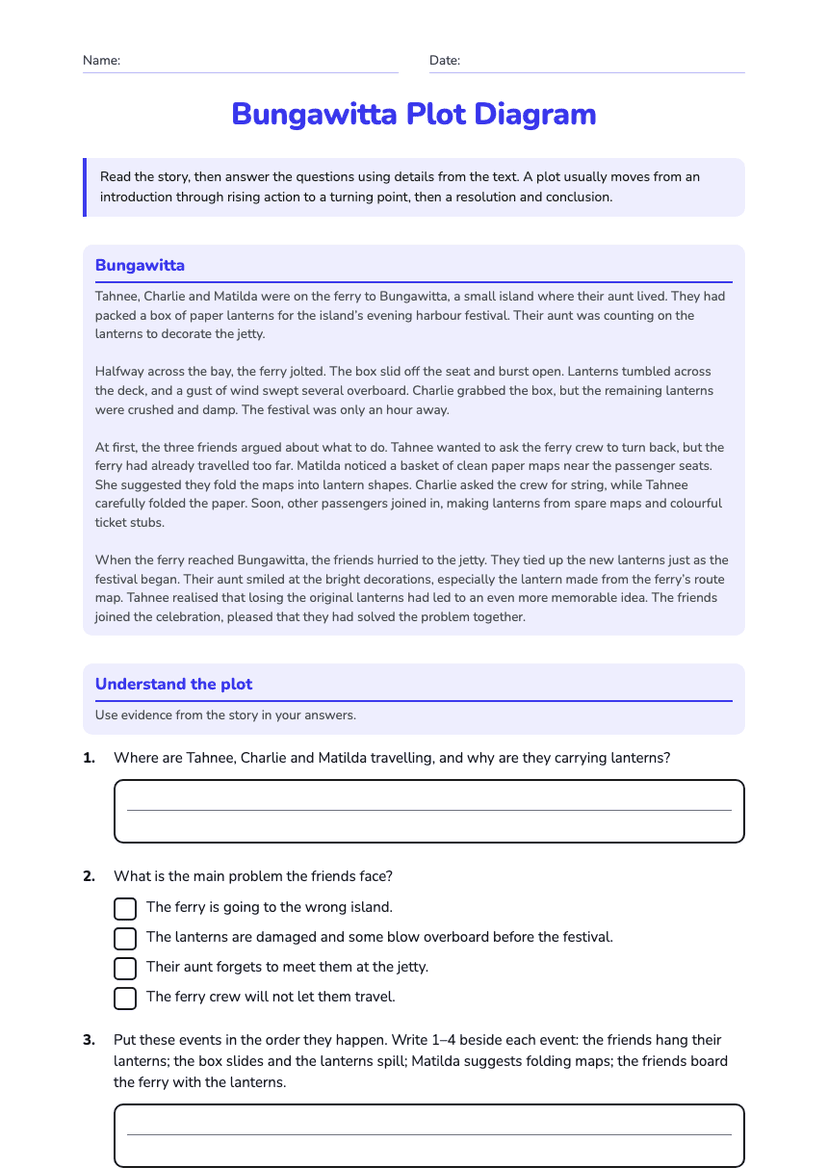
Bungawitta Plot Diagram
A free english worksheet ready for your classroom. Open in Kuraplan to grab the print-ready PDF, customize it for your students, or generate a fresh version in seconds.
Name:Date:
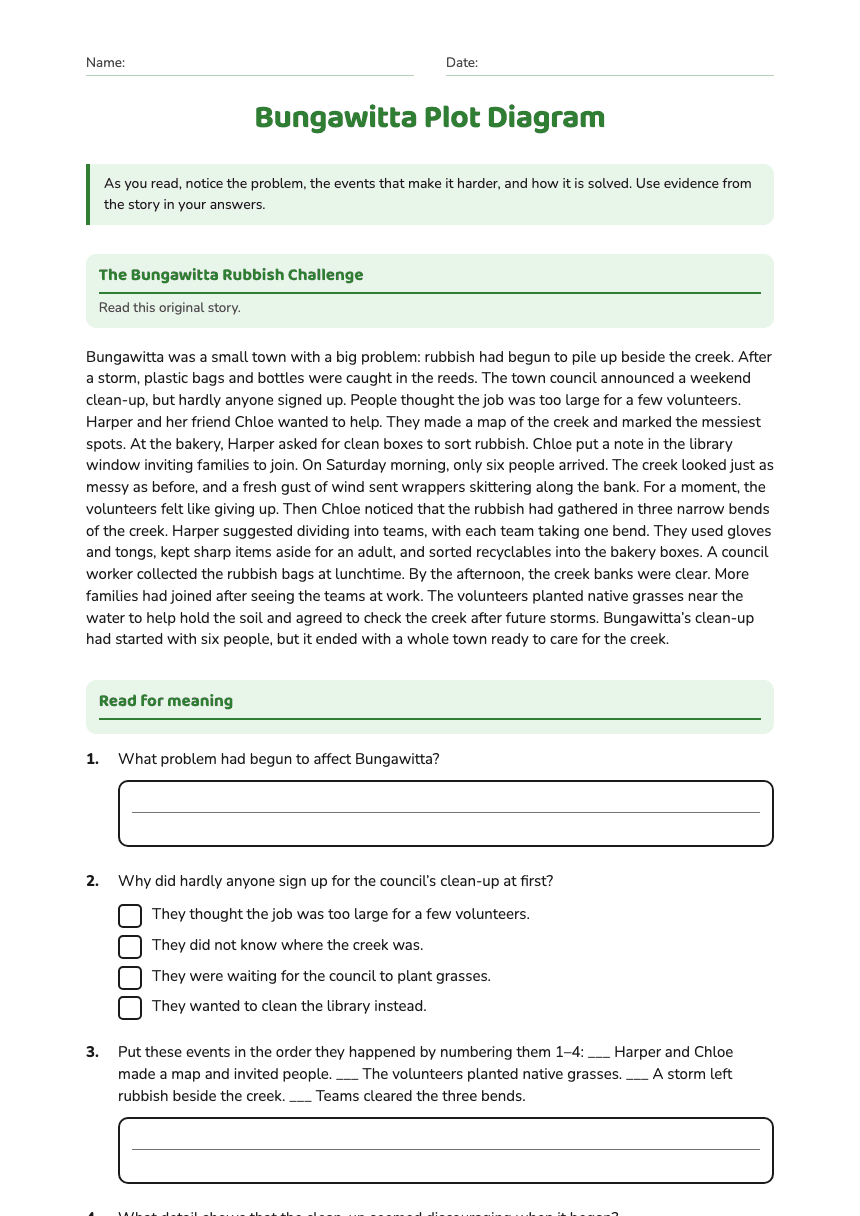
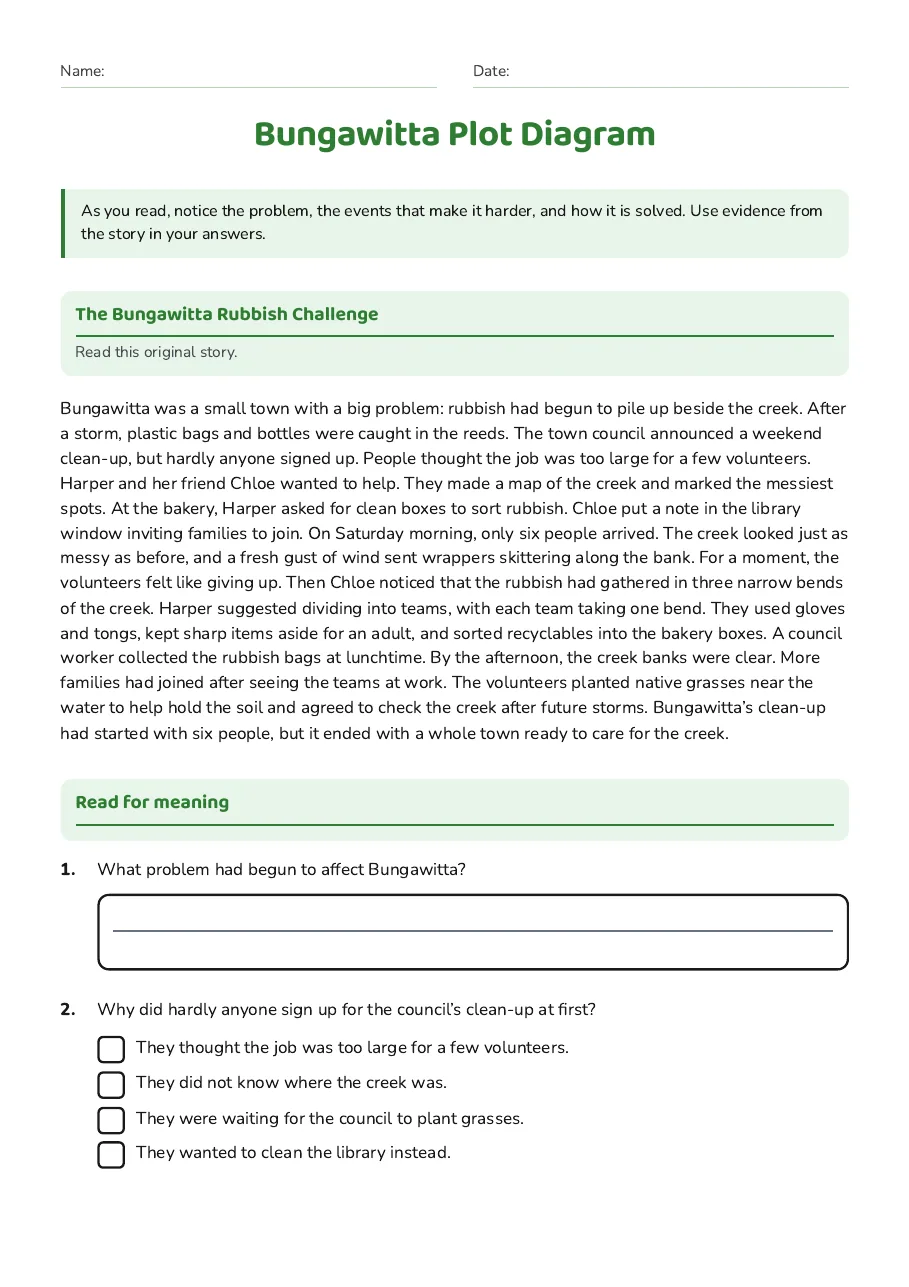
Bungawitta Plot Diagram
As you read, notice the problem, the events that make it harder, and how it is solved. Use evidence from the story in your answers.
The Bungawitta Rubbish Challenge
Read this original story.
Bungawitta was a small town with a big problem: rubbish had begun to pile up beside the creek. After a storm, plastic bags and bottles were caught in the reeds. The town council announced a weekend clean-up, but hardly anyone signed up. People thought the job was too large for a few volunteers.
Harper and her friend Chloe wanted to help. They made a map of the creek and marked the messiest spots. At the bakery, Harper asked for clean boxes to sort rubbish. Chloe put a note in the library window inviting families to join. On Saturday morning, only six people arrived. The creek looked just as messy as before, and a fresh gust of wind sent wrappers skittering along the bank.
For a moment, the volunteers felt like giving up. Then Chloe noticed that the rubbish had gathered in three narrow bends of the creek. Harper suggested dividing into teams, with each team taking one bend. They used gloves and tongs, kept sharp items aside for an adult, and sorted recyclables into the bakery boxes. A council worker collected the rubbish bags at lunchtime.
By the afternoon, the creek banks were clear. More families had joined after seeing the teams at work. The volunteers planted native grasses near the water to help hold the soil and agreed to check the creek after future storms. Bungawitta’s clean-up had started with six people, but it ended with a whole town ready to care for the creek.
Read for meaning
1.What problem had begun to affect Bungawitta?
2.Why did hardly anyone sign up for the council’s clean-up at first?
- They thought the job was too large for a few volunteers.
- They did not know where the creek was.
- They were waiting for the council to plant grasses.
- They wanted to clean the library instead.
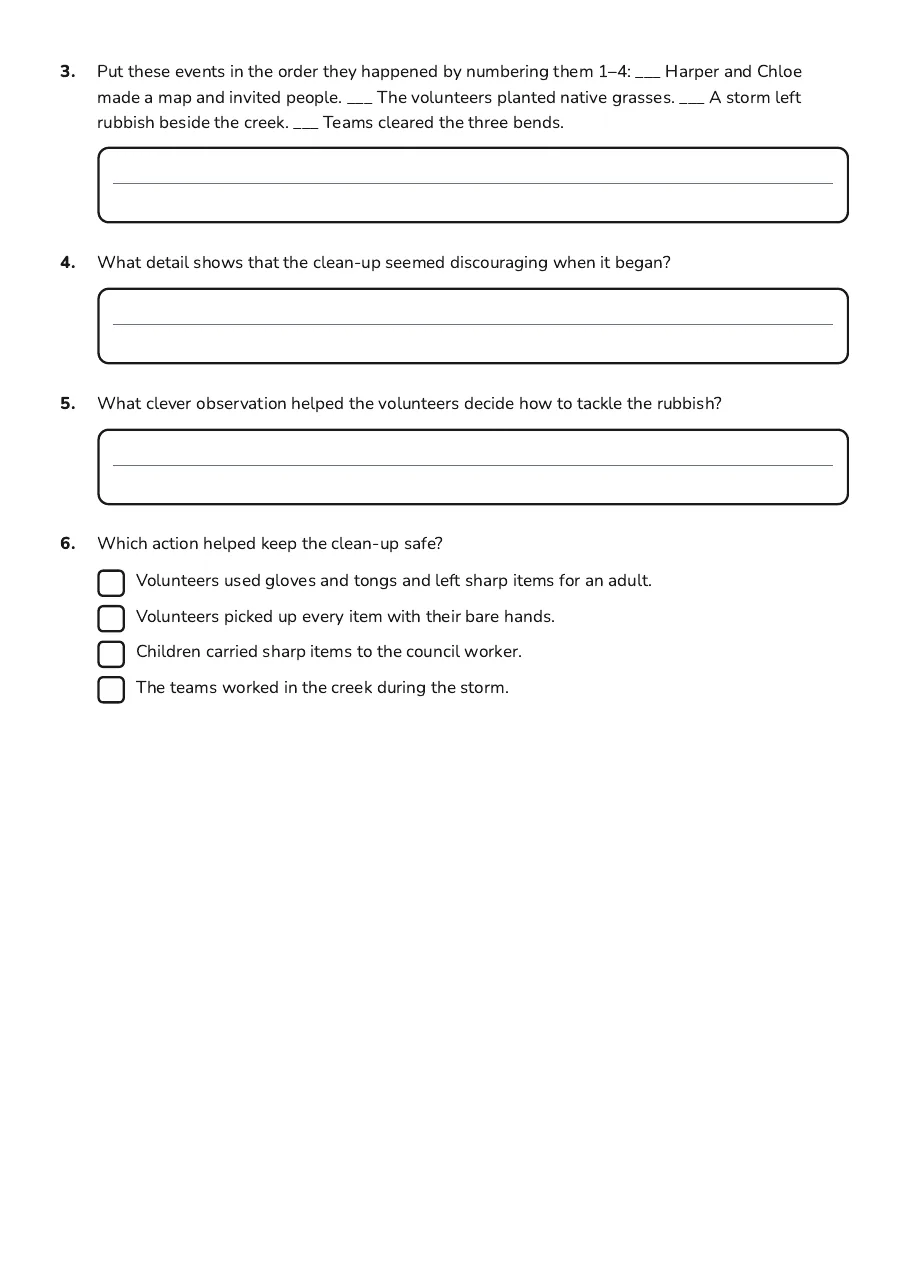
3.Put these events in the order they happened by numbering them 1–4: ___ Harper and Chloe made a map and invited people. ___ The volunteers planted native grasses. ___ A storm left rubbish beside the creek. ___ Teams cleared the three bends.
4.What detail shows that the clean-up seemed discouraging when it began?
5.What clever observation helped the volunteers decide how to tackle the rubbish?
6.Which action helped keep the clean-up safe?
- Volunteers used gloves and tongs and left sharp items for an adult.
- Volunteers picked up every item with their bare hands.
- Children carried sharp items to the council worker.
- The teams worked in the creek during the storm.
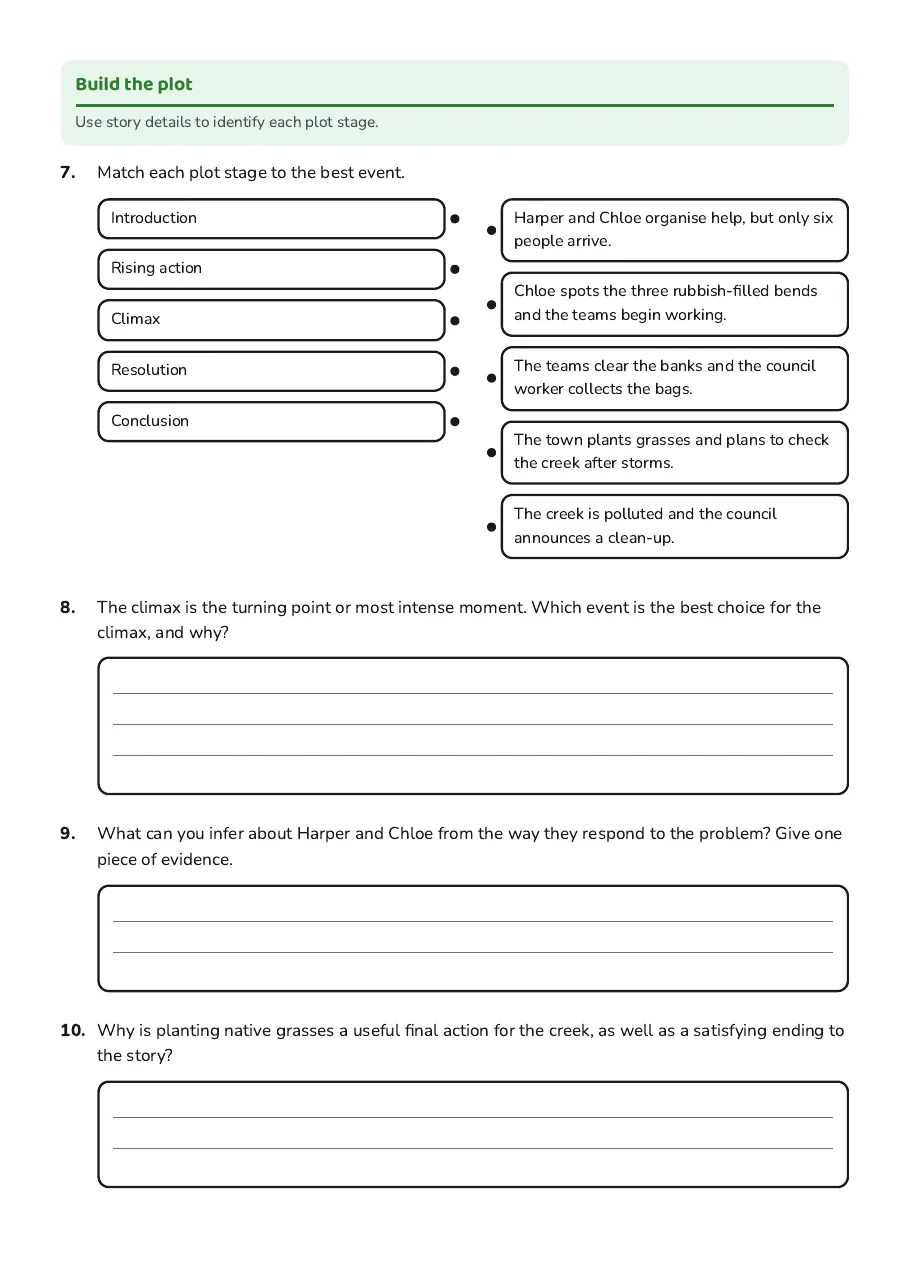
Build the plot
Use story details to identify each plot stage.
7.Match each plot stage to the best event.
- Introduction
- Rising action
- Climax
- Resolution
- Conclusion
- Harper and Chloe organise help, but only six people arrive.
- Chloe spots the three rubbish-filled bends and the teams begin working.
- The teams clear the banks and the council worker collects the bags.
- The town plants grasses and plans to check the creek after storms.
- The creek is polluted and the council announces a clean-up.
8.The climax is the turning point or most intense moment. Which event is the best choice for the climax, and why?
9.What can you infer about Harper and Chloe from the way they respond to the problem? Give one piece of evidence.
10.Why is planting native grasses a useful final action for the creek, as well as a satisfying ending to the story?
11.Imagine the story ended when only six volunteers arrived. How would that change the message of the story? Explain one likely effect.
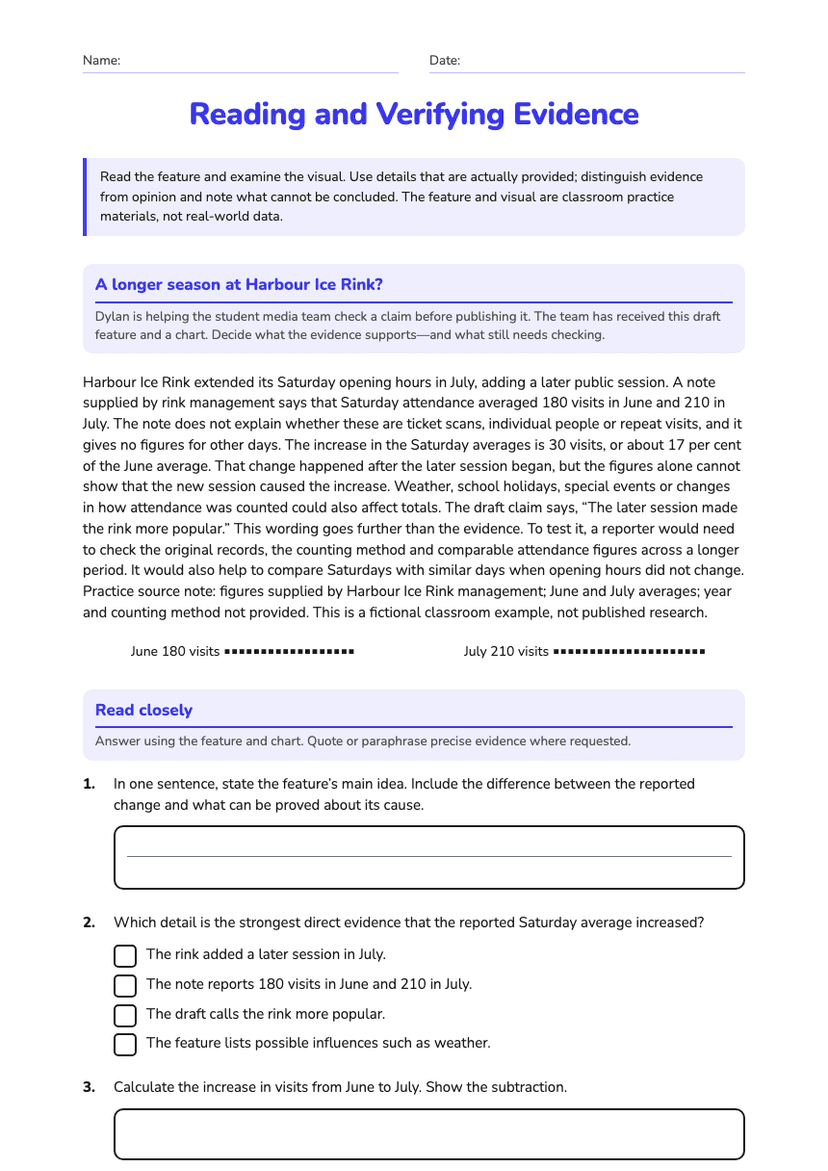
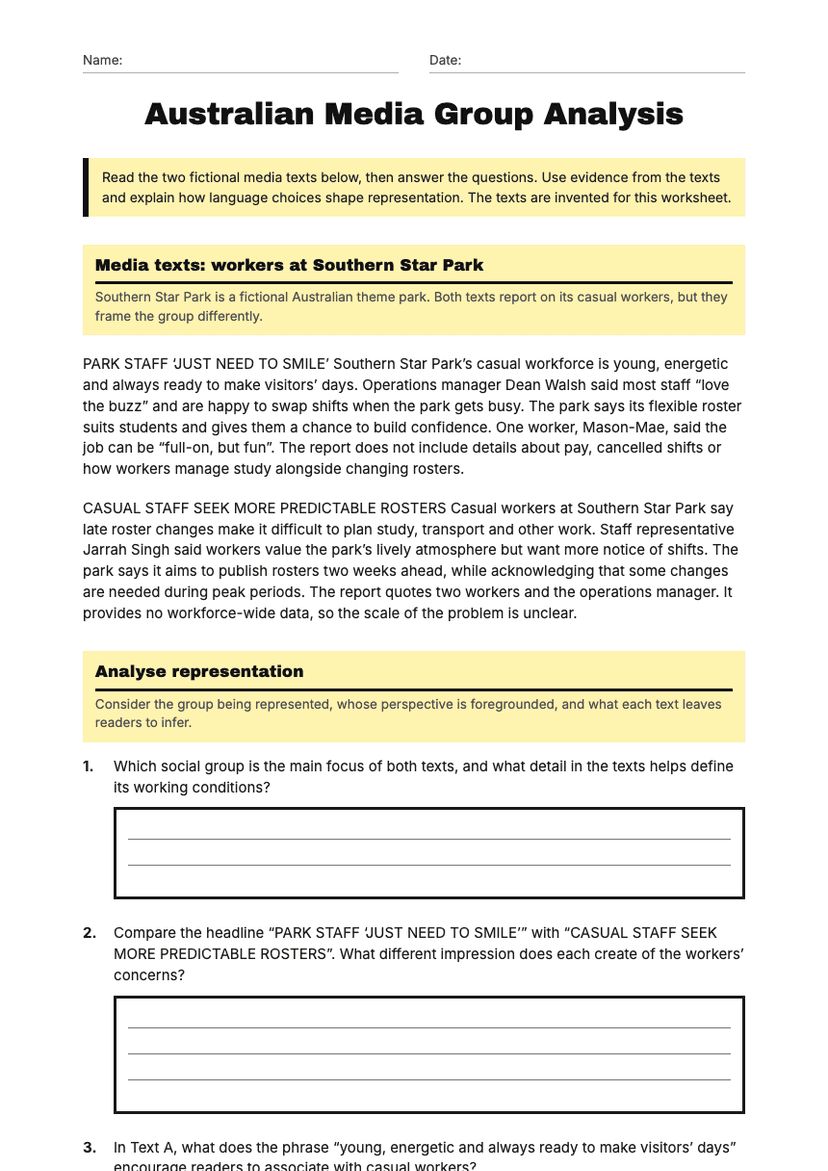
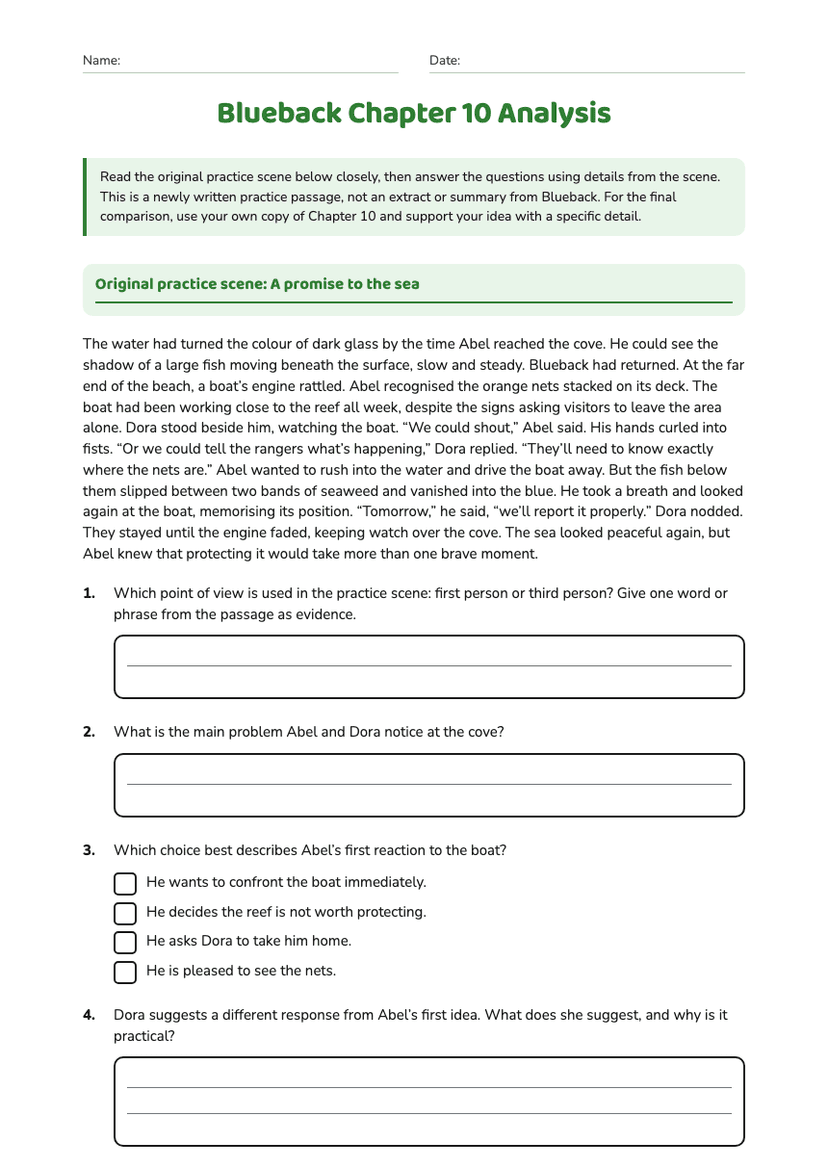
4 printable pages
Page 1
Page 2
Page 3

Page 4
About This Worksheet
Free in Kuraplan
Sign up free, grab the PDF, and customize it for your class.
Print-Ready
Formatted for standard paper. Clean layout, easy to read.
AI-Generated
Created with Kuraplan's AI, designed for real classroom use.
For Teachers & Parents
Use in classrooms, for homework, tutoring, or homeschool.
Need a custom version of this worksheet?
Kuraplan's AI generates custom worksheets in seconds — differentiated for every learner, aligned to your curriculum.
Generate Custom Worksheets — Free No credit card Curriculum-aligned Under 60 seconds