Social SciencesFreePrintable
Bush Medicine Plant Protection
A free social sciences worksheet ready for your classroom. Open in Kuraplan to grab the print-ready PDF, customize it for your students, or generate a fresh version in seconds.
Name:Date:
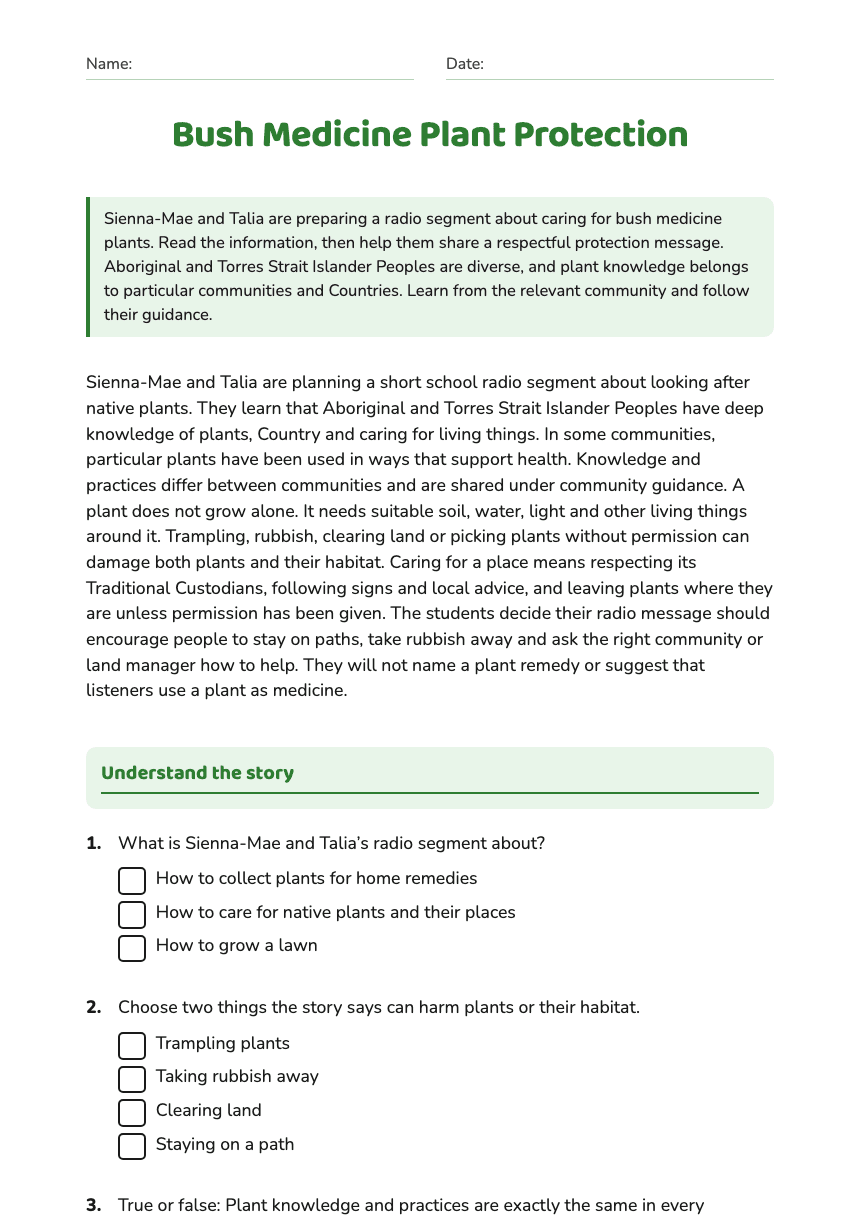
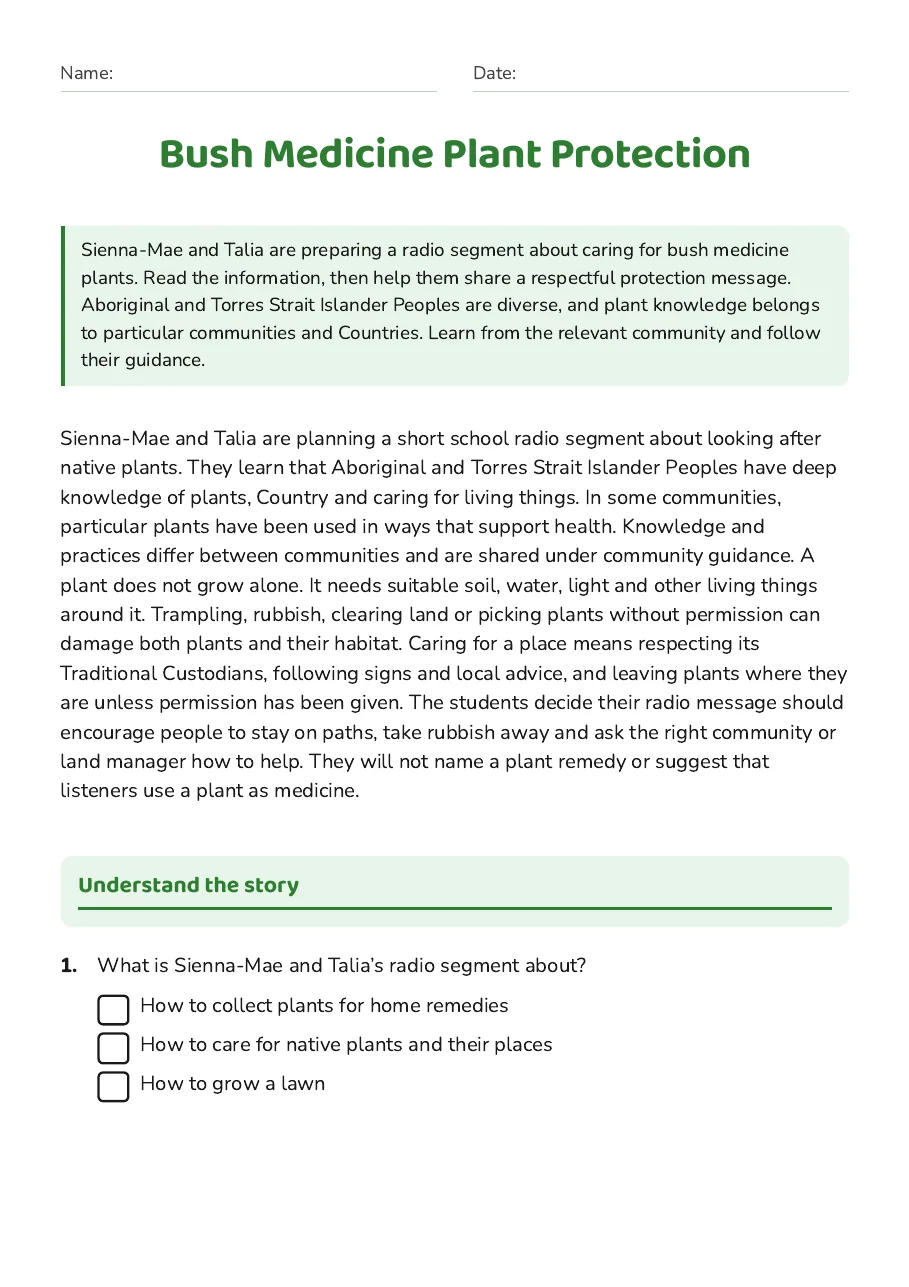
Bush Medicine Plant Protection
Sienna-Mae and Talia are preparing a radio segment about caring for bush medicine plants. Read the information, then help them share a respectful protection message. Aboriginal and Torres Strait Islander Peoples are diverse, and plant knowledge belongs to particular communities and Countries. Learn from the relevant community and follow their guidance.
Sienna-Mae and Talia are planning a short school radio segment about looking after native plants. They learn that Aboriginal and Torres Strait Islander Peoples have deep knowledge of plants, Country and caring for living things. In some communities, particular plants have been used in ways that support health. Knowledge and practices differ between communities and are shared under community guidance.
A plant does not grow alone. It needs suitable soil, water, light and other living things around it. Trampling, rubbish, clearing land or picking plants without permission can damage both plants and their habitat. Caring for a place means respecting its Traditional Custodians, following signs and local advice, and leaving plants where they are unless permission has been given.
The students decide their radio message should encourage people to stay on paths, take rubbish away and ask the right community or land manager how to help. They will not name a plant remedy or suggest that listeners use a plant as medicine.
Understand the story
1.What is Sienna-Mae and Talia’s radio segment about?
- How to collect plants for home remedies
- How to care for native plants and their places
- How to grow a lawn
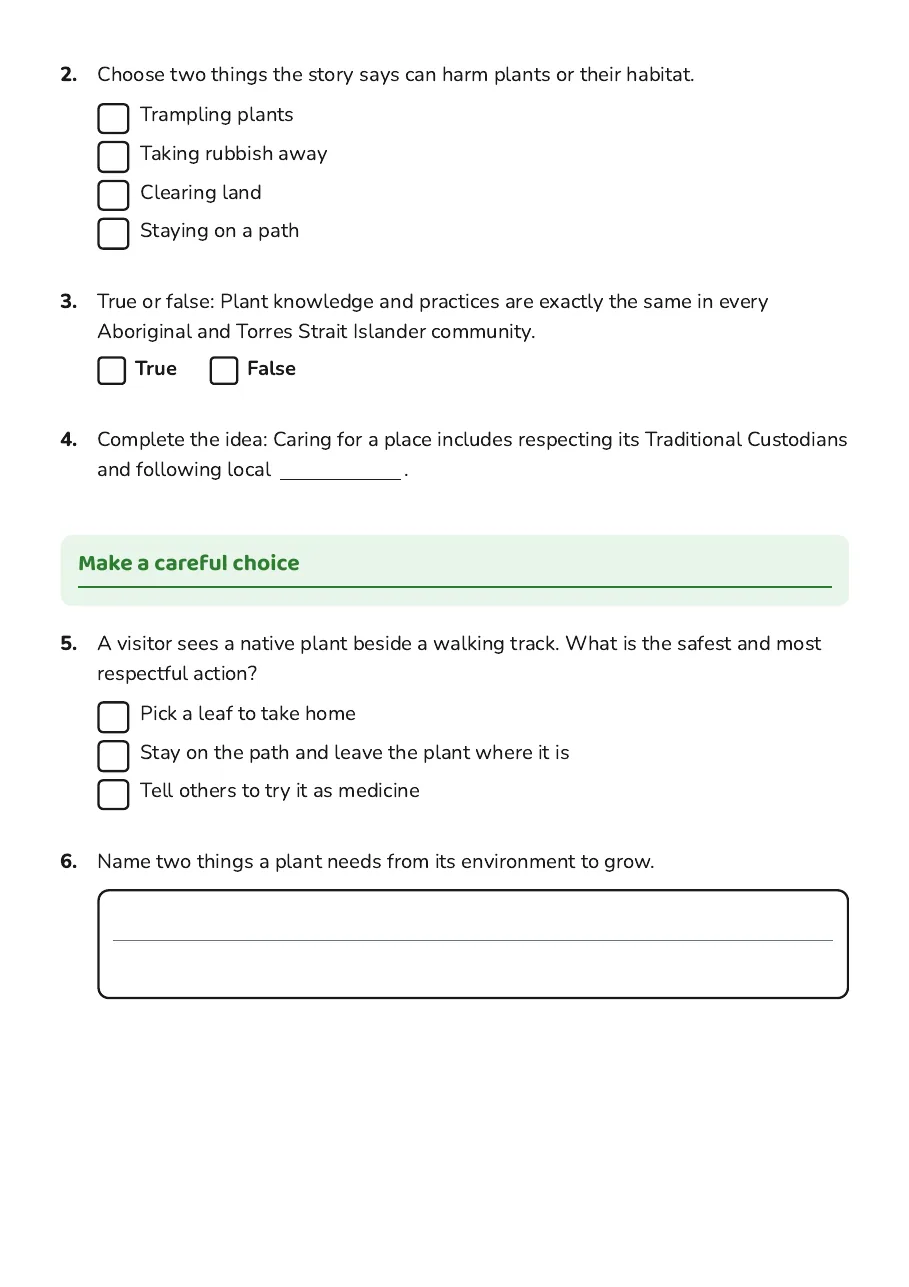
2.Choose two things the story says can harm plants or their habitat.
- Trampling plants
- Taking rubbish away
- Clearing land
- Staying on a path
3.True or false: Plant knowledge and practices are exactly the same in every Aboriginal and Torres Strait Islander community.
TrueFalse
4.Complete the idea: Caring for a place includes respecting its Traditional Custodians and following local .
Make a careful choice
5.A visitor sees a native plant beside a walking track. What is the safest and most respectful action?
- Pick a leaf to take home
- Stay on the path and leave the plant where it is
- Tell others to try it as medicine
6.Name two things a plant needs from its environment to grow.
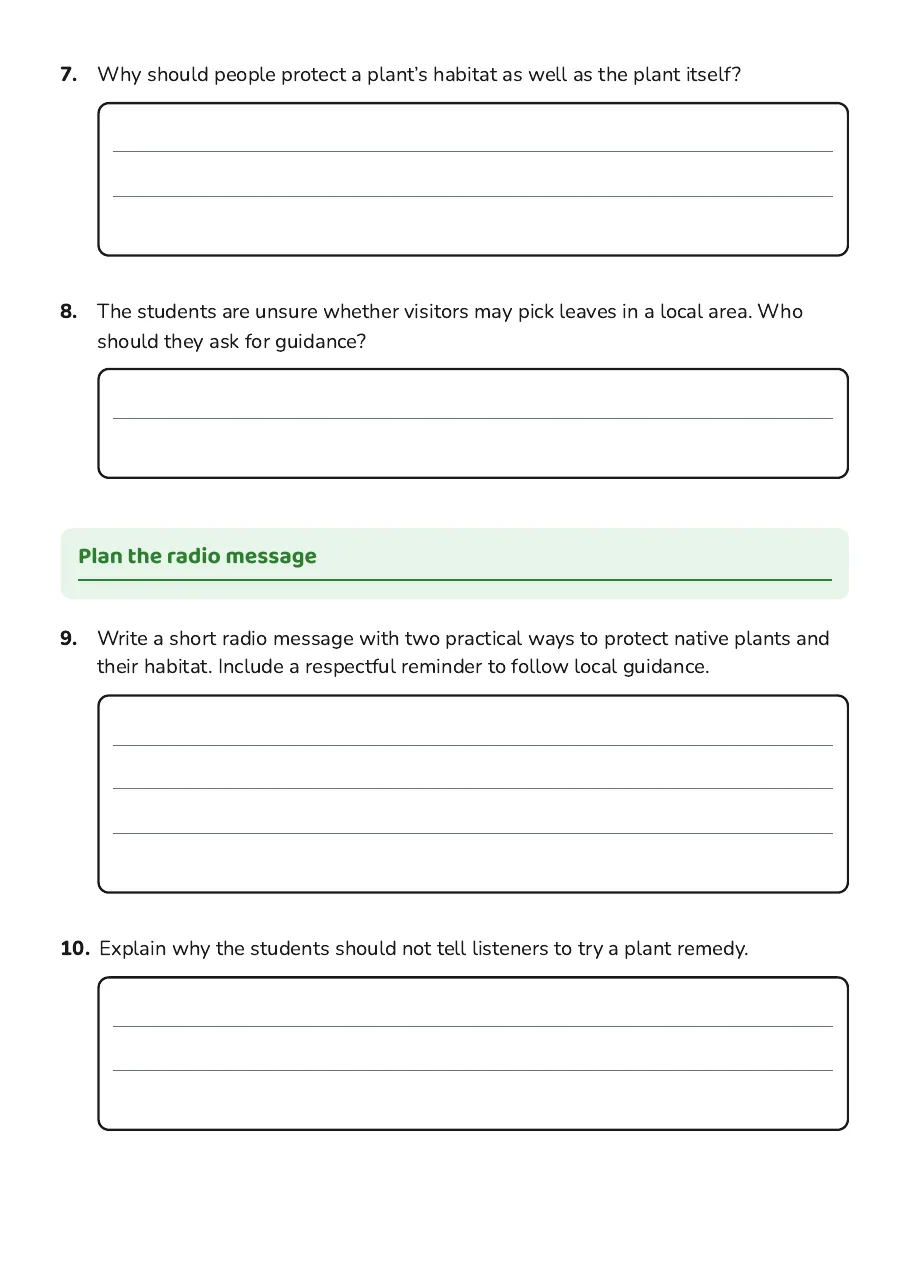
7.Why should people protect a plant’s habitat as well as the plant itself?
8.The students are unsure whether visitors may pick leaves in a local area. Who should they ask for guidance?
Plan the radio message
9.Write a short radio message with two practical ways to protect native plants and their habitat. Include a respectful reminder to follow local guidance.
10.Explain why the students should not tell listeners to try a plant remedy.
Draw a small scene showing one way people can care for native plants and their habitat. Add a short respectful caption.
4 printable pages
Page 1
Page 2
Page 3
Page 4
About This Worksheet
Free in Kuraplan
Sign up free, grab the PDF, and customize it for your class.
Print-Ready
Formatted for standard paper. Clean layout, easy to read.
AI-Generated
Created with Kuraplan's AI, designed for real classroom use.
For Teachers & Parents
Use in classrooms, for homework, tutoring, or homeschool.
Need a custom version of this worksheet?
Kuraplan's AI generates custom worksheets in seconds — differentiated for every learner, aligned to your curriculum.
Generate Custom Worksheets — Free No credit card Curriculum-aligned Under 60 seconds
More Social Sciences Worksheets
Year 6
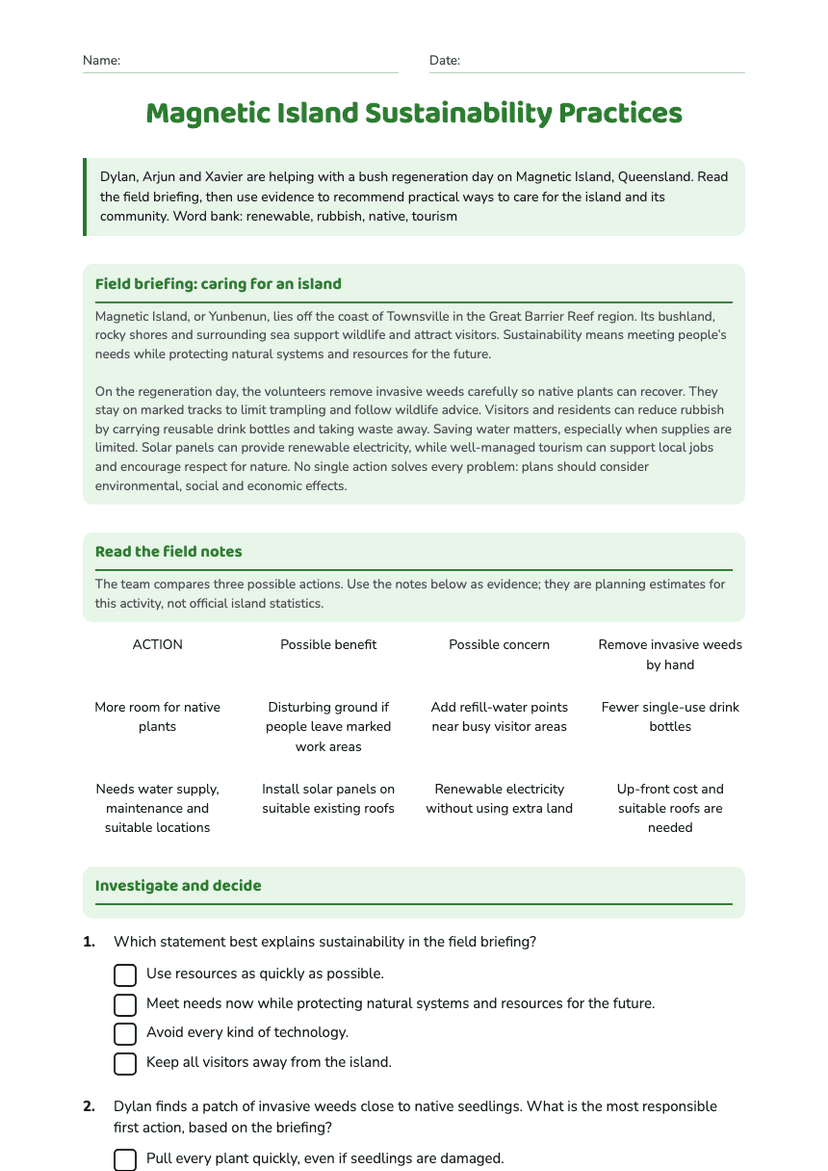
Magnetic Island Sustainability Practices
Free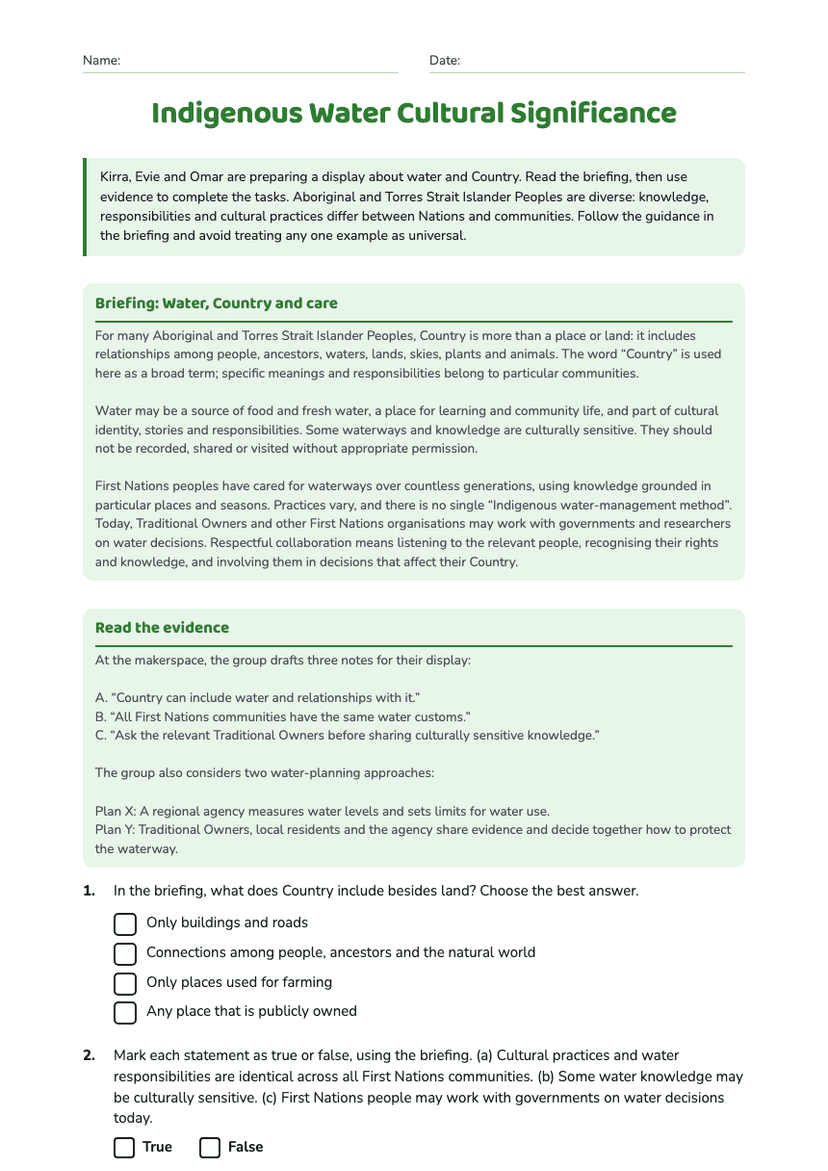
Year 7
Indigenous Water Cultural Significance
Free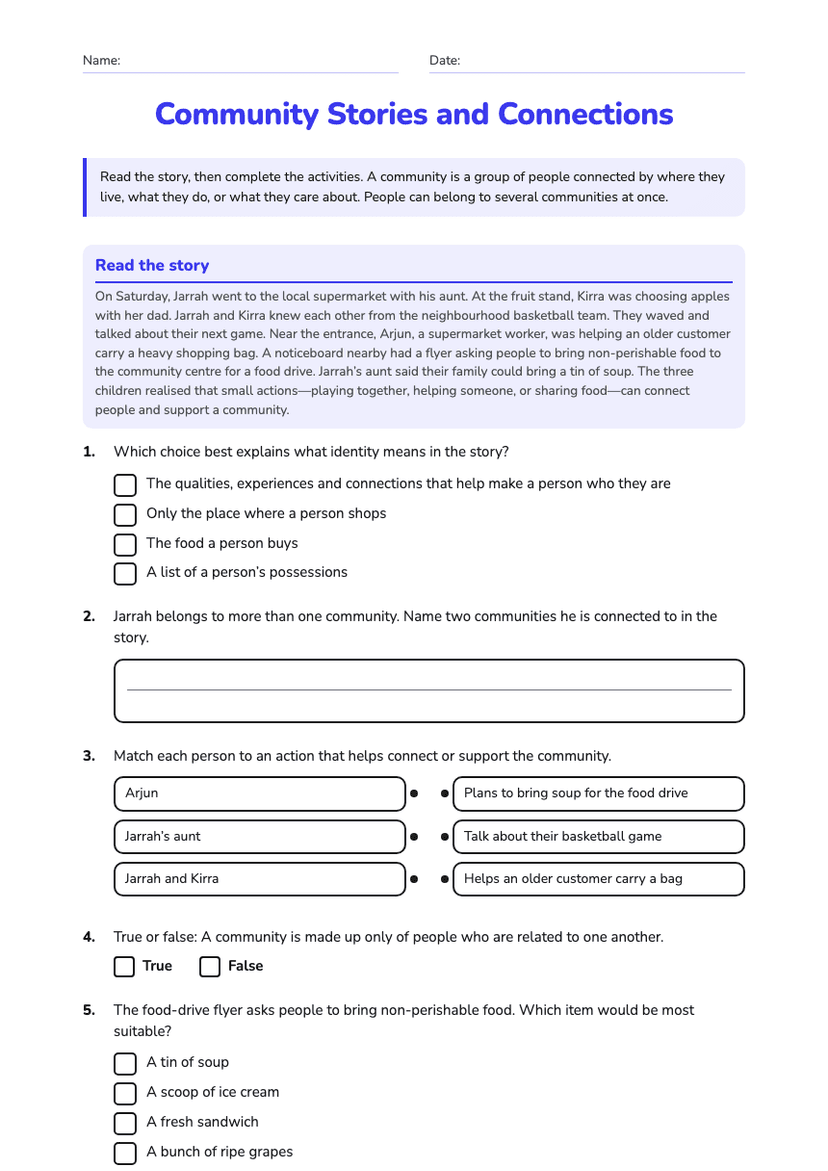
Community Stories and Connections
Free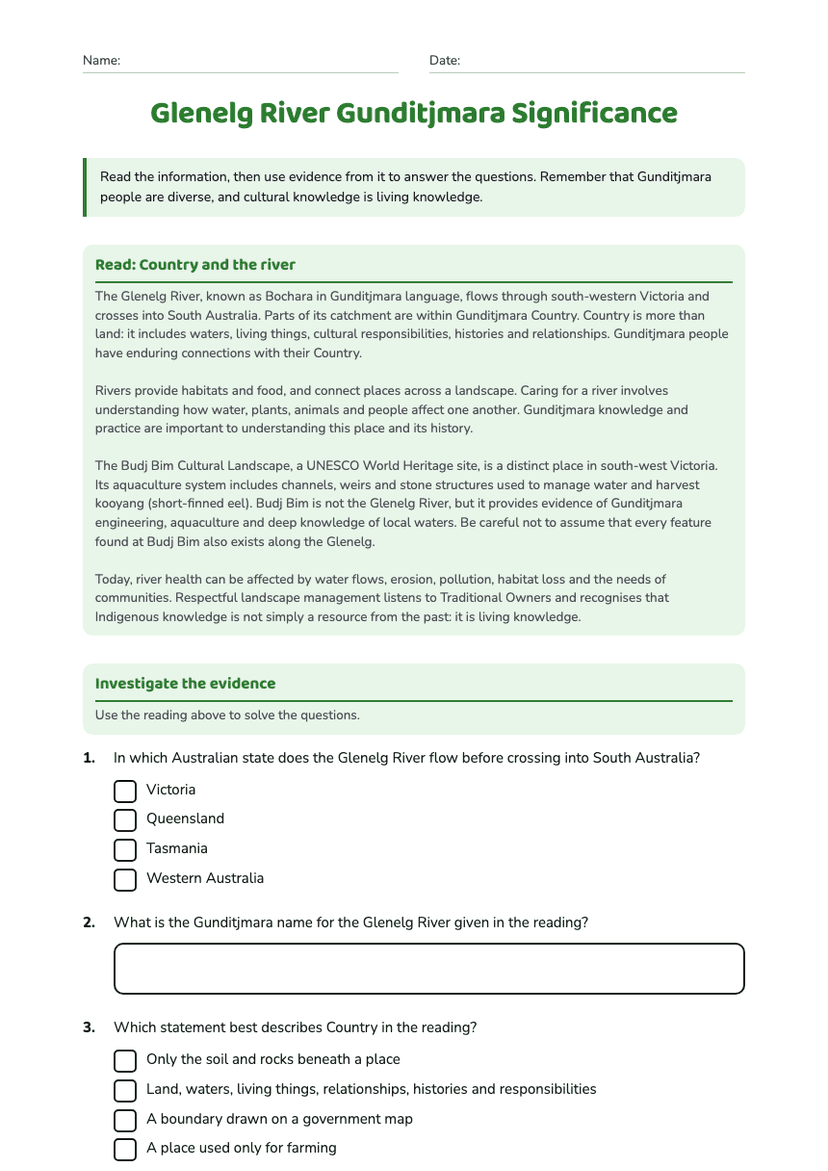
Year 8
Glenelg River Gunditjmara Significance
Free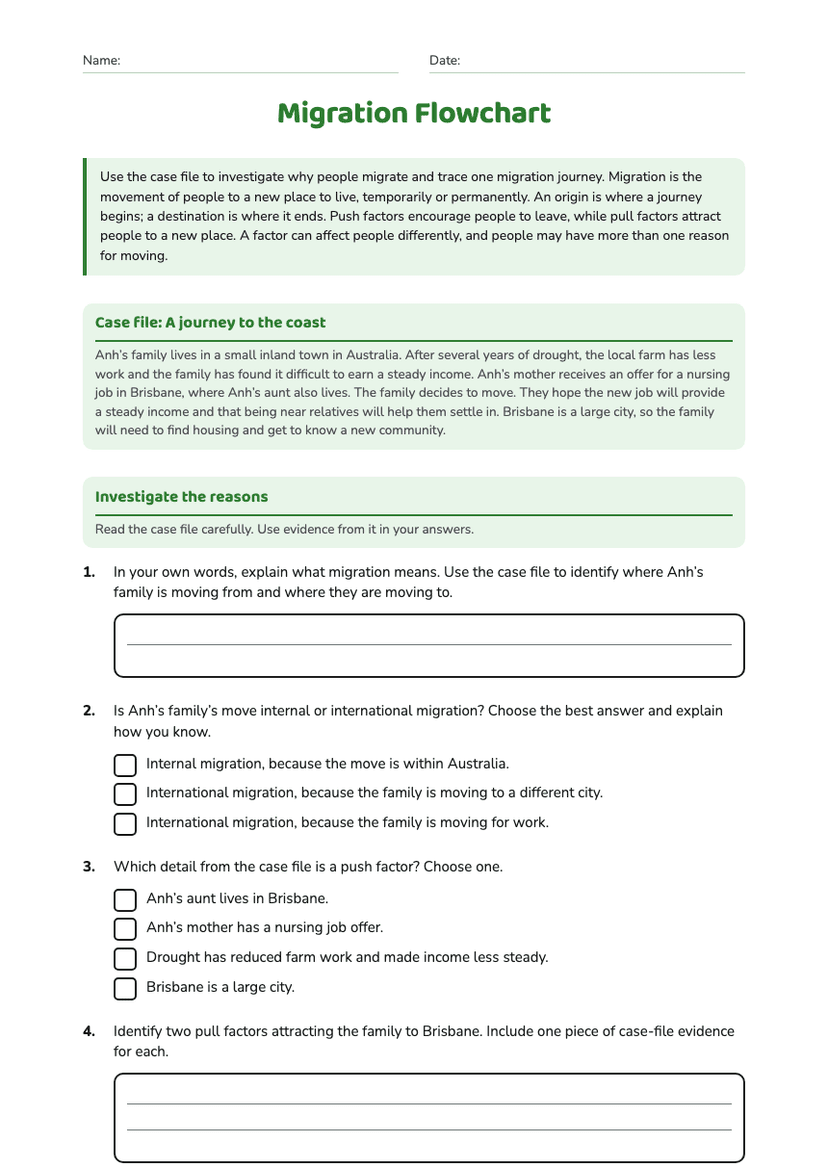
Year 7
Migration Flowchart
Free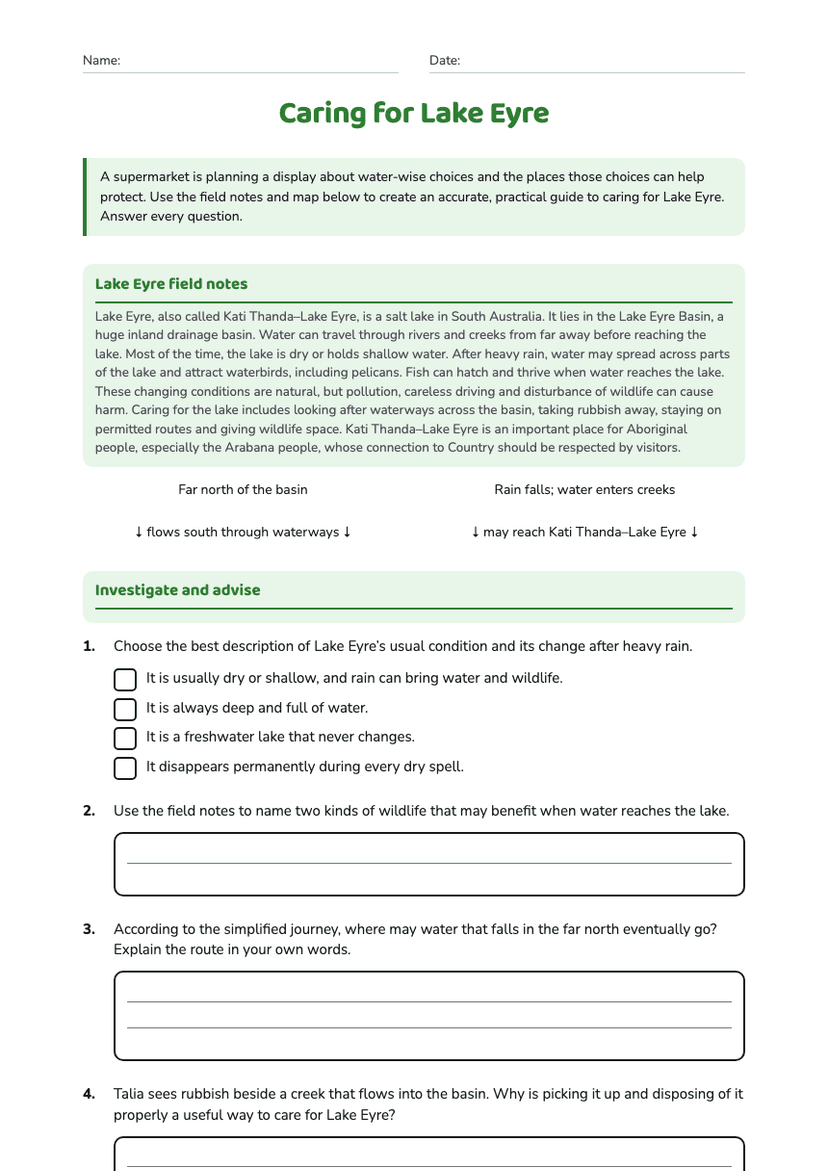
Year 6
Caring for Lake Eyre
Free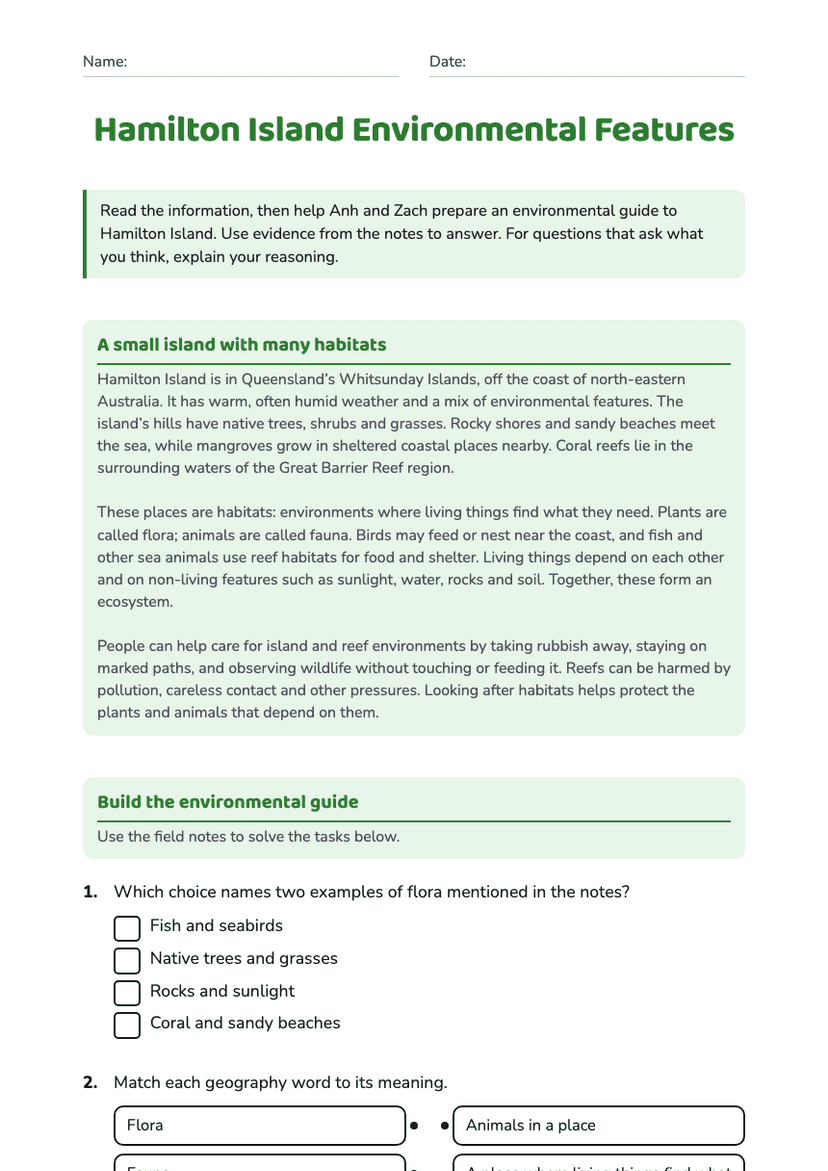
Year 3–4
Hamilton Island Environmental Features
Free
Year 2