Circulatory System Reading Passages
A free science worksheet ready for your classroom. Open in Kuraplan to grab the print-ready PDF, customize it for your students, or generate a fresh version in seconds.
Circulatory System Reading Passages
📚 Part 1: Reading Passage - Your Amazing Heart
I can understand how the circulatory system works by reading and analyzing informational text.
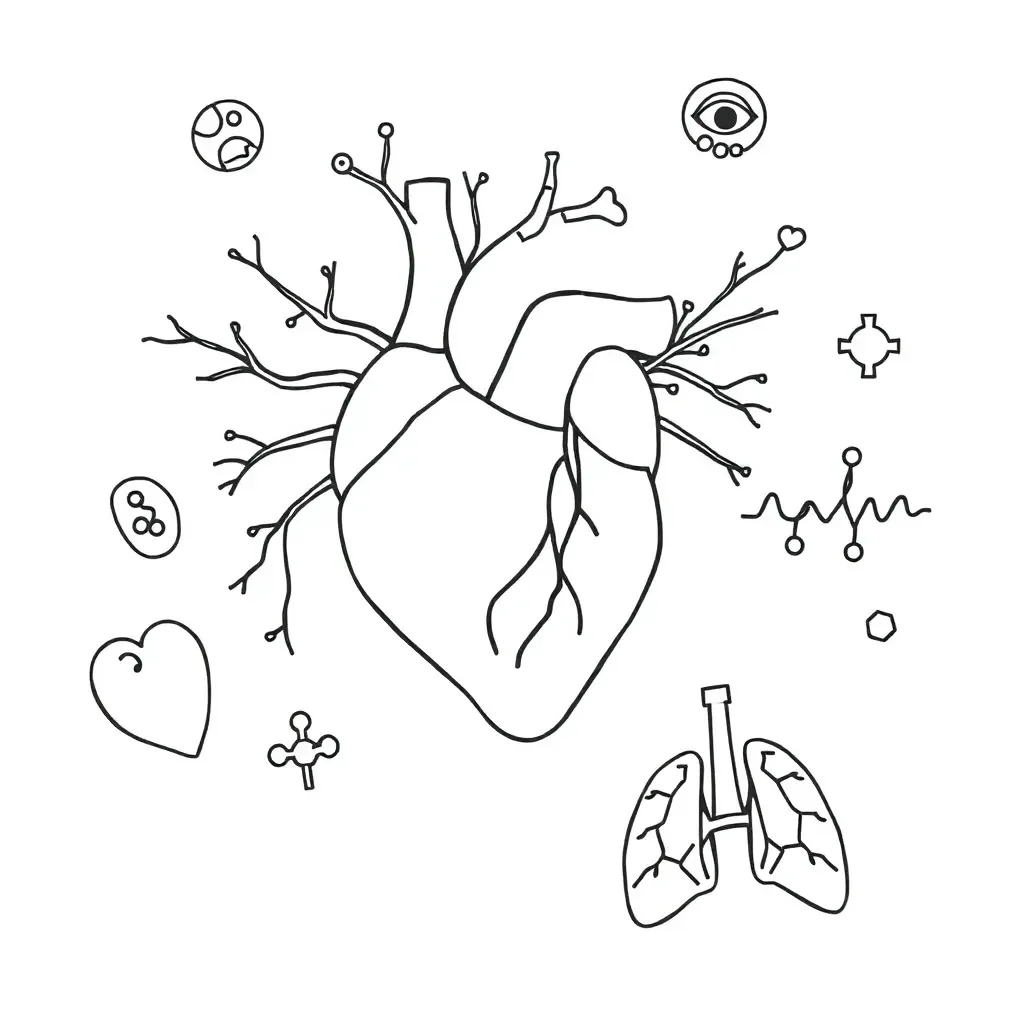
Your heart is an amazing muscle that works 24 hours a day, 7 days a week! It's about the size of your fist and beats around 100,000 times every day. The heart is the main part of your circulatory system - the network that moves blood throughout your body.
Your heart has four chambers, or rooms. The top two chambers are called atria (AY-tree-uh), and the bottom two are called ventricles (VEN-tri-kuls). Blood flows into the atria first, then gets pumped down to the ventricles, which push the blood out to your body and lungs.
Blood travels through your body in tubes called blood vessels. There are three main types: arteries carry oxygen-rich blood away from your heart, veins bring oxygen-poor blood back to your heart, and tiny capillaries connect arteries and veins. Your blood delivers oxygen and nutrients to every cell in your body and picks up waste products to remove them.
🔍 Part 2: Vocabulary and Comprehension
a) The _________________ system is the network that moves blood throughout your body.
b) _________________ are tiny blood vessels that connect arteries and veins.
c) Blood delivers _________________ and nutrients to every cell in your body.
🎯 Part 3: Extension Activity
📋 Answer Key (Teacher Use)
1. Around 100,000 times
2. Ventricles
3. Arteries
4. a) circulatory b) Capillaries c) oxygen
5. Sample answer: Blood flows into the atria first, then gets pumped down to the ventricles. The ventricles push the blood out to the body and lungs.
6. Sample answer: The heart needs to beat continuously because every cell in the body needs oxygen and nutrients delivered by blood, even during sleep.
Differentiation Strategies:
• Struggling readers: Provide audio recording of passage
• ELL students: Pre-teach vocabulary with visual aids
• Advanced learners: Complete extension research activity
About This Worksheet
Free in Kuraplan
Sign up free, grab the PDF, and customize it for your class.
Print-Ready
Formatted for standard paper. Clean layout, easy to read.
AI-Generated
Created with Kuraplan's AI, designed for real classroom use.
For Teachers & Parents
Use in classrooms, for homework, tutoring, or homeschool.
Need a custom version of this worksheet?
Kuraplan's AI generates custom worksheets in seconds — differentiated for every learner, aligned to your curriculum.
Generate Custom Worksheets — FreeMore Science Worksheets
Explore Your Five Senses
Free
Five Senses: Observations & Inferences
Free
Sense Detective Worksheet
Free
Exploring the Five Senses
Free
Body Systems Data Investigation
Free
Brain Structure Labeling Sheet
Free
Human Lifespan Growth Stages
Free