Climate Change Reading Comprehension
A free english worksheet ready for your classroom. Open in Kuraplan to grab the print-ready PDF, customize it for your students, or generate a fresh version in seconds.
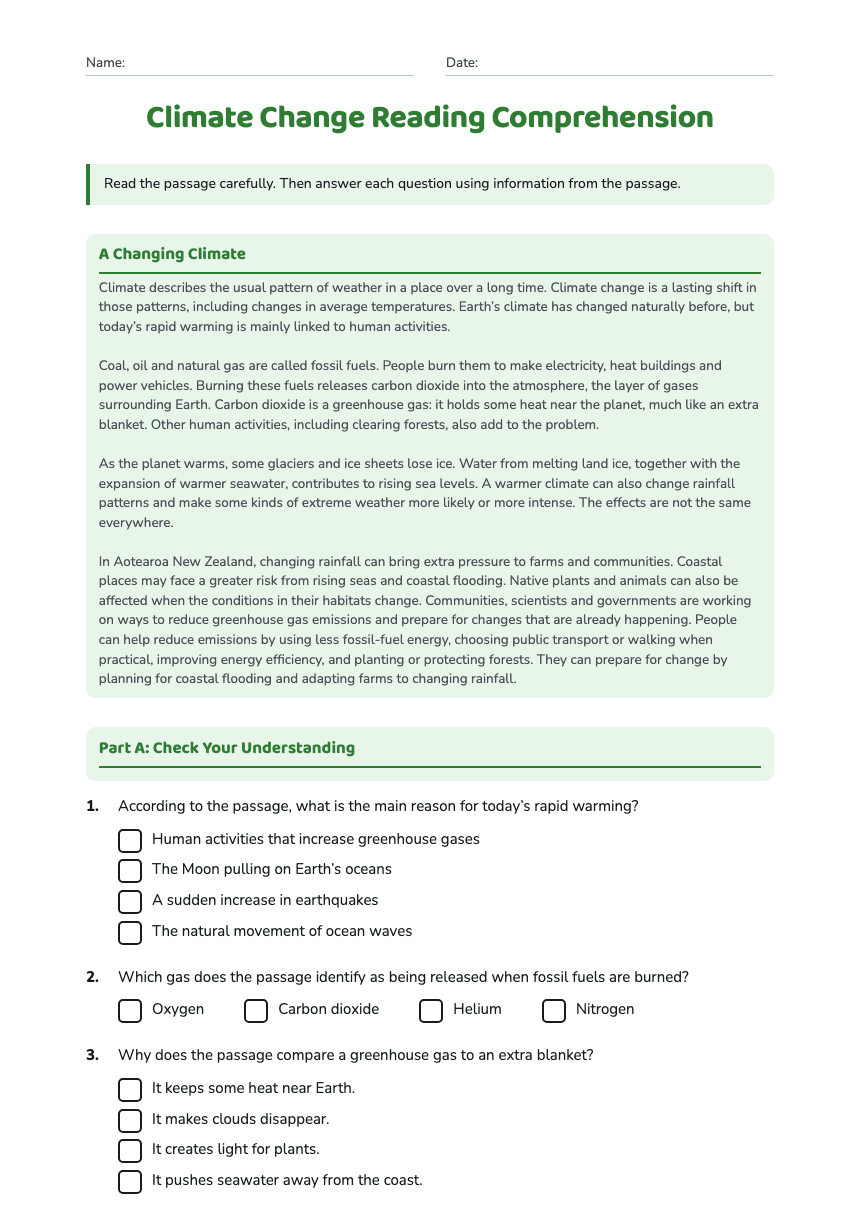
Climate Change Reading Comprehension
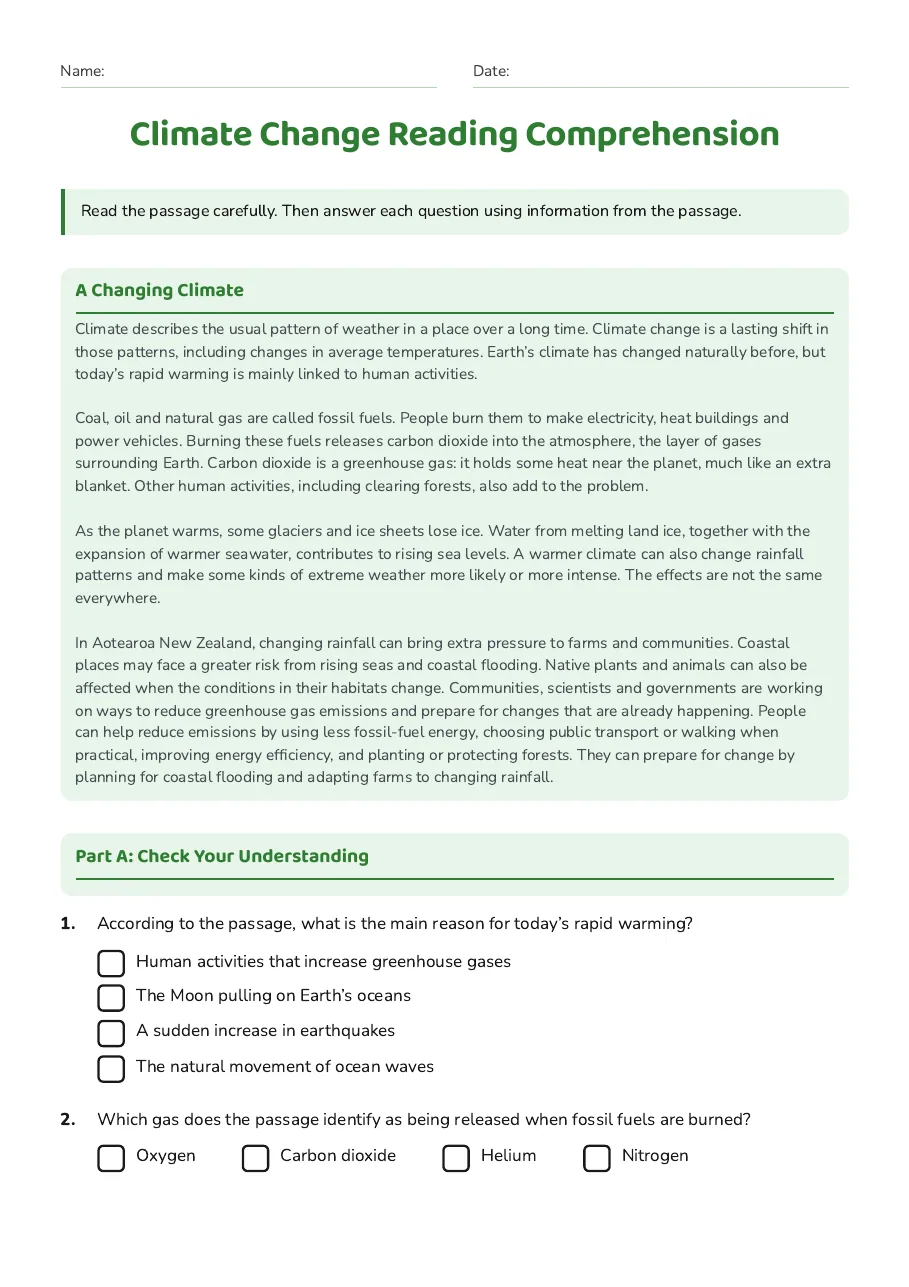
A Changing Climate
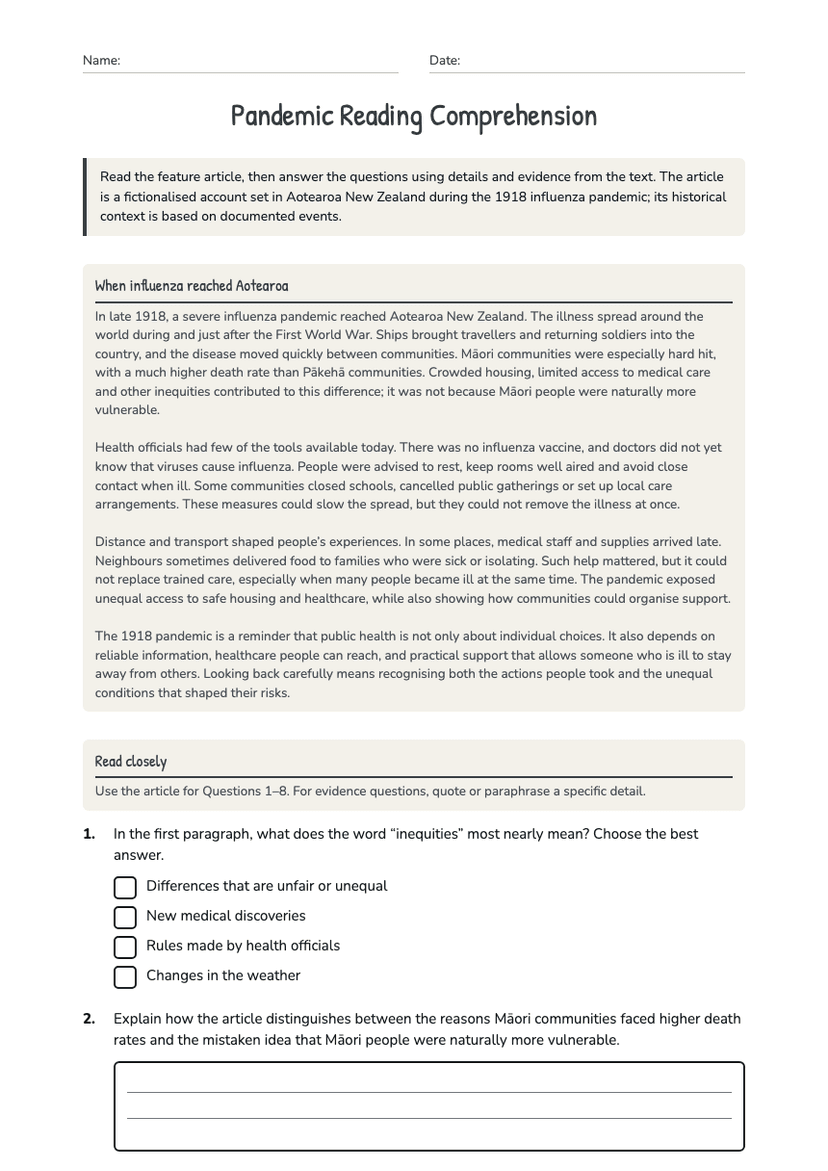
Climate describes the usual pattern of weather in a place over a long time. Climate change is a lasting shift in those patterns, including changes in average temperatures. Earth’s climate has changed naturally before, but today’s rapid warming is mainly linked to human activities. Coal, oil and natural gas are called fossil fuels. People burn them to make electricity, heat buildings and power vehicles. Burning these fuels releases carbon dioxide into the atmosphere, the layer of gases surrounding Earth. Carbon dioxide is a greenhouse gas: it holds some heat near the planet, much like an extra blanket. Other human activities, including clearing forests, also add to the problem. As the planet warms, some glaciers and ice sheets lose ice. Water from melting land ice, together with the expansion of warmer seawater, contributes to rising sea levels. A warmer climate can also change rainfall patterns and make some kinds of extreme weather more likely or more intense. The effects are not the same everywhere. In Aotearoa New Zealand, changing rainfall can bring extra pressure to farms and communities. Coastal places may face a greater risk from rising seas and coastal flooding. Native plants and animals can also be affected when the conditions in their habitats change. Communities, scientists and governments are working on ways to reduce greenhouse gas emissions and prepare for changes that are already happening. People can help reduce emissions by using less fossil-fuel energy, choosing public transport or walking when practical, improving energy efficiency, and planting or protecting forests. They can prepare for change by planning for coastal flooding and adapting farms to changing rainfall.
Part A: Check Your Understanding
- Human activities that increase greenhouse gases
- The Moon pulling on Earth’s oceans
- A sudden increase in earthquakes
- The natural movement of ocean waves
- Oxygen
- Carbon dioxide
- Helium
- Nitrogen
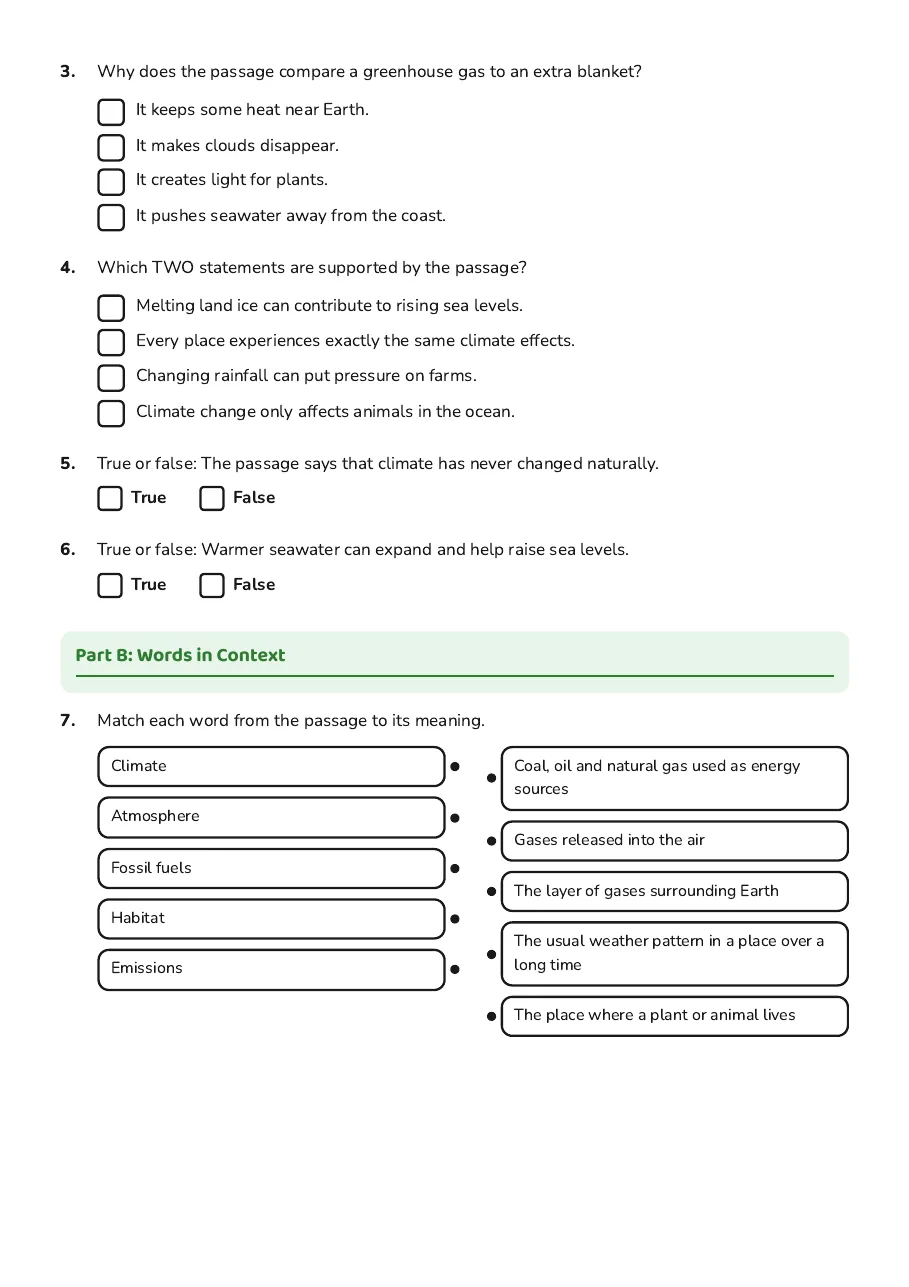
- It keeps some heat near Earth.
- It makes clouds disappear.
- It creates light for plants.
- It pushes seawater away from the coast.
- Melting land ice can contribute to rising sea levels.
- Every place experiences exactly the same climate effects.
- Changing rainfall can put pressure on farms.
- Climate change only affects animals in the ocean.
Part B: Words in Context
- Climate
- Atmosphere
- Fossil fuels
- Habitat
- Emissions
- Coal, oil and natural gas used as energy sources
- Gases released into the air
- The layer of gases surrounding Earth
- The usual weather pattern in a place over a long time
- The place where a plant or animal lives
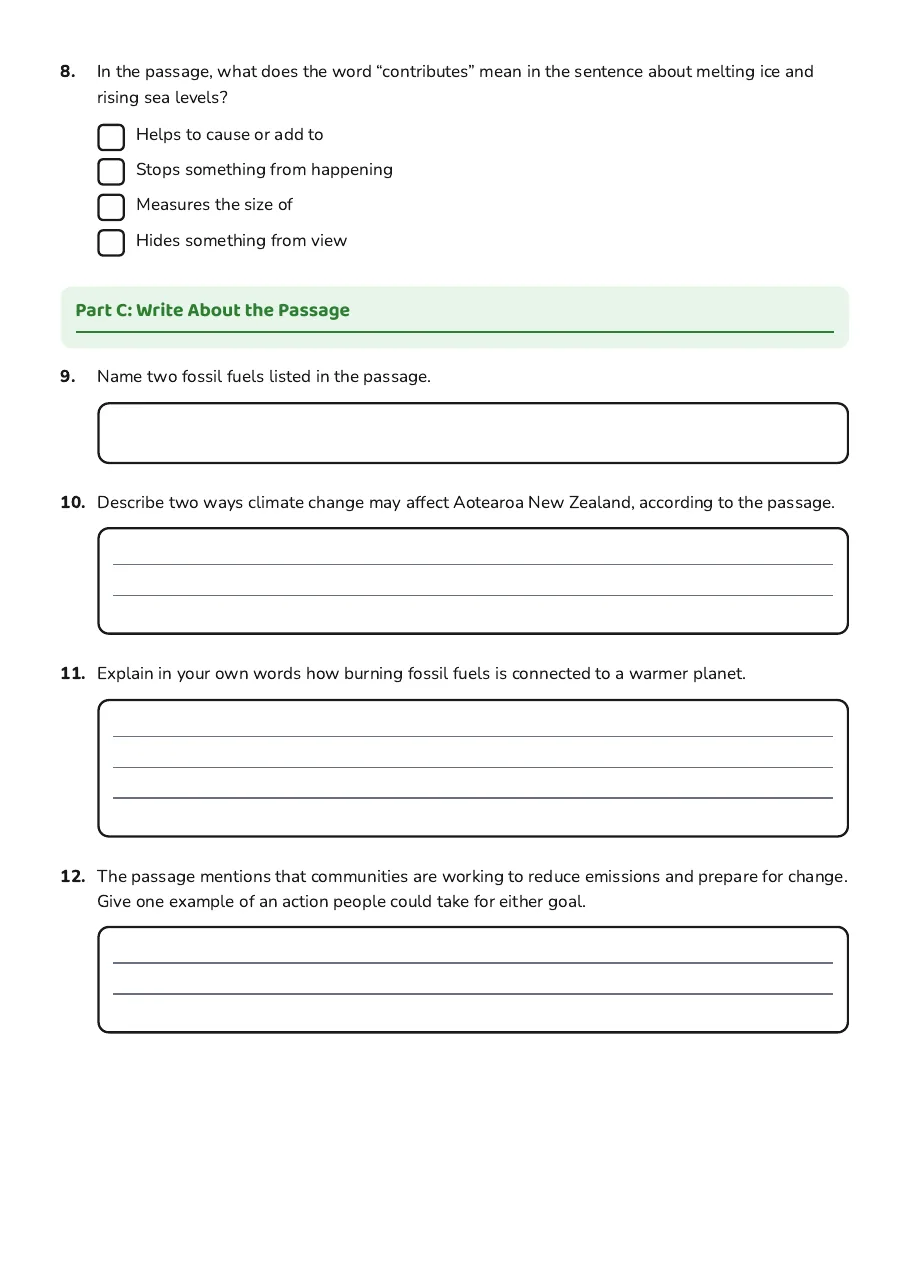
- Helps to cause or add to
- Stops something from happening
- Measures the size of
- Hides something from view
Part C: Write About the Passage
3 printable pages
Page 1
Page 2
Page 3
About This Worksheet
Free in Kuraplan
Sign up free, grab the PDF, and customize it for your class.
Print-Ready
Formatted for standard paper. Clean layout, easy to read.
AI-Generated
Created with Kuraplan's AI, designed for real classroom use.
For Teachers & Parents
Use in classrooms, for homework, tutoring, or homeschool.
Need a custom version of this worksheet?
Kuraplan's AI generates custom worksheets in seconds — differentiated for every learner, aligned to your curriculum.
Generate Custom Worksheets — Free