Community Rules and Rights
A free social sciences worksheet ready for your classroom. Open in Kuraplan to grab the print-ready PDF, customize it for your students, or generate a fresh version in seconds.
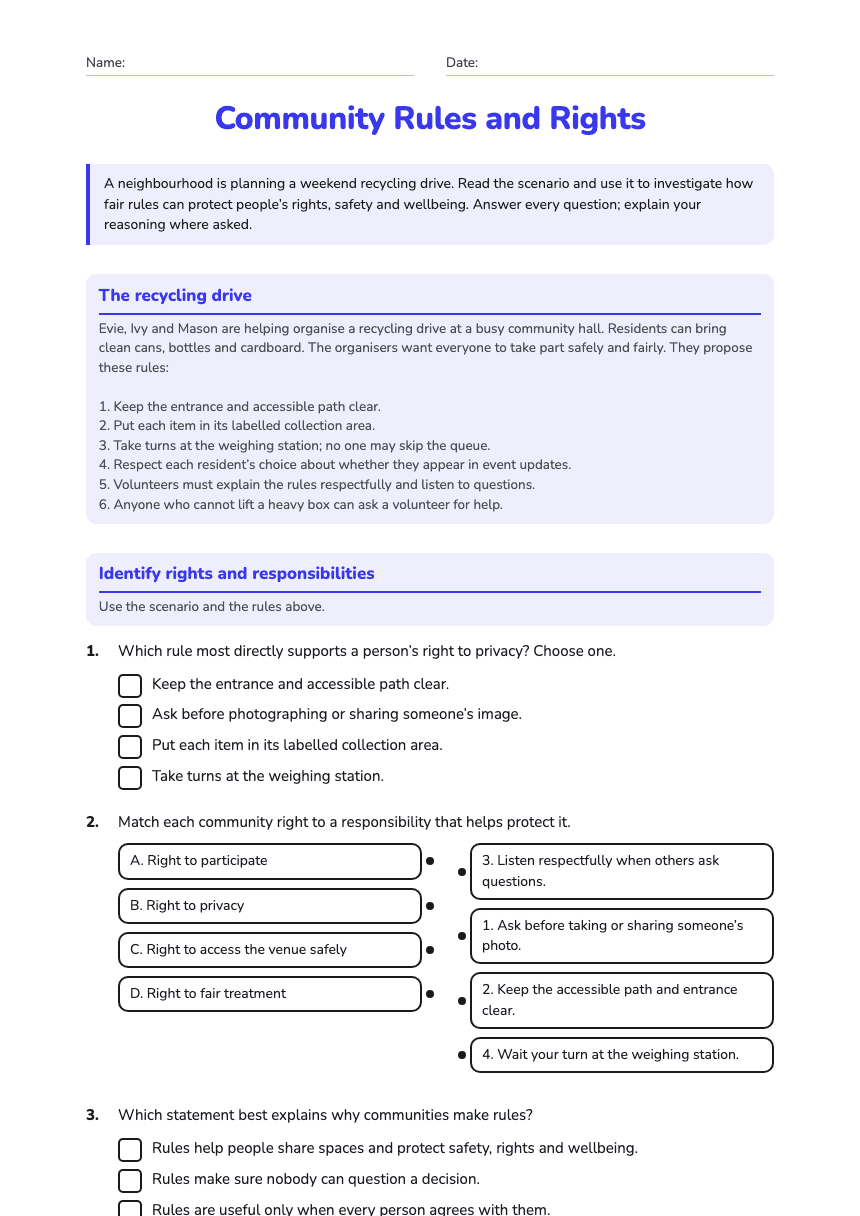
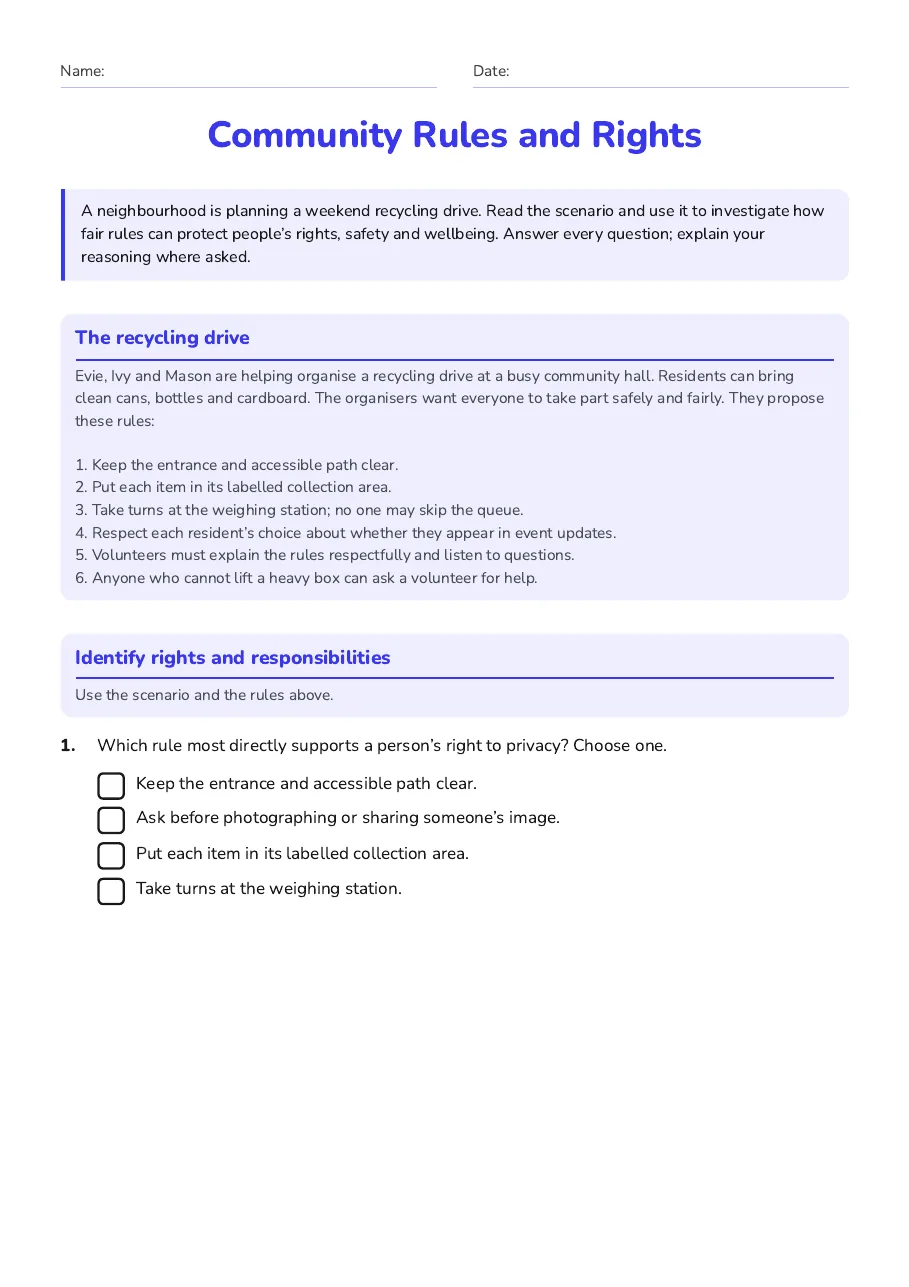
Community Rules and Rights
The recycling drive
Evie, Ivy and Mason are helping organise a recycling drive at a busy community hall. Residents can bring clean cans, bottles and cardboard. The organisers want everyone to take part safely and fairly. They propose these rules: 1. Keep the entrance and accessible path clear. 2. Put each item in its labelled collection area. 3. Take turns at the weighing station; no one may skip the queue. 4. Respect each resident’s choice about whether they appear in event updates. 5. Volunteers must explain the rules respectfully and listen to questions. 6. Anyone who cannot lift a heavy box can ask a volunteer for help.
Identify rights and responsibilities
Use the scenario and the rules above.
- Keep the entrance and accessible path clear.
- Ask before photographing or sharing someone’s image.
- Put each item in its labelled collection area.
- Take turns at the weighing station.
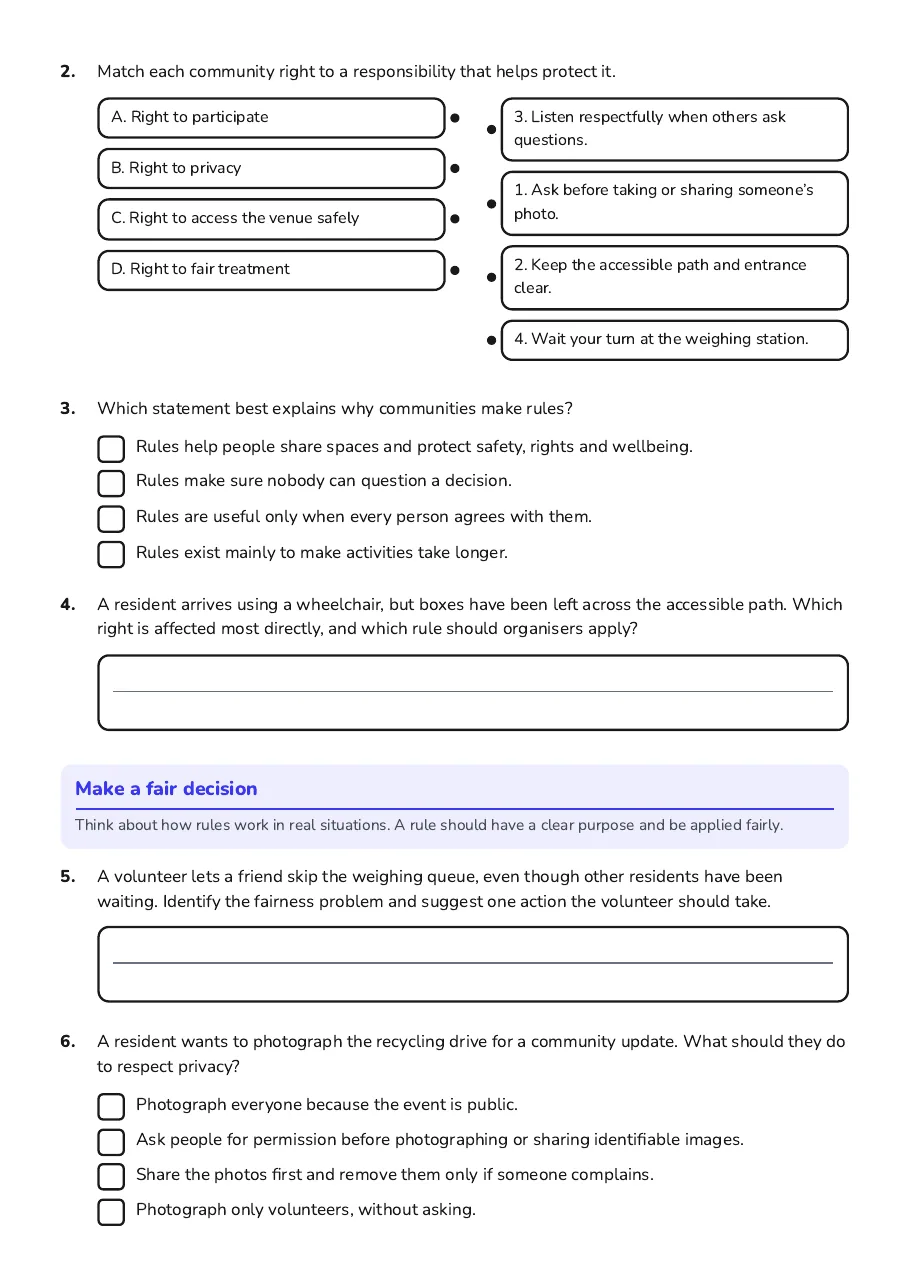
- A. Right to participate
- B. Right to privacy
- C. Right to access the venue safely
- D. Right to fair treatment
- 3. Listen respectfully when others ask questions.
- 1. Ask before taking or sharing someone’s photo.
- 2. Keep the accessible path and entrance clear.
- 4. Wait your turn at the weighing station.
- Rules help people share spaces and protect safety, rights and wellbeing.
- Rules make sure nobody can question a decision.
- Rules are useful only when every person agrees with them.
- Rules exist mainly to make activities take longer.
Make a fair decision
Think about how rules work in real situations. A rule should have a clear purpose and be applied fairly.
- Photograph everyone because the event is public.
- Ask people for permission before photographing or sharing identifiable images.
- Share the photos first and remove them only if someone complains.
- Photograph only volunteers, without asking.
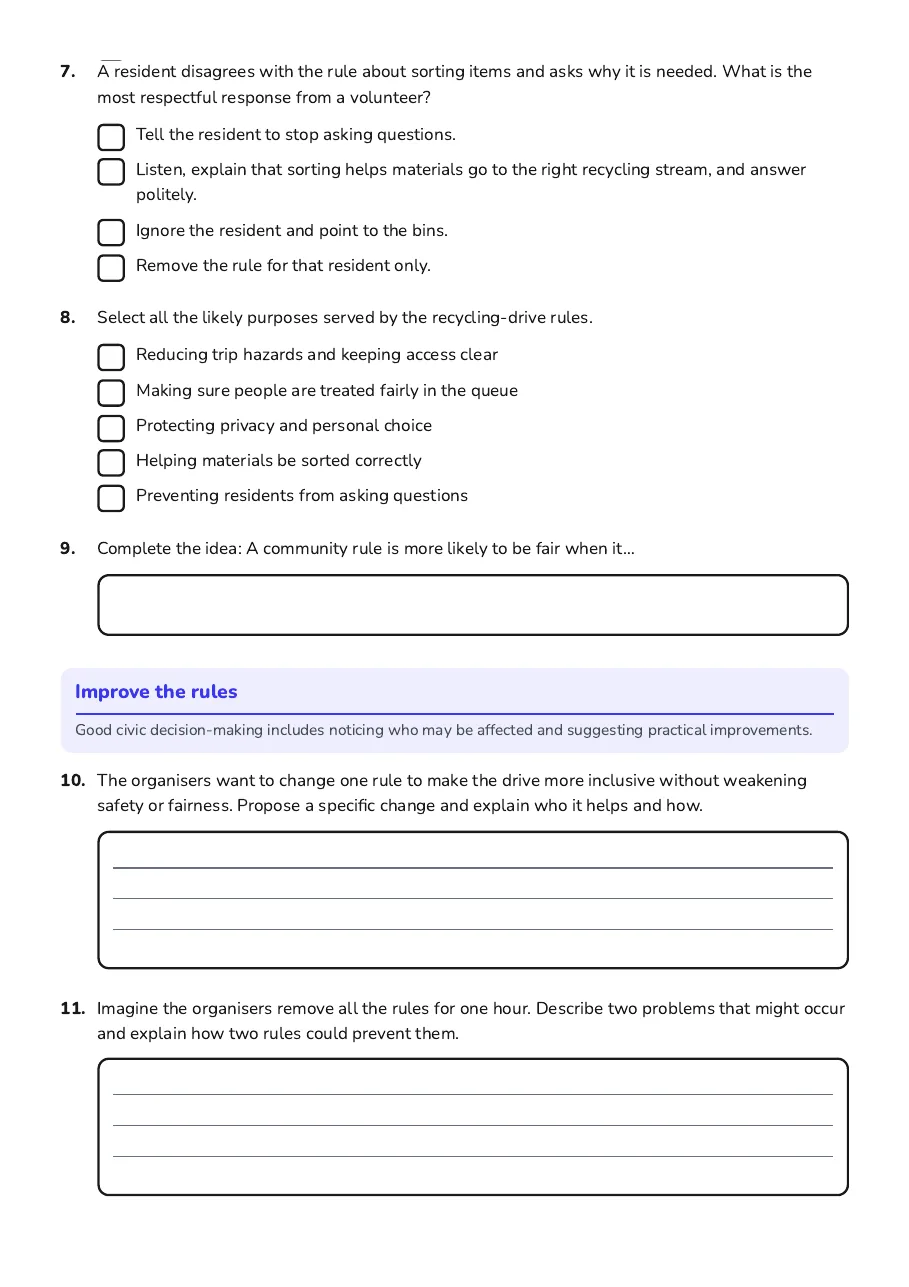
- Tell the resident to stop asking questions.
- Listen, explain that sorting helps materials go to the right recycling stream, and answer politely.
- Ignore the resident and point to the bins.
- Remove the rule for that resident only.
- Reducing trip hazards and keeping access clear
- Making sure people are treated fairly in the queue
- Protecting privacy and personal choice
- Helping materials be sorted correctly
- Preventing residents from asking questions
Improve the rules
Good civic decision-making includes noticing who may be affected and suggesting practical improvements.
3 printable pages
Page 1
Page 2
Page 3
About This Worksheet
Free in Kuraplan
Sign up free, grab the PDF, and customize it for your class.
Print-Ready
Formatted for standard paper. Clean layout, easy to read.
AI-Generated
Created with Kuraplan's AI, designed for real classroom use.
For Teachers & Parents
Use in classrooms, for homework, tutoring, or homeschool.
Need a custom version of this worksheet?
Kuraplan's AI generates custom worksheets in seconds — differentiated for every learner, aligned to your curriculum.
Generate Custom Worksheets — FreeMore Social Sciences Worksheets
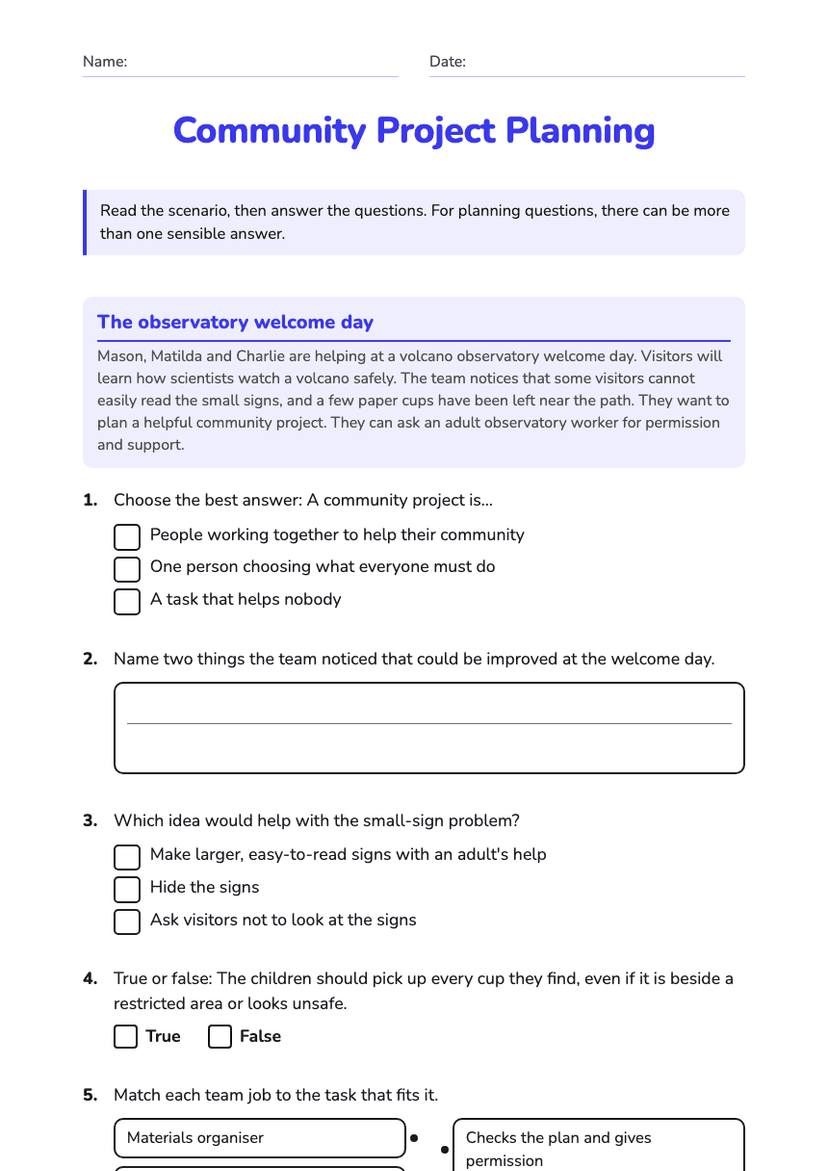
Community Project Planning
Free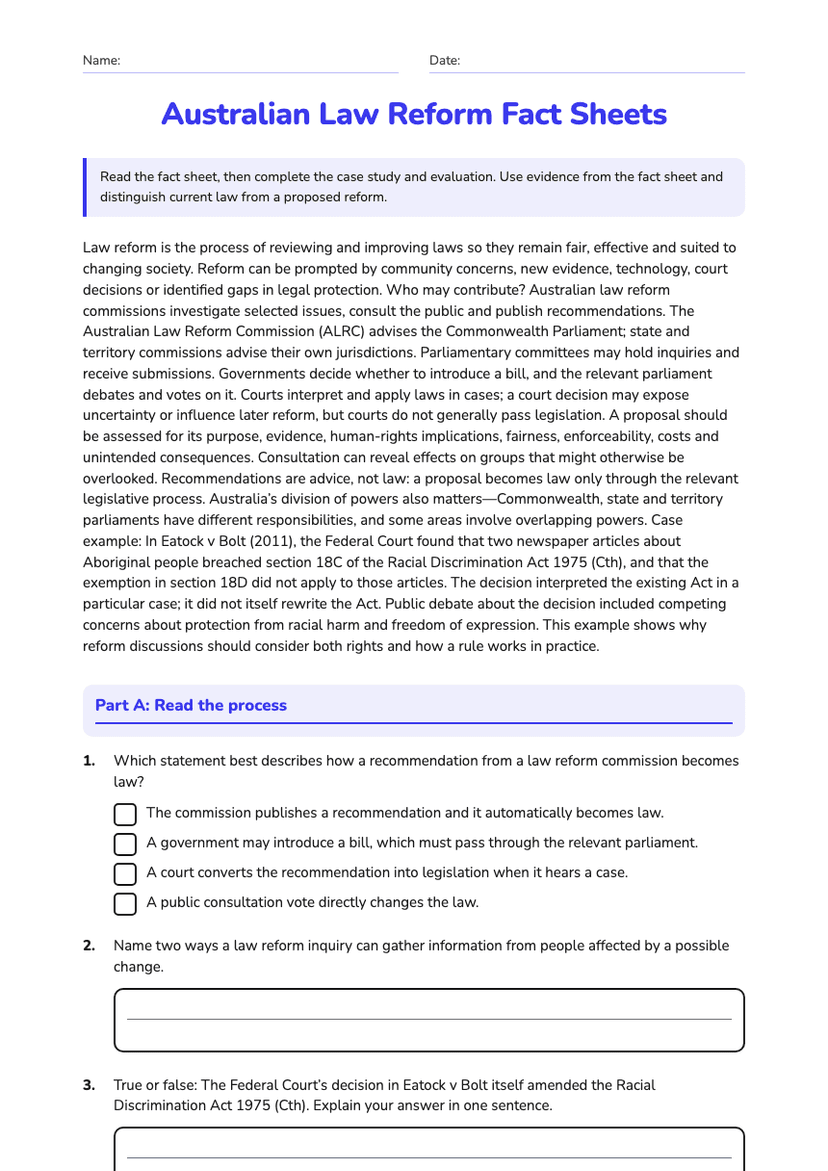
Australian Law Reform Fact Sheets
Free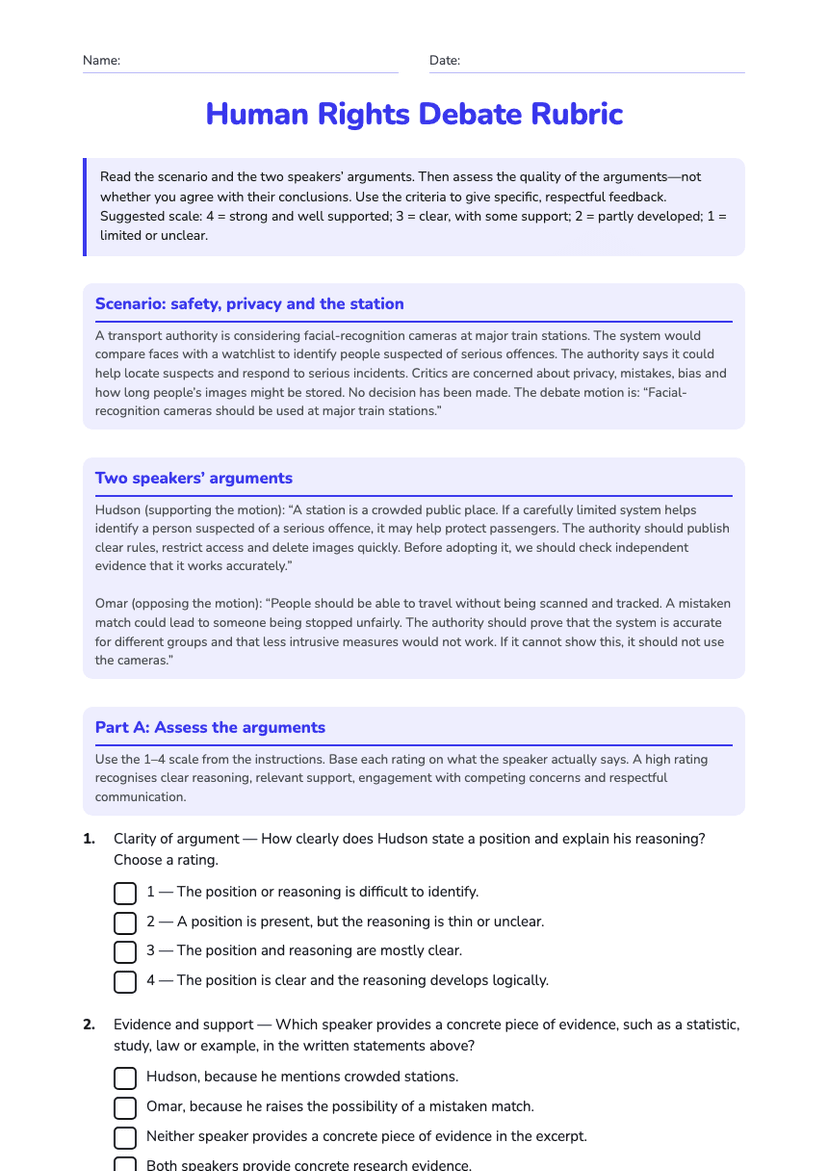
Human Rights Debate Rubric
Free
Australian Referendums Constitutional Process
Free
Media and Law Reform
Free
Australian Constitution Fundamentals
Free
Commonwealth Constitution Overview
Free