Commutative Property Exploration
A free maths worksheet ready for your classroom. Open in Kuraplan to grab the print-ready PDF, customize it for your students, or generate a fresh version in seconds.
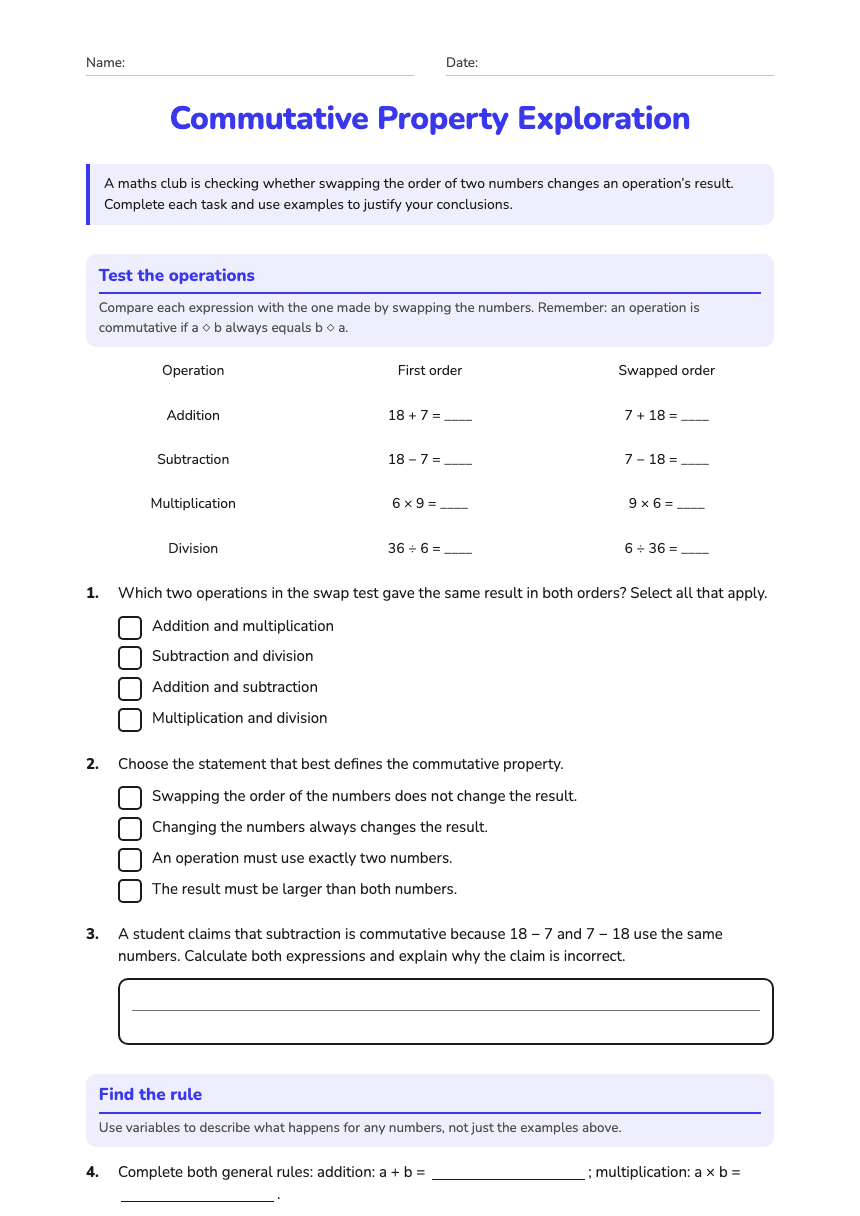
Commutative Property Exploration
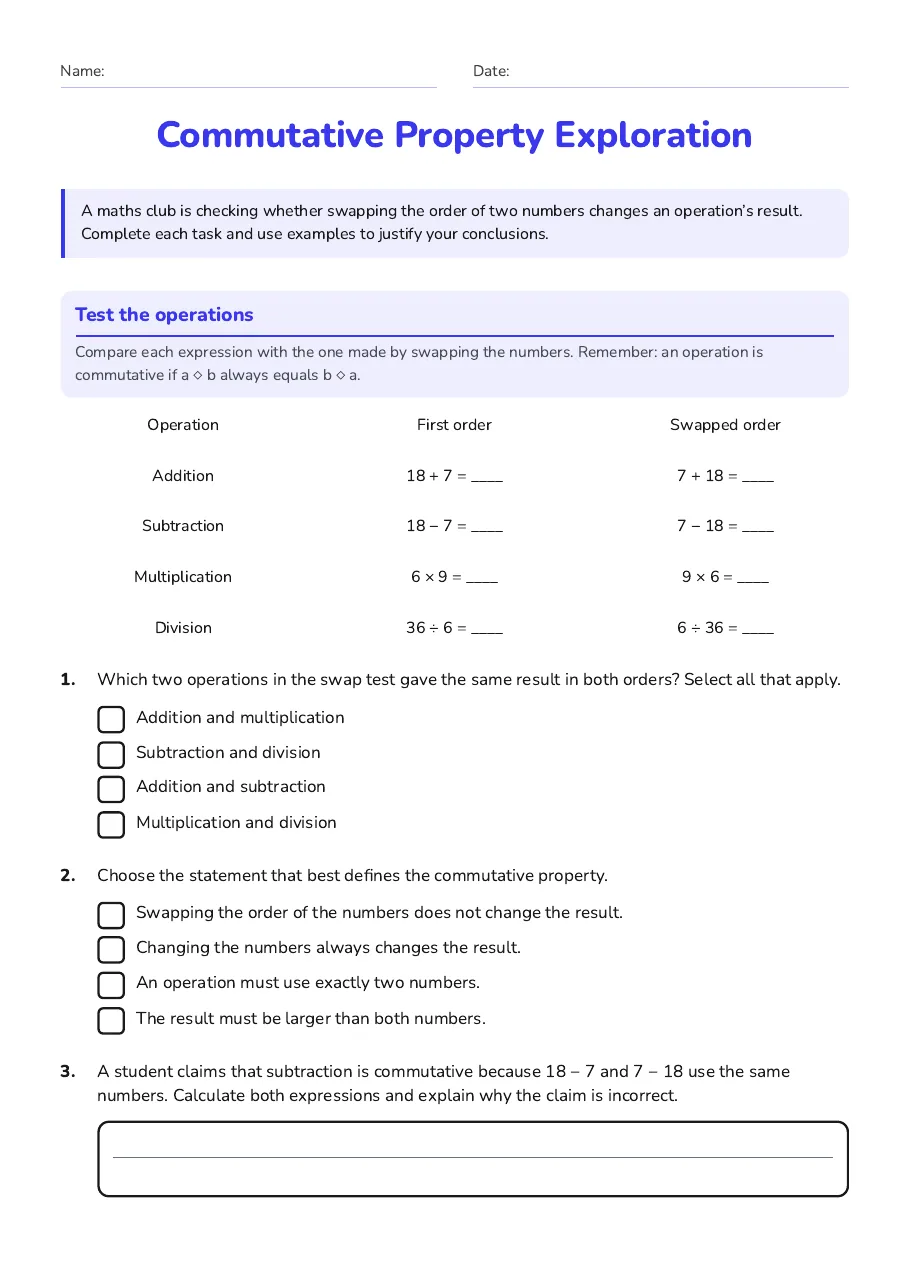
Test the operations
Compare each expression with the one made by swapping the numbers. Remember: an operation is commutative if a ◇ b always equals b ◇ a.
Operation
First order
Swapped order
Addition
18 + 7 = ____
7 + 18 = ____
Subtraction
18 − 7 = ____
7 − 18 = ____
Multiplication
6 × 9 = ____
9 × 6 = ____
Division
36 ÷ 6 = ____
6 ÷ 36 = ____
- Addition and multiplication
- Subtraction and division
- Addition and subtraction
- Multiplication and division
- Swapping the order of the numbers does not change the result.
- Changing the numbers always changes the result.
- An operation must use exactly two numbers.
- The result must be larger than both numbers.
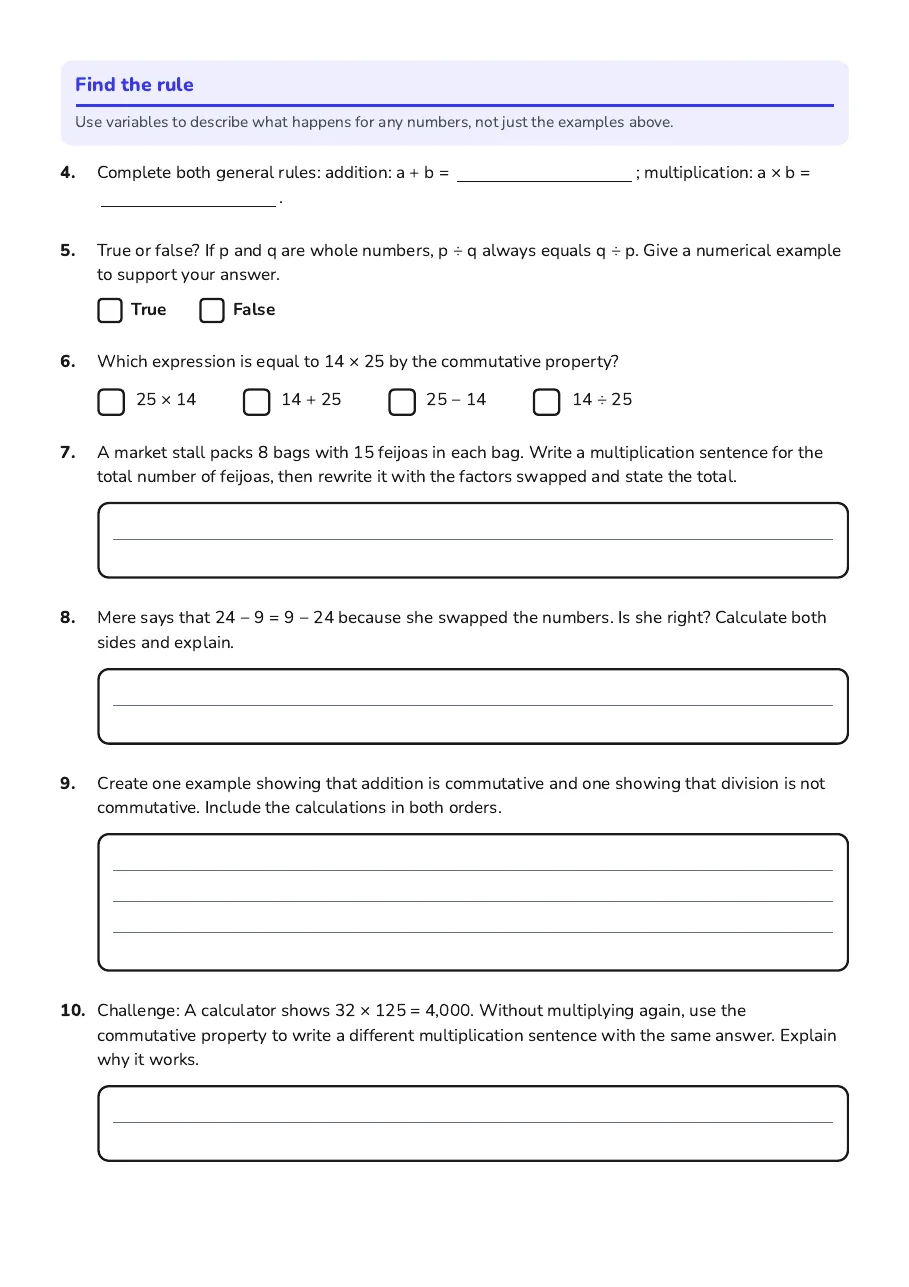
Find the rule
Use variables to describe what happens for any numbers, not just the examples above.
- 25 × 14
- 14 + 25
- 25 − 14
- 14 ÷ 25
2 printable pages
Page 1
Page 2
About This Worksheet
Free in Kuraplan
Sign up free, grab the PDF, and customize it for your class.
Print-Ready
Formatted for standard paper. Clean layout, easy to read.
AI-Generated
Created with Kuraplan's AI, designed for real classroom use.
For Teachers & Parents
Use in classrooms, for homework, tutoring, or homeschool.
Need a custom version of this worksheet?
Kuraplan's AI generates custom worksheets in seconds — differentiated for every learner, aligned to your curriculum.
Generate Custom Worksheets — FreeMore Maths Worksheets
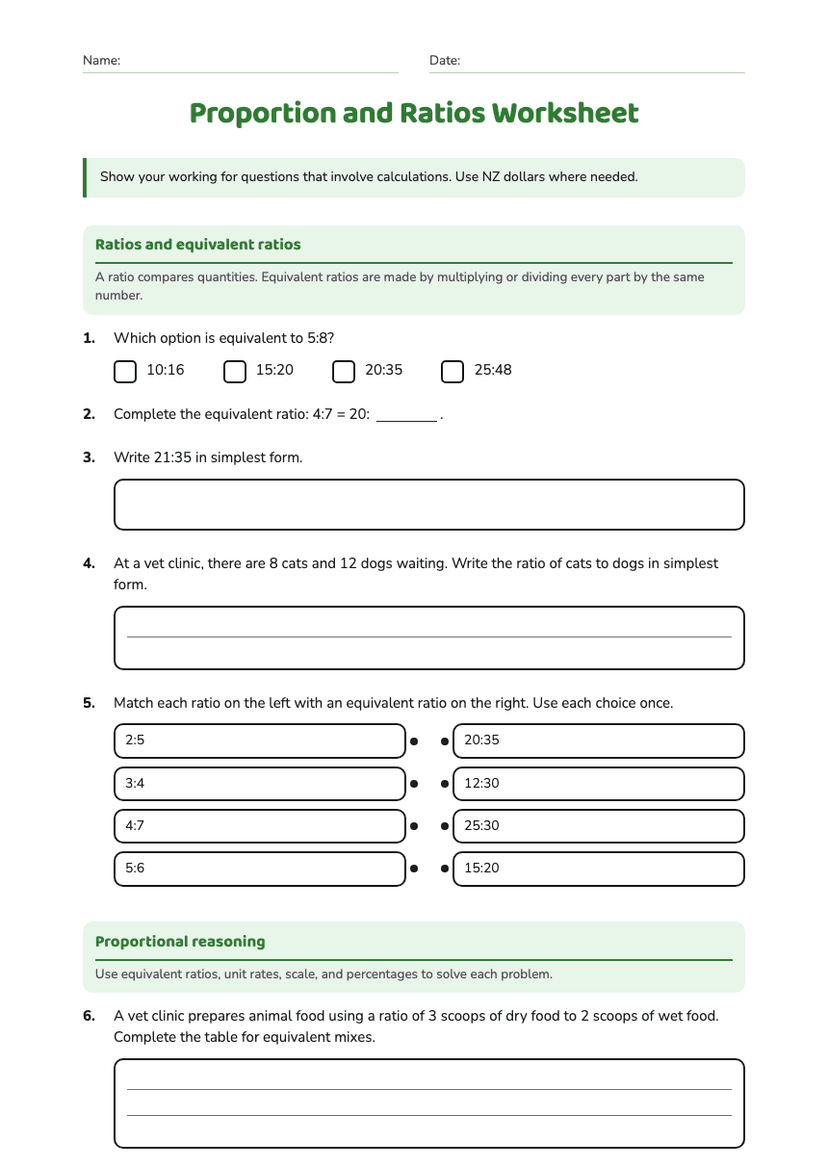
Proportion and Ratios Worksheet
Free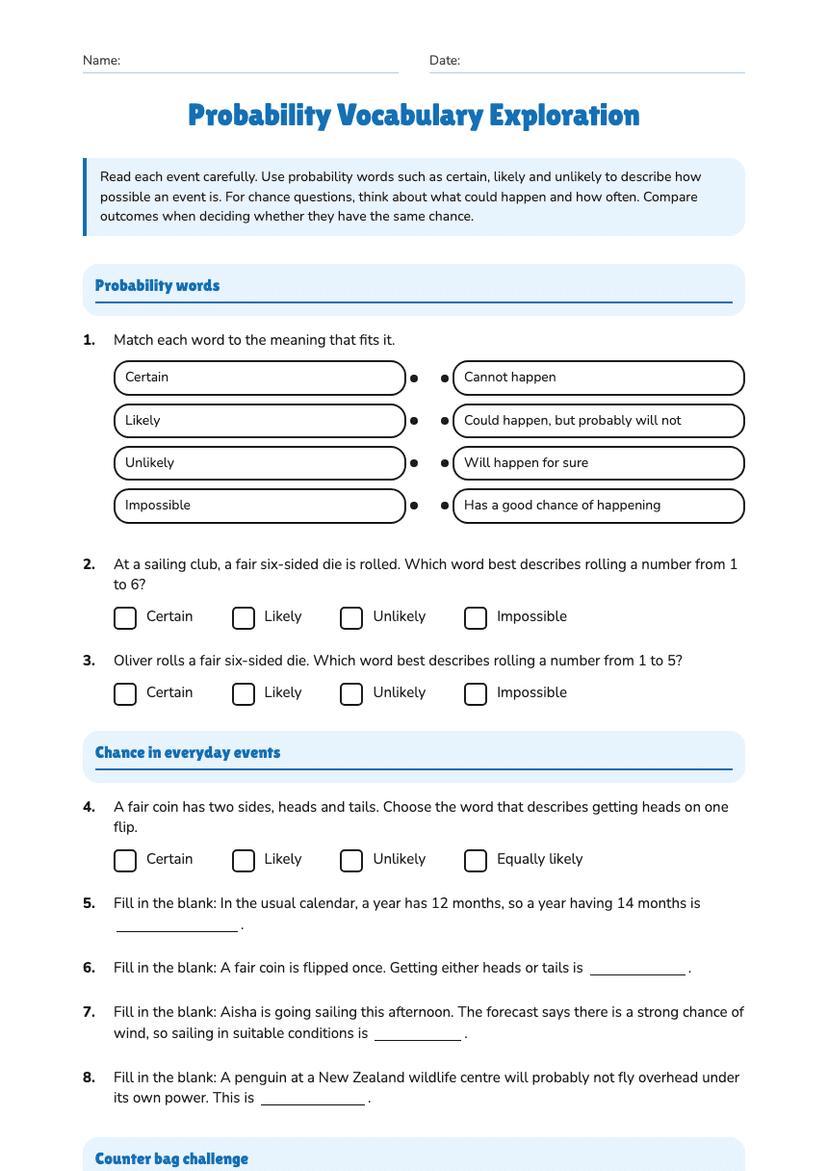
Probability Vocabulary Exploration
Free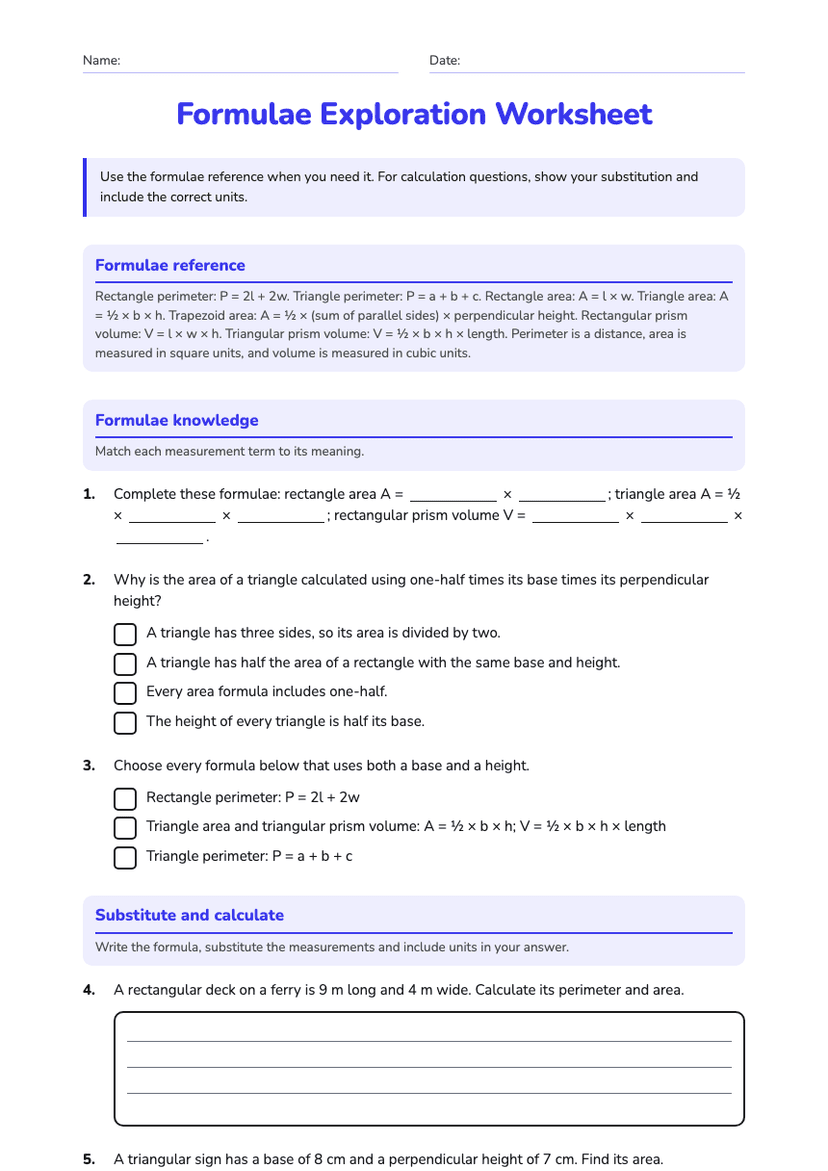
Formulae Exploration Worksheet
Free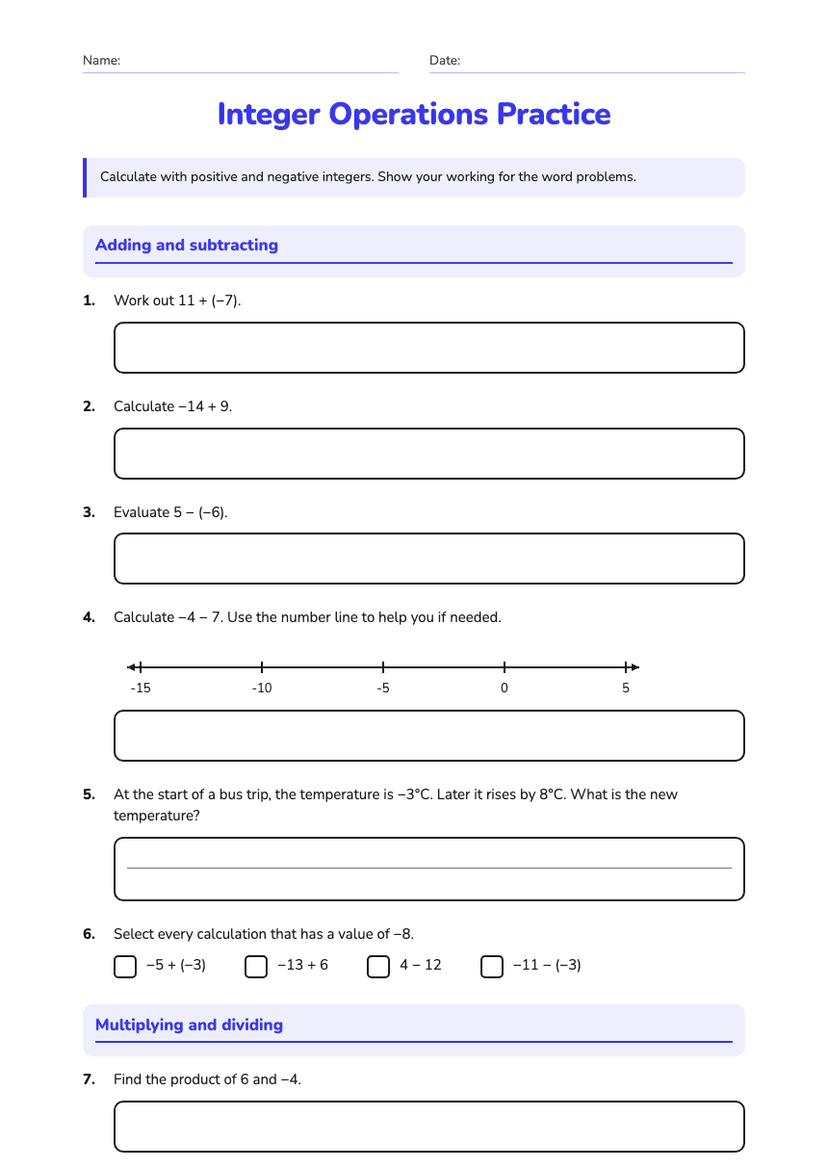
Integer Operations Practice
Free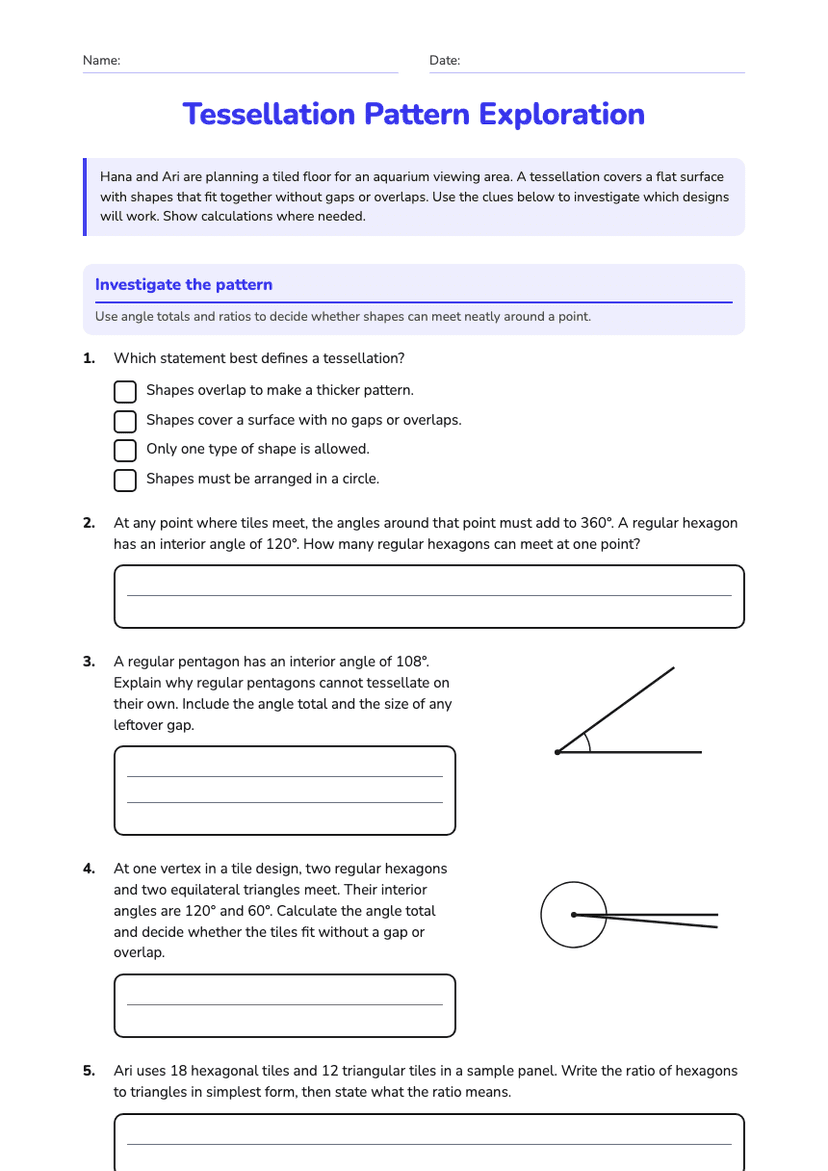
Tessellation Pattern Exploration
Free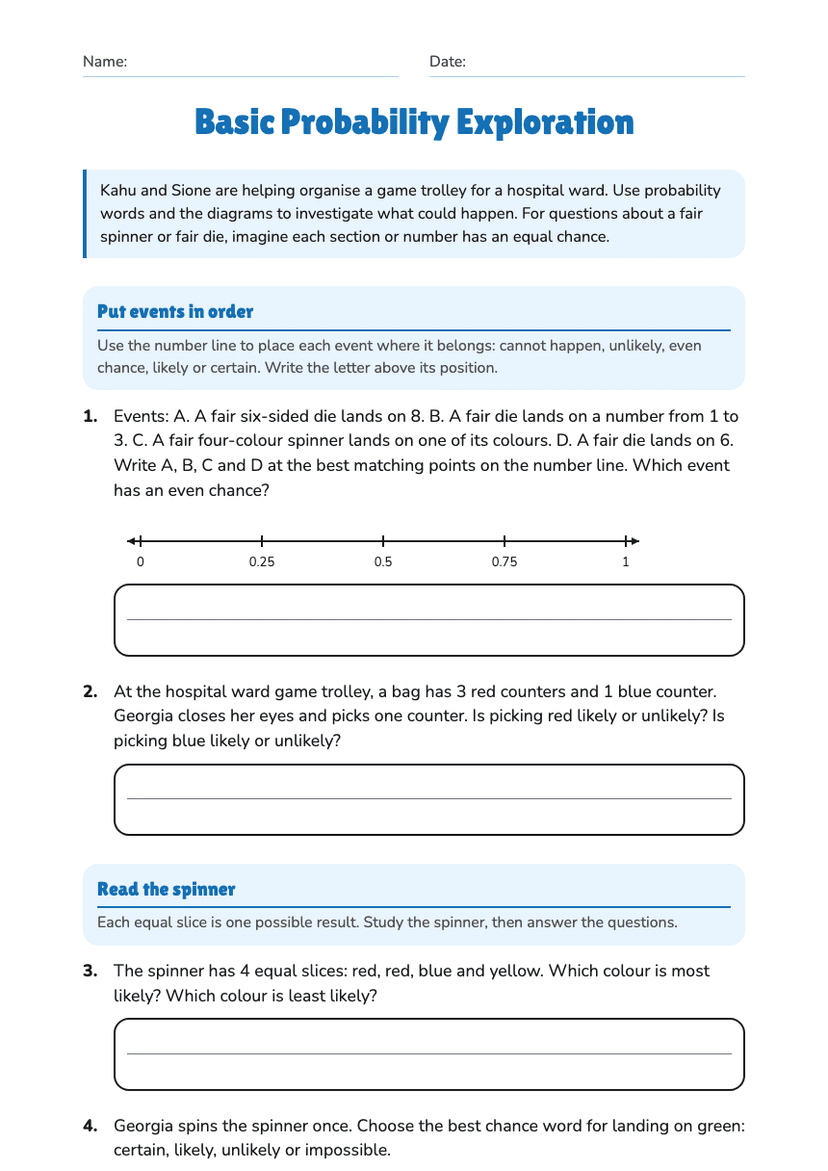
Basic Probability Exploration
Free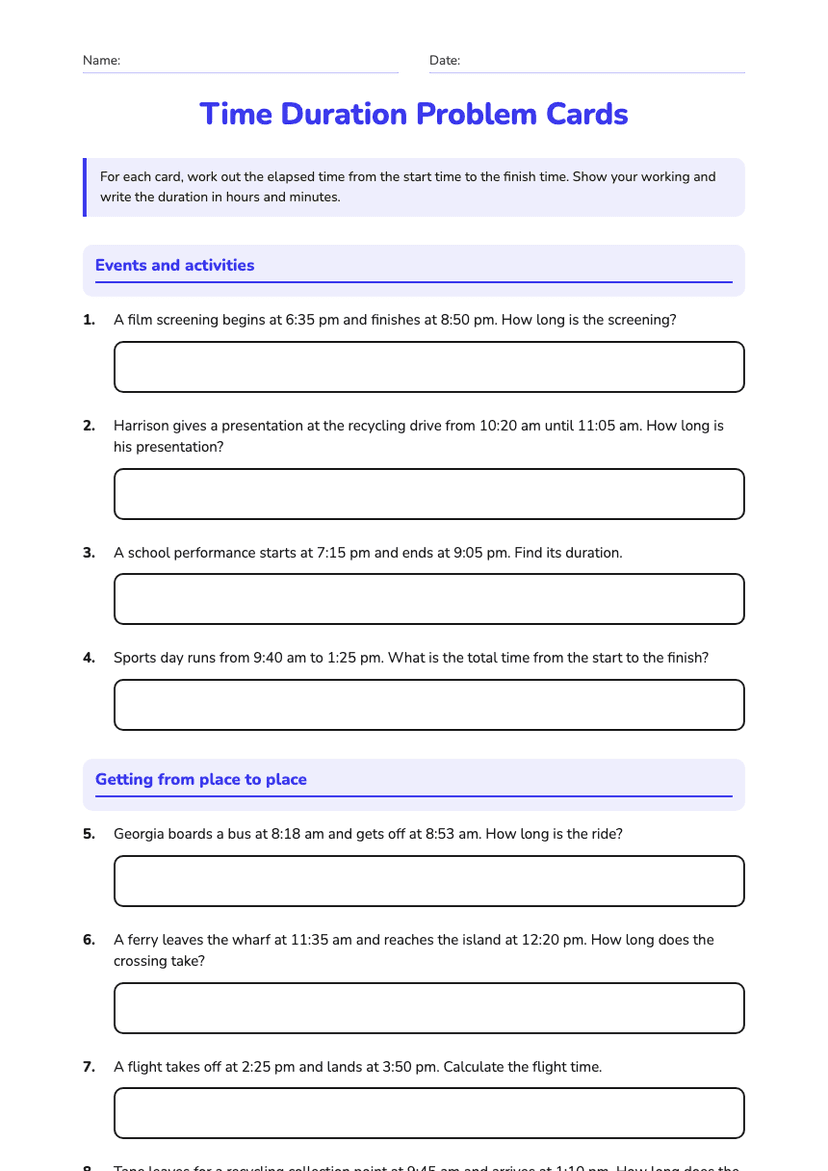
Time Duration Problem Cards
Free