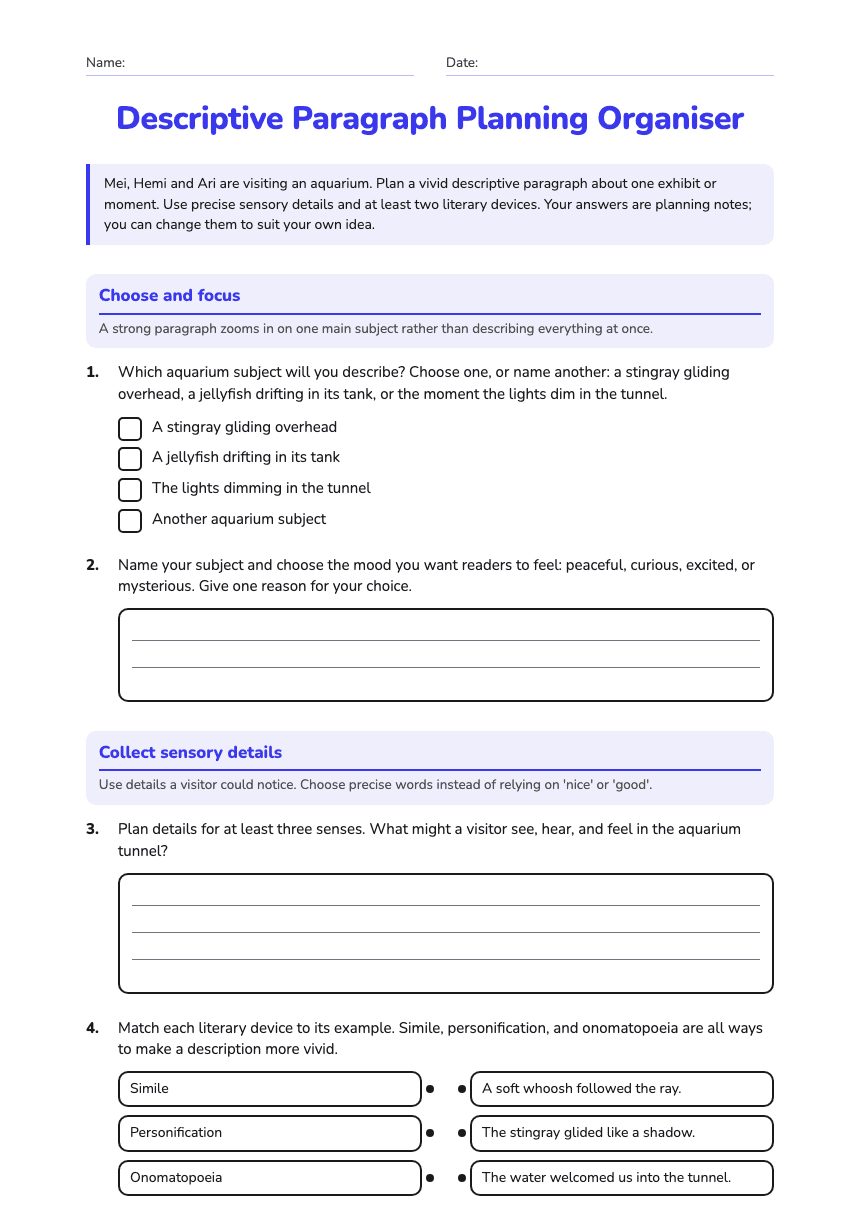
Descriptive Paragraph Planning Organiser
A free english worksheet ready for your classroom. Open in Kuraplan to grab the print-ready PDF, customize it for your students, or generate a fresh version in seconds.
Descriptive Paragraph Planning Organiser
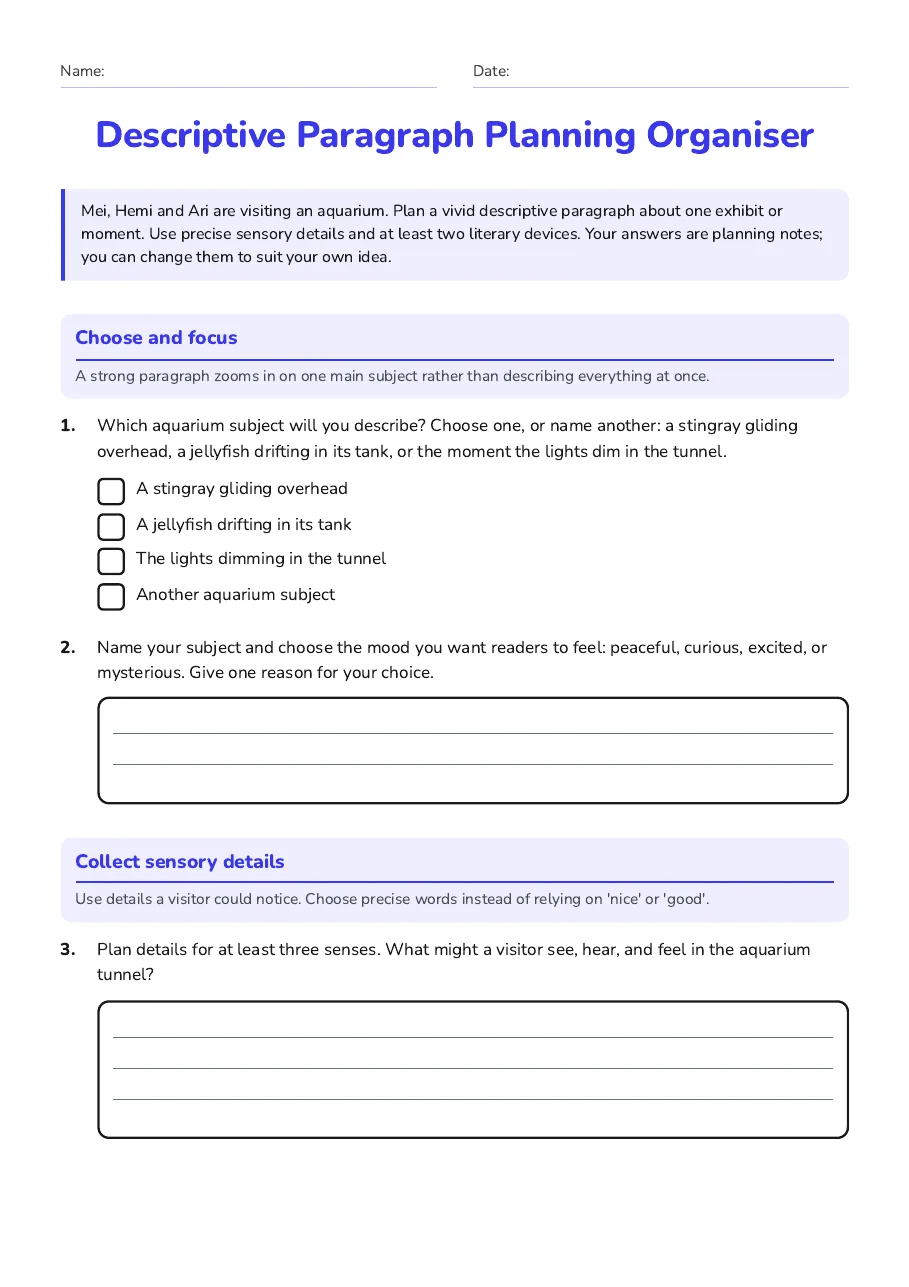
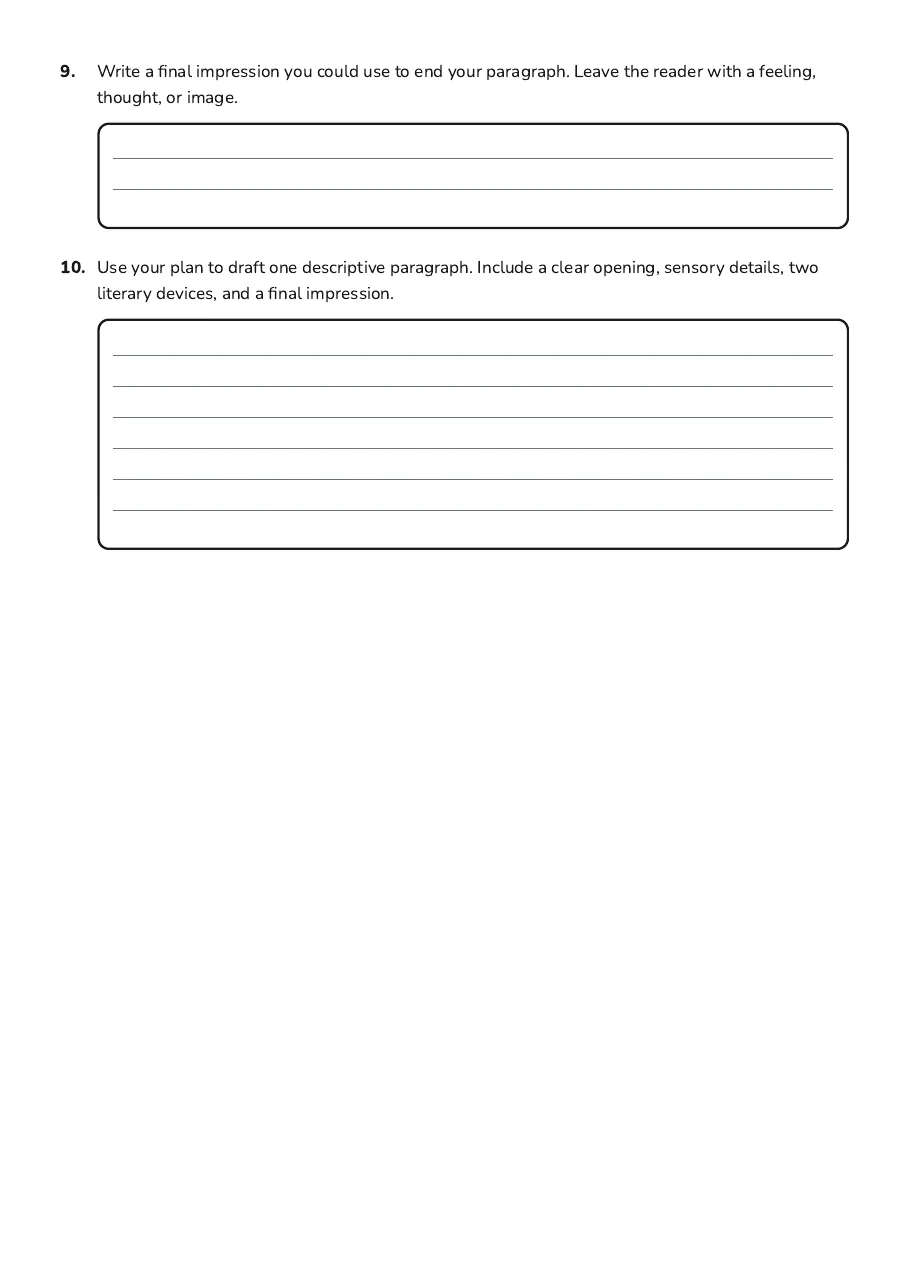
Choose and focus
A strong paragraph zooms in on one main subject rather than describing everything at once.
- A stingray gliding overhead
- A jellyfish drifting in its tank
- The lights dimming in the tunnel
- Another aquarium subject
Collect sensory details
Use details a visitor could notice. Choose precise words instead of relying on 'nice' or 'good'.
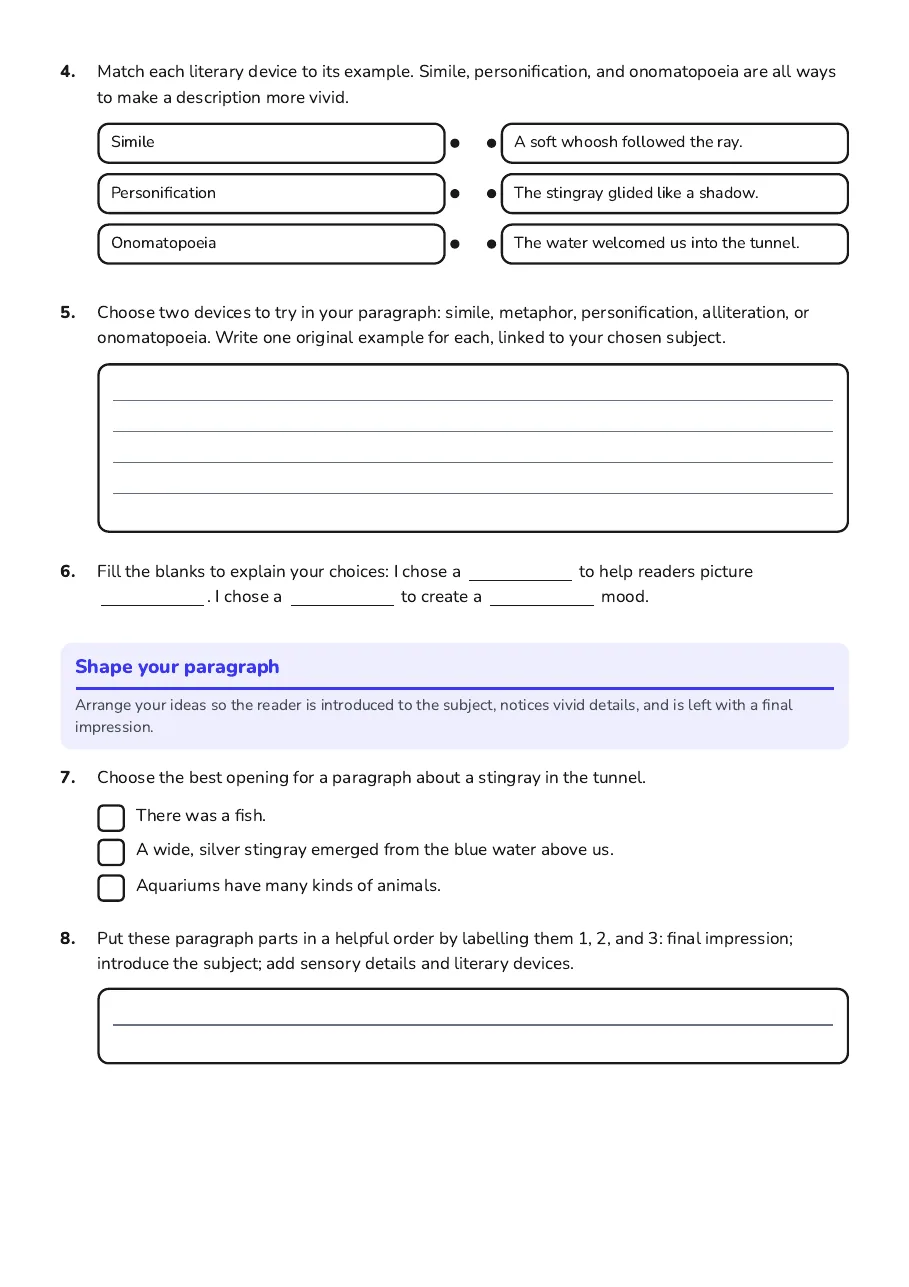
- Simile
- Personification
- Onomatopoeia
- A soft whoosh followed the ray.
- The stingray glided like a shadow.
- The water welcomed us into the tunnel.
Shape your paragraph
Arrange your ideas so the reader is introduced to the subject, notices vivid details, and is left with a final impression.
- There was a fish.
- A wide, silver stingray emerged from the blue water above us.
- Aquariums have many kinds of animals.
3 printable pages
Page 1
Page 2
Page 3
About This Worksheet
Free in Kuraplan
Sign up free, grab the PDF, and customize it for your class.
Print-Ready
Formatted for standard paper. Clean layout, easy to read.
AI-Generated
Created with Kuraplan's AI, designed for real classroom use.
For Teachers & Parents
Use in classrooms, for homework, tutoring, or homeschool.
Need a custom version of this worksheet?
Kuraplan's AI generates custom worksheets in seconds — differentiated for every learner, aligned to your curriculum.
Generate Custom Worksheets — FreeMore English Worksheets
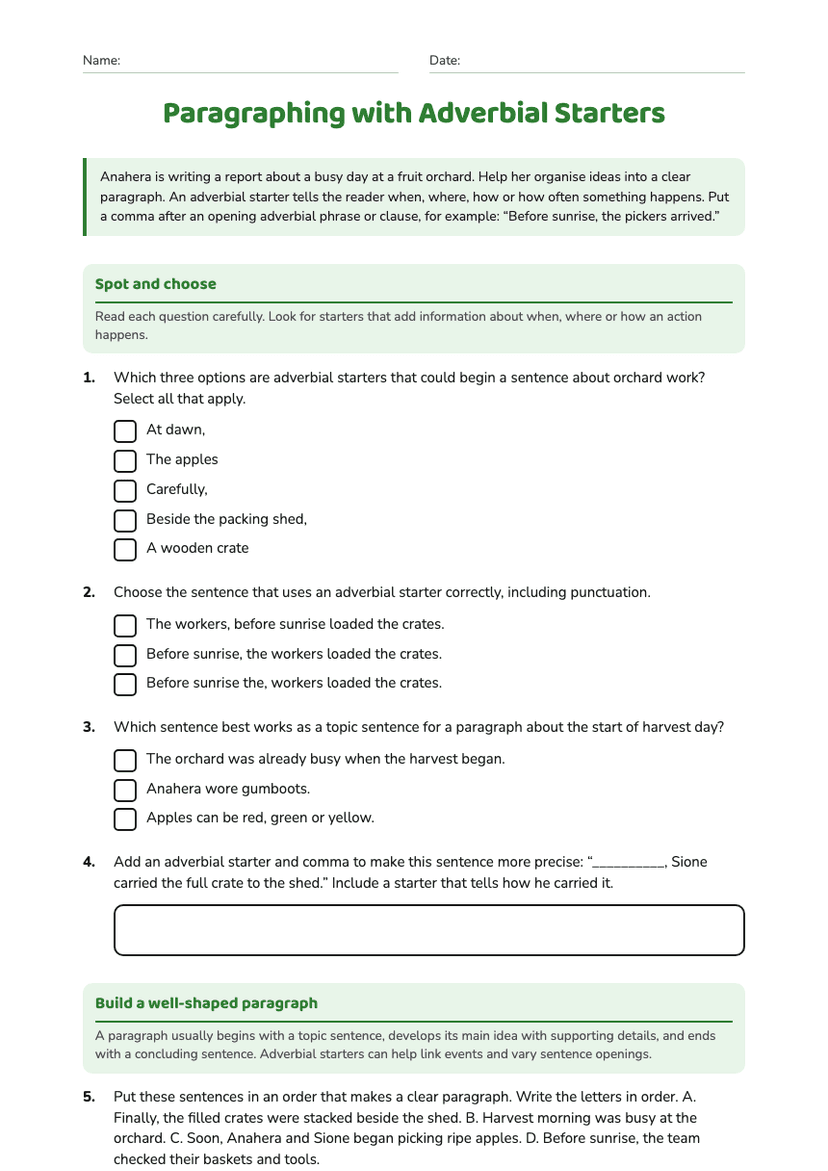
Paragraphing with Adverbial Starters
Free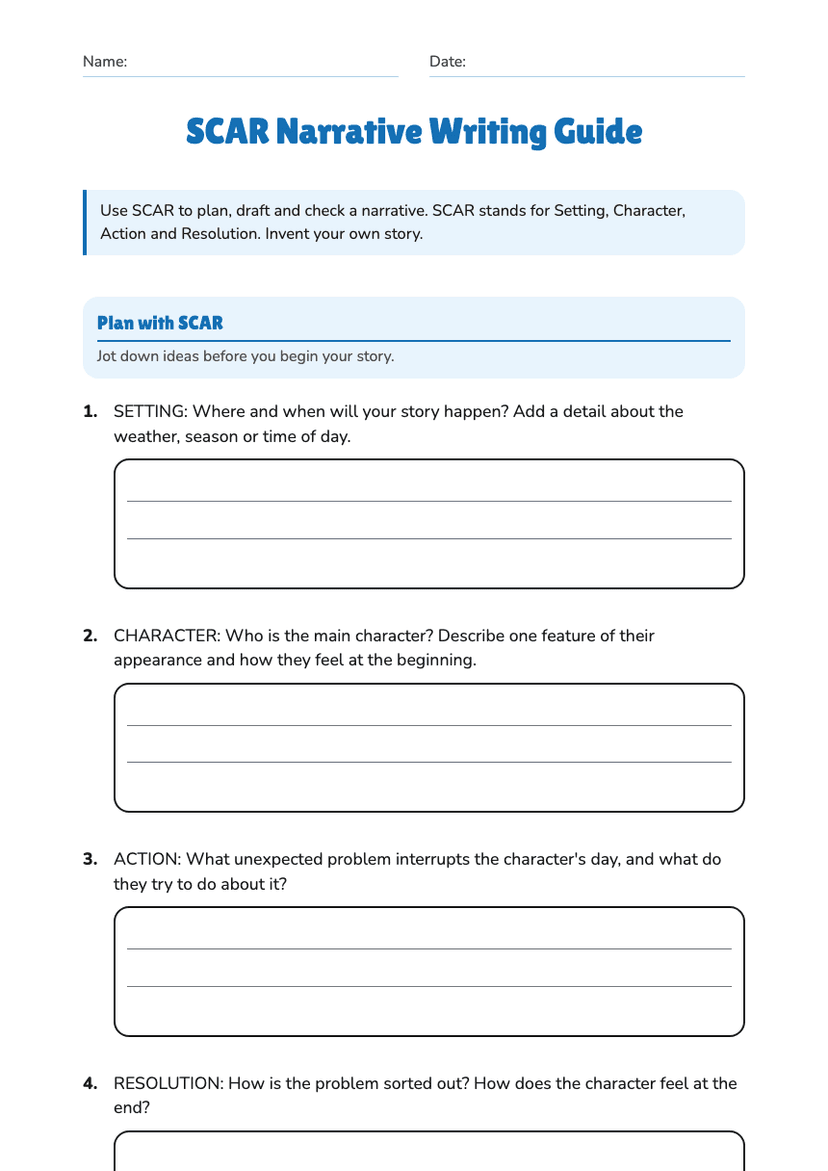
SCAR Narrative Writing Guide
Free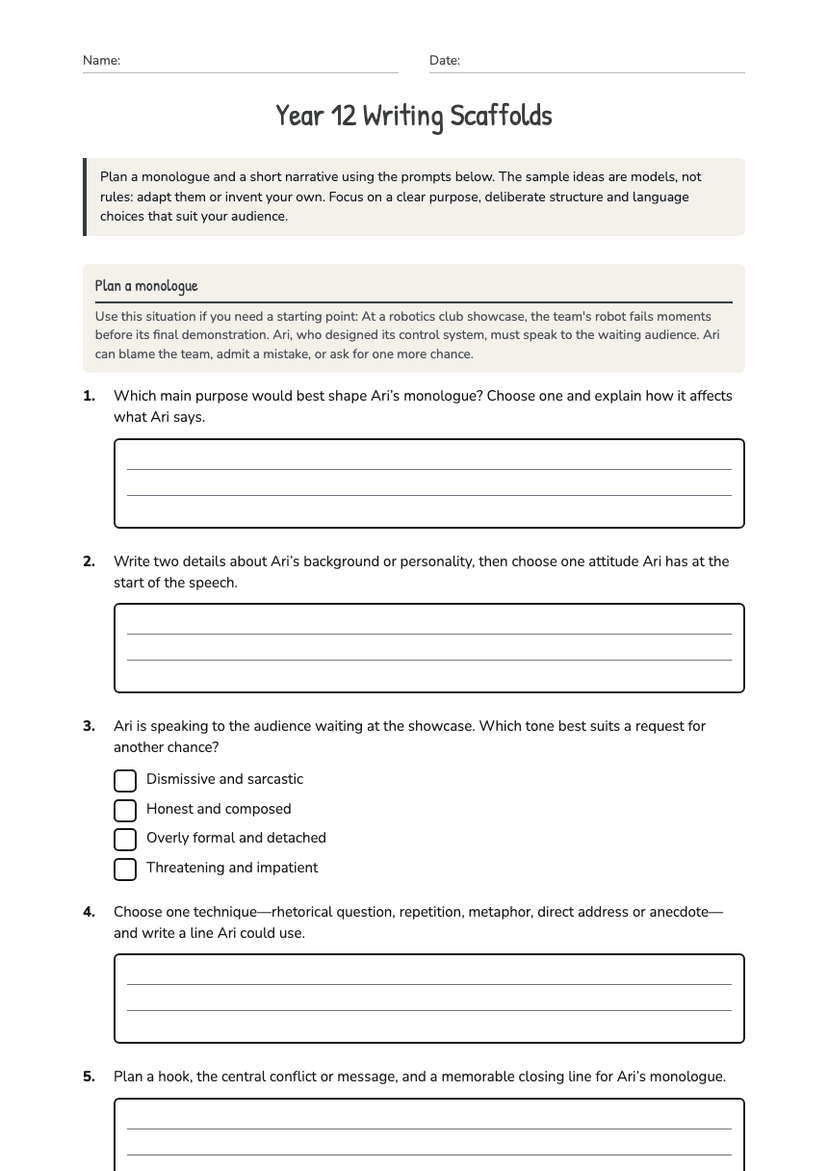
Year 12 Writing Scaffolds
Free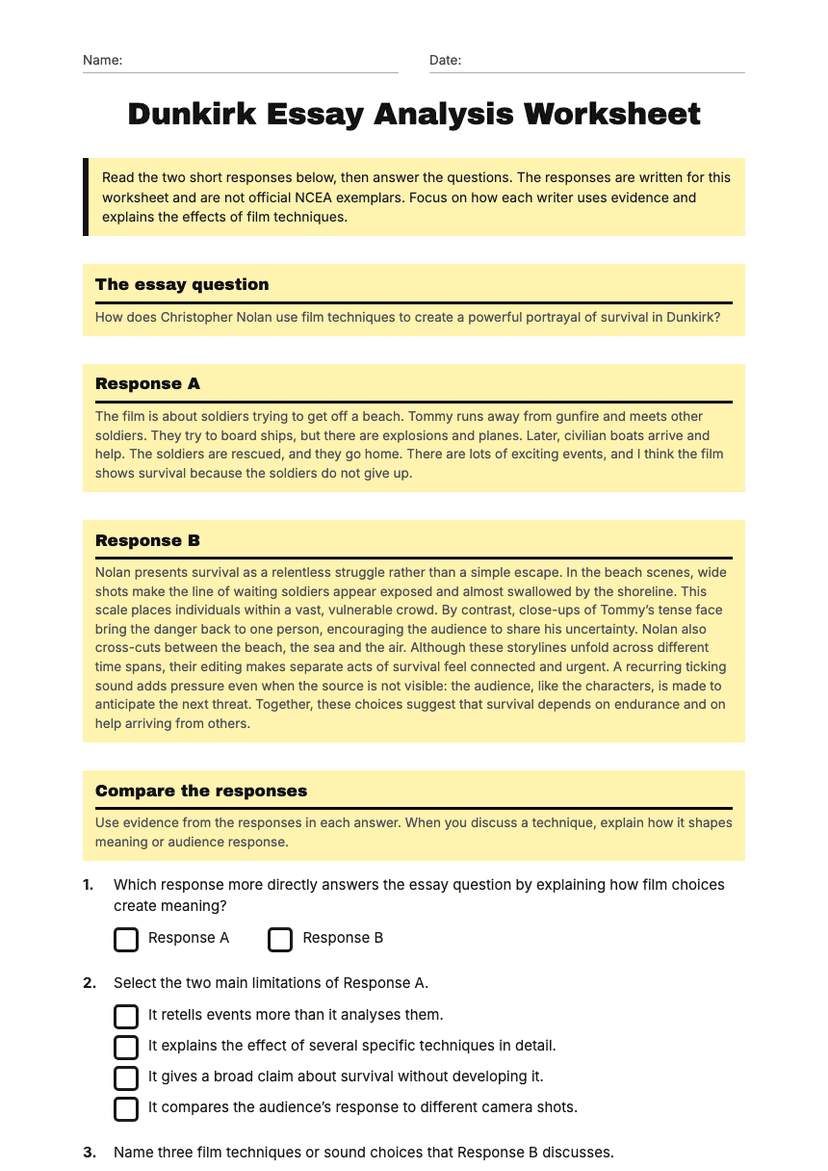
Dunkirk Essay Analysis Worksheet
Free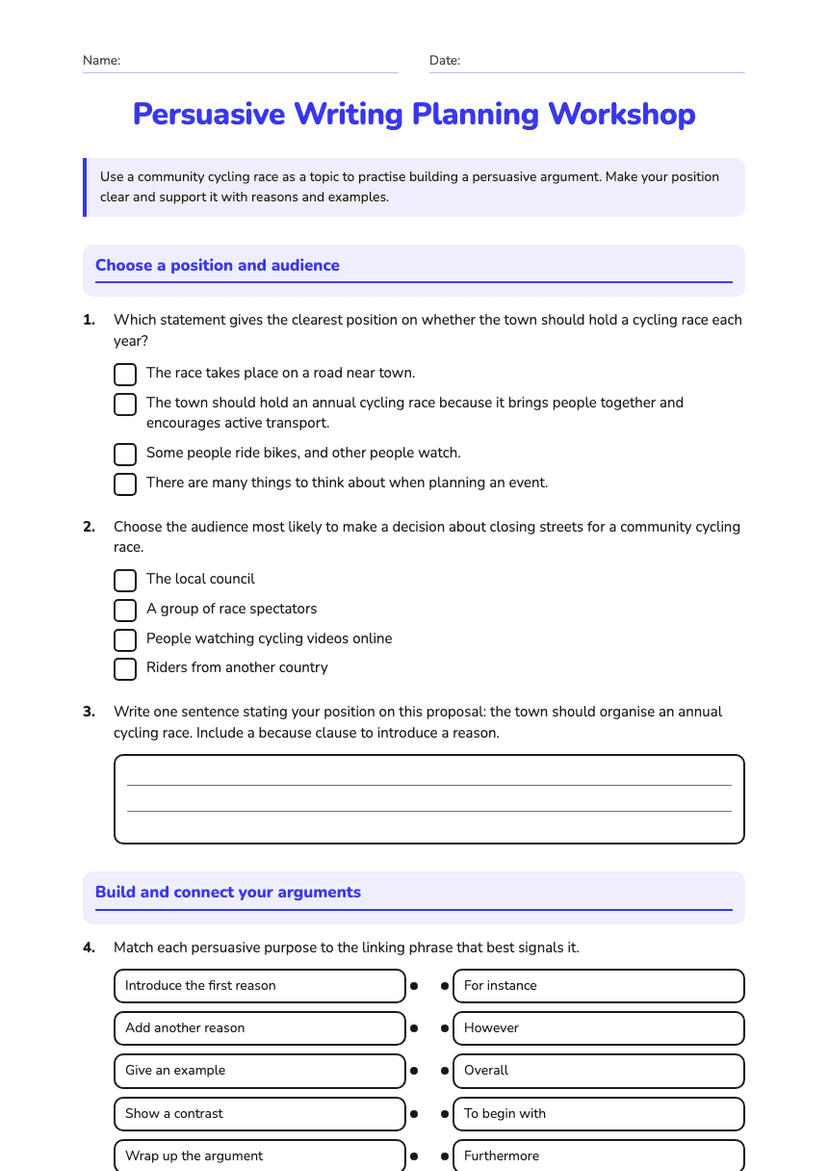
Persuasive Writing Planning Workshop
Free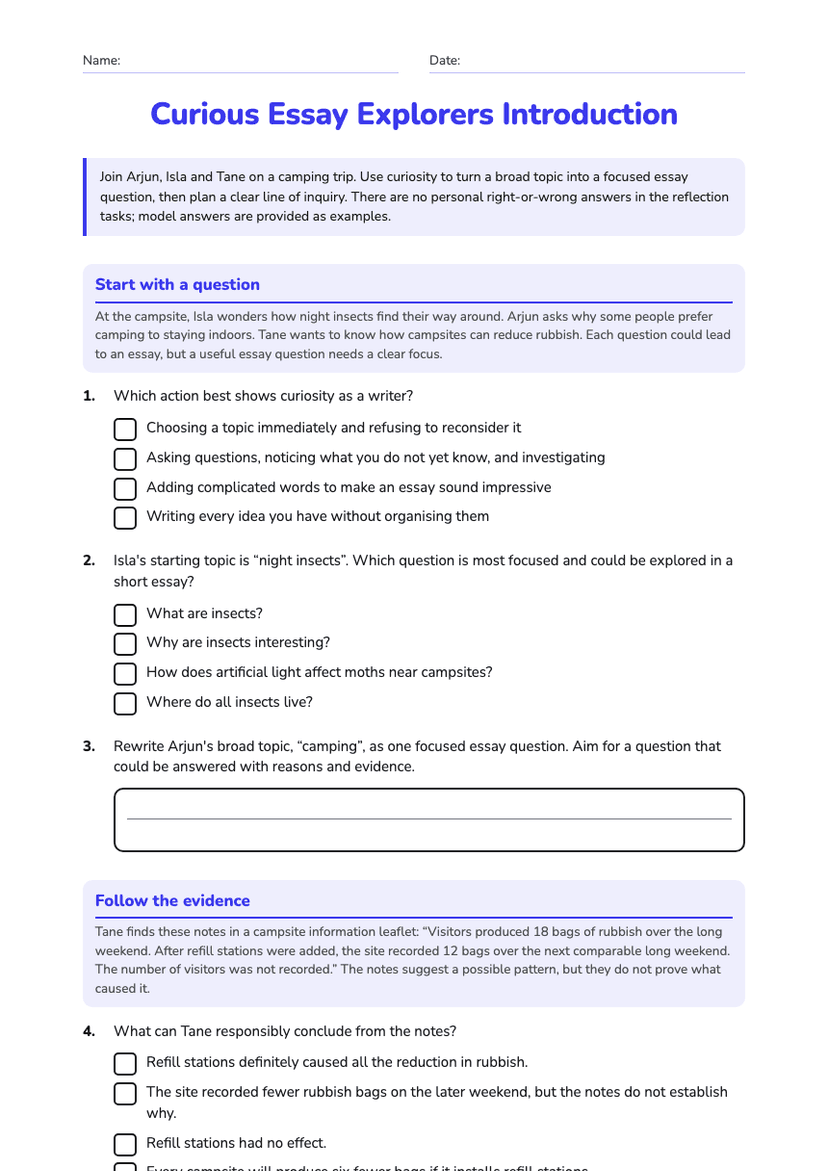
Curious Essay Explorers Introduction
Free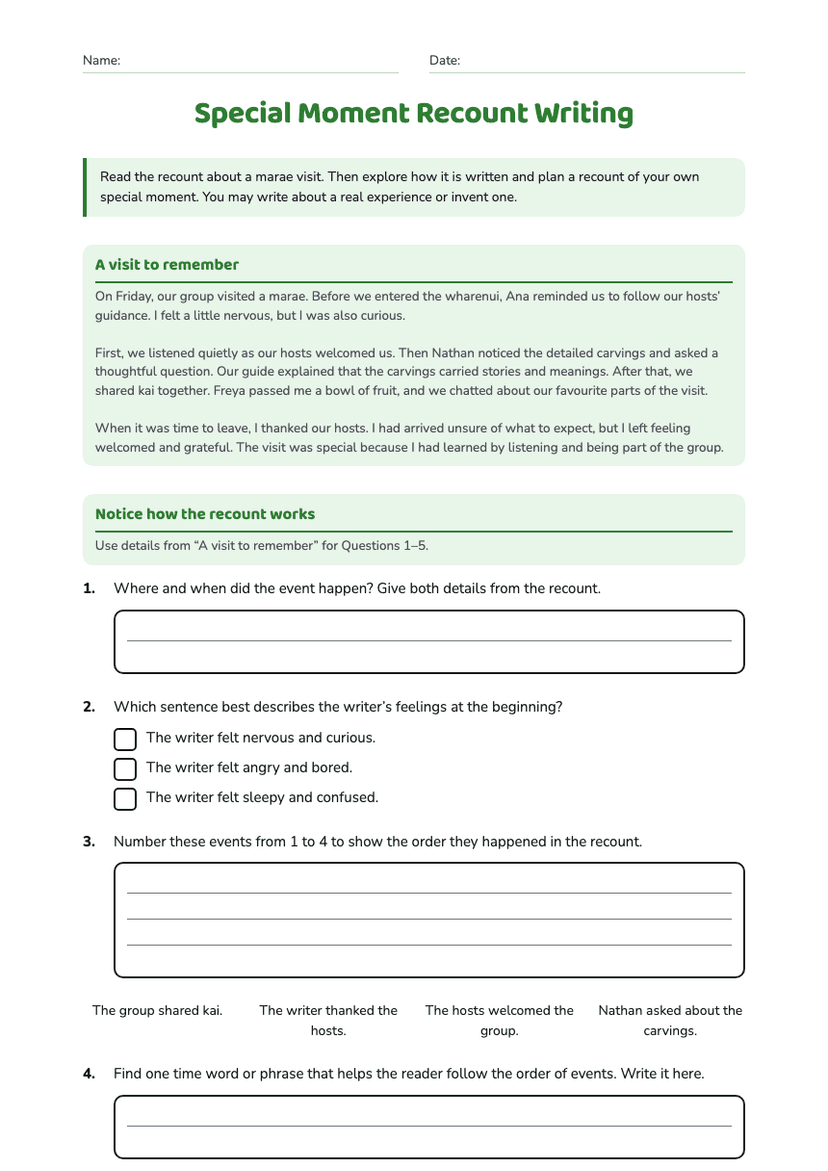
Special Moment Recount Writing
Free