Early Aotearoa New Zealand History
A free social sciences worksheet ready for your classroom. Open in Kuraplan to grab the print-ready PDF, customize it for your students, or generate a fresh version in seconds.

Early Aotearoa New Zealand History
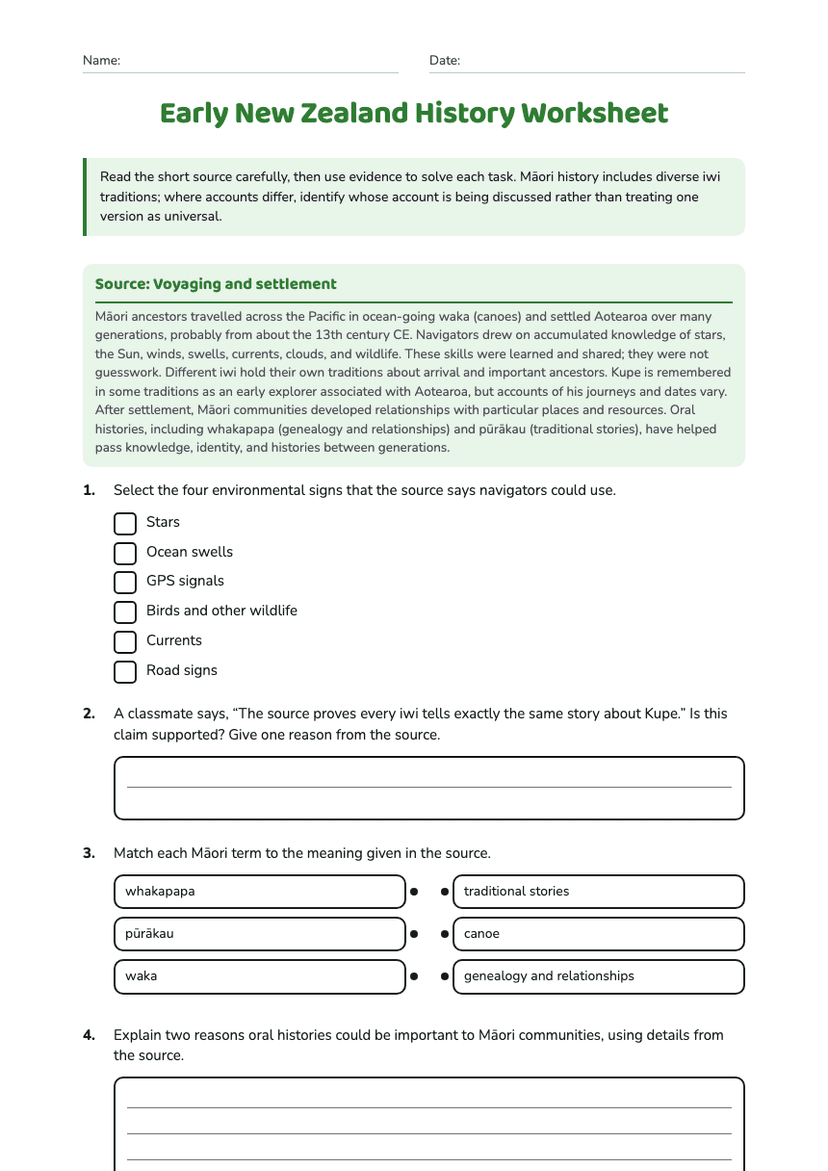
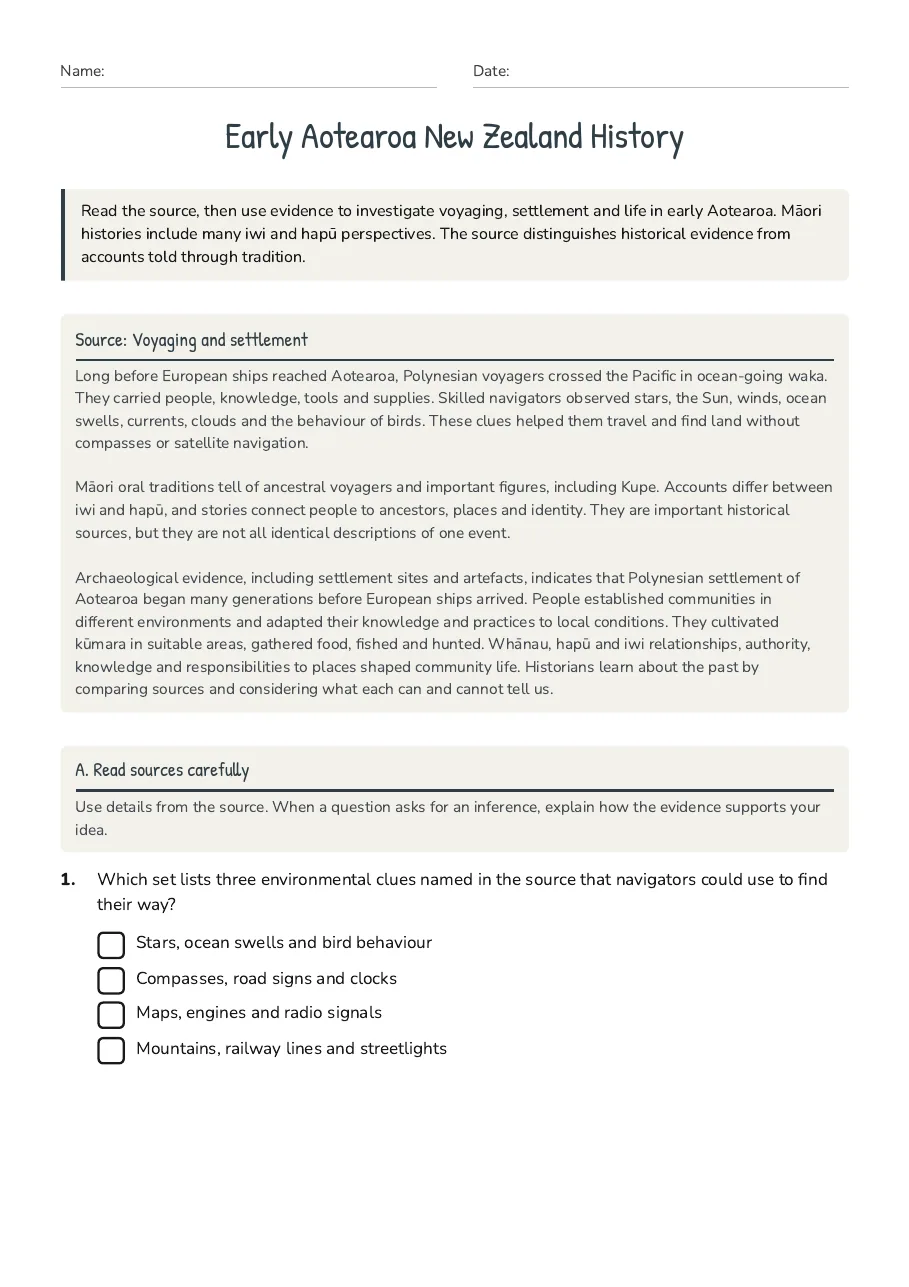
Source: Voyaging and settlement
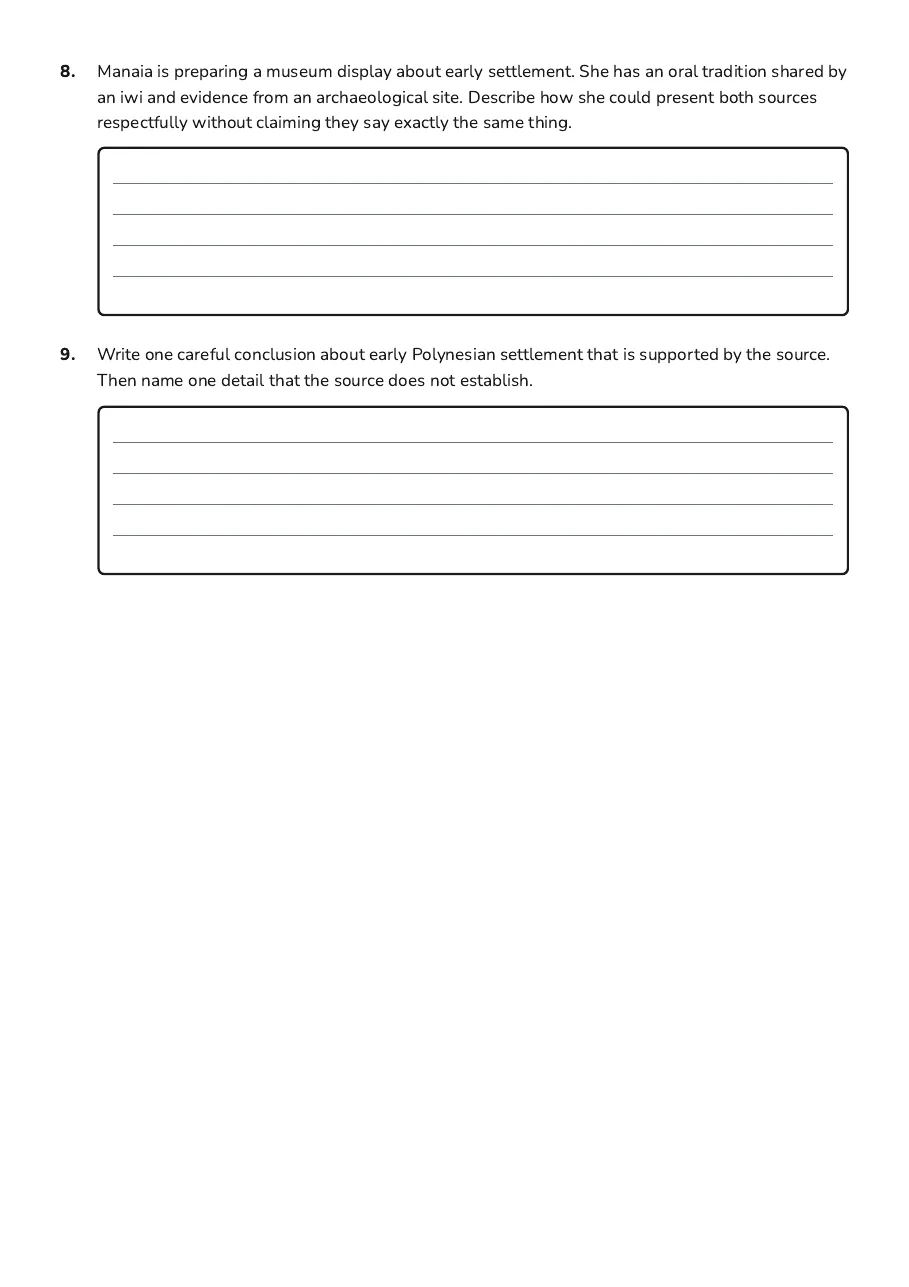
Long before European ships reached Aotearoa, Polynesian voyagers crossed the Pacific in ocean-going waka. They carried people, knowledge, tools and supplies. Skilled navigators observed stars, the Sun, winds, ocean swells, currents, clouds and the behaviour of birds. These clues helped them travel and find land without compasses or satellite navigation. Māori oral traditions tell of ancestral voyagers and important figures, including Kupe. Accounts differ between iwi and hapū, and stories connect people to ancestors, places and identity. They are important historical sources, but they are not all identical descriptions of one event. Archaeological evidence, including settlement sites and artefacts, indicates that Polynesian settlement of Aotearoa began many generations before European ships arrived. People established communities in different environments and adapted their knowledge and practices to local conditions. They cultivated kūmara in suitable areas, gathered food, fished and hunted. Whānau, hapū and iwi relationships, authority, knowledge and responsibilities to places shaped community life. Historians learn about the past by comparing sources and considering what each can and cannot tell us.
A. Read sources carefully
Use details from the source. When a question asks for an inference, explain how the evidence supports your idea.
- Stars, ocean swells and bird behaviour
- Compasses, road signs and clocks
- Maps, engines and radio signals
- Mountains, railway lines and streetlights
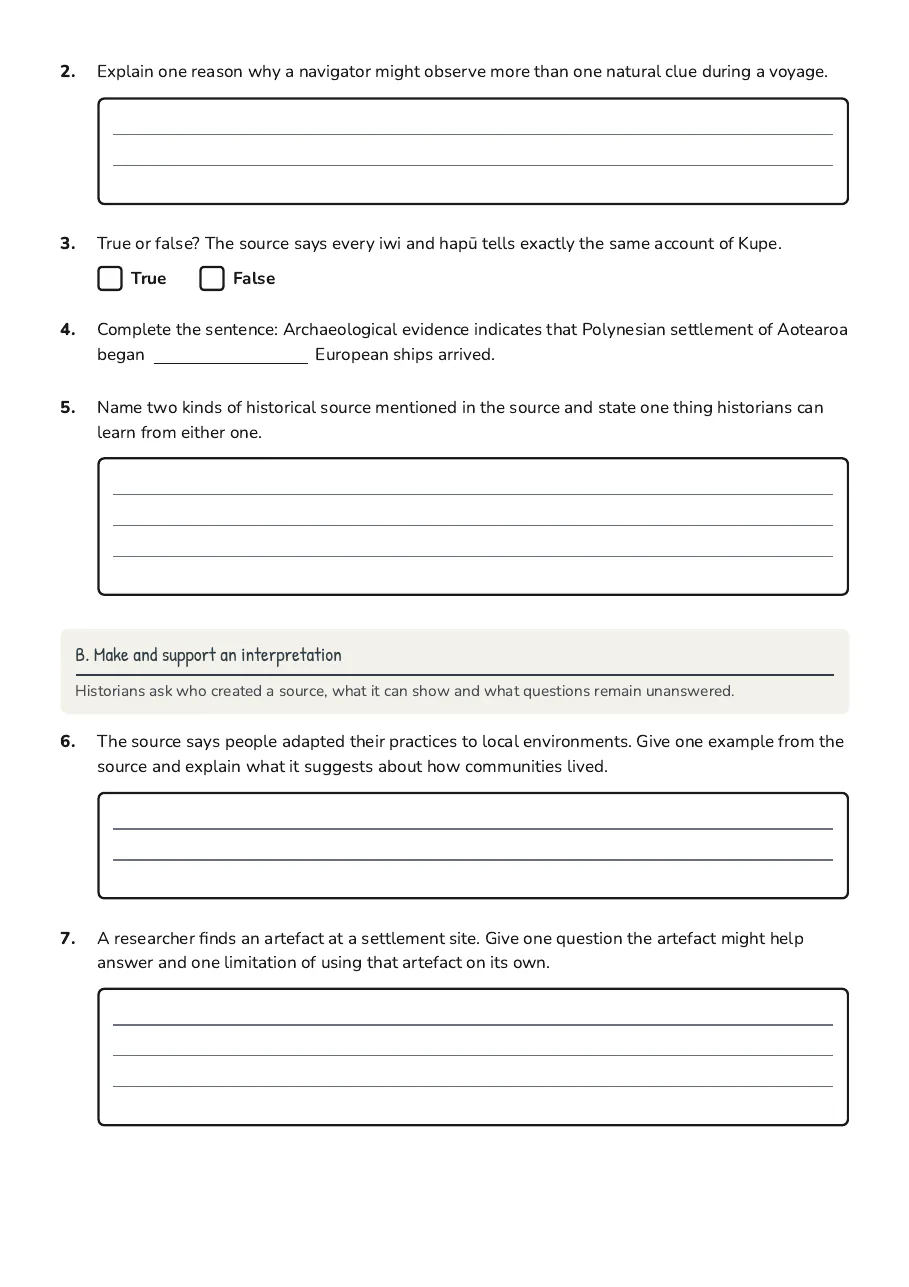
B. Make and support an interpretation
Historians ask who created a source, what it can show and what questions remain unanswered.
3 printable pages
Page 1
Page 2
Page 3
About This Worksheet
Free in Kuraplan
Sign up free, grab the PDF, and customize it for your class.
Print-Ready
Formatted for standard paper. Clean layout, easy to read.
AI-Generated
Created with Kuraplan's AI, designed for real classroom use.
For Teachers & Parents
Use in classrooms, for homework, tutoring, or homeschool.
Need a custom version of this worksheet?
Kuraplan's AI generates custom worksheets in seconds — differentiated for every learner, aligned to your curriculum.
Generate Custom Worksheets — FreeMore Social Sciences Worksheets
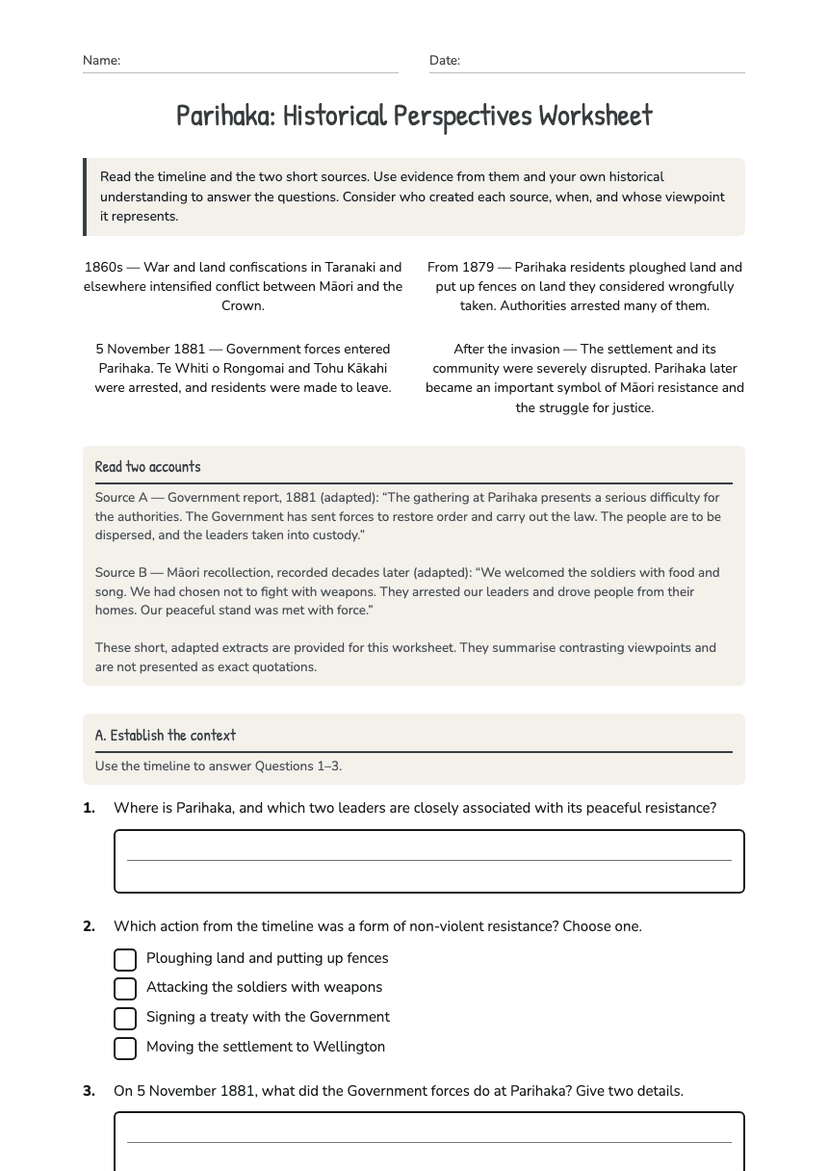
Parihaka: Historical Perspectives Worksheet
Free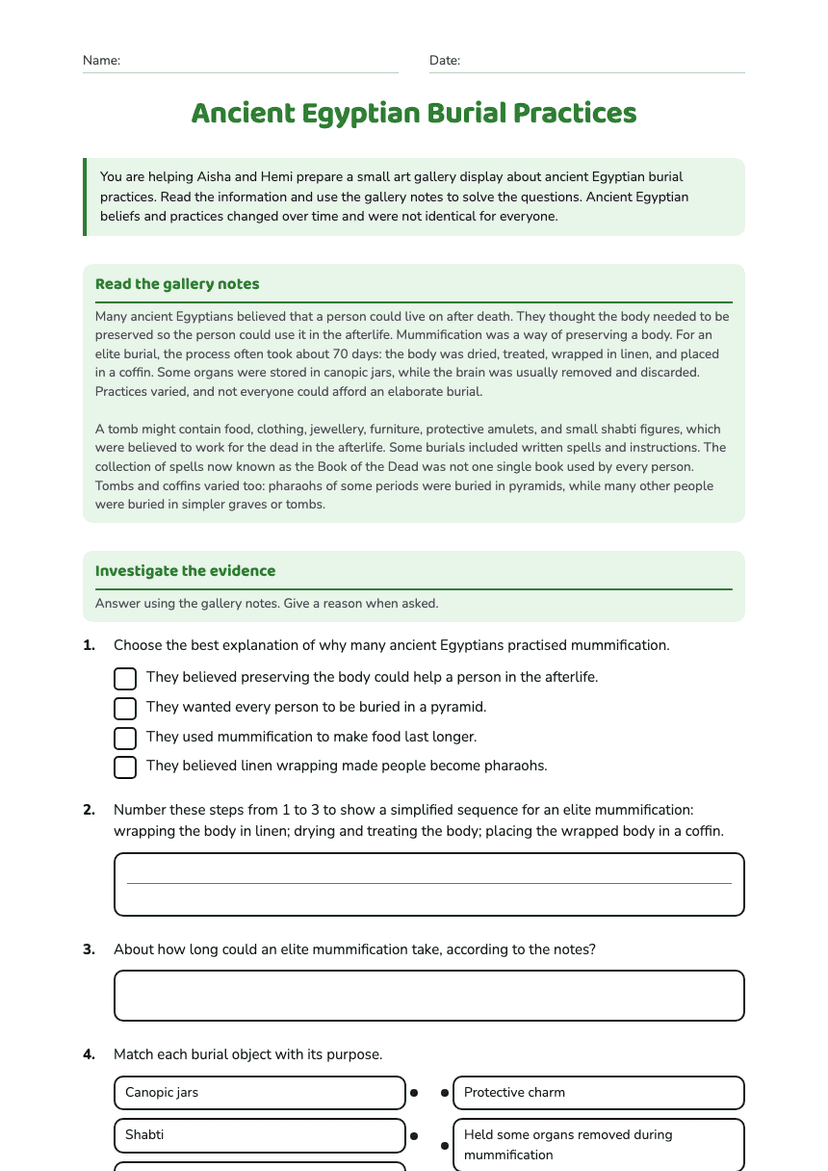
Ancient Egyptian Burial Practices
Free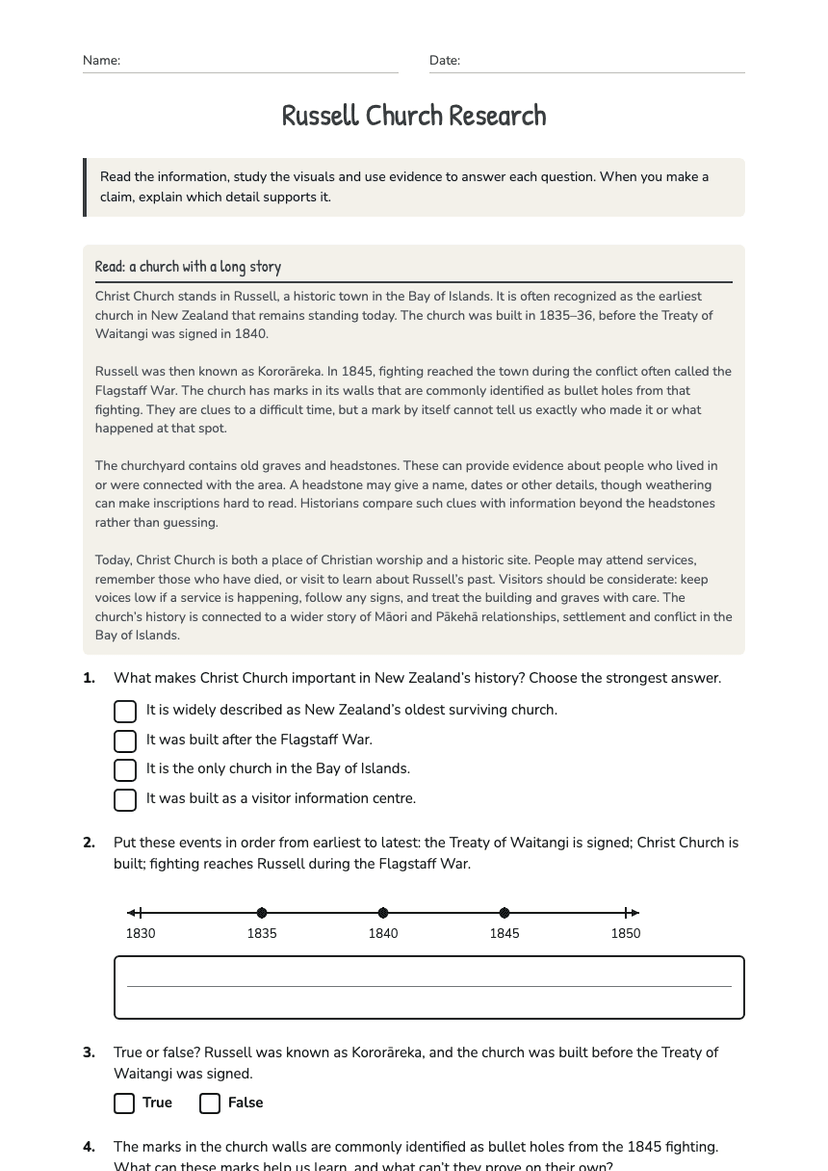
Russell Church Research
Free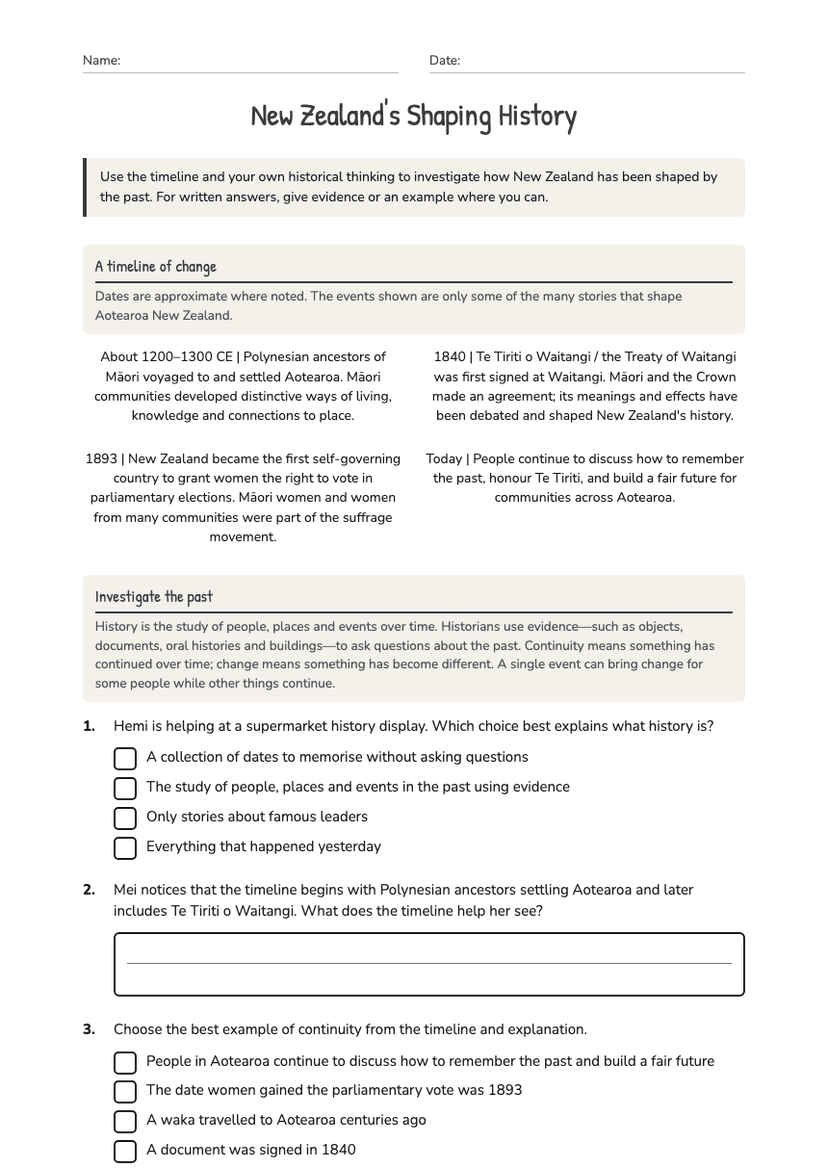
New Zealand's Shaping History
Free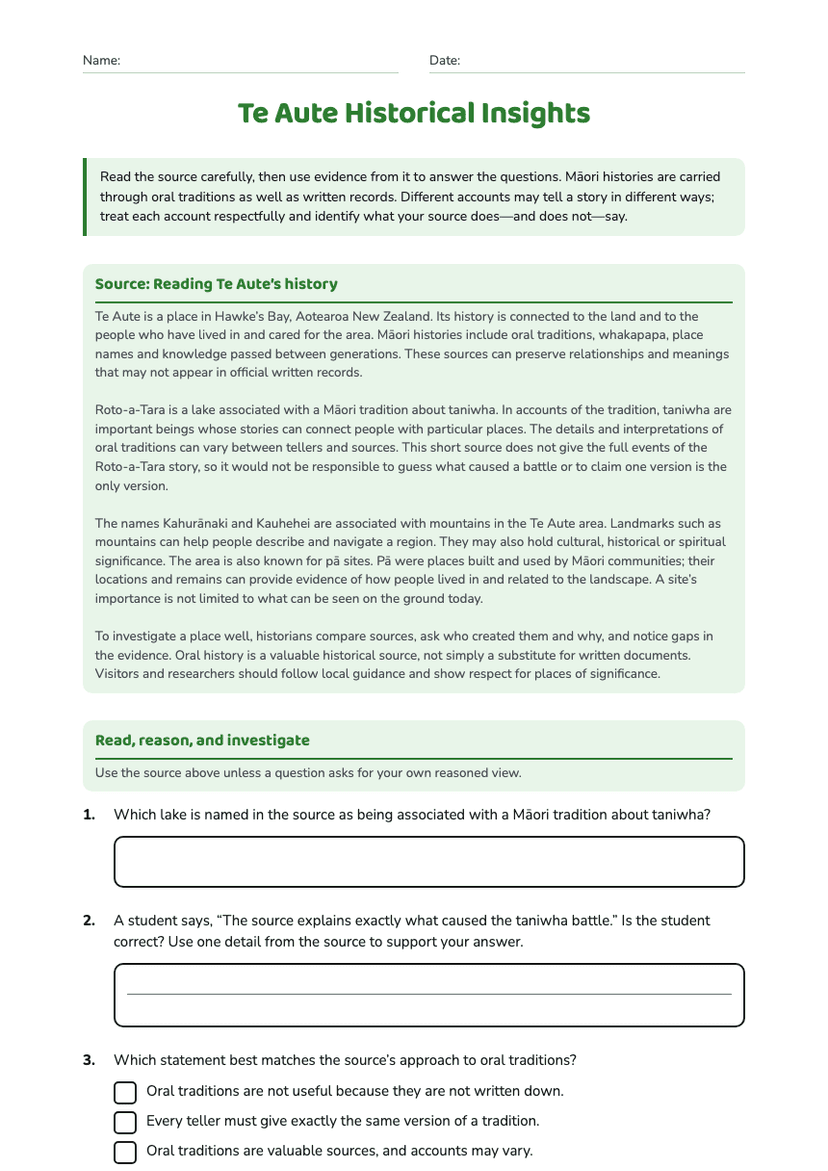
Te Aute Historical Insights
Free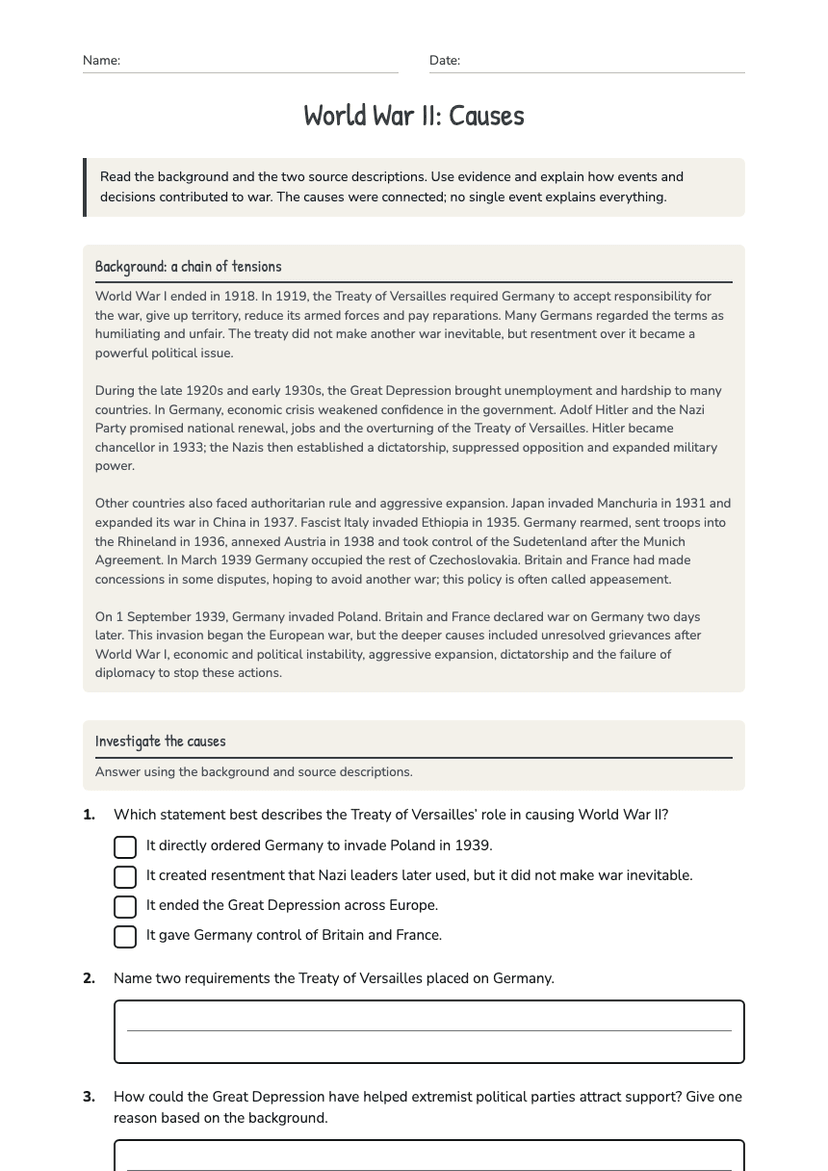
World War II: Causes
Free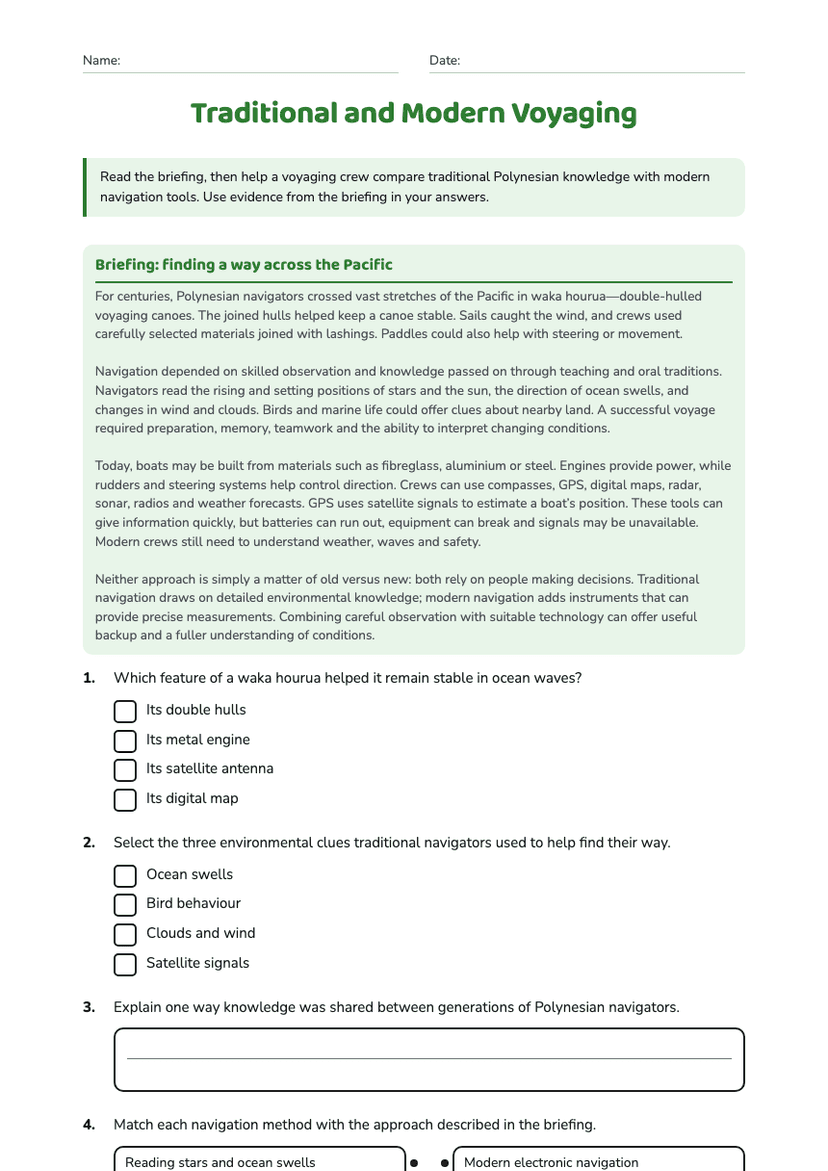
Traditional and Modern Voyaging
Free