Early New Zealand History Worksheet
A free social sciences worksheet ready for your classroom. Open in Kuraplan to grab the print-ready PDF, customize it for your students, or generate a fresh version in seconds.
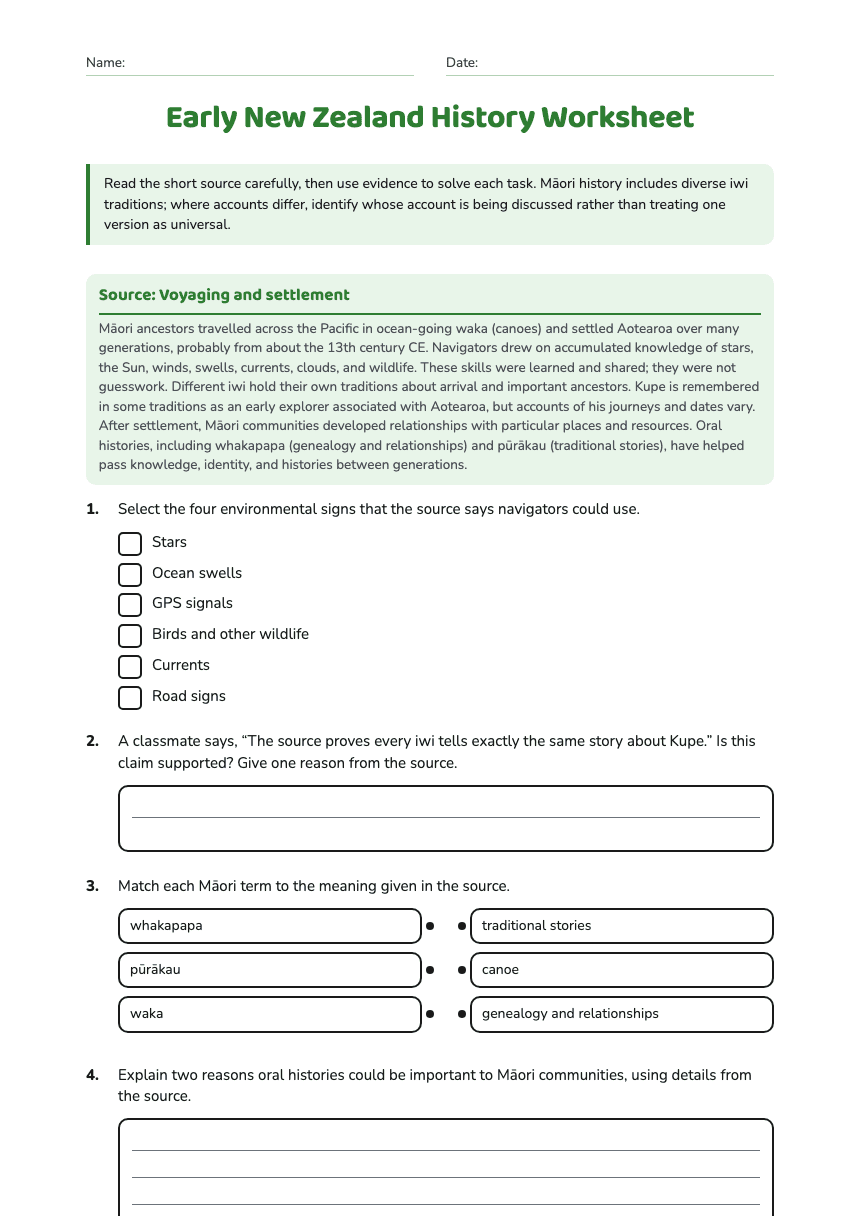
Early New Zealand History Worksheet
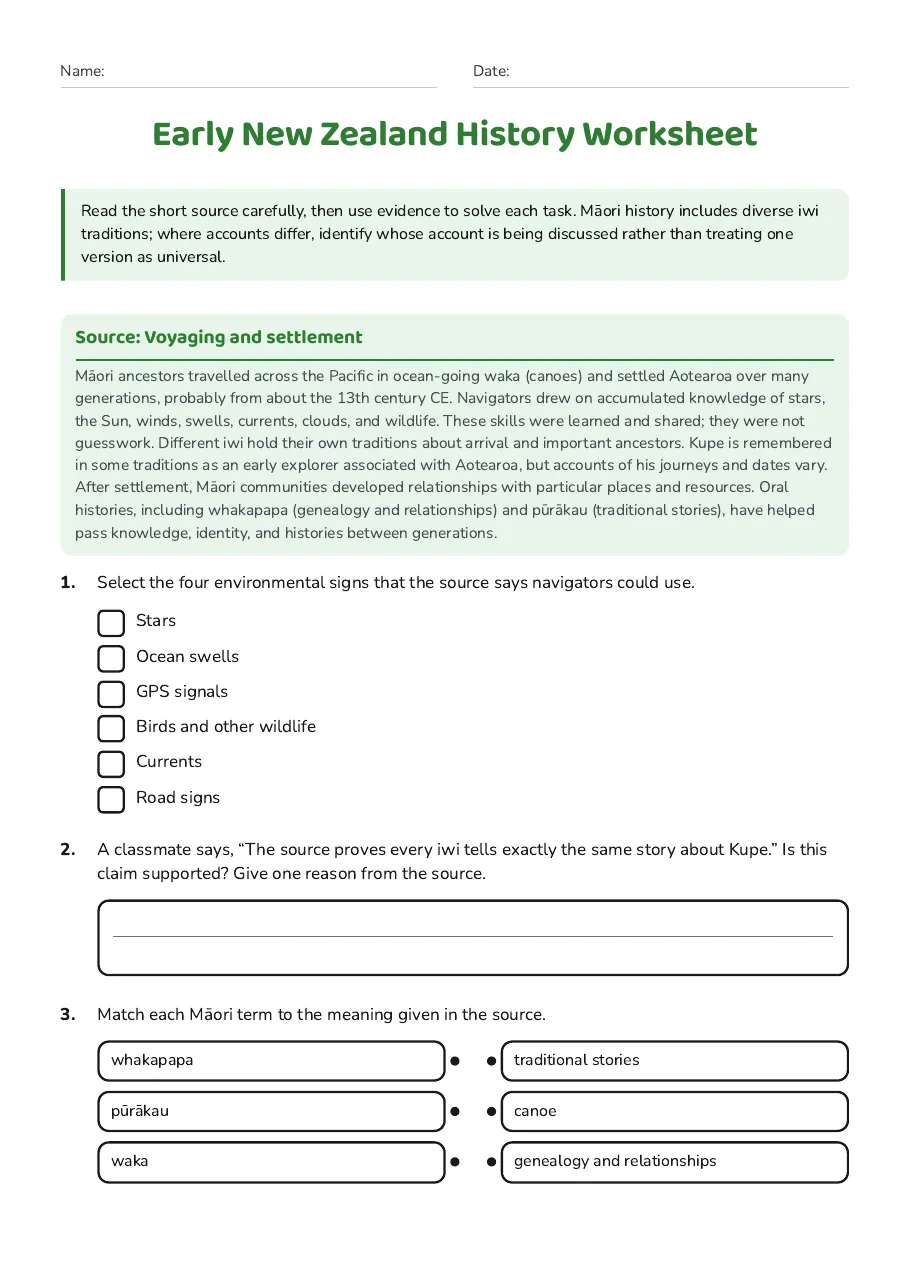
Source: Voyaging and settlement
Māori ancestors travelled across the Pacific in ocean-going waka (canoes) and settled Aotearoa over many generations, probably from about the 13th century CE. Navigators drew on accumulated knowledge of stars, the Sun, winds, swells, currents, clouds, and wildlife. These skills were learned and shared; they were not guesswork. Different iwi hold their own traditions about arrival and important ancestors. Kupe is remembered in some traditions as an early explorer associated with Aotearoa, but accounts of his journeys and dates vary. After settlement, Māori communities developed relationships with particular places and resources. Oral histories, including whakapapa (genealogy and relationships) and pūrākau (traditional stories), have helped pass knowledge, identity, and histories between generations.
- Stars
- Ocean swells
- GPS signals
- Birds and other wildlife
- Currents
- Road signs
- whakapapa
- pūrākau
- waka
- traditional stories
- canoe
- genealogy and relationships
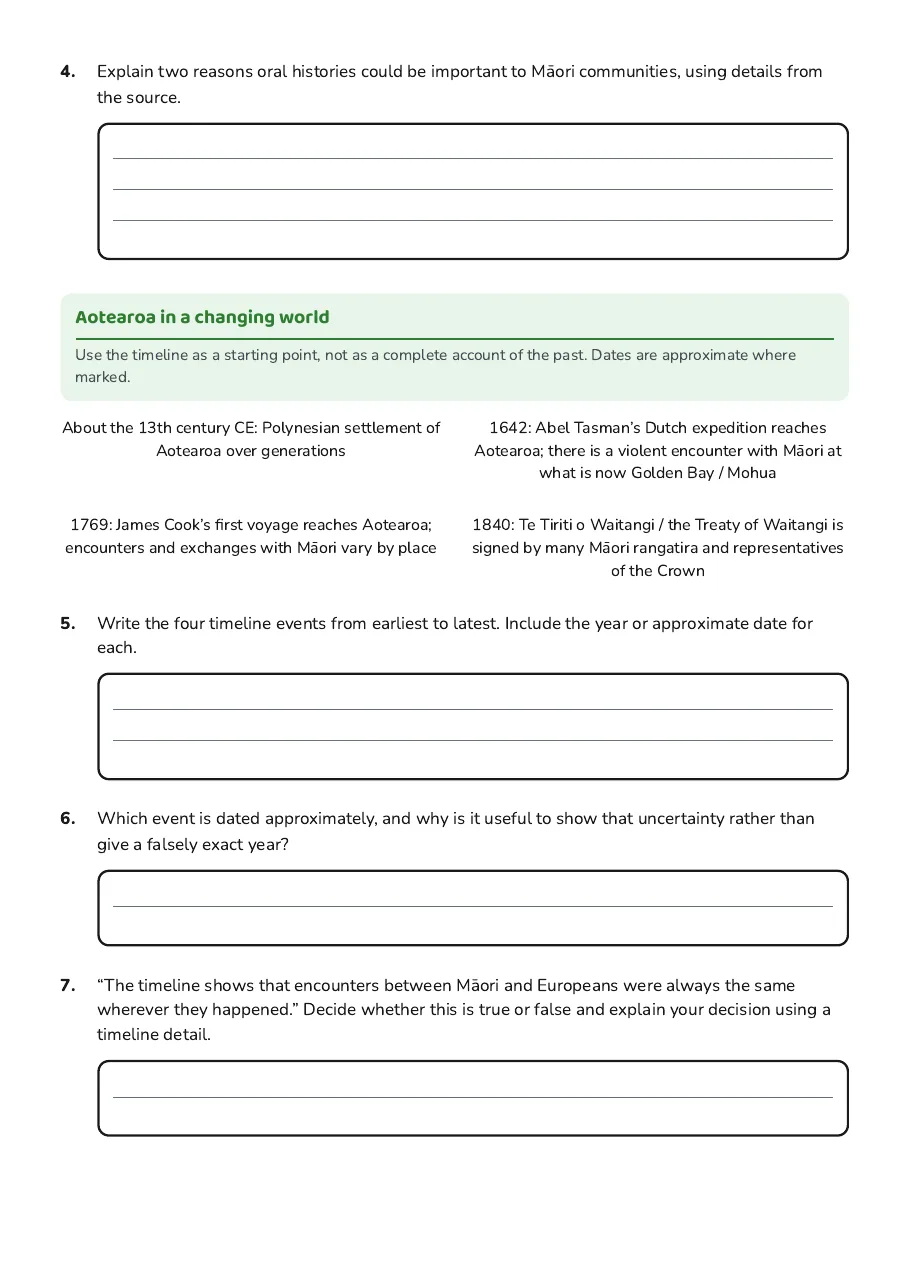
Aotearoa in a changing world
Use the timeline as a starting point, not as a complete account of the past. Dates are approximate where marked.
About the 13th century CE: Polynesian settlement of Aotearoa over generations
1642: Abel Tasman’s Dutch expedition reaches Aotearoa; there is a violent encounter with Māori at what is now Golden Bay / Mohua
1769: James Cook’s first voyage reaches Aotearoa; encounters and exchanges with Māori vary by place
1840: Te Tiriti o Waitangi / the Treaty of Waitangi is signed by many Māori rangatira and representatives of the Crown
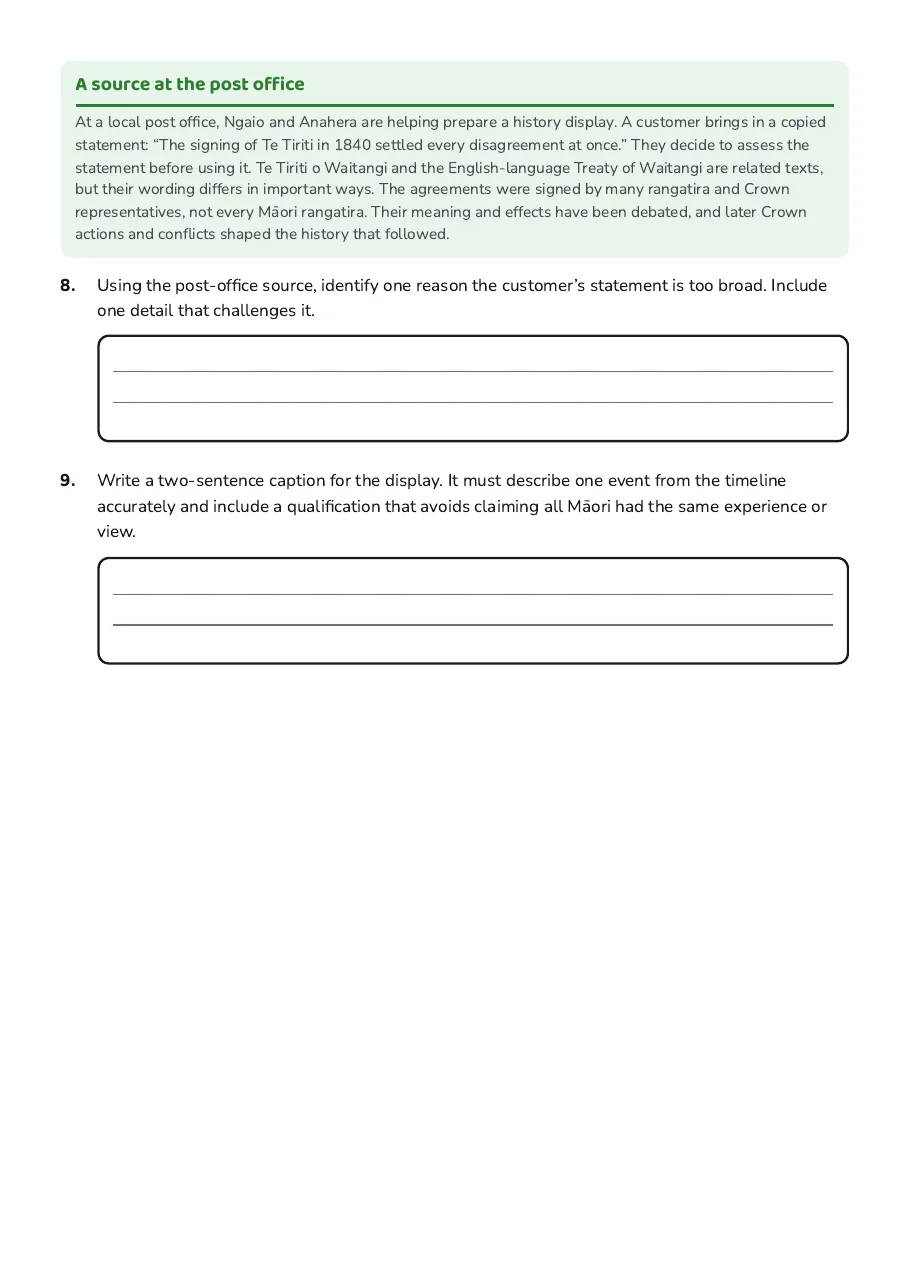
A source at the post office
At a local post office, Ngaio and Anahera are helping prepare a history display. A customer brings in a copied statement: “The signing of Te Tiriti in 1840 settled every disagreement at once.” They decide to assess the statement before using it. Te Tiriti o Waitangi and the English-language Treaty of Waitangi are related texts, but their wording differs in important ways. The agreements were signed by many rangatira and Crown representatives, not every Māori rangatira. Their meaning and effects have been debated, and later Crown actions and conflicts shaped the history that followed.
3 printable pages
Page 1
Page 2
Page 3
About This Worksheet
Free in Kuraplan
Sign up free, grab the PDF, and customize it for your class.
Print-Ready
Formatted for standard paper. Clean layout, easy to read.
AI-Generated
Created with Kuraplan's AI, designed for real classroom use.
For Teachers & Parents
Use in classrooms, for homework, tutoring, or homeschool.
Need a custom version of this worksheet?
Kuraplan's AI generates custom worksheets in seconds — differentiated for every learner, aligned to your curriculum.
Generate Custom Worksheets — FreeMore Social Sciences Worksheets
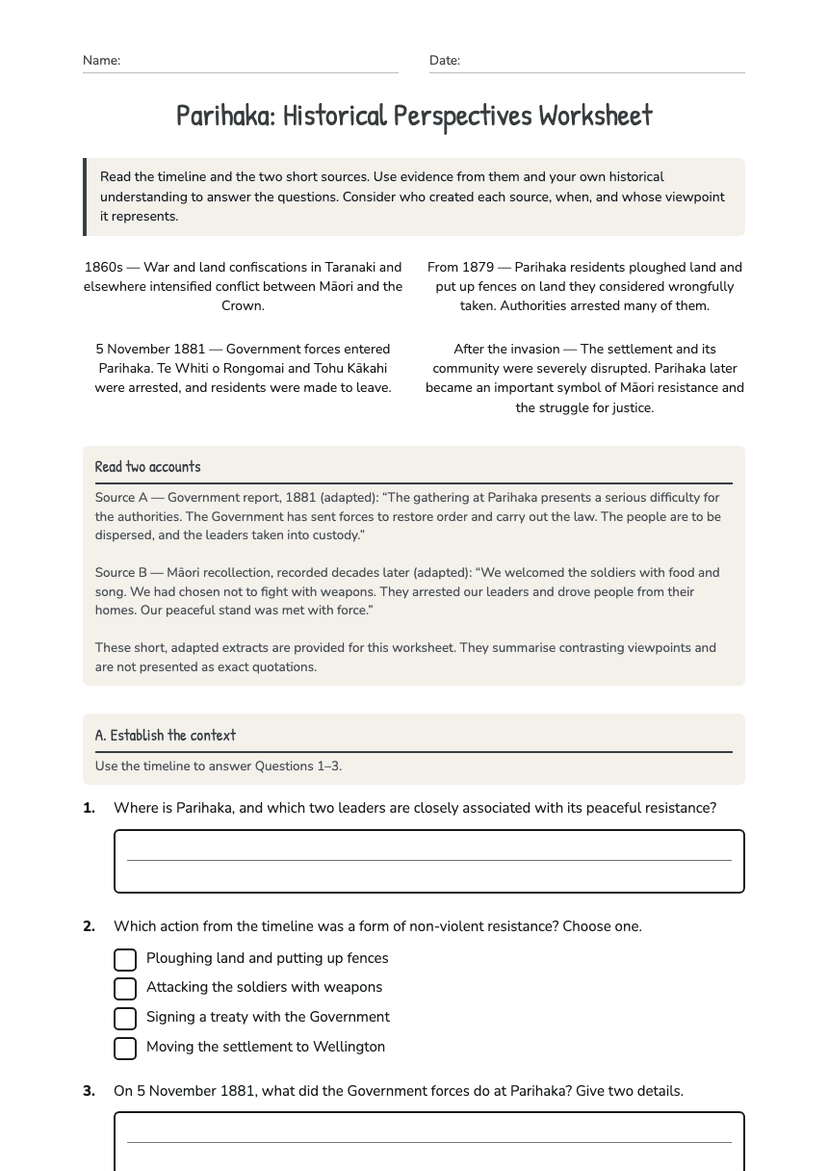
Parihaka: Historical Perspectives Worksheet
Free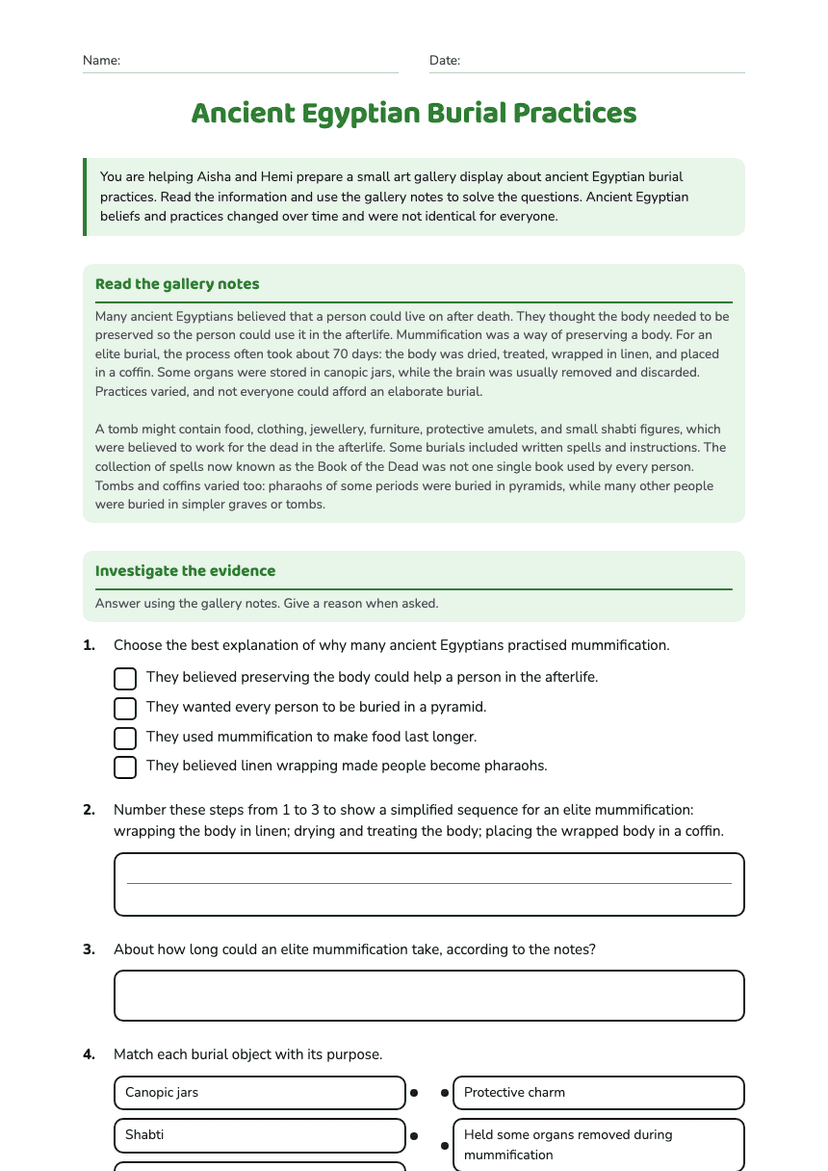
Ancient Egyptian Burial Practices
Free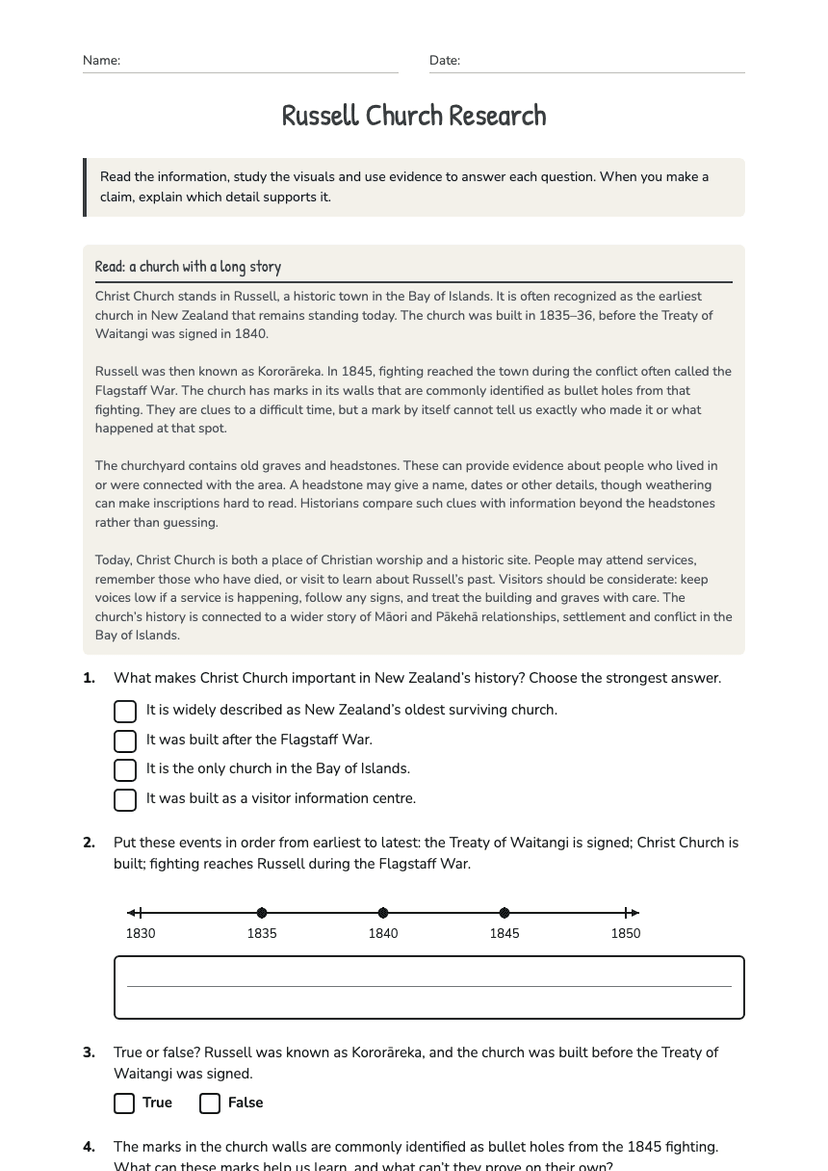
Russell Church Research
Free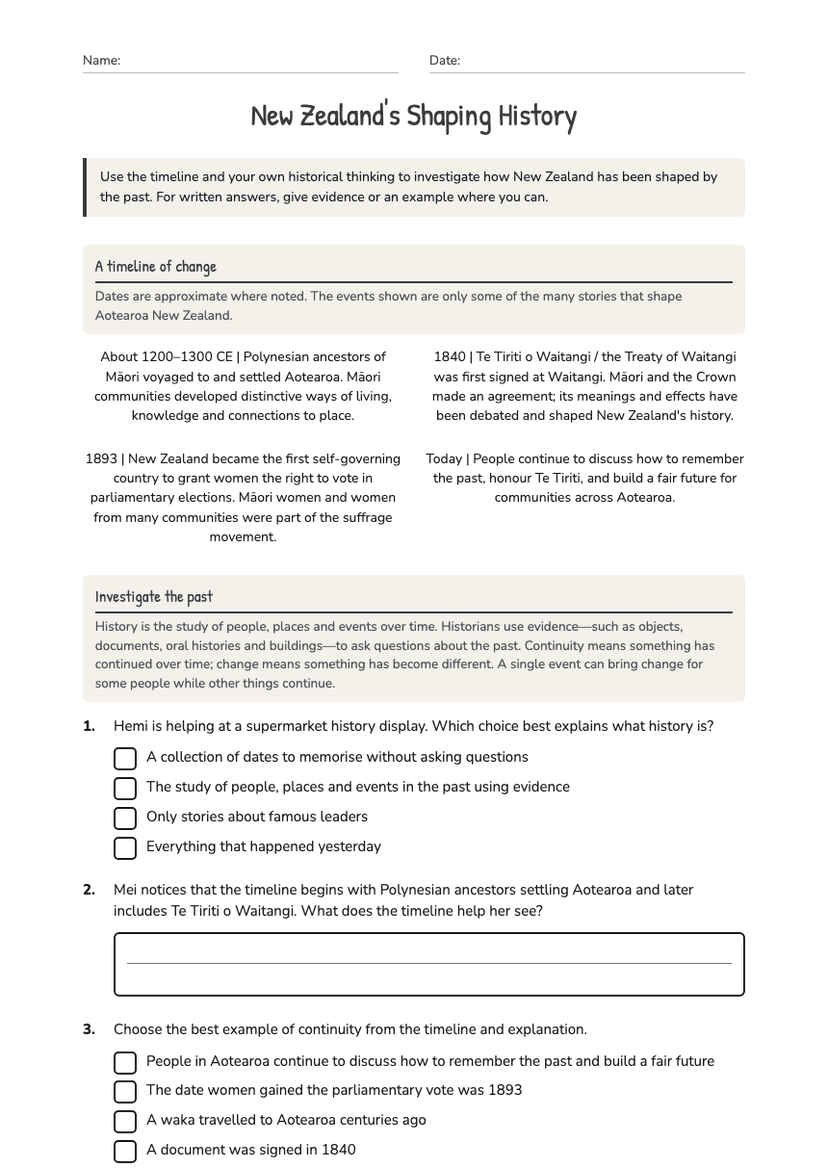
New Zealand's Shaping History
Free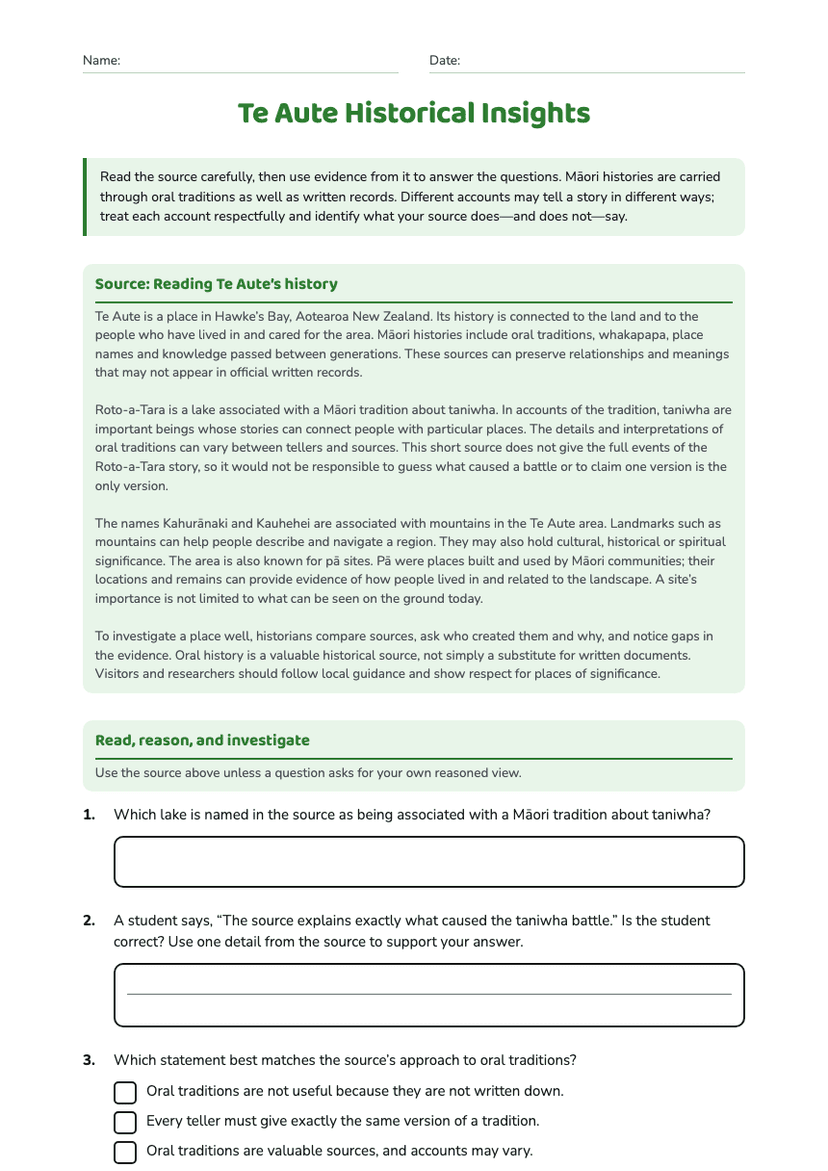
Te Aute Historical Insights
Free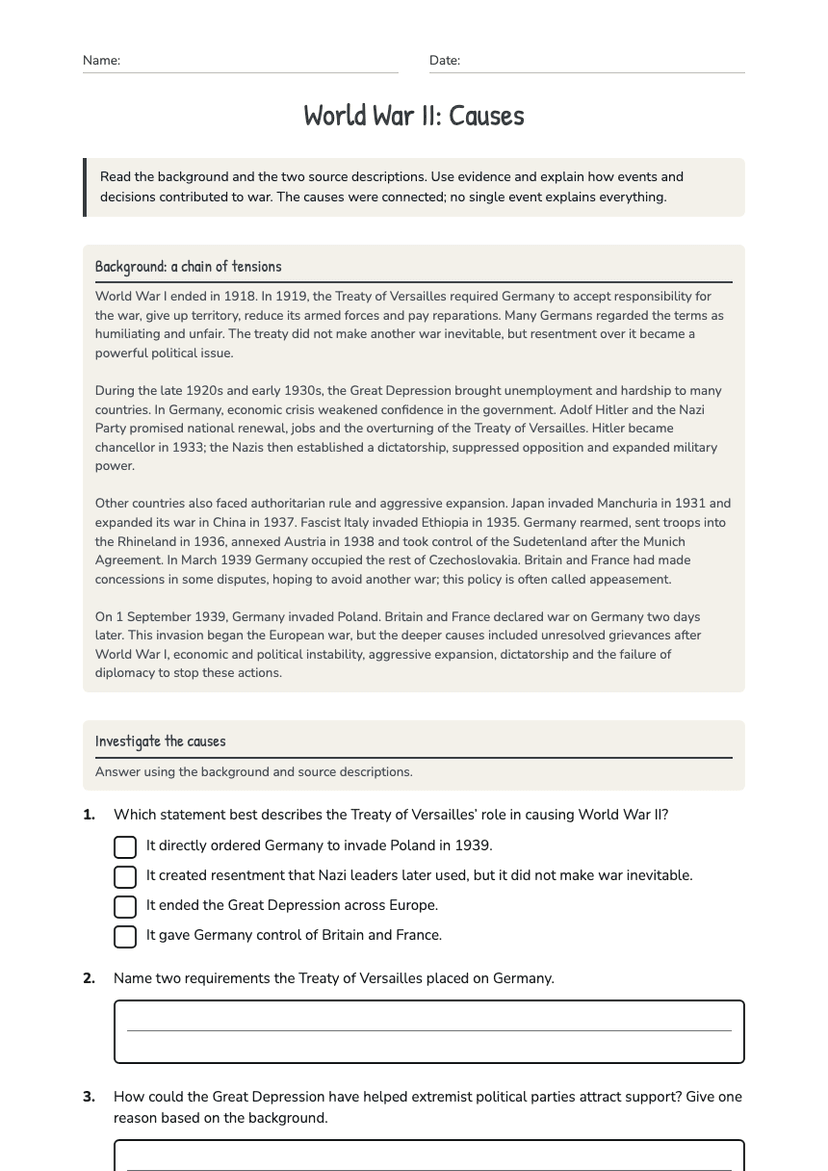
World War II: Causes
Free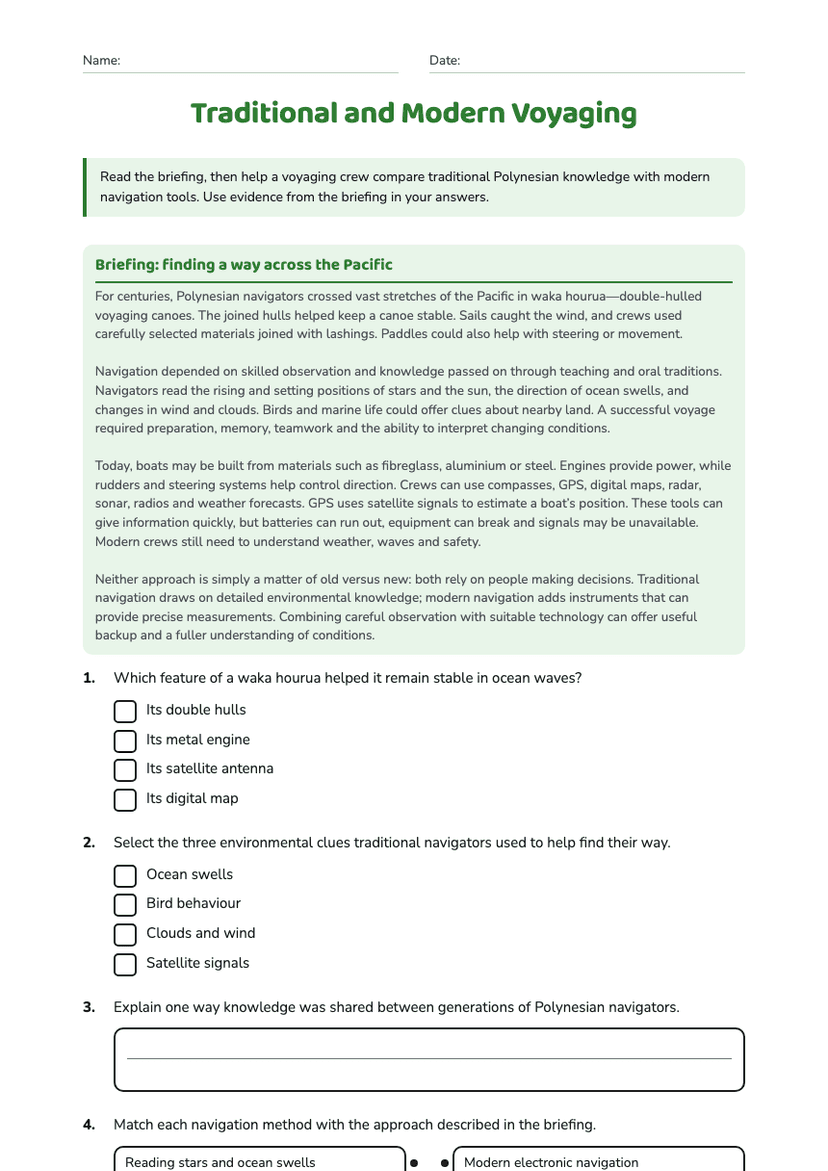
Traditional and Modern Voyaging
Free