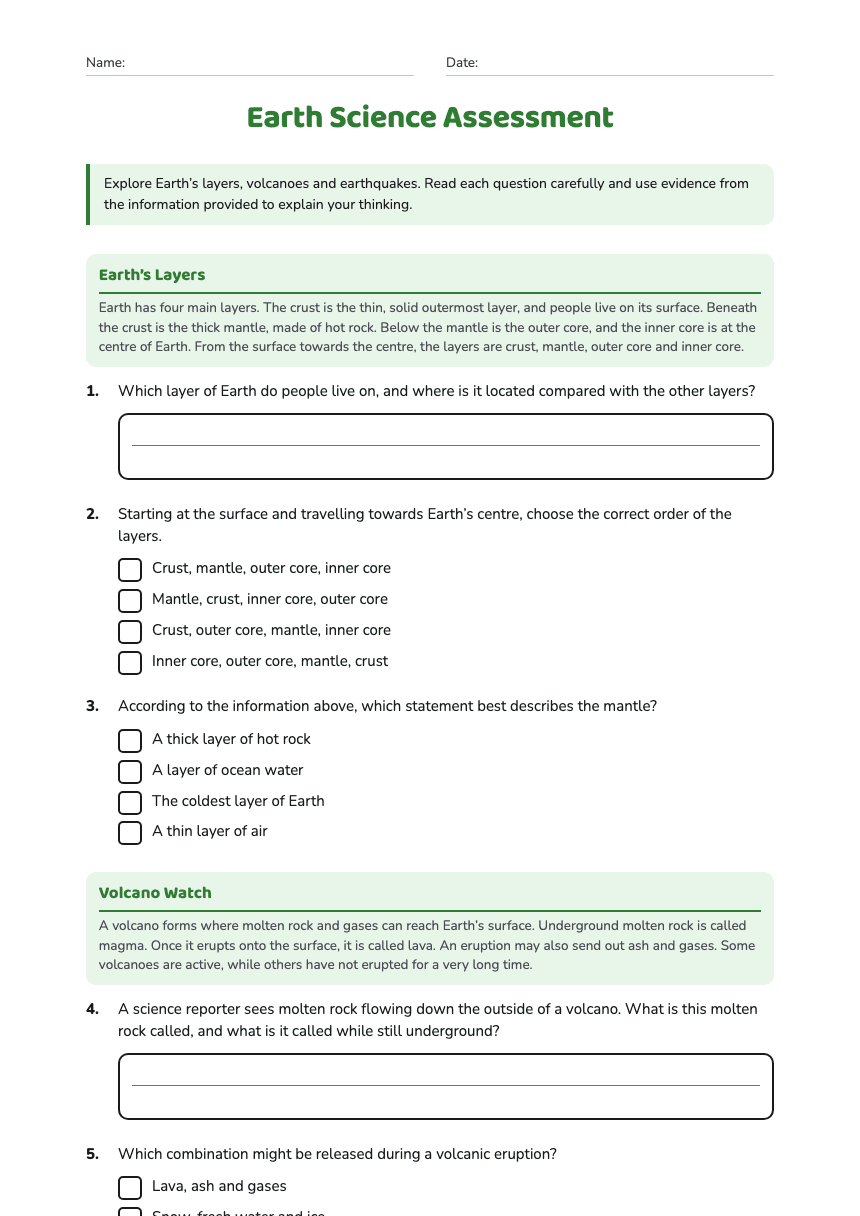
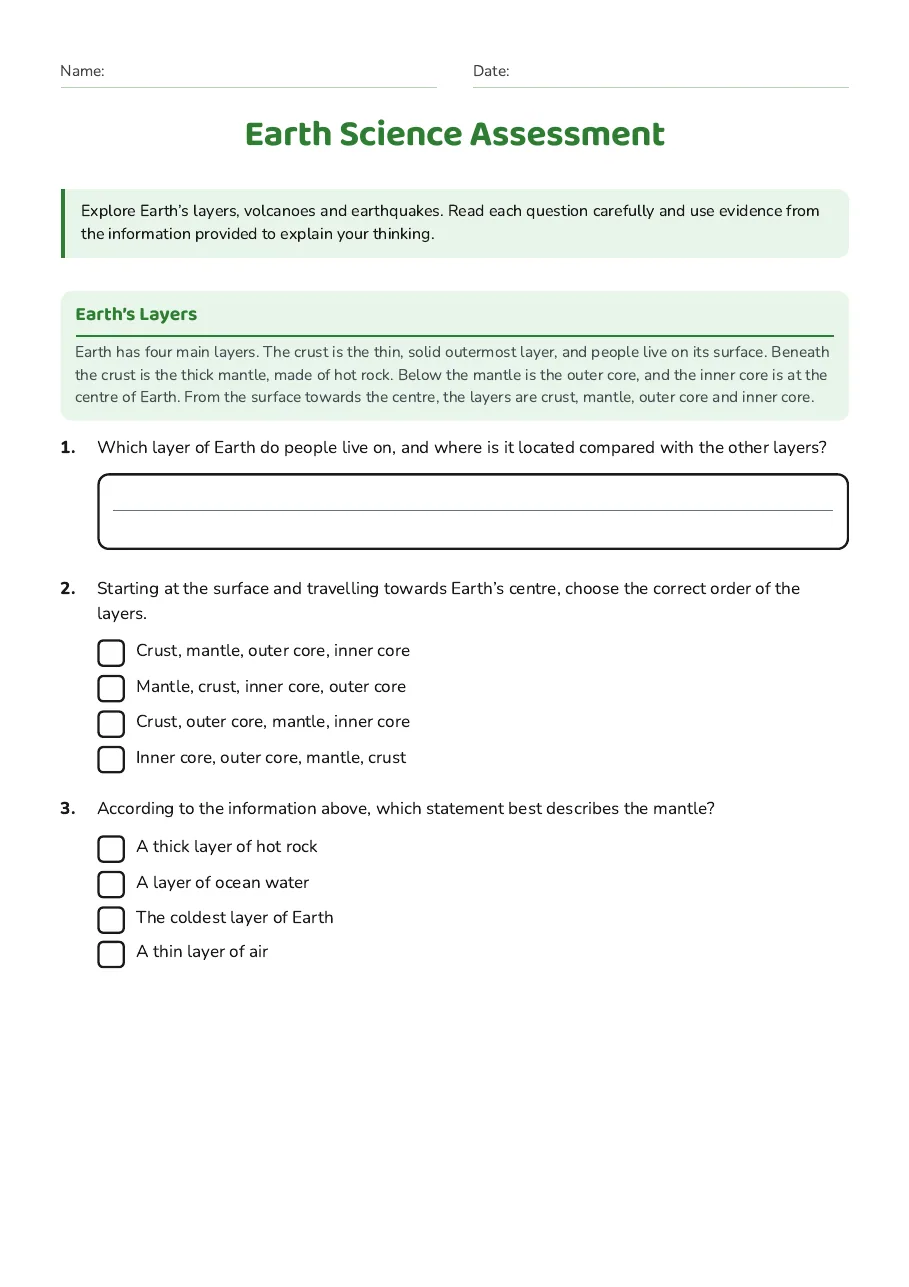
Earth Science Assessment
A free science worksheet ready for your classroom. Open in Kuraplan to grab the print-ready PDF, customize it for your students, or generate a fresh version in seconds.
Earth Science Assessment
Earth’s Layers
Earth has four main layers. The crust is the thin, solid outermost layer, and people live on its surface. Beneath the crust is the thick mantle, made of hot rock. Below the mantle is the outer core, and the inner core is at the centre of Earth. From the surface towards the centre, the layers are crust, mantle, outer core and inner core.
- Crust, mantle, outer core, inner core
- Mantle, crust, inner core, outer core
- Crust, outer core, mantle, inner core
- Inner core, outer core, mantle, crust
- A thick layer of hot rock
- A layer of ocean water
- The coldest layer of Earth
- A thin layer of air
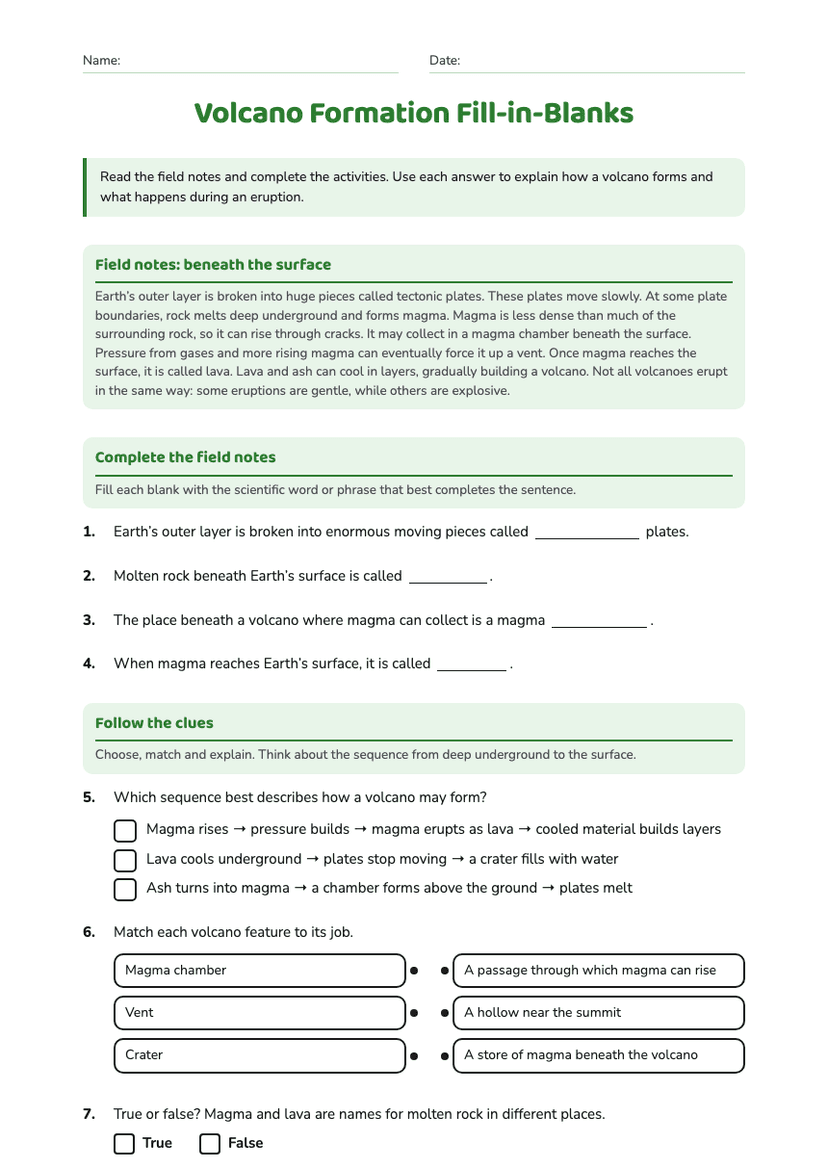
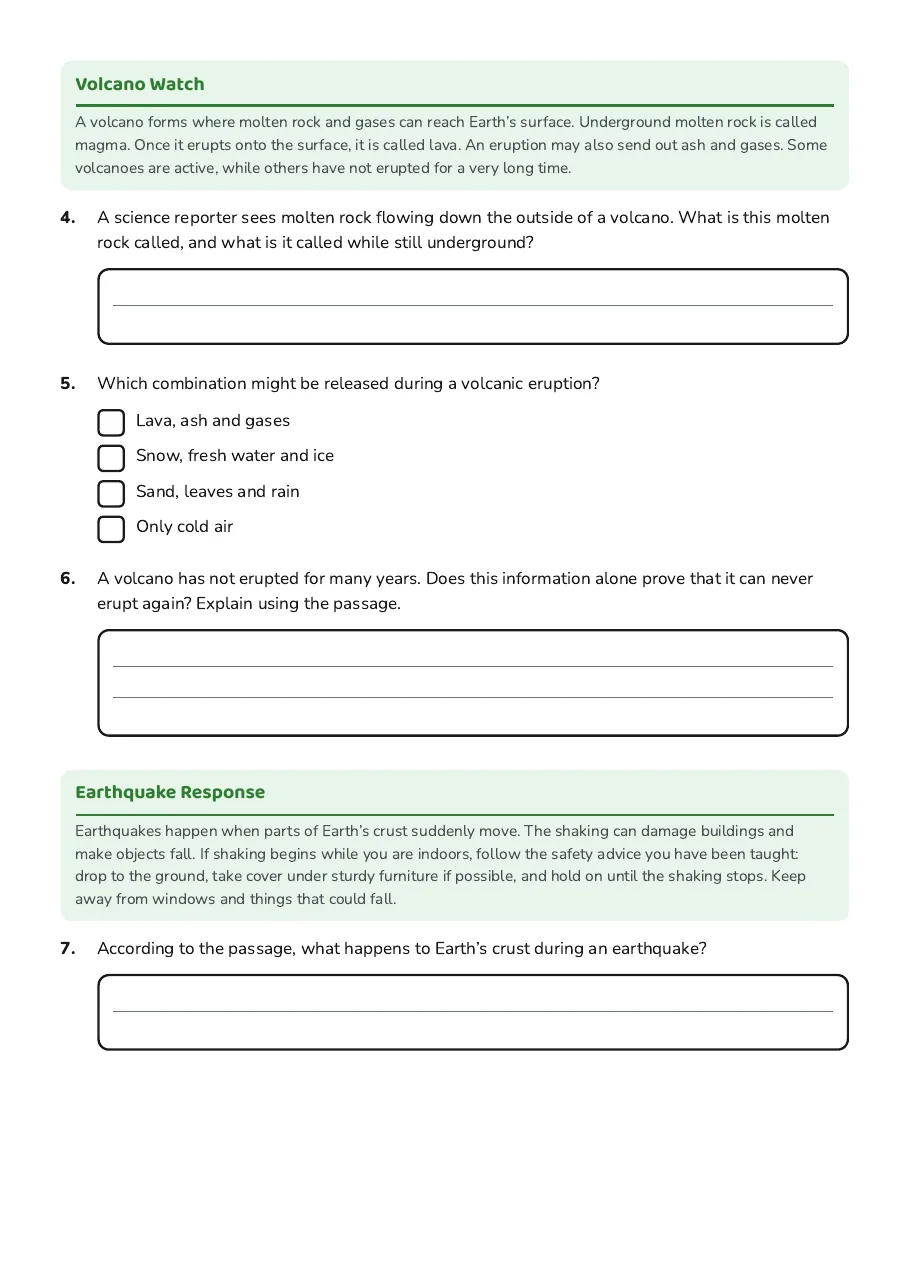
Volcano Watch
A volcano forms where molten rock and gases can reach Earth’s surface. Underground molten rock is called magma. Once it erupts onto the surface, it is called lava. An eruption may also send out ash and gases. Some volcanoes are active, while others have not erupted for a very long time.
- Lava, ash and gases
- Snow, fresh water and ice
- Sand, leaves and rain
- Only cold air
Earthquake Response
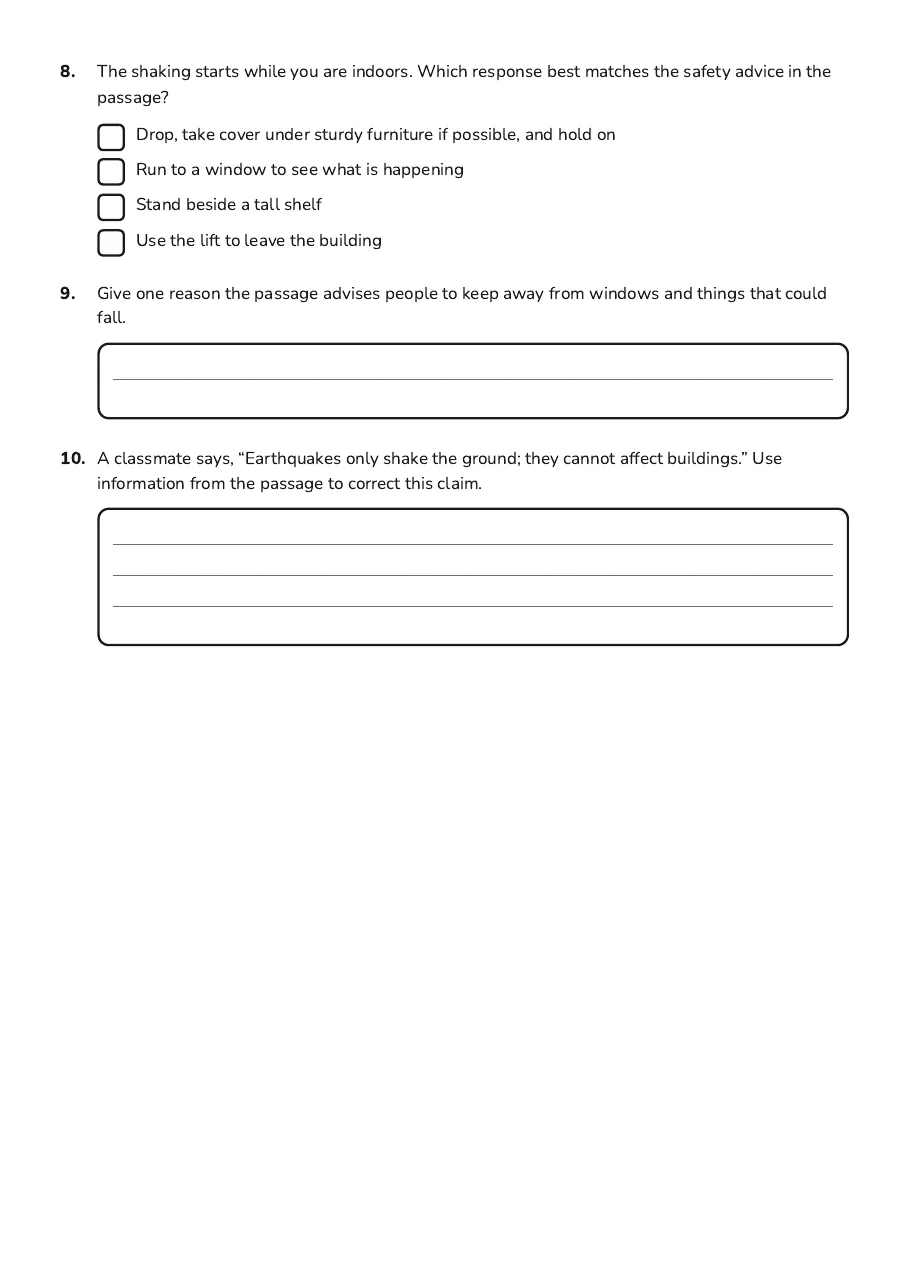
Earthquakes happen when parts of Earth’s crust suddenly move. The shaking can damage buildings and make objects fall. If shaking begins while you are indoors, follow the safety advice you have been taught: drop to the ground, take cover under sturdy furniture if possible, and hold on until the shaking stops. Keep away from windows and things that could fall.
- Drop, take cover under sturdy furniture if possible, and hold on
- Run to a window to see what is happening
- Stand beside a tall shelf
- Use the lift to leave the building
3 printable pages
Page 1
Page 2
Page 3
About This Worksheet
Free in Kuraplan
Sign up free, grab the PDF, and customize it for your class.
Print-Ready
Formatted for standard paper. Clean layout, easy to read.
AI-Generated
Created with Kuraplan's AI, designed for real classroom use.
For Teachers & Parents
Use in classrooms, for homework, tutoring, or homeschool.
Need a custom version of this worksheet?
Kuraplan's AI generates custom worksheets in seconds — differentiated for every learner, aligned to your curriculum.
Generate Custom Worksheets — Free