Earthquake Causes and Effects
A free geography worksheet ready for your classroom. Open in Kuraplan to grab the print-ready PDF, customize it for your students, or generate a fresh version in seconds.
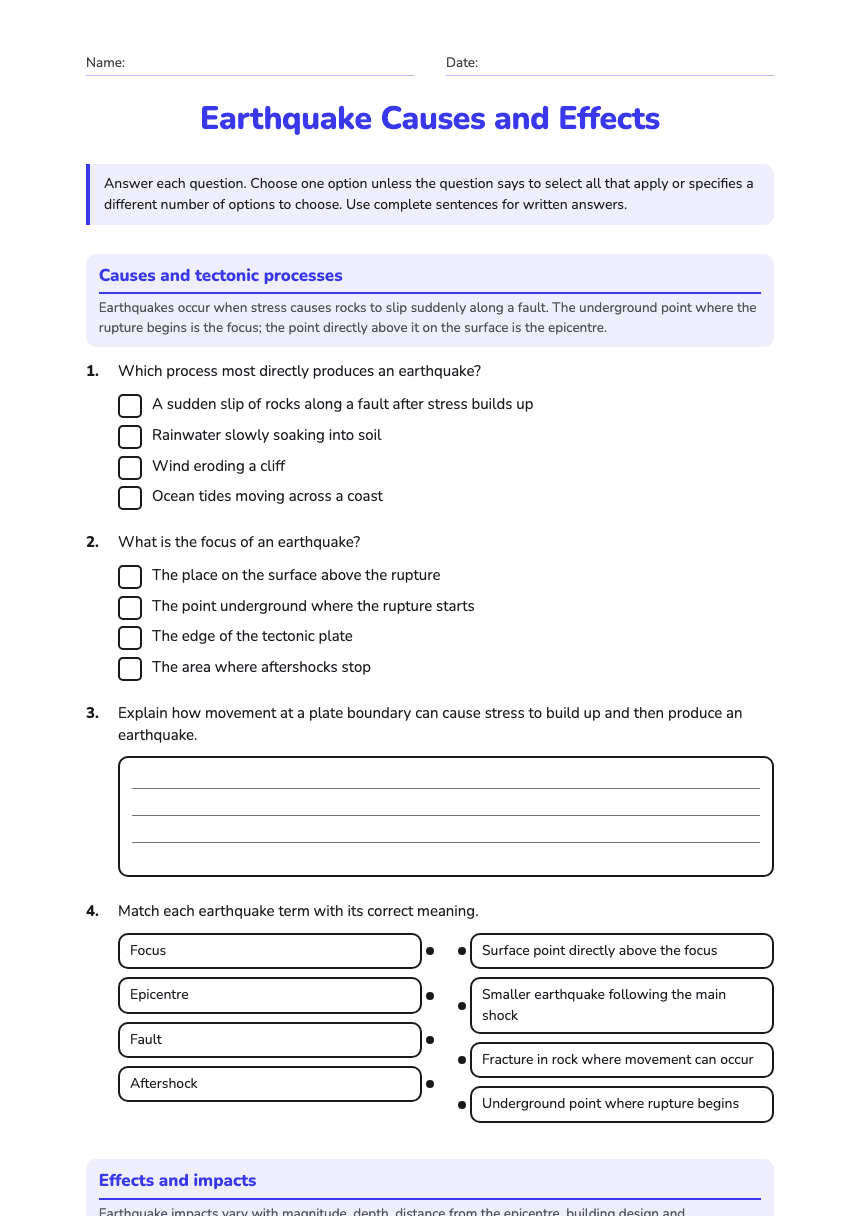
Earthquake Causes and Effects
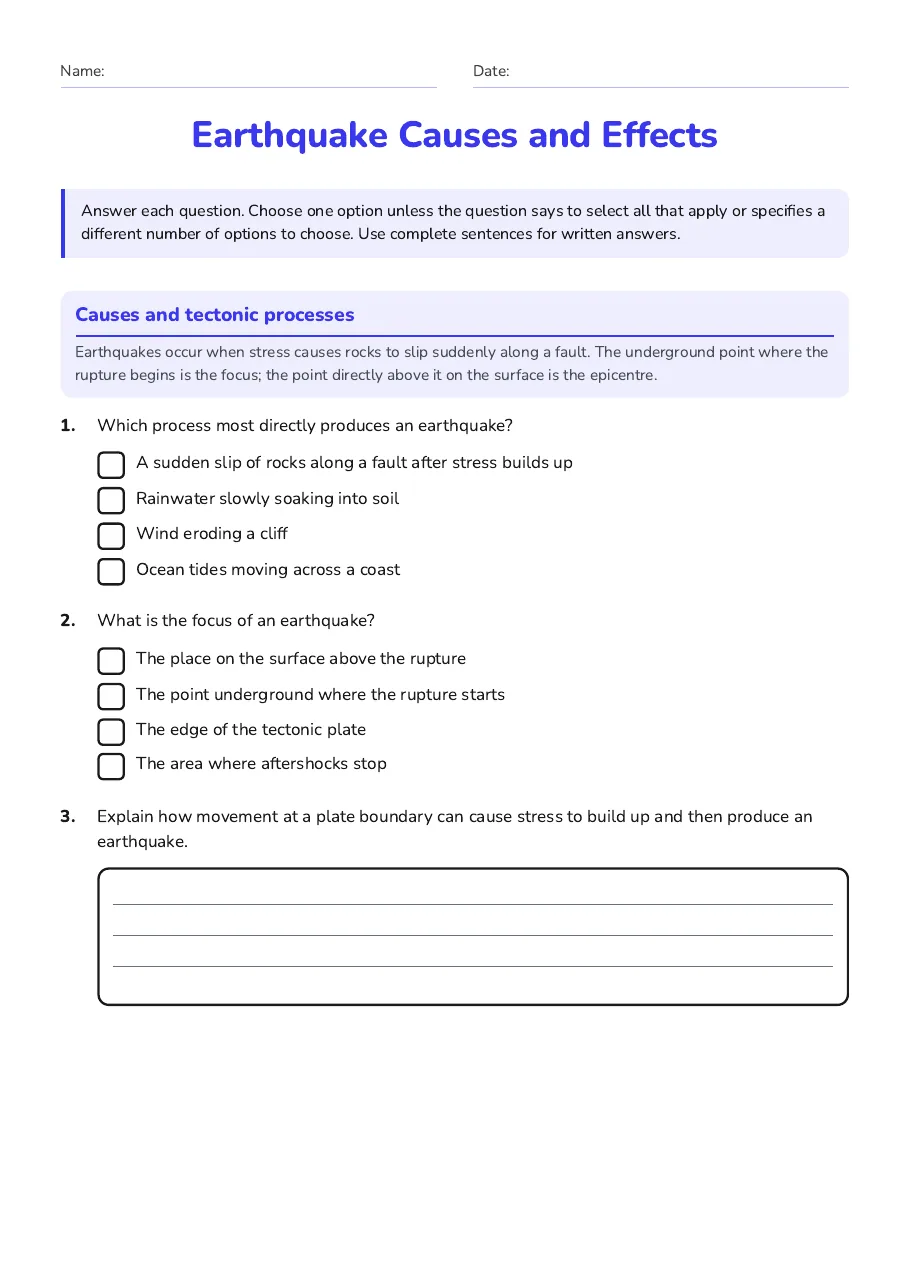
Causes and tectonic processes
Earthquakes occur when stress causes rocks to slip suddenly along a fault. The underground point where the rupture begins is the focus; the point directly above it on the surface is the epicentre.
- A sudden slip of rocks along a fault after stress builds up
- Rainwater slowly soaking into soil
- Wind eroding a cliff
- Ocean tides moving across a coast
- The place on the surface above the rupture
- The point underground where the rupture starts
- The edge of the tectonic plate
- The area where aftershocks stop
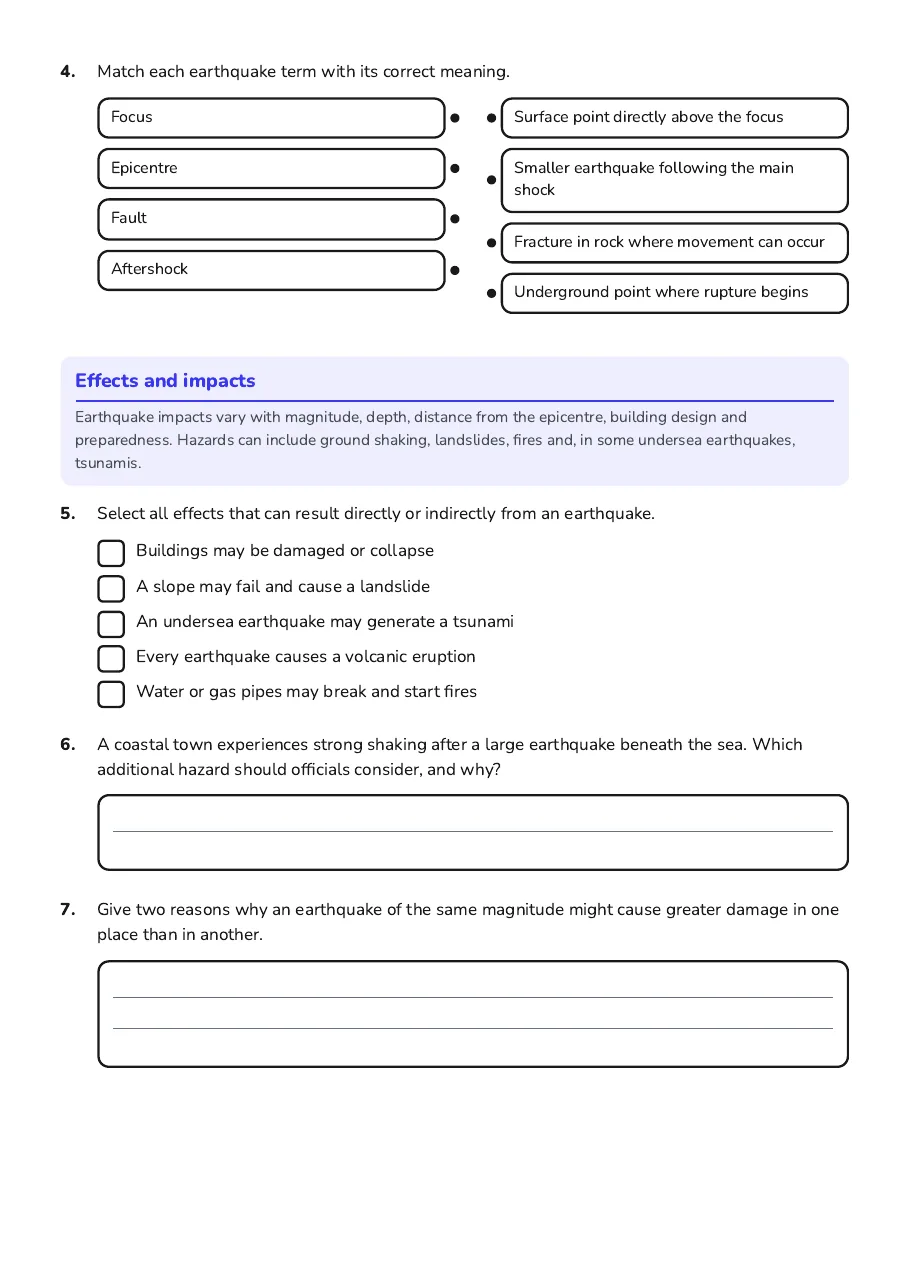
- Focus
- Epicentre
- Fault
- Aftershock
- Surface point directly above the focus
- Smaller earthquake following the main shock
- Fracture in rock where movement can occur
- Underground point where rupture begins
Effects and impacts
Earthquake impacts vary with magnitude, depth, distance from the epicentre, building design and preparedness. Hazards can include ground shaking, landslides, fires and, in some undersea earthquakes, tsunamis.
- Buildings may be damaged or collapse
- A slope may fail and cause a landslide
- An undersea earthquake may generate a tsunami
- Every earthquake causes a volcanic eruption
- Water or gas pipes may break and start fires
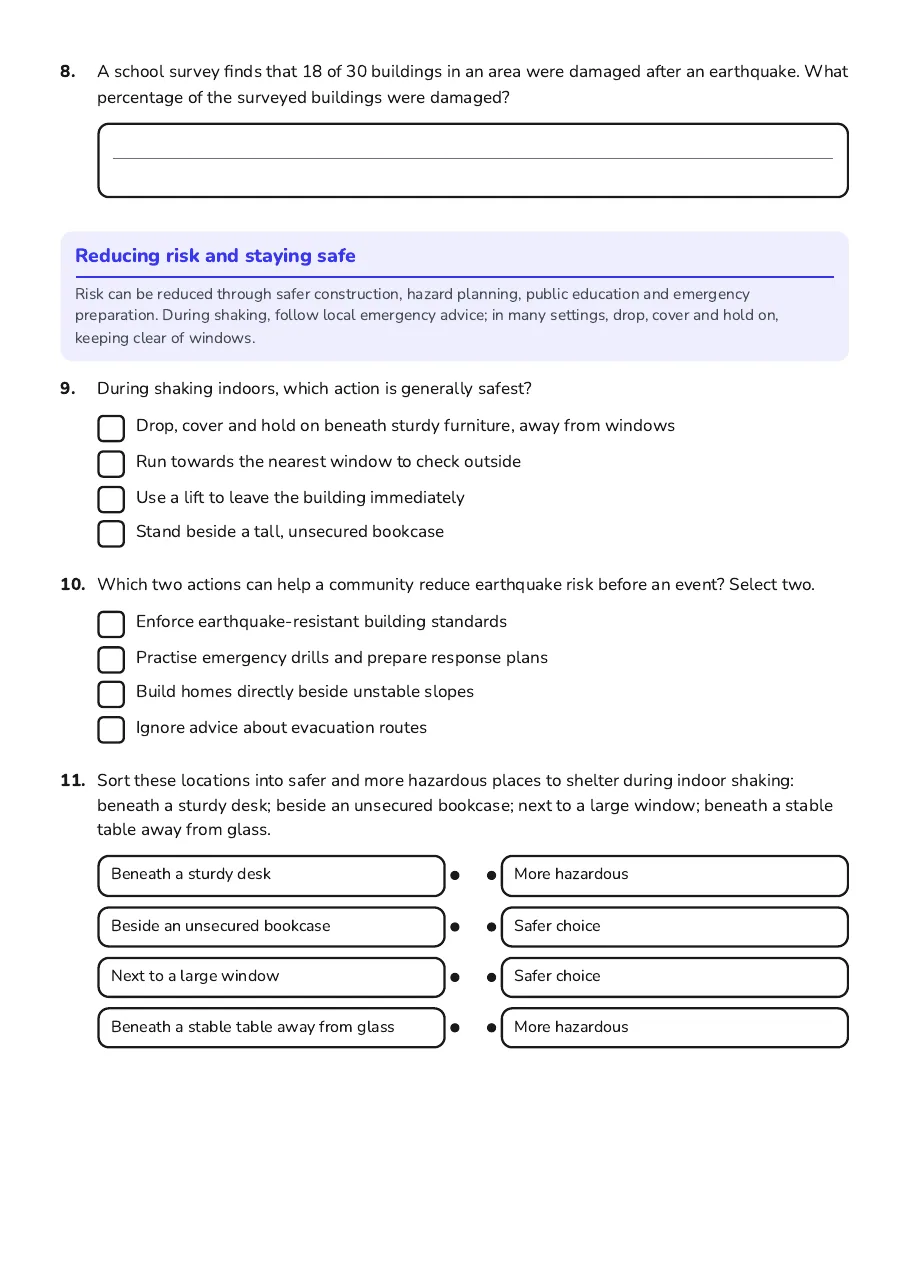
Reducing risk and staying safe
Risk can be reduced through safer construction, hazard planning, public education and emergency preparation. During shaking, follow local emergency advice; in many settings, drop, cover and hold on, keeping clear of windows.
- Drop, cover and hold on beneath sturdy furniture, away from windows
- Run towards the nearest window to check outside
- Use a lift to leave the building immediately
- Stand beside a tall, unsecured bookcase
- Enforce earthquake-resistant building standards
- Practise emergency drills and prepare response plans
- Build homes directly beside unstable slopes
- Ignore advice about evacuation routes
- Beneath a sturdy desk
- Beside an unsecured bookcase
- Next to a large window
- Beneath a stable table away from glass
- More hazardous
- Safer choice
- Safer choice
- More hazardous
4 printable pages
Page 1
Page 2
Page 3
Page 4
About This Worksheet
Free in Kuraplan
Sign up free, grab the PDF, and customize it for your class.
Print-Ready
Formatted for standard paper. Clean layout, easy to read.
AI-Generated
Created with Kuraplan's AI, designed for real classroom use.
For Teachers & Parents
Use in classrooms, for homework, tutoring, or homeschool.
Need a custom version of this worksheet?
Kuraplan's AI generates custom worksheets in seconds — differentiated for every learner, aligned to your curriculum.
Generate Custom Worksheets — Free