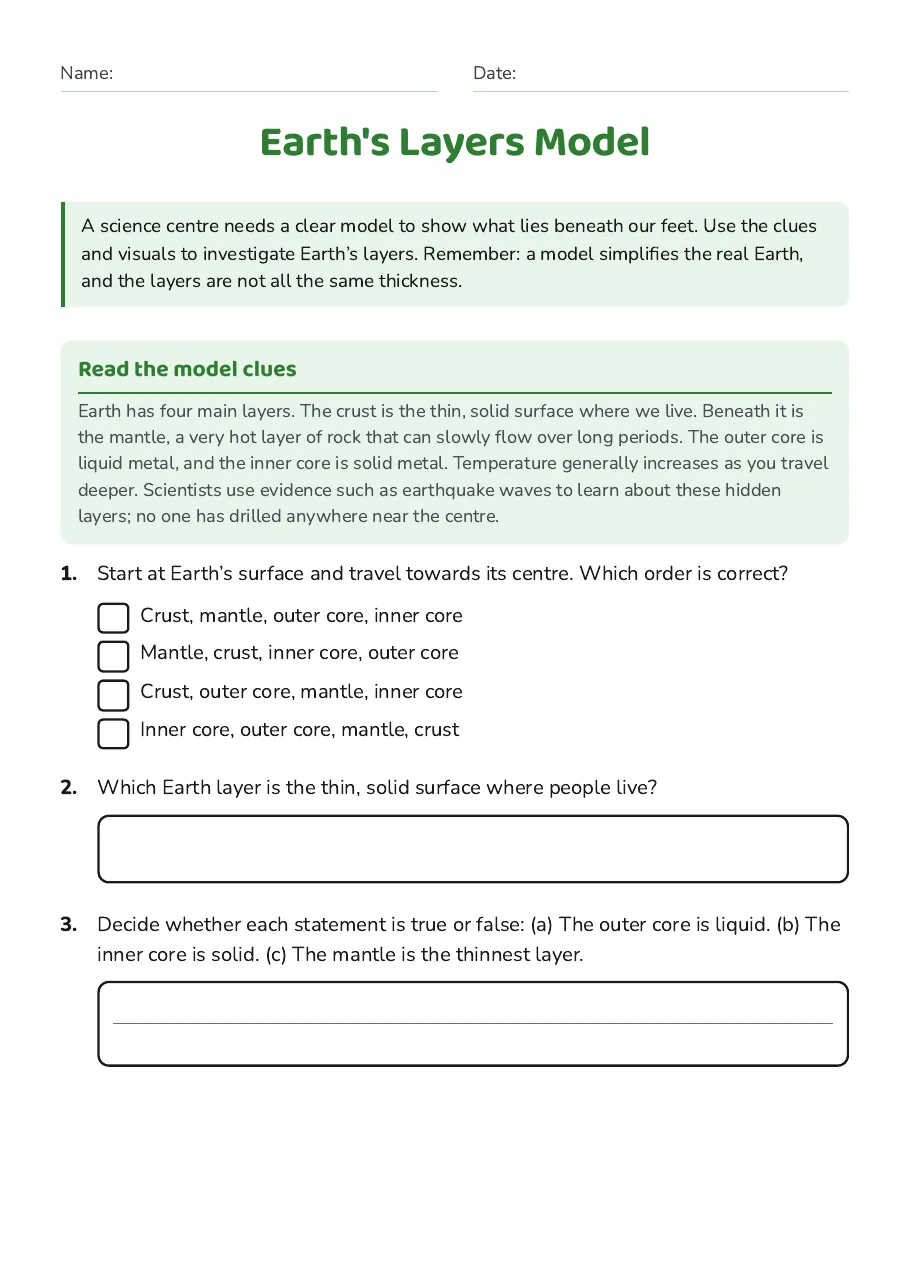
Earth's Layers Model
A free science worksheet ready for your classroom. Open in Kuraplan to grab the print-ready PDF, customize it for your students, or generate a fresh version in seconds.

Earth's Layers Model
Read the model clues
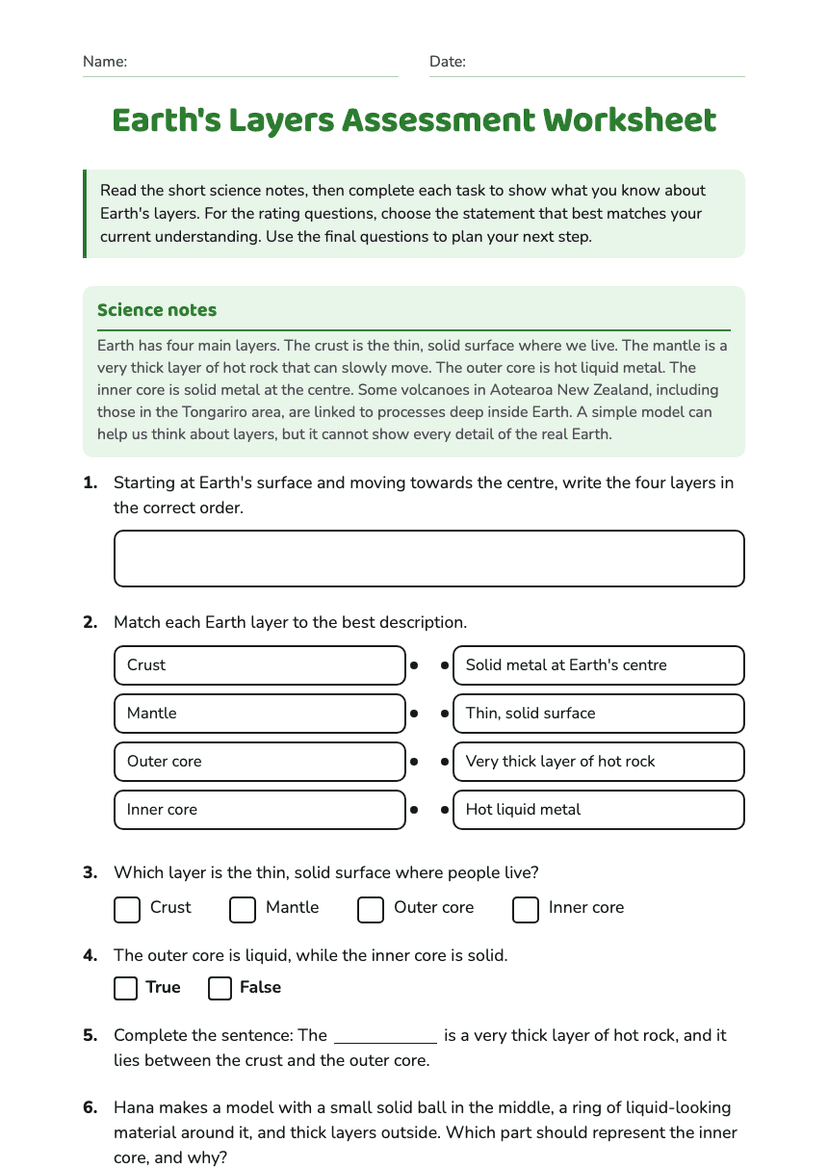
Earth has four main layers. The crust is the thin, solid surface where we live. Beneath it is the mantle, a very hot layer of rock that can slowly flow over long periods. The outer core is liquid metal, and the inner core is solid metal. Temperature generally increases as you travel deeper. Scientists use evidence such as earthquake waves to learn about these hidden layers; no one has drilled anywhere near the centre.
- Crust, mantle, outer core, inner core
- Mantle, crust, inner core, outer core
- Crust, outer core, mantle, inner core
- Inner core, outer core, mantle, crust
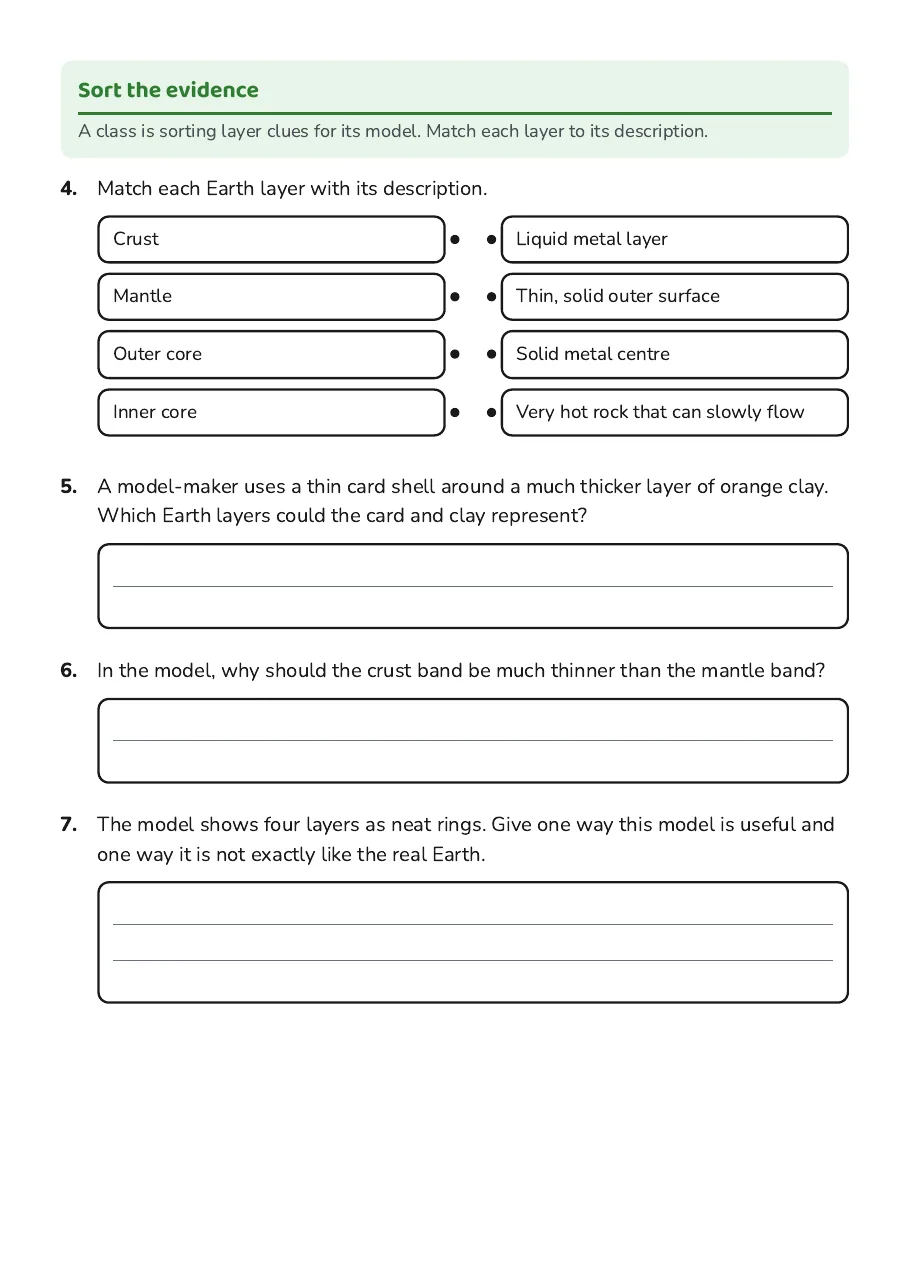
Sort the evidence
A class is sorting layer clues for its model. Match each layer to its description.
- Crust
- Mantle
- Outer core
- Inner core
- Liquid metal layer
- Thin, solid outer surface
- Solid metal centre
- Very hot rock that can slowly flow
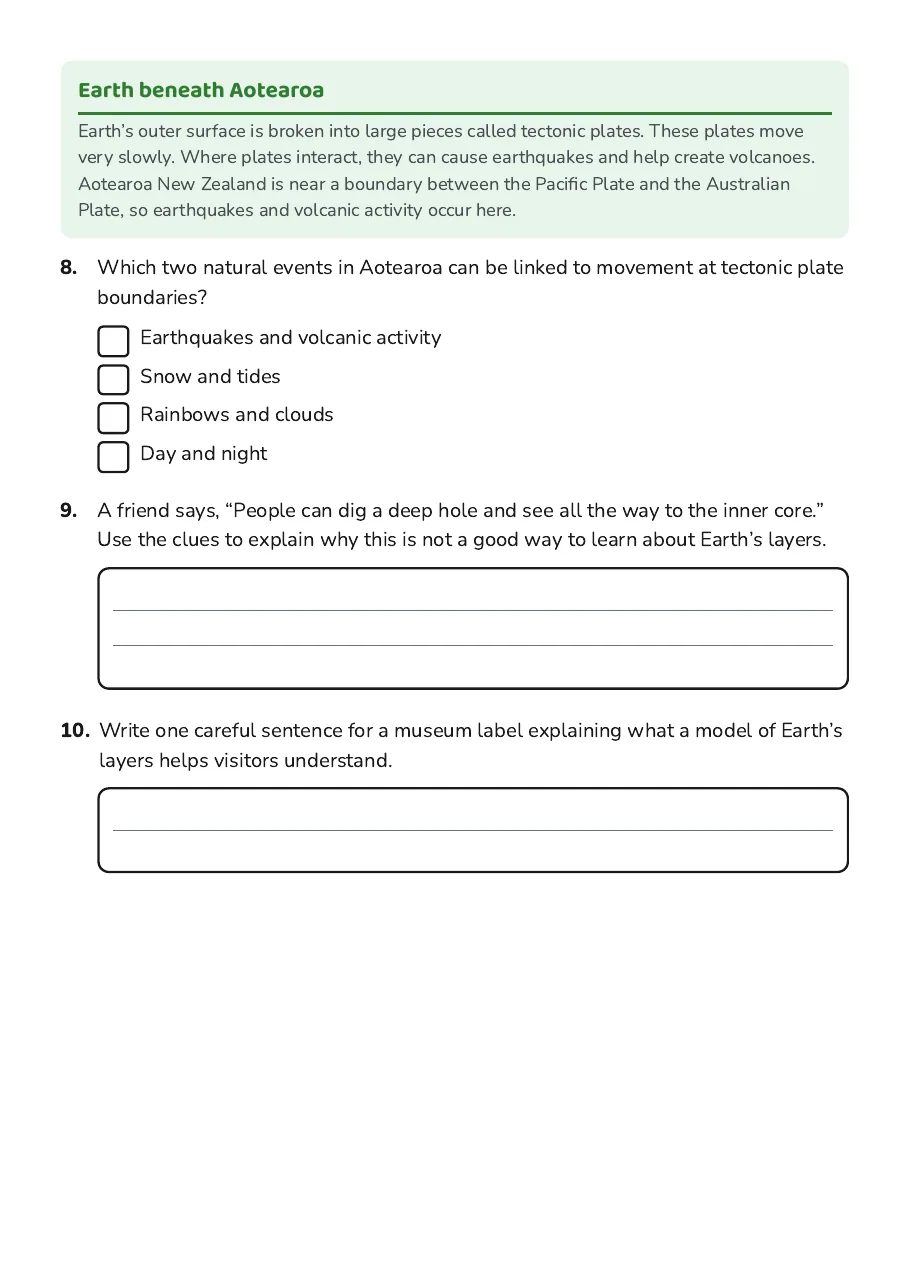
Earth beneath Aotearoa
Earth’s outer surface is broken into large pieces called tectonic plates. These plates move very slowly. Where plates interact, they can cause earthquakes and help create volcanoes. Aotearoa New Zealand is near a boundary between the Pacific Plate and the Australian Plate, so earthquakes and volcanic activity occur here.
- Earthquakes and volcanic activity
- Snow and tides
- Rainbows and clouds
- Day and night
3 printable pages
Page 1
Page 2
Page 3
About This Worksheet
Free in Kuraplan
Sign up free, grab the PDF, and customize it for your class.
Print-Ready
Formatted for standard paper. Clean layout, easy to read.
AI-Generated
Created with Kuraplan's AI, designed for real classroom use.
For Teachers & Parents
Use in classrooms, for homework, tutoring, or homeschool.
Need a custom version of this worksheet?
Kuraplan's AI generates custom worksheets in seconds — differentiated for every learner, aligned to your curriculum.
Generate Custom Worksheets — Free