Government Systems Comparison Chart
A free social sciences worksheet ready for your classroom. Open in Kuraplan to grab the print-ready PDF, customize it for your students, or generate a fresh version in seconds.
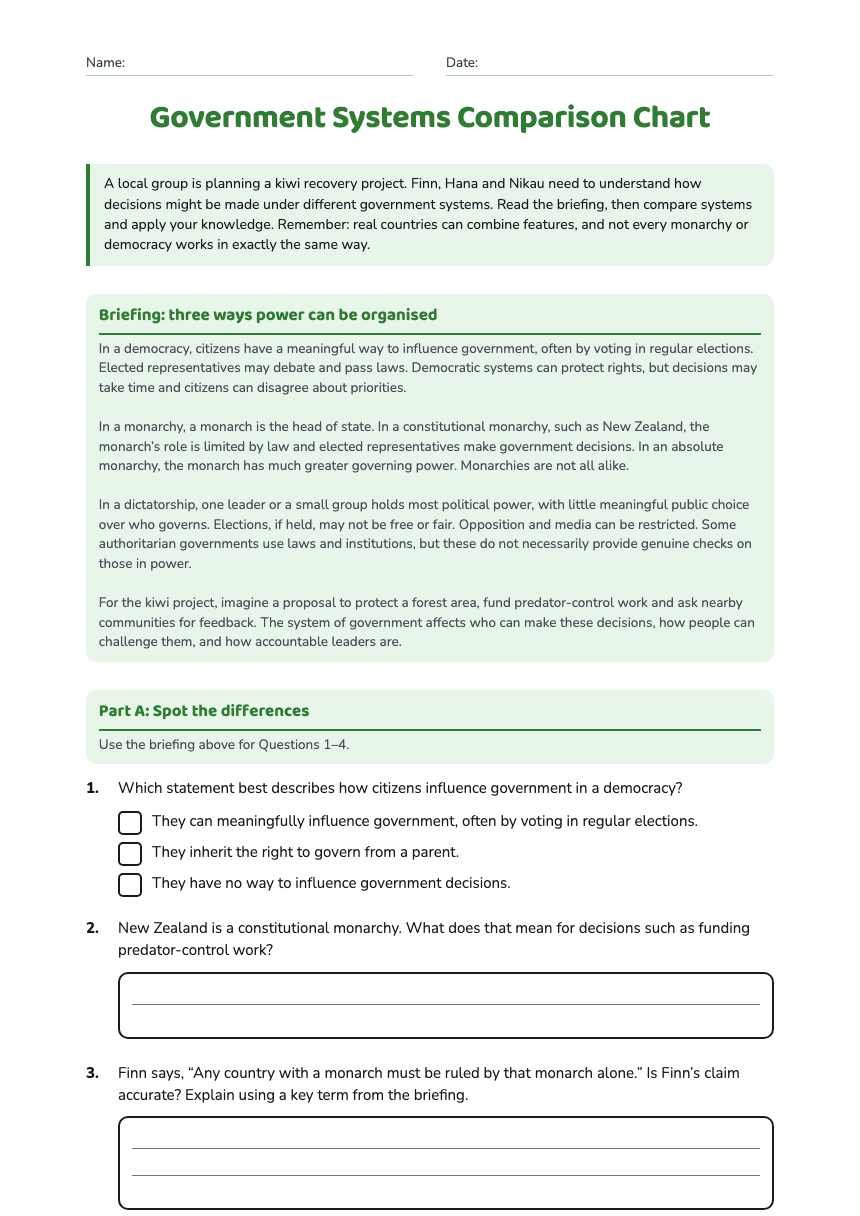
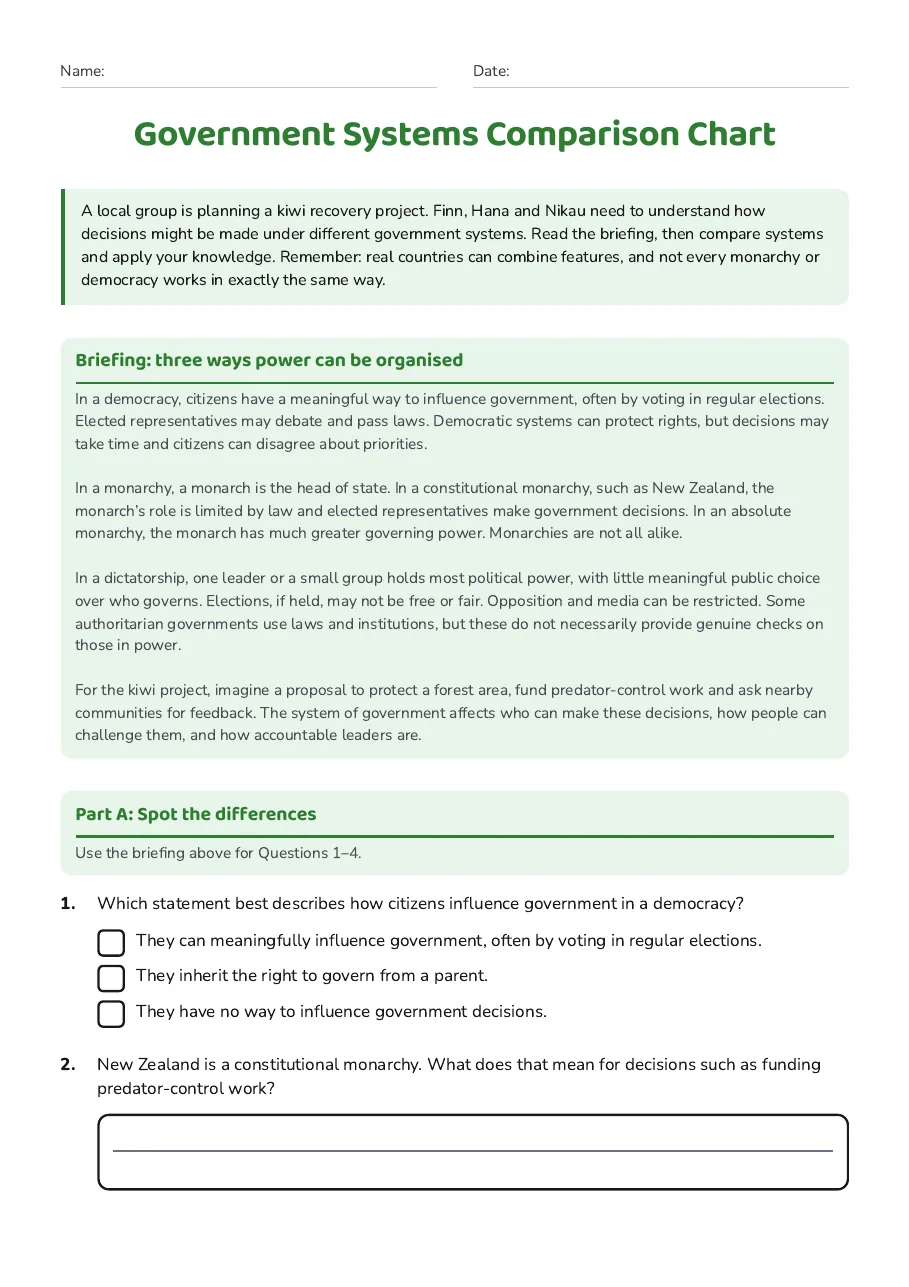
Government Systems Comparison Chart
Briefing: three ways power can be organised
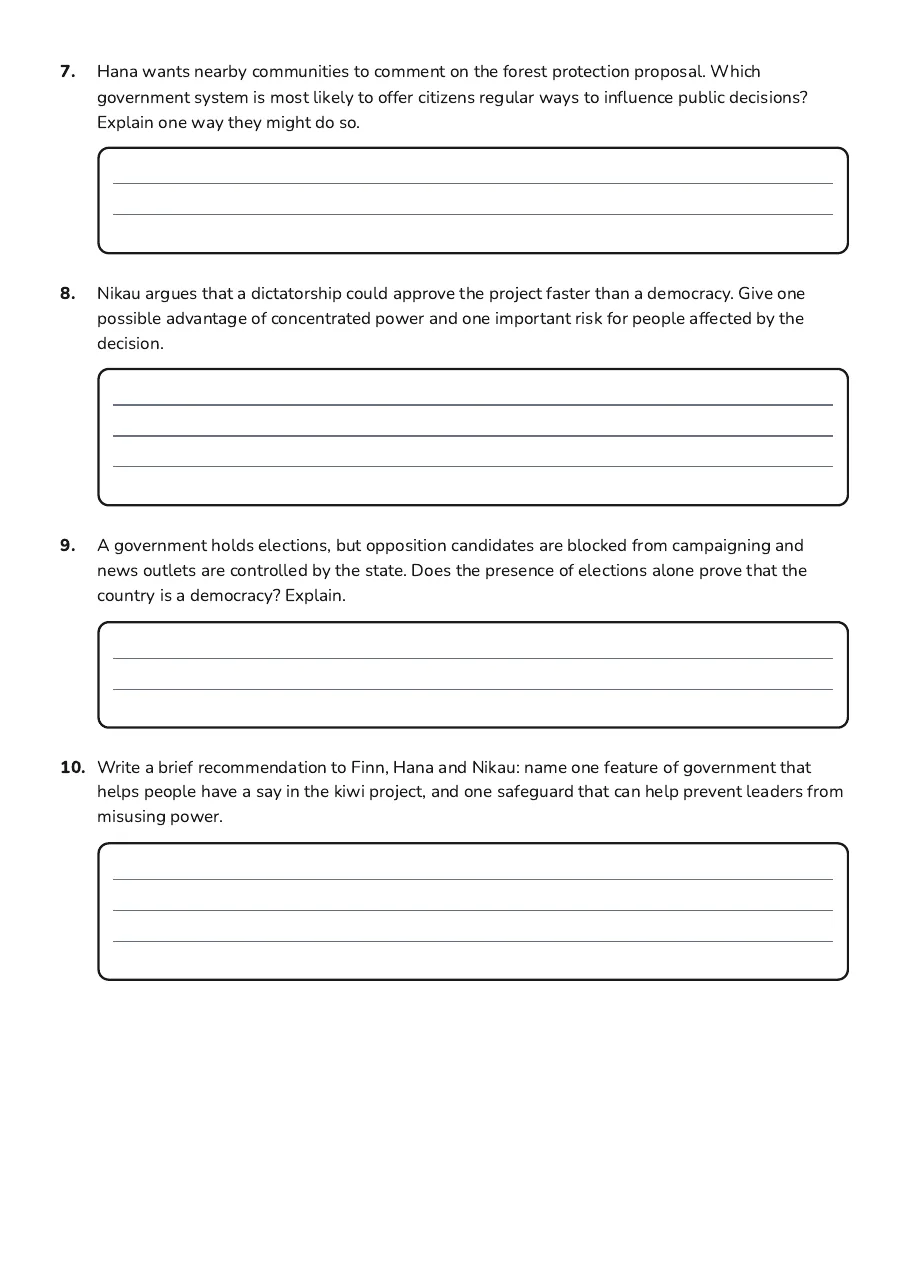
In a democracy, citizens have a meaningful way to influence government, often by voting in regular elections. Elected representatives may debate and pass laws. Democratic systems can protect rights, but decisions may take time and citizens can disagree about priorities. In a monarchy, a monarch is the head of state. In a constitutional monarchy, such as New Zealand, the monarch’s role is limited by law and elected representatives make government decisions. In an absolute monarchy, the monarch has much greater governing power. Monarchies are not all alike. In a dictatorship, one leader or a small group holds most political power, with little meaningful public choice over who governs. Elections, if held, may not be free or fair. Opposition and media can be restricted. Some authoritarian governments use laws and institutions, but these do not necessarily provide genuine checks on those in power. For the kiwi project, imagine a proposal to protect a forest area, fund predator-control work and ask nearby communities for feedback. The system of government affects who can make these decisions, how people can challenge them, and how accountable leaders are.
Part A: Spot the differences
Use the briefing above for Questions 1–4.
- They can meaningfully influence government, often by voting in regular elections.
- They inherit the right to govern from a parent.
- They have no way to influence government decisions.
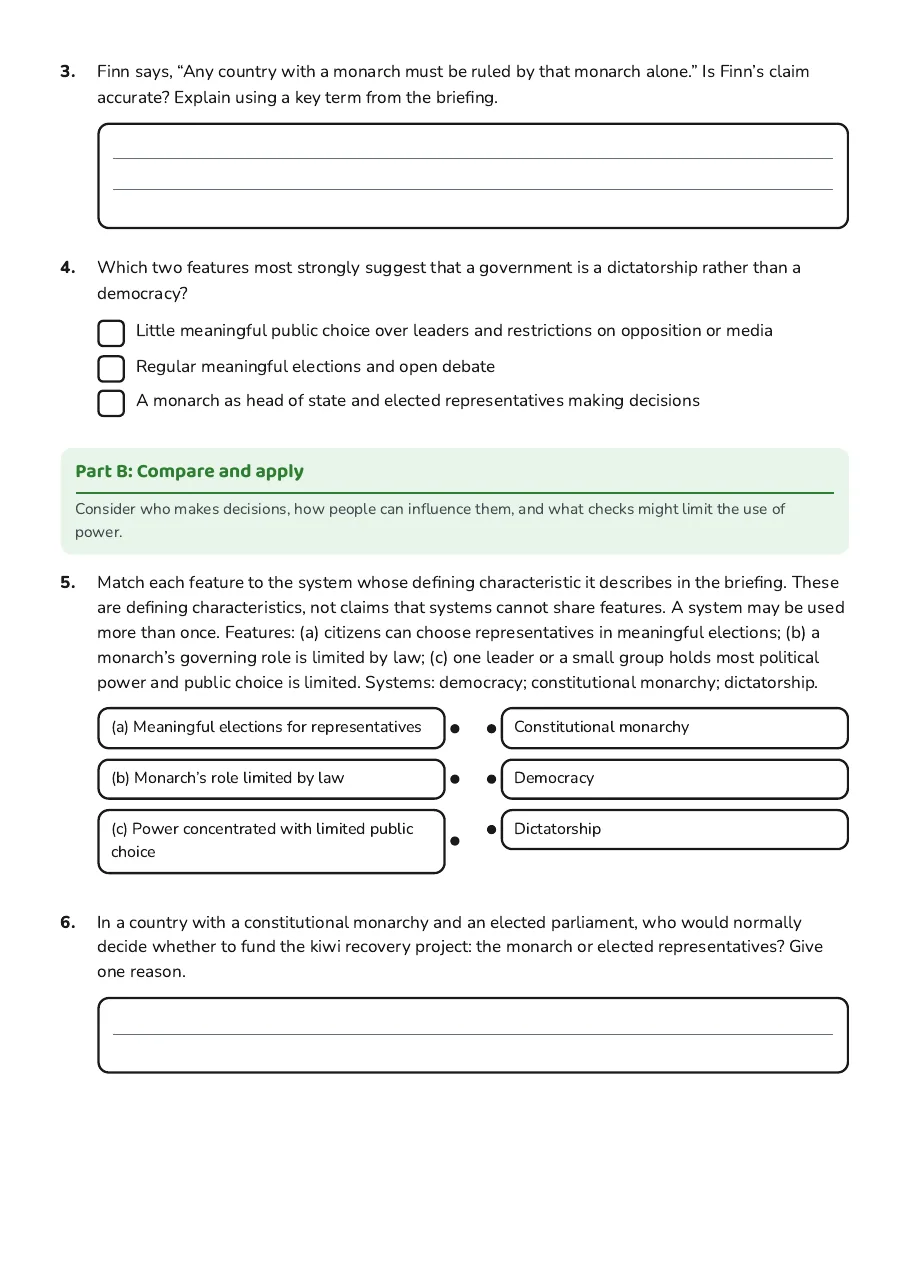
- Little meaningful public choice over leaders and restrictions on opposition or media
- Regular meaningful elections and open debate
- A monarch as head of state and elected representatives making decisions
Part B: Compare and apply
Consider who makes decisions, how people can influence them, and what checks might limit the use of power.
- (a) Meaningful elections for representatives
- (b) Monarch’s role limited by law
- (c) Power concentrated with limited public choice
- Constitutional monarchy
- Democracy
- Dictatorship
3 printable pages
Page 1
Page 2
Page 3
About This Worksheet
Free in Kuraplan
Sign up free, grab the PDF, and customize it for your class.
Print-Ready
Formatted for standard paper. Clean layout, easy to read.
AI-Generated
Created with Kuraplan's AI, designed for real classroom use.
For Teachers & Parents
Use in classrooms, for homework, tutoring, or homeschool.
Need a custom version of this worksheet?
Kuraplan's AI generates custom worksheets in seconds — differentiated for every learner, aligned to your curriculum.
Generate Custom Worksheets — FreeMore Social Sciences Worksheets
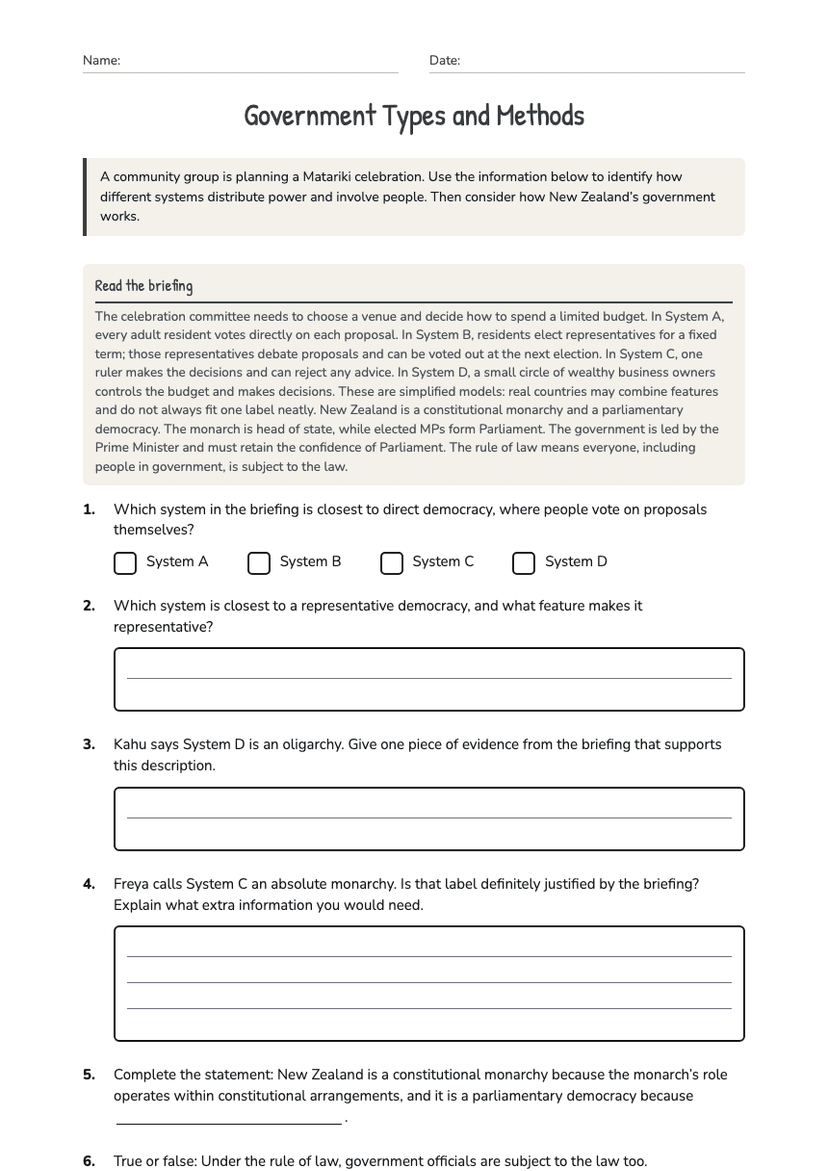
Government Types and Methods
Free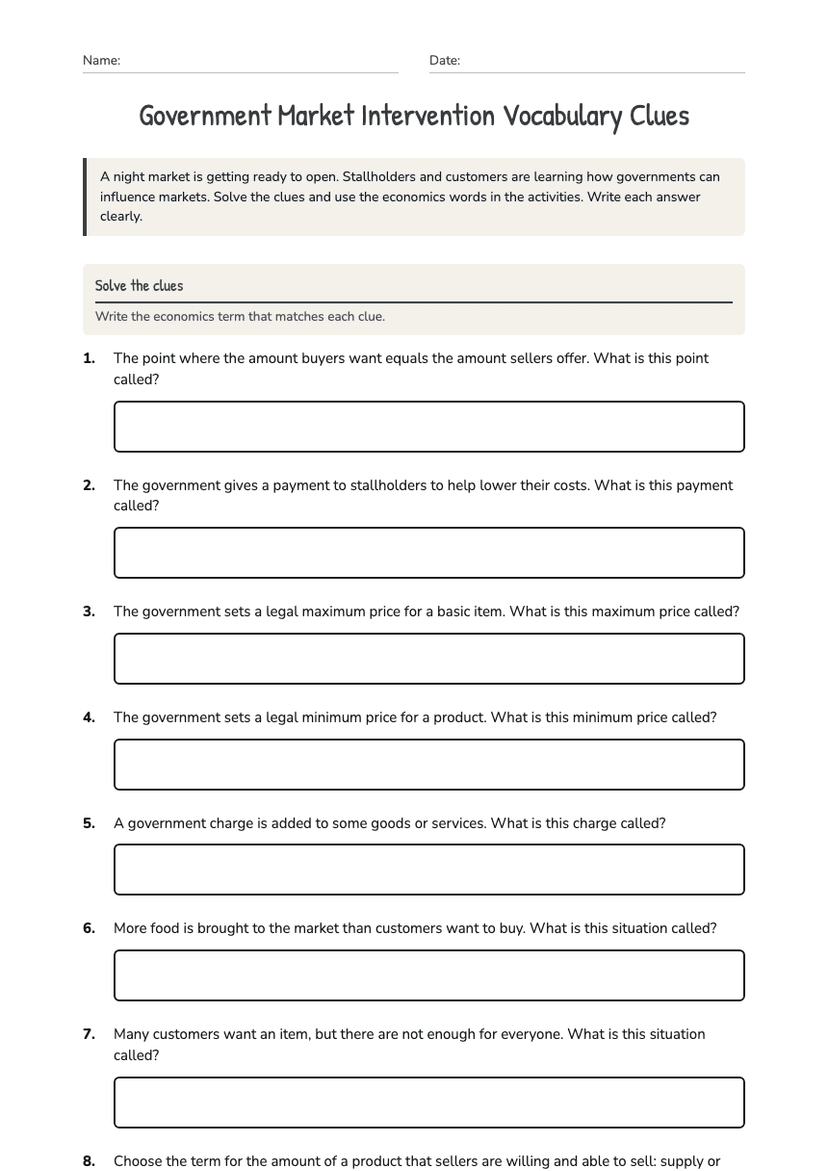
Government Market Intervention Vocabulary Clues
Free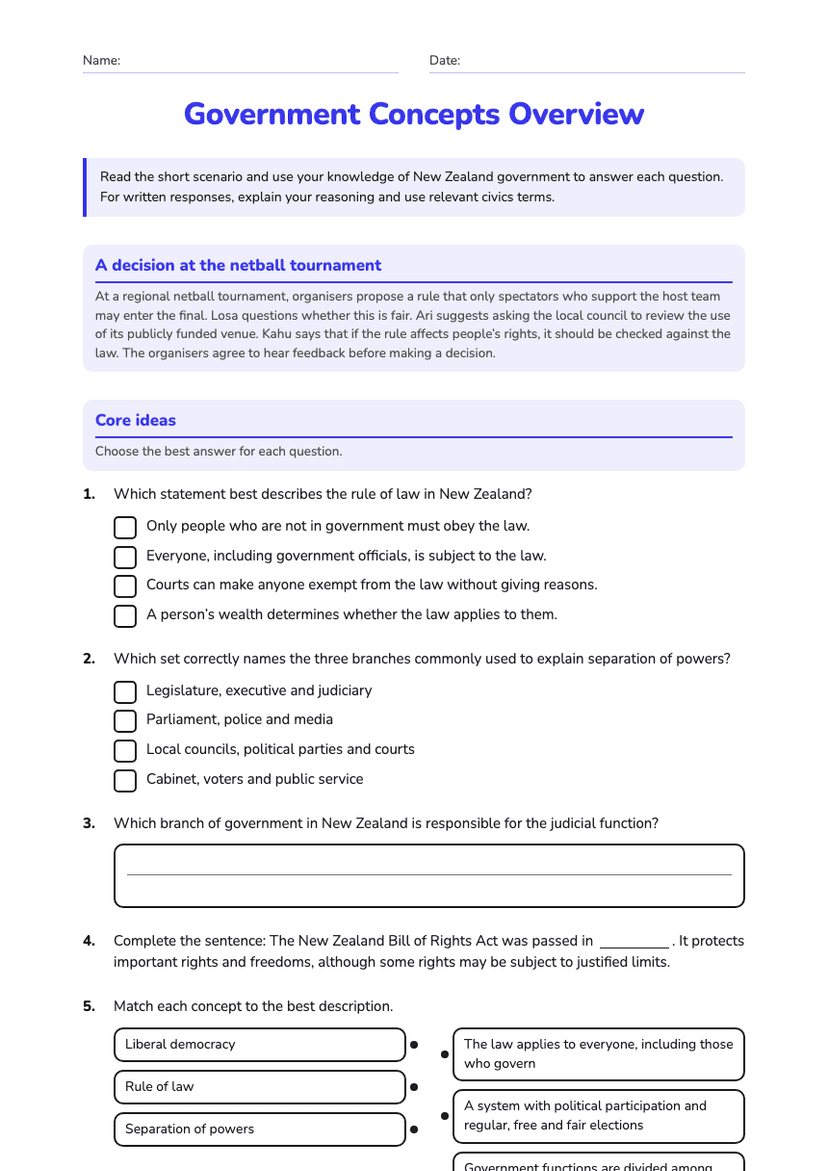
Government Concepts Overview
Free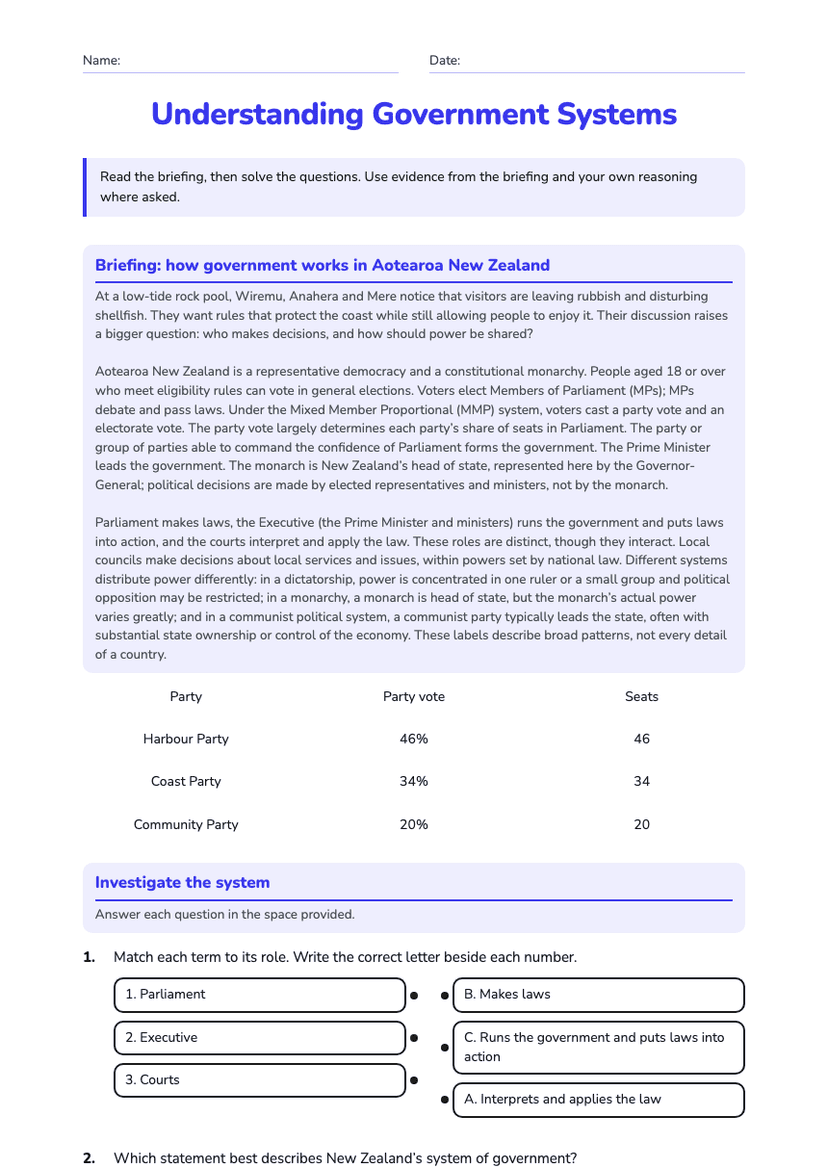
Understanding Government Systems
Free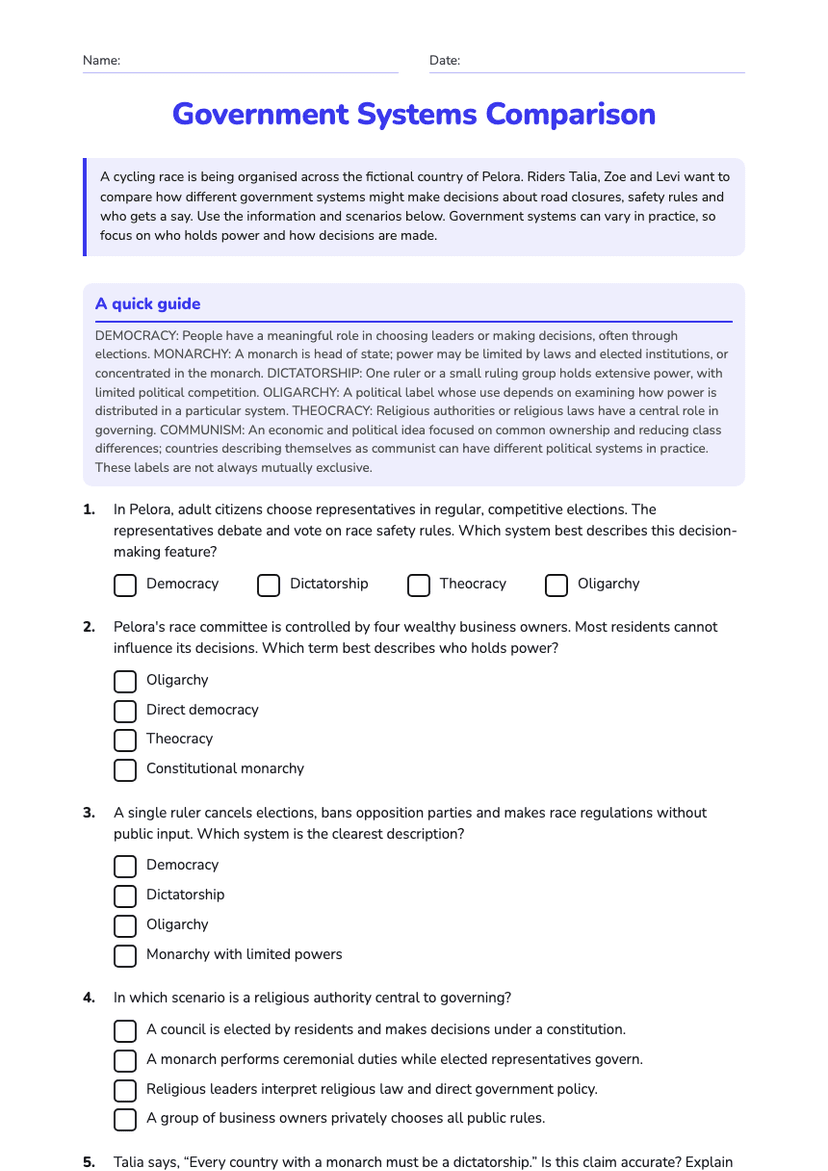
Government Systems Comparison
Free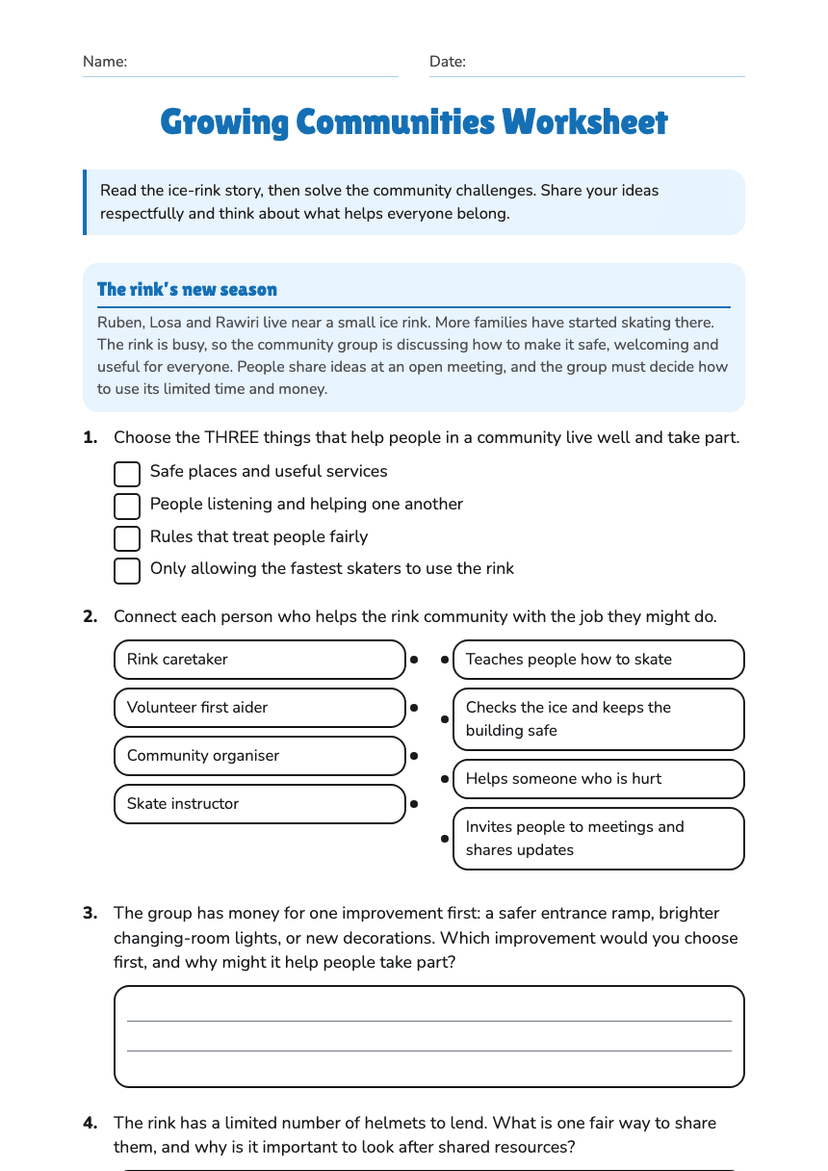
Growing Communities Worksheet
Free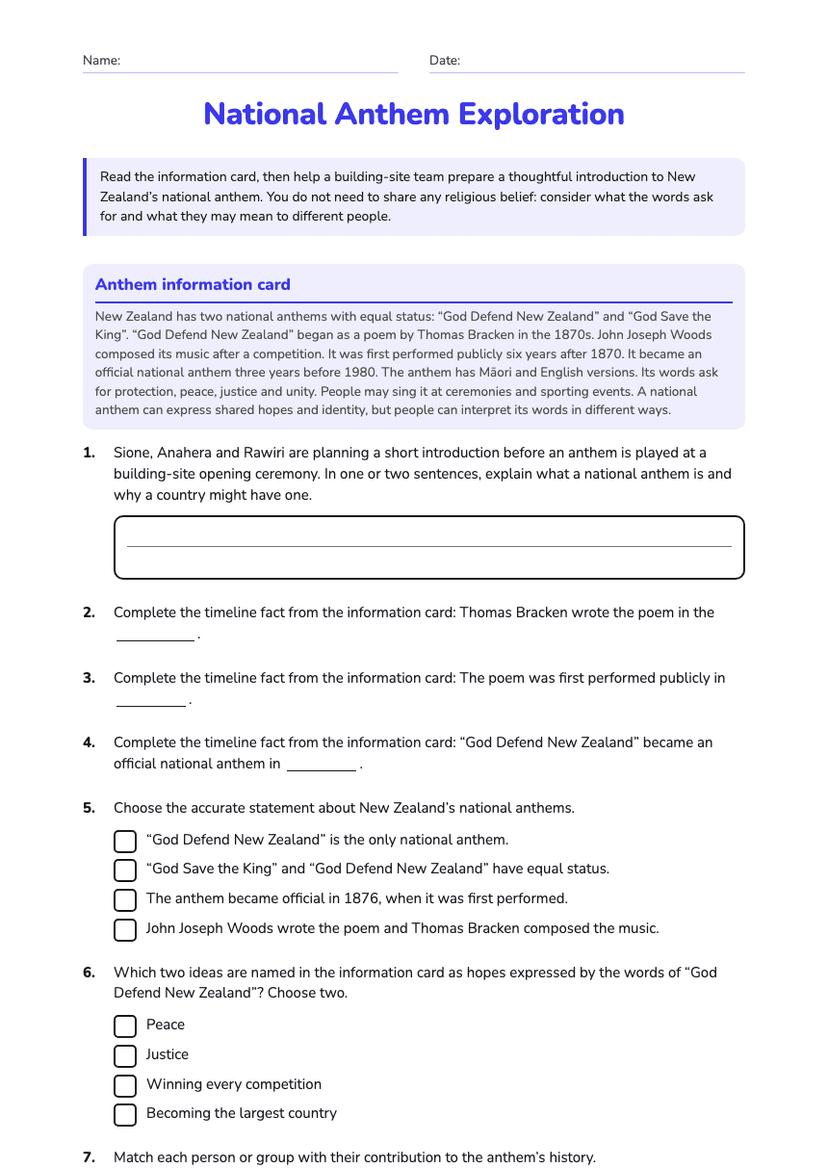
National Anthem Exploration
Free