Government Types and Methods
A free social sciences worksheet ready for your classroom. Open in Kuraplan to grab the print-ready PDF, customize it for your students, or generate a fresh version in seconds.
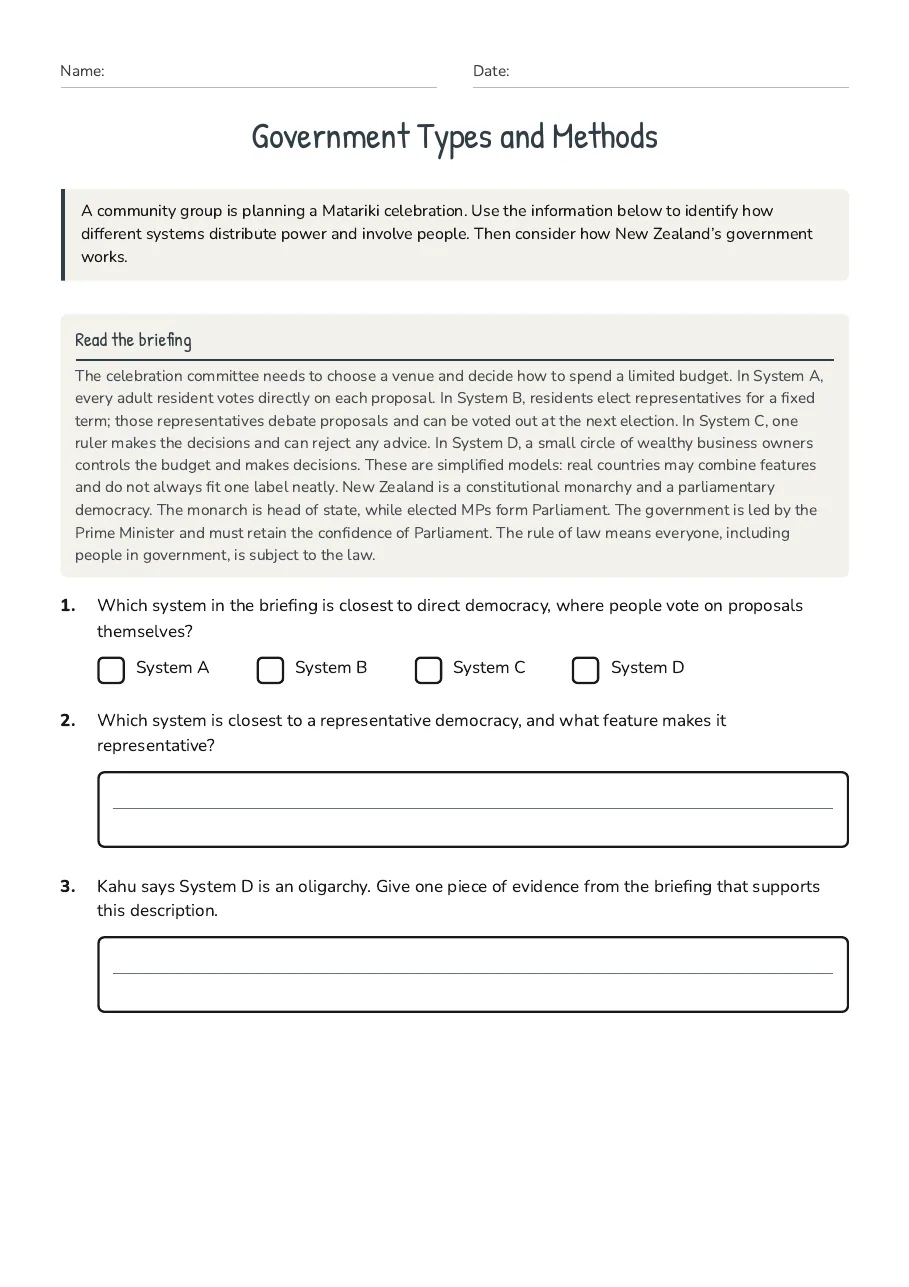
Government Types and Methods
Read the briefing
The celebration committee needs to choose a venue and decide how to spend a limited budget. In System A, every adult resident votes directly on each proposal. In System B, residents elect representatives for a fixed term; those representatives debate proposals and can be voted out at the next election. In System C, one ruler makes the decisions and can reject any advice. In System D, a small circle of wealthy business owners controls the budget and makes decisions. These are simplified models: real countries may combine features and do not always fit one label neatly. New Zealand is a constitutional monarchy and a parliamentary democracy. The monarch is head of state, while elected MPs form Parliament. The government is led by the Prime Minister and must retain the confidence of Parliament. The rule of law means everyone, including people in government, is subject to the law.
- System A
- System B
- System C
- System D
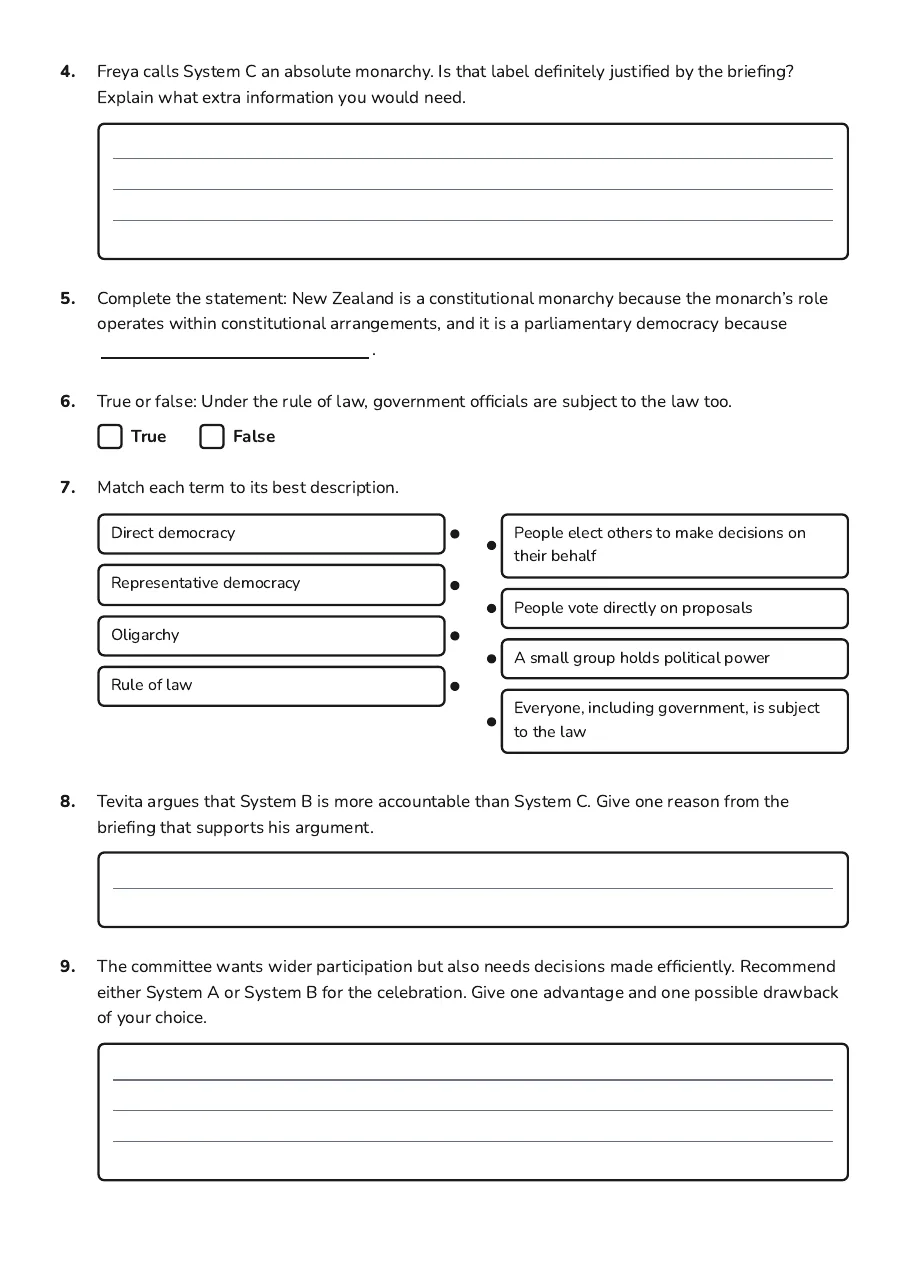
- Direct democracy
- Representative democracy
- Oligarchy
- Rule of law
- People elect others to make decisions on their behalf
- People vote directly on proposals
- A small group holds political power
- Everyone, including government, is subject to the law
3 printable pages
Page 1
Page 2
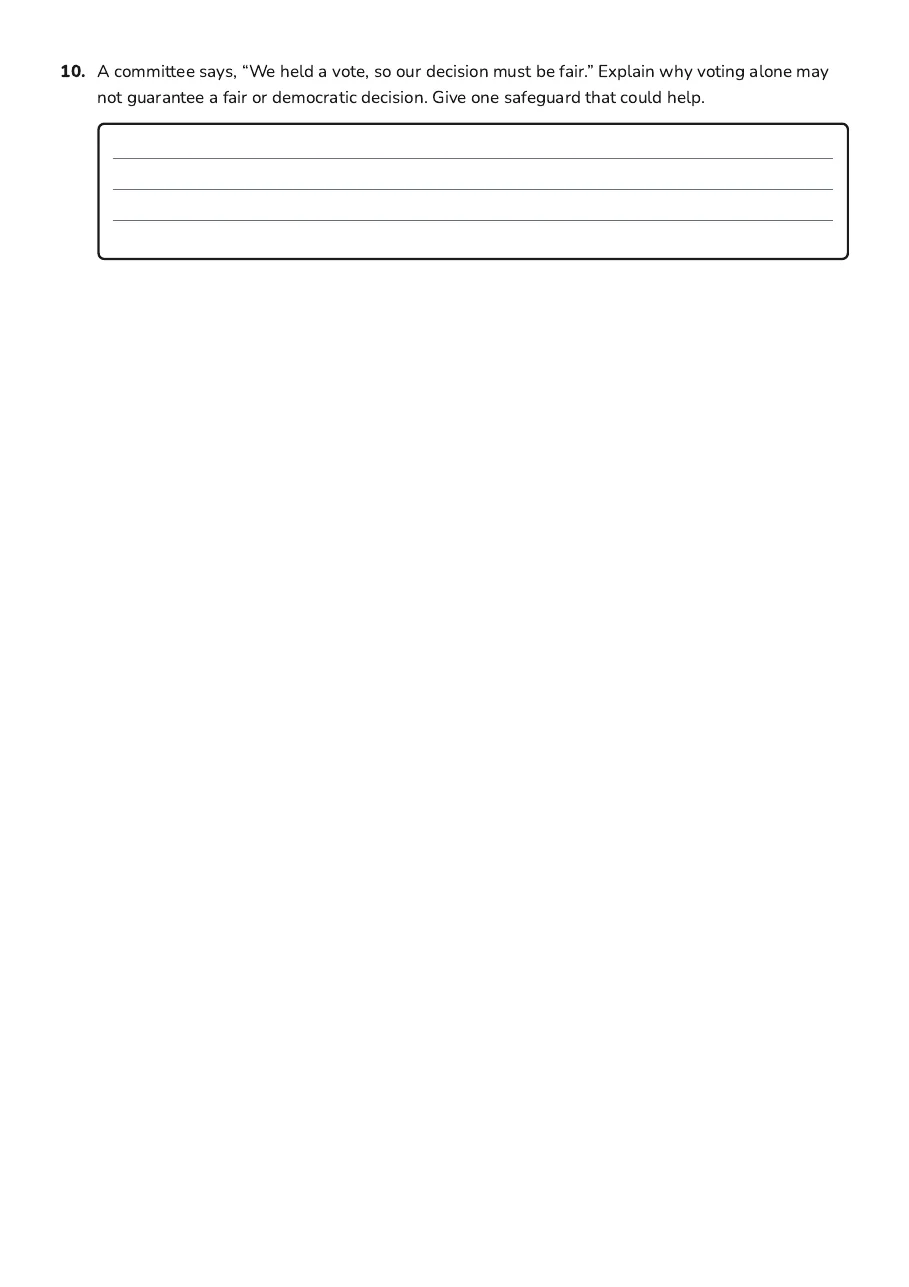
Page 3
About This Worksheet
Free in Kuraplan
Sign up free, grab the PDF, and customize it for your class.
Print-Ready
Formatted for standard paper. Clean layout, easy to read.
AI-Generated
Created with Kuraplan's AI, designed for real classroom use.
For Teachers & Parents
Use in classrooms, for homework, tutoring, or homeschool.
Need a custom version of this worksheet?
Kuraplan's AI generates custom worksheets in seconds — differentiated for every learner, aligned to your curriculum.
Generate Custom Worksheets — FreeMore Social Sciences Worksheets
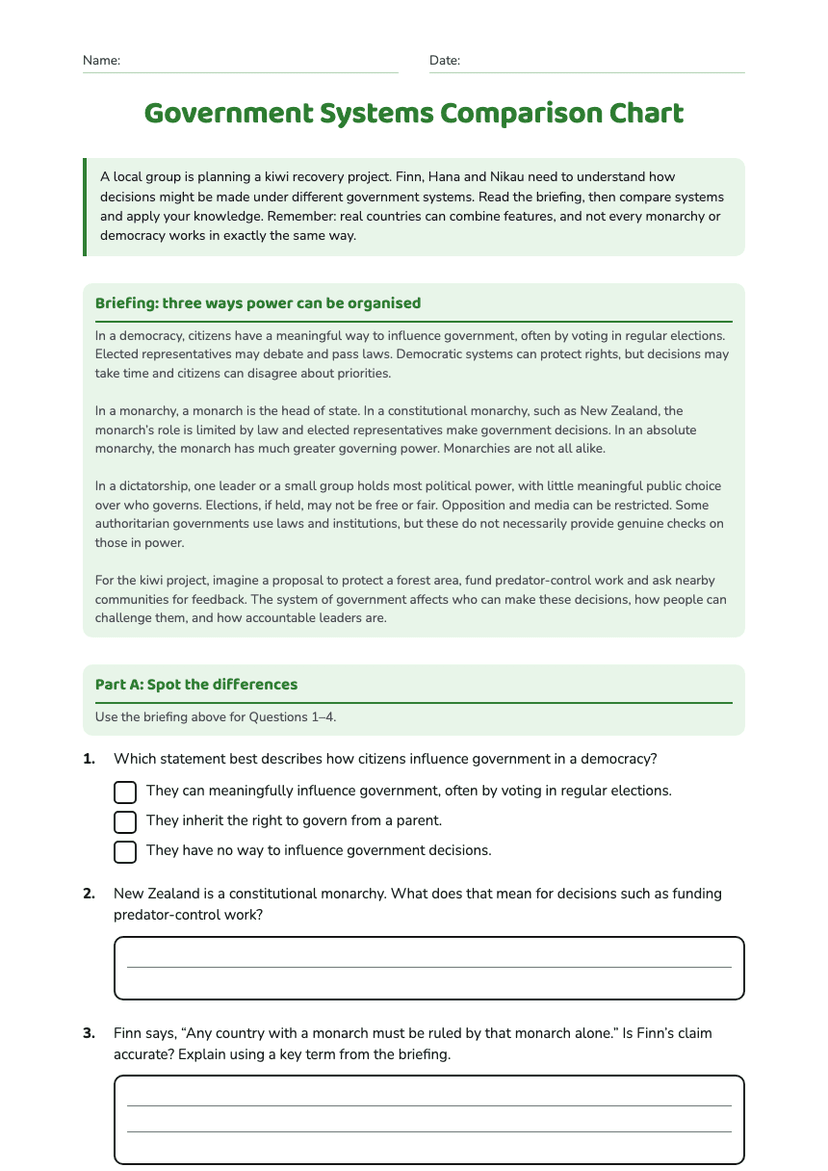
Government Systems Comparison Chart
Free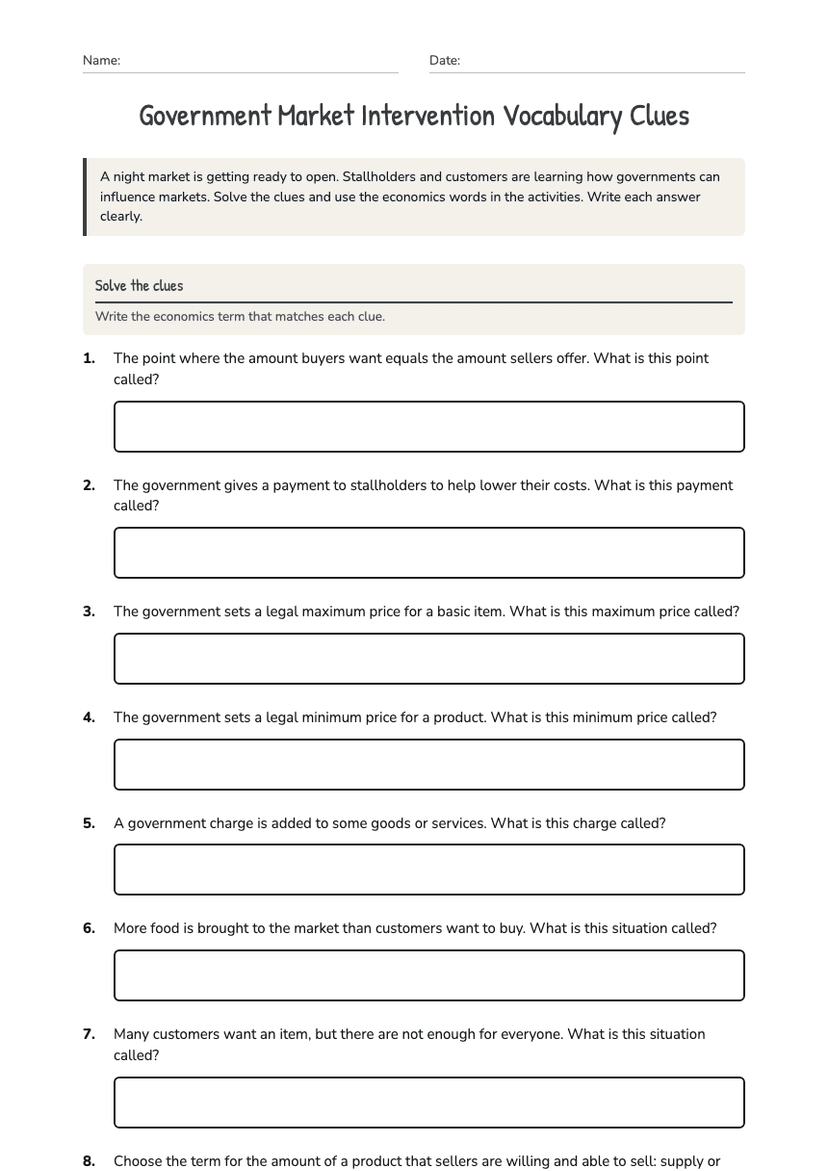
Government Market Intervention Vocabulary Clues
Free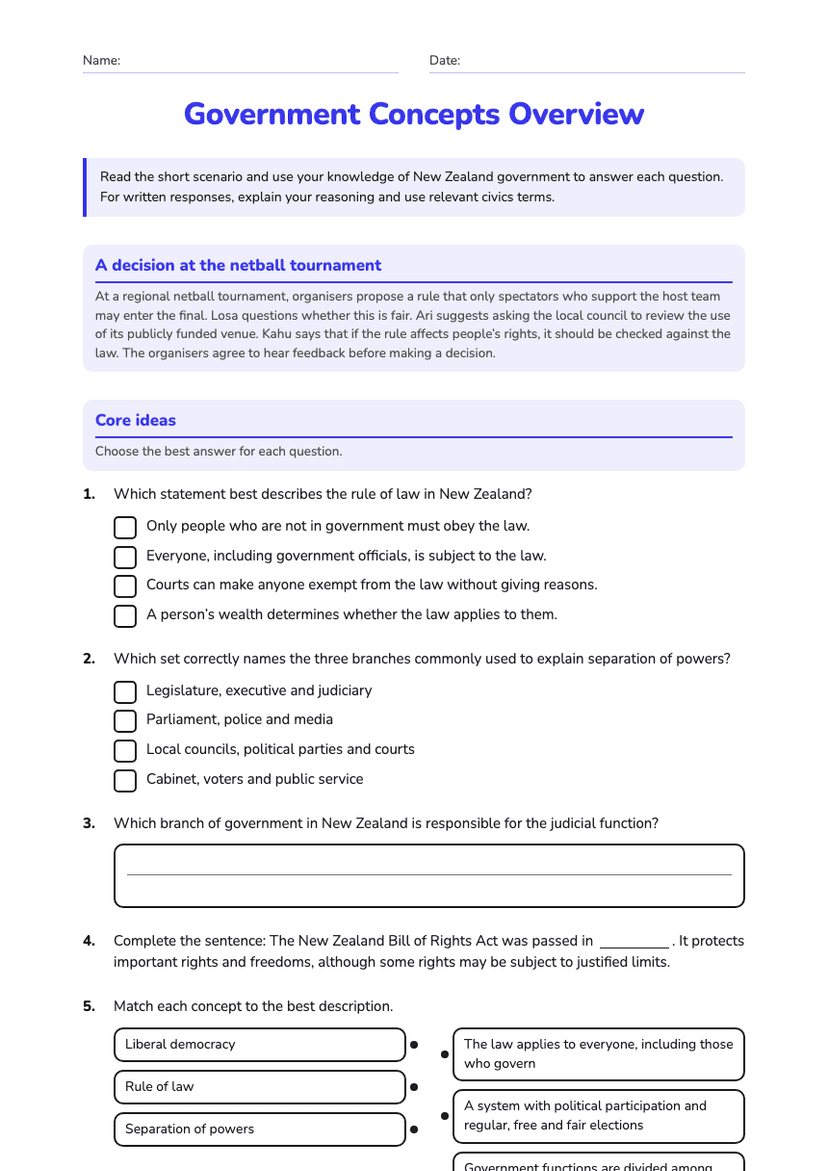
Government Concepts Overview
Free
Understanding Government Systems
Free
Government Systems Comparison
Free
Growing Communities Worksheet
Free
National Anthem Exploration
Free