Indigenous Water Cultural Significance
A free social sciences worksheet ready for your classroom. Open in Kuraplan to grab the print-ready PDF, customize it for your students, or generate a fresh version in seconds.
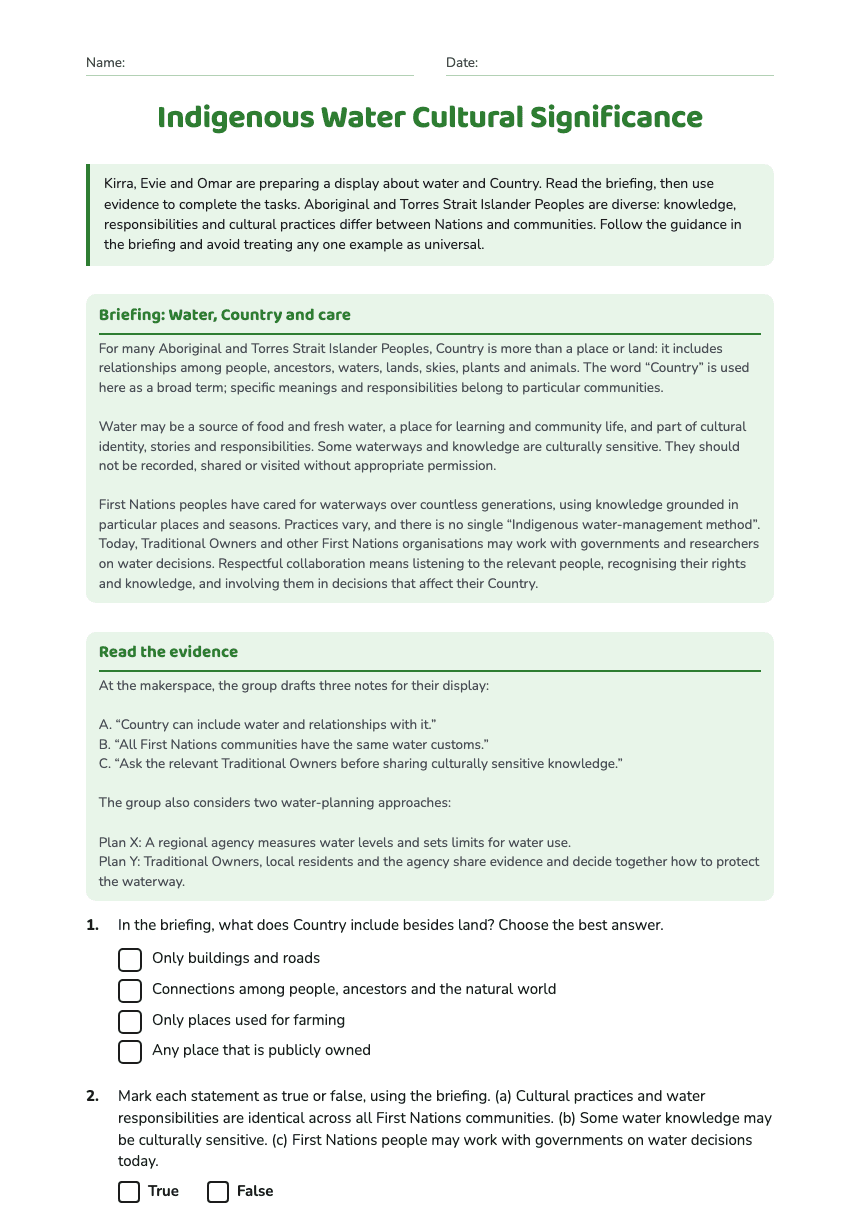
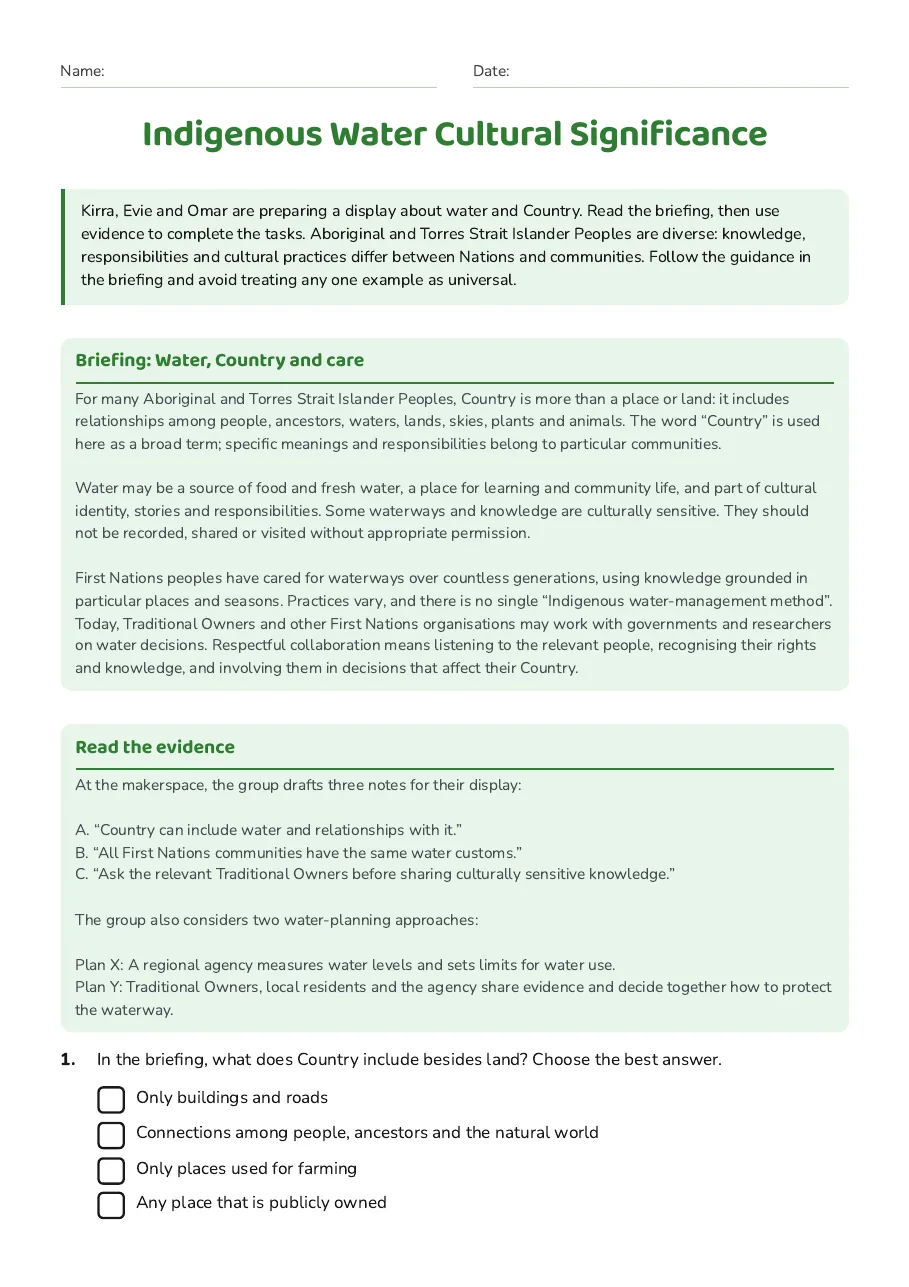
Indigenous Water Cultural Significance
Briefing: Water, Country and care
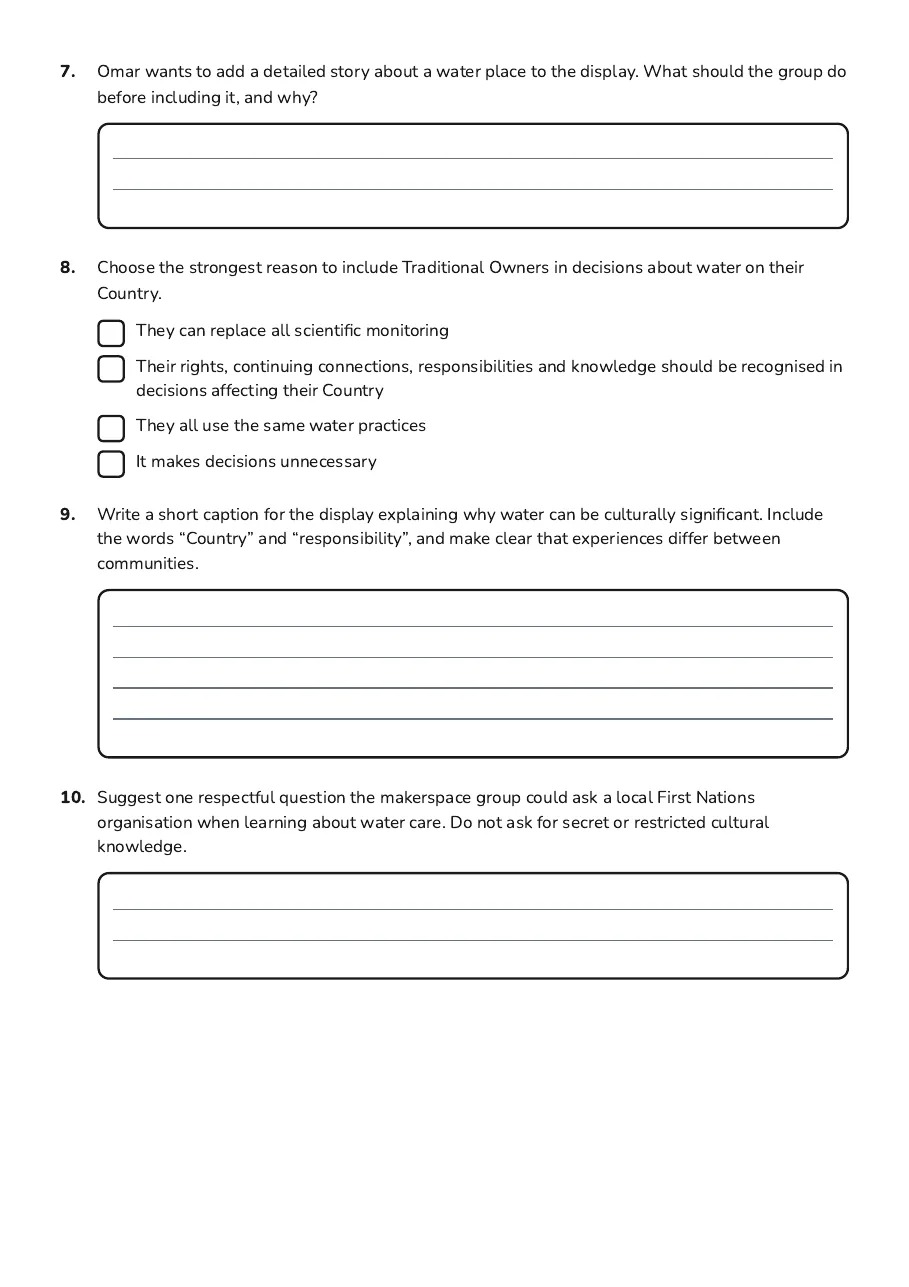
For many Aboriginal and Torres Strait Islander Peoples, Country is more than a place or land: it includes relationships among people, ancestors, waters, lands, skies, plants and animals. The word “Country” is used here as a broad term; specific meanings and responsibilities belong to particular communities. Water may be a source of food and fresh water, a place for learning and community life, and part of cultural identity, stories and responsibilities. Some waterways and knowledge are culturally sensitive. They should not be recorded, shared or visited without appropriate permission. First Nations peoples have cared for waterways over countless generations, using knowledge grounded in particular places and seasons. Practices vary, and there is no single “Indigenous water-management method”. Today, Traditional Owners and other First Nations organisations may work with governments and researchers on water decisions. Respectful collaboration means listening to the relevant people, recognising their rights and knowledge, and involving them in decisions that affect their Country.
Read the evidence
At the makerspace, the group drafts three notes for their display: A. “Country can include water and relationships with it.” B. “All First Nations communities have the same water customs.” C. “Ask the relevant Traditional Owners before sharing culturally sensitive knowledge.” The group also considers two water-planning approaches: Plan X: A regional agency measures water levels and sets limits for water use. Plan Y: Traditional Owners, local residents and the agency share evidence and decide together how to protect the waterway.
- Only buildings and roads
- Connections among people, ancestors and the natural world
- Only places used for farming
- Any place that is publicly owned
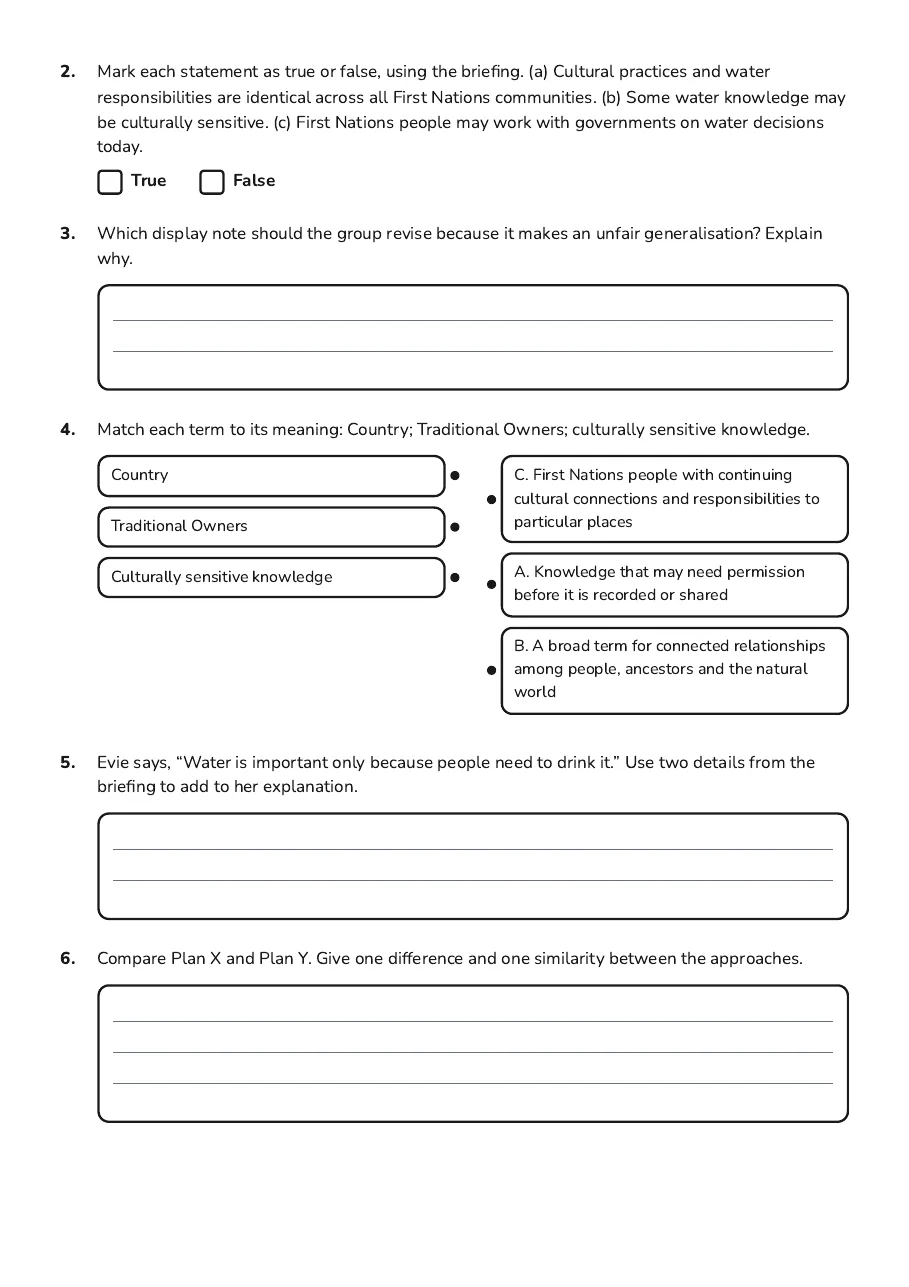
- Country
- Traditional Owners
- Culturally sensitive knowledge
- C. First Nations people with continuing cultural connections and responsibilities to particular places
- A. Knowledge that may need permission before it is recorded or shared
- B. A broad term for connected relationships among people, ancestors and the natural world
- They can replace all scientific monitoring
- Their rights, continuing connections, responsibilities and knowledge should be recognised in decisions affecting their Country
- They all use the same water practices
- It makes decisions unnecessary
3 printable pages
Page 1
Page 2
Page 3
About This Worksheet
Free in Kuraplan
Sign up free, grab the PDF, and customize it for your class.
Print-Ready
Formatted for standard paper. Clean layout, easy to read.
AI-Generated
Created with Kuraplan's AI, designed for real classroom use.
For Teachers & Parents
Use in classrooms, for homework, tutoring, or homeschool.
Need a custom version of this worksheet?
Kuraplan's AI generates custom worksheets in seconds — differentiated for every learner, aligned to your curriculum.
Generate Custom Worksheets — FreeMore Social Sciences Worksheets
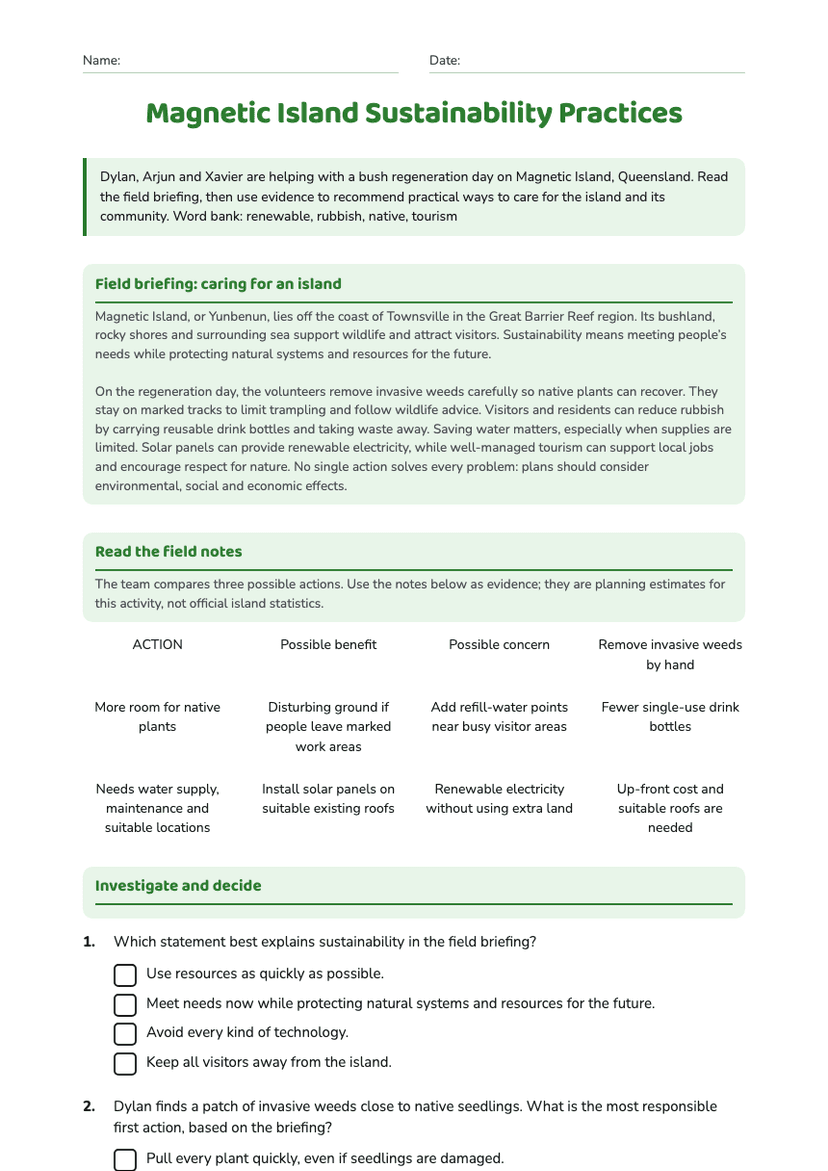
Magnetic Island Sustainability Practices
Free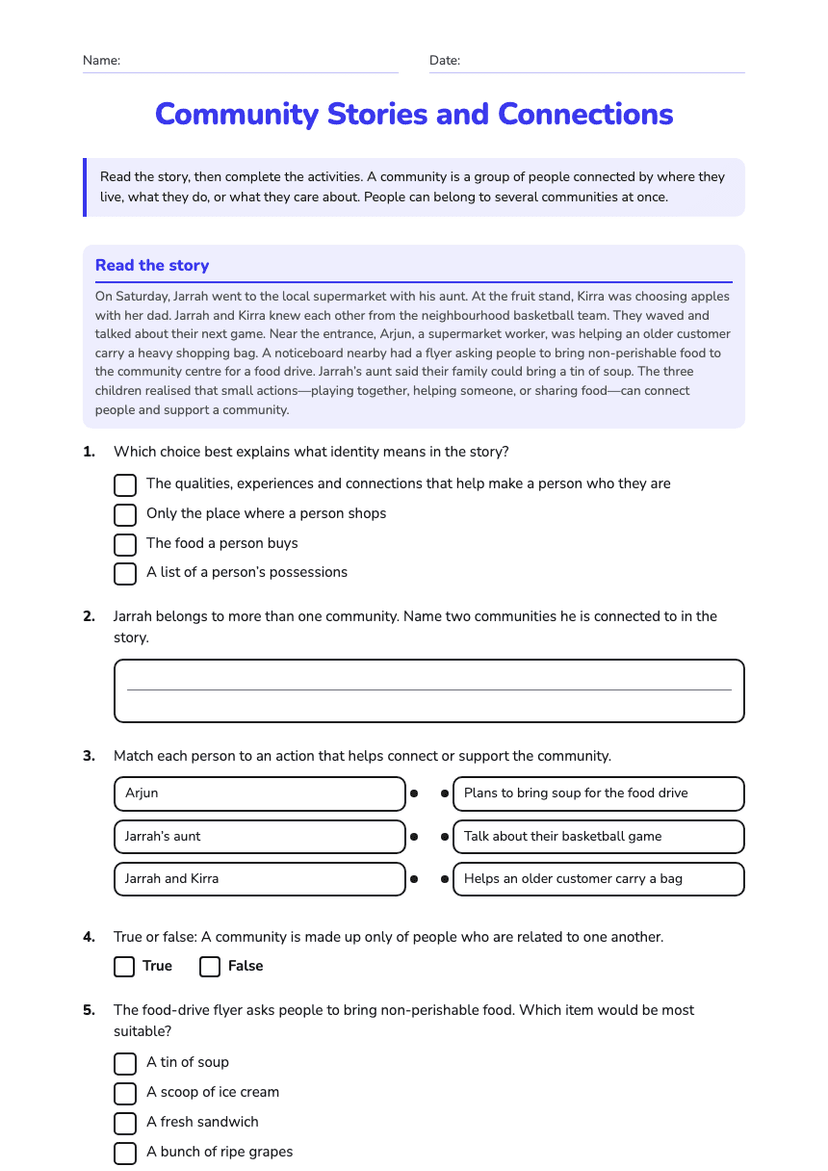
Community Stories and Connections
Free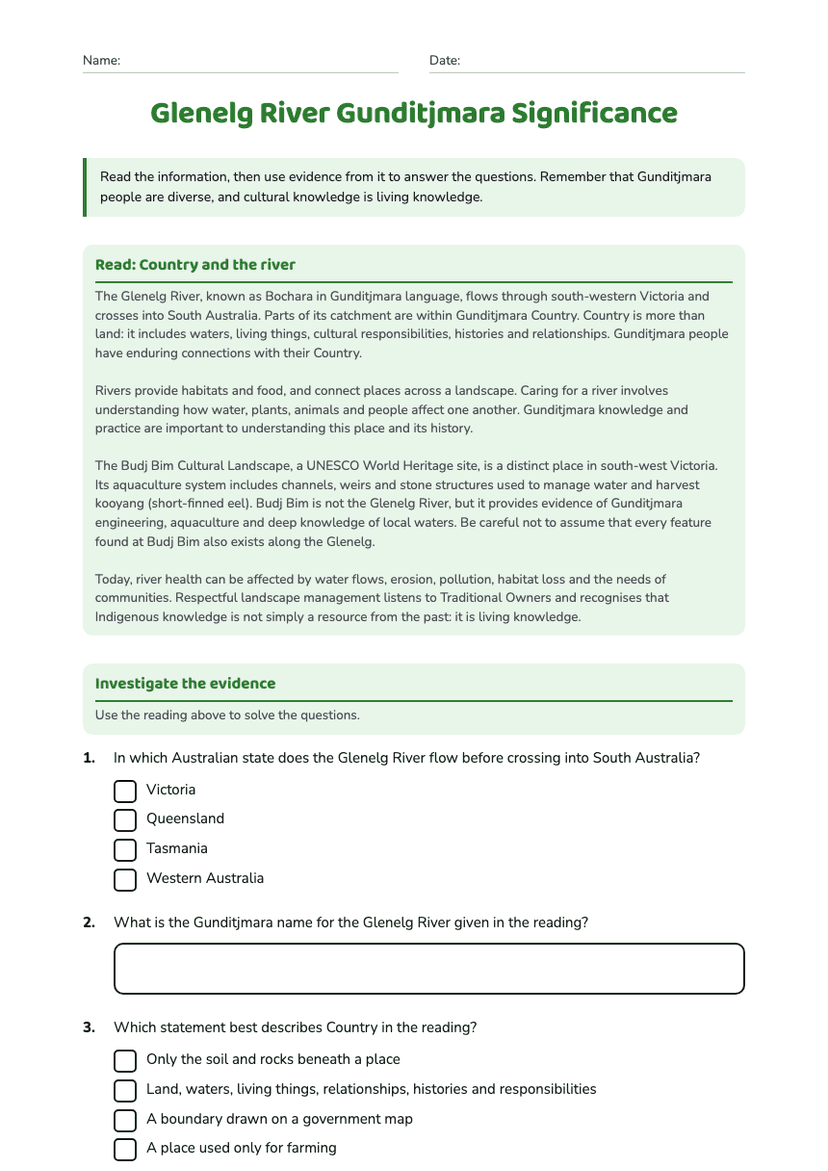
Glenelg River Gunditjmara Significance
Free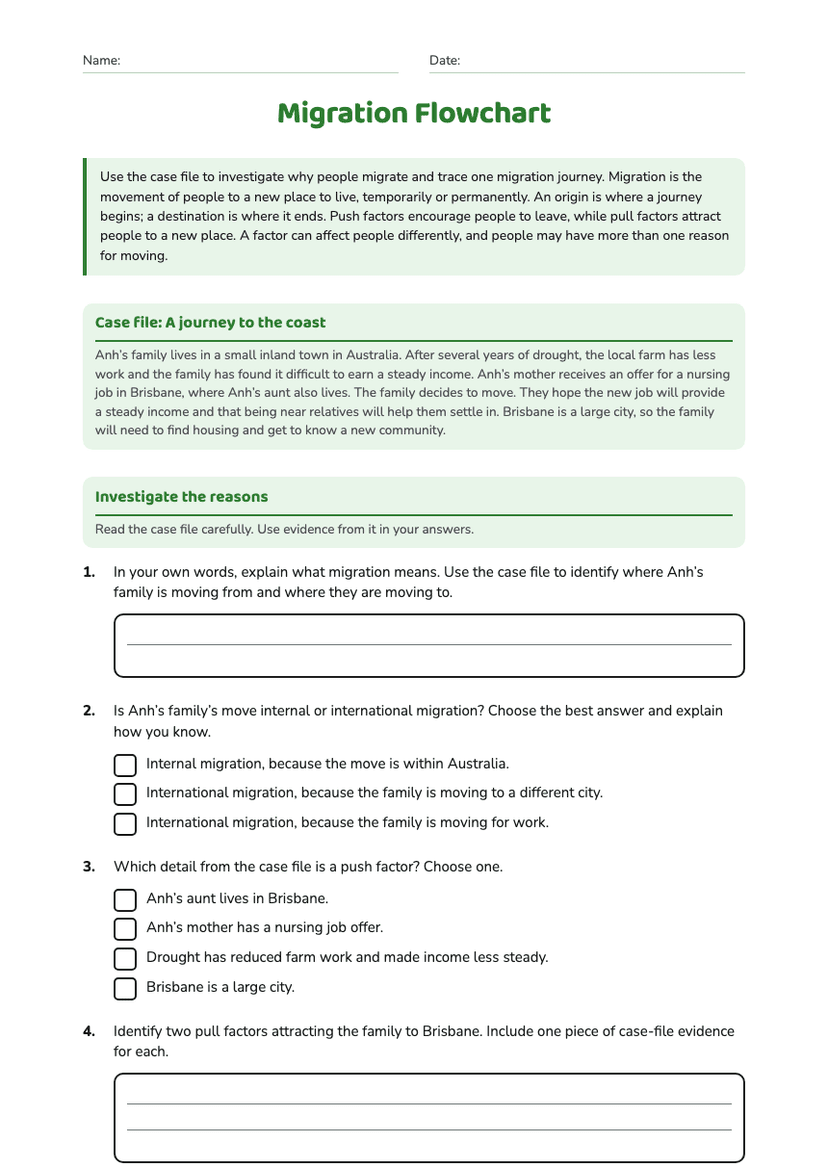
Migration Flowchart
Free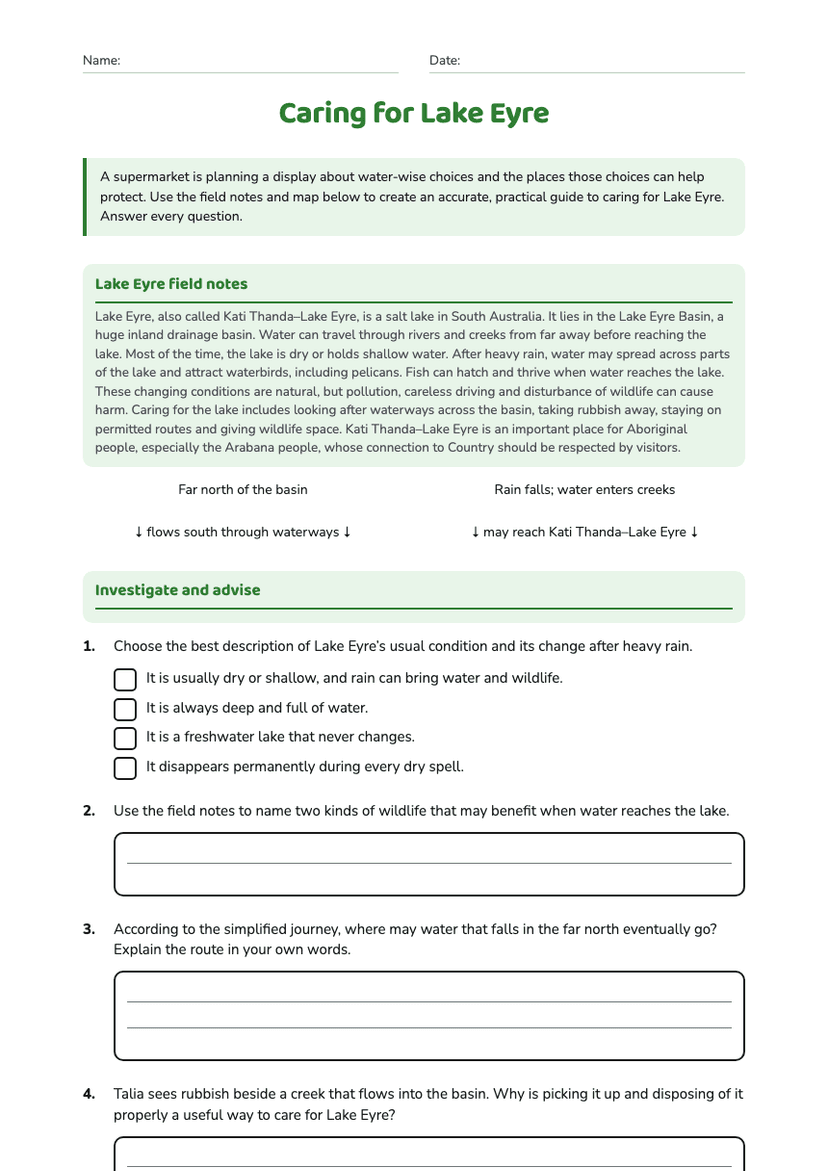
Caring for Lake Eyre
Free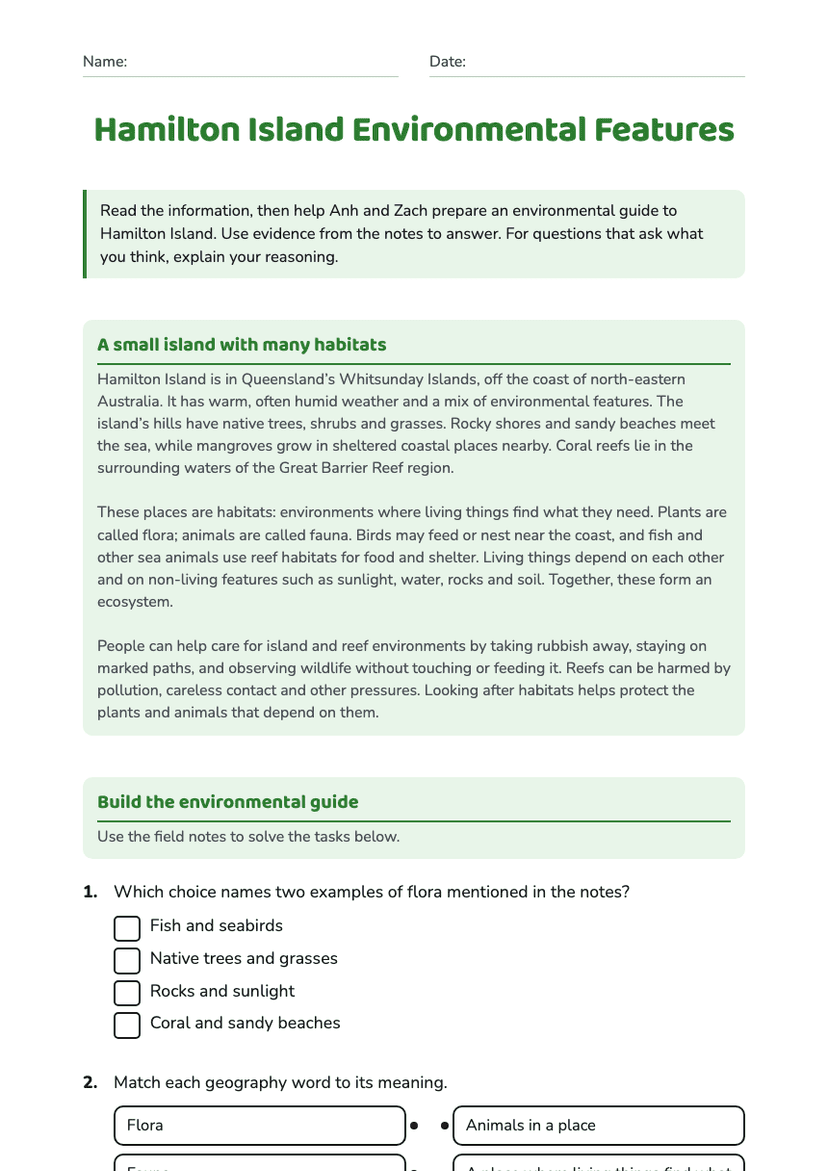
Hamilton Island Environmental Features
Free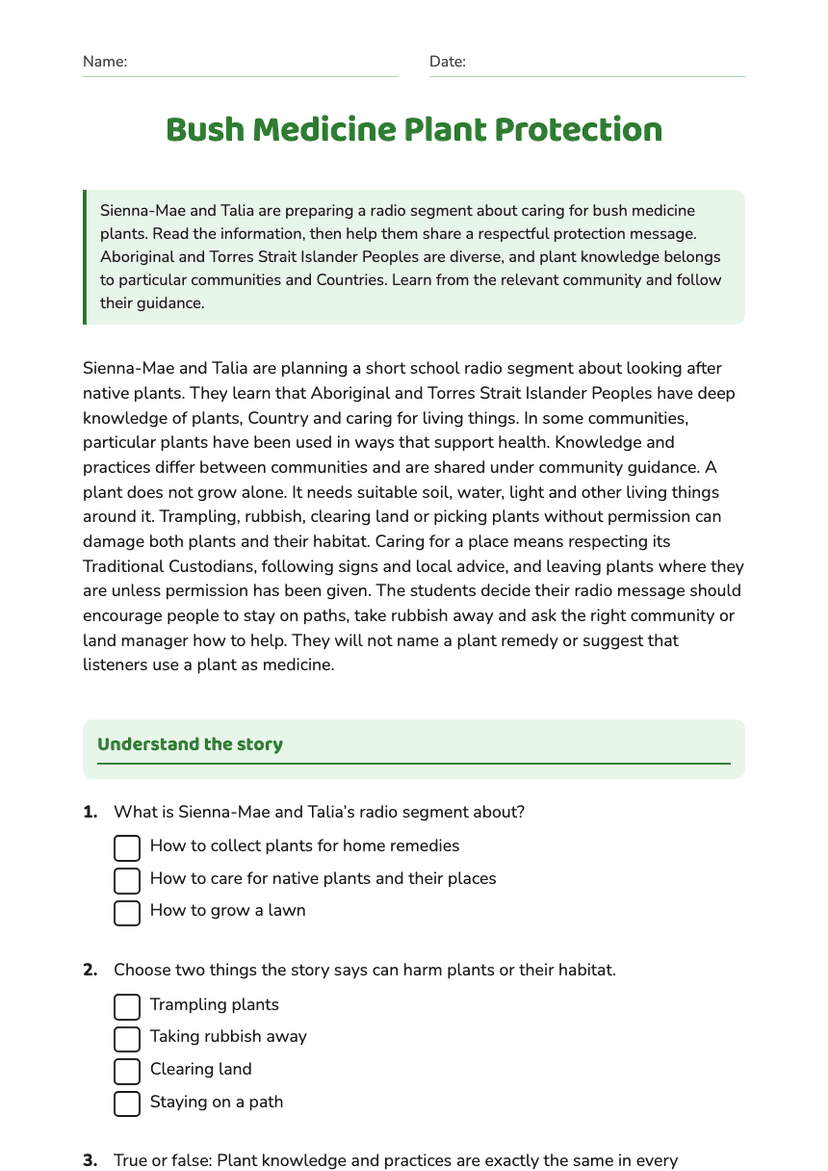
Bush Medicine Plant Protection
Free