MathsFreePrintable
Introduction to Algebraic Thinking
A free maths worksheet ready for your classroom. Open in Kuraplan to grab the print-ready PDF, customize it for your students, or generate a fresh version in seconds.
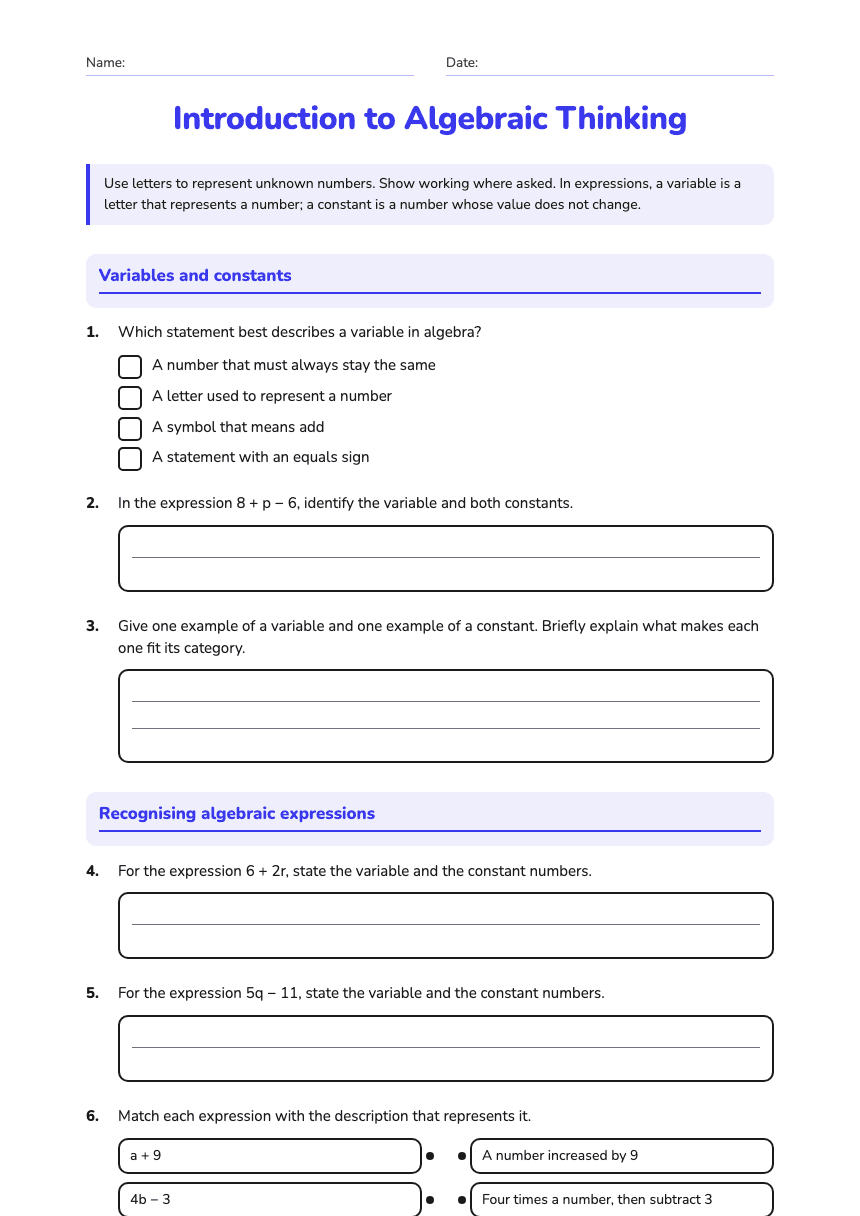
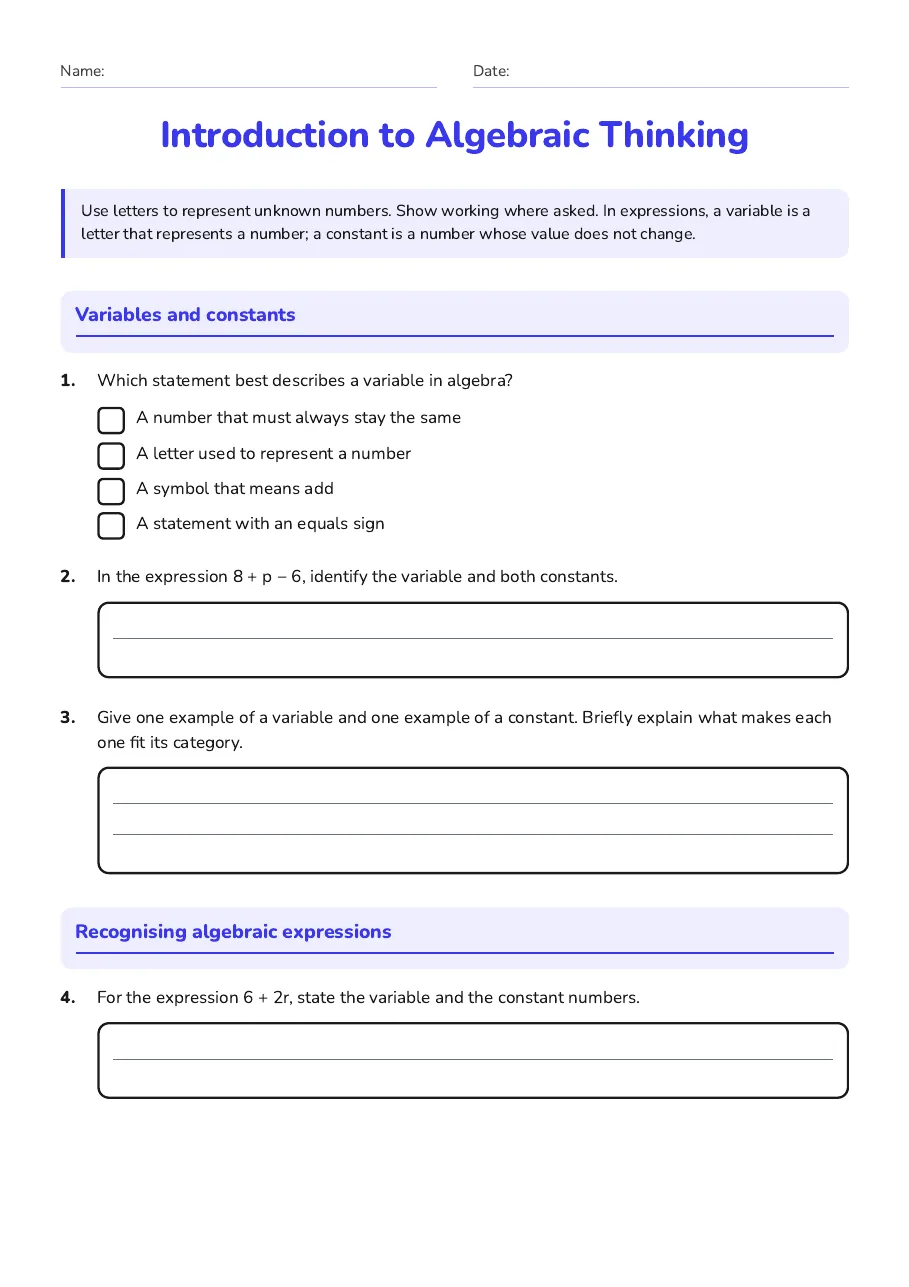
Name:Date:
Introduction to Algebraic Thinking
Use letters to represent unknown numbers. Show working where asked. In expressions, a variable is a letter that represents a number; a constant is a number whose value does not change.
Variables and constants
1.Which statement best describes a variable in algebra?
- A number that must always stay the same
- A letter used to represent a number
- A symbol that means add
- A statement with an equals sign
2.In the expression 8 + p − 6, identify the variable and both constants.
3.Give one example of a variable and one example of a constant. Briefly explain what makes each one fit its category.
Recognising algebraic expressions
4.For the expression 6 + 2r, state the variable and the constant numbers.
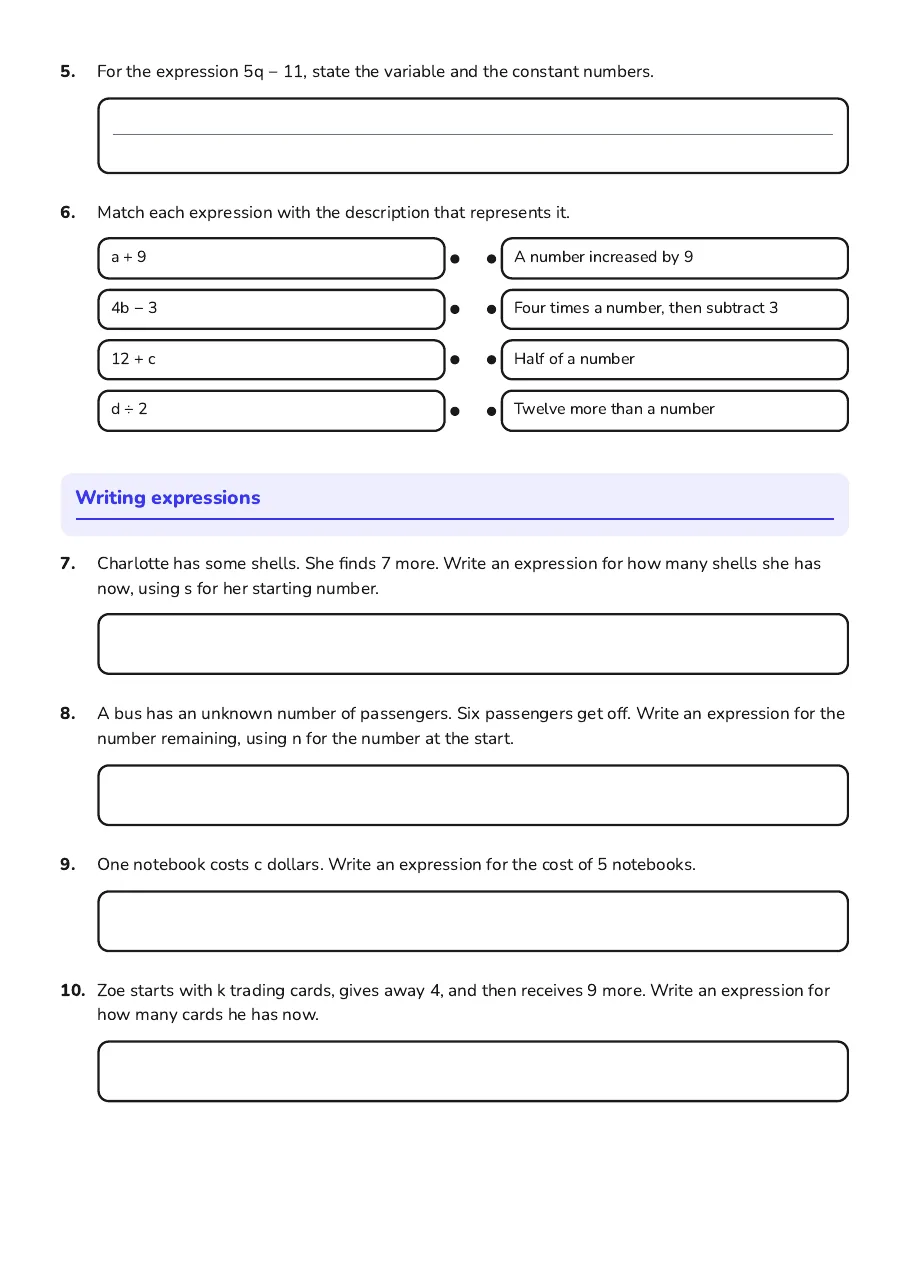
5.For the expression 5q − 11, state the variable and the constant numbers.
6.Match each expression with the description that represents it.
- a + 9
- 4b − 3
- 12 + c
- d ÷ 2
- A number increased by 9
- Four times a number, then subtract 3
- Half of a number
- Twelve more than a number
Writing expressions
7.Charlotte has some shells. She finds 7 more. Write an expression for how many shells she has now, using s for her starting number.
8.A bus has an unknown number of passengers. Six passengers get off. Write an expression for the number remaining, using n for the number at the start.
9.One notebook costs c dollars. Write an expression for the cost of 5 notebooks.
10.Zoe starts with k trading cards, gives away 4, and then receives 9 more. Write an expression for how many cards he has now.
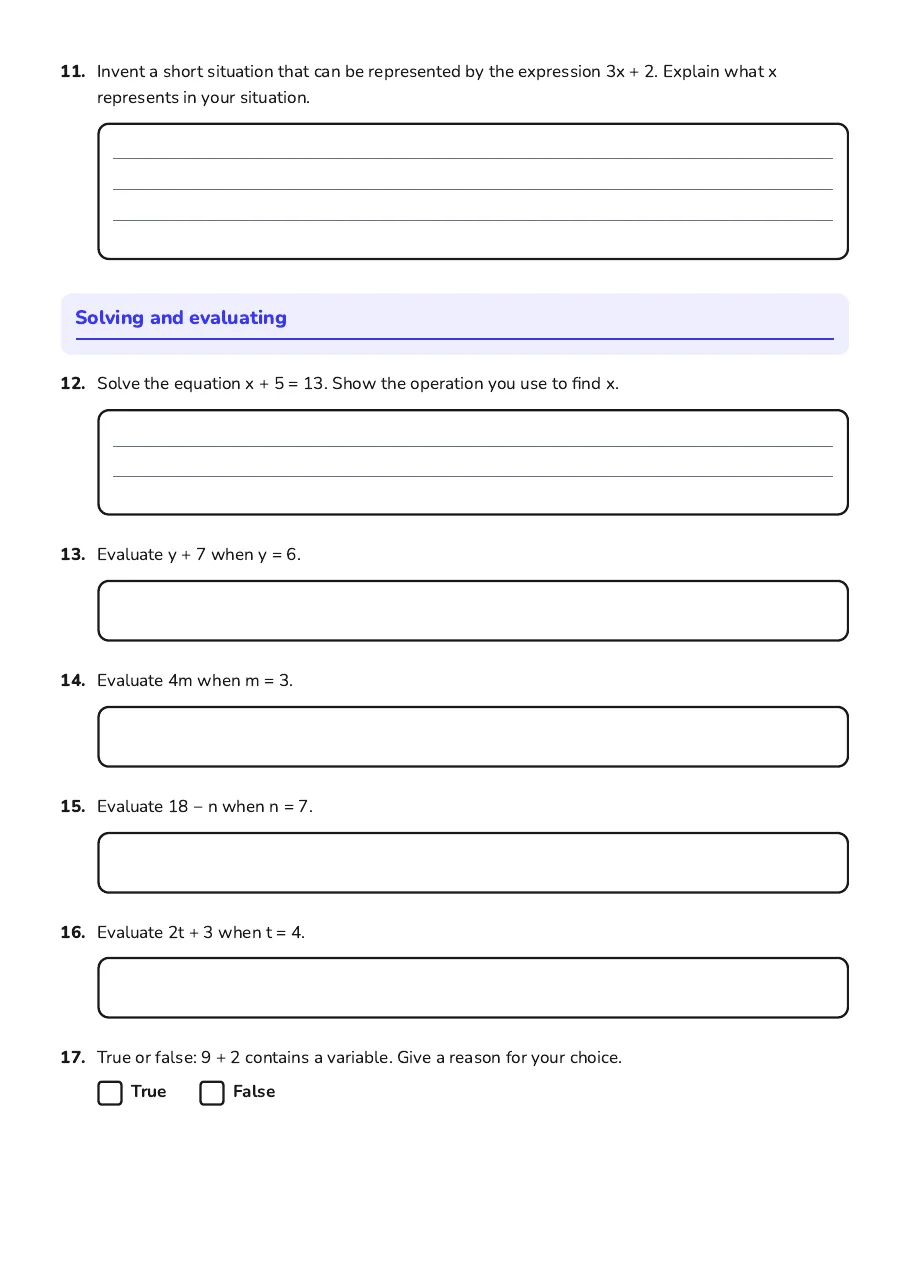
11.Invent a short situation that can be represented by the expression 3x + 2. Explain what x represents in your situation.
Solving and evaluating
12.Solve the equation x + 5 = 13. Show the operation you use to find x.
13.Evaluate y + 7 when y = 6.
14.Evaluate 4m when m = 3.
15.Evaluate 18 − n when n = 7.
16.Evaluate 2t + 3 when t = 4.
17.True or false: 9 + 2 contains a variable. Give a reason for your choice.
TrueFalse
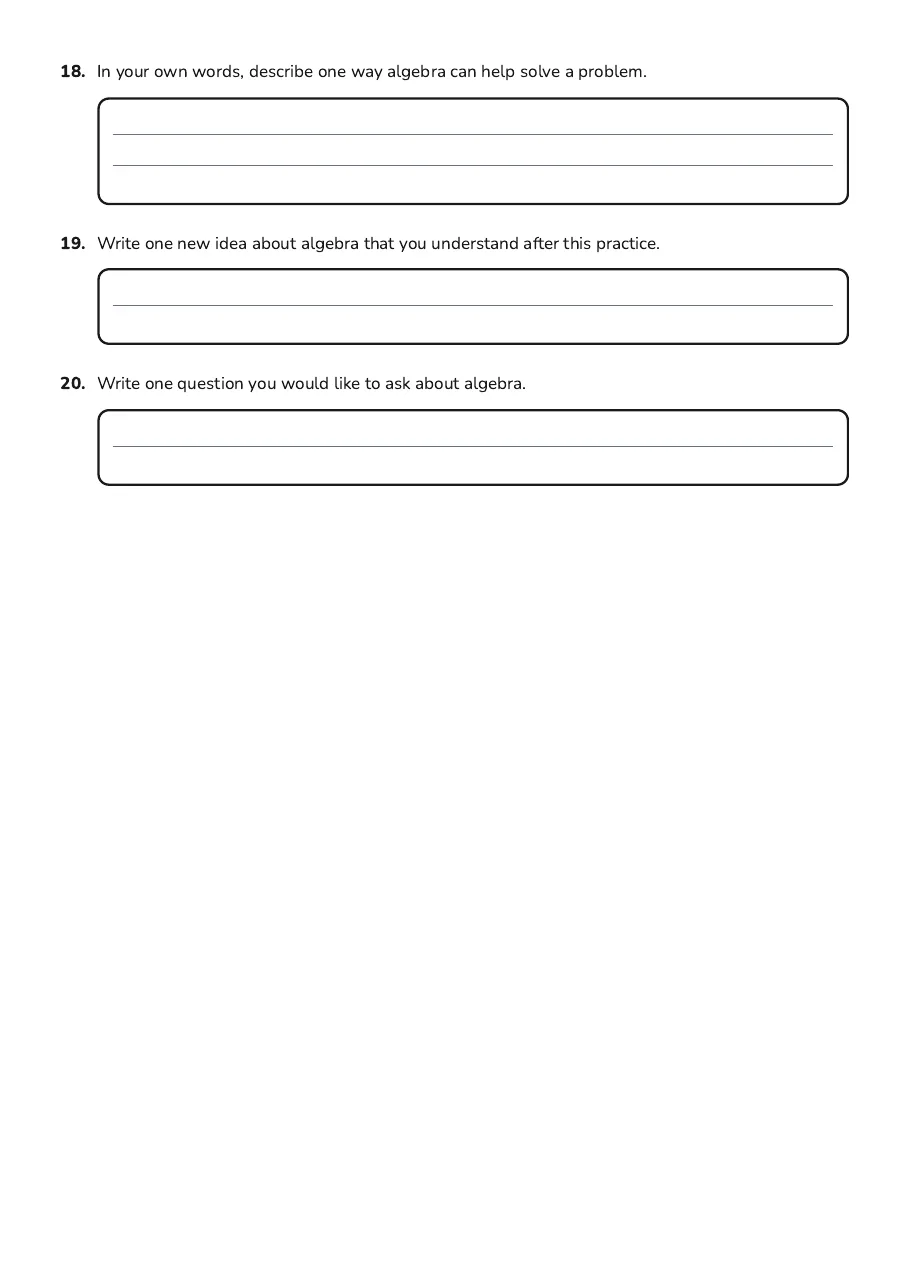
18.In your own words, describe one way algebra can help solve a problem.
19.Write one new idea about algebra that you understand after this practice.
20.Write one question you would like to ask about algebra.
4 printable pages
Page 1
Page 2
Page 3
Page 4
About This Worksheet
Free in Kuraplan
Sign up free, grab the PDF, and customize it for your class.
Print-Ready
Formatted for standard paper. Clean layout, easy to read.
AI-Generated
Created with Kuraplan's AI, designed for real classroom use.
For Teachers & Parents
Use in classrooms, for homework, tutoring, or homeschool.
Need a custom version of this worksheet?
Kuraplan's AI generates custom worksheets in seconds — differentiated for every learner, aligned to your curriculum.
Generate Custom Worksheets — Free No credit card Curriculum-aligned Under 60 seconds
More Maths Worksheets
Year 7–8
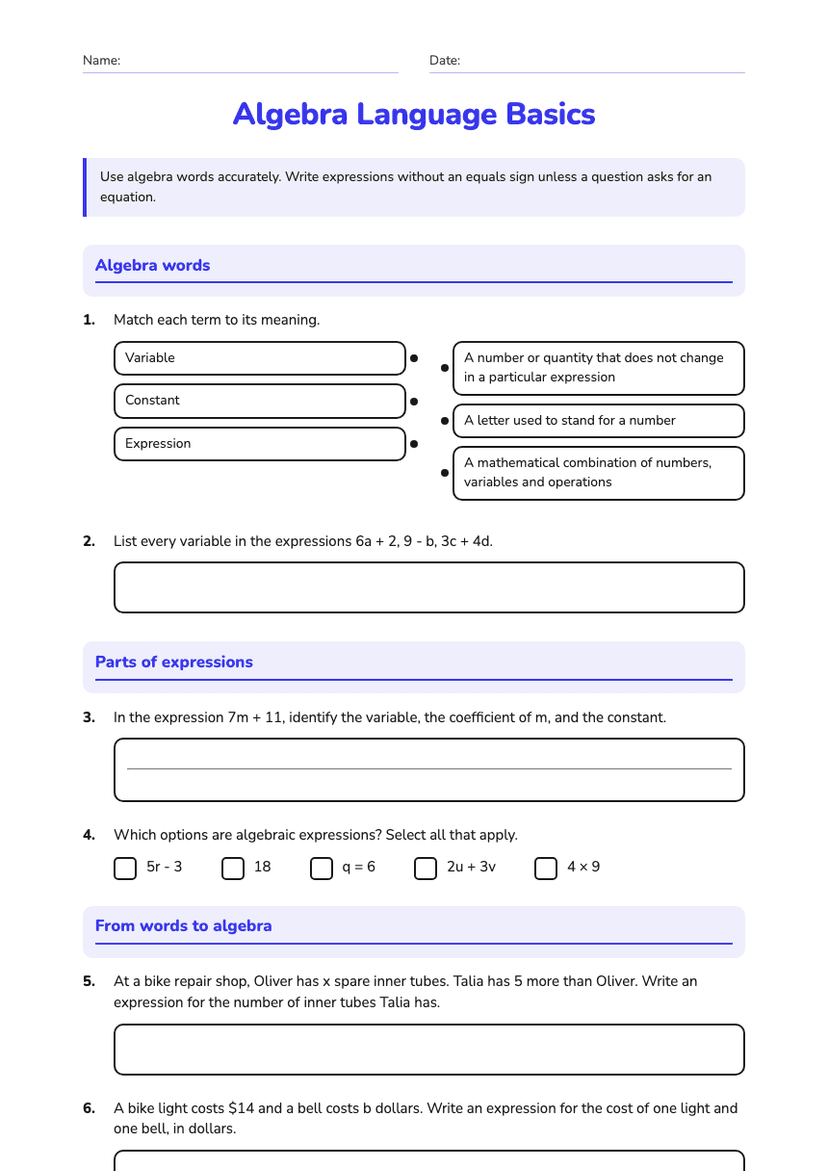
Algebra Language Basics
Free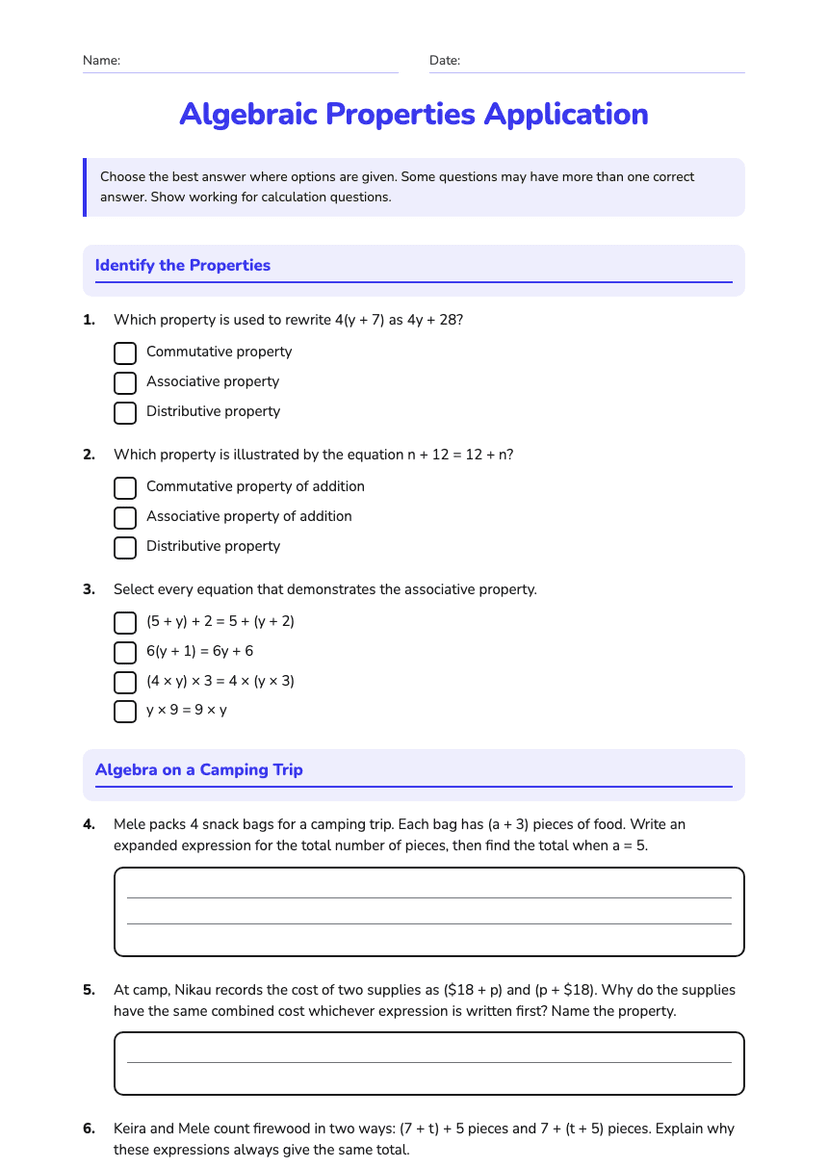
Year 8
Algebraic Properties Application
Free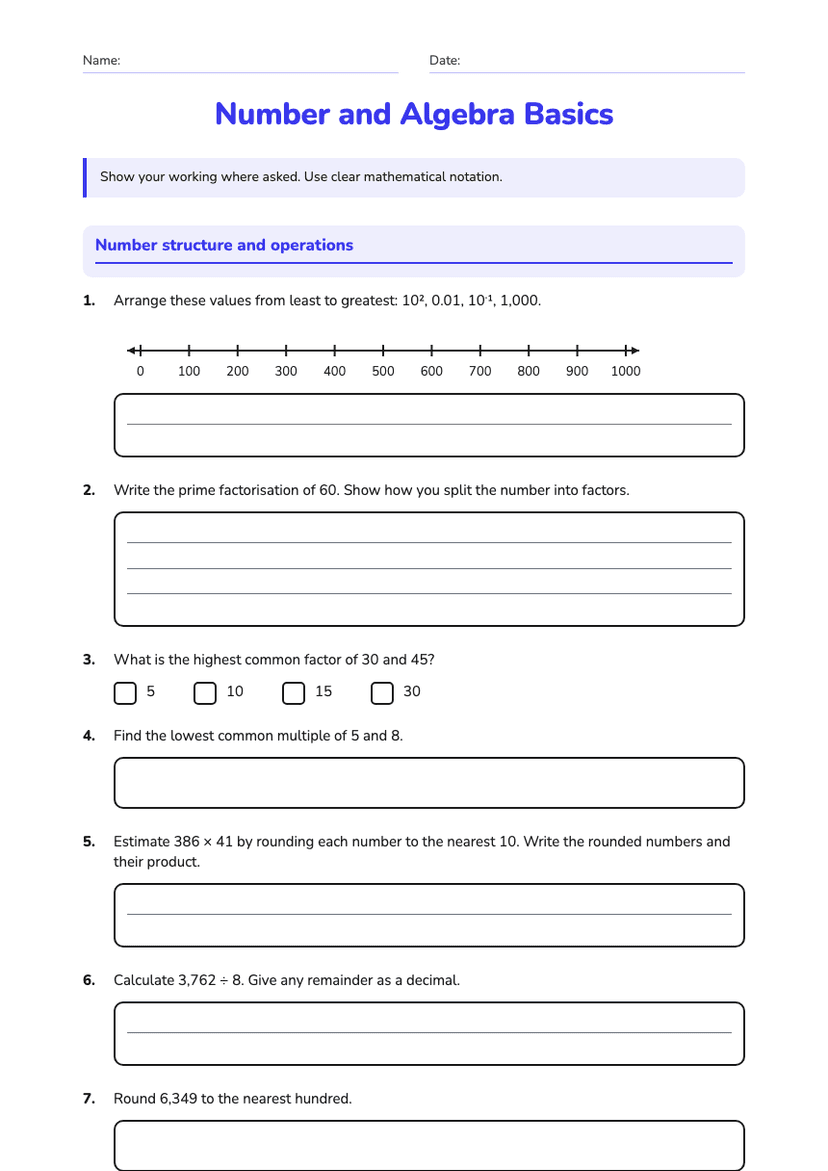
Year 7–8
Number and Algebra Basics
Free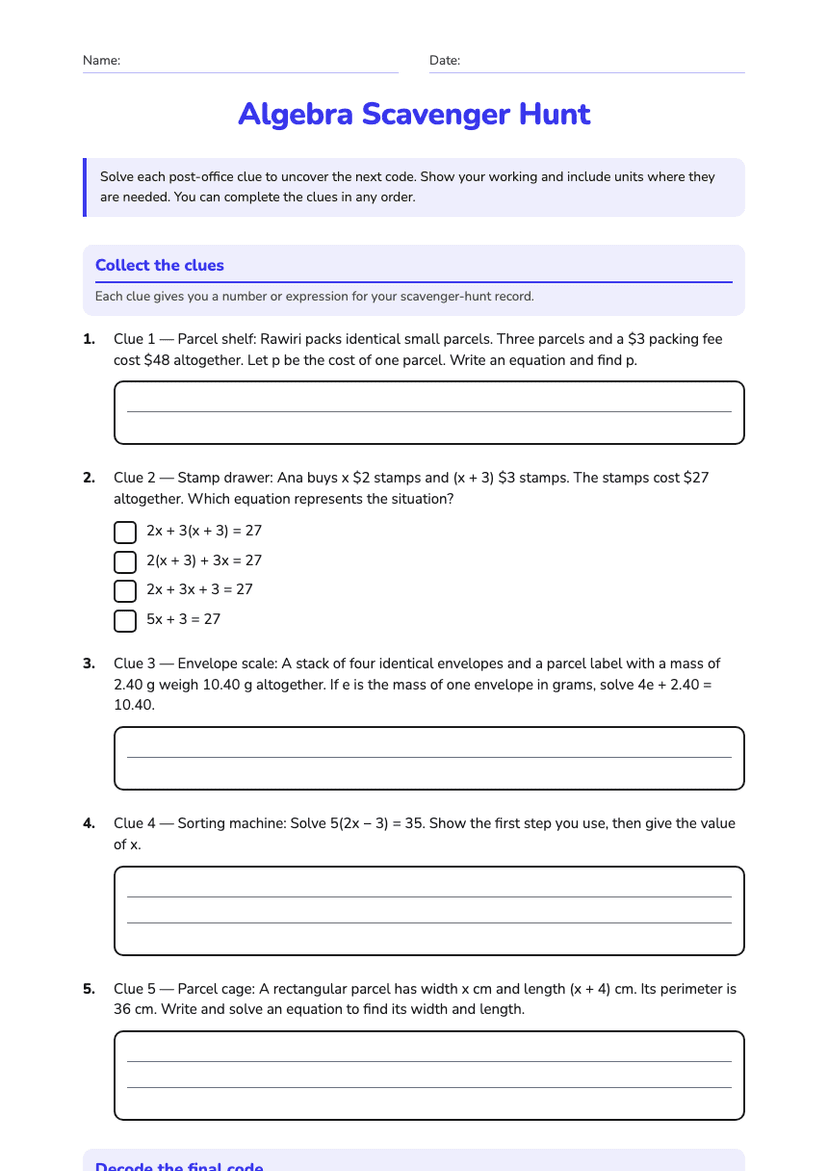
Year 9
Algebra Scavenger Hunt
Free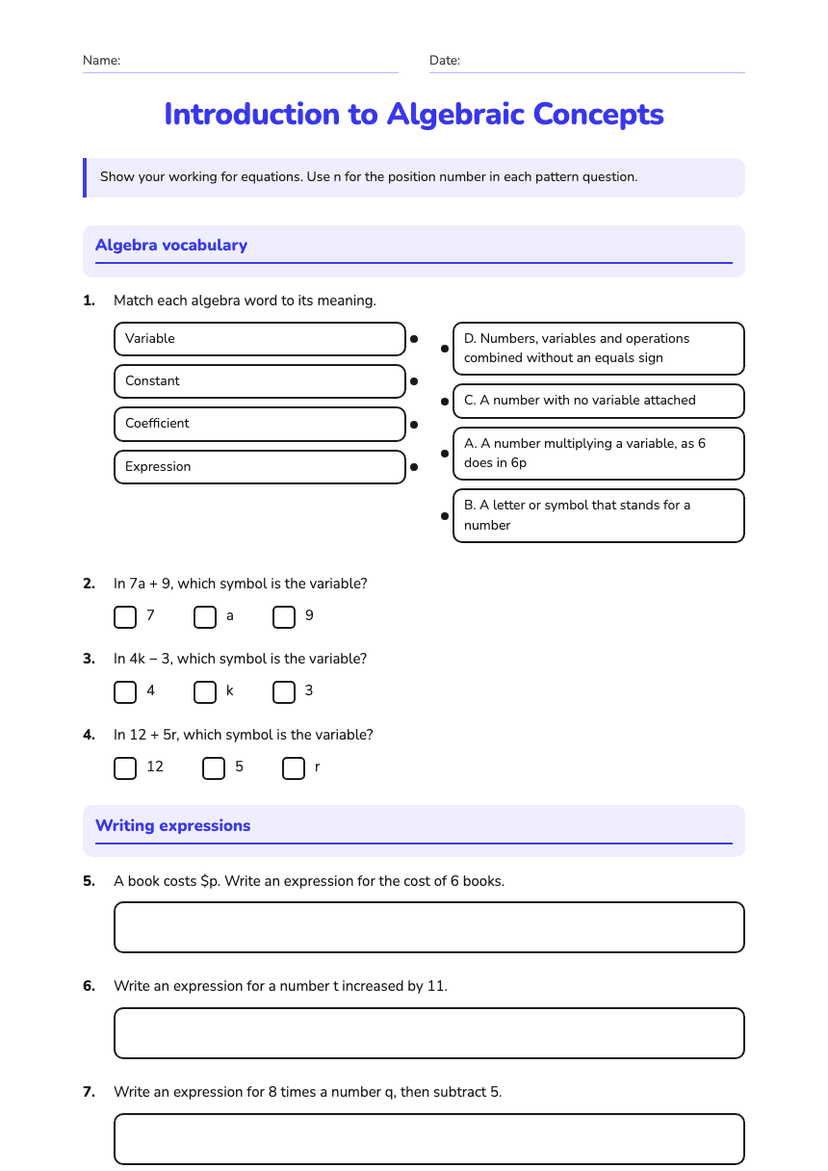
Year 7–8
Introduction to Algebraic Concepts
Free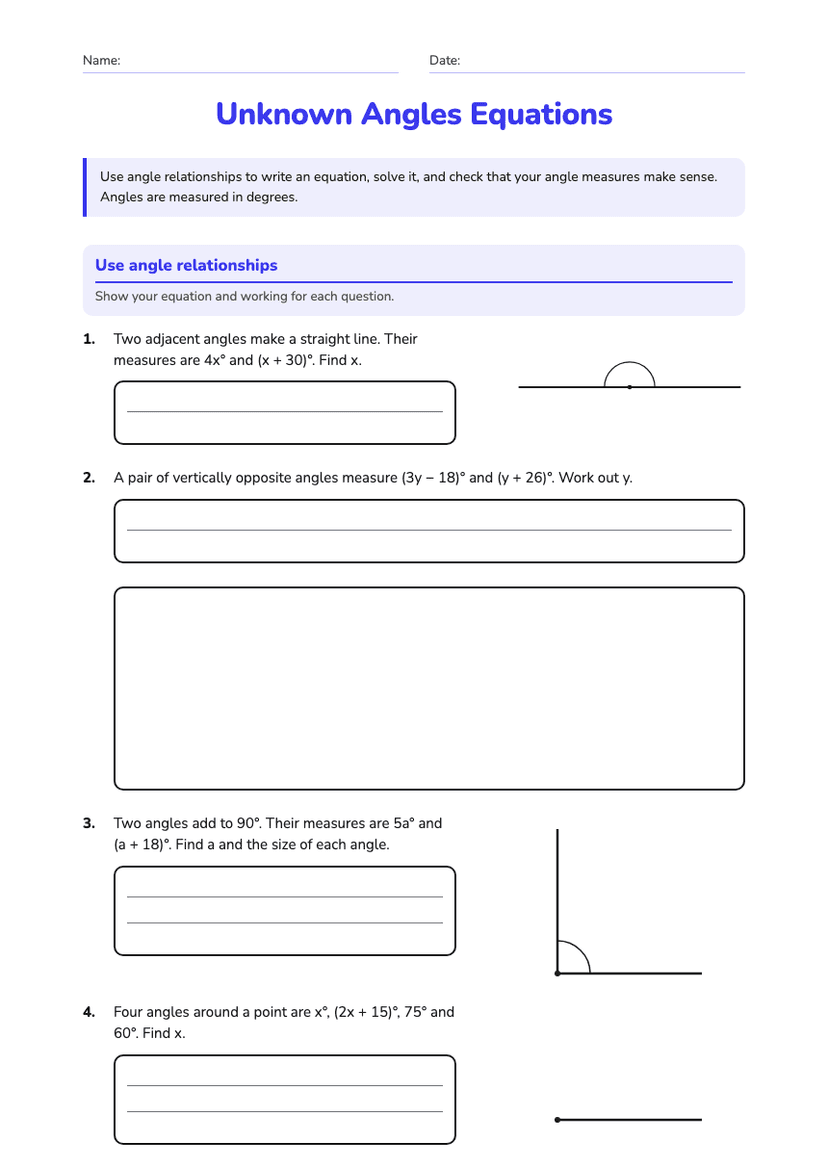
Year 7–8
Unknown Angles Equations
Free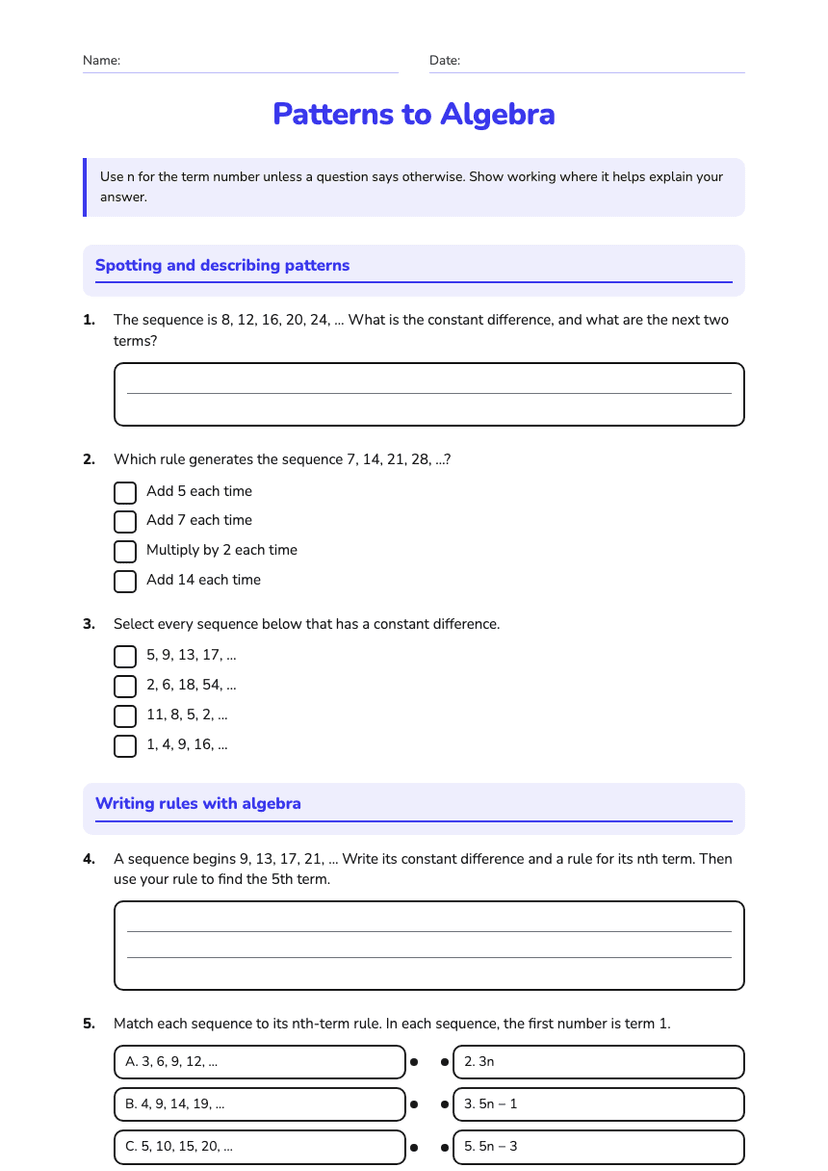
Year 7–8
Patterns to Algebra
Free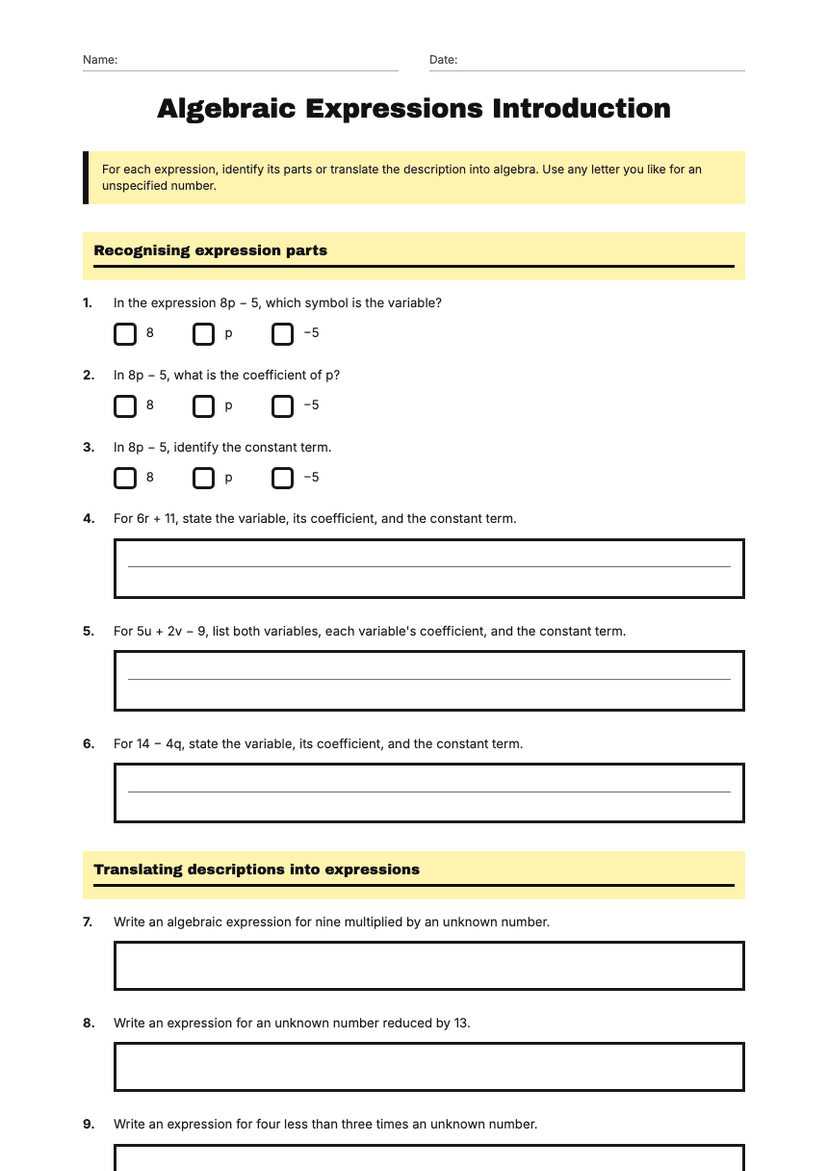
Year 11