Landscape Art Exploration
A free art worksheet ready for your classroom. Open in Kuraplan to grab the print-ready PDF, customize it for your students, or generate a fresh version in seconds.

Landscape Art Exploration
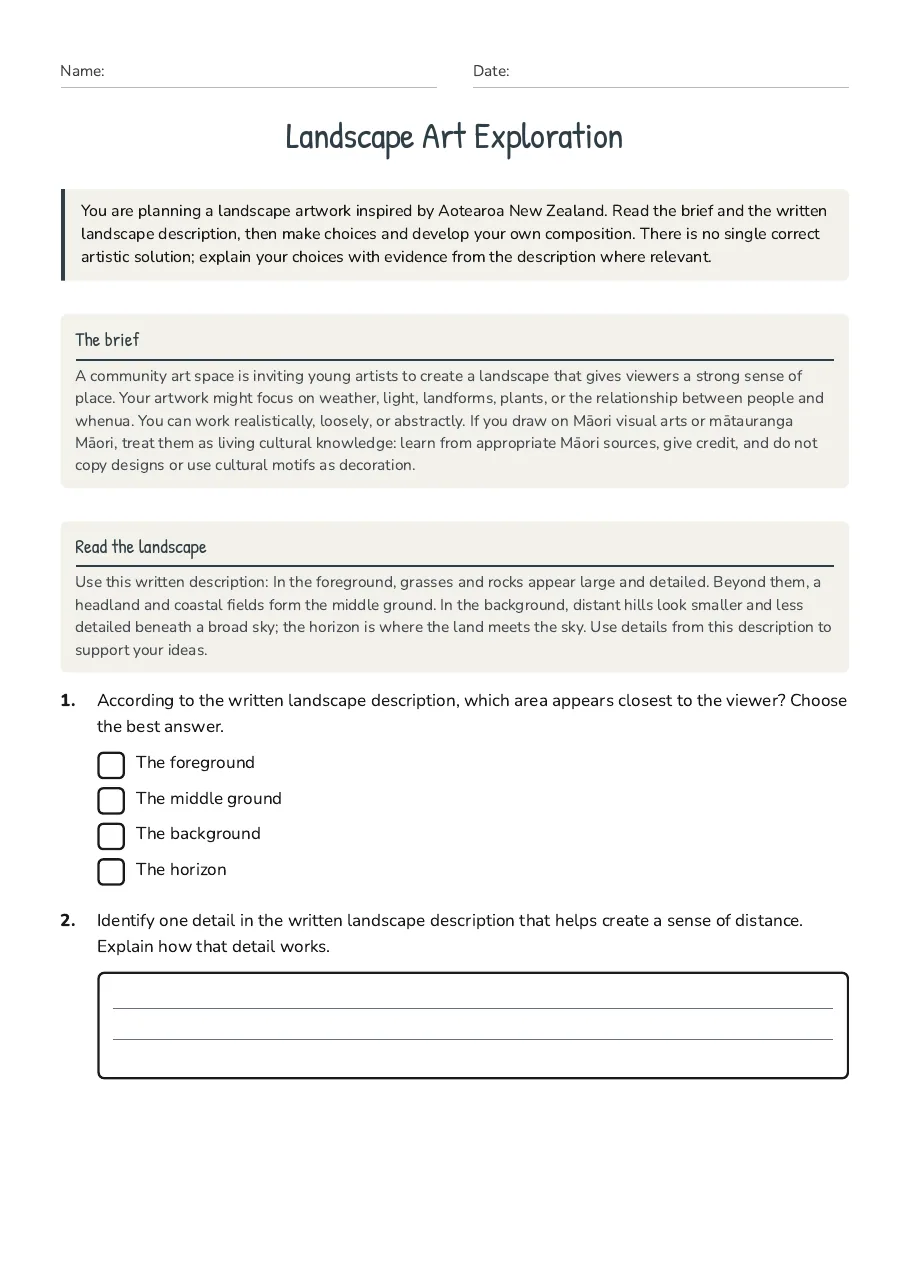
The brief
A community art space is inviting young artists to create a landscape that gives viewers a strong sense of place. Your artwork might focus on weather, light, landforms, plants, or the relationship between people and whenua. You can work realistically, loosely, or abstractly. If you draw on Māori visual arts or mātauranga Māori, treat them as living cultural knowledge: learn from appropriate Māori sources, give credit, and do not copy designs or use cultural motifs as decoration.
Read the landscape
Use this written description: In the foreground, grasses and rocks appear large and detailed. Beyond them, a headland and coastal fields form the middle ground. In the background, distant hills look smaller and less detailed beneath a broad sky; the horizon is where the land meets the sky. Use details from this description to support your ideas.
- The foreground
- The middle ground
- The background
- The horizon
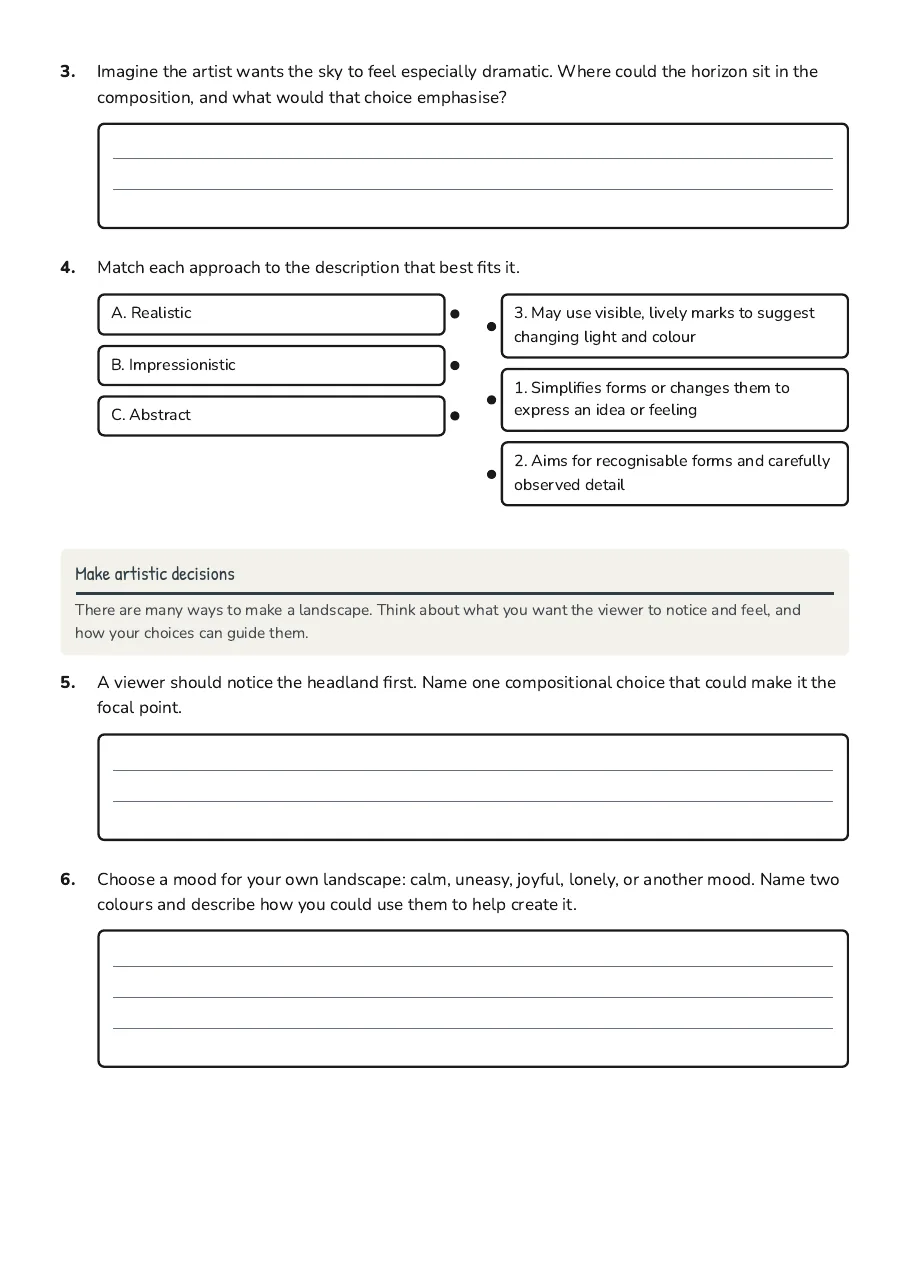
- A. Realistic
- B. Impressionistic
- C. Abstract
- 3. May use visible, lively marks to suggest changing light and colour
- 1. Simplifies forms or changes them to express an idea or feeling
- 2. Aims for recognisable forms and carefully observed detail
Make artistic decisions
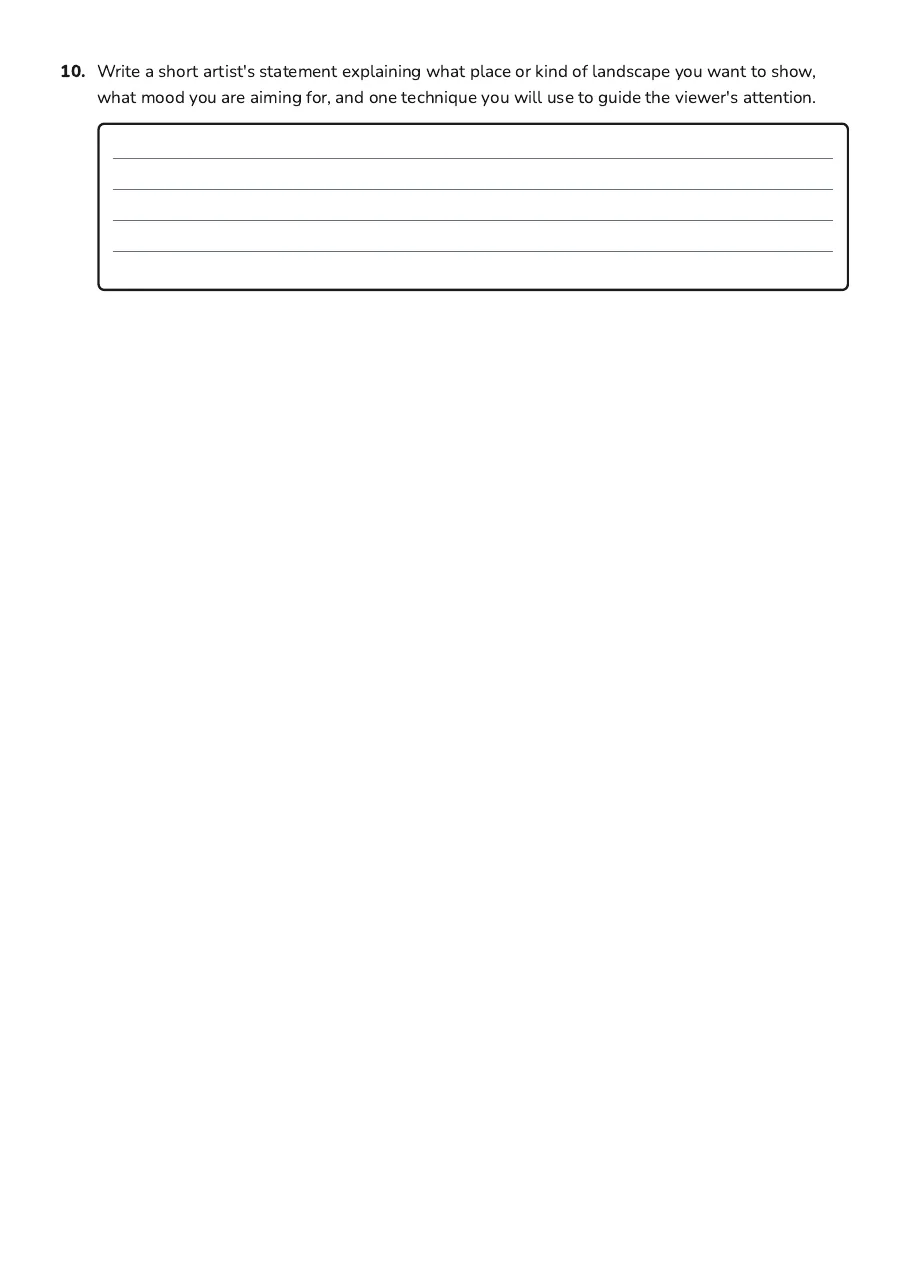
There are many ways to make a landscape. Think about what you want the viewer to notice and feel, and how your choices can guide them.
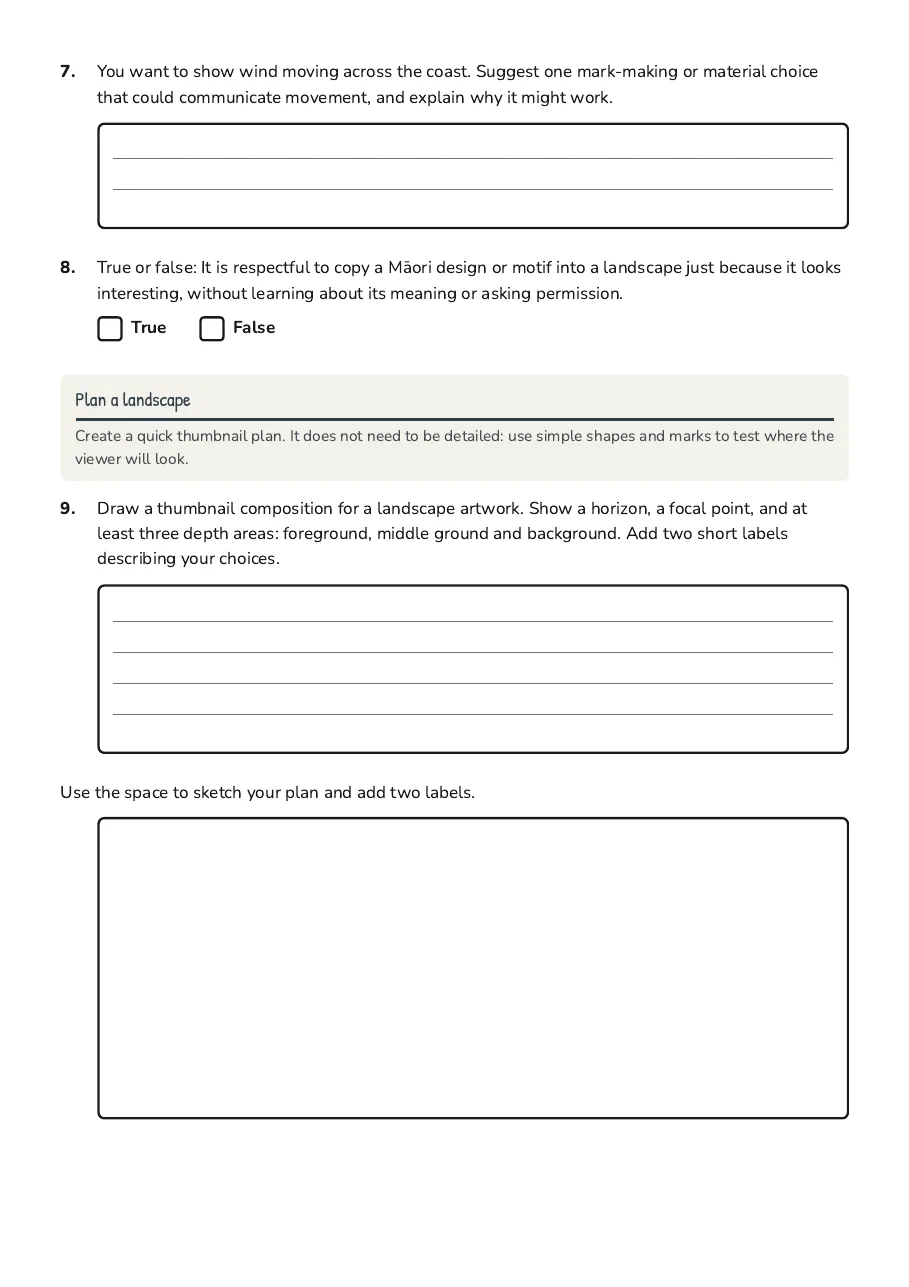
Plan a landscape
Create a quick thumbnail plan. It does not need to be detailed: use simple shapes and marks to test where the viewer will look.
4 printable pages
Page 1
Page 2
Page 3
Page 4
About This Worksheet
Free in Kuraplan
Sign up free, grab the PDF, and customize it for your class.
Print-Ready
Formatted for standard paper. Clean layout, easy to read.
AI-Generated
Created with Kuraplan's AI, designed for real classroom use.
For Teachers & Parents
Use in classrooms, for homework, tutoring, or homeschool.
Need a custom version of this worksheet?
Kuraplan's AI generates custom worksheets in seconds — differentiated for every learner, aligned to your curriculum.
Generate Custom Worksheets — FreeMore Art Worksheets
Place Value Exploration
Free
Volume Measurement Exploration
Free
Probability Vocabulary Exploration
Free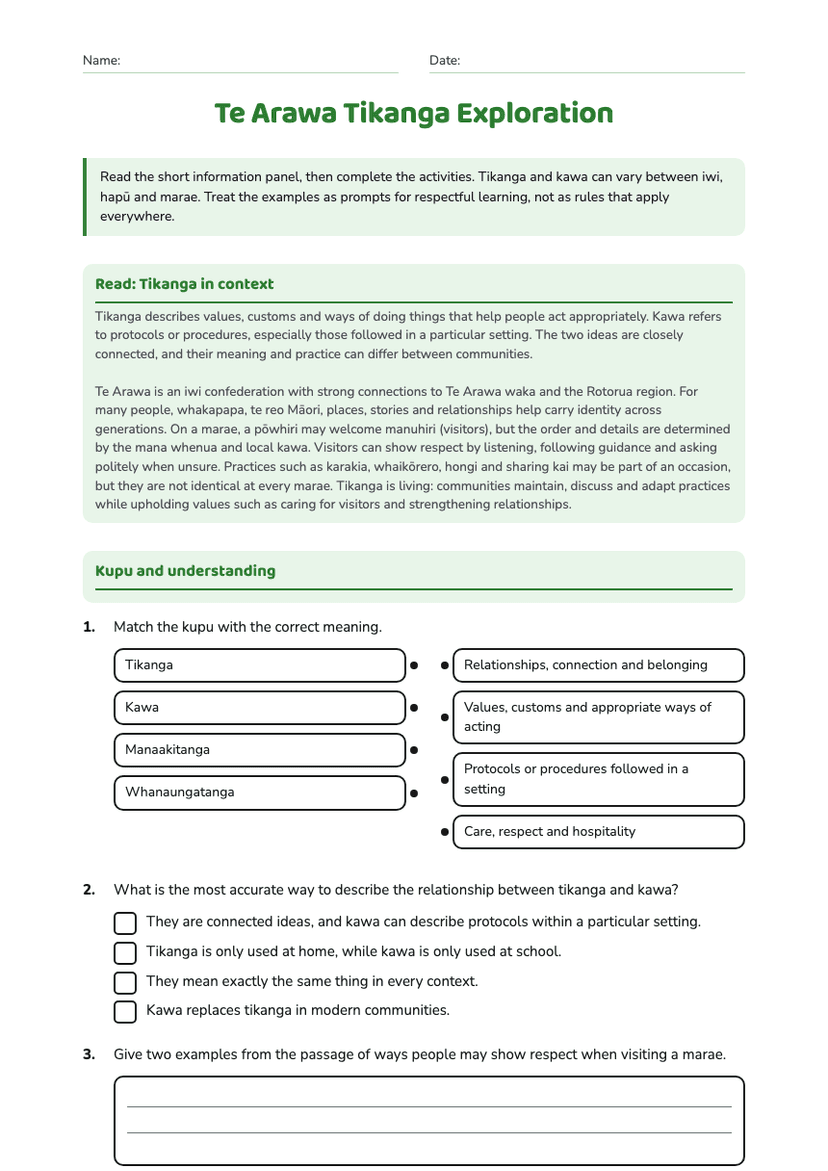
Te Arawa Tikanga Exploration
Free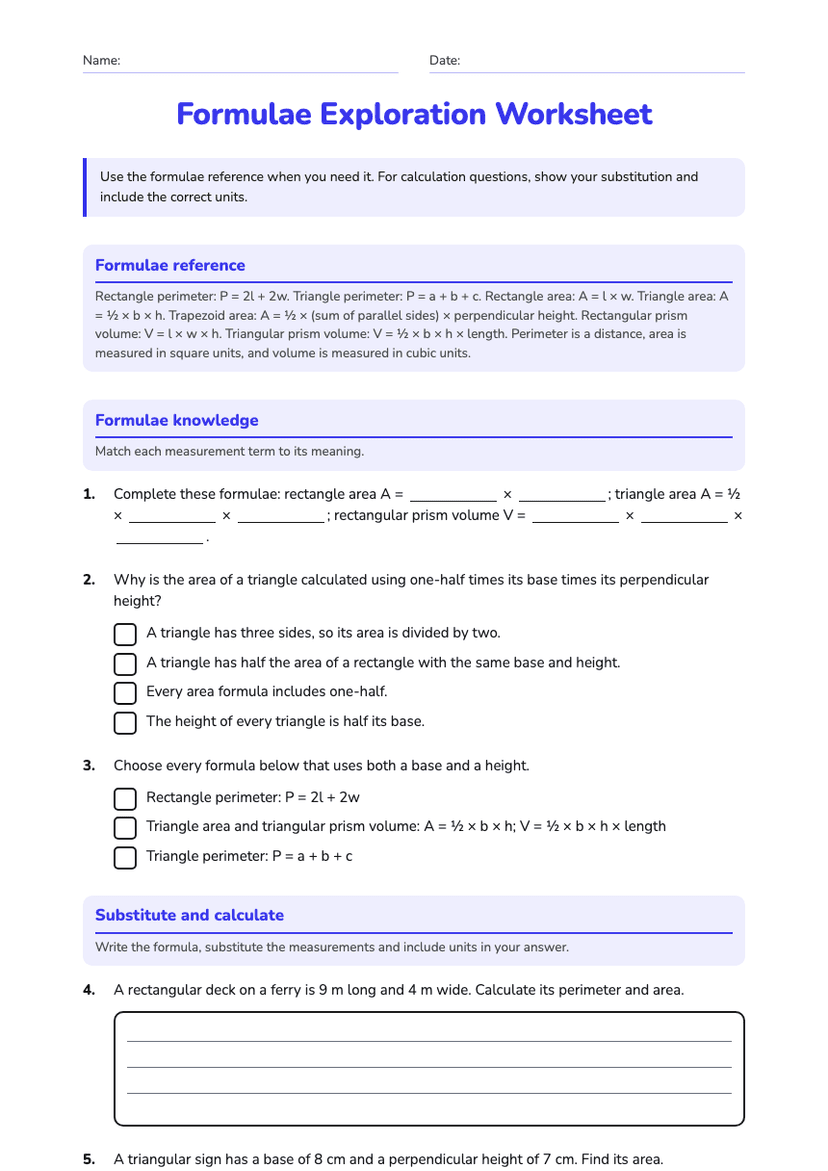
Formulae Exploration Worksheet
Free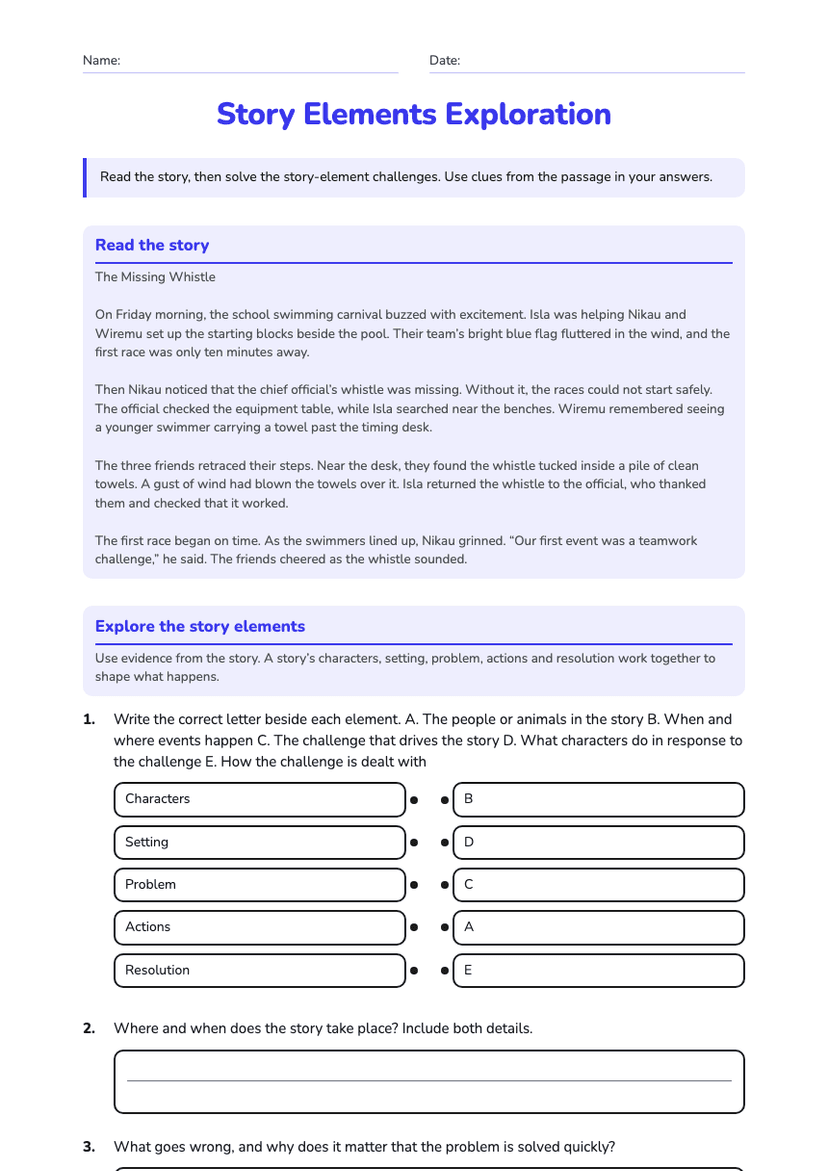
Story Elements Exploration
Free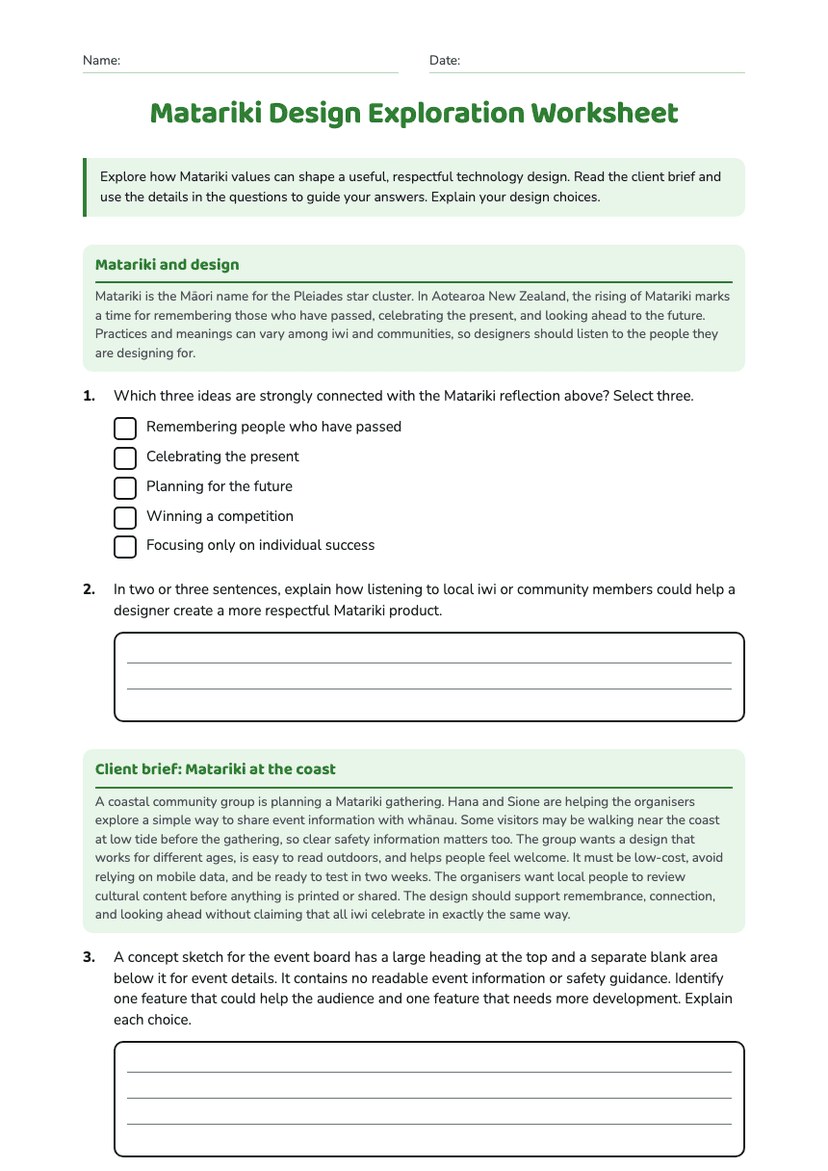
Matariki Design Exploration Worksheet
Free