Leadership Styles Comparison
A free social sciences worksheet ready for your classroom. Open in Kuraplan to grab the print-ready PDF, customize it for your students, or generate a fresh version in seconds.
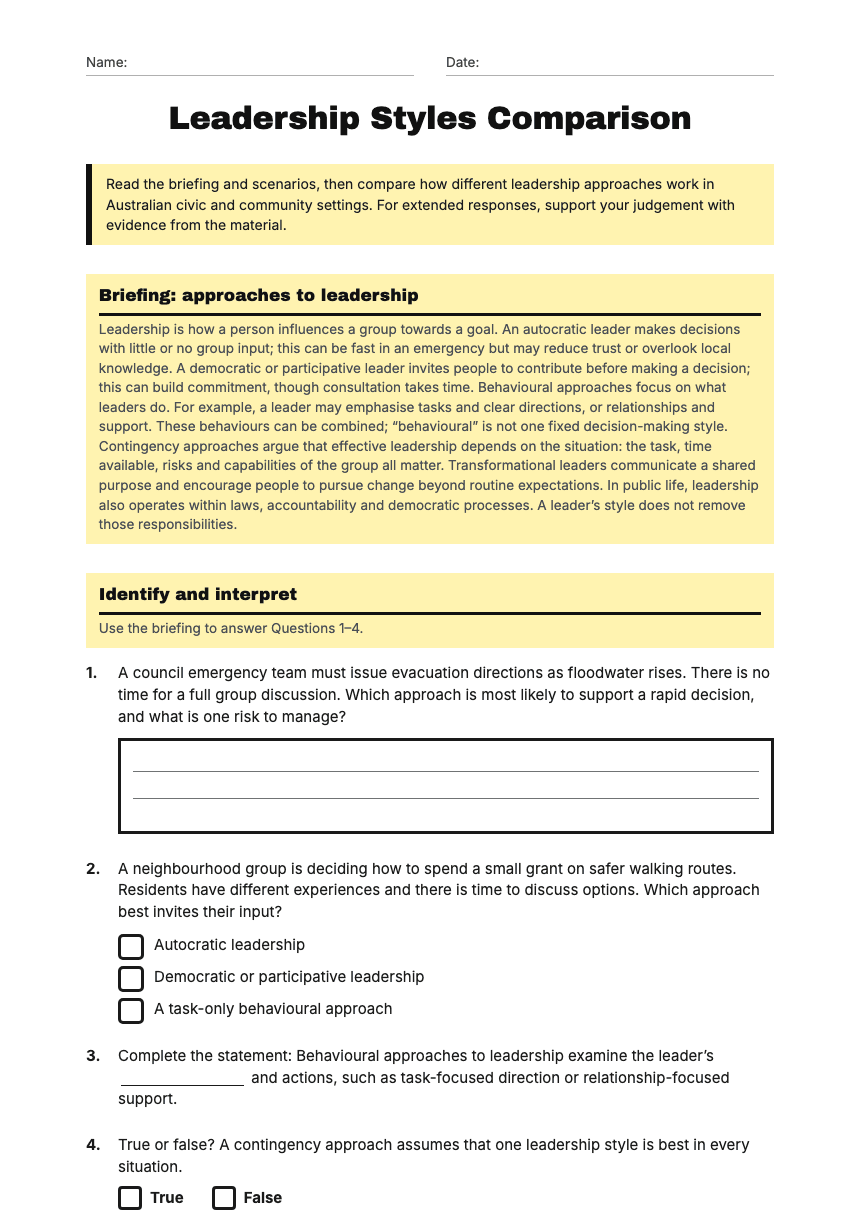
Leadership Styles Comparison
Briefing: approaches to leadership
Leadership is how a person influences a group towards a goal. An autocratic leader makes decisions with little or no group input; this can be fast in an emergency but may reduce trust or overlook local knowledge. A democratic or participative leader invites people to contribute before making a decision; this can build commitment, though consultation takes time. Behavioural approaches focus on what leaders do. For example, a leader may emphasise tasks and clear directions, or relationships and support. These behaviours can be combined; “behavioural” is not one fixed decision-making style. Contingency approaches argue that effective leadership depends on the situation: the task, time available, risks and capabilities of the group all matter. Transformational leaders communicate a shared purpose and encourage people to pursue change beyond routine expectations. In public life, leadership also operates within laws, accountability and democratic processes. A leader’s style does not remove those responsibilities.
Identify and interpret
Use the briefing to answer Questions 1–4.
- Autocratic leadership
- Democratic or participative leadership
- A task-only behavioural approach
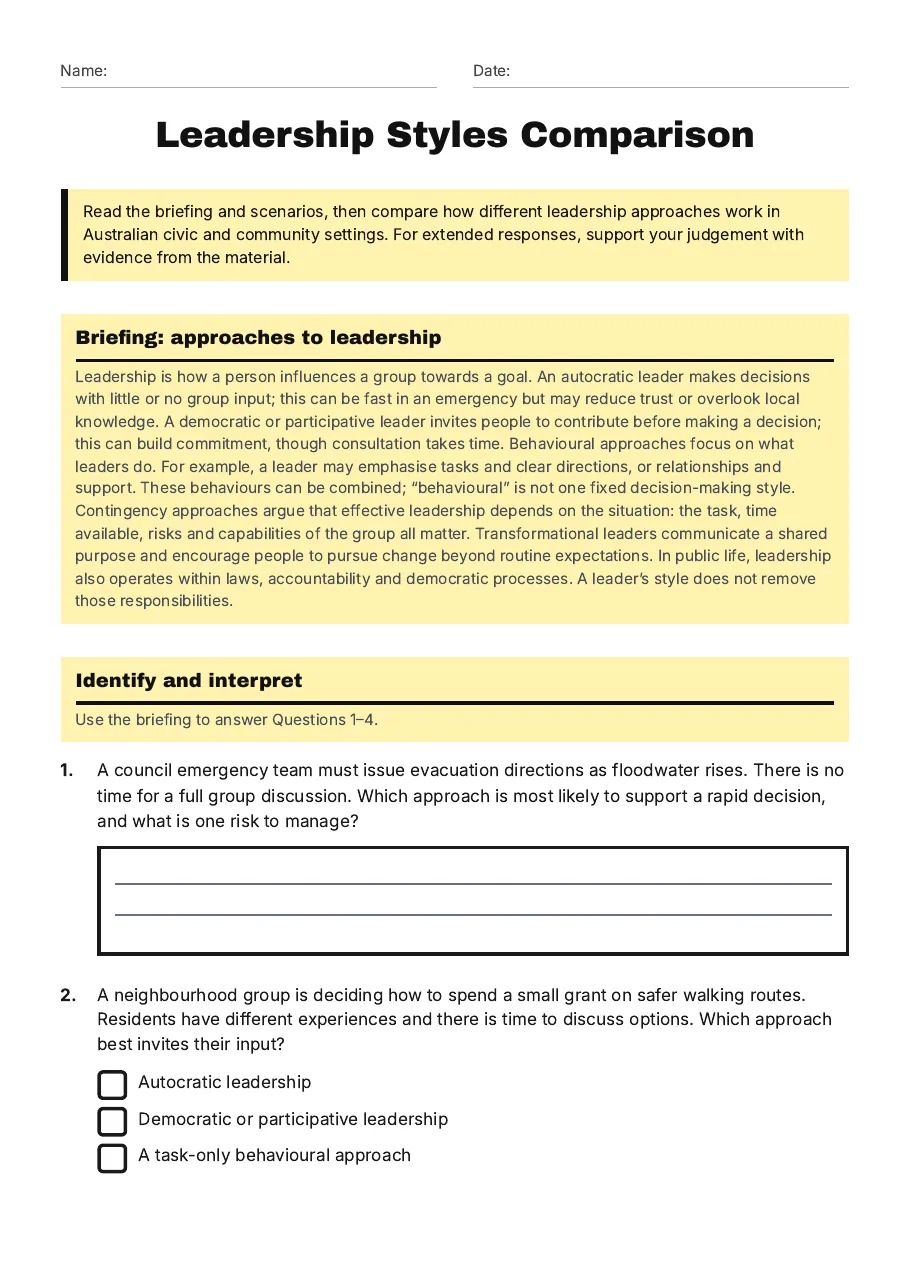
Match the approach to the challenge
Consider the purpose, urgency and people involved in each scenario.
- A. A volunteer coordinator asks members to contribute ideas before the group chooses a community event.
- B. A team leader sets clear immediate roles during a dangerous chemical spill.
- C. A community organiser builds a shared vision to motivate residents to restore a local wetland over several years.
- D. A project lead changes how much guidance they give according to the task’s risk and the team’s experience.
- Autocratic
- Democratic / participative
- Transformational
- Contingency
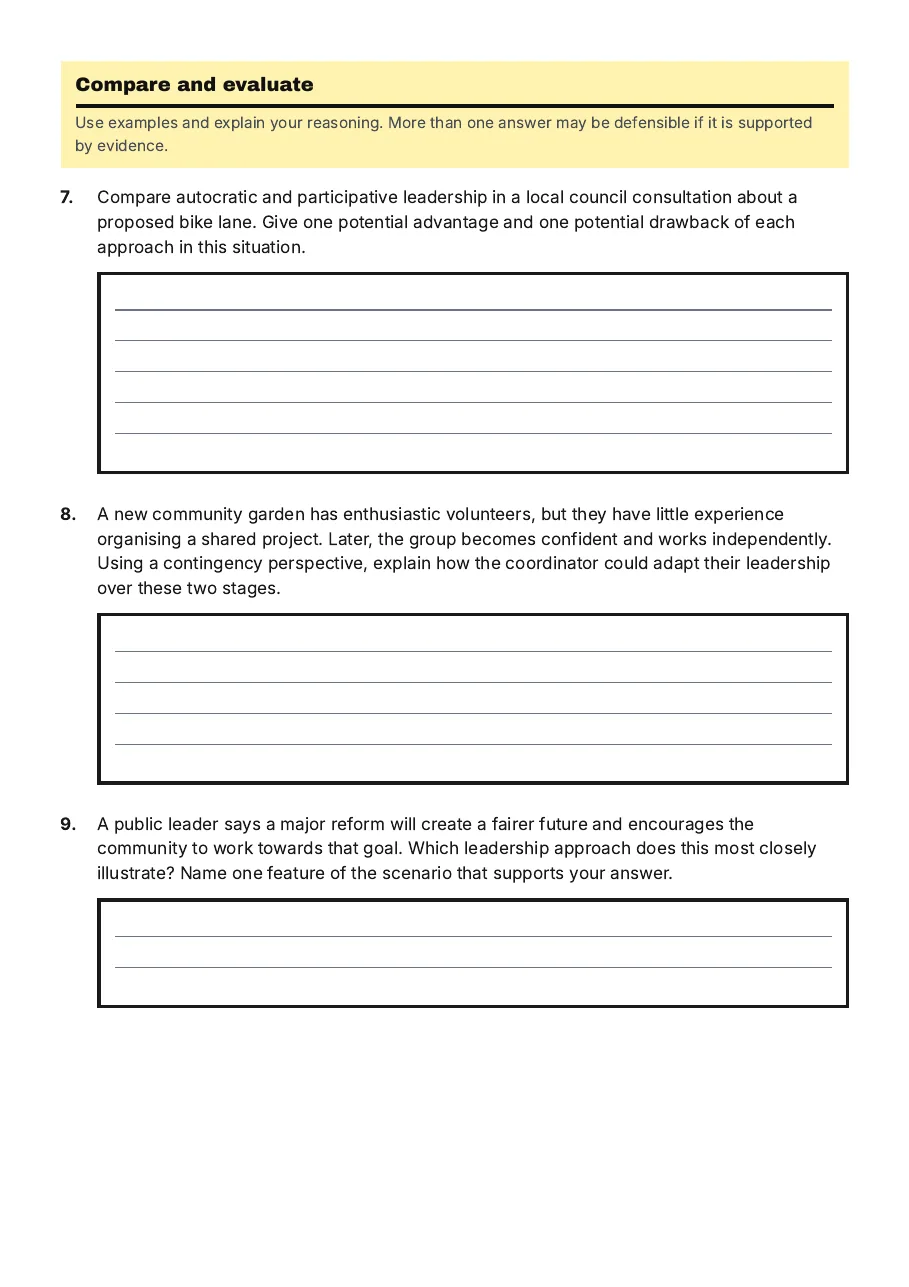
Compare and evaluate
Use examples and explain your reasoning. More than one answer may be defensible if it is supported by evidence.
4 printable pages
Page 1
Page 2
Page 3

Page 4
About This Worksheet
Free in Kuraplan
Sign up free, grab the PDF, and customize it for your class.
Print-Ready
Formatted for standard paper. Clean layout, easy to read.
AI-Generated
Created with Kuraplan's AI, designed for real classroom use.
For Teachers & Parents
Use in classrooms, for homework, tutoring, or homeschool.
Need a custom version of this worksheet?
Kuraplan's AI generates custom worksheets in seconds — differentiated for every learner, aligned to your curriculum.
Generate Custom Worksheets — FreeMore Social Sciences Worksheets
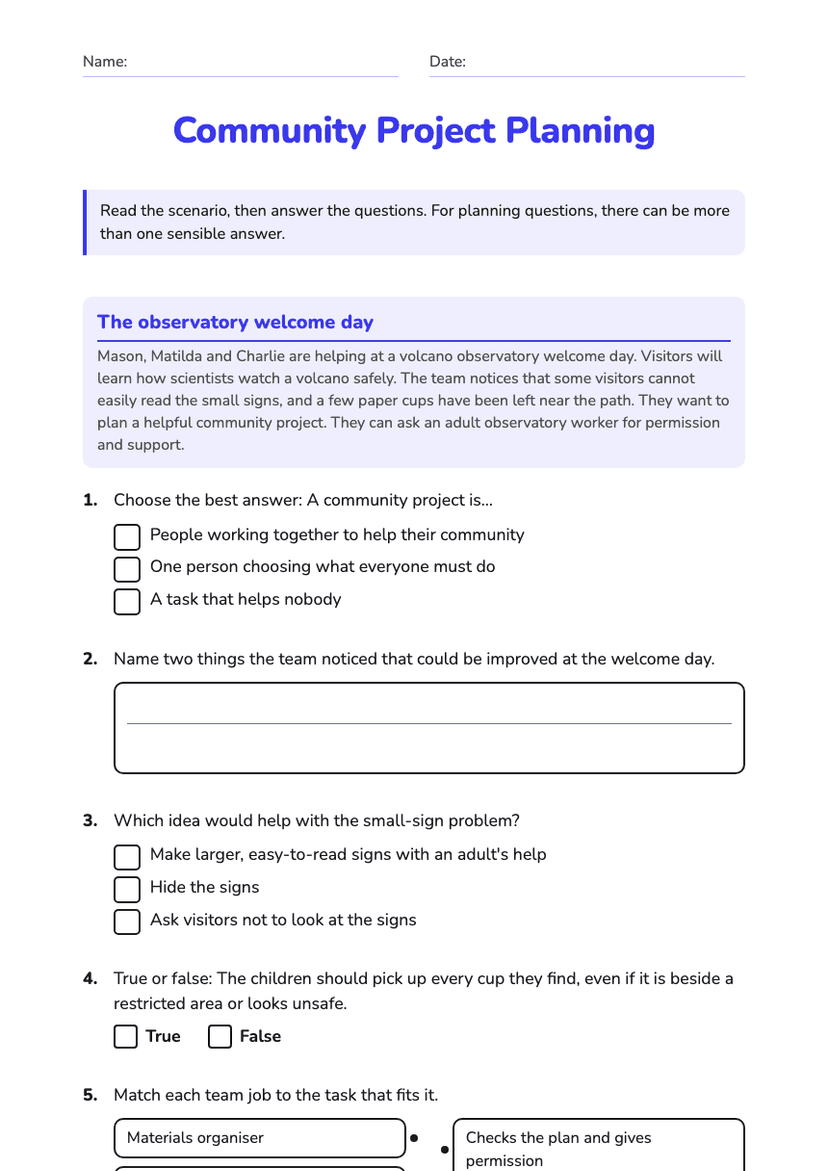
Community Project Planning
Free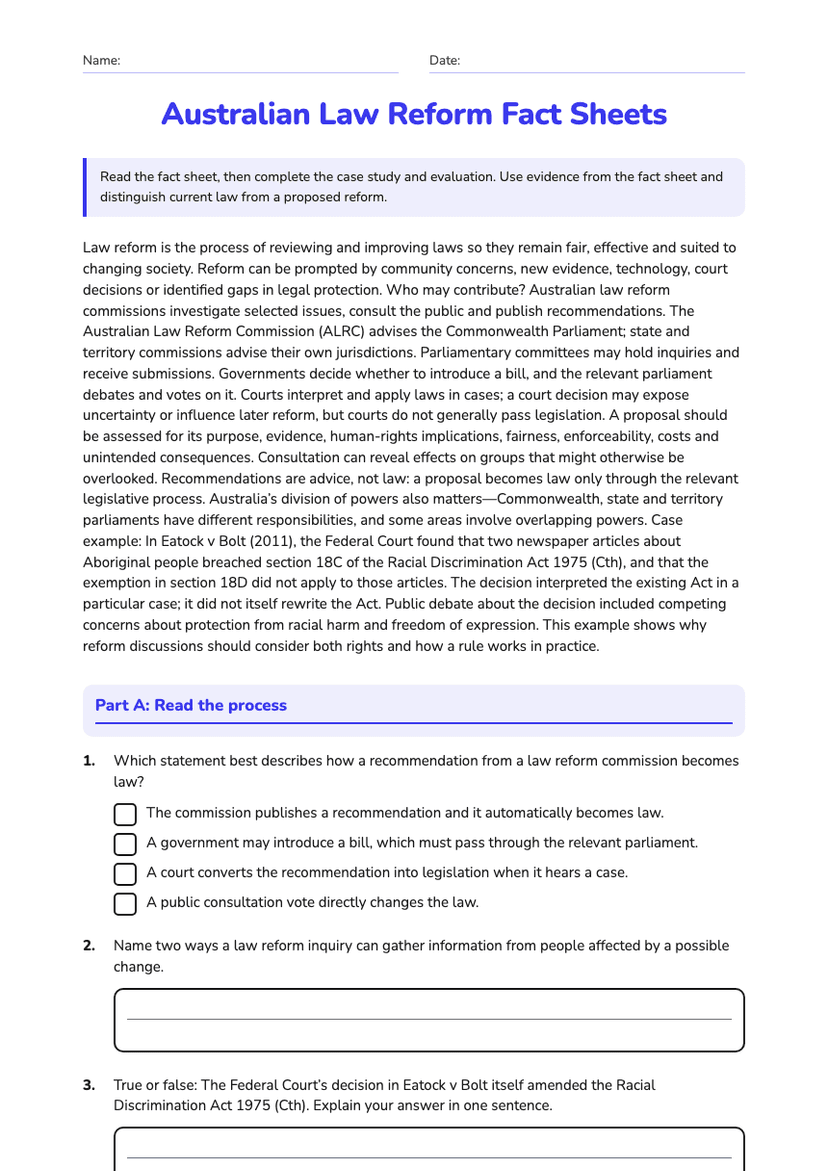
Australian Law Reform Fact Sheets
Free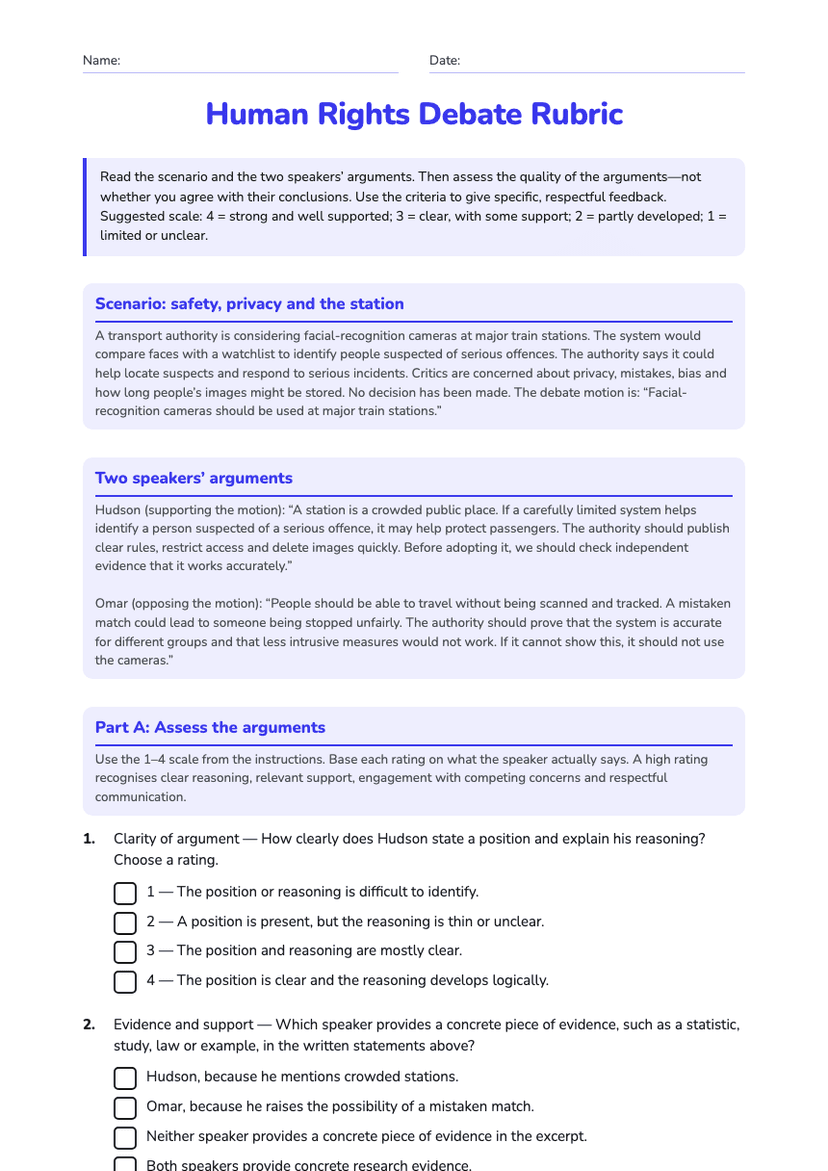
Human Rights Debate Rubric
Free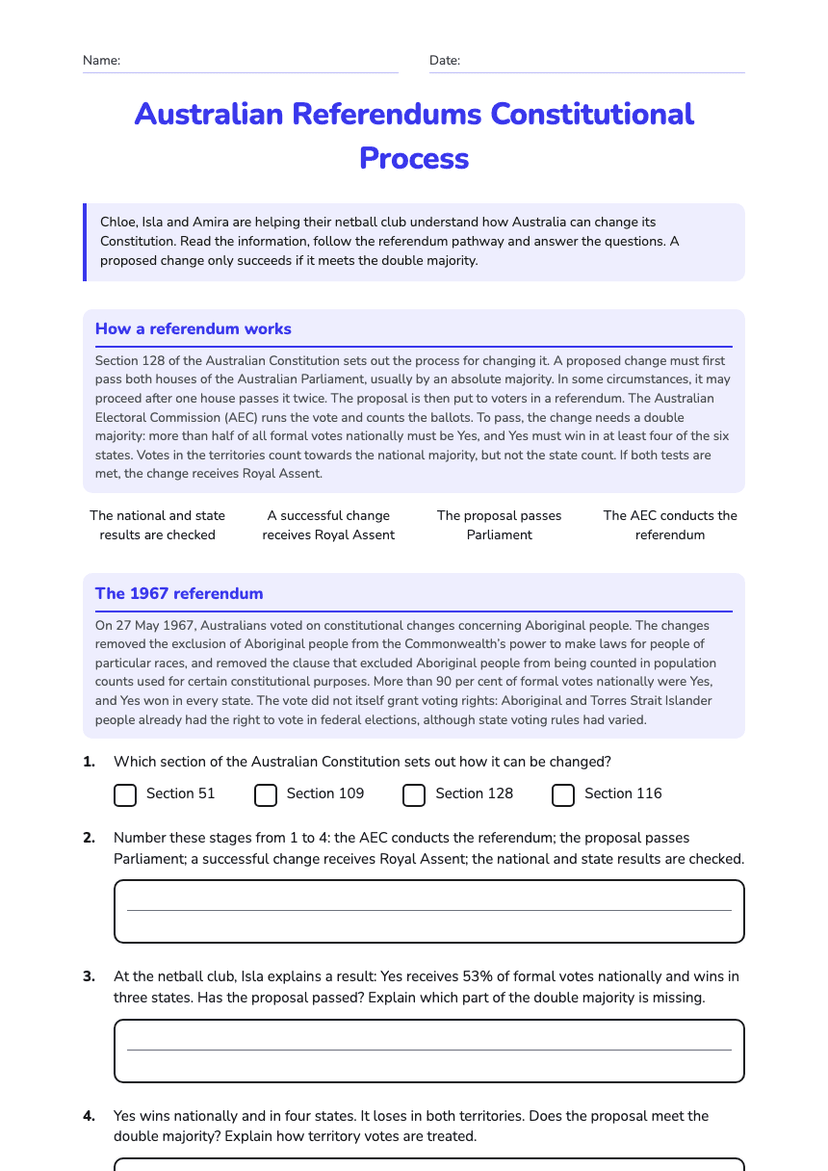
Australian Referendums Constitutional Process
Free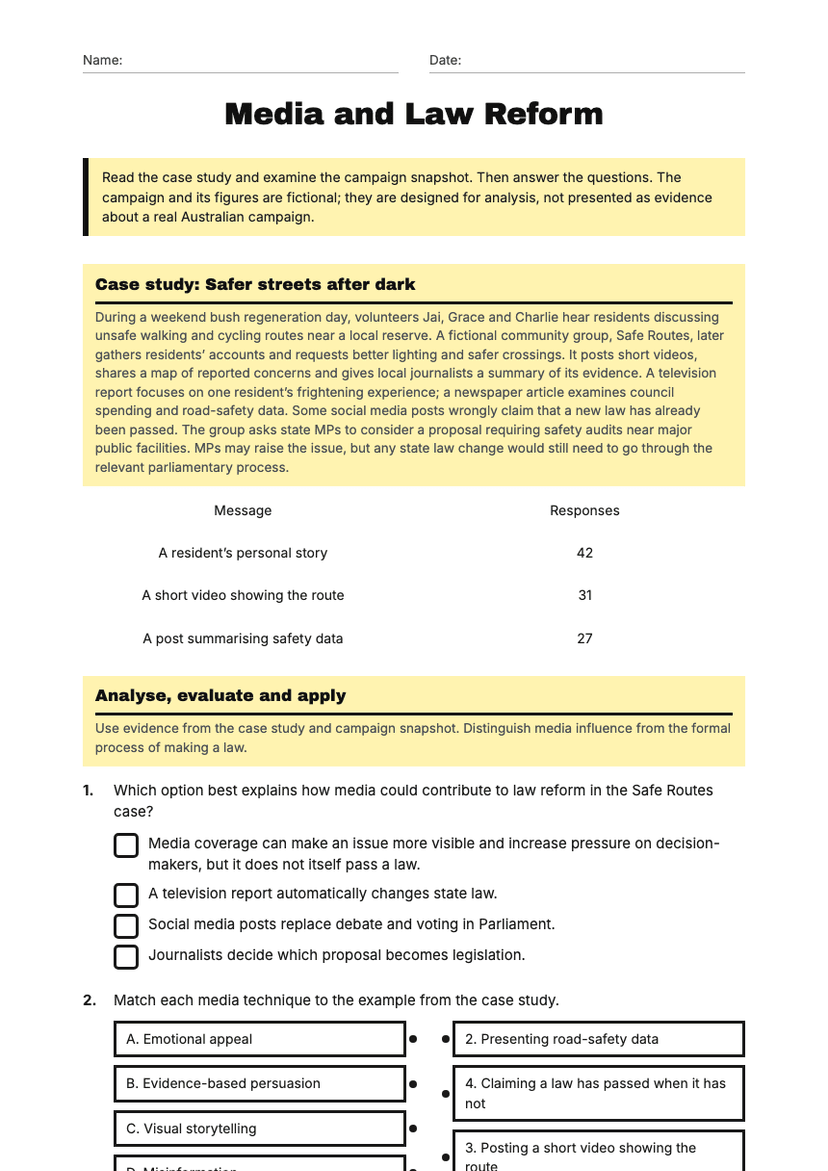
Media and Law Reform
Free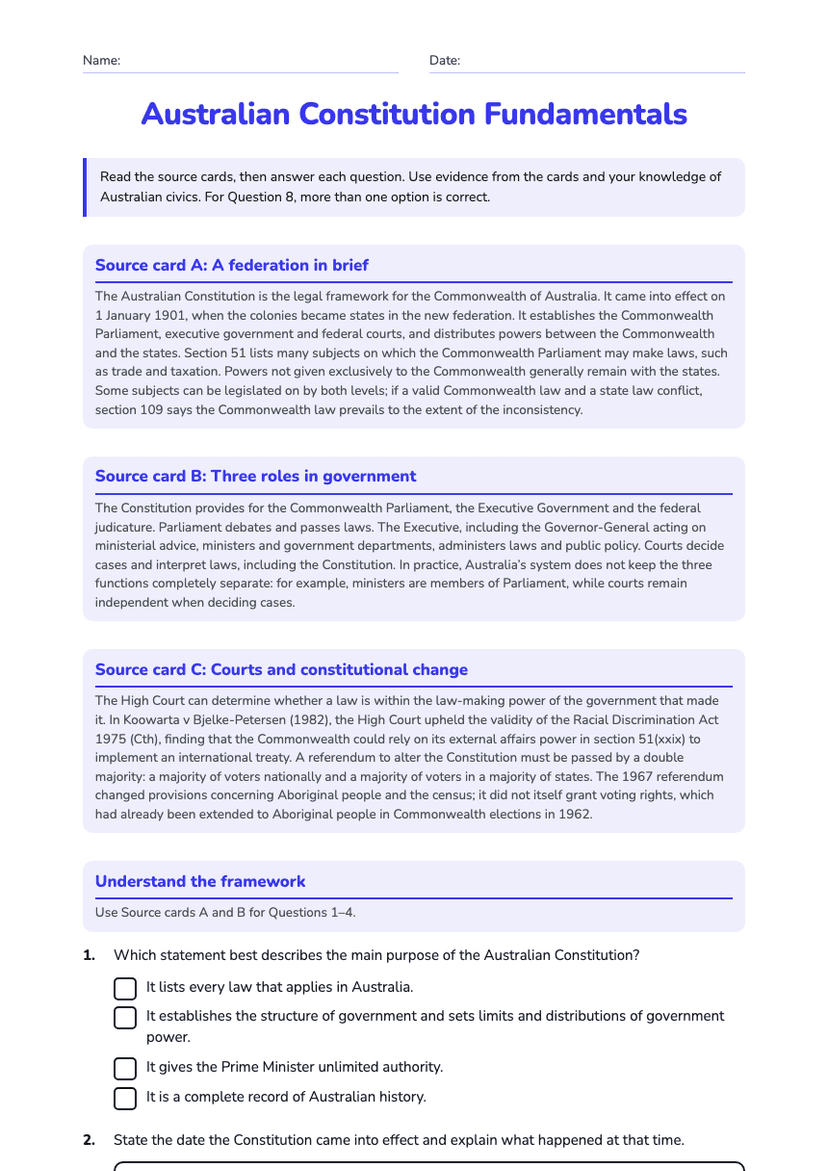
Australian Constitution Fundamentals
Free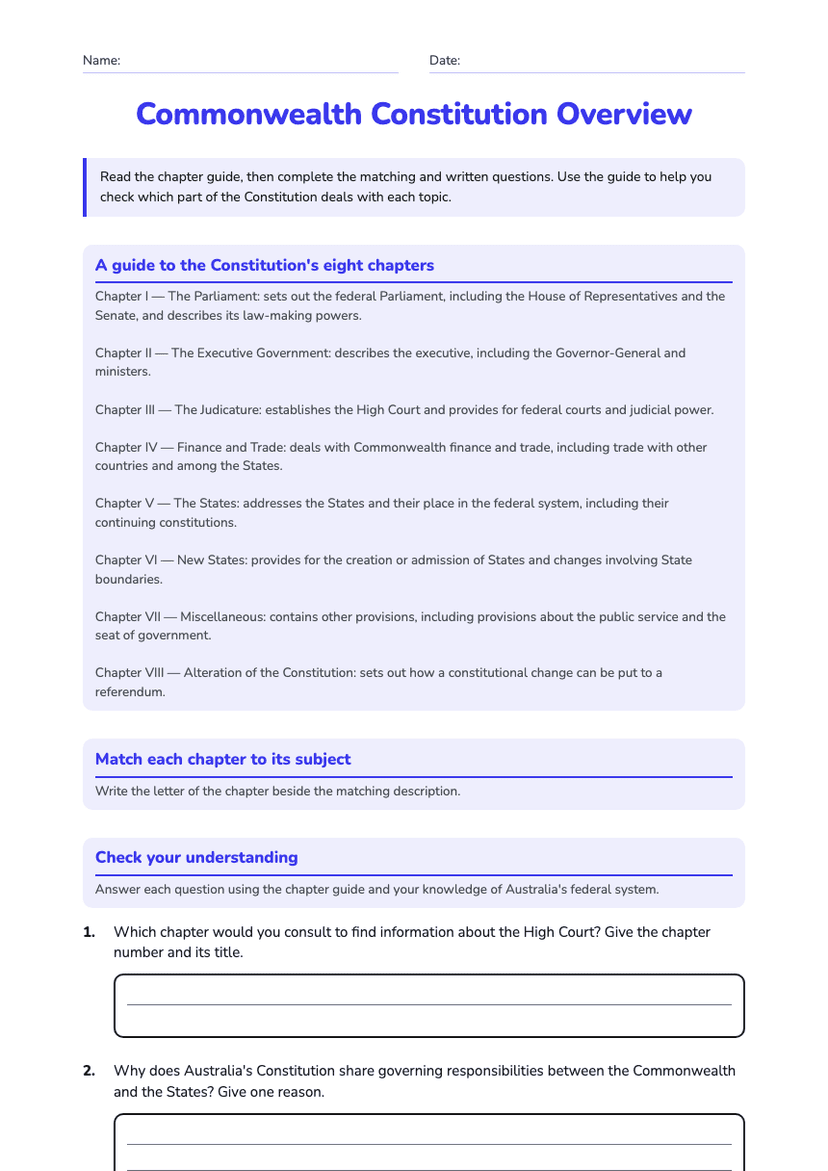
Commonwealth Constitution Overview
Free