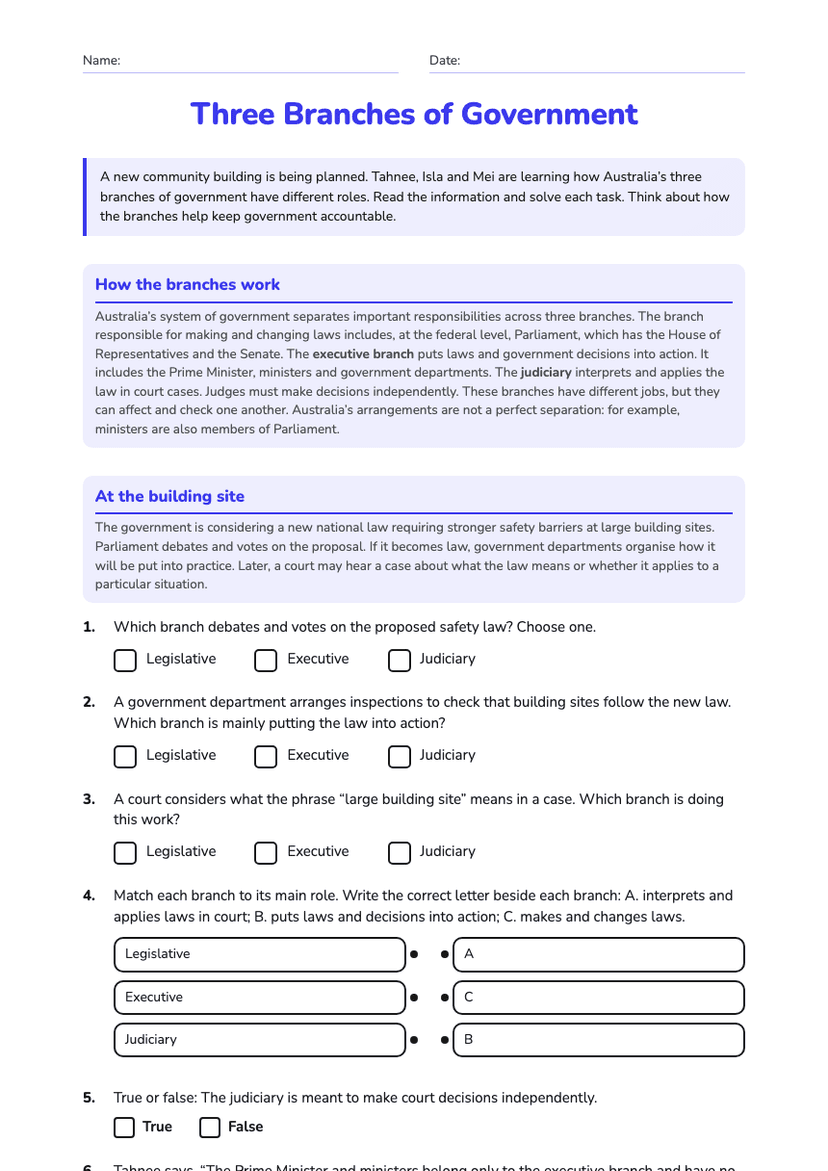
Media and Law Reform
A free social sciences worksheet ready for your classroom. Open in Kuraplan to grab the print-ready PDF, customize it for your students, or generate a fresh version in seconds.
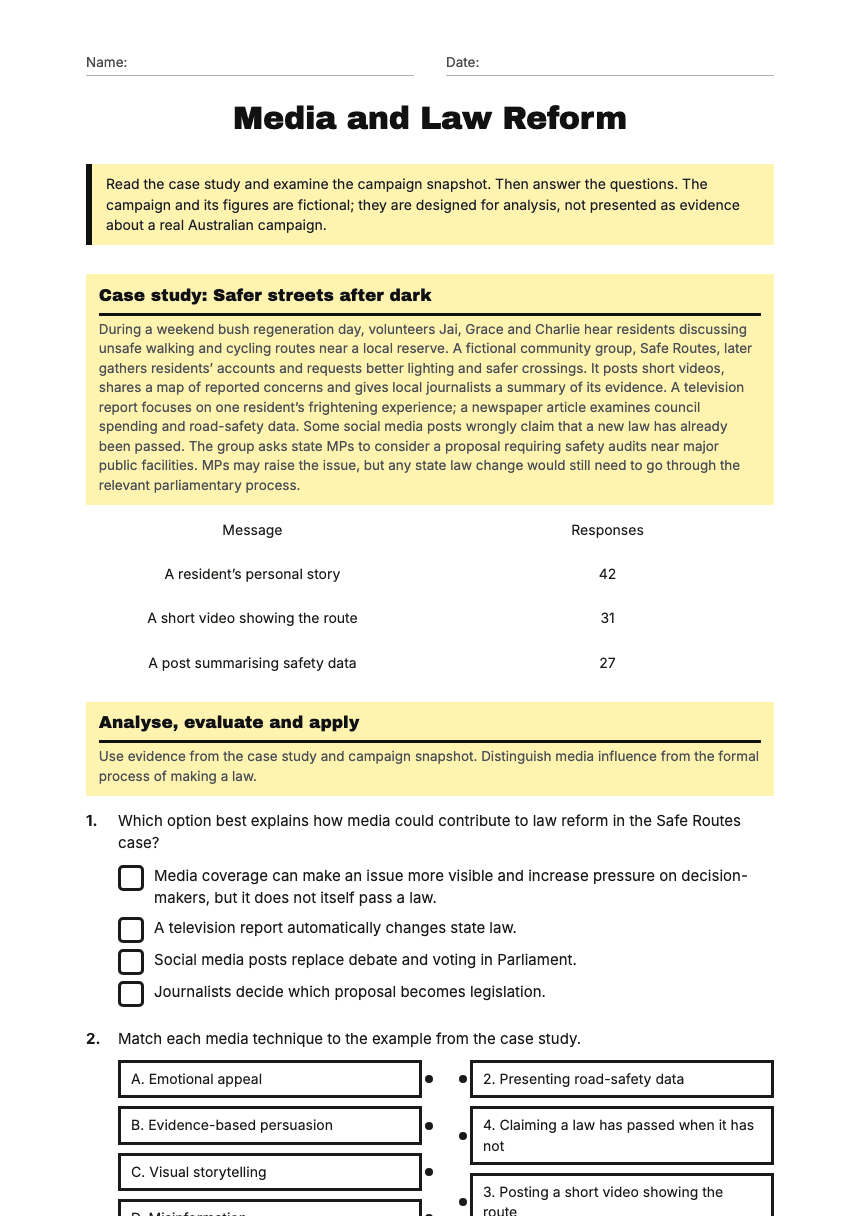
Media and Law Reform
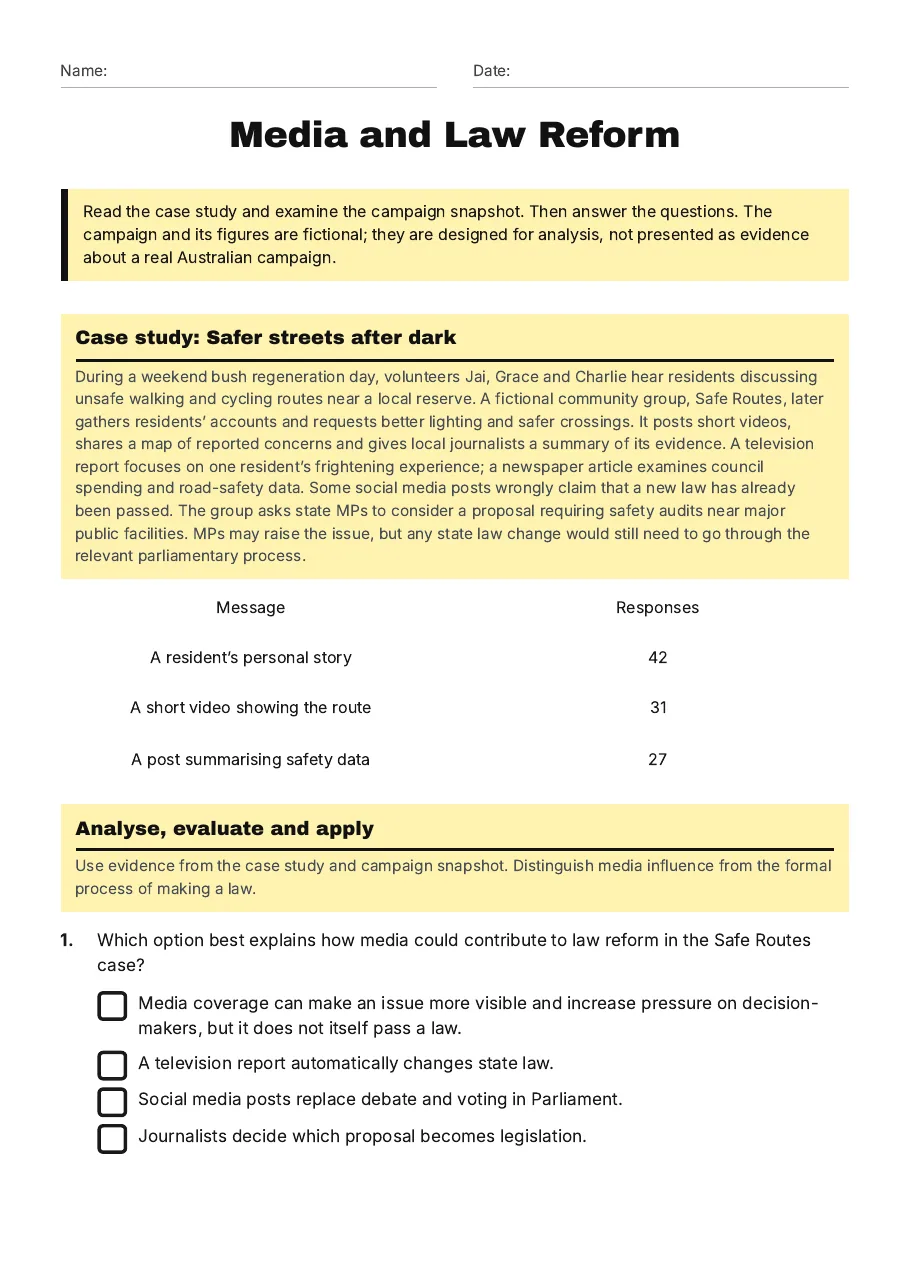
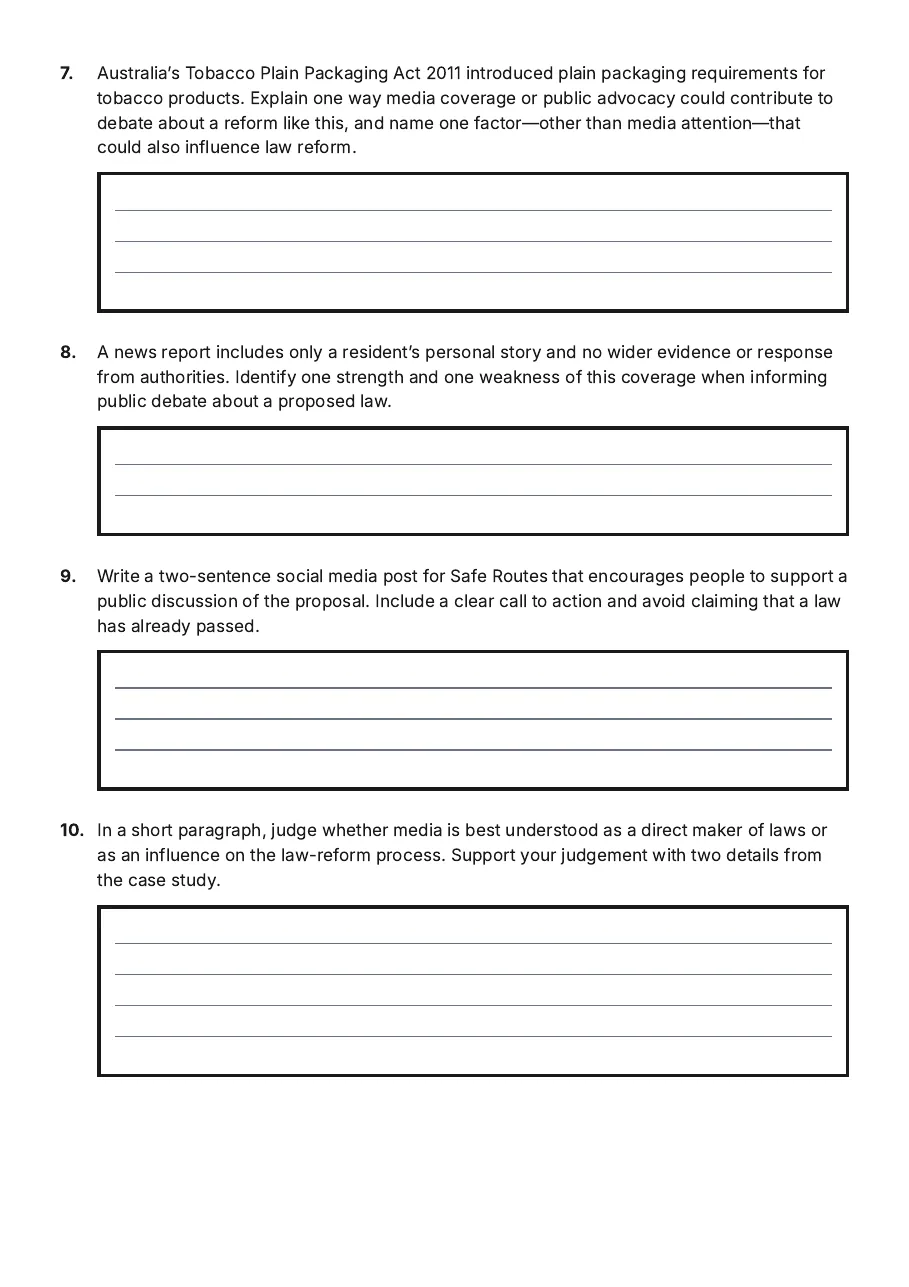
Case study: Safer streets after dark
During a weekend bush regeneration day, volunteers Jai, Grace and Charlie hear residents discussing unsafe walking and cycling routes near a local reserve. A fictional community group, Safe Routes, later gathers residents’ accounts and requests better lighting and safer crossings. It posts short videos, shares a map of reported concerns and gives local journalists a summary of its evidence. A television report focuses on one resident’s frightening experience; a newspaper article examines council spending and road-safety data. Some social media posts wrongly claim that a new law has already been passed. The group asks state MPs to consider a proposal requiring safety audits near major public facilities. MPs may raise the issue, but any state law change would still need to go through the relevant parliamentary process.
Message
Responses
A resident’s personal story
42
A short video showing the route
31
A post summarising safety data
27
Analyse, evaluate and apply
Use evidence from the case study and campaign snapshot. Distinguish media influence from the formal process of making a law.
- Media coverage can make an issue more visible and increase pressure on decision-makers, but it does not itself pass a law.
- A television report automatically changes state law.
- Social media posts replace debate and voting in Parliament.
- Journalists decide which proposal becomes legislation.
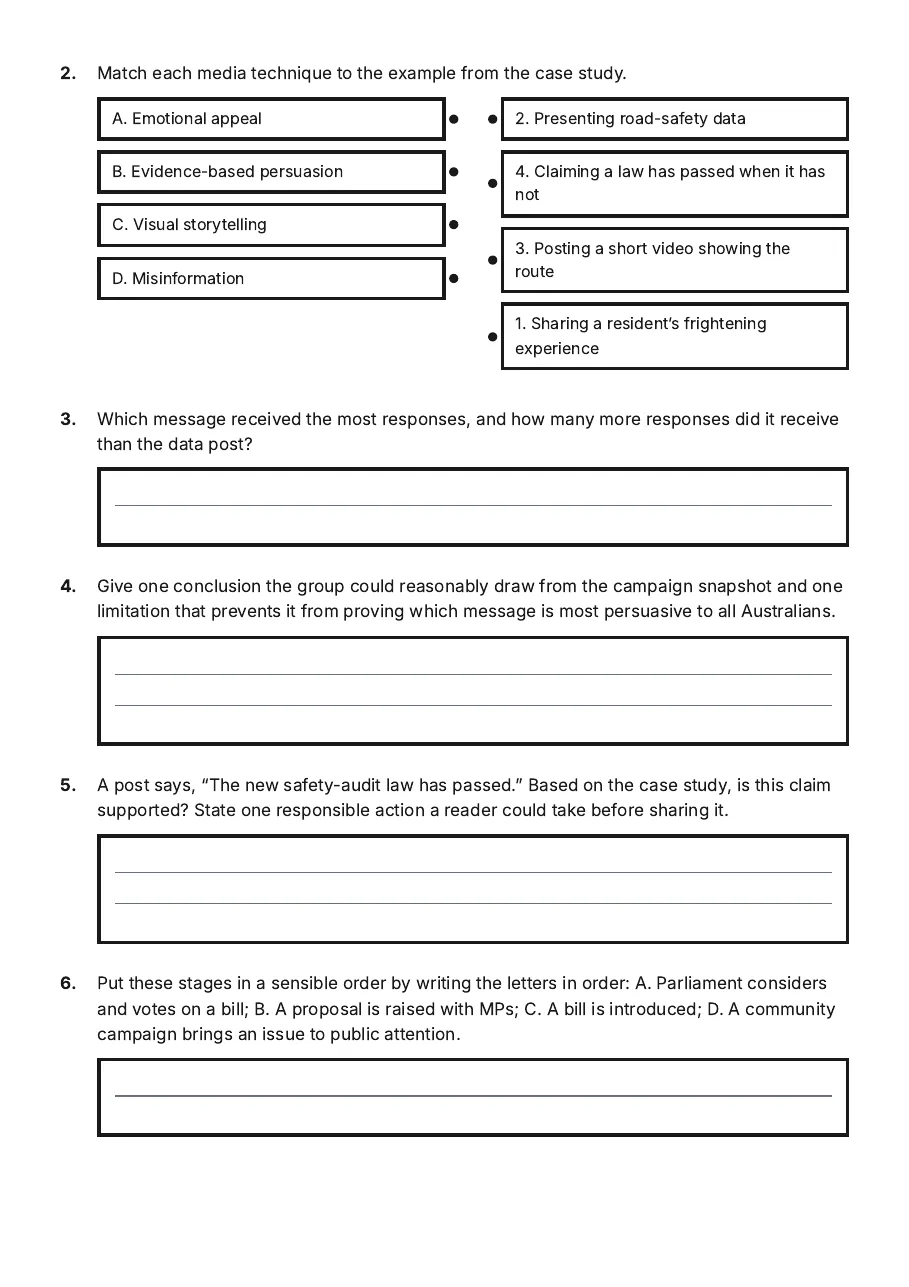
- A. Emotional appeal
- B. Evidence-based persuasion
- C. Visual storytelling
- D. Misinformation
- 2. Presenting road-safety data
- 4. Claiming a law has passed when it has not
- 3. Posting a short video showing the route
- 1. Sharing a resident’s frightening experience
3 printable pages
Page 1
Page 2
Page 3
About This Worksheet
Free in Kuraplan
Sign up free, grab the PDF, and customize it for your class.
Print-Ready
Formatted for standard paper. Clean layout, easy to read.
AI-Generated
Created with Kuraplan's AI, designed for real classroom use.
For Teachers & Parents
Use in classrooms, for homework, tutoring, or homeschool.
Need a custom version of this worksheet?
Kuraplan's AI generates custom worksheets in seconds — differentiated for every learner, aligned to your curriculum.
Generate Custom Worksheets — FreeMore Social Sciences Worksheets
Community Project Planning
Free
Australian Law Reform Fact Sheets
Free
Human Rights Debate Rubric
Free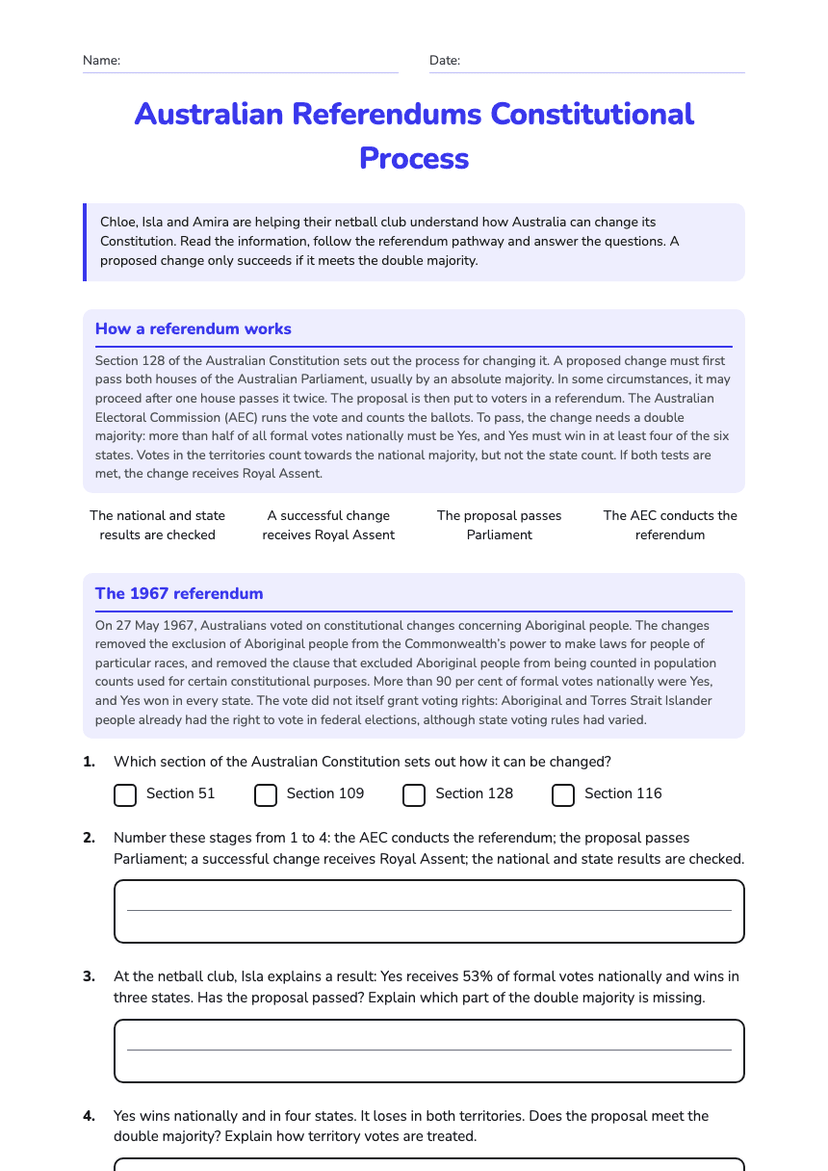
Australian Referendums Constitutional Process
Free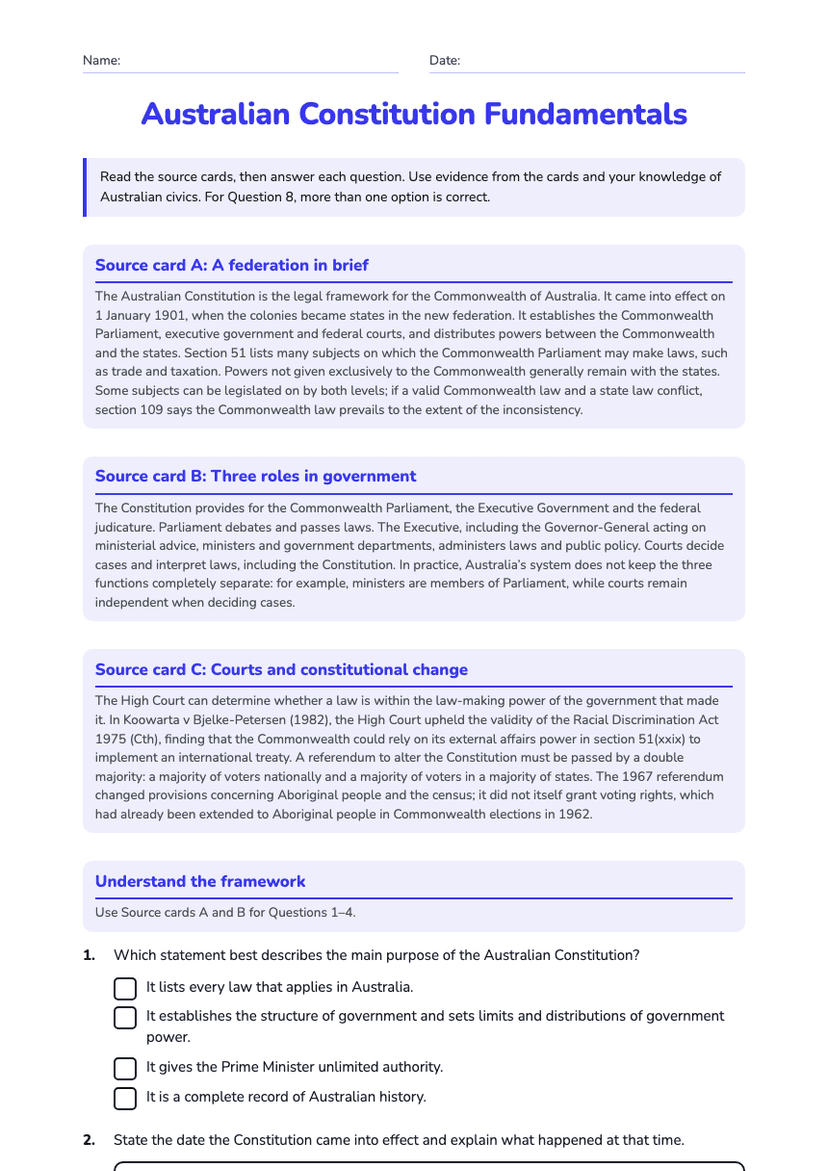
Australian Constitution Fundamentals
Free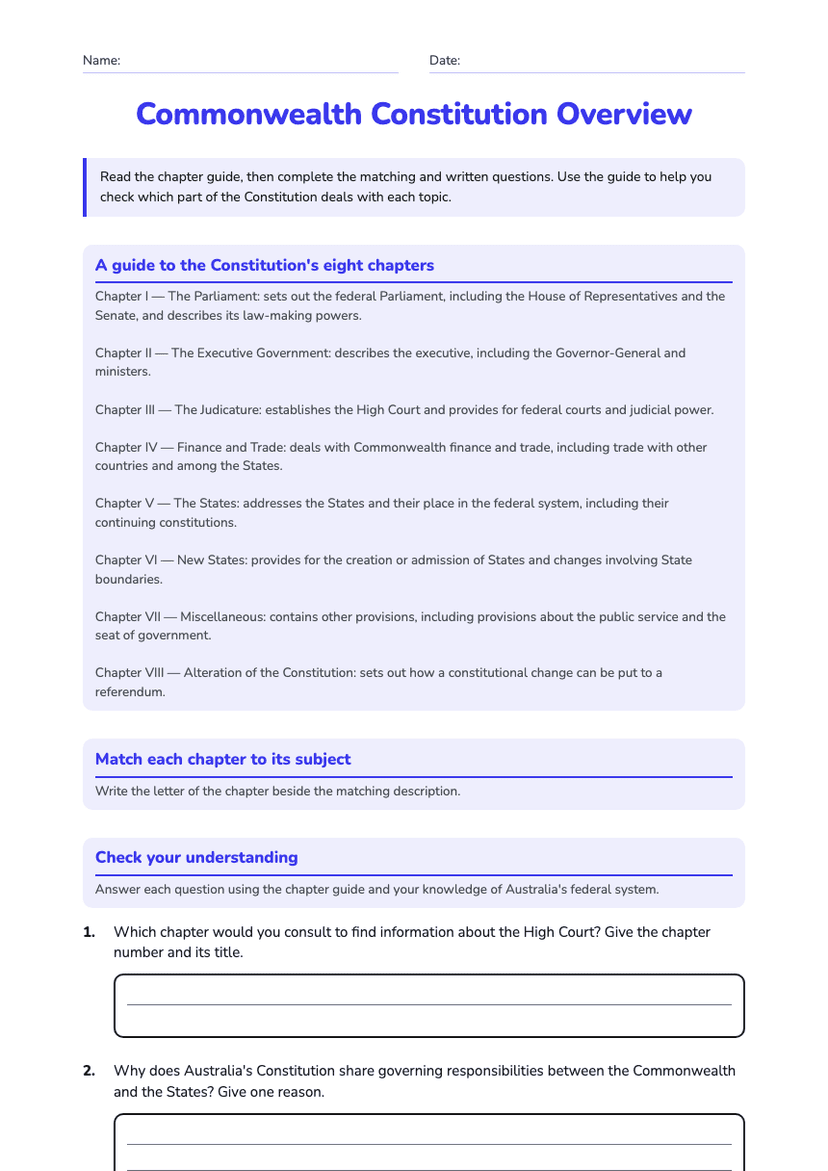
Commonwealth Constitution Overview
Free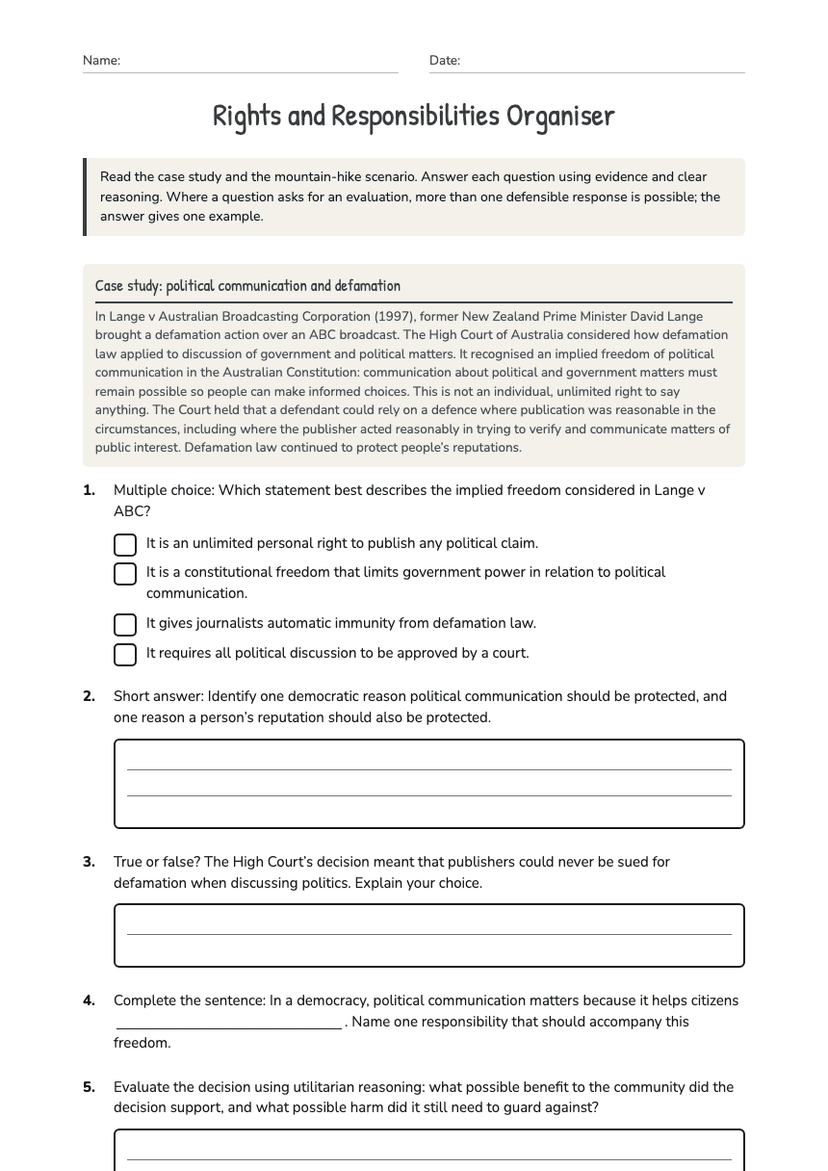
Rights and Responsibilities Organiser
Free