Ocean Layers Worksheet
A free social sciences worksheet ready for your classroom. Open in Kuraplan to grab the print-ready PDF, customize it for your students, or generate a fresh version in seconds.

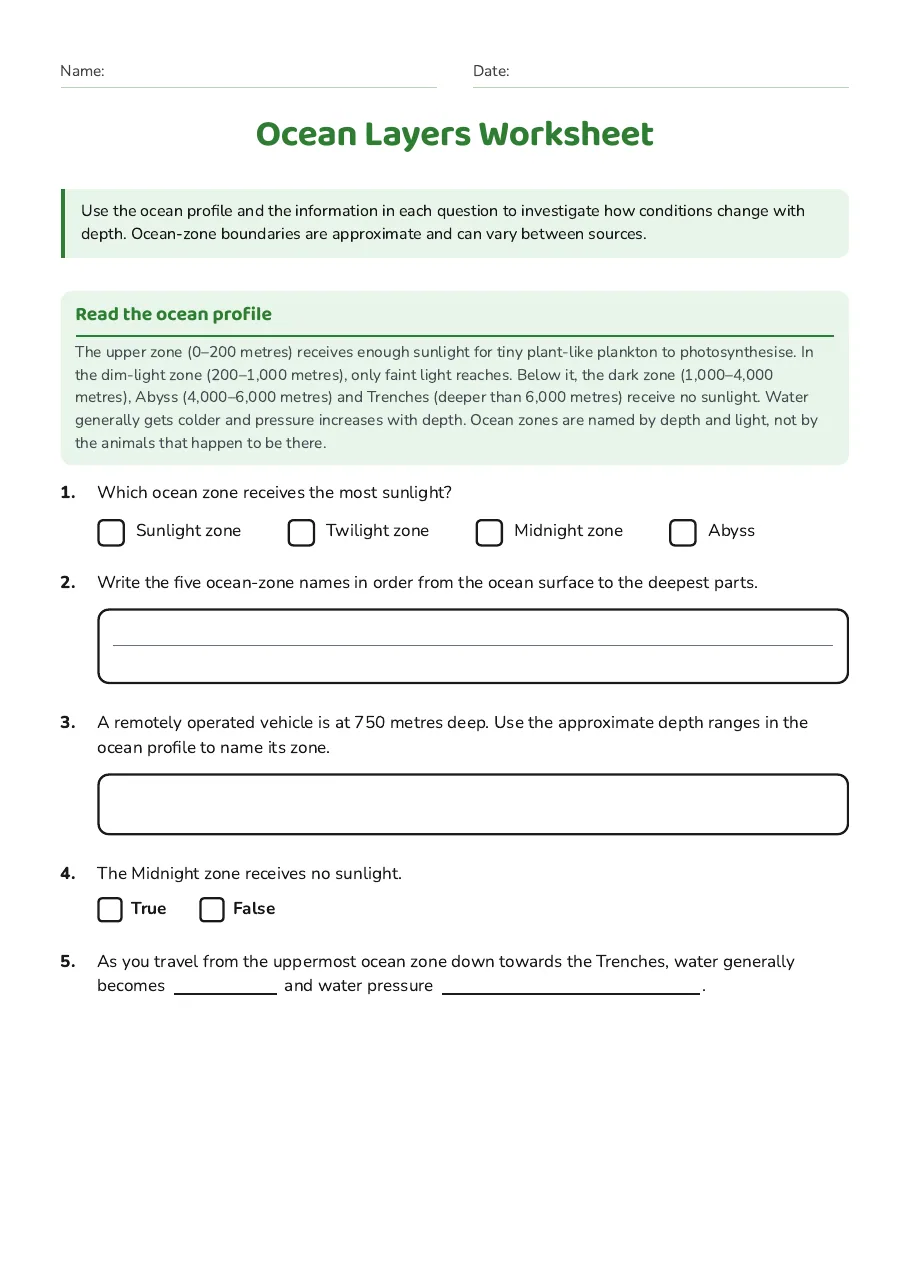
Ocean Layers Worksheet
Read the ocean profile
The upper zone (0–200 metres) receives enough sunlight for tiny plant-like plankton to photosynthesise. In the dim-light zone (200–1,000 metres), only faint light reaches. Below it, the dark zone (1,000–4,000 metres), Abyss (4,000–6,000 metres) and Trenches (deeper than 6,000 metres) receive no sunlight. Water generally gets colder and pressure increases with depth. Ocean zones are named by depth and light, not by the animals that happen to be there.
- Sunlight zone
- Twilight zone
- Midnight zone
- Abyss
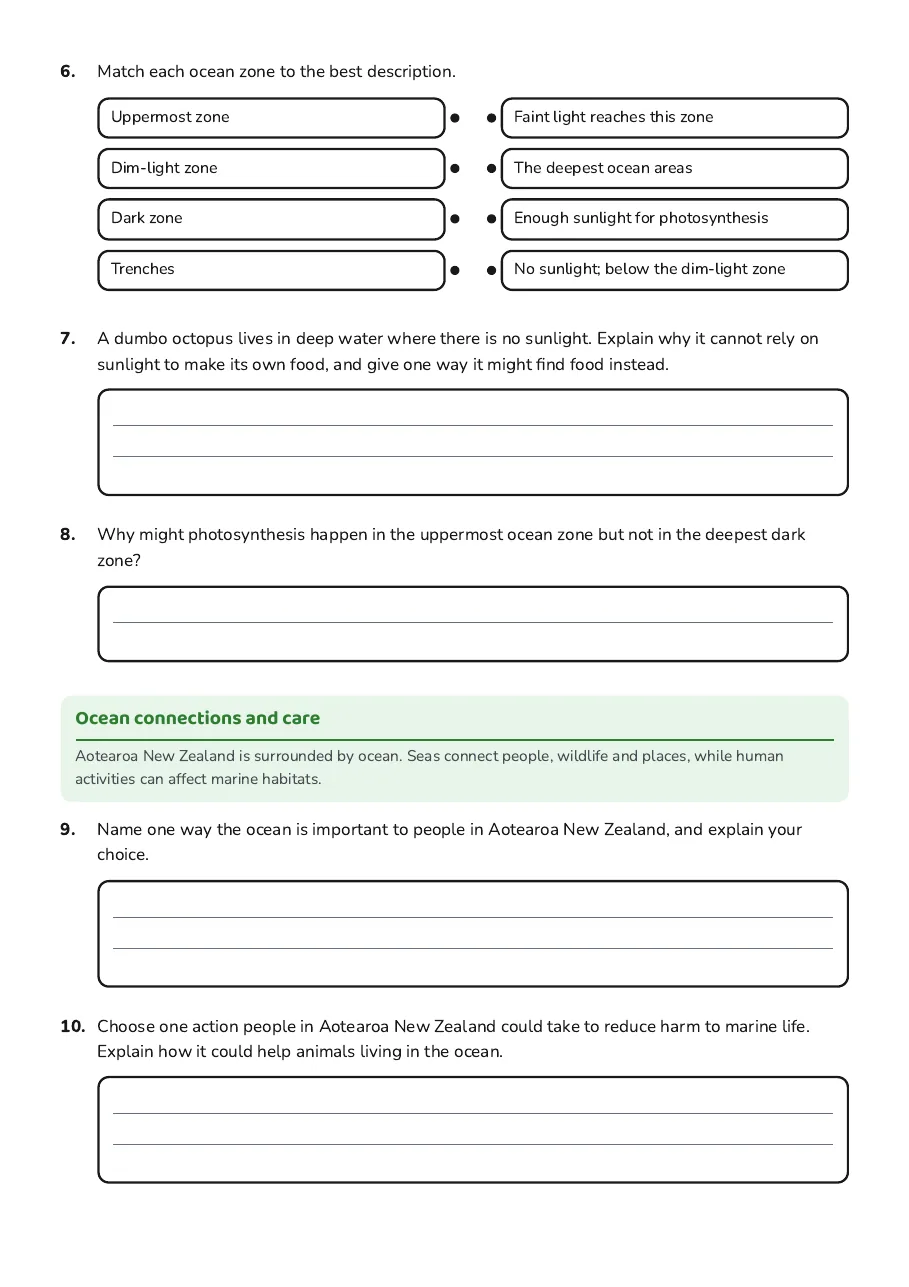
- Uppermost zone
- Dim-light zone
- Dark zone
- Trenches
- Faint light reaches this zone
- The deepest ocean areas
- Enough sunlight for photosynthesis
- No sunlight; below the dim-light zone
Ocean connections and care
Aotearoa New Zealand is surrounded by ocean. Seas connect people, wildlife and places, while human activities can affect marine habitats.
2 printable pages
Page 1
Page 2
About This Worksheet
Free in Kuraplan
Sign up free, grab the PDF, and customize it for your class.
Print-Ready
Formatted for standard paper. Clean layout, easy to read.
AI-Generated
Created with Kuraplan's AI, designed for real classroom use.
For Teachers & Parents
Use in classrooms, for homework, tutoring, or homeschool.
Need a custom version of this worksheet?
Kuraplan's AI generates custom worksheets in seconds — differentiated for every learner, aligned to your curriculum.
Generate Custom Worksheets — FreeMore Social Sciences Worksheets
Migration, Culture and Belonging
Free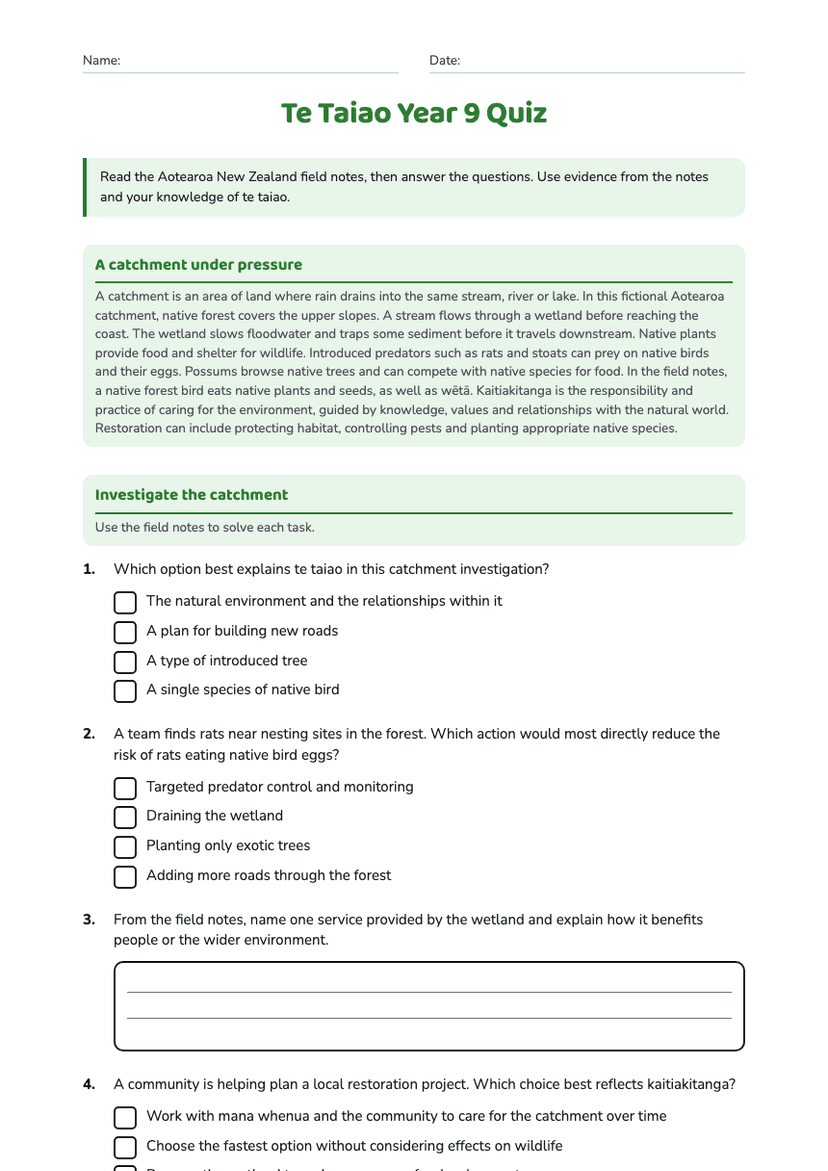
Te Taiao Year 9 Quiz
Free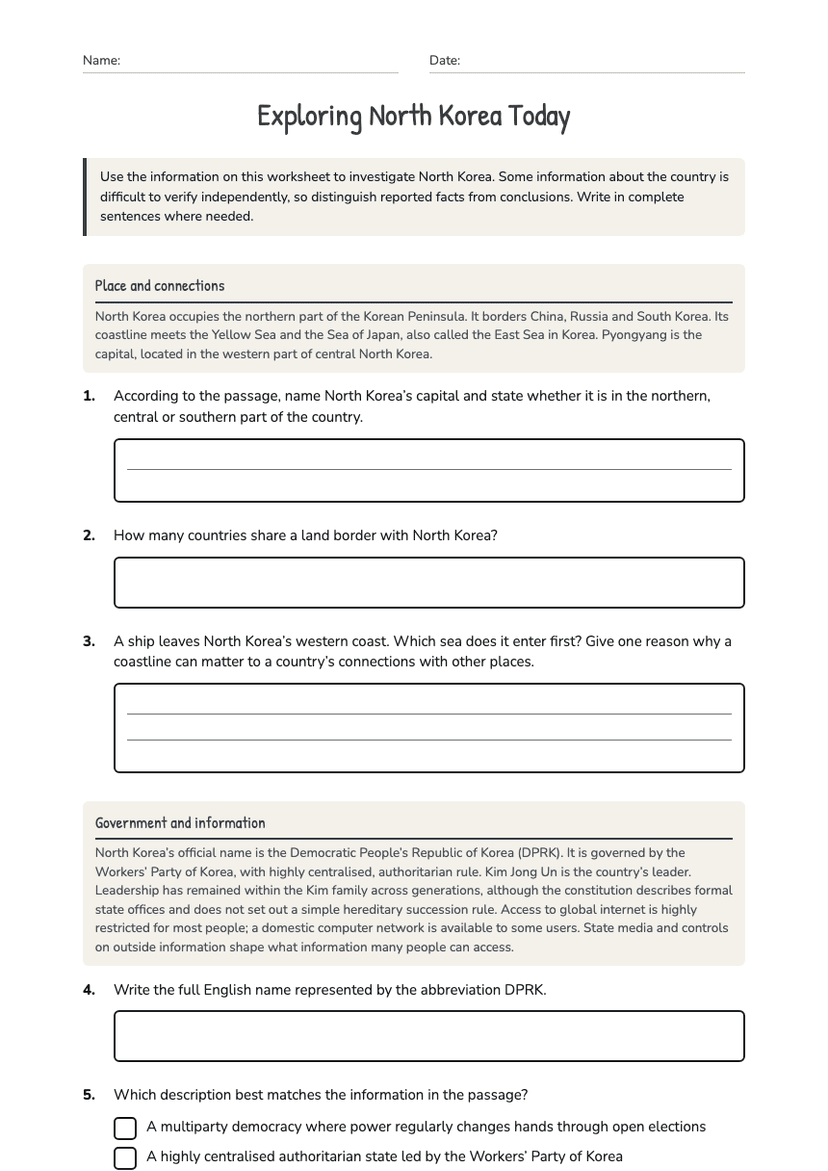
Exploring North Korea Today
Free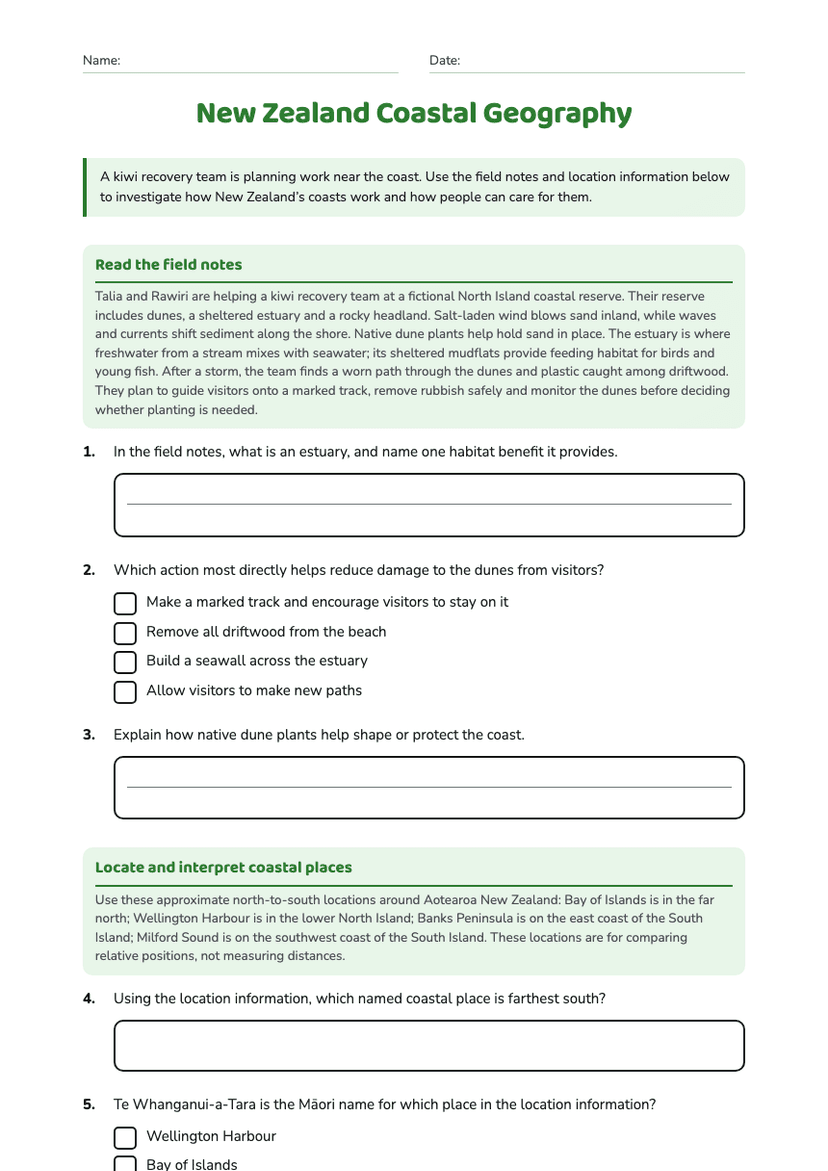
New Zealand Coastal Geography
Free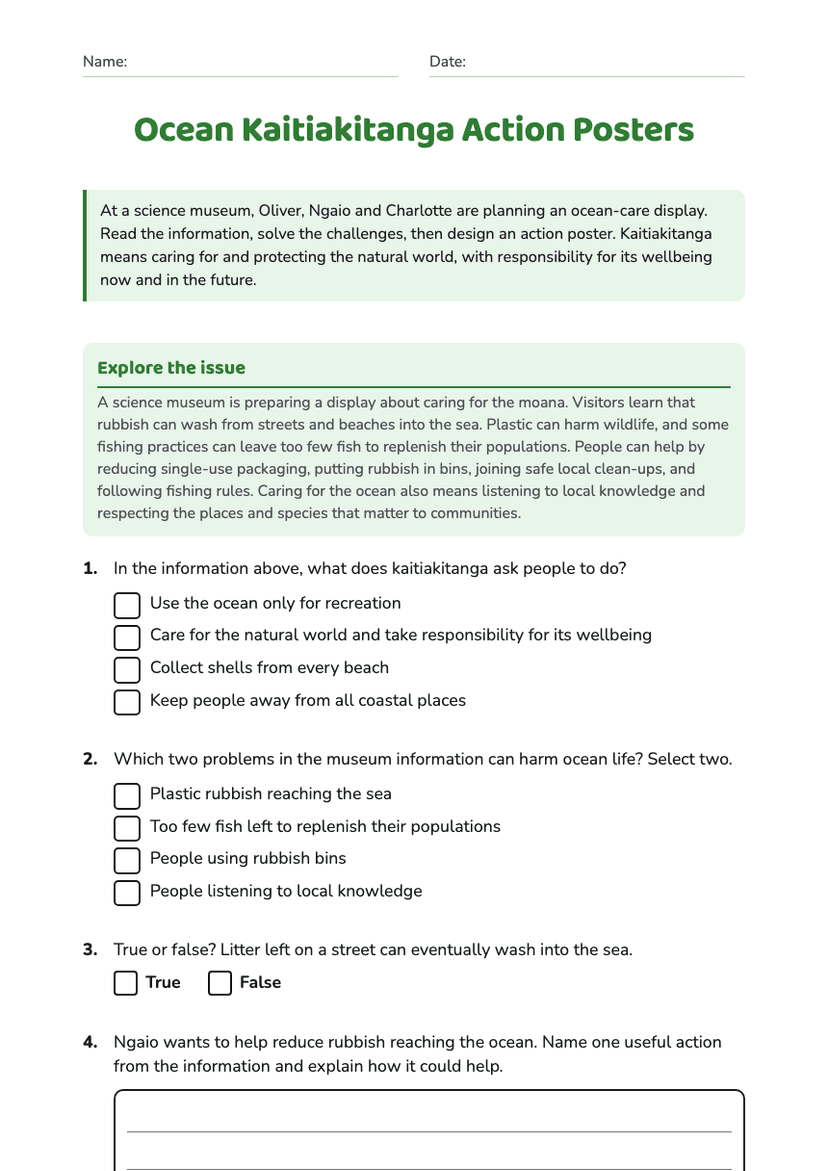
Ocean Kaitiakitanga Action Posters
Free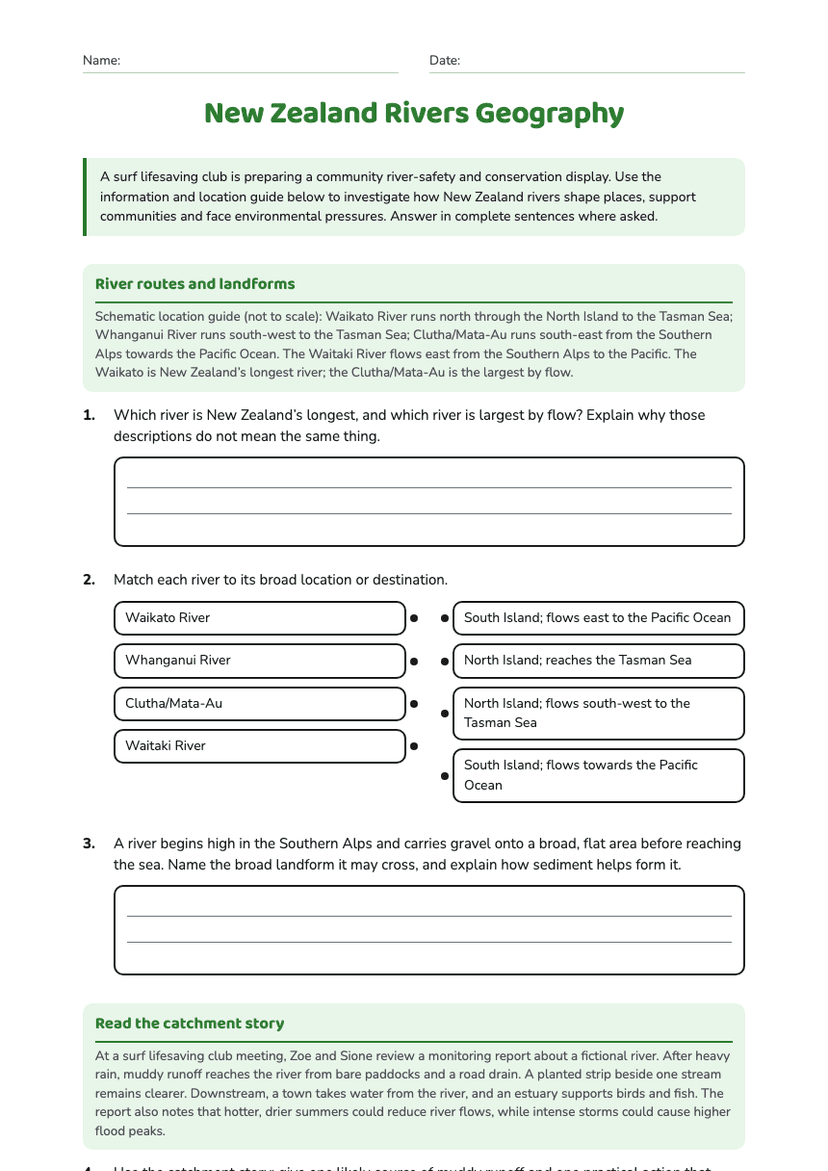
New Zealand Rivers Geography
Free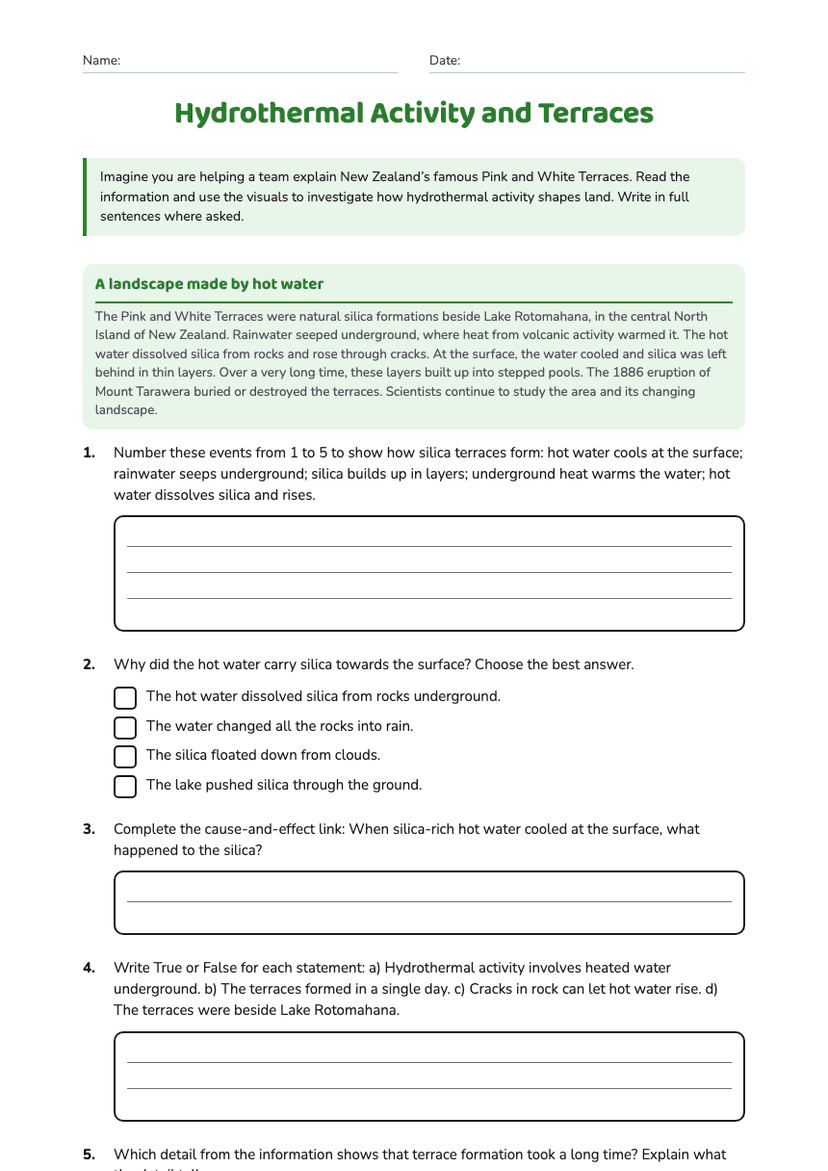
Hydrothermal Activity and Terraces
Free