Pandemic Reading Comprehension
A free english worksheet ready for your classroom. Open in Kuraplan to grab the print-ready PDF, customize it for your students, or generate a fresh version in seconds.
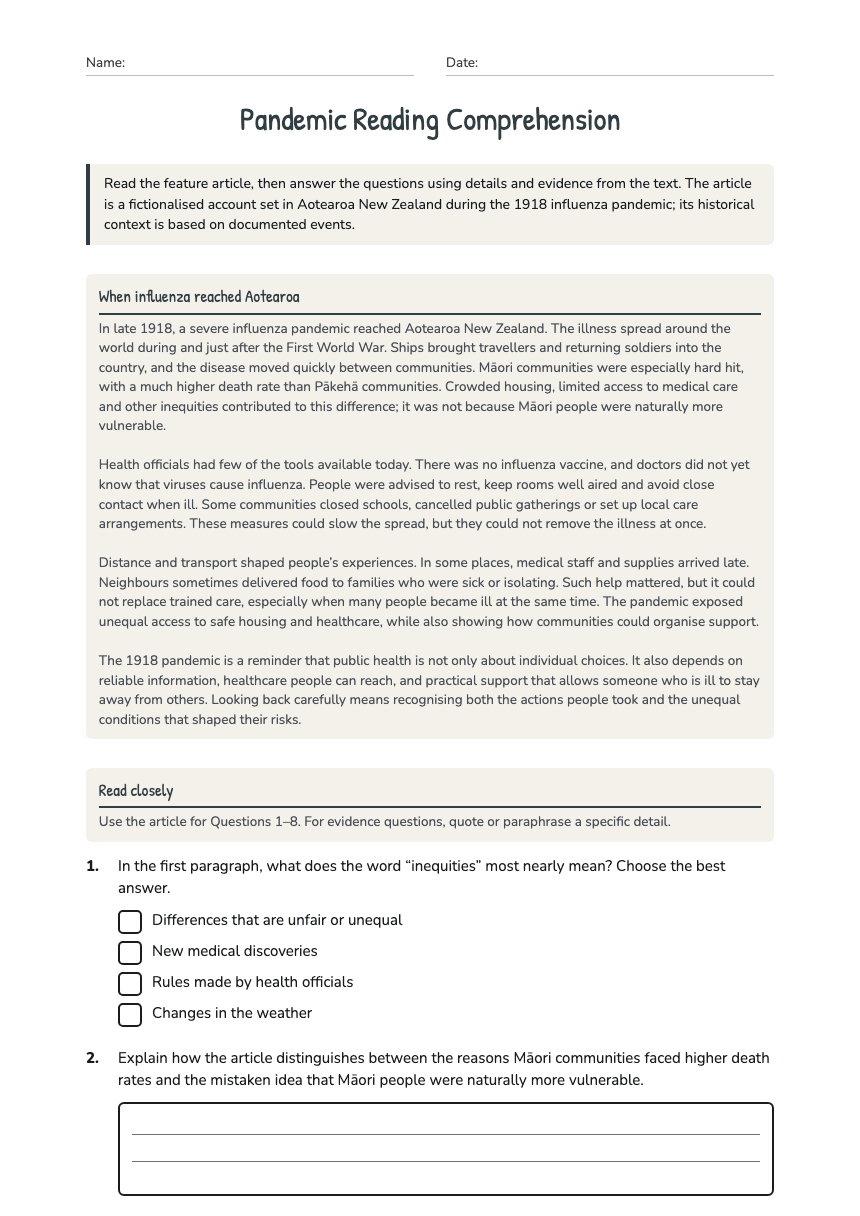
Pandemic Reading Comprehension
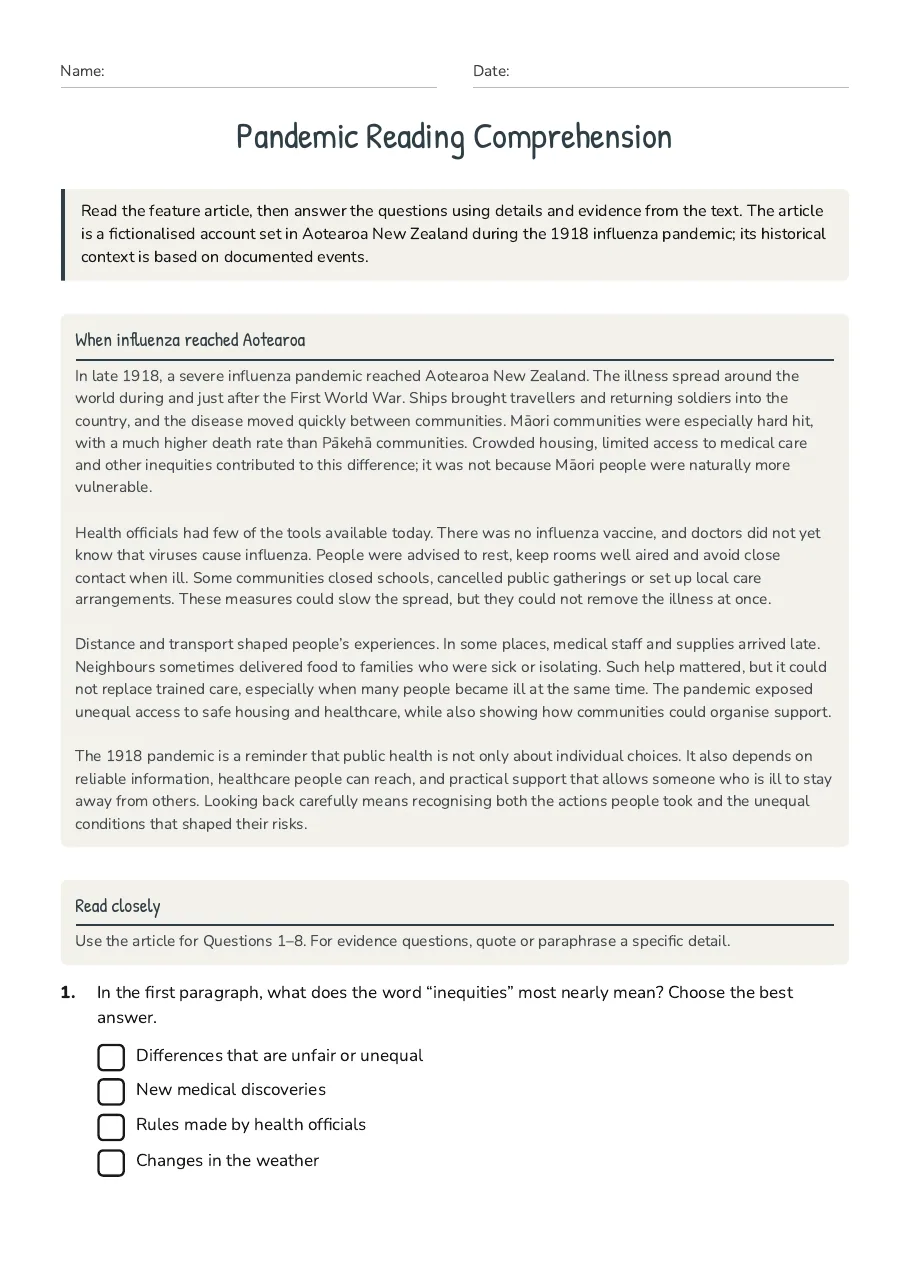
When influenza reached Aotearoa
In late 1918, a severe influenza pandemic reached Aotearoa New Zealand. The illness spread around the world during and just after the First World War. Ships brought travellers and returning soldiers into the country, and the disease moved quickly between communities. Māori communities were especially hard hit, with a much higher death rate than Pākehā communities. Crowded housing, limited access to medical care and other inequities contributed to this difference; it was not because Māori people were naturally more vulnerable. Health officials had few of the tools available today. There was no influenza vaccine, and doctors did not yet know that viruses cause influenza. People were advised to rest, keep rooms well aired and avoid close contact when ill. Some communities closed schools, cancelled public gatherings or set up local care arrangements. These measures could slow the spread, but they could not remove the illness at once. Distance and transport shaped people’s experiences. In some places, medical staff and supplies arrived late. Neighbours sometimes delivered food to families who were sick or isolating. Such help mattered, but it could not replace trained care, especially when many people became ill at the same time. The pandemic exposed unequal access to safe housing and healthcare, while also showing how communities could organise support. The 1918 pandemic is a reminder that public health is not only about individual choices. It also depends on reliable information, healthcare people can reach, and practical support that allows someone who is ill to stay away from others. Looking back carefully means recognising both the actions people took and the unequal conditions that shaped their risks.
Read closely
Use the article for Questions 1–8. For evidence questions, quote or paraphrase a specific detail.
- Differences that are unfair or unequal
- New medical discoveries
- Rules made by health officials
- Changes in the weather
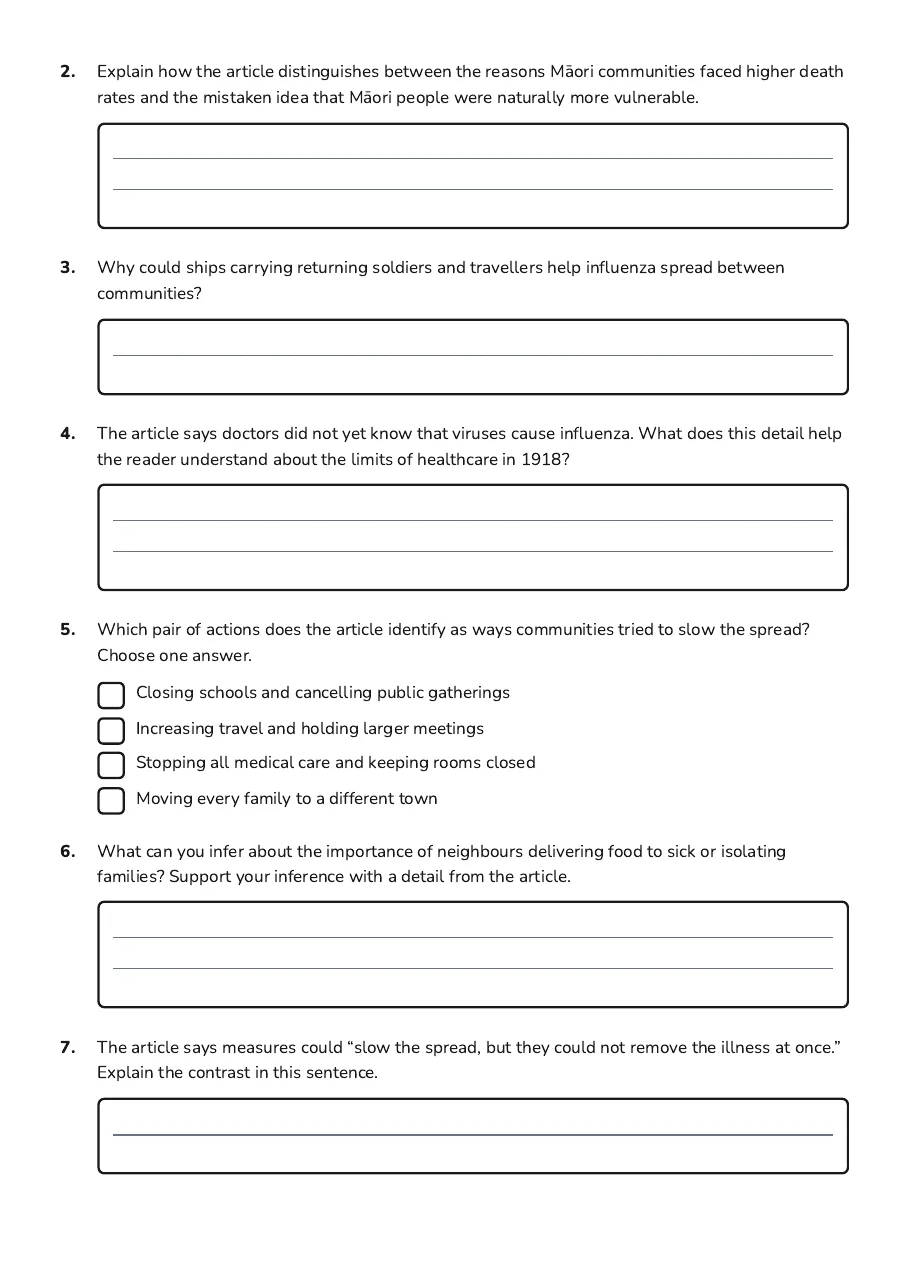
- Closing schools and cancelling public gatherings
- Increasing travel and holding larger meetings
- Stopping all medical care and keeping rooms closed
- Moving every family to a different town
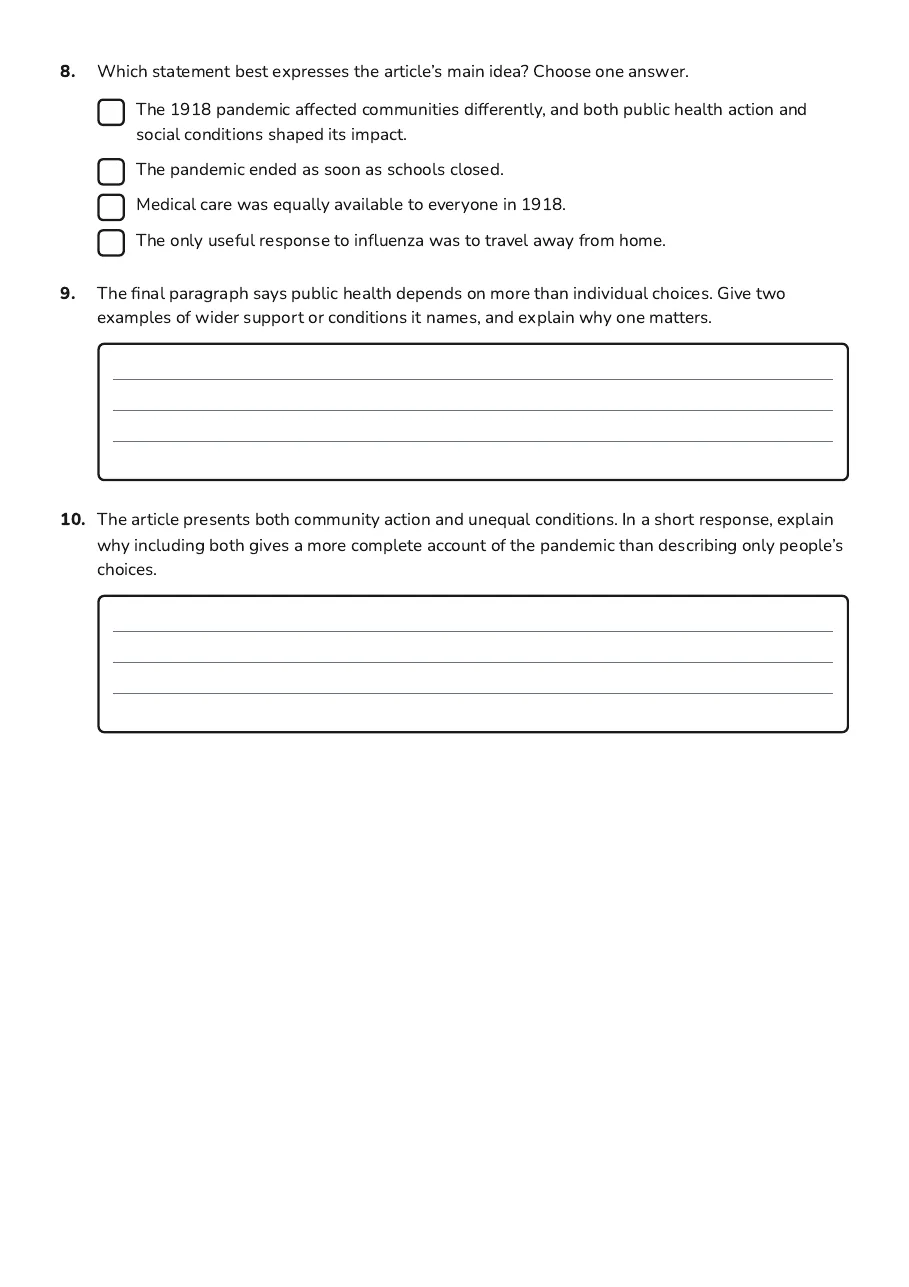
- The 1918 pandemic affected communities differently, and both public health action and social conditions shaped its impact.
- The pandemic ended as soon as schools closed.
- Medical care was equally available to everyone in 1918.
- The only useful response to influenza was to travel away from home.
3 printable pages
Page 1
Page 2
Page 3
About This Worksheet
Free in Kuraplan
Sign up free, grab the PDF, and customize it for your class.
Print-Ready
Formatted for standard paper. Clean layout, easy to read.
AI-Generated
Created with Kuraplan's AI, designed for real classroom use.
For Teachers & Parents
Use in classrooms, for homework, tutoring, or homeschool.
Need a custom version of this worksheet?
Kuraplan's AI generates custom worksheets in seconds — differentiated for every learner, aligned to your curriculum.
Generate Custom Worksheets — Free