EnglishFreePrintable
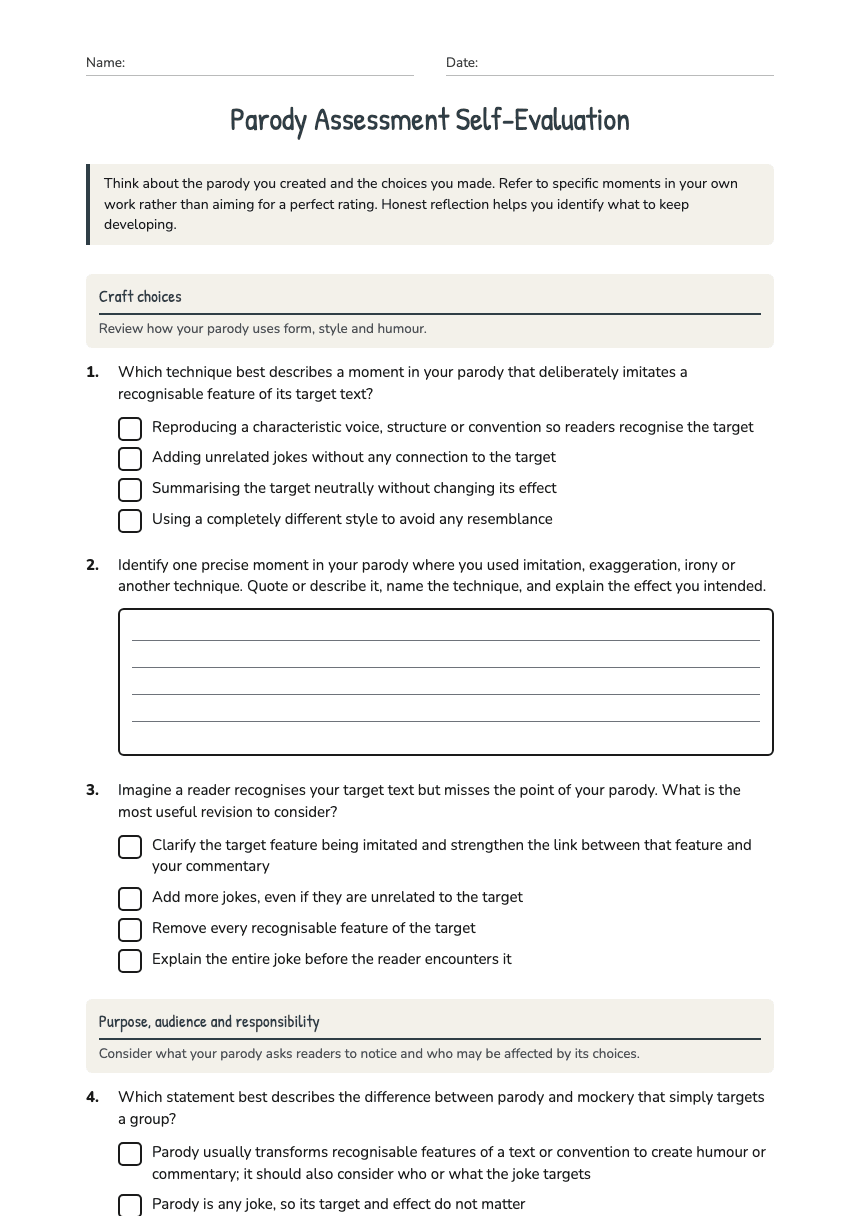
Parody Assessment Self-Evaluation
A free english worksheet ready for your classroom. Open in Kuraplan to grab the print-ready PDF, customize it for your students, or generate a fresh version in seconds.
Name:Date:
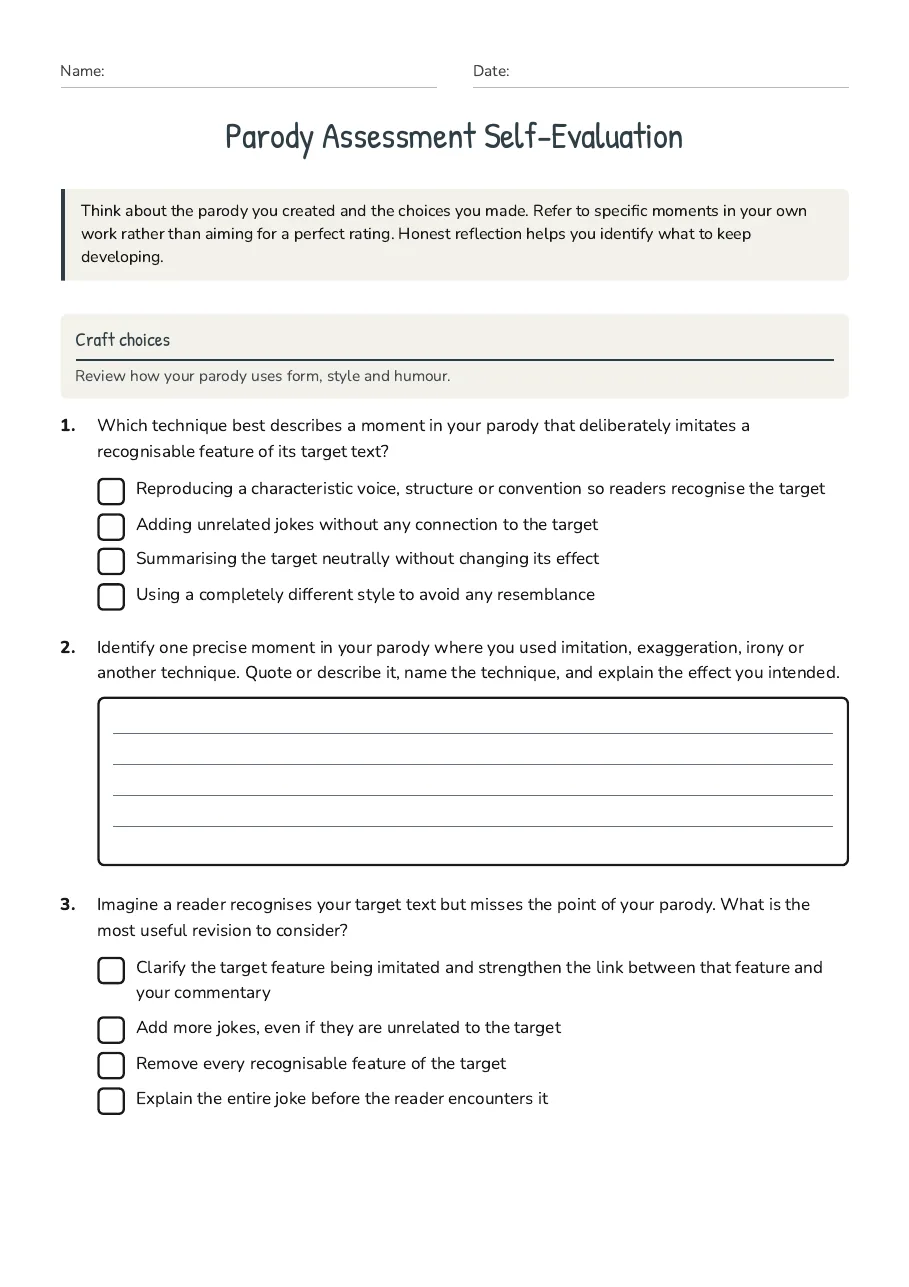
Parody Assessment Self-Evaluation
Think about the parody you created and the choices you made. Refer to specific moments in your own work rather than aiming for a perfect rating. Honest reflection helps you identify what to keep developing.
Craft choices
Review how your parody uses form, style and humour.
1.Which technique best describes a moment in your parody that deliberately imitates a recognisable feature of its target text?
- Reproducing a characteristic voice, structure or convention so readers recognise the target
- Adding unrelated jokes without any connection to the target
- Summarising the target neutrally without changing its effect
- Using a completely different style to avoid any resemblance
2.Identify one precise moment in your parody where you used imitation, exaggeration, irony or another technique. Quote or describe it, name the technique, and explain the effect you intended.
3.Imagine a reader recognises your target text but misses the point of your parody. What is the most useful revision to consider?
- Clarify the target feature being imitated and strengthen the link between that feature and your commentary
- Add more jokes, even if they are unrelated to the target
- Remove every recognisable feature of the target
- Explain the entire joke before the reader encounters it
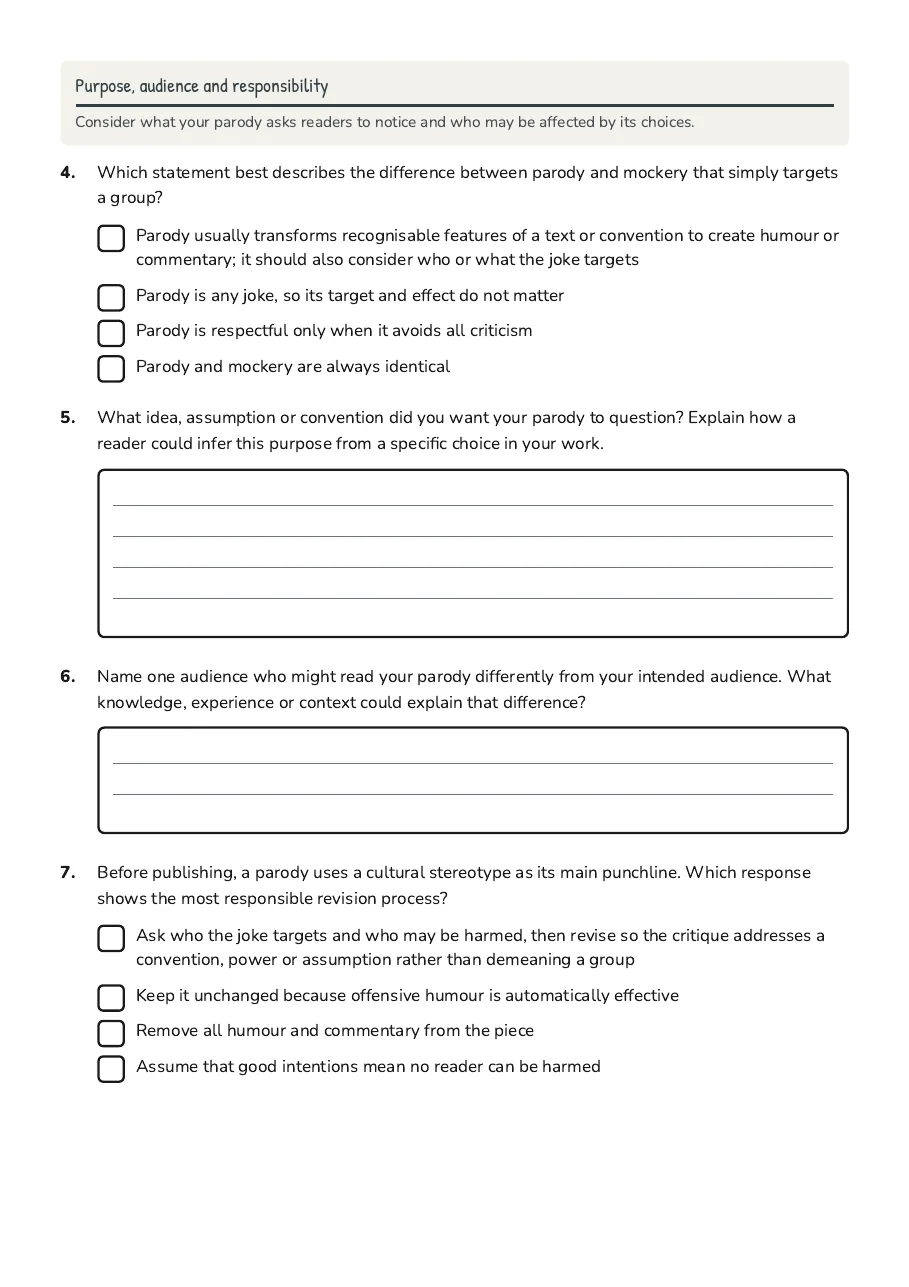
Purpose, audience and responsibility
Consider what your parody asks readers to notice and who may be affected by its choices.
4.Which statement best describes the difference between parody and mockery that simply targets a group?
- Parody usually transforms recognisable features of a text or convention to create humour or commentary; it should also consider who or what the joke targets
- Parody is any joke, so its target and effect do not matter
- Parody is respectful only when it avoids all criticism
- Parody and mockery are always identical
5.What idea, assumption or convention did you want your parody to question? Explain how a reader could infer this purpose from a specific choice in your work.
6.Name one audience who might read your parody differently from your intended audience. What knowledge, experience or context could explain that difference?
7.Before publishing, a parody uses a cultural stereotype as its main punchline. Which response shows the most responsible revision process?
- Ask who the joke targets and who may be harmed, then revise so the critique addresses a convention, power or assumption rather than demeaning a group
- Keep it unchanged because offensive humour is automatically effective
- Remove all humour and commentary from the piece
- Assume that good intentions mean no reader can be harmed
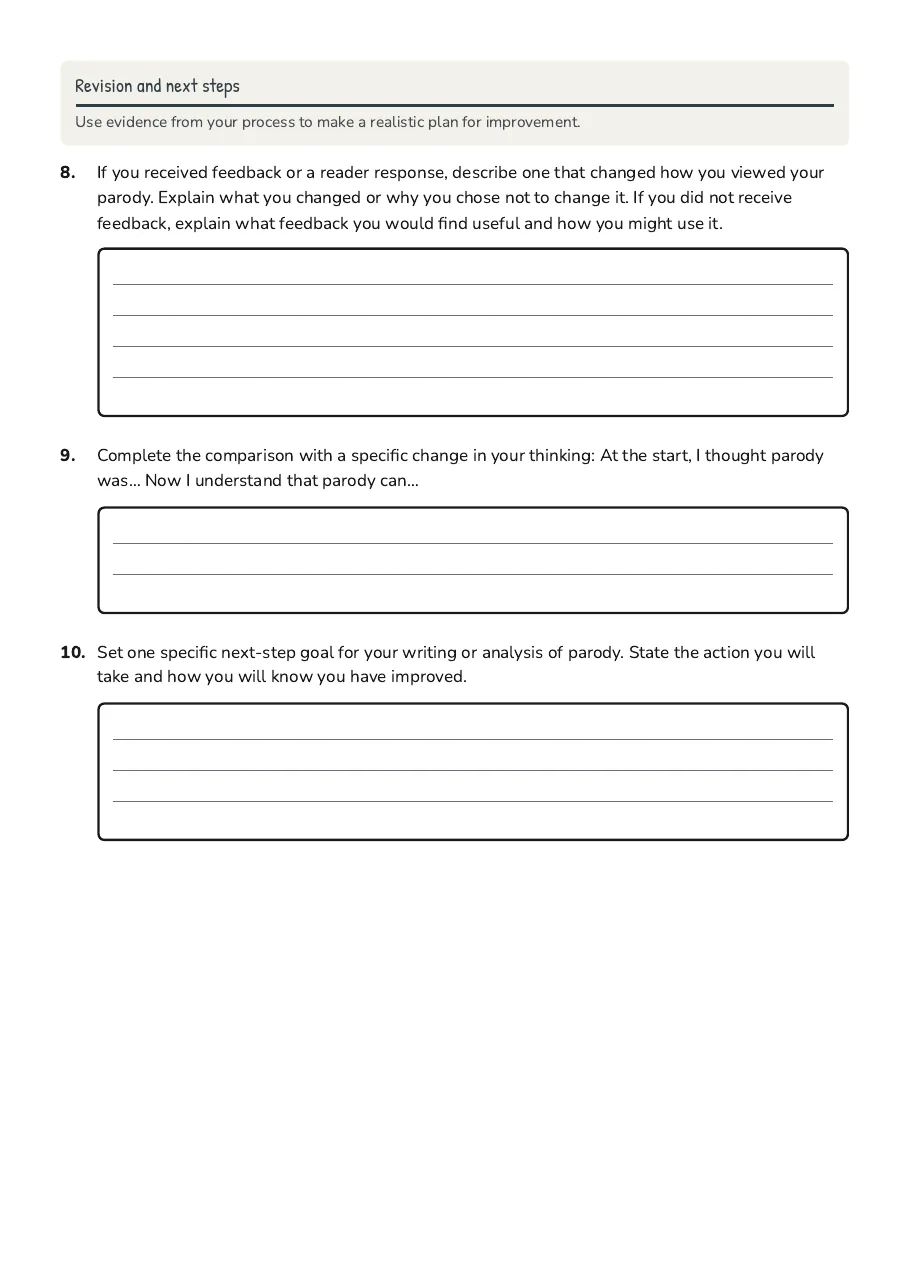
Revision and next steps
Use evidence from your process to make a realistic plan for improvement.
8.If you received feedback or a reader response, describe one that changed how you viewed your parody. Explain what you changed or why you chose not to change it. If you did not receive feedback, explain what feedback you would find useful and how you might use it.
9.Complete the comparison with a specific change in your thinking: At the start, I thought parody was… Now I understand that parody can…
10.Set one specific next-step goal for your writing or analysis of parody. State the action you will take and how you will know you have improved.
3 printable pages
Page 1
Page 2
Page 3
About This Worksheet
Free in Kuraplan
Sign up free, grab the PDF, and customize it for your class.
Print-Ready
Formatted for standard paper. Clean layout, easy to read.
AI-Generated
Created with Kuraplan's AI, designed for real classroom use.
For Teachers & Parents
Use in classrooms, for homework, tutoring, or homeschool.
Need a custom version of this worksheet?
Kuraplan's AI generates custom worksheets in seconds — differentiated for every learner, aligned to your curriculum.
Generate Custom Worksheets — Free No credit card Curriculum-aligned Under 60 seconds
More English Worksheets
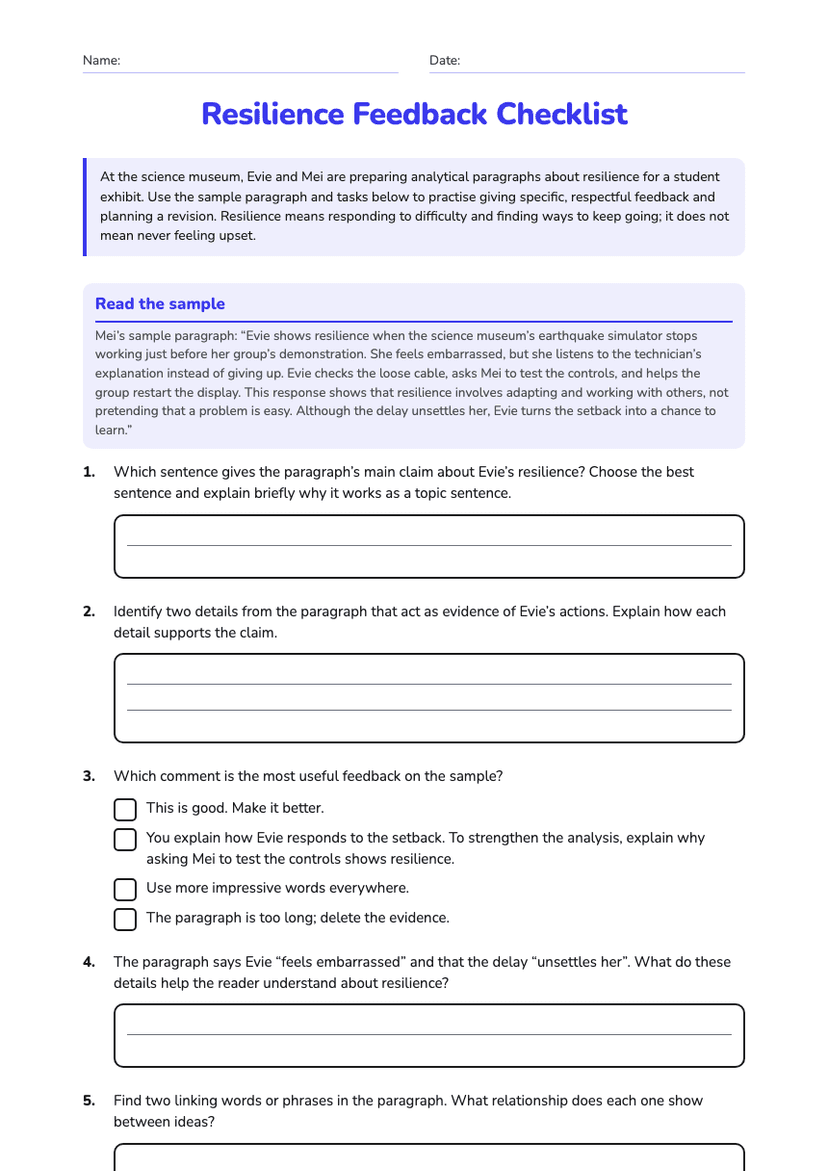
Year 8
Resilience Feedback Checklist
Free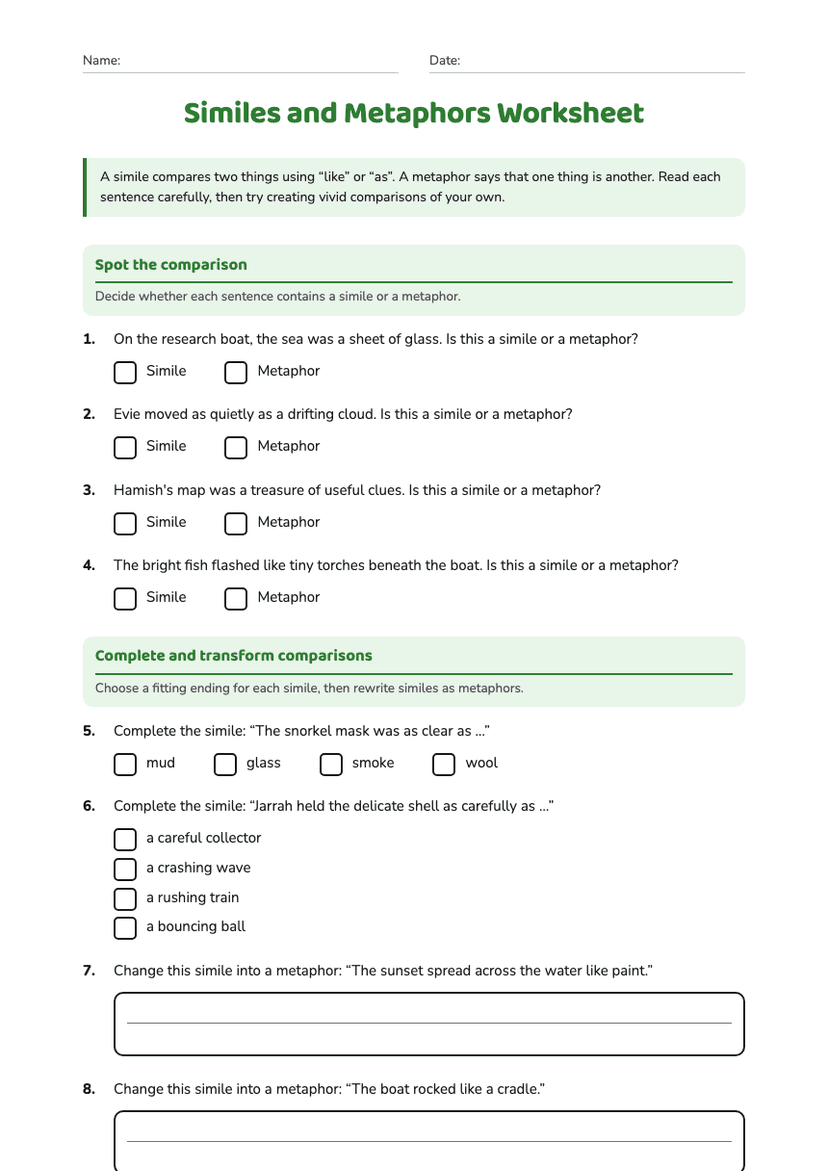
Year 5
Similes and Metaphors Worksheet
Free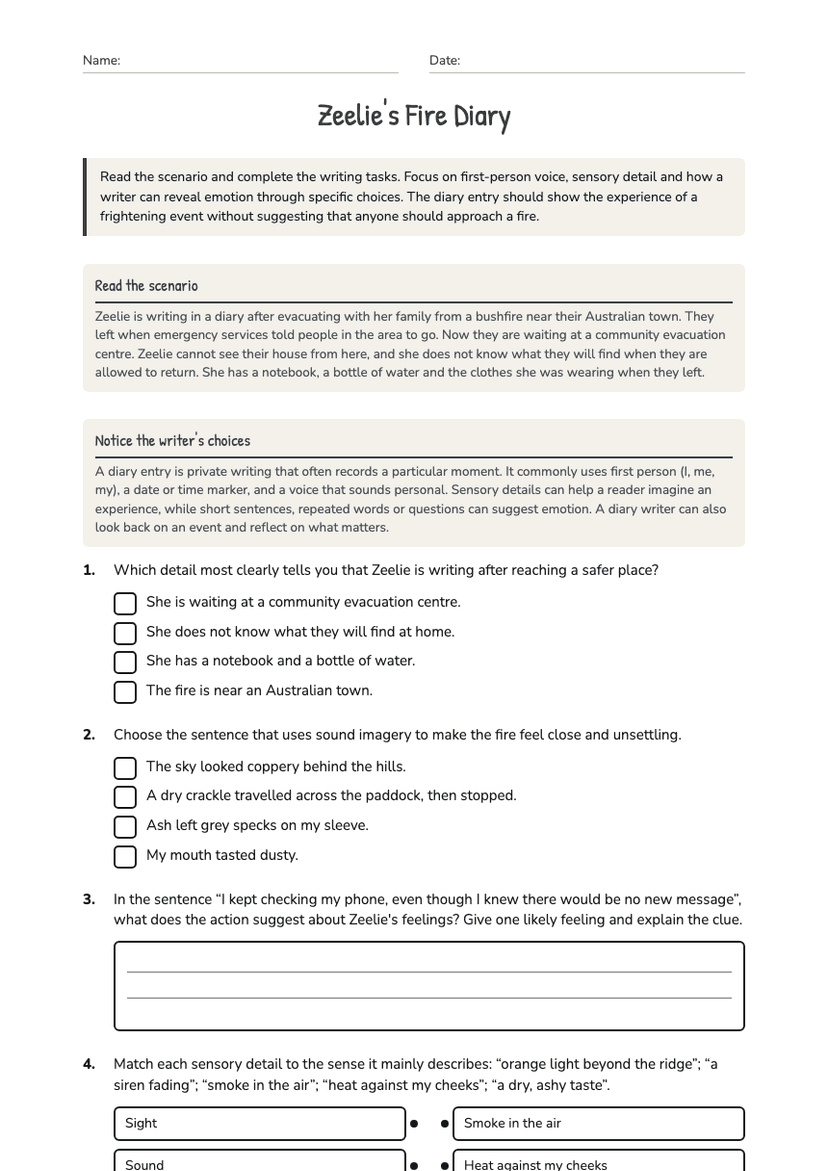
Year 8
Zeelie's Fire Diary
Free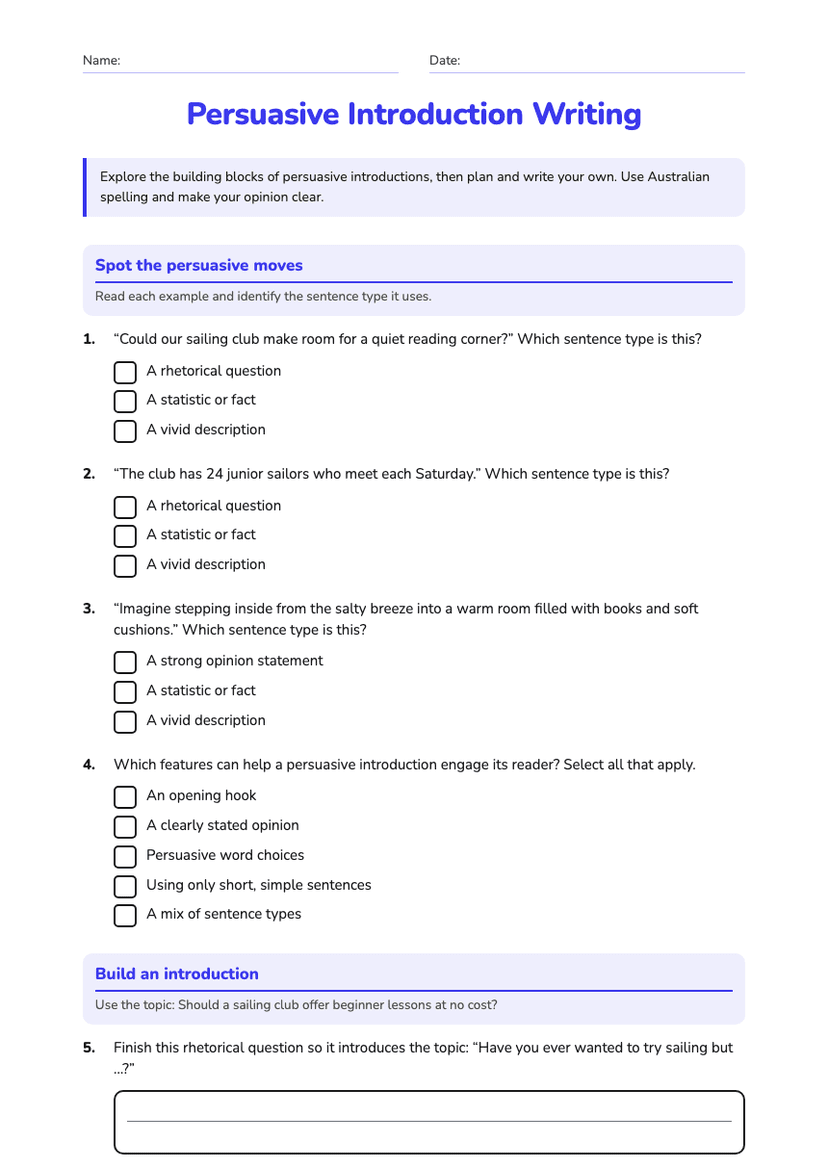
Year 5–6
Persuasive Introduction Writing
Free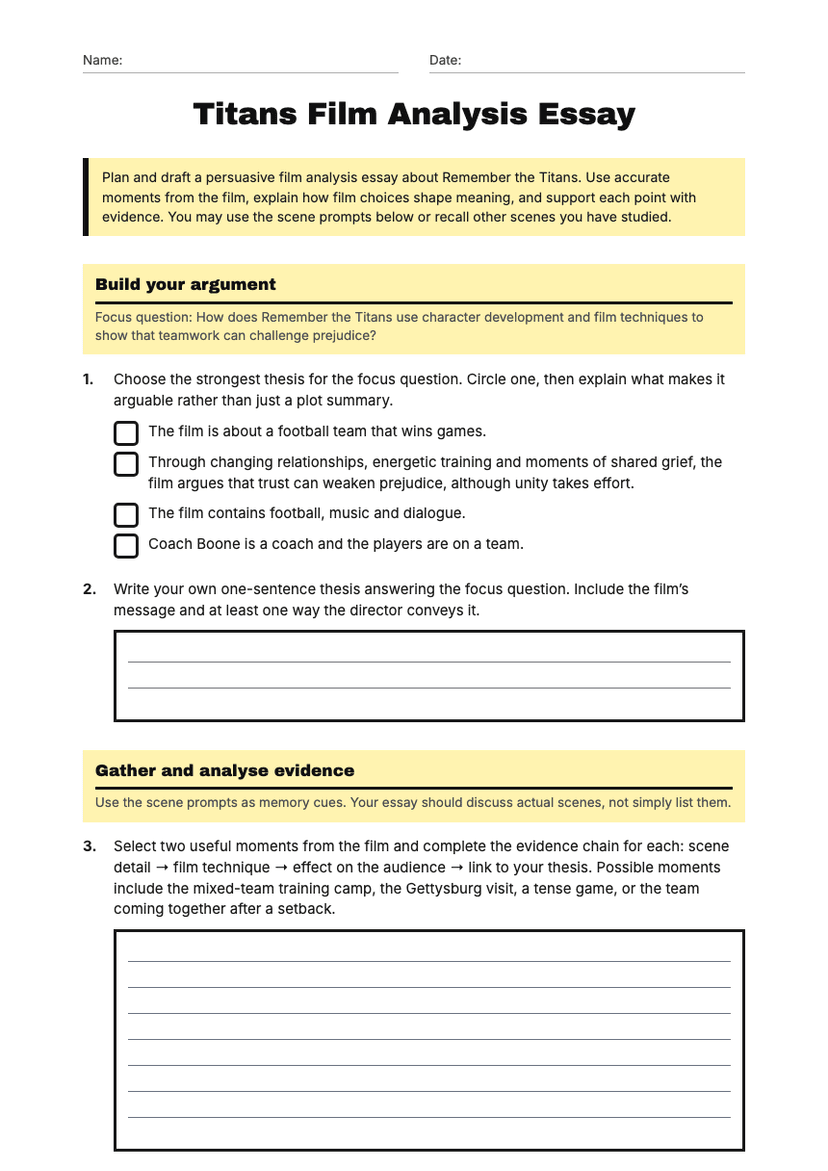
Year 7
Titans Film Analysis Essay
Free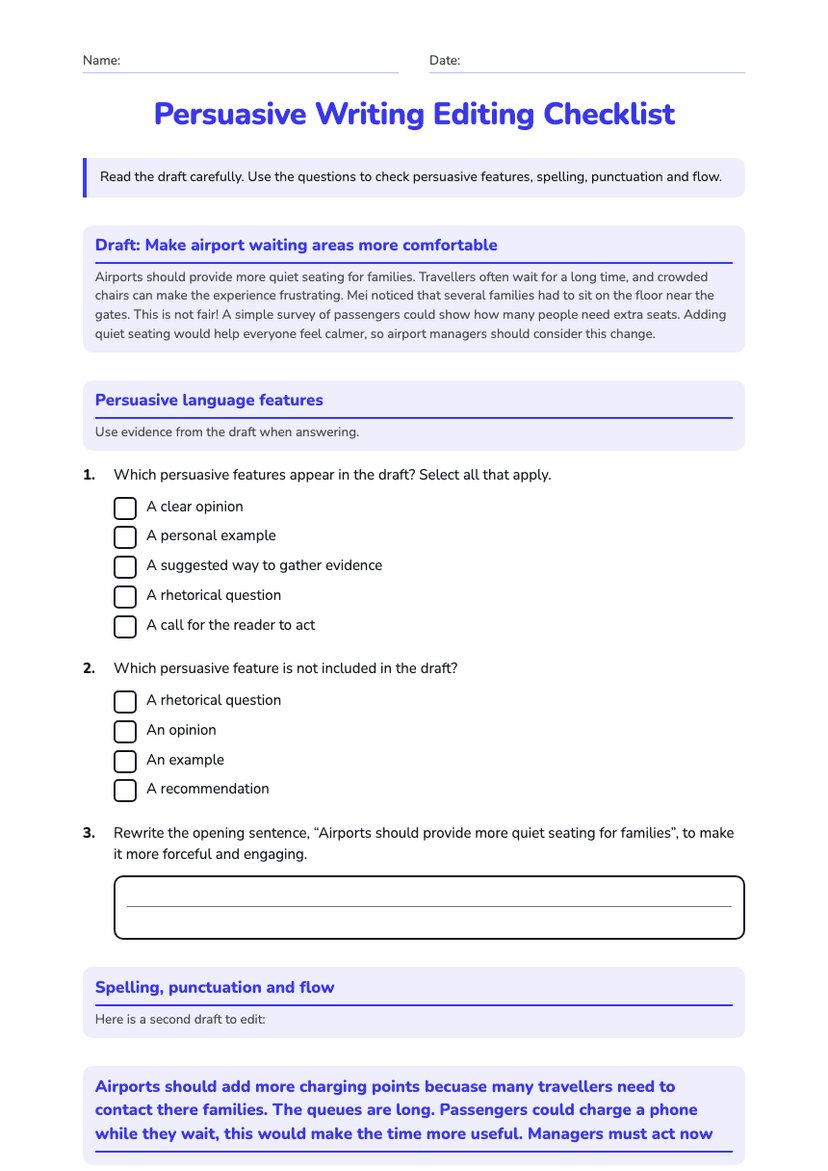
Persuasive Writing Editing Checklist
Free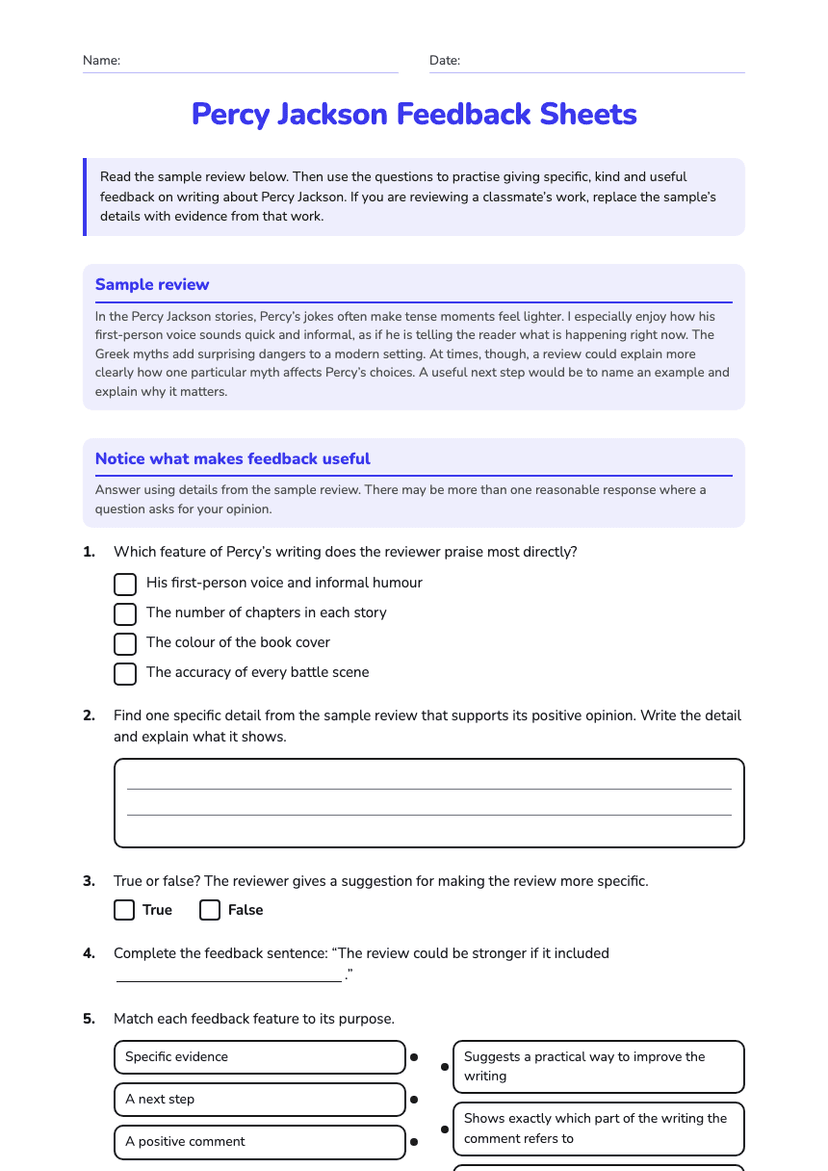
Percy Jackson Feedback Sheets
Free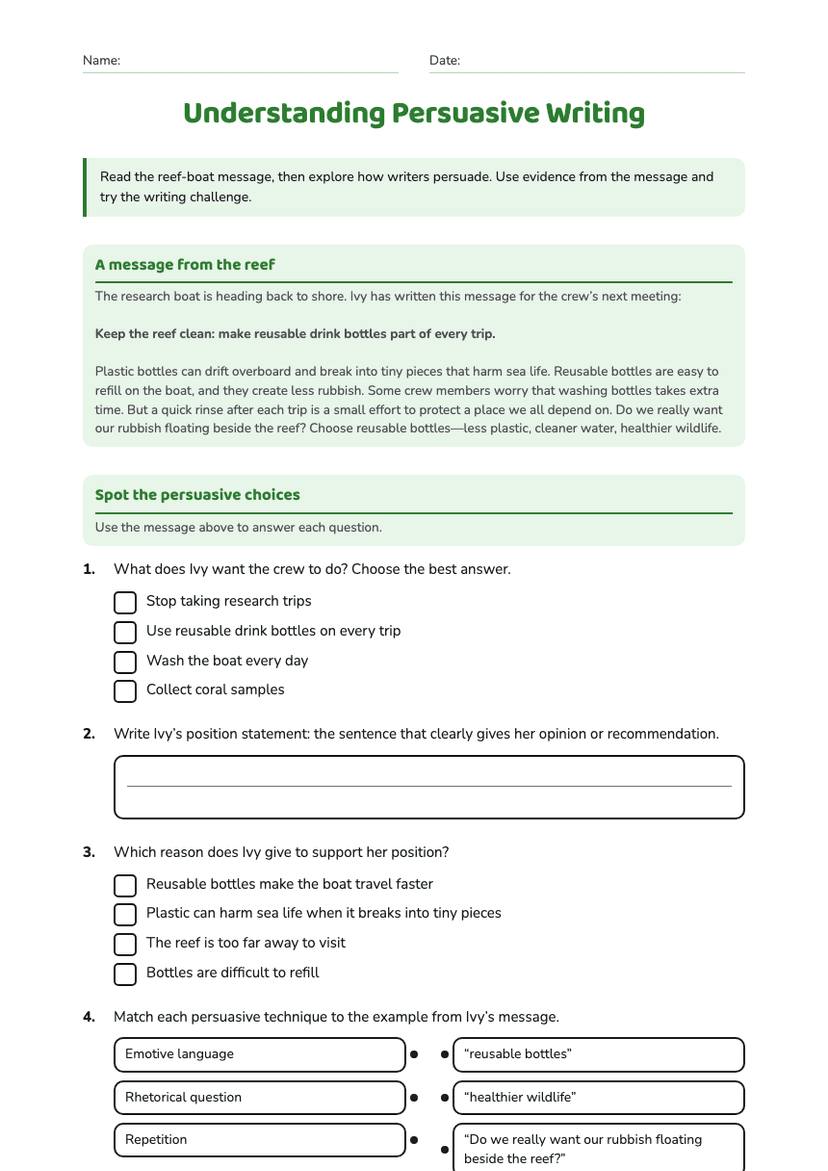
Year 5