ScienceFreePrintable
Predicting Gas Exchange
A free science worksheet ready for your classroom. Open in Kuraplan to grab the print-ready PDF, customize it for your students, or generate a fresh version in seconds.
Name:Date:
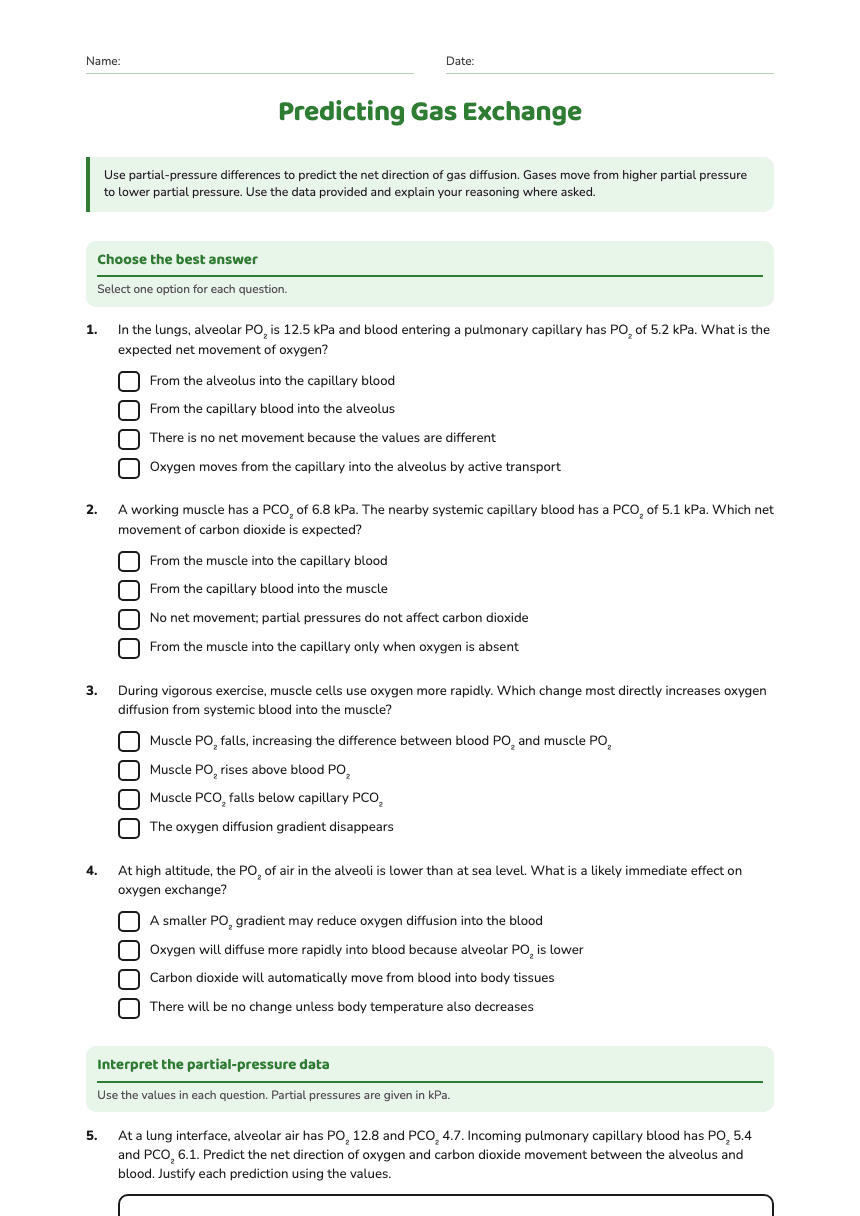
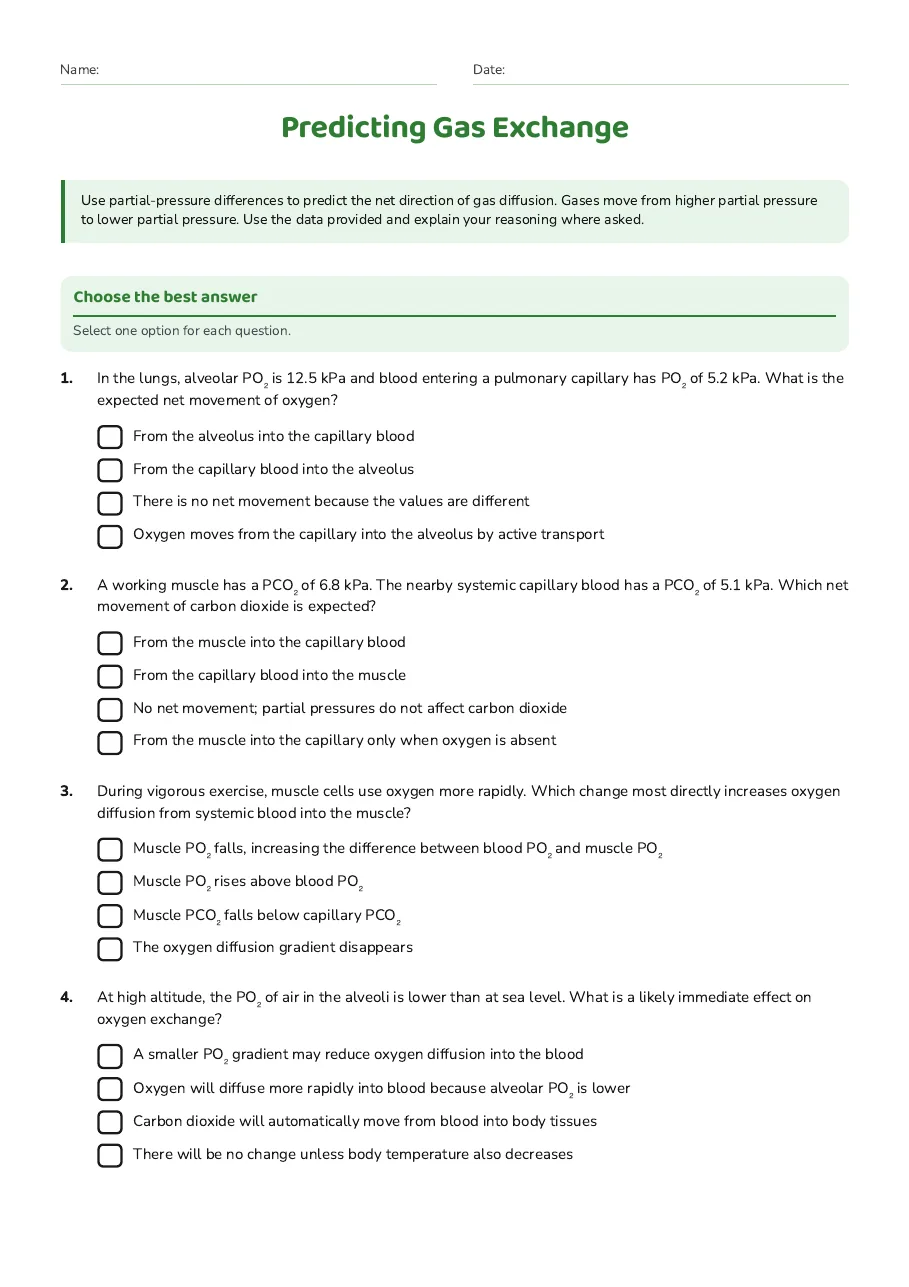
Predicting Gas Exchange
Use partial-pressure differences to predict the net direction of gas diffusion. Gases move from higher partial pressure to lower partial pressure. Use the data provided and explain your reasoning where asked.
Choose the best answer
Select one option for each question.
1.In the lungs, alveolar PO₂ is 12.5 kPa and blood entering a pulmonary capillary has PO₂ of 5.2 kPa. What is the expected net movement of oxygen?
- From the alveolus into the capillary blood
- From the capillary blood into the alveolus
- There is no net movement because the values are different
- Oxygen moves from the capillary into the alveolus by active transport
2.A working muscle has a PCO₂ of 6.8 kPa. The nearby systemic capillary blood has a PCO₂ of 5.1 kPa. Which net movement of carbon dioxide is expected?
- From the muscle into the capillary blood
- From the capillary blood into the muscle
- No net movement; partial pressures do not affect carbon dioxide
- From the muscle into the capillary only when oxygen is absent
3.During vigorous exercise, muscle cells use oxygen more rapidly. Which change most directly increases oxygen diffusion from systemic blood into the muscle?
- Muscle PO₂ falls, increasing the difference between blood PO₂ and muscle PO₂
- Muscle PO₂ rises above blood PO₂
- Muscle PCO₂ falls below capillary PCO₂
- The oxygen diffusion gradient disappears
4.At high altitude, the PO₂ of air in the alveoli is lower than at sea level. What is a likely immediate effect on oxygen exchange?
- A smaller PO₂ gradient may reduce oxygen diffusion into the blood
- Oxygen will diffuse more rapidly into blood because alveolar PO₂ is lower
- Carbon dioxide will automatically move from blood into body tissues
- There will be no change unless body temperature also decreases
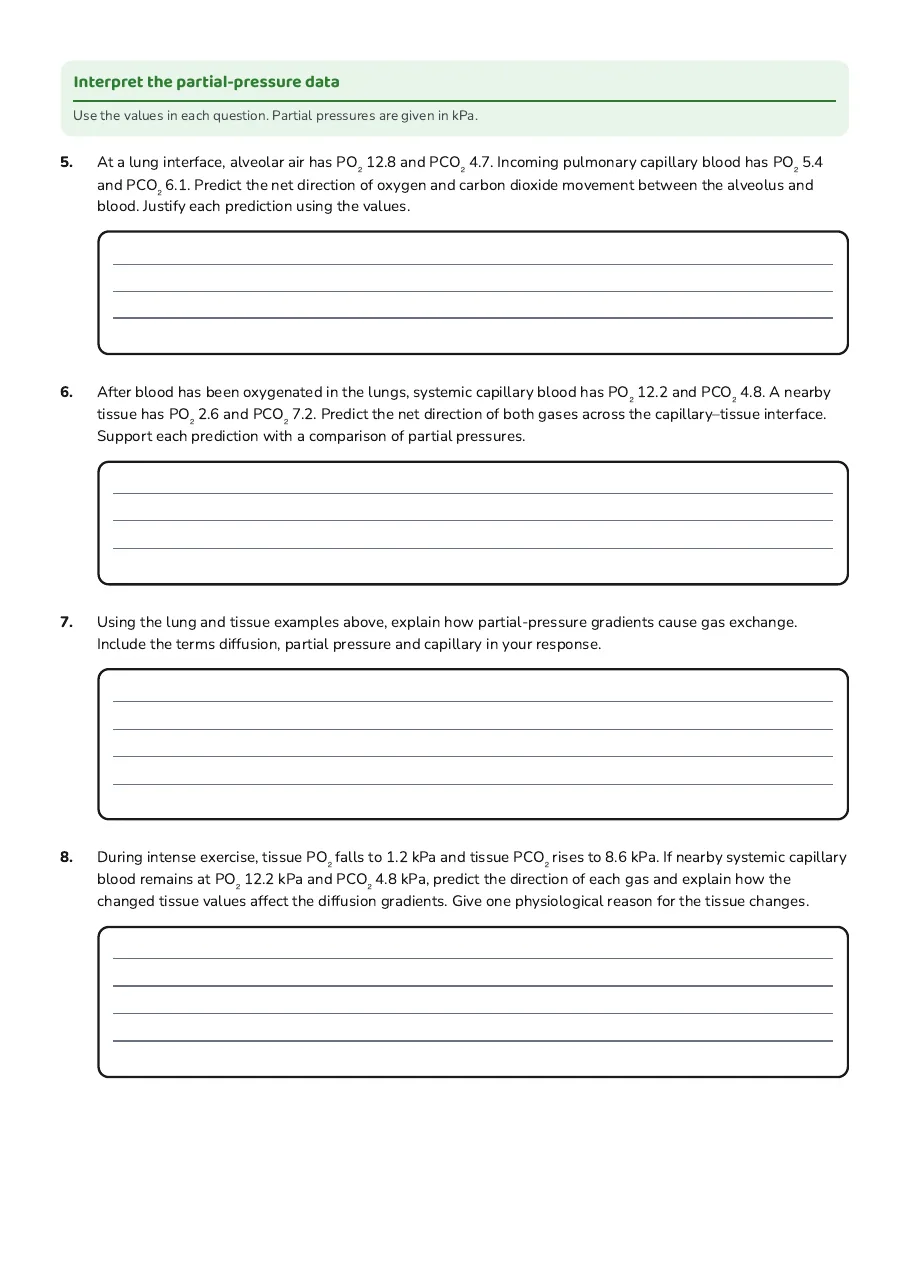
Interpret the partial-pressure data
Use the values in each question. Partial pressures are given in kPa.
5.At a lung interface, alveolar air has PO₂ 12.8 and PCO₂ 4.7. Incoming pulmonary capillary blood has PO₂ 5.4 and PCO₂ 6.1. Predict the net direction of oxygen and carbon dioxide movement between the alveolus and blood. Justify each prediction using the values.
6.After blood has been oxygenated in the lungs, systemic capillary blood has PO₂ 12.2 and PCO₂ 4.8. A nearby tissue has PO₂ 2.6 and PCO₂ 7.2. Predict the net direction of both gases across the capillary–tissue interface. Support each prediction with a comparison of partial pressures.
7.Using the lung and tissue examples above, explain how partial-pressure gradients cause gas exchange. Include the terms diffusion, partial pressure and capillary in your response.
8.During intense exercise, tissue PO₂ falls to 1.2 kPa and tissue PCO₂ rises to 8.6 kPa. If nearby systemic capillary blood remains at PO₂ 12.2 kPa and PCO₂ 4.8 kPa, predict the direction of each gas and explain how the changed tissue values affect the diffusion gradients. Give one physiological reason for the tissue changes.
2 printable pages
Page 1
Page 2
About This Worksheet
Free in Kuraplan
Sign up free, grab the PDF, and customize it for your class.
Print-Ready
Formatted for standard paper. Clean layout, easy to read.
AI-Generated
Created with Kuraplan's AI, designed for real classroom use.
For Teachers & Parents
Use in classrooms, for homework, tutoring, or homeschool.
Need a custom version of this worksheet?
Kuraplan's AI generates custom worksheets in seconds — differentiated for every learner, aligned to your curriculum.
Generate Custom Worksheets — Free No credit card Curriculum-aligned Under 60 seconds
More Science Worksheets
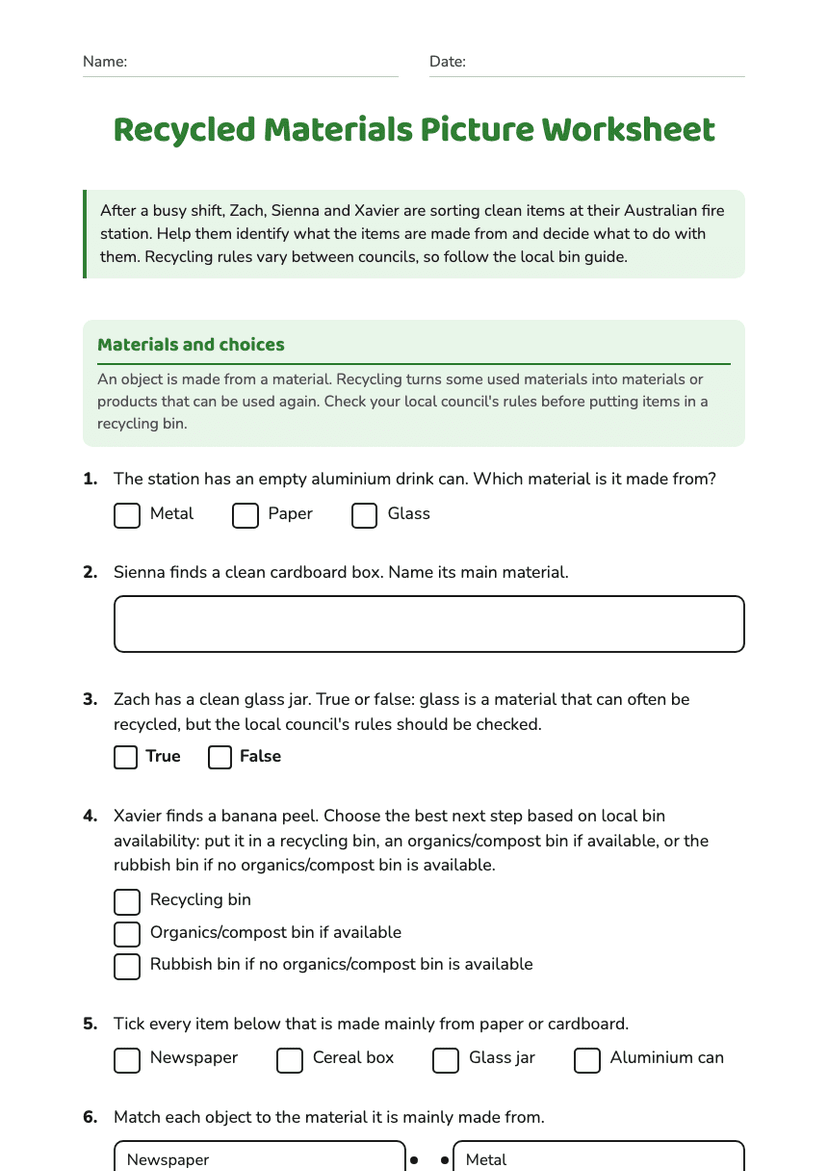
Recycled Materials Picture Worksheet
Free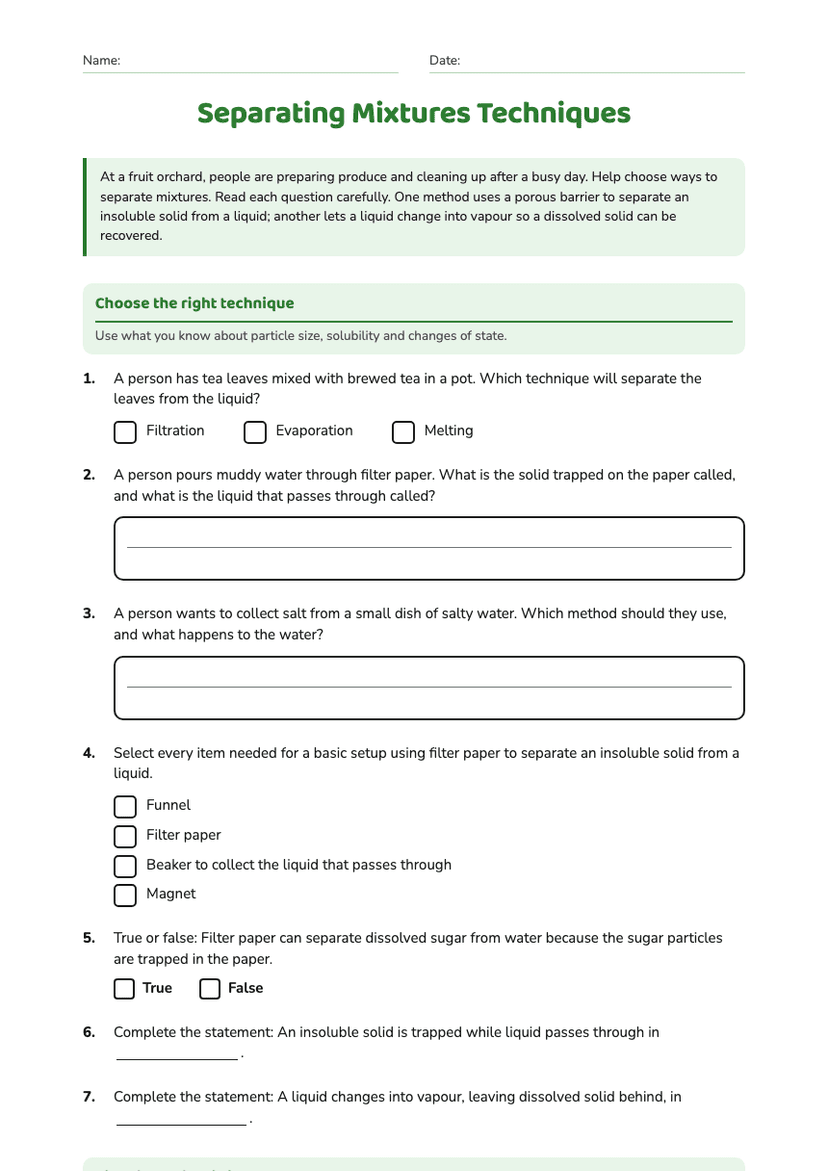
Separating Mixtures Techniques
Free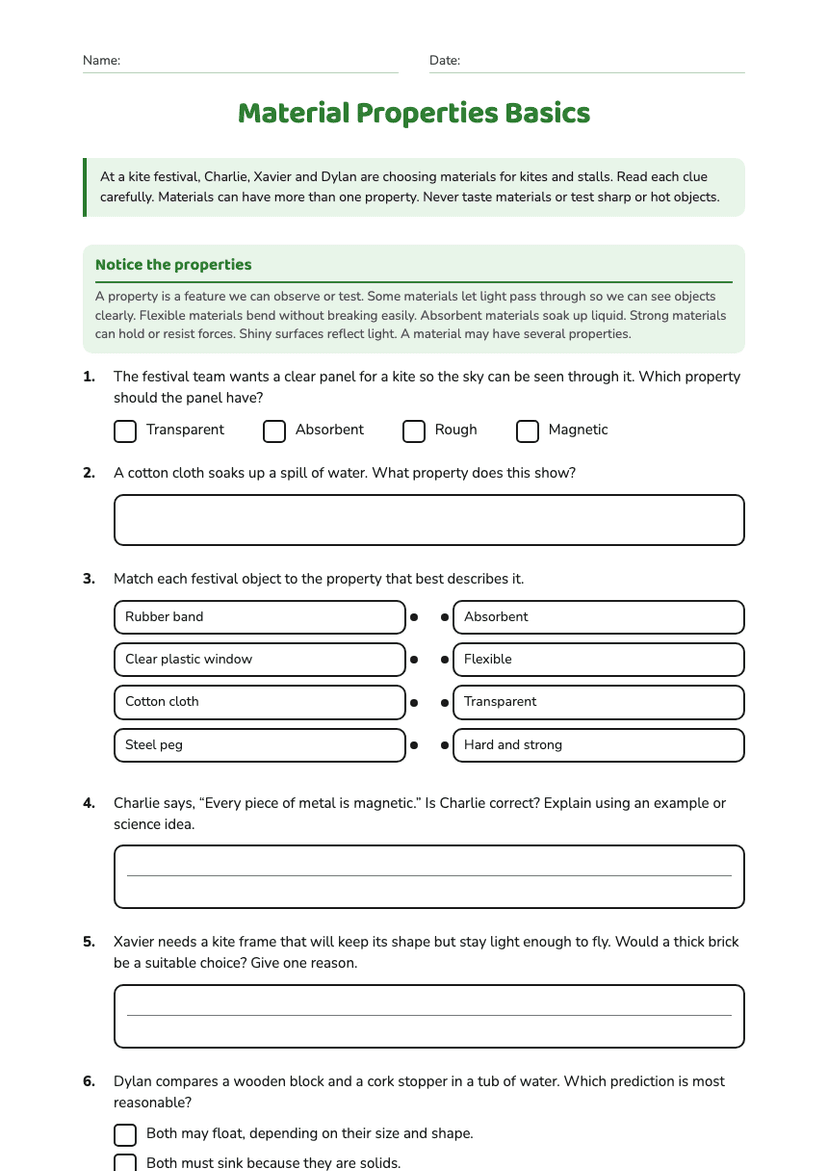
Material Properties Basics
Free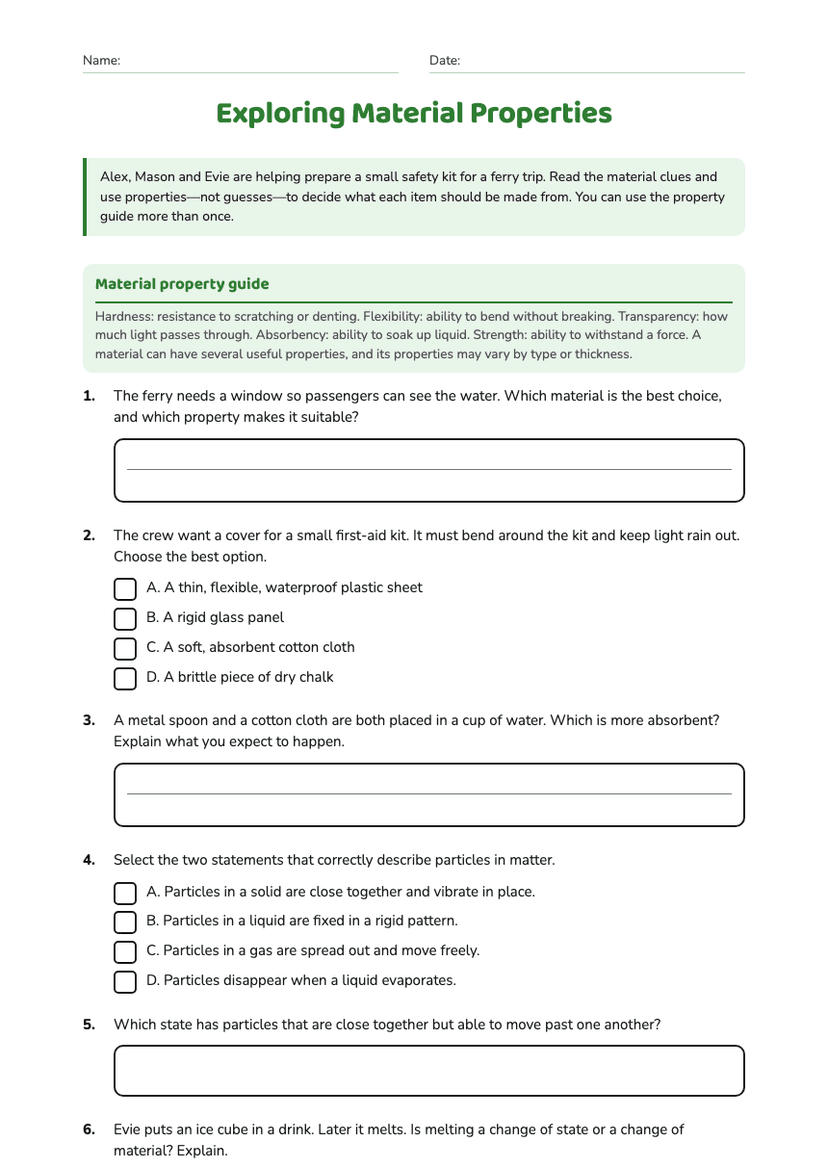
Year 5–6
Exploring Material Properties
Free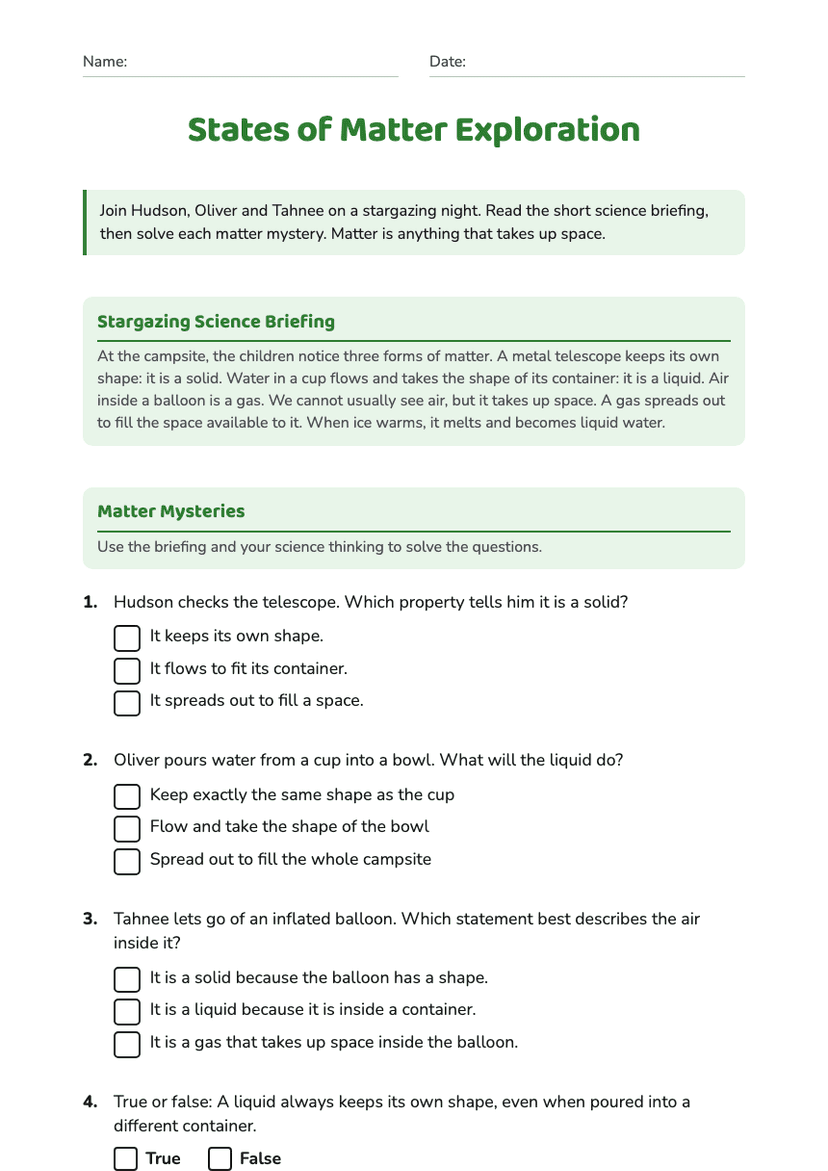
Year 3
States of Matter Exploration
Free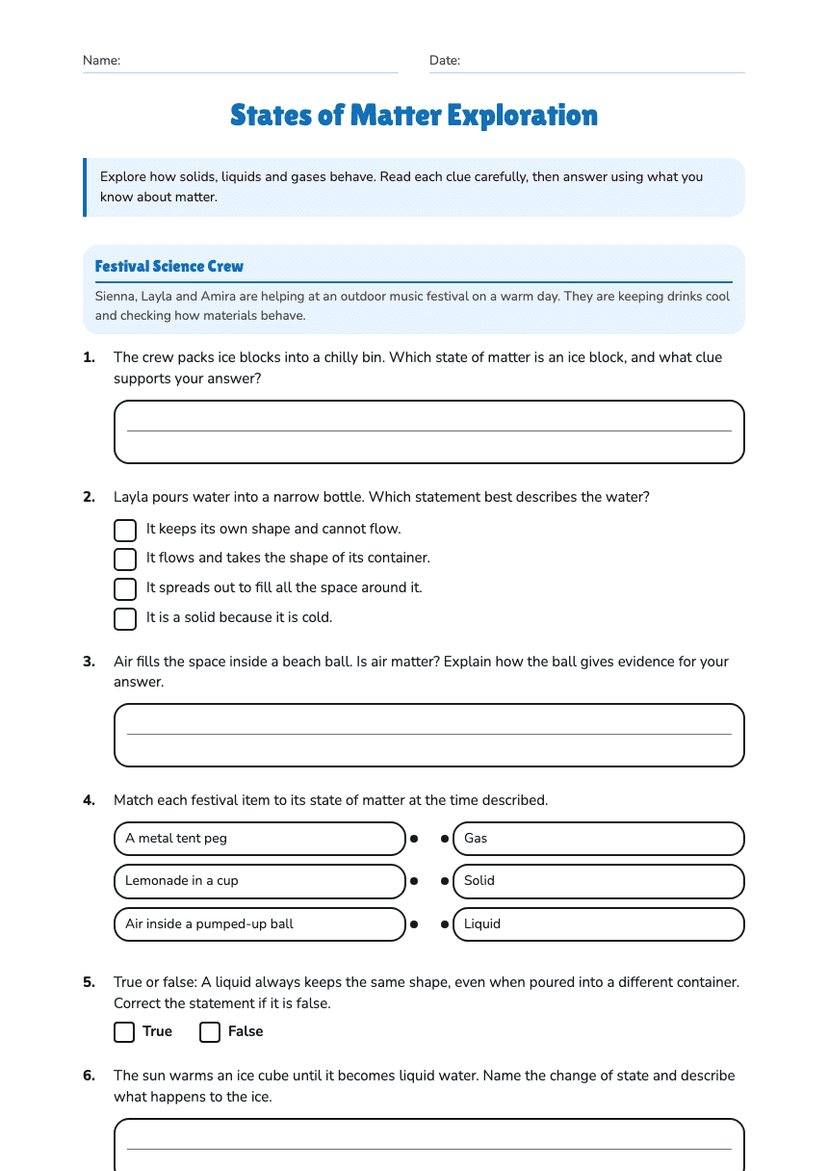
States of Matter Exploration
Free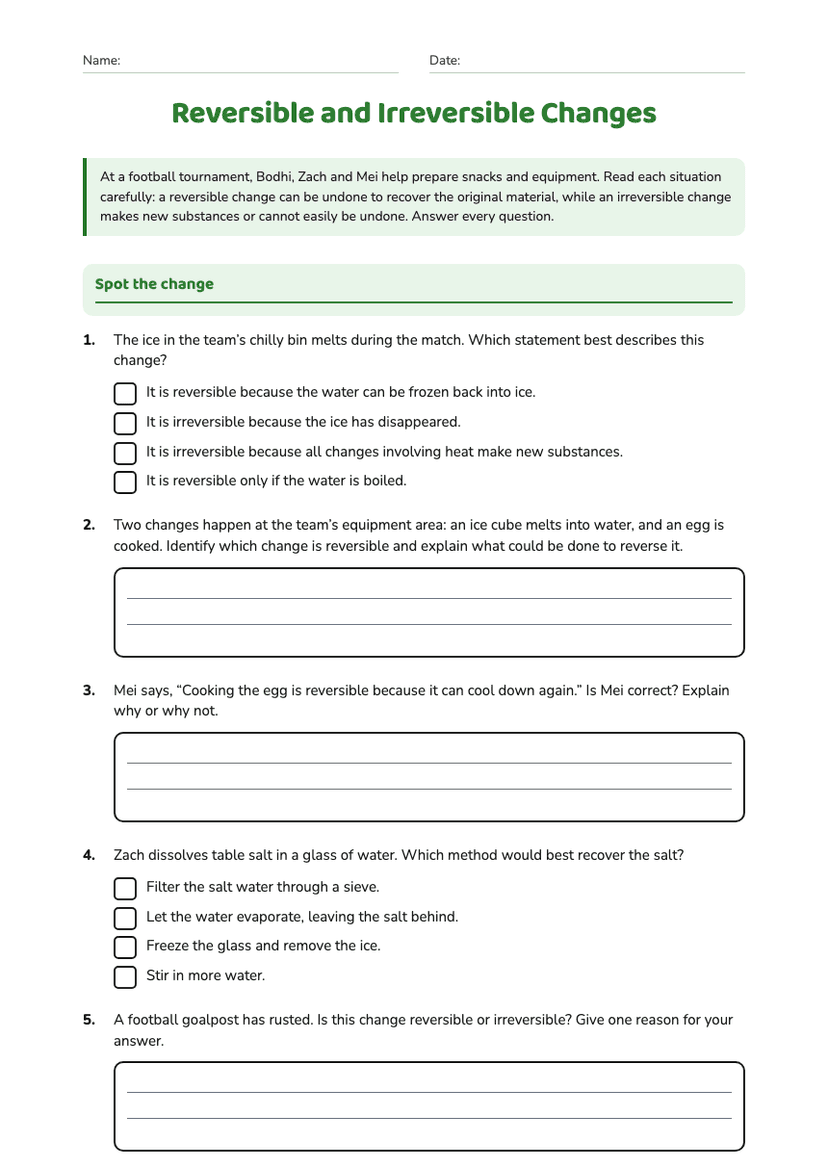
Year 6
Reversible and Irreversible Changes
Free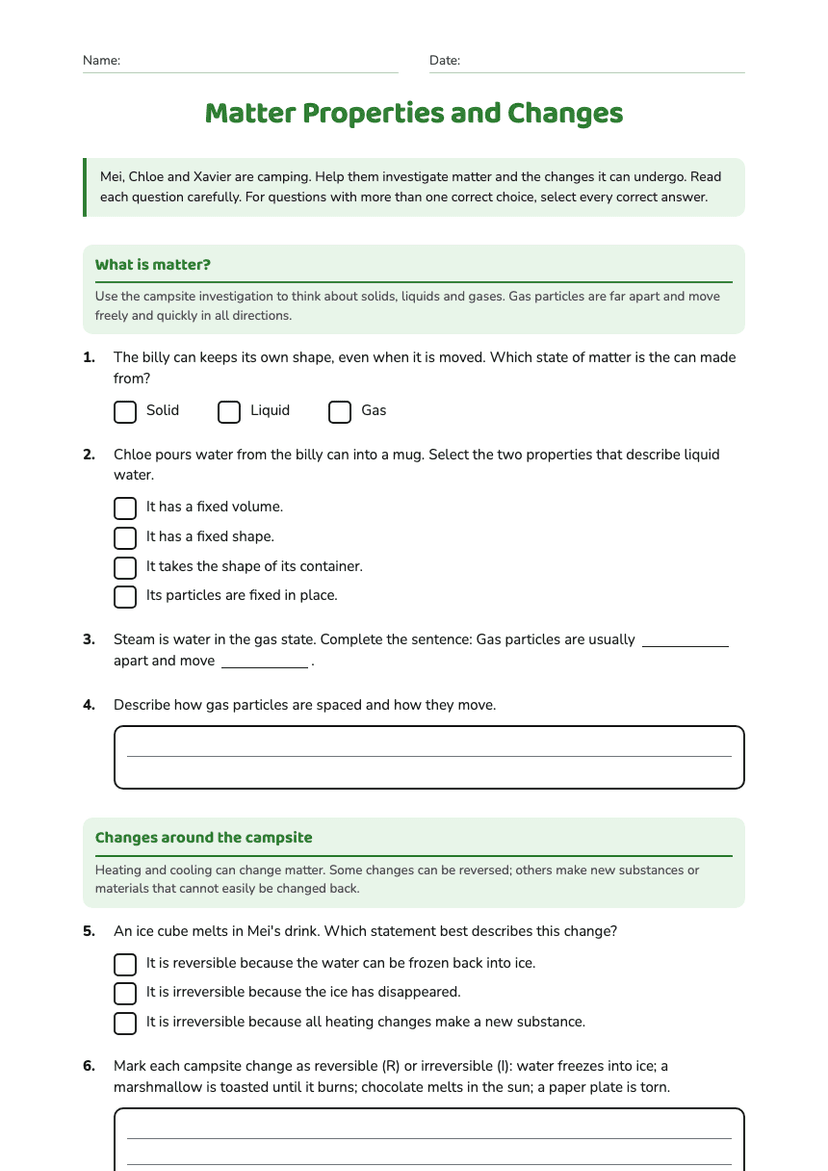
Year 5–6