Rights and Responsibilities Organiser
A free social sciences worksheet ready for your classroom. Open in Kuraplan to grab the print-ready PDF, customize it for your students, or generate a fresh version in seconds.
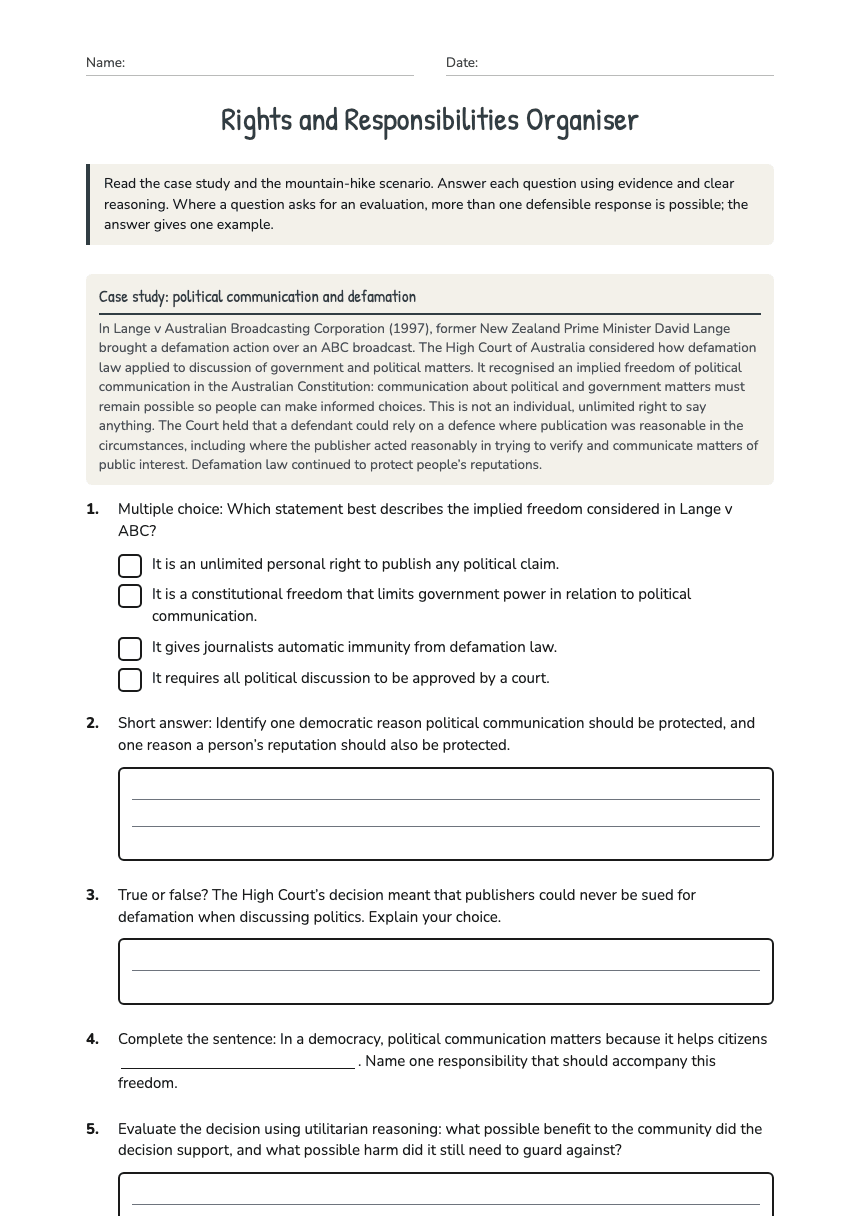
Rights and Responsibilities Organiser
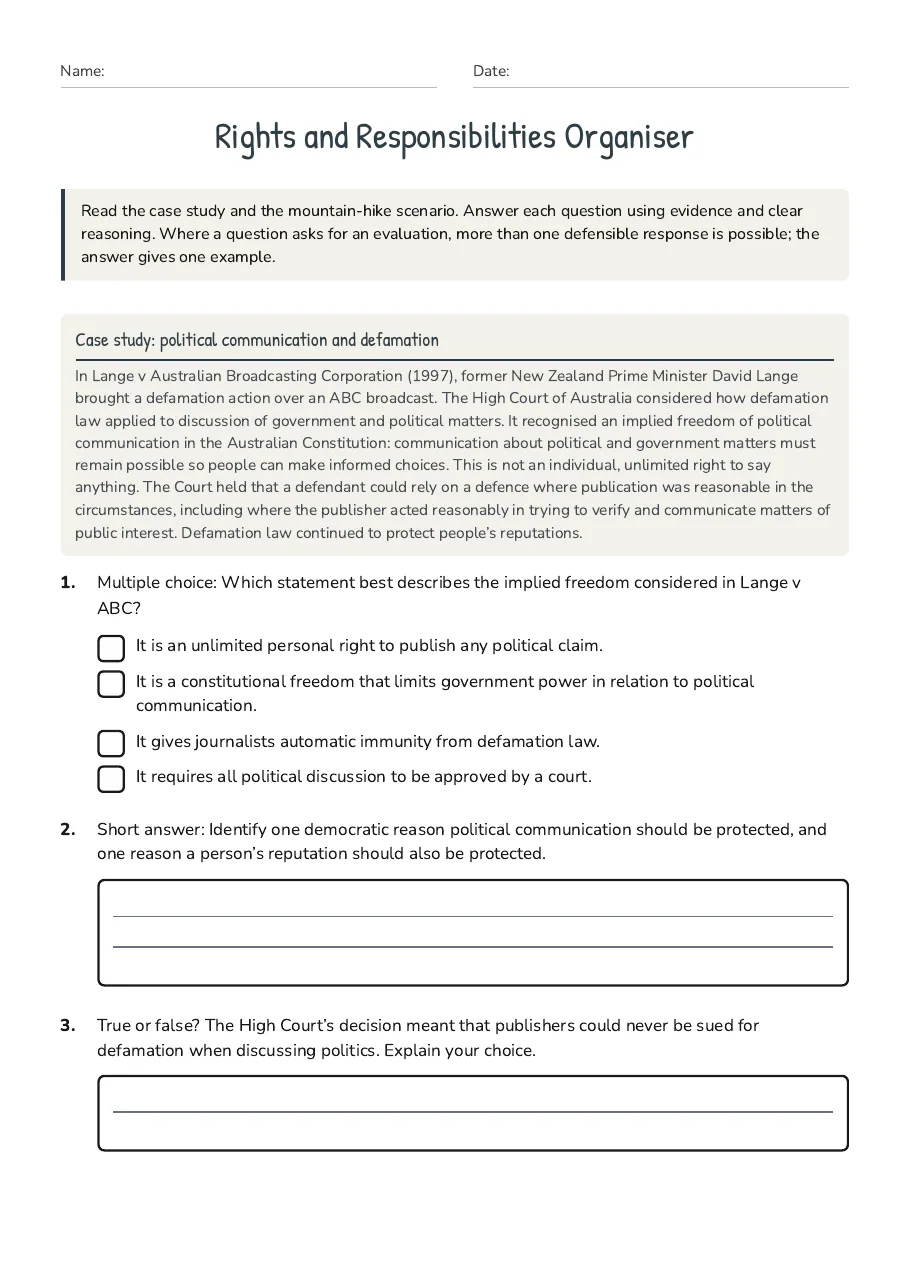
Case study: political communication and defamation
In Lange v Australian Broadcasting Corporation (1997), former New Zealand Prime Minister David Lange brought a defamation action over an ABC broadcast. The High Court of Australia considered how defamation law applied to discussion of government and political matters. It recognised an implied freedom of political communication in the Australian Constitution: communication about political and government matters must remain possible so people can make informed choices. This is not an individual, unlimited right to say anything. The Court held that a defendant could rely on a defence where publication was reasonable in the circumstances, including where the publisher acted reasonably in trying to verify and communicate matters of public interest. Defamation law continued to protect people’s reputations.
- It is an unlimited personal right to publish any political claim.
- It is a constitutional freedom that limits government power in relation to political communication.
- It gives journalists automatic immunity from defamation law.
- It requires all political discussion to be approved by a court.
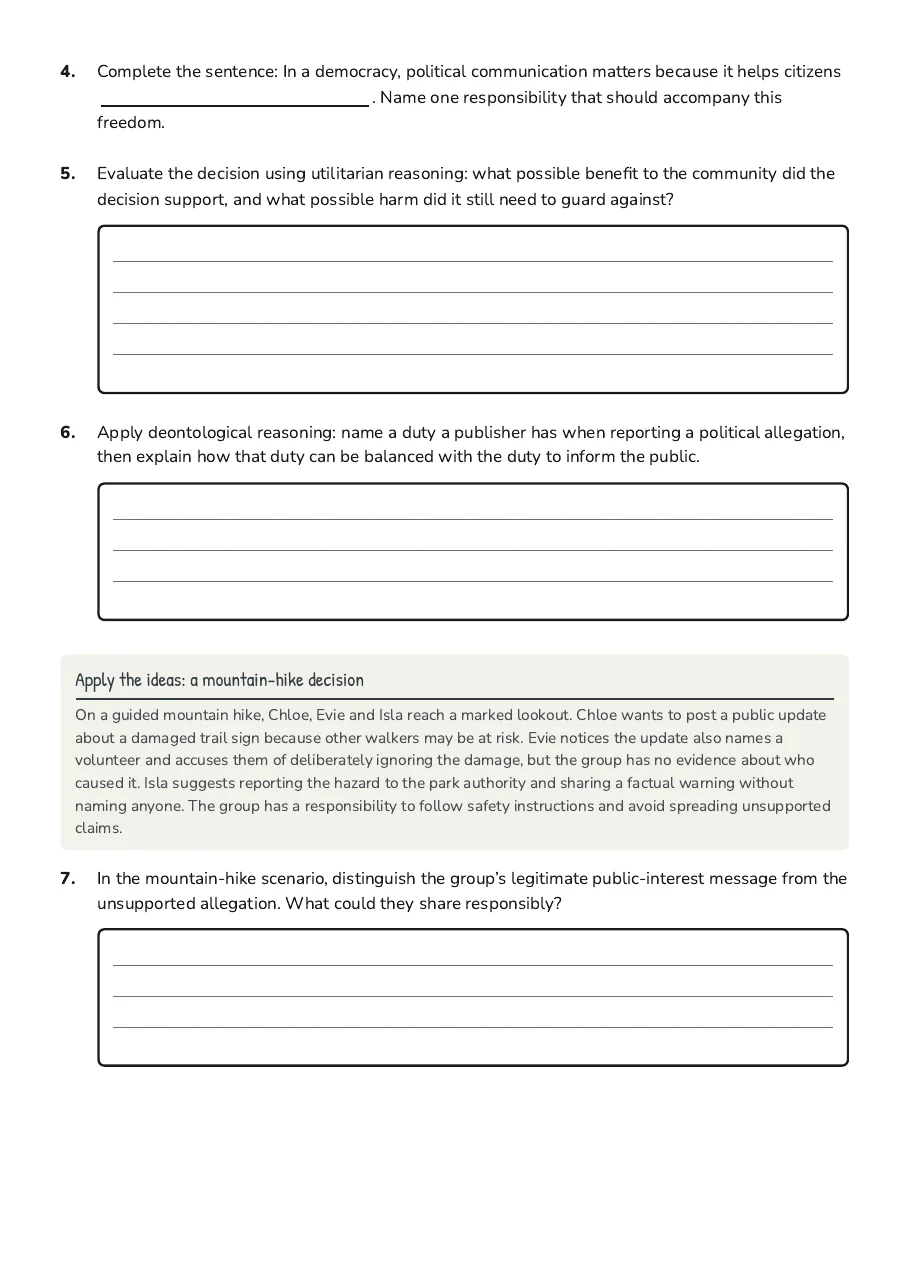
Apply the ideas: a mountain-hike decision
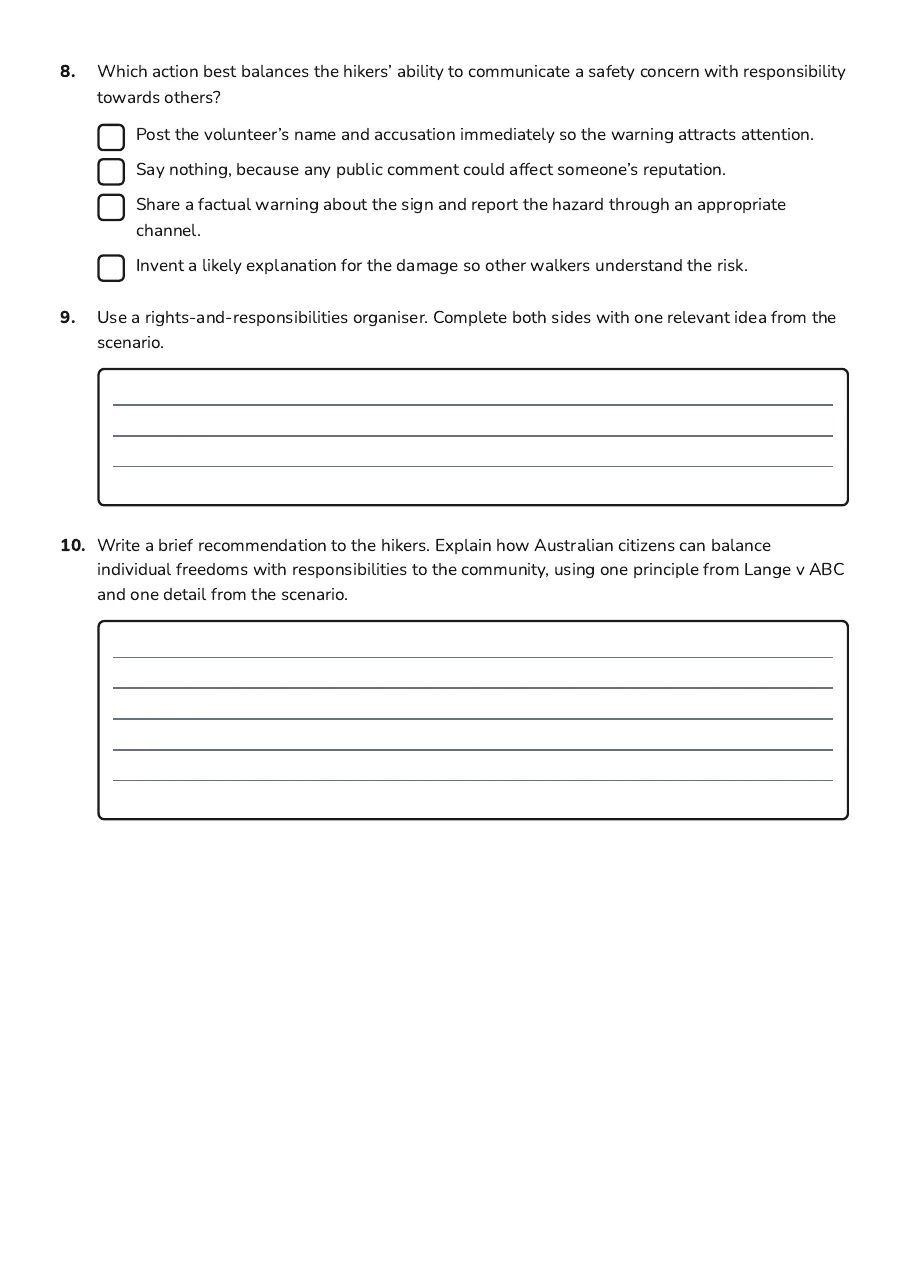
On a guided mountain hike, Chloe, Evie and Isla reach a marked lookout. Chloe wants to post a public update about a damaged trail sign because other walkers may be at risk. Evie notices the update also names a volunteer and accuses them of deliberately ignoring the damage, but the group has no evidence about who caused it. Isla suggests reporting the hazard to the park authority and sharing a factual warning without naming anyone. The group has a responsibility to follow safety instructions and avoid spreading unsupported claims.
- Post the volunteer’s name and accusation immediately so the warning attracts attention.
- Say nothing, because any public comment could affect someone’s reputation.
- Share a factual warning about the sign and report the hazard through an appropriate channel.
- Invent a likely explanation for the damage so other walkers understand the risk.
3 printable pages
Page 1
Page 2
Page 3
About This Worksheet
Free in Kuraplan
Sign up free, grab the PDF, and customize it for your class.
Print-Ready
Formatted for standard paper. Clean layout, easy to read.
AI-Generated
Created with Kuraplan's AI, designed for real classroom use.
For Teachers & Parents
Use in classrooms, for homework, tutoring, or homeschool.
Need a custom version of this worksheet?
Kuraplan's AI generates custom worksheets in seconds — differentiated for every learner, aligned to your curriculum.
Generate Custom Worksheets — FreeMore Social Sciences Worksheets
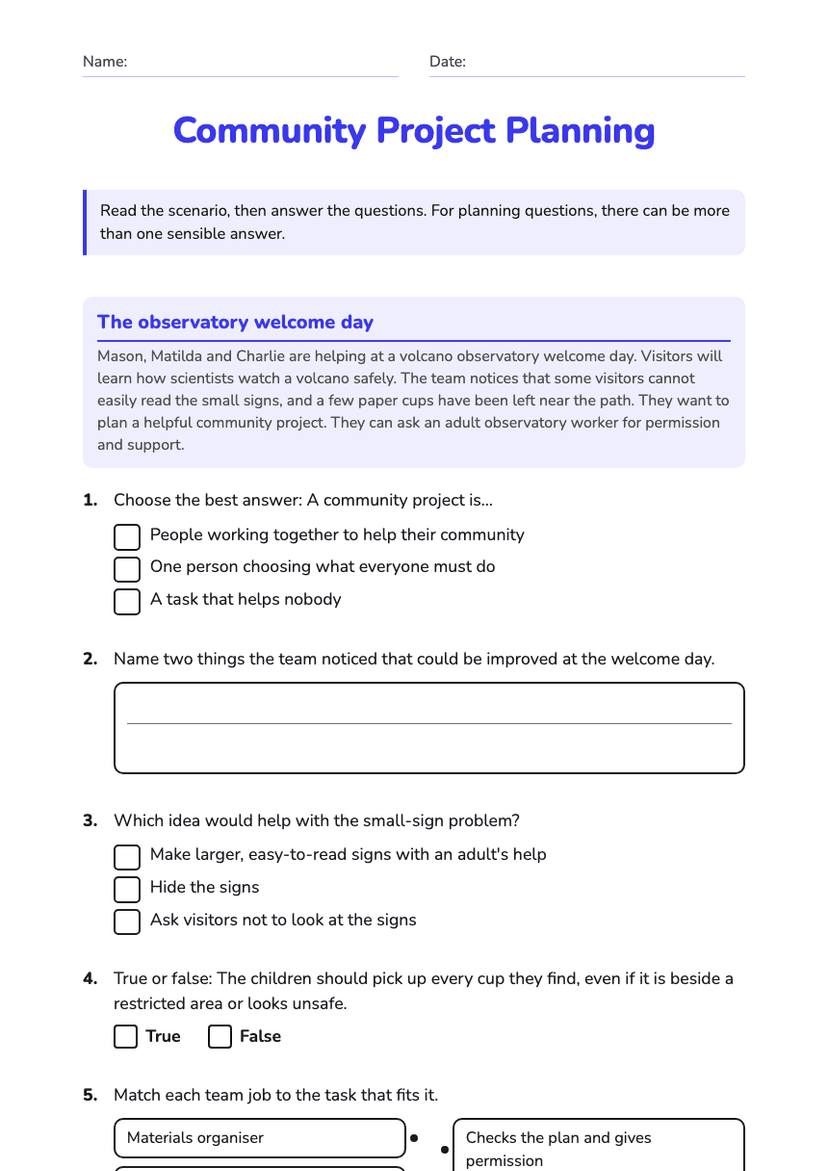
Community Project Planning
Free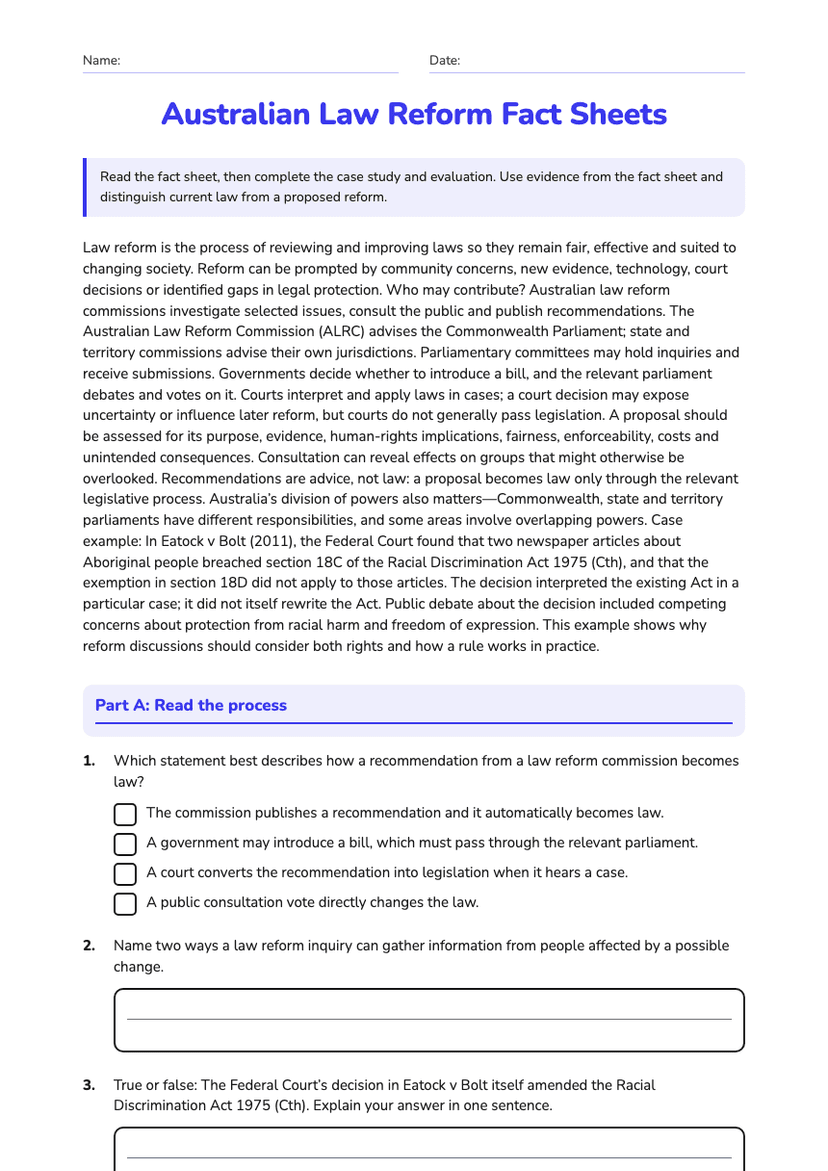
Australian Law Reform Fact Sheets
Free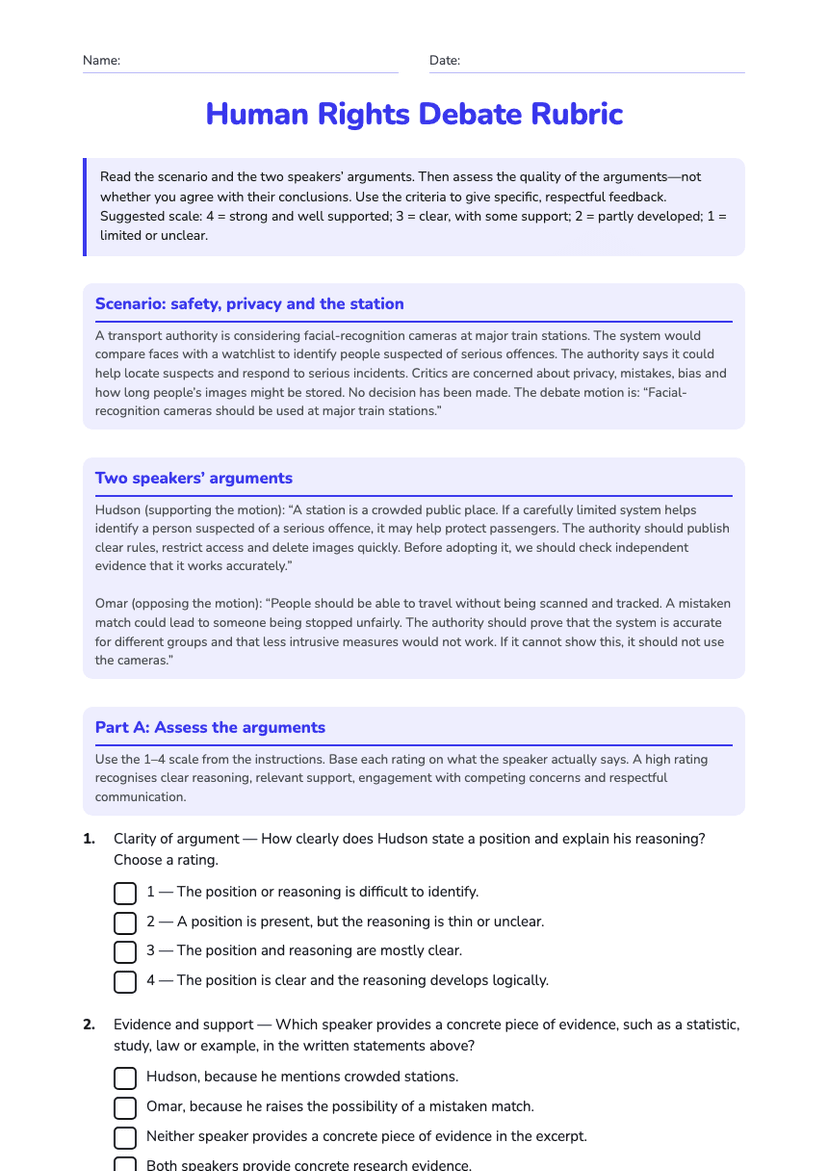
Human Rights Debate Rubric
Free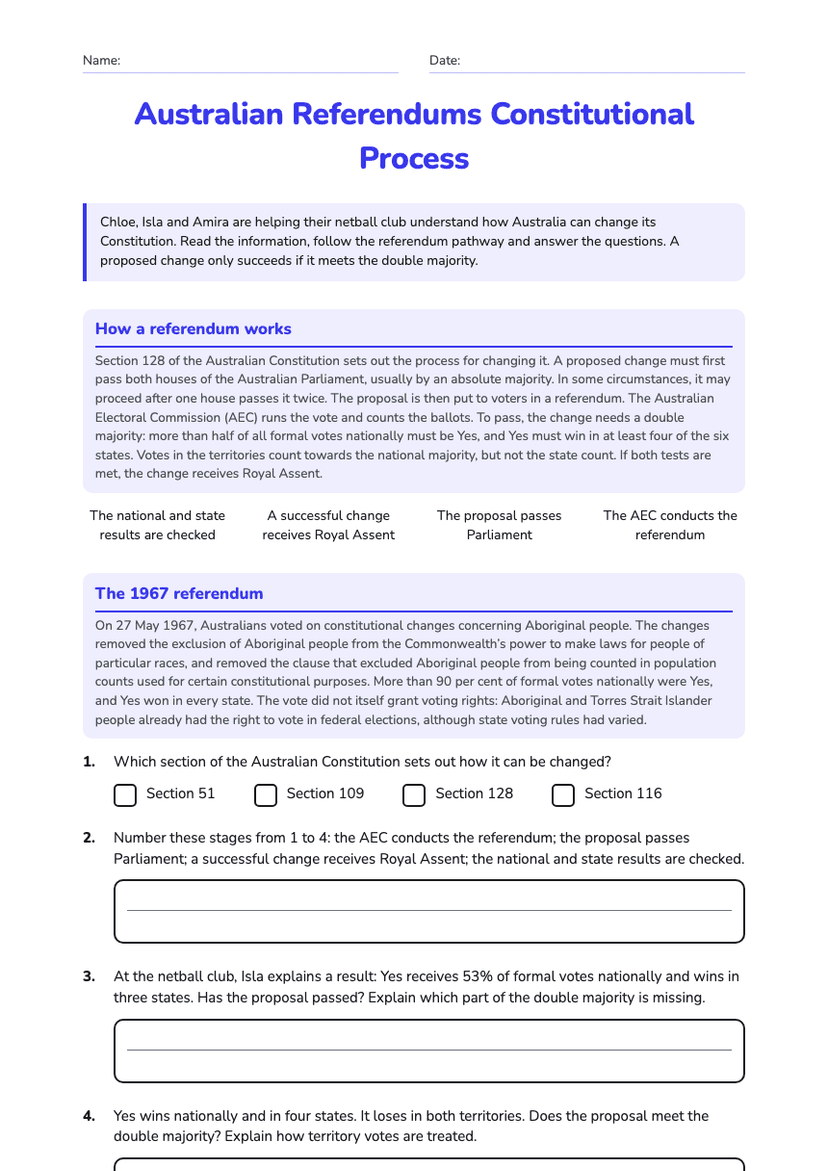
Australian Referendums Constitutional Process
Free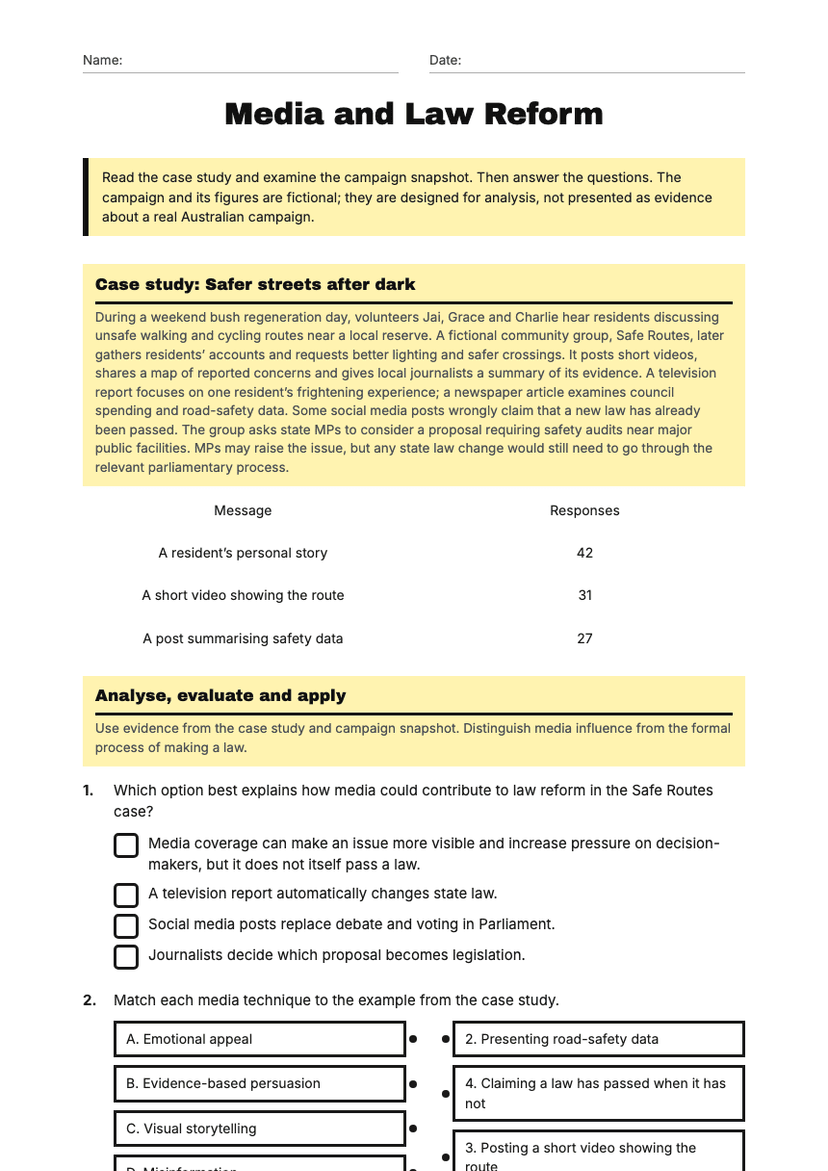
Media and Law Reform
Free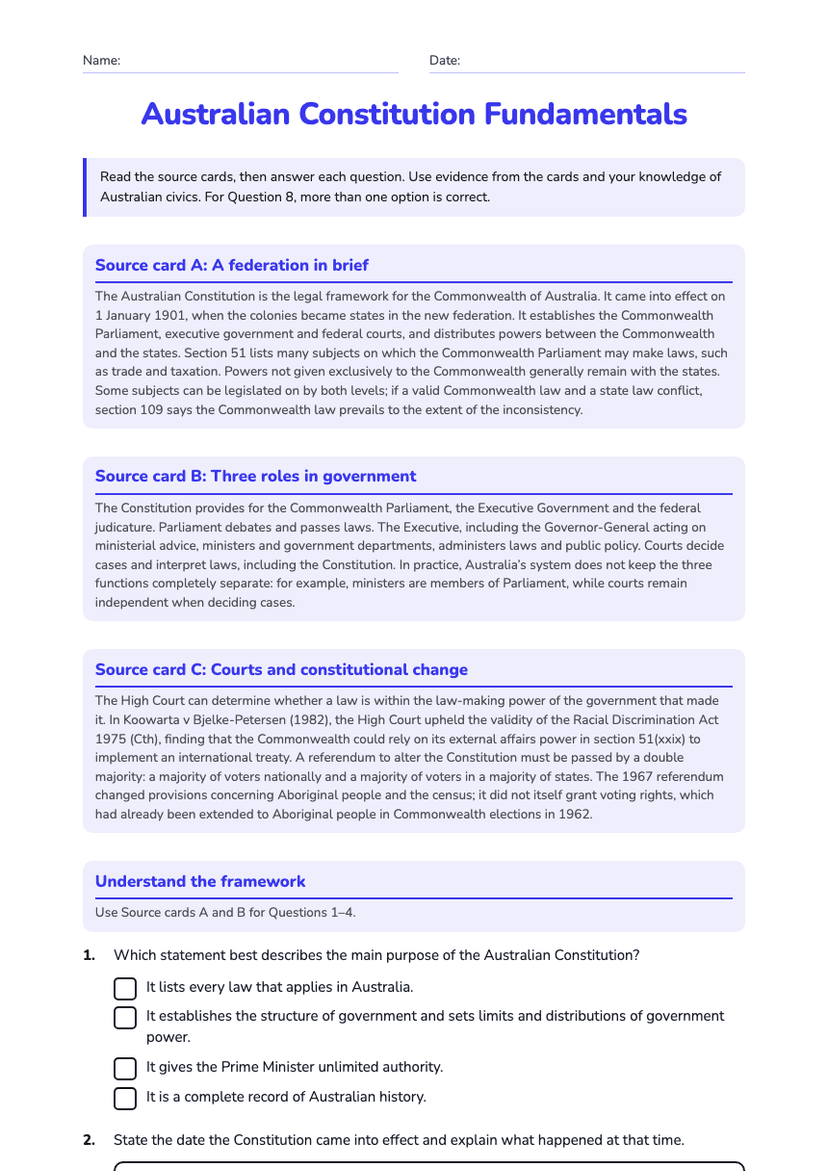
Australian Constitution Fundamentals
Free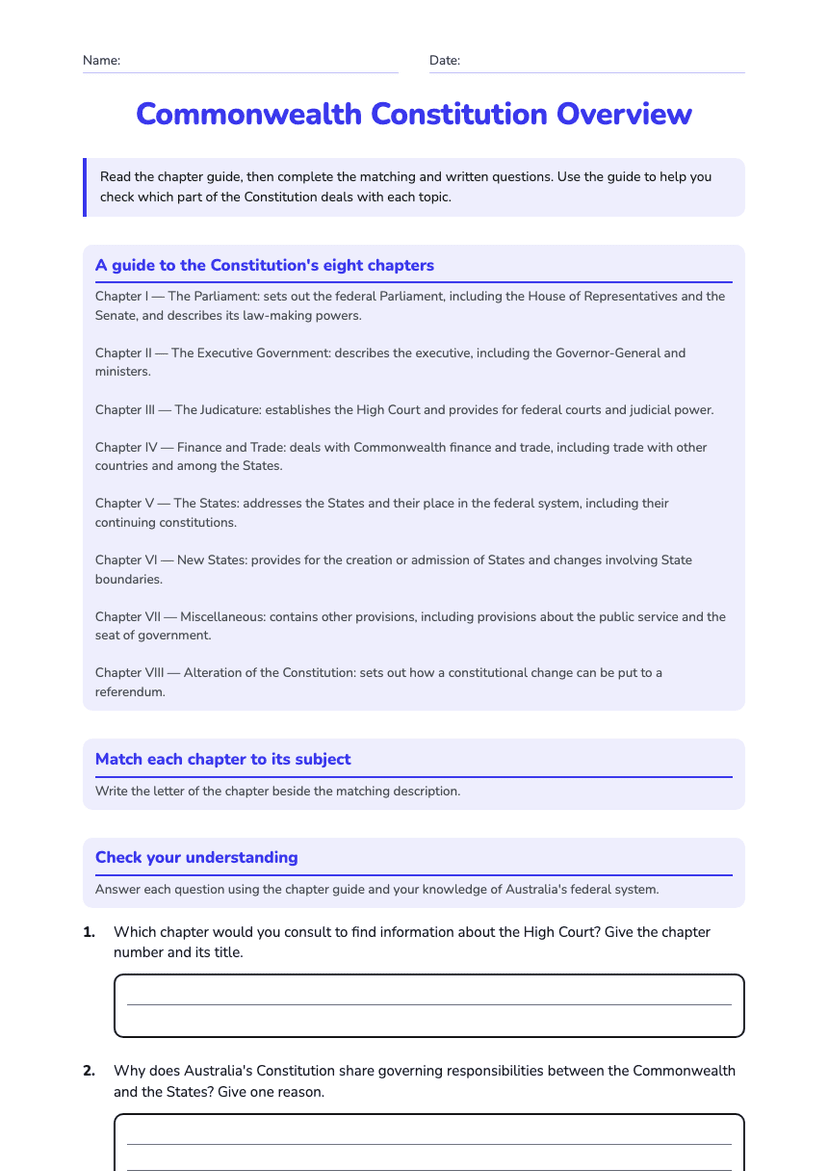
Commonwealth Constitution Overview
Free