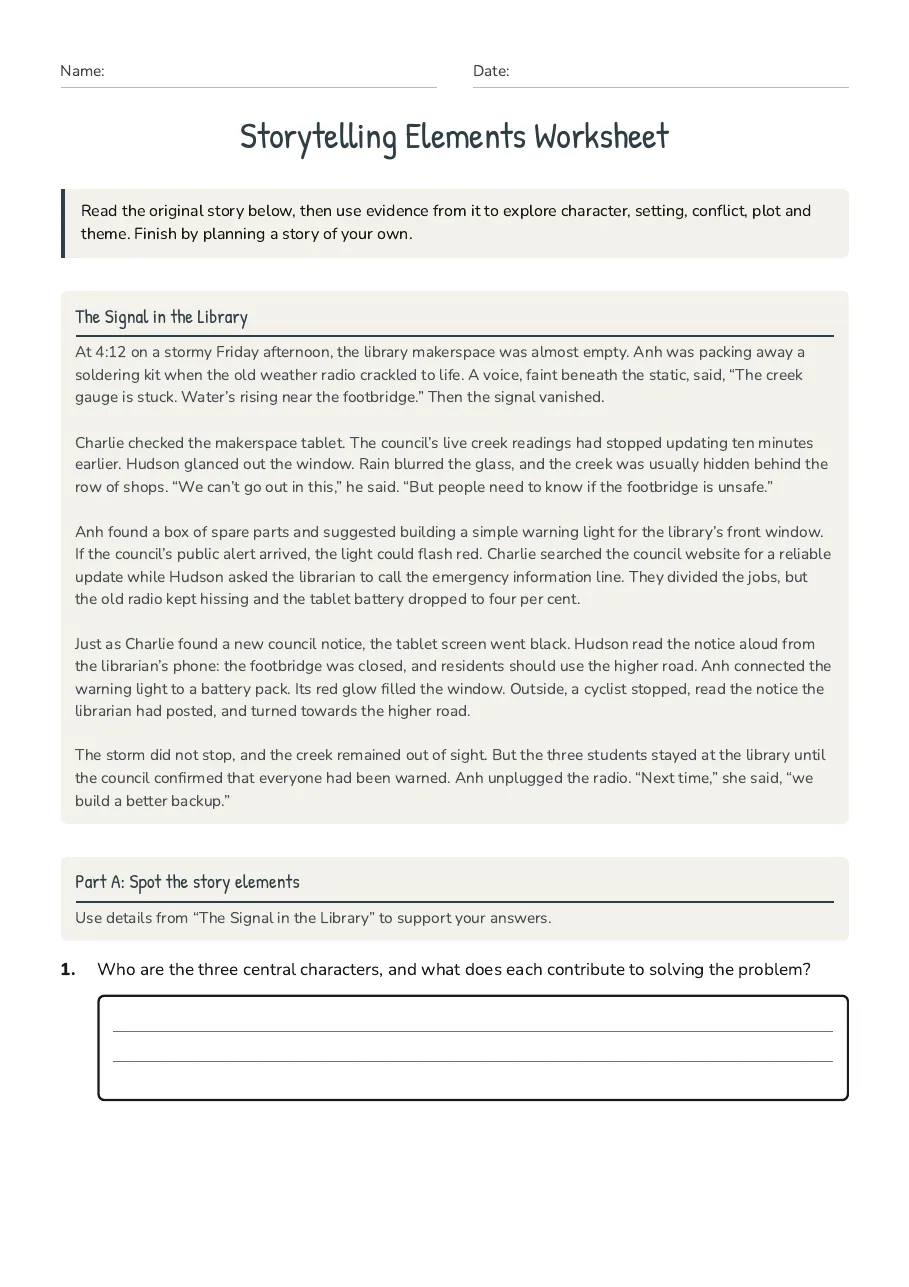
Storytelling Elements Worksheet
A free english worksheet ready for your classroom. Open in Kuraplan to grab the print-ready PDF, customize it for your students, or generate a fresh version in seconds.

Storytelling Elements Worksheet
The Signal in the Library
At 4:12 on a stormy Friday afternoon, the library makerspace was almost empty. Anh was packing away a soldering kit when the old weather radio crackled to life. A voice, faint beneath the static, said, “The creek gauge is stuck. Water’s rising near the footbridge.” Then the signal vanished. Charlie checked the makerspace tablet. The council’s live creek readings had stopped updating ten minutes earlier. Hudson glanced out the window. Rain blurred the glass, and the creek was usually hidden behind the row of shops. “We can’t go out in this,” he said. “But people need to know if the footbridge is unsafe.” Anh found a box of spare parts and suggested building a simple warning light for the library’s front window. If the council’s public alert arrived, the light could flash red. Charlie searched the council website for a reliable update while Hudson asked the librarian to call the emergency information line. They divided the jobs, but the old radio kept hissing and the tablet battery dropped to four per cent. Just as Charlie found a new council notice, the tablet screen went black. Hudson read the notice aloud from the librarian’s phone: the footbridge was closed, and residents should use the higher road. Anh connected the warning light to a battery pack. Its red glow filled the window. Outside, a cyclist stopped, read the notice the librarian had posted, and turned towards the higher road. The storm did not stop, and the creek remained out of sight. But the three students stayed at the library until the council confirmed that everyone had been warned. Anh unplugged the radio. “Next time,” she said, “we build a better backup.”
Part A: Spot the story elements
Use details from “The Signal in the Library” to support your answers.
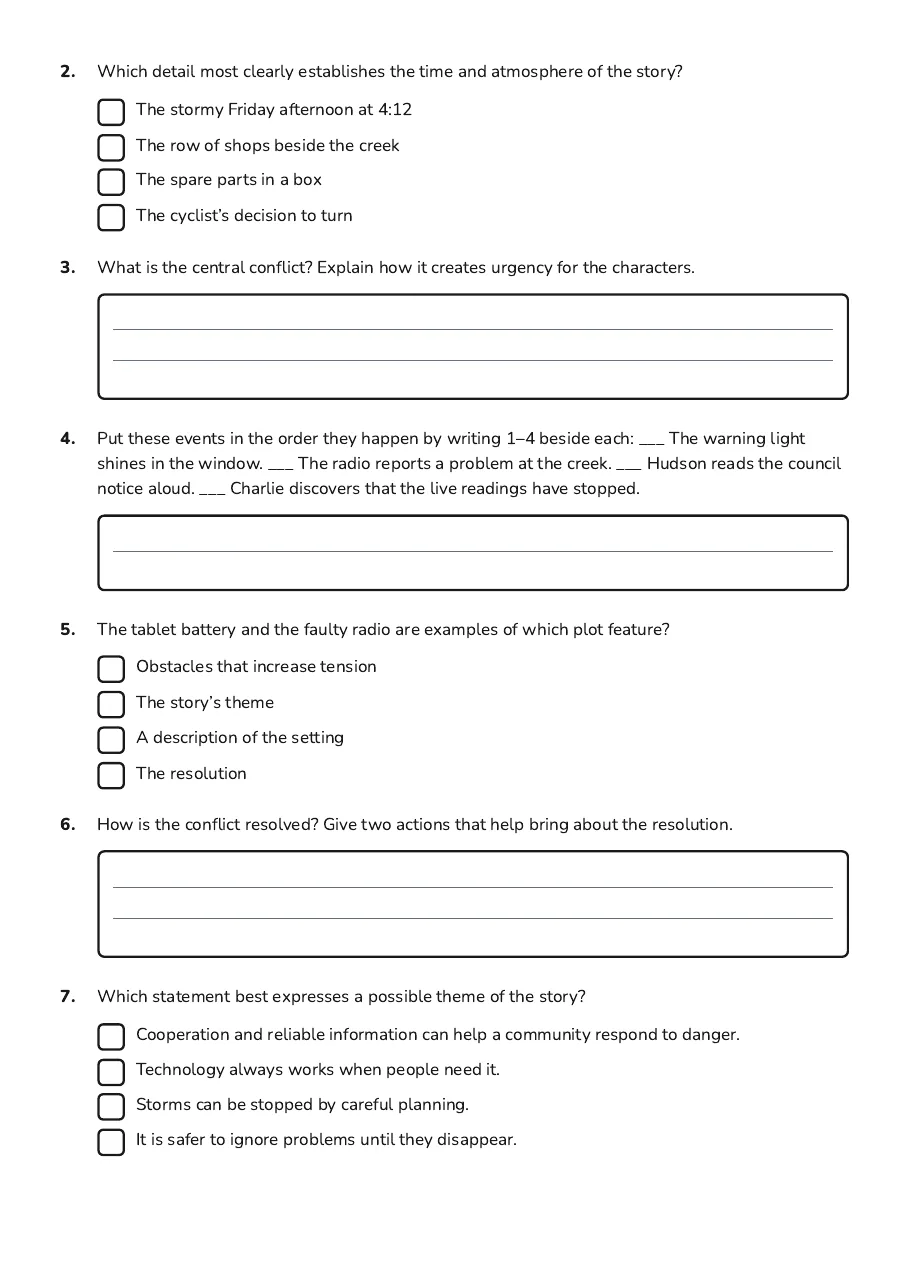
- The stormy Friday afternoon at 4:12
- The row of shops beside the creek
- The spare parts in a box
- The cyclist’s decision to turn
- Obstacles that increase tension
- The story’s theme
- A description of the setting
- The resolution
- Cooperation and reliable information can help a community respond to danger.
- Technology always works when people need it.
- Storms can be stopped by careful planning.
- It is safer to ignore problems until they disappear.
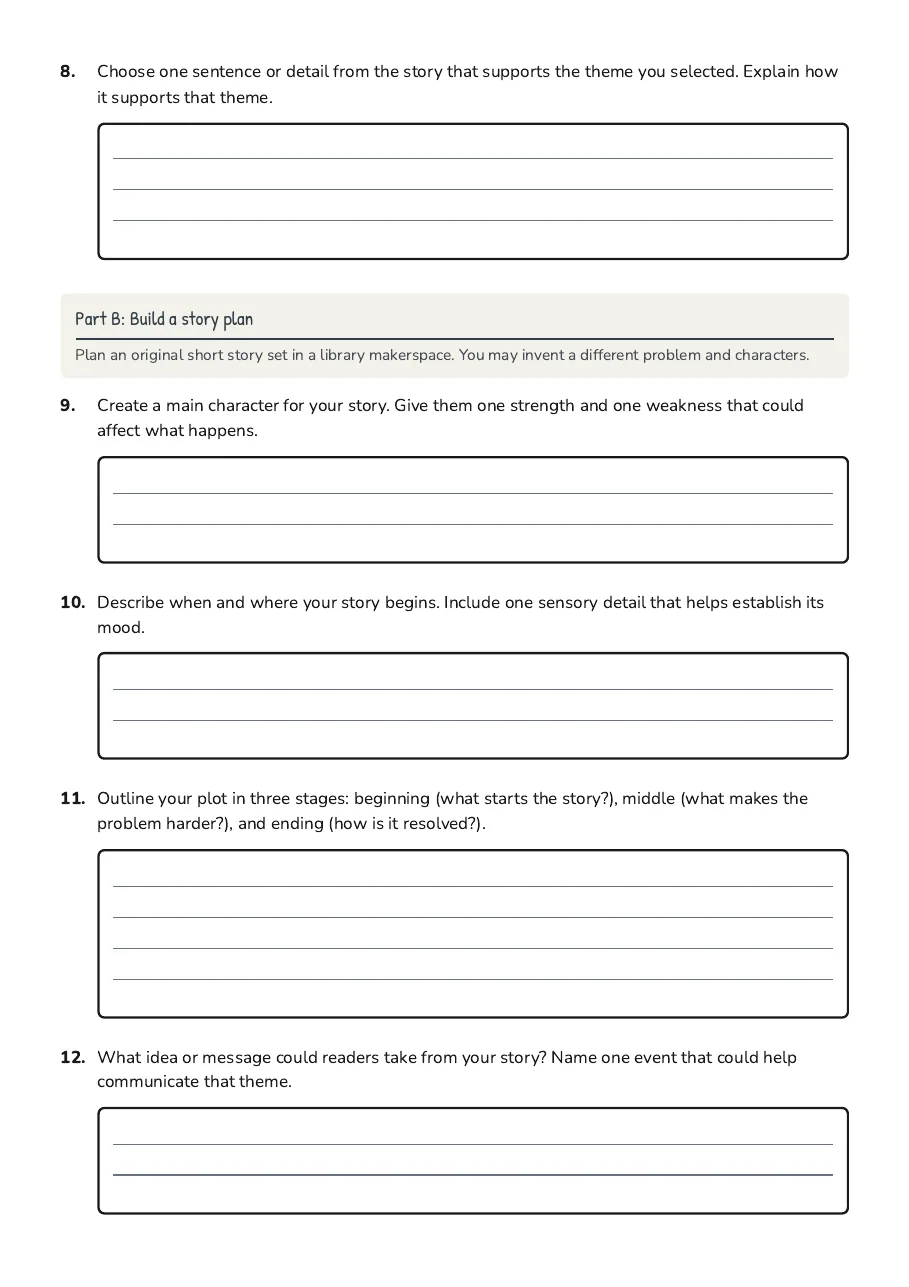
Part B: Build a story plan
Plan an original short story set in a library makerspace. You may invent a different problem and characters.
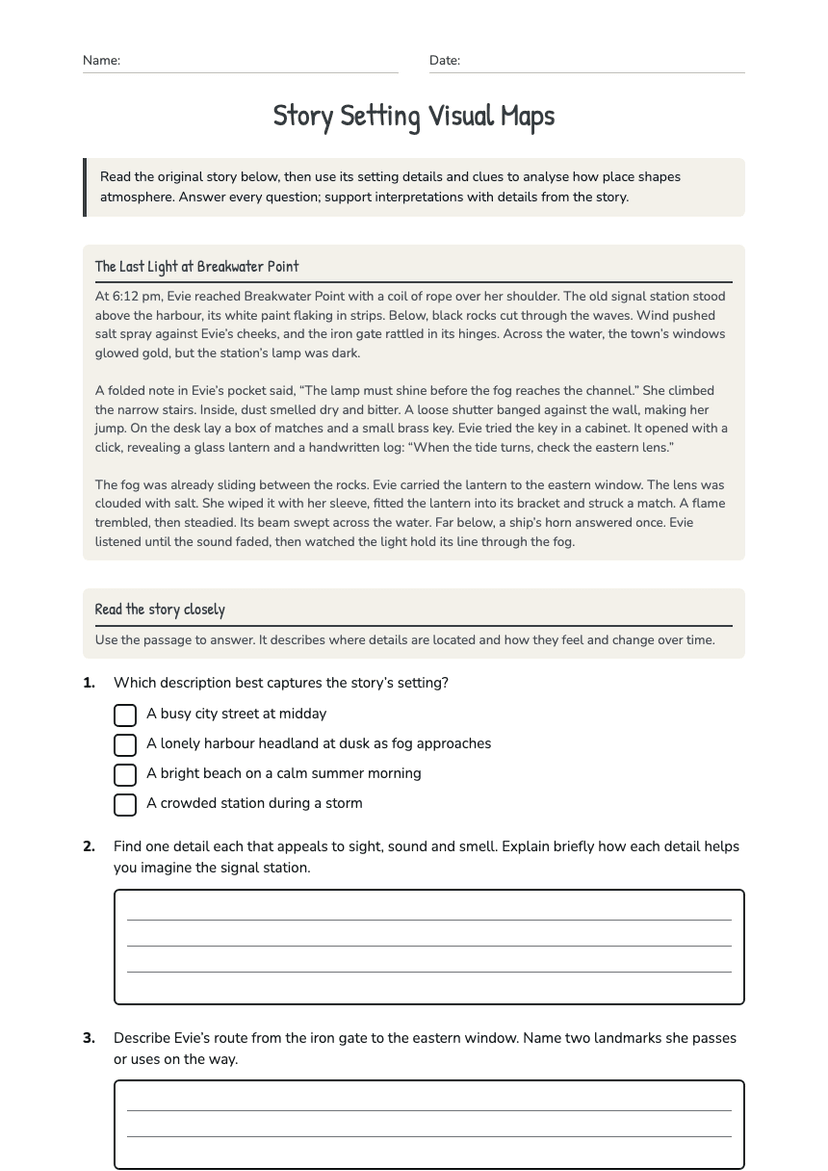
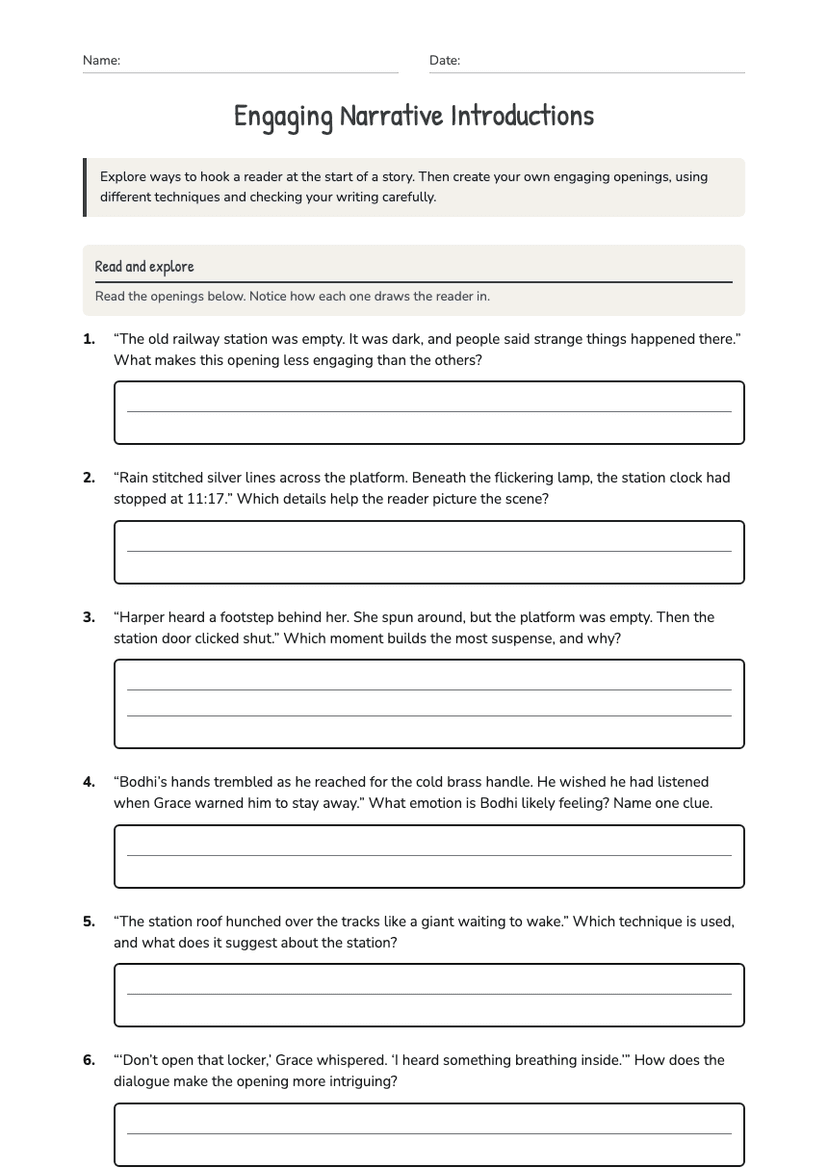
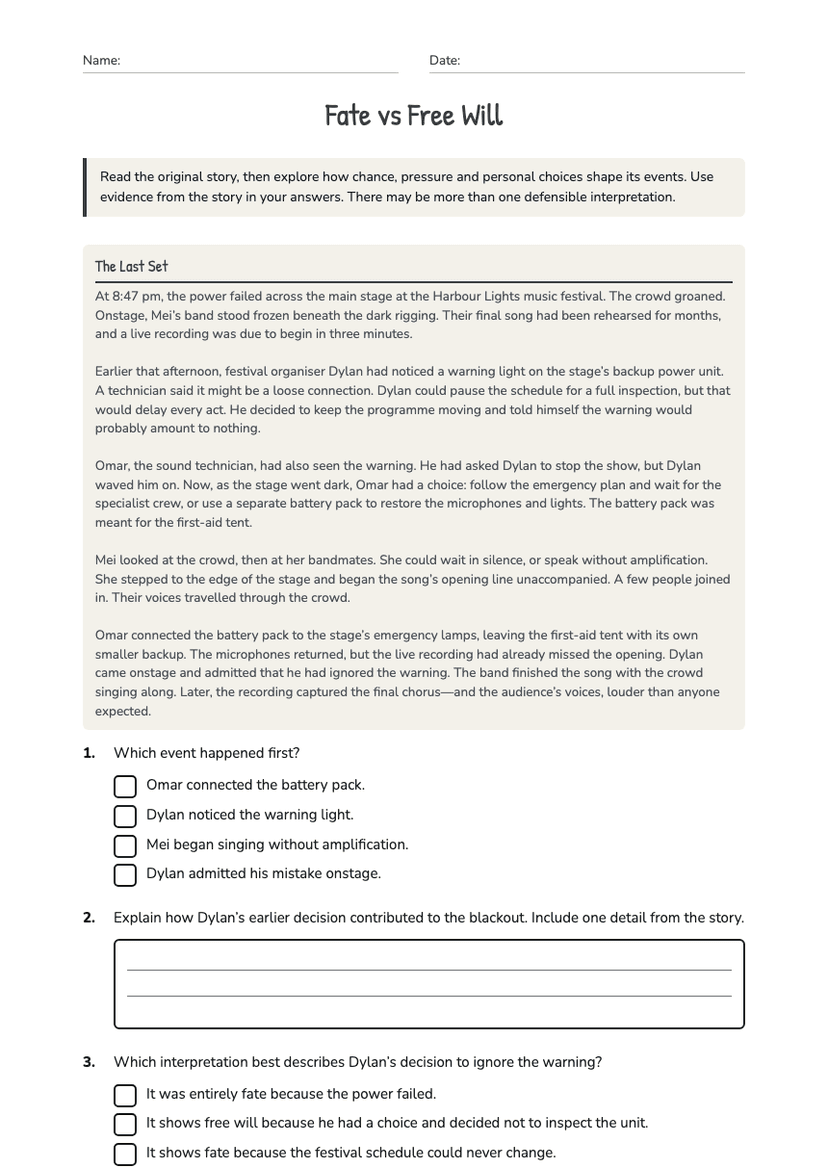
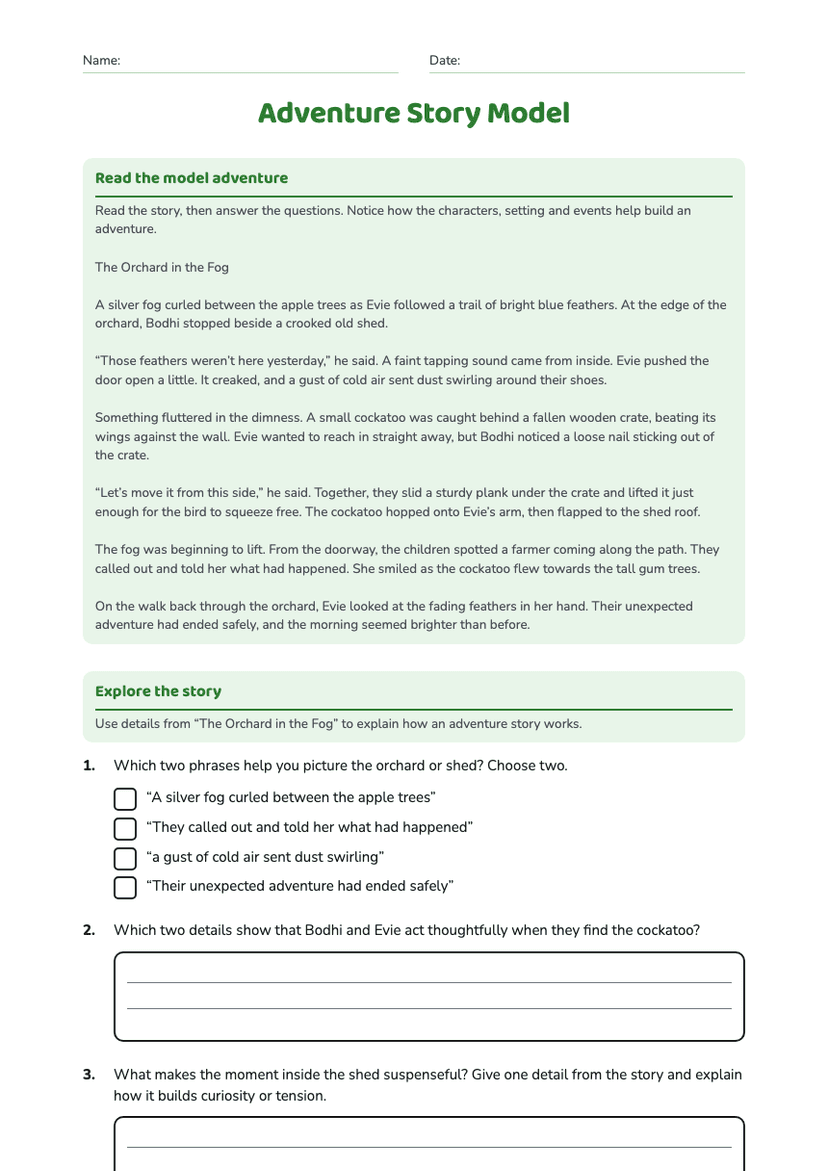
4 printable pages
Page 1
Page 2
Page 3
Page 4
About This Worksheet
Free in Kuraplan
Sign up free, grab the PDF, and customize it for your class.
Print-Ready
Formatted for standard paper. Clean layout, easy to read.
AI-Generated
Created with Kuraplan's AI, designed for real classroom use.
For Teachers & Parents
Use in classrooms, for homework, tutoring, or homeschool.
Need a custom version of this worksheet?
Kuraplan's AI generates custom worksheets in seconds — differentiated for every learner, aligned to your curriculum.
Generate Custom Worksheets — Free