Summary Writing Skills
A free english worksheet ready for your classroom. Open in Kuraplan to grab the print-ready PDF, customize it for your students, or generate a fresh version in seconds.
Summary Writing Skills
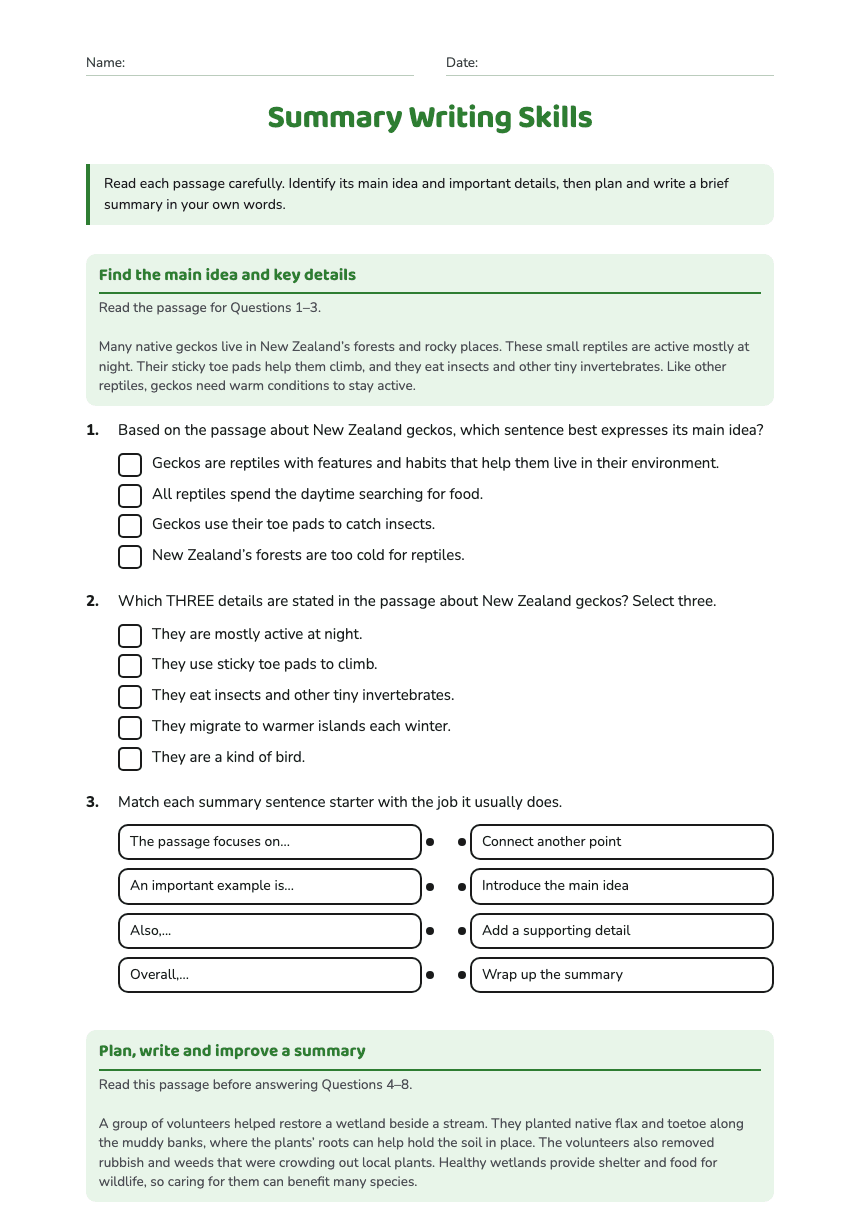
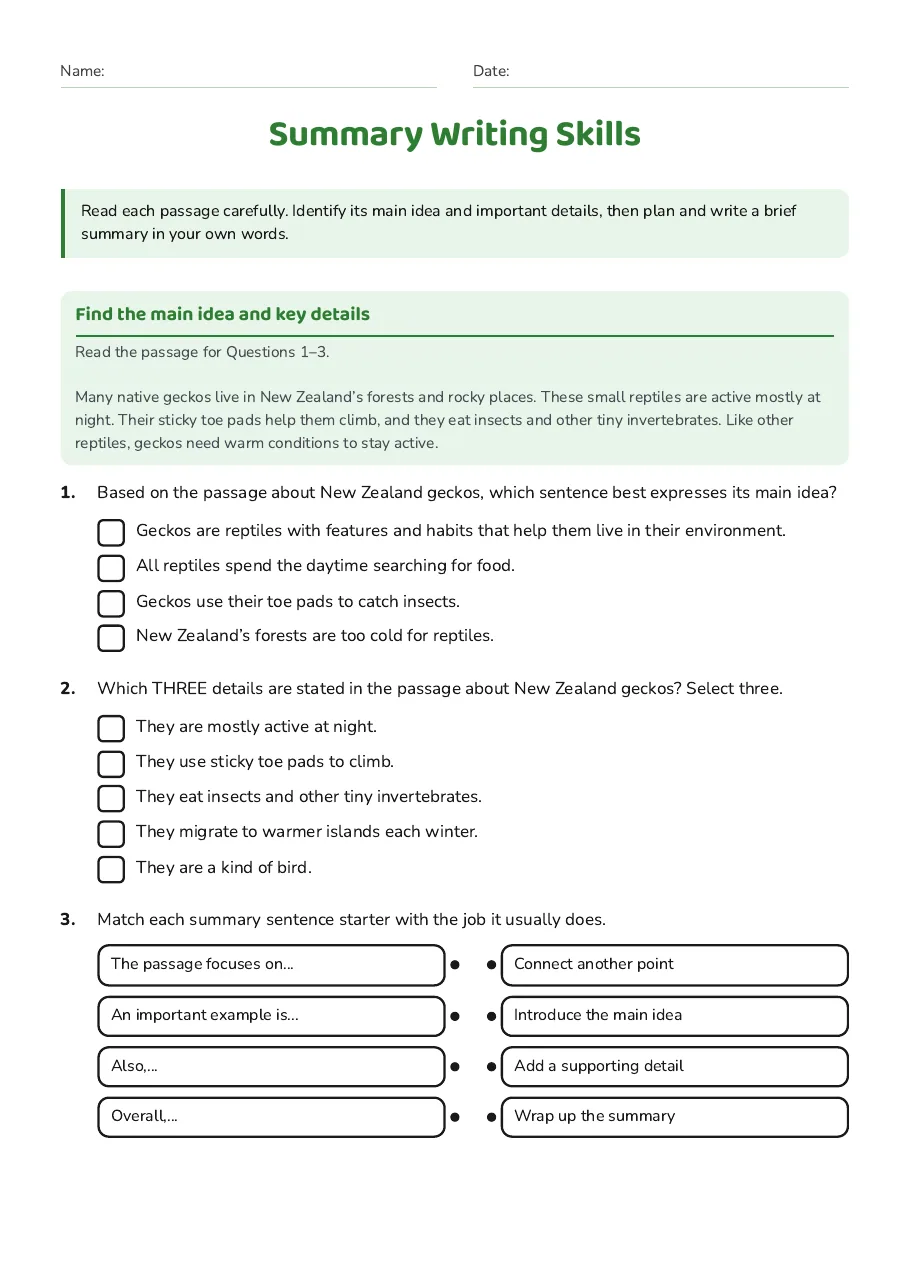
Find the main idea and key details
Read the passage for Questions 1–3. Many native geckos live in New Zealand’s forests and rocky places. These small reptiles are active mostly at night. Their sticky toe pads help them climb, and they eat insects and other tiny invertebrates. Like other reptiles, geckos need warm conditions to stay active.
- Geckos are reptiles with features and habits that help them live in their environment.
- All reptiles spend the daytime searching for food.
- Geckos use their toe pads to catch insects.
- New Zealand’s forests are too cold for reptiles.
- They are mostly active at night.
- They use sticky toe pads to climb.
- They eat insects and other tiny invertebrates.
- They migrate to warmer islands each winter.
- They are a kind of bird.
- The passage focuses on...
- An important example is...
- Also,...
- Overall,...
- Connect another point
- Introduce the main idea
- Add a supporting detail
- Wrap up the summary
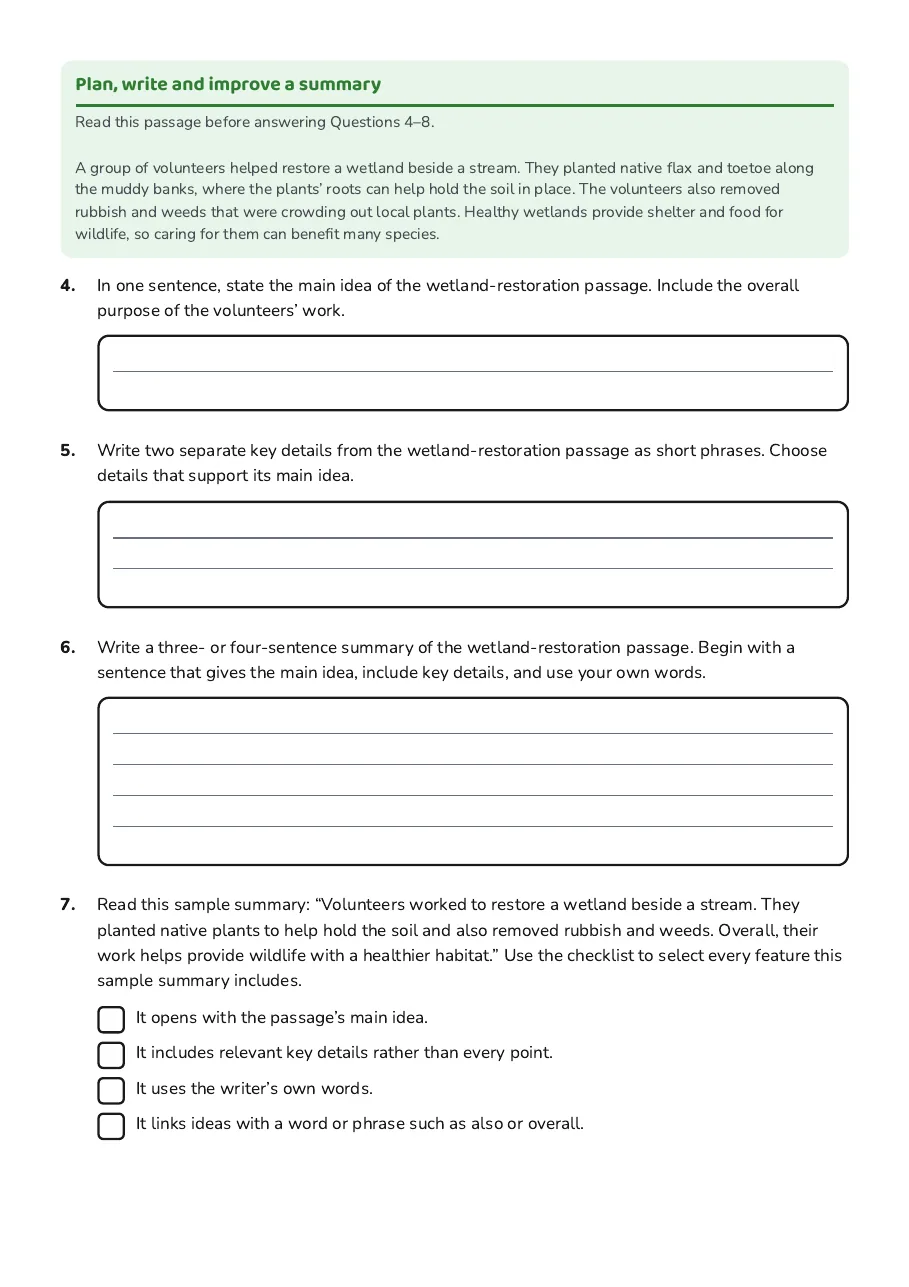
Plan, write and improve a summary
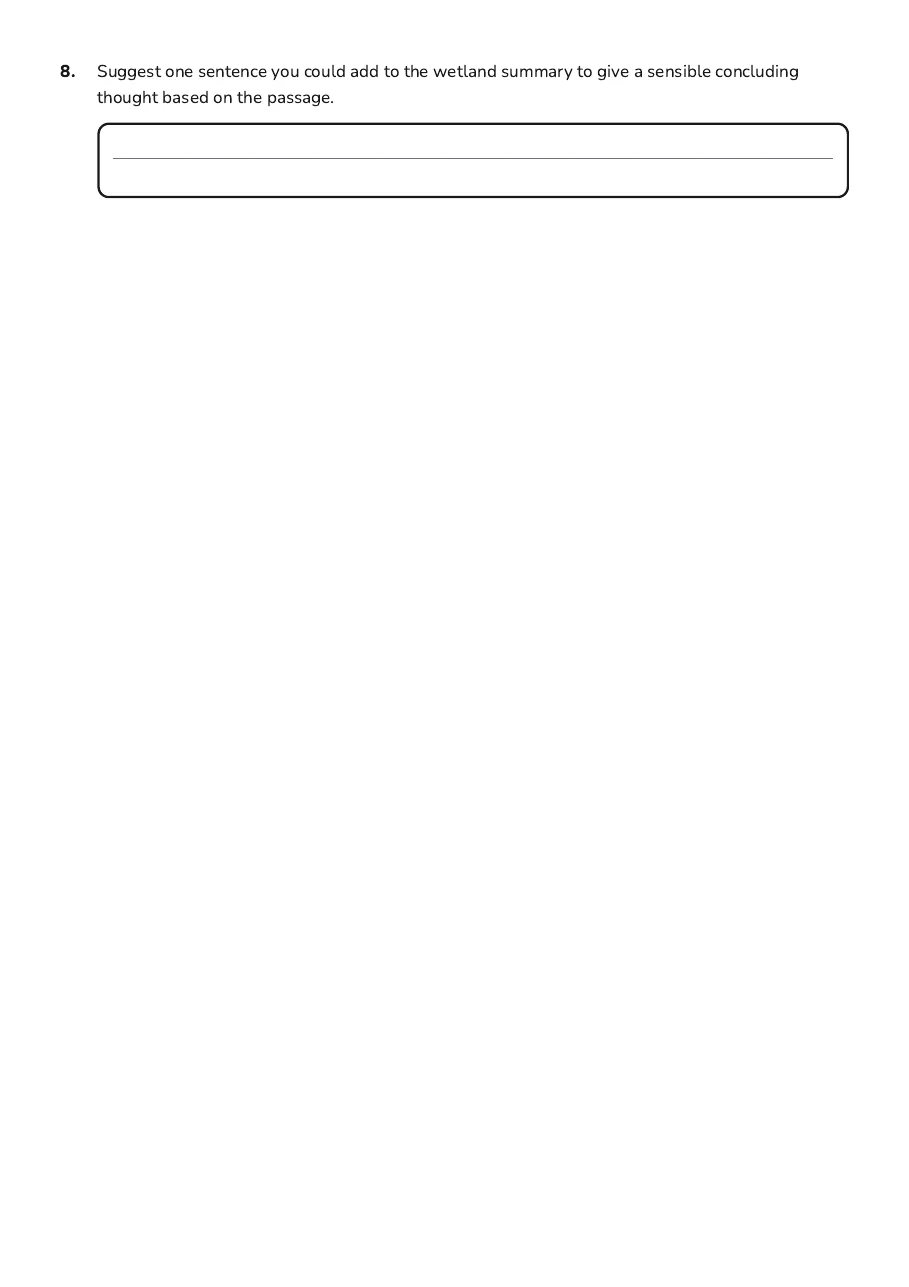
Read this passage before answering Questions 4–8. A group of volunteers helped restore a wetland beside a stream. They planted native flax and toetoe along the muddy banks, where the plants’ roots can help hold the soil in place. The volunteers also removed rubbish and weeds that were crowding out local plants. Healthy wetlands provide shelter and food for wildlife, so caring for them can benefit many species.
- It opens with the passage’s main idea.
- It includes relevant key details rather than every point.
- It uses the writer’s own words.
- It links ideas with a word or phrase such as also or overall.
3 printable pages
Page 1
Page 2
Page 3
About This Worksheet
Free in Kuraplan
Sign up free, grab the PDF, and customize it for your class.
Print-Ready
Formatted for standard paper. Clean layout, easy to read.
AI-Generated
Created with Kuraplan's AI, designed for real classroom use.
For Teachers & Parents
Use in classrooms, for homework, tutoring, or homeschool.
Need a custom version of this worksheet?
Kuraplan's AI generates custom worksheets in seconds — differentiated for every learner, aligned to your curriculum.
Generate Custom Worksheets — FreeMore English Worksheets
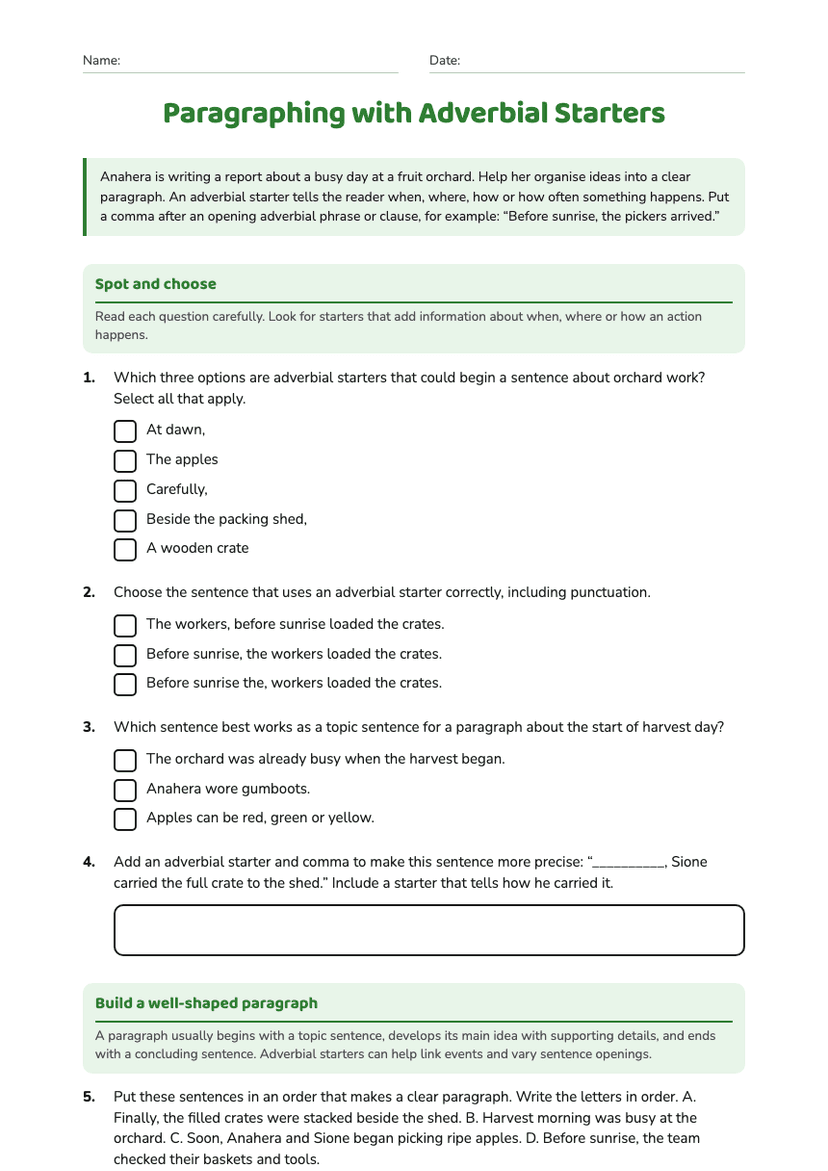
Paragraphing with Adverbial Starters
Free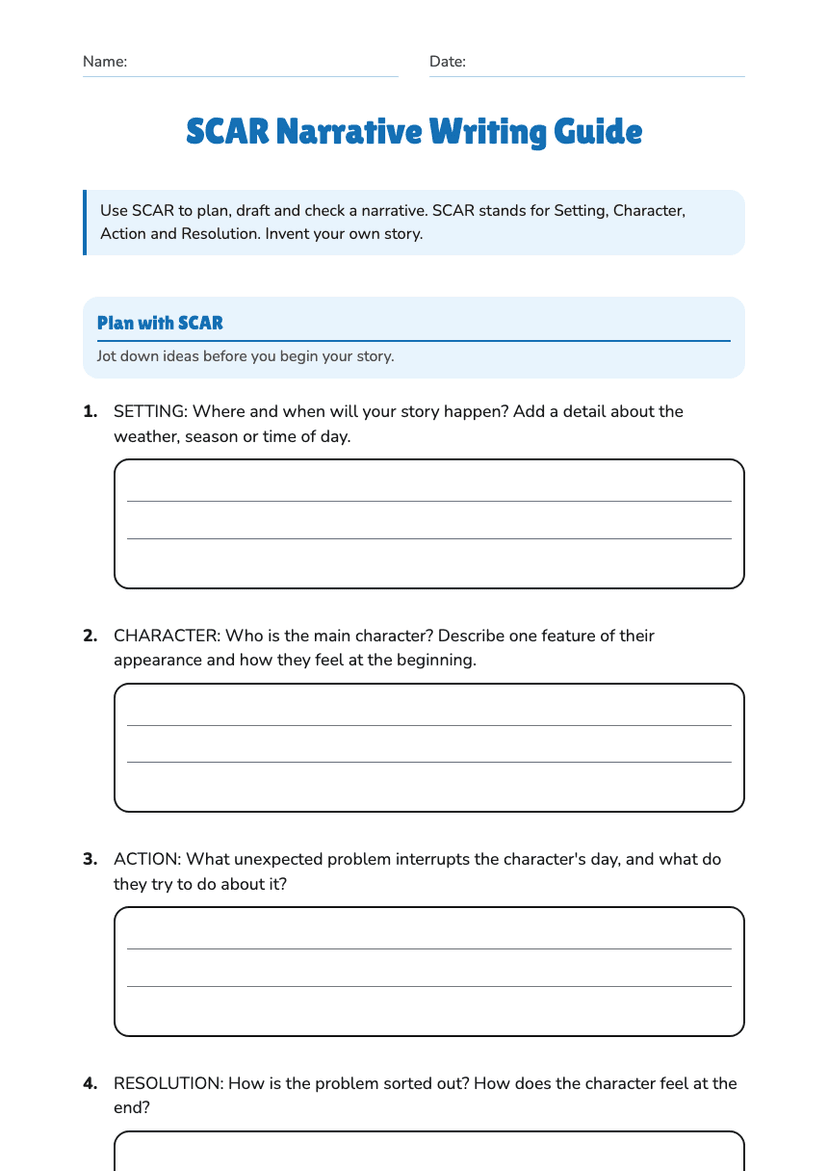
SCAR Narrative Writing Guide
Free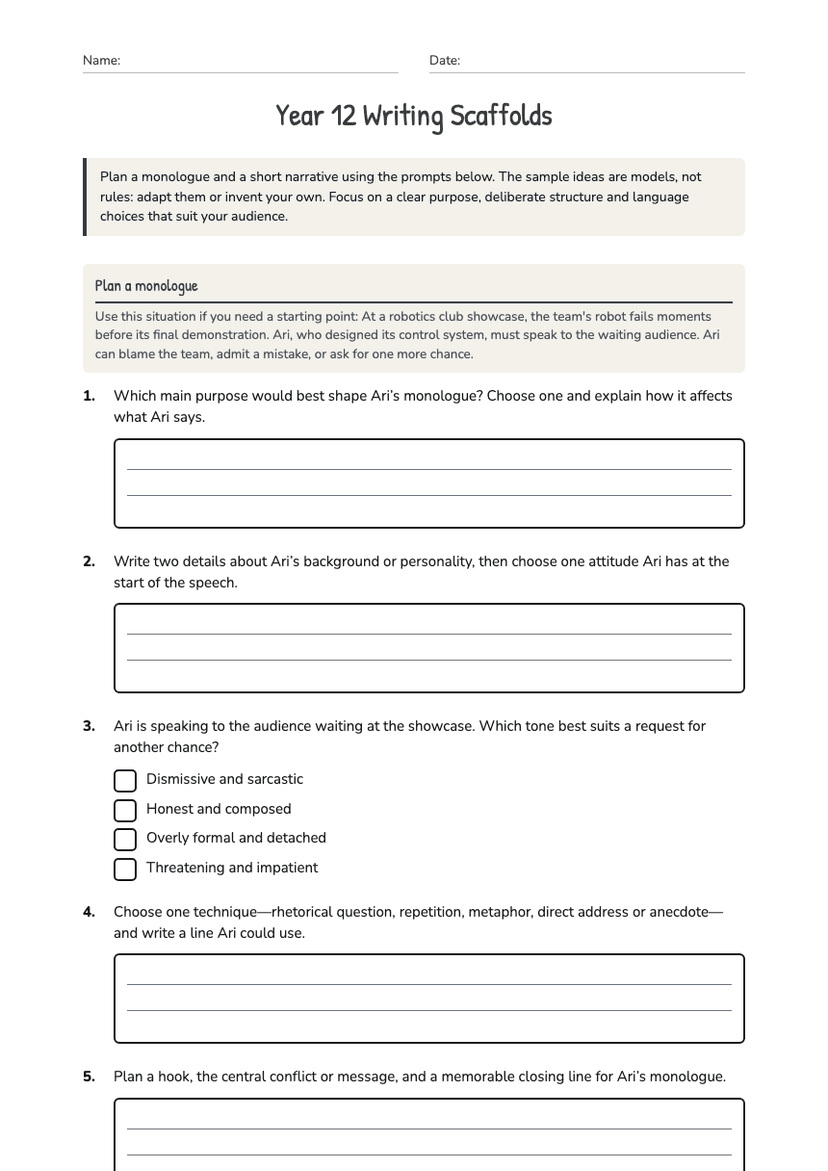
Year 12 Writing Scaffolds
Free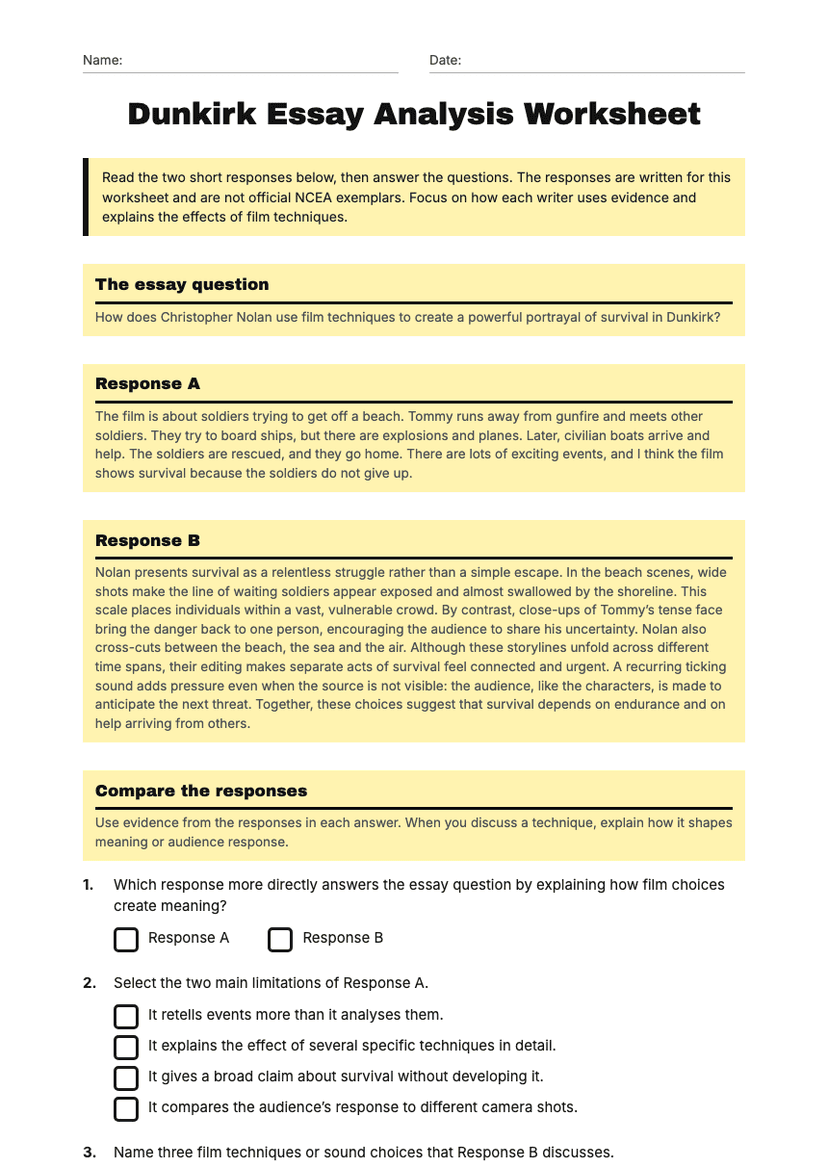
Dunkirk Essay Analysis Worksheet
Free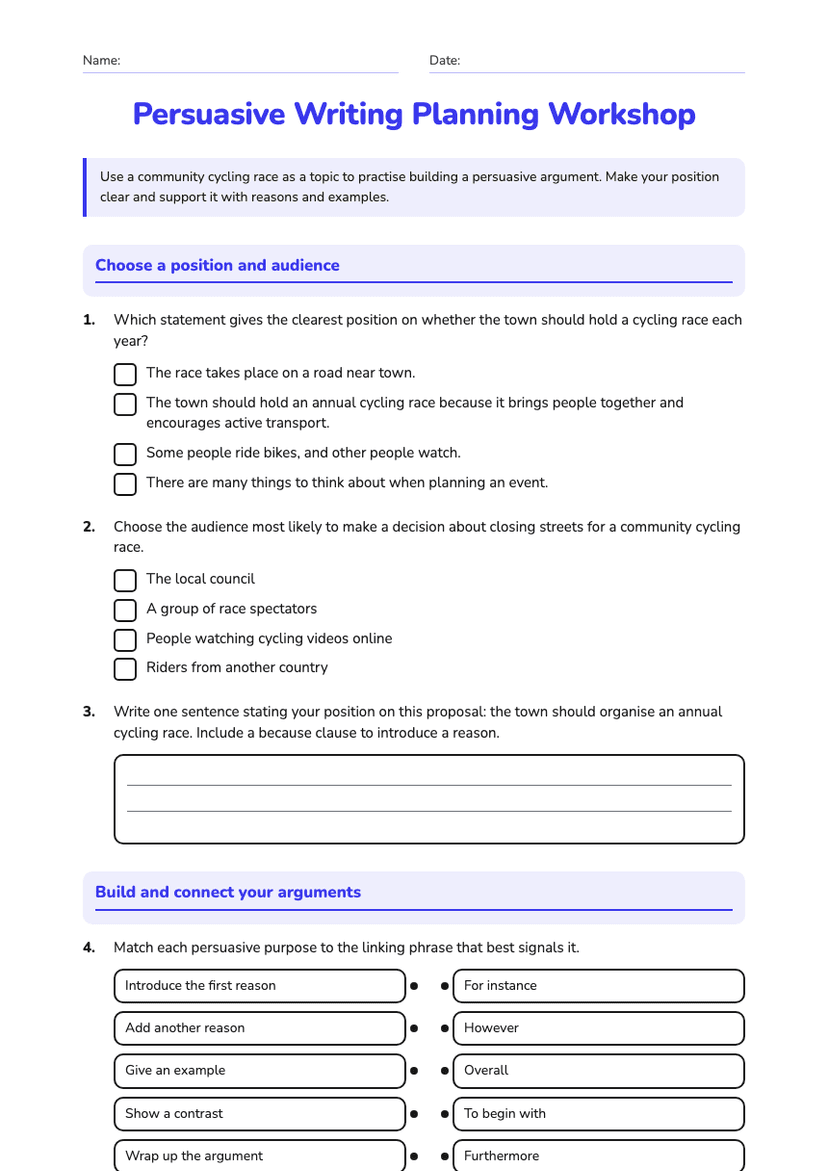
Persuasive Writing Planning Workshop
Free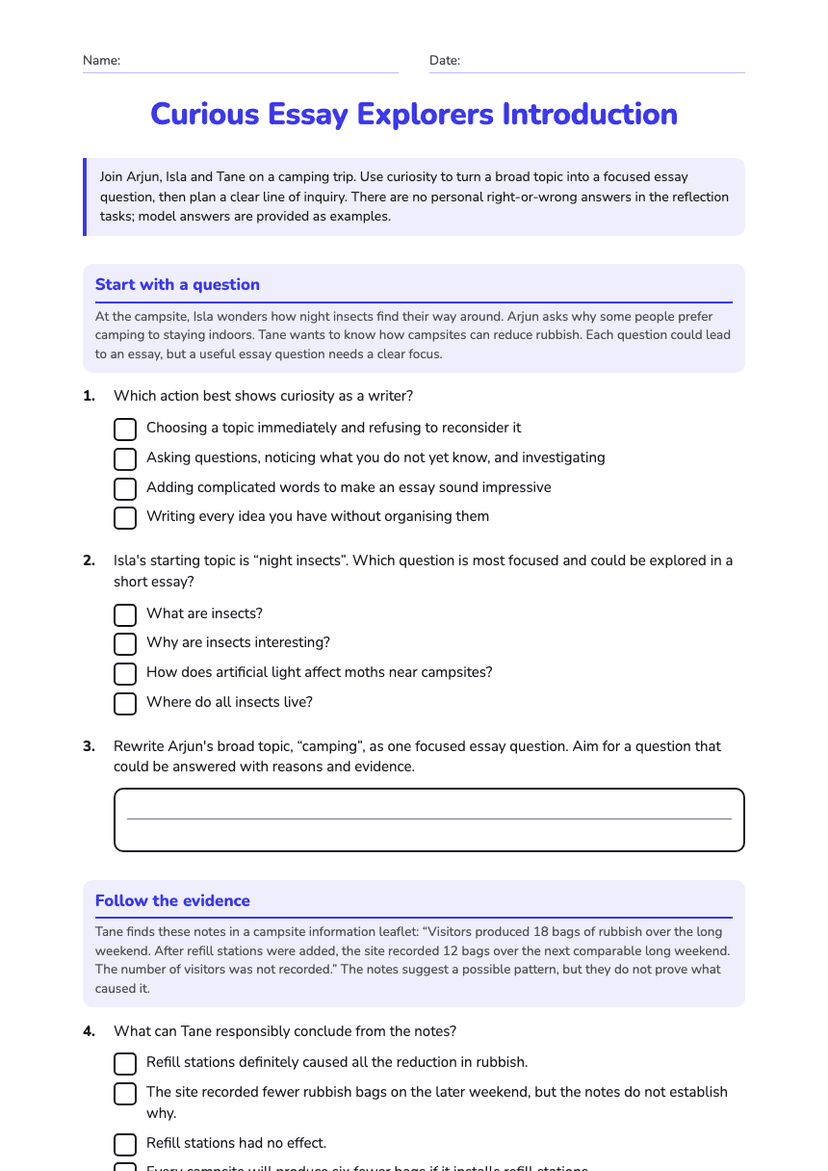
Curious Essay Explorers Introduction
Free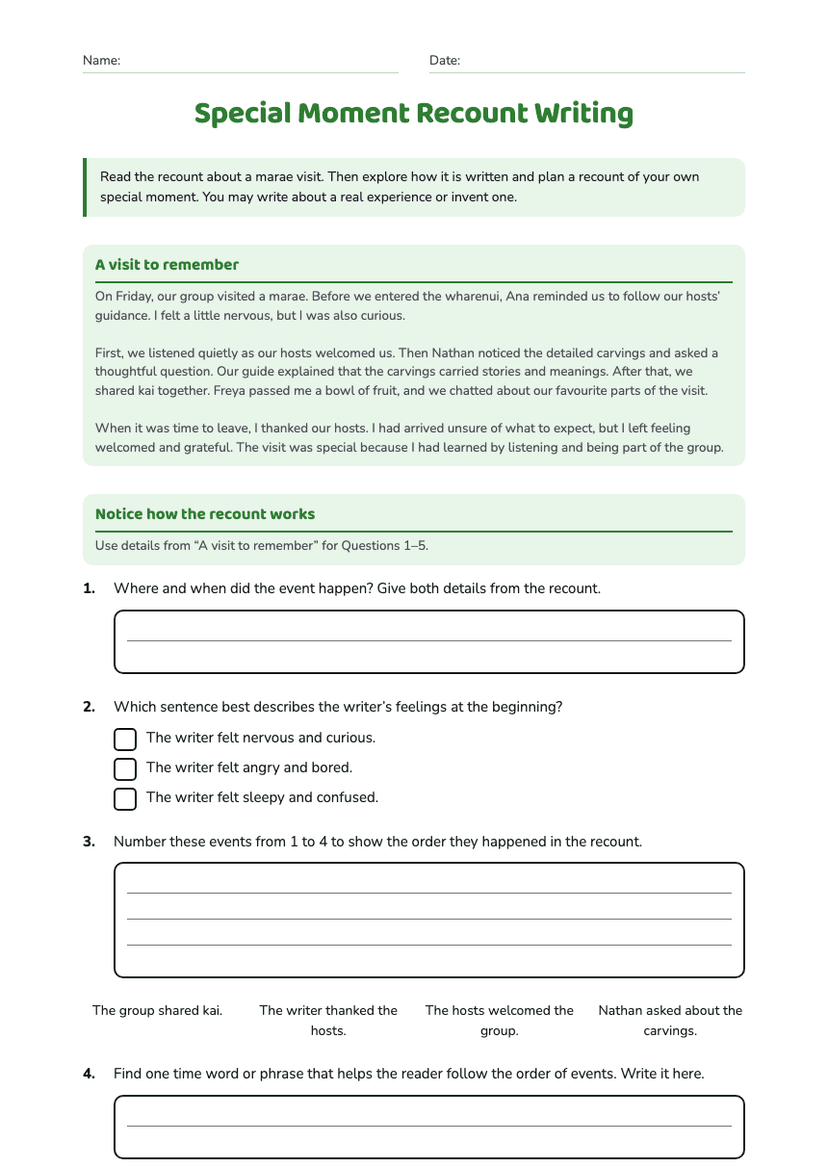
Special Moment Recount Writing
Free