Te Aute Historical Insights
A free social sciences worksheet ready for your classroom. Open in Kuraplan to grab the print-ready PDF, customize it for your students, or generate a fresh version in seconds.
Te Aute Historical Insights
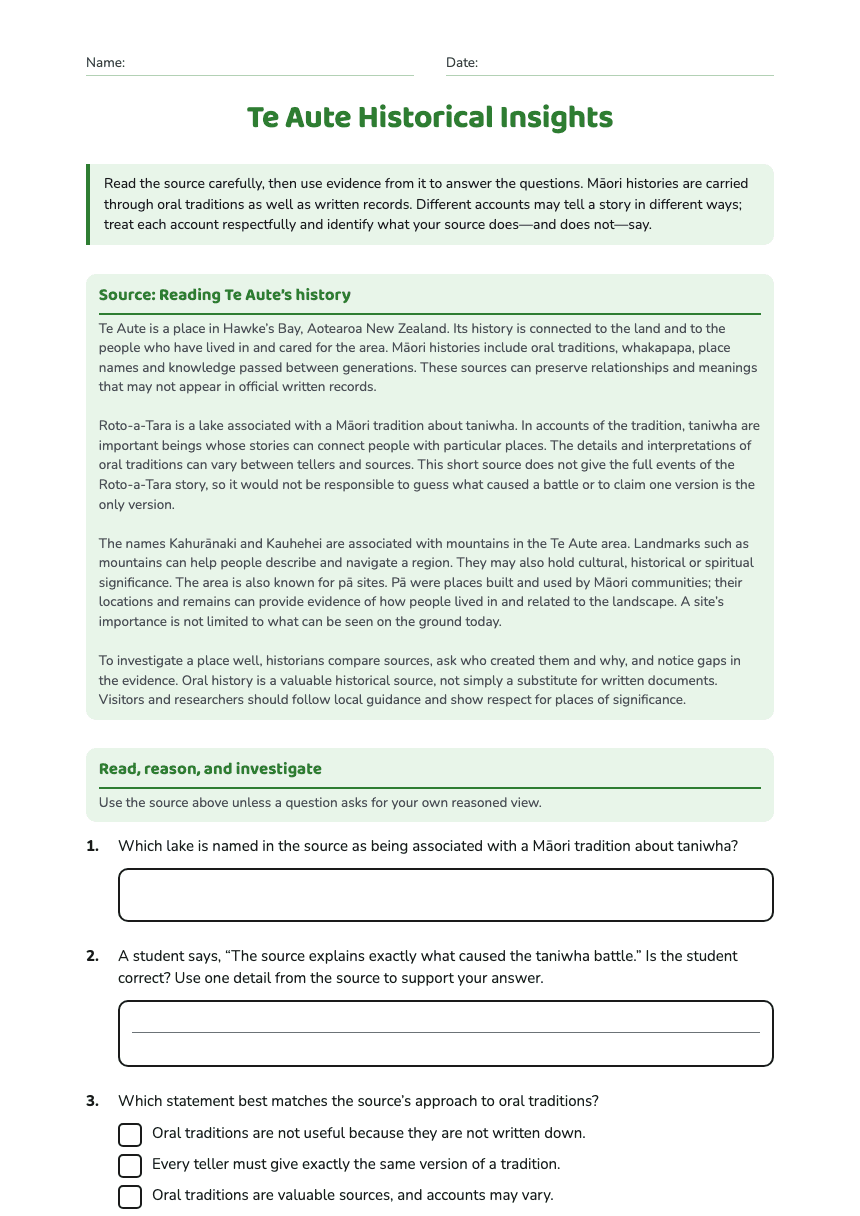
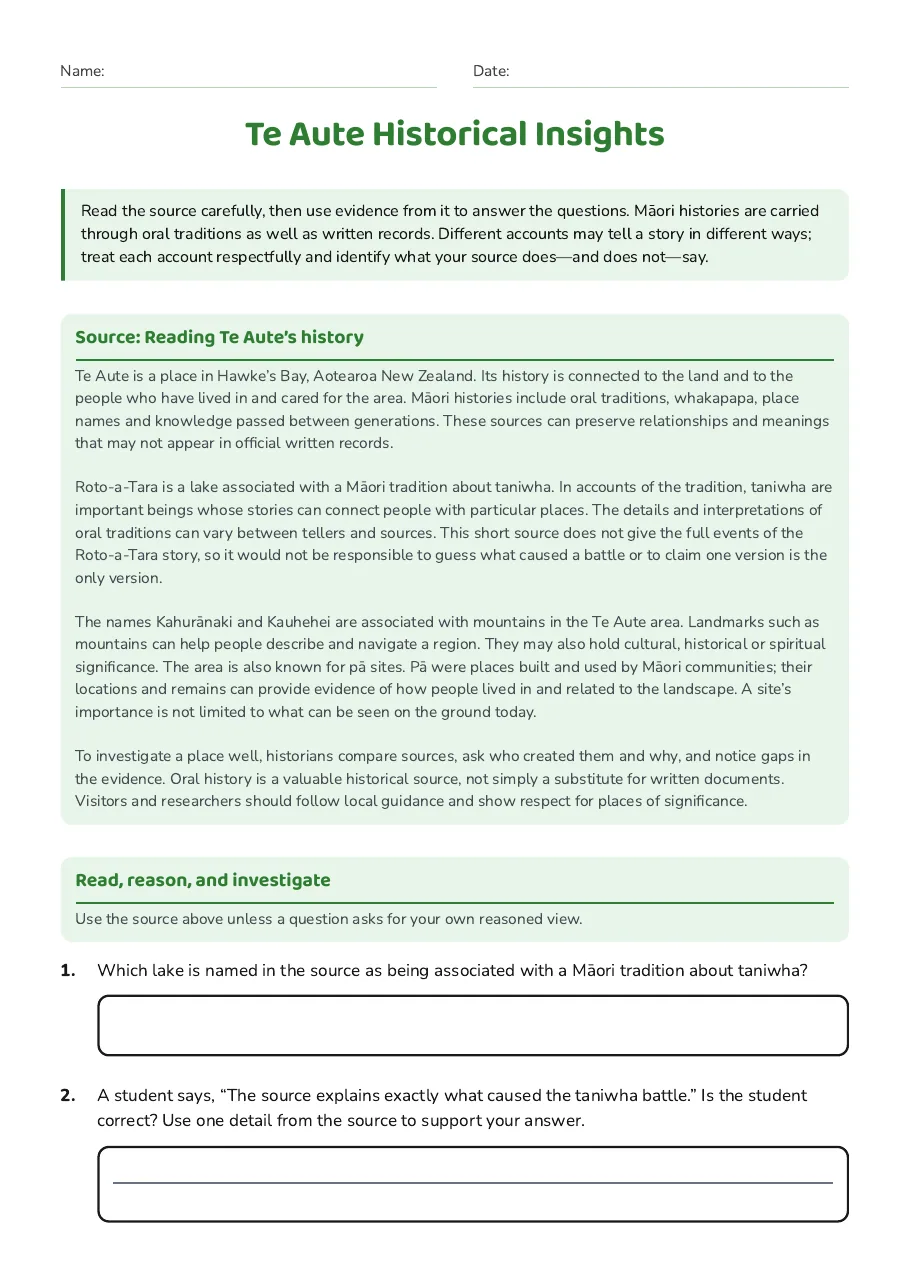
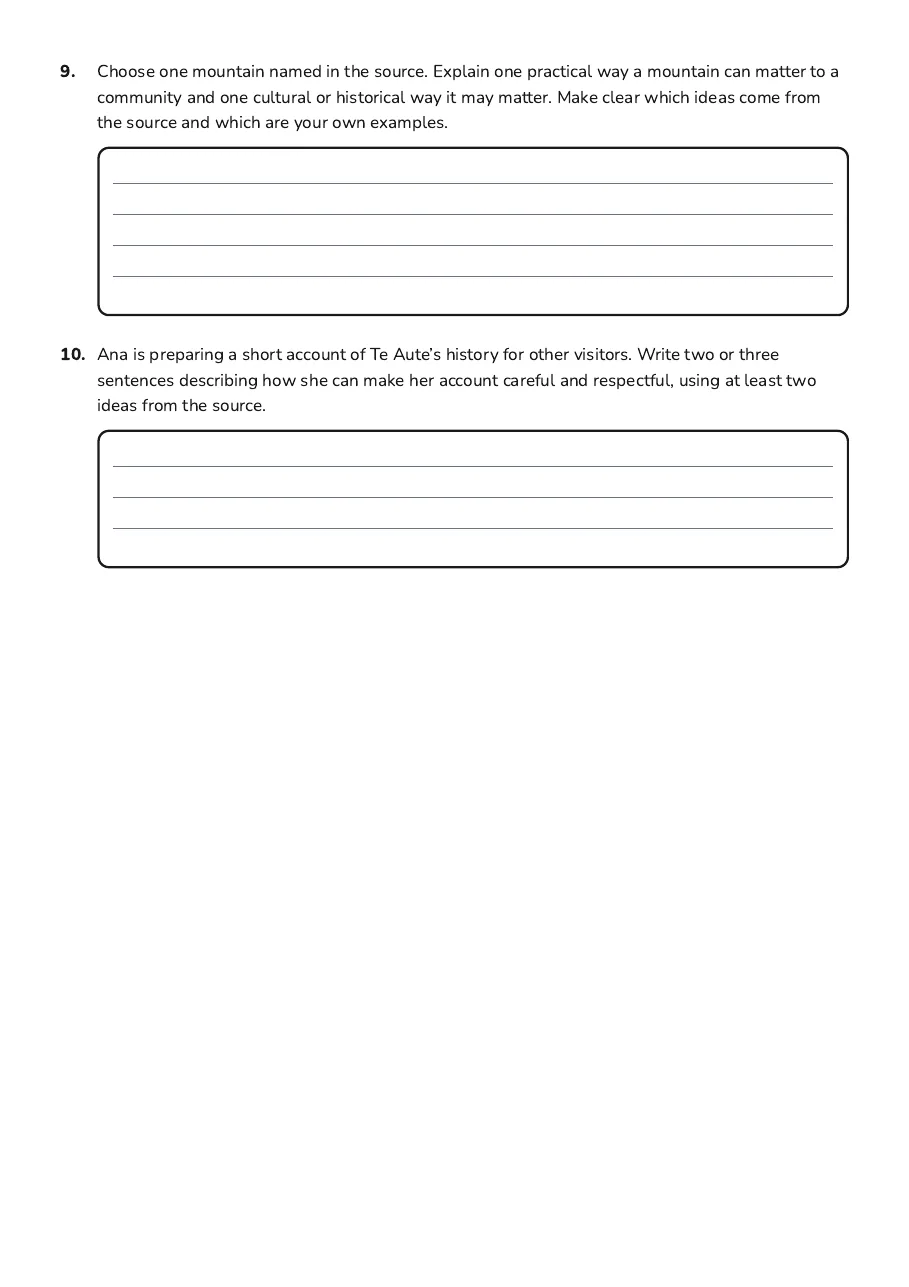
Source: Reading Te Aute’s history
Te Aute is a place in Hawke’s Bay, Aotearoa New Zealand. Its history is connected to the land and to the people who have lived in and cared for the area. Māori histories include oral traditions, whakapapa, place names and knowledge passed between generations. These sources can preserve relationships and meanings that may not appear in official written records. Roto-a-Tara is a lake associated with a Māori tradition about taniwha. In accounts of the tradition, taniwha are important beings whose stories can connect people with particular places. The details and interpretations of oral traditions can vary between tellers and sources. This short source does not give the full events of the Roto-a-Tara story, so it would not be responsible to guess what caused a battle or to claim one version is the only version. The names Kahurānaki and Kauhehei are associated with mountains in the Te Aute area. Landmarks such as mountains can help people describe and navigate a region. They may also hold cultural, historical or spiritual significance. The area is also known for pā sites. Pā were places built and used by Māori communities; their locations and remains can provide evidence of how people lived in and related to the landscape. A site’s importance is not limited to what can be seen on the ground today. To investigate a place well, historians compare sources, ask who created them and why, and notice gaps in the evidence. Oral history is a valuable historical source, not simply a substitute for written documents. Visitors and researchers should follow local guidance and show respect for places of significance.
Read, reason, and investigate
Use the source above unless a question asks for your own reasoned view.
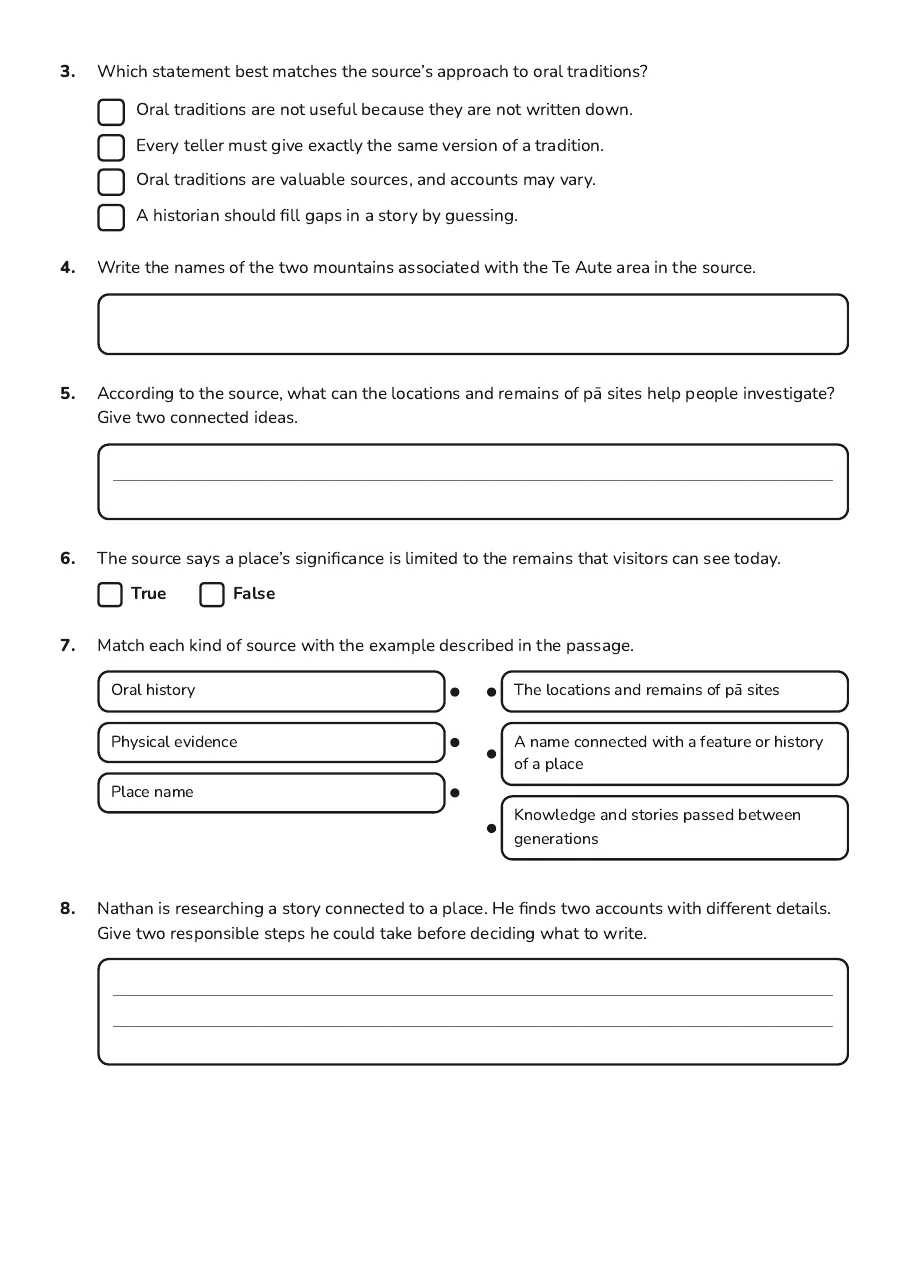
- Oral traditions are not useful because they are not written down.
- Every teller must give exactly the same version of a tradition.
- Oral traditions are valuable sources, and accounts may vary.
- A historian should fill gaps in a story by guessing.
- Oral history
- Physical evidence
- Place name
- The locations and remains of pā sites
- A name connected with a feature or history of a place
- Knowledge and stories passed between generations
3 printable pages
Page 1
Page 2
Page 3
About This Worksheet
Free in Kuraplan
Sign up free, grab the PDF, and customize it for your class.
Print-Ready
Formatted for standard paper. Clean layout, easy to read.
AI-Generated
Created with Kuraplan's AI, designed for real classroom use.
For Teachers & Parents
Use in classrooms, for homework, tutoring, or homeschool.
Need a custom version of this worksheet?
Kuraplan's AI generates custom worksheets in seconds — differentiated for every learner, aligned to your curriculum.
Generate Custom Worksheets — FreeMore Social Sciences Worksheets
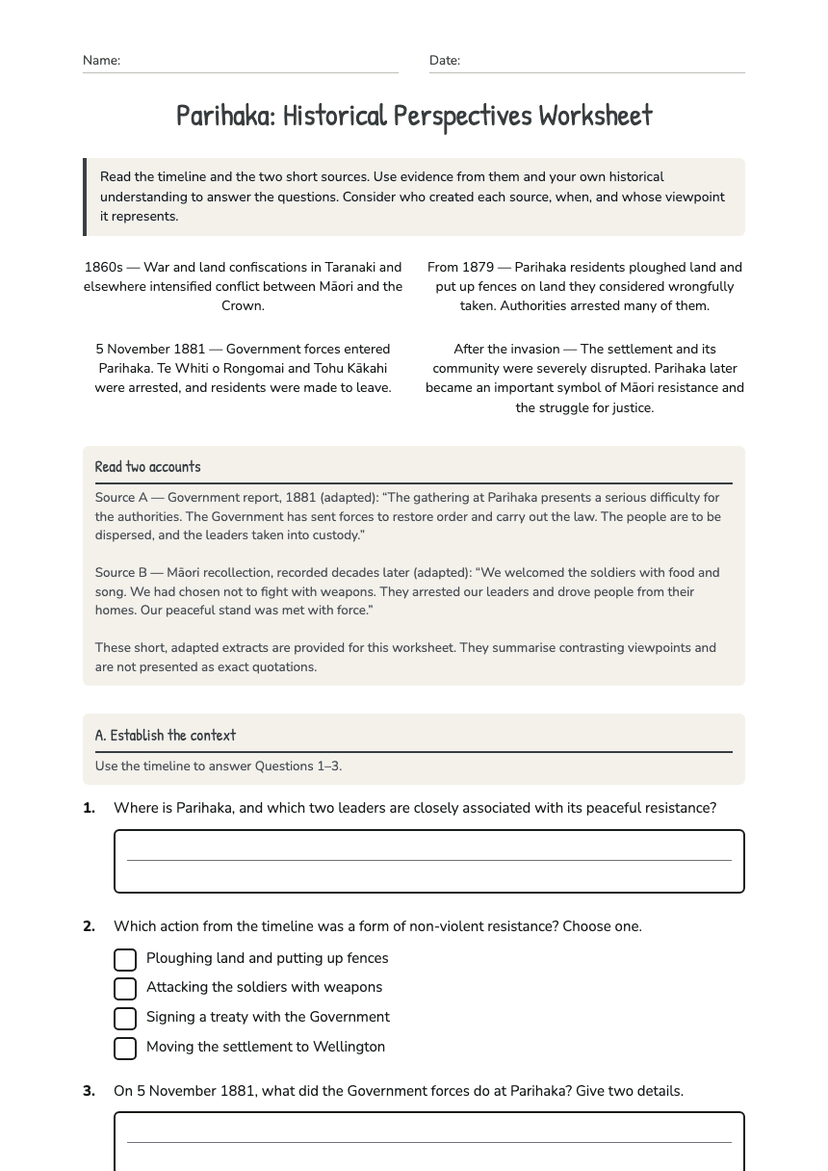
Parihaka: Historical Perspectives Worksheet
Free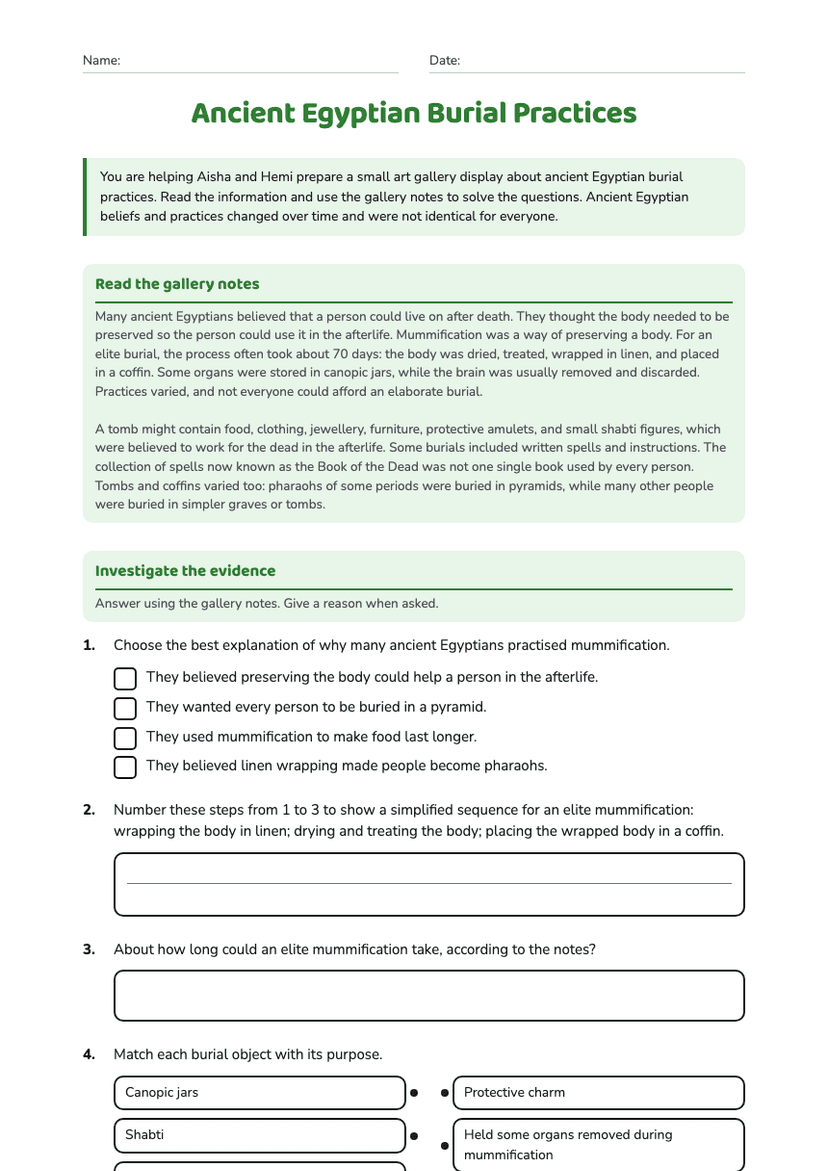
Ancient Egyptian Burial Practices
Free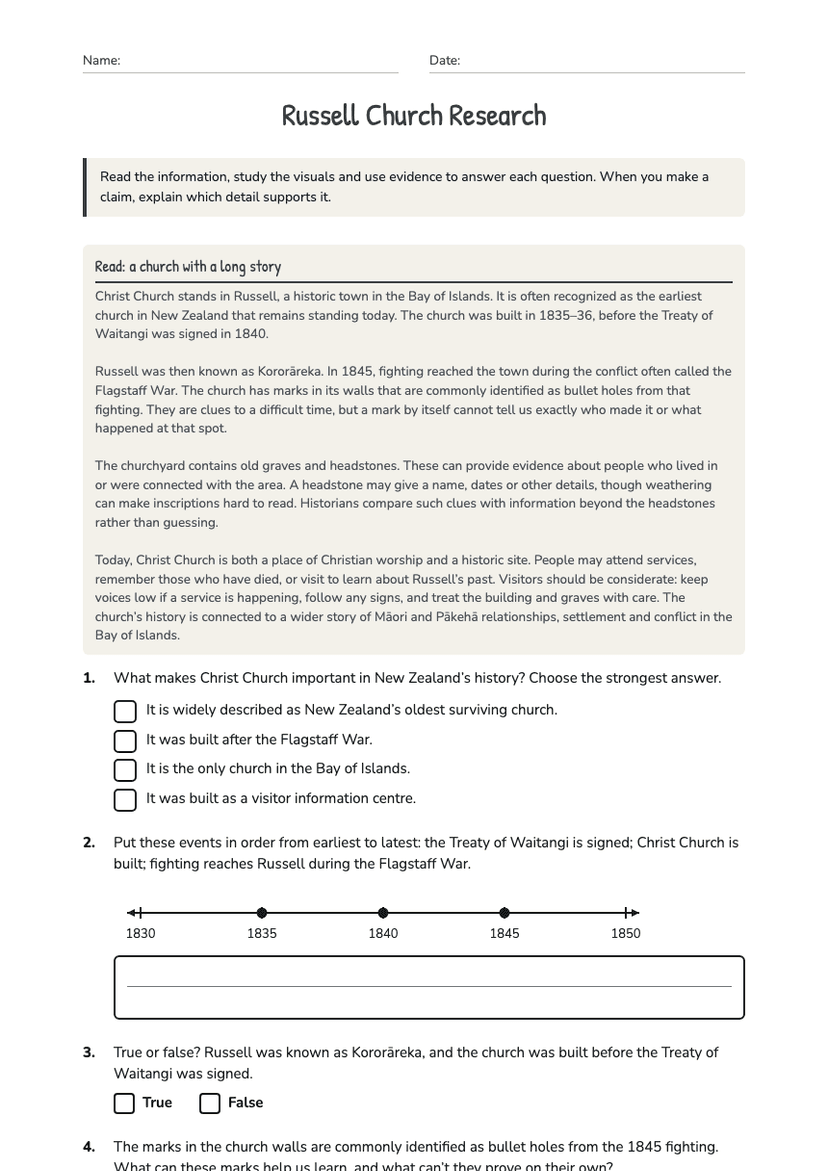
Russell Church Research
Free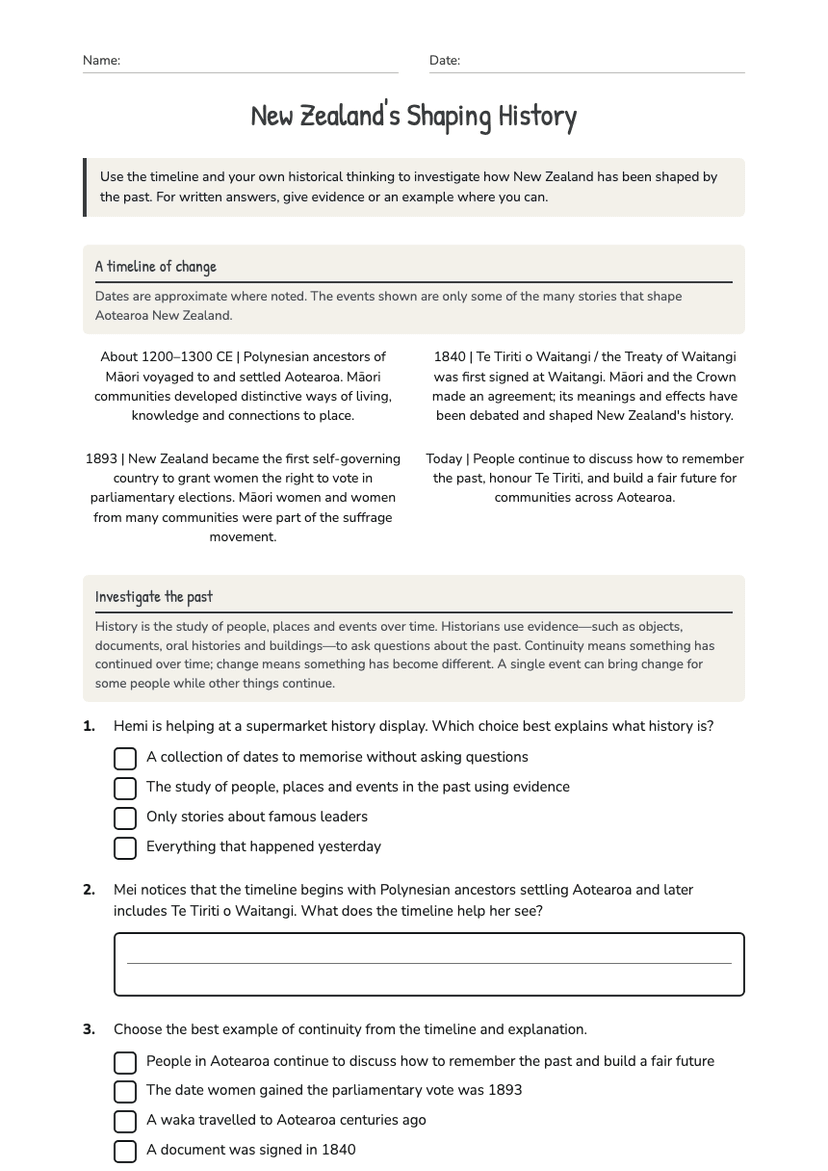
New Zealand's Shaping History
Free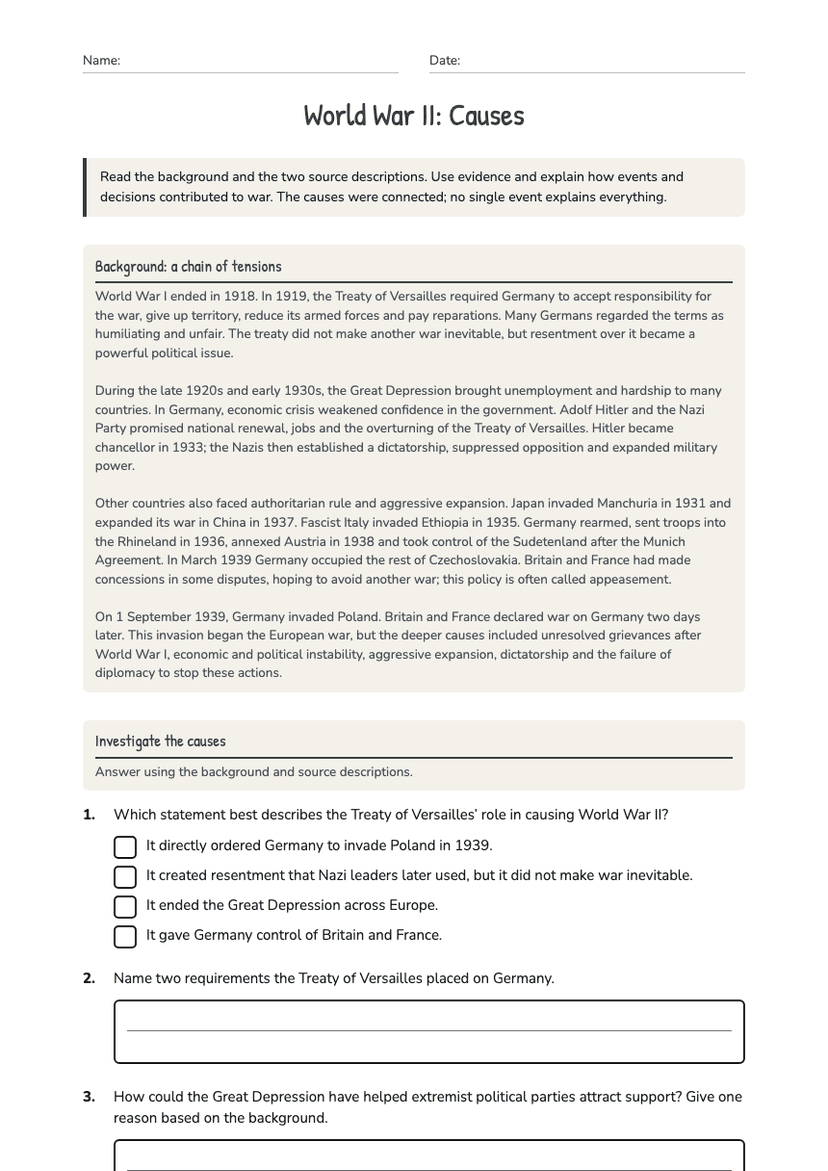
World War II: Causes
Free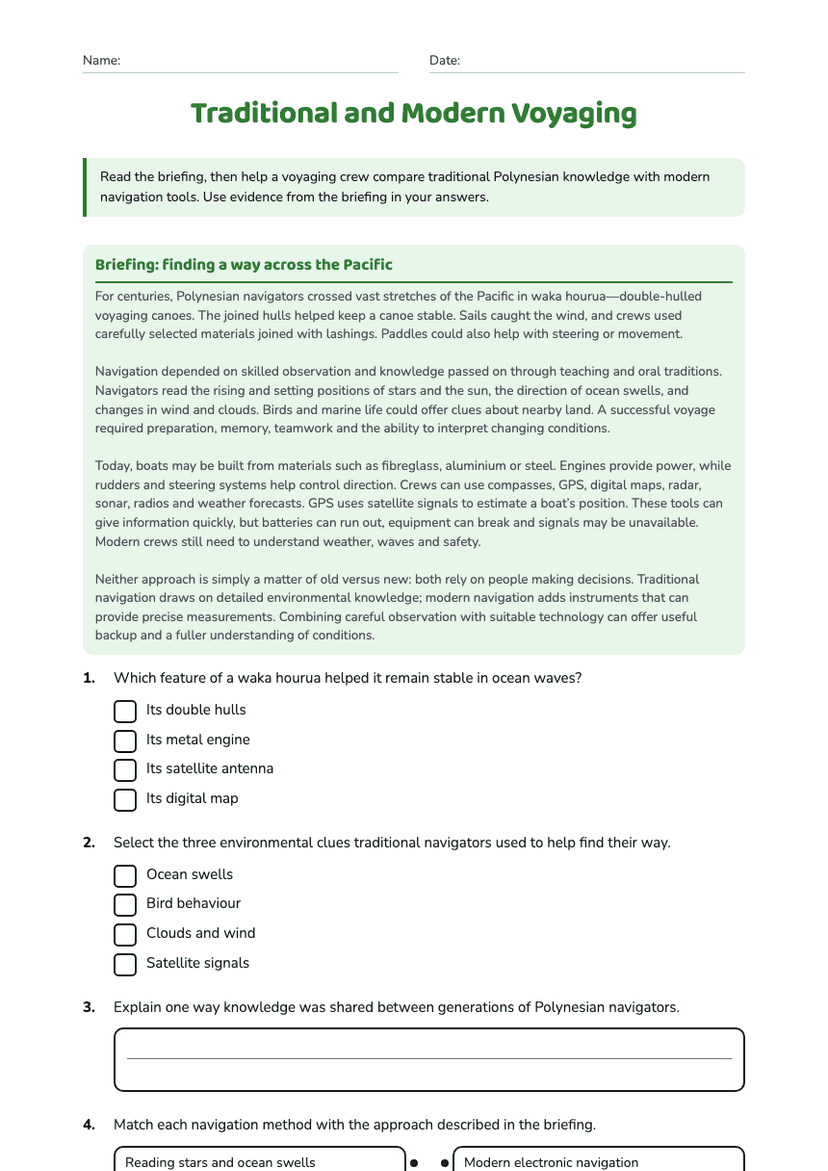
Traditional and Modern Voyaging
Free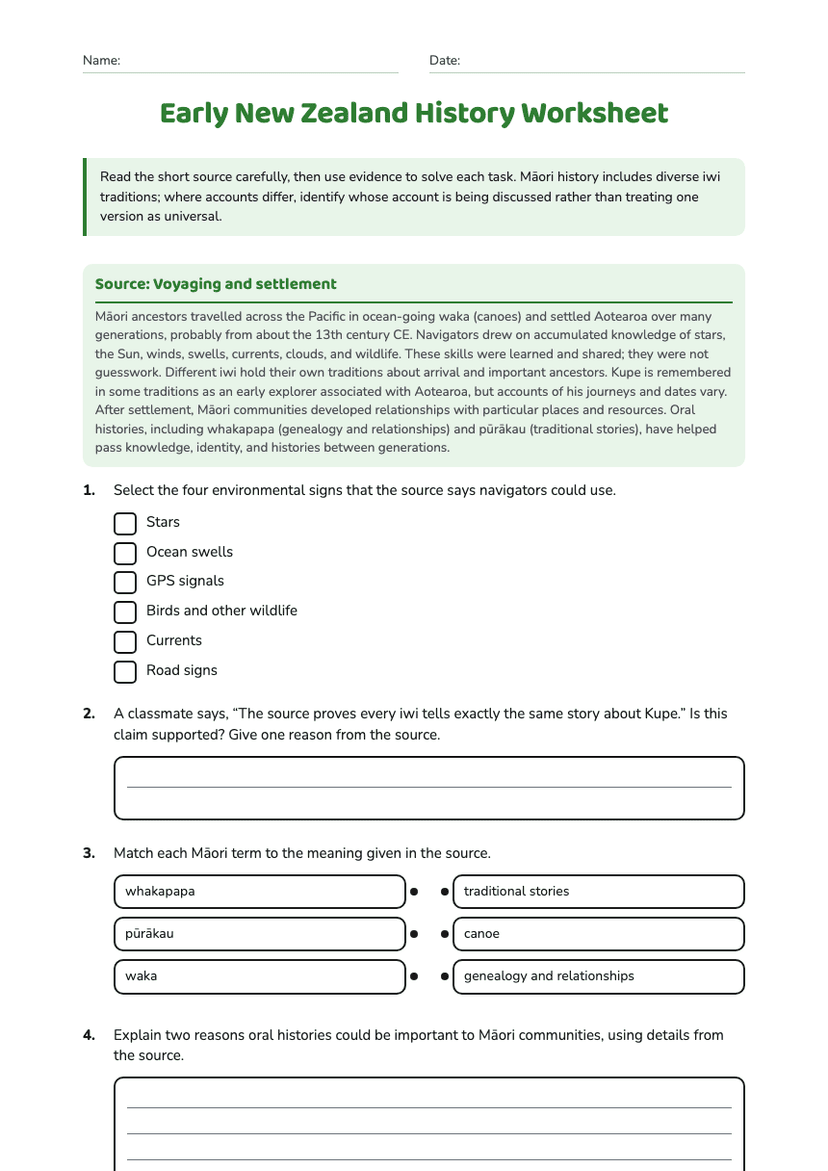
Early New Zealand History Worksheet
Free