The Building Blocks: Atomic Structure
A free science worksheet ready for your classroom. Open in Kuraplan to grab the print-ready PDF, customize it for your students, or generate a fresh version in seconds.

The Building Blocks: Atomic Structure
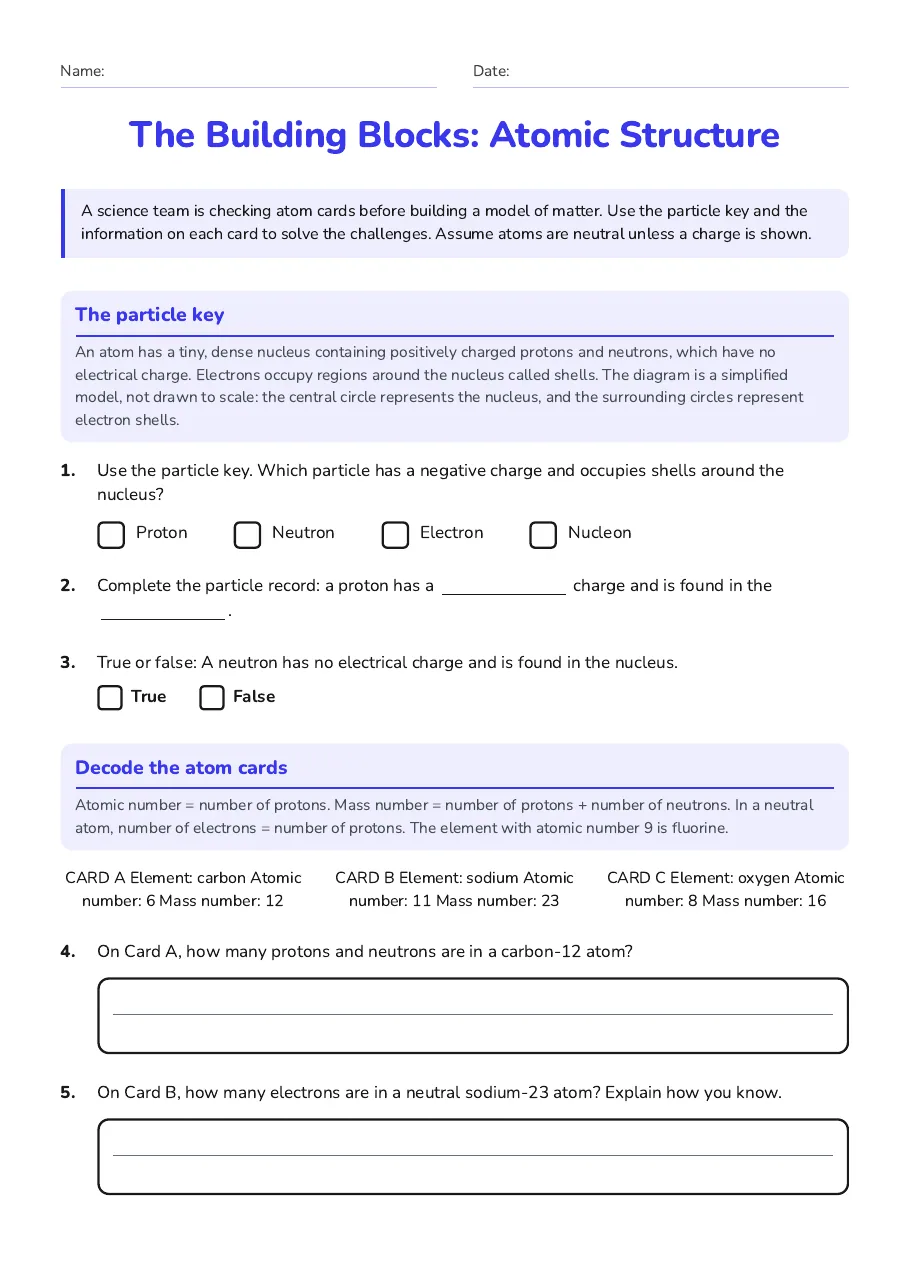
The particle key
An atom has a tiny, dense nucleus containing positively charged protons and neutrons, which have no electrical charge. Electrons occupy regions around the nucleus called shells. The diagram is a simplified model, not drawn to scale: the central circle represents the nucleus, and the surrounding circles represent electron shells.
- Proton
- Neutron
- Electron
- Nucleon
Decode the atom cards
Atomic number = number of protons. Mass number = number of protons + number of neutrons. In a neutral atom, number of electrons = number of protons. The element with atomic number 9 is fluorine.
CARD A Element: carbon Atomic number: 6 Mass number: 12
CARD B Element: sodium Atomic number: 11 Mass number: 23
CARD C Element: oxygen Atomic number: 8 Mass number: 16
2 printable pages
Page 1
Page 2
About This Worksheet
Free in Kuraplan
Sign up free, grab the PDF, and customize it for your class.
Print-Ready
Formatted for standard paper. Clean layout, easy to read.
AI-Generated
Created with Kuraplan's AI, designed for real classroom use.
For Teachers & Parents
Use in classrooms, for homework, tutoring, or homeschool.
Need a custom version of this worksheet?
Kuraplan's AI generates custom worksheets in seconds — differentiated for every learner, aligned to your curriculum.
Generate Custom Worksheets — FreeMore Science Worksheets
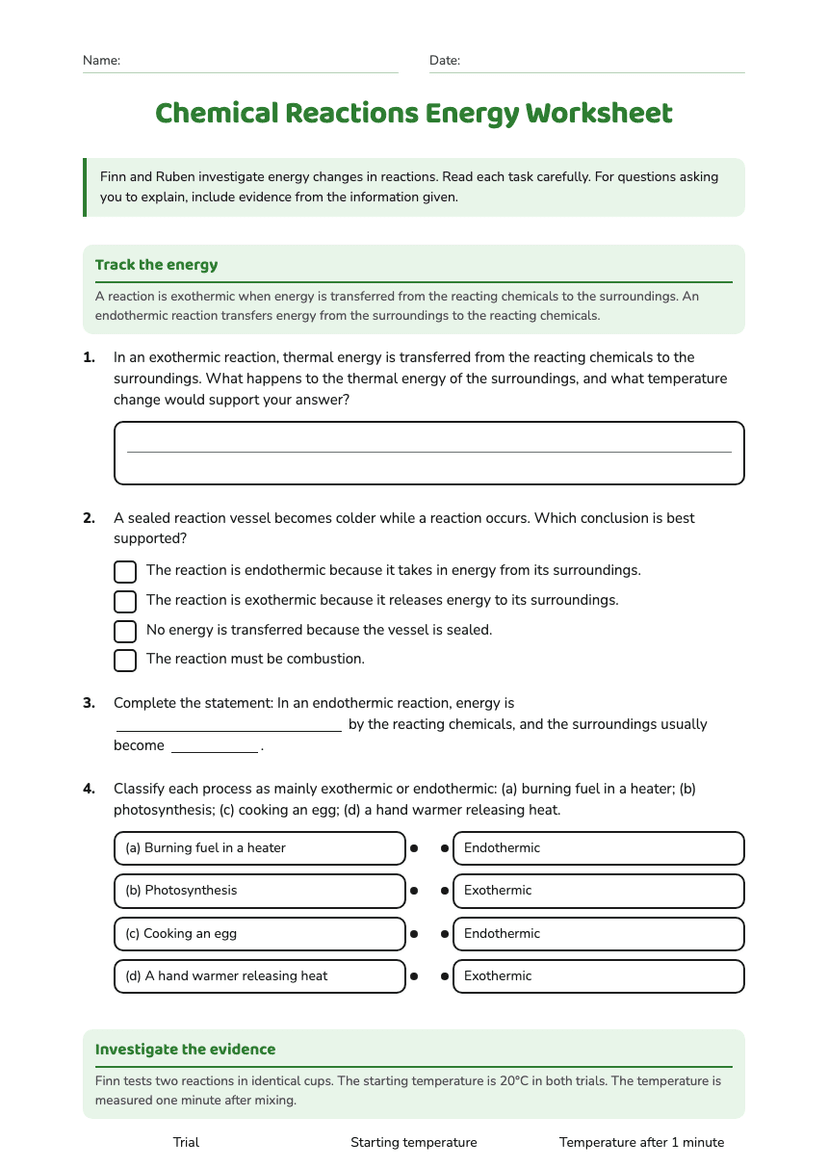
Chemical Reactions Energy Worksheet
Free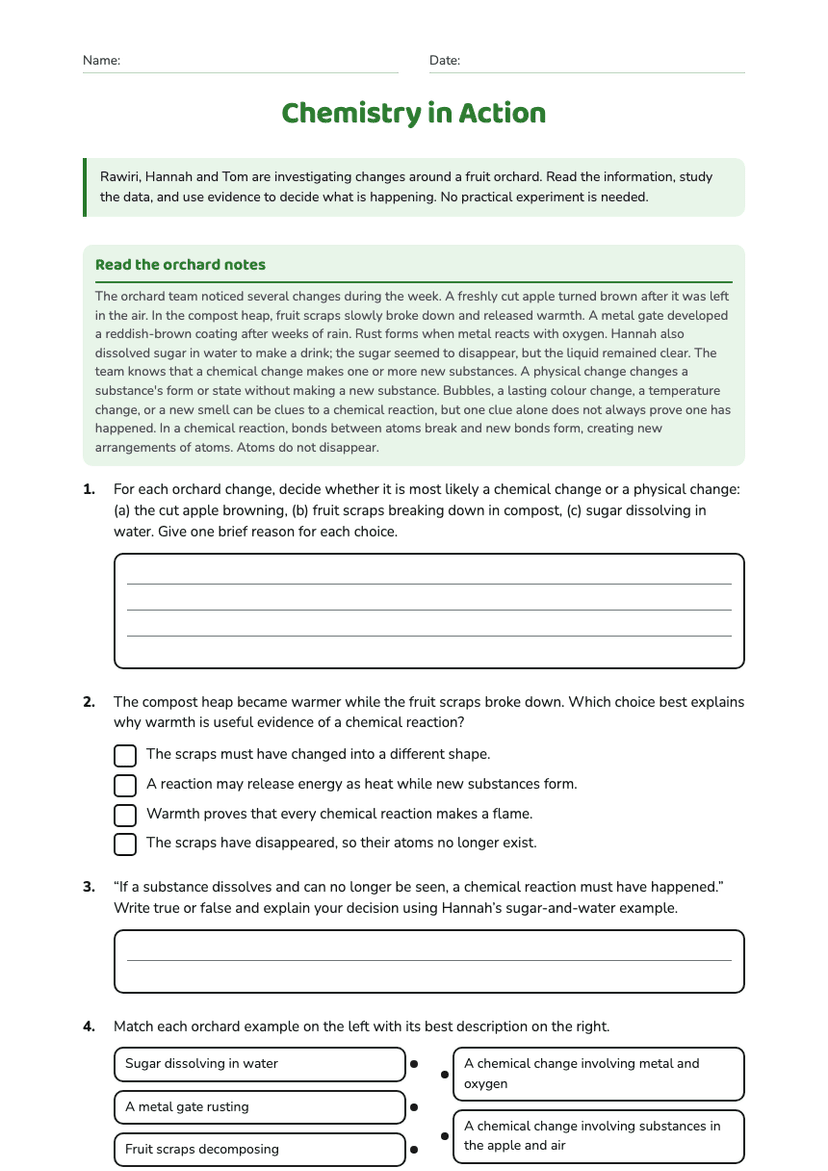
Chemistry in Action
Free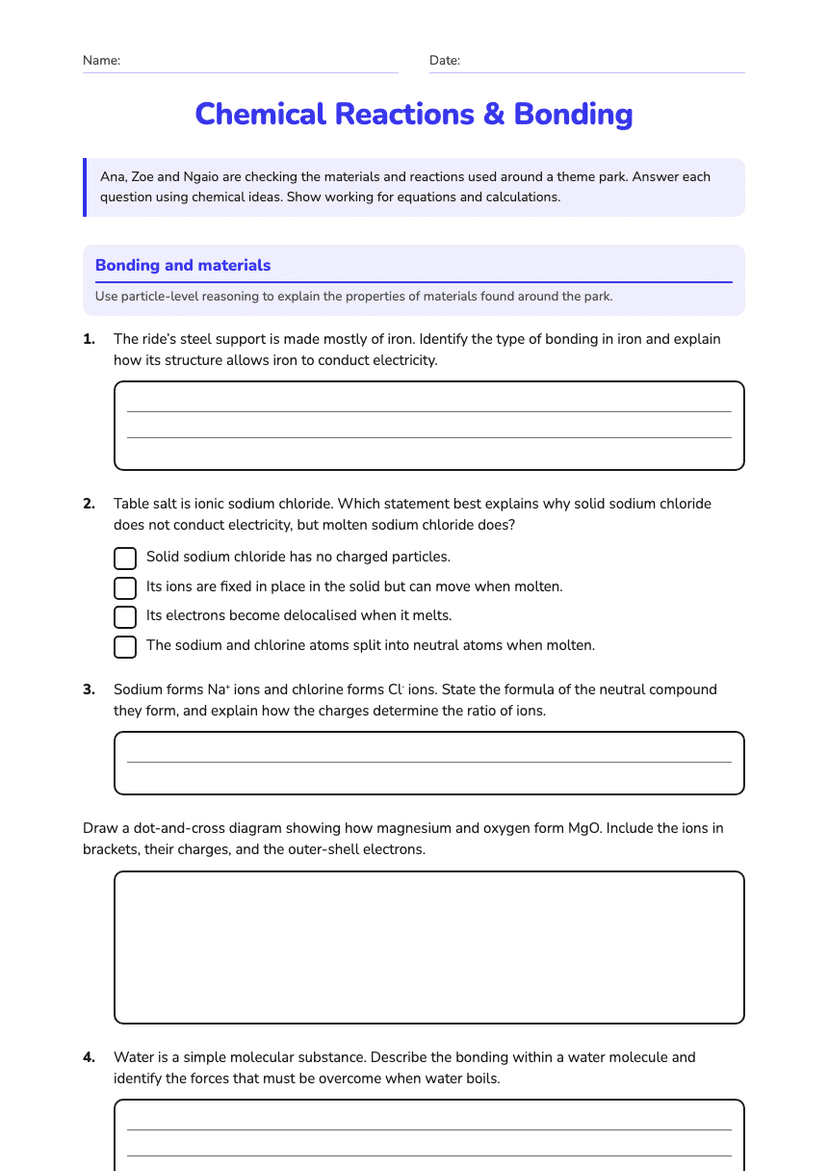
Chemical Reactions & Bonding
Free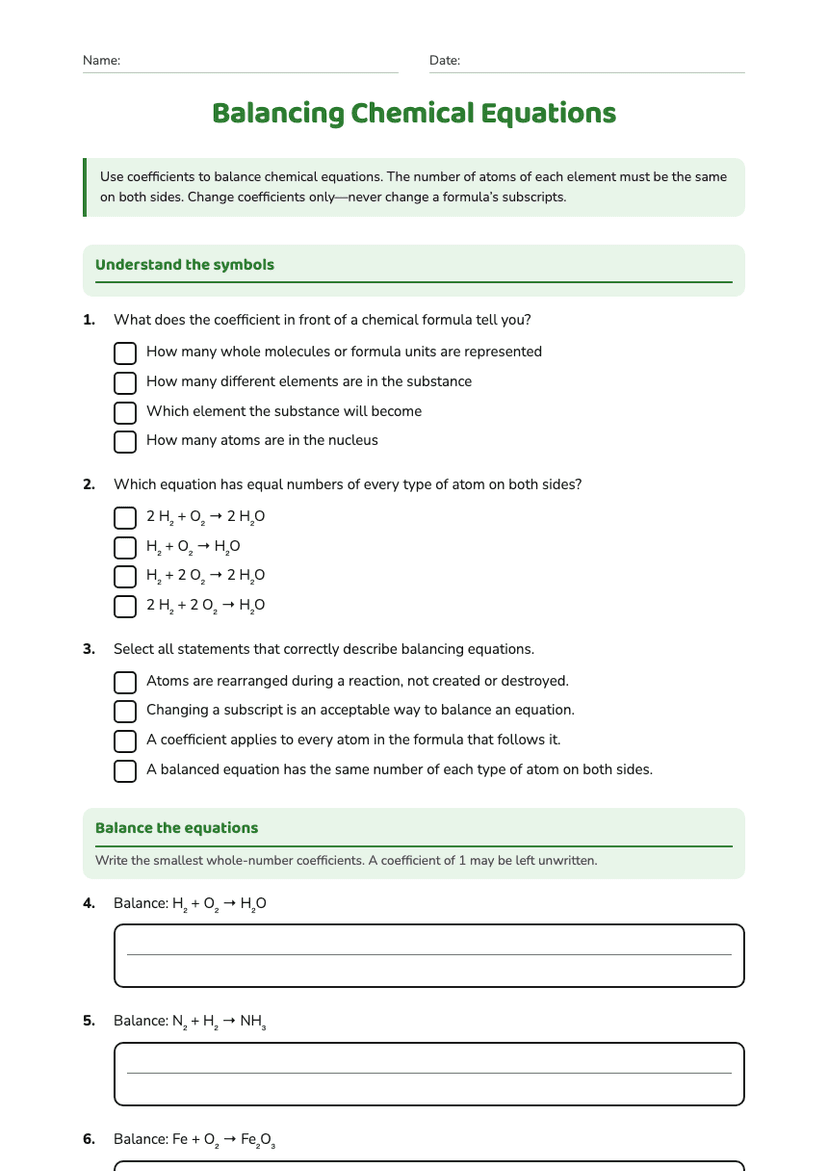
Balancing Chemical Equations
Free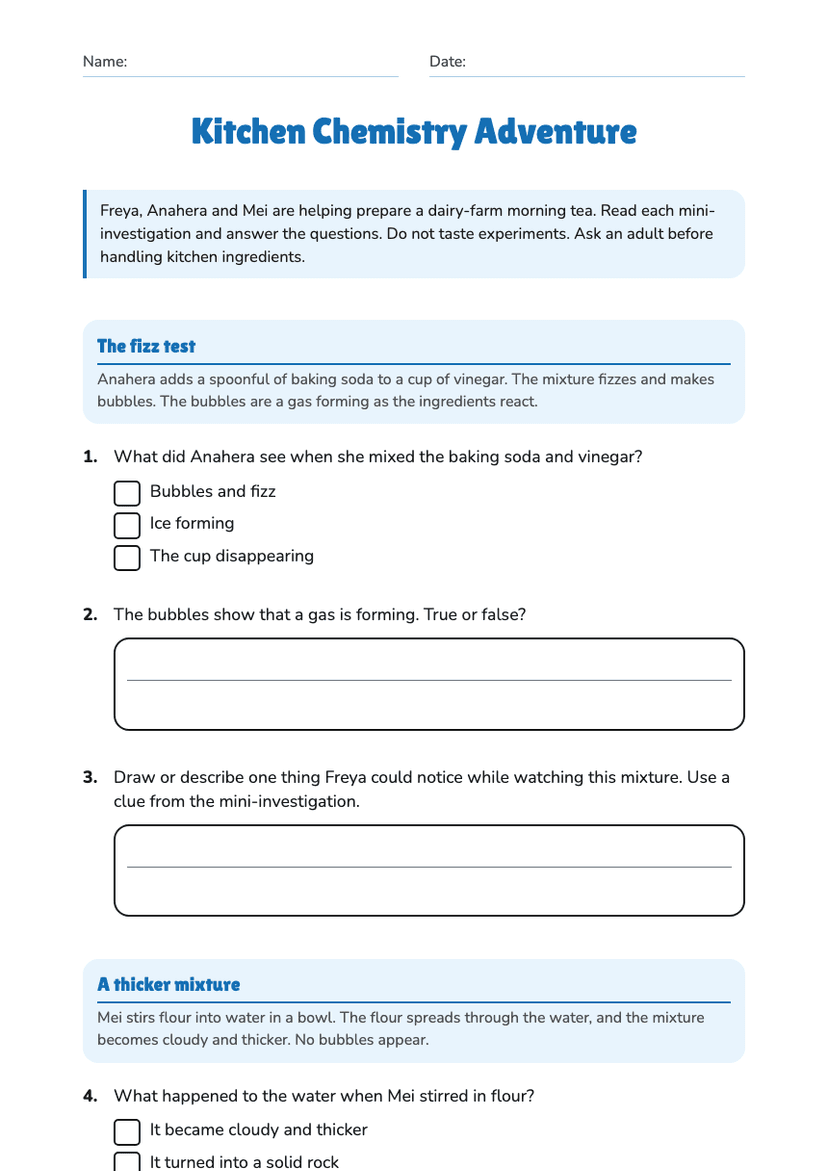
Kitchen Chemistry Adventure
Free
Chemical Reactions Introduction
Free
Element Flashcards Worksheet
Free