Understanding Acids Worksheet
A free science worksheet ready for your classroom. Open in Kuraplan to grab the print-ready PDF, customize it for your students, or generate a fresh version in seconds.
Understanding Acids Worksheet
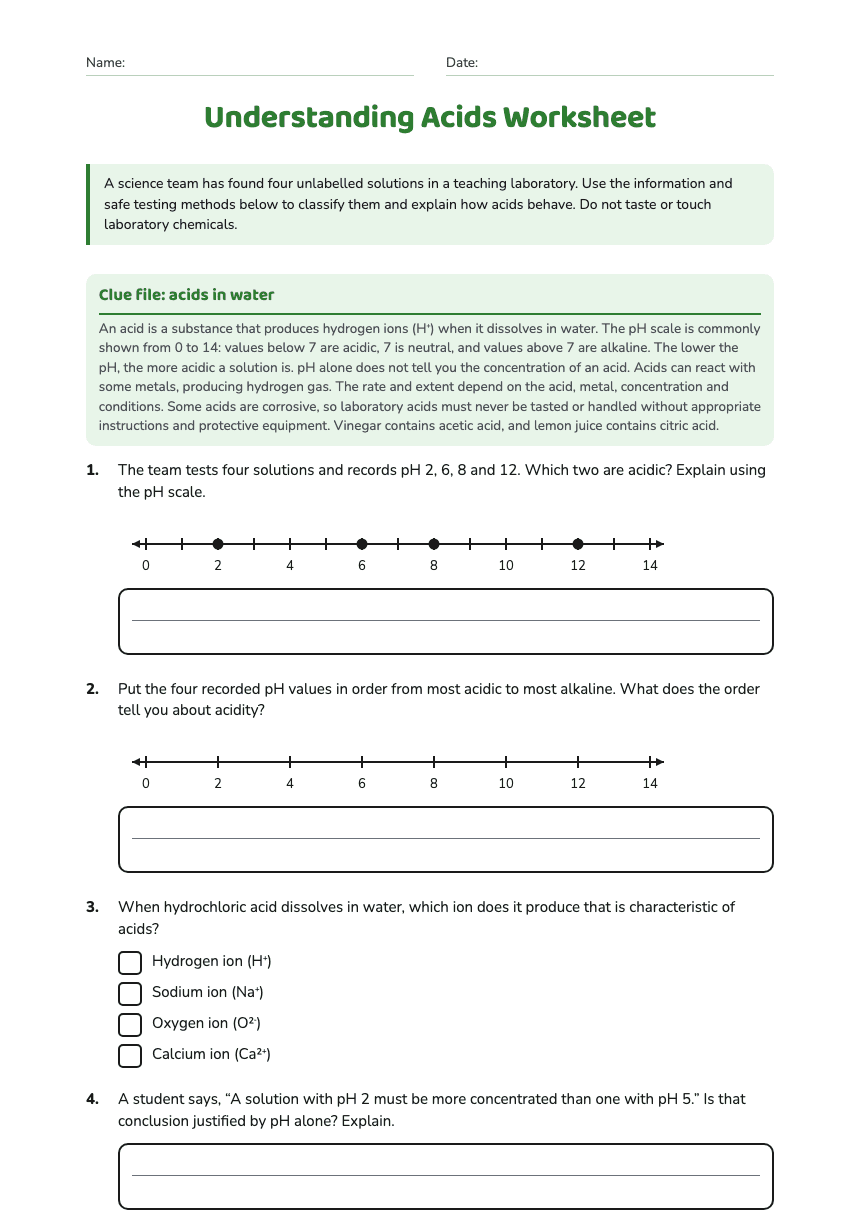
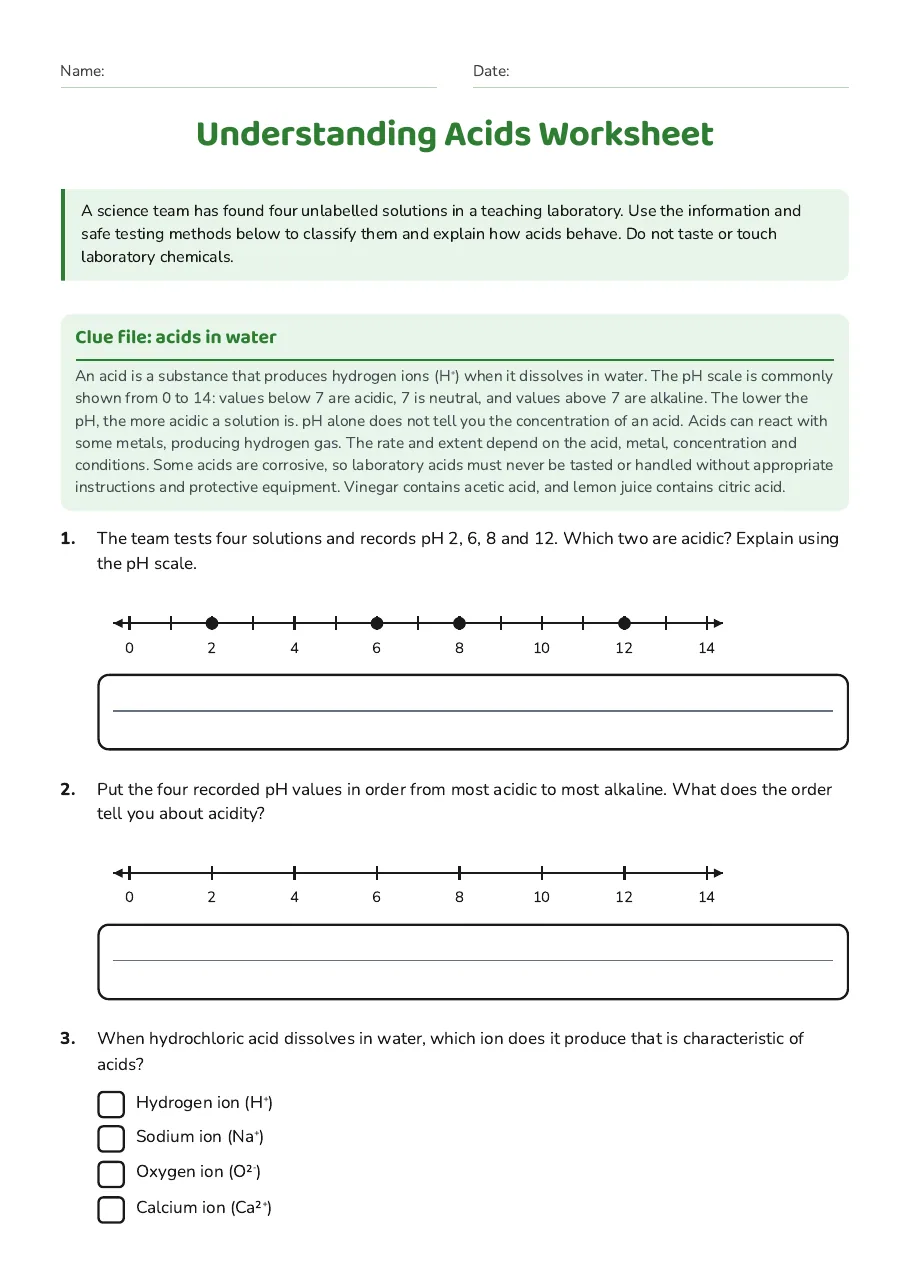
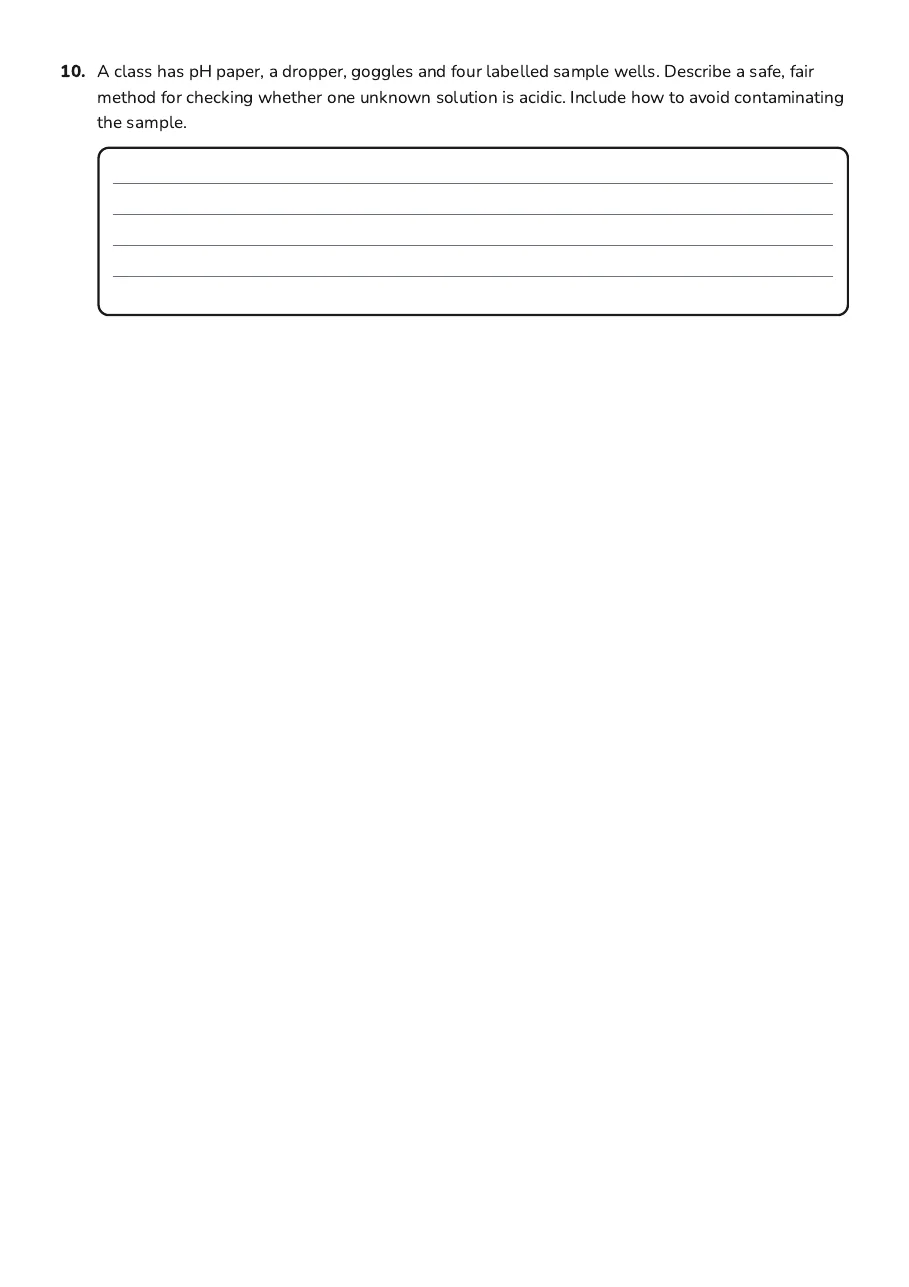
Clue file: acids in water
An acid is a substance that produces hydrogen ions (H⁺) when it dissolves in water. The pH scale is commonly shown from 0 to 14: values below 7 are acidic, 7 is neutral, and values above 7 are alkaline. The lower the pH, the more acidic a solution is. pH alone does not tell you the concentration of an acid. Acids can react with some metals, producing hydrogen gas. The rate and extent depend on the acid, metal, concentration and conditions. Some acids are corrosive, so laboratory acids must never be tasted or handled without appropriate instructions and protective equipment. Vinegar contains acetic acid, and lemon juice contains citric acid.
- Hydrogen ion (H⁺)
- Sodium ion (Na⁺)
- Oxygen ion (O²⁻)
- Calcium ion (Ca²⁺)
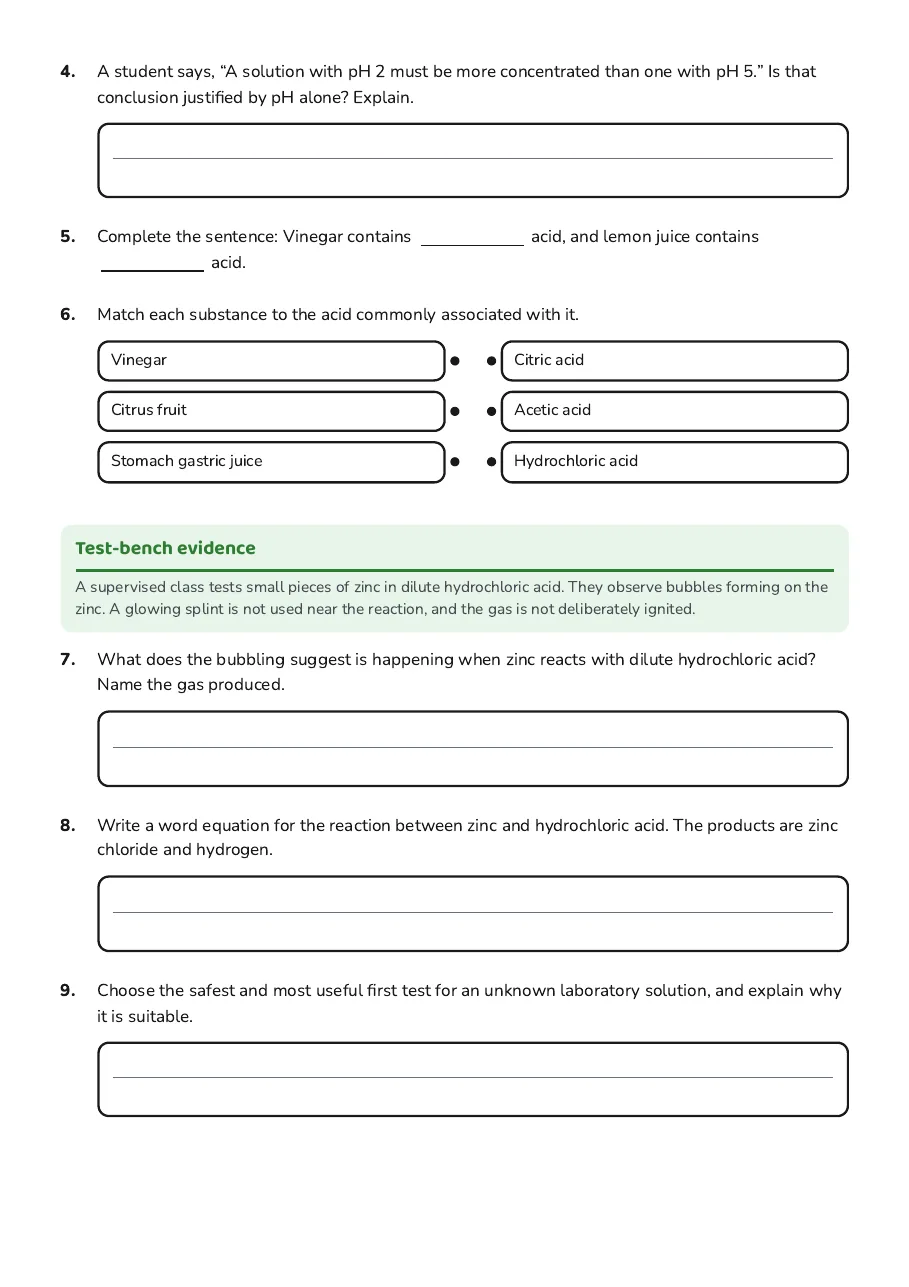
- Vinegar
- Citrus fruit
- Stomach gastric juice
- Citric acid
- Acetic acid
- Hydrochloric acid
Test-bench evidence
A supervised class tests small pieces of zinc in dilute hydrochloric acid. They observe bubbles forming on the zinc. A glowing splint is not used near the reaction, and the gas is not deliberately ignited.
3 printable pages
Page 1
Page 2
Page 3
About This Worksheet
Free in Kuraplan
Sign up free, grab the PDF, and customize it for your class.
Print-Ready
Formatted for standard paper. Clean layout, easy to read.
AI-Generated
Created with Kuraplan's AI, designed for real classroom use.
For Teachers & Parents
Use in classrooms, for homework, tutoring, or homeschool.
Need a custom version of this worksheet?
Kuraplan's AI generates custom worksheets in seconds — differentiated for every learner, aligned to your curriculum.
Generate Custom Worksheets — FreeMore Science Worksheets
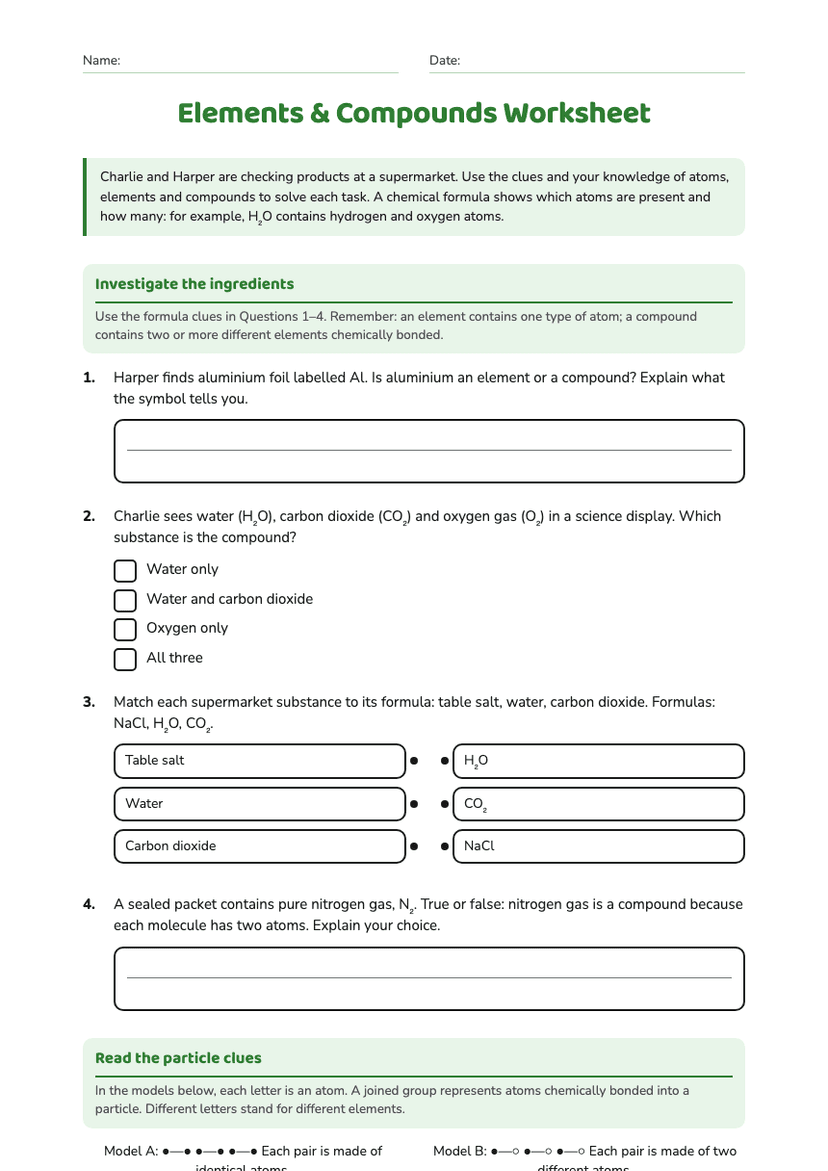
Elements & Compounds Worksheet
Free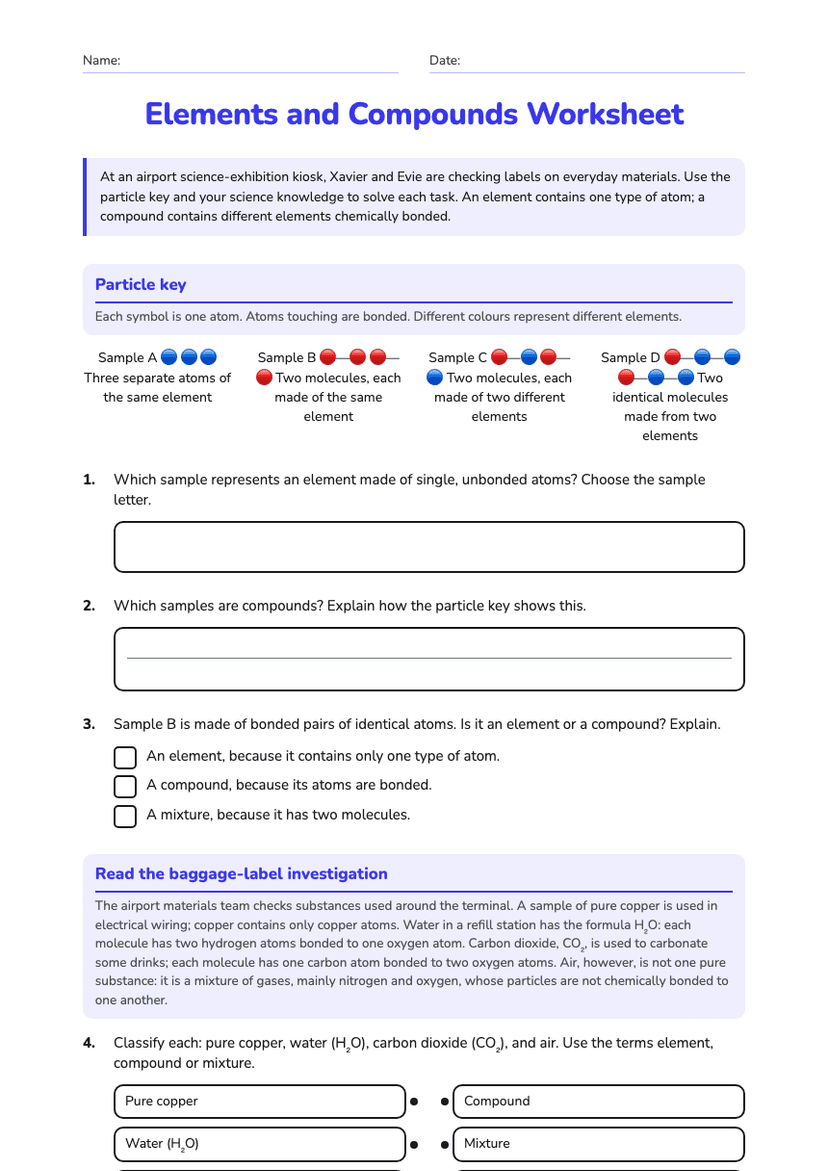
Elements and Compounds Worksheet
Free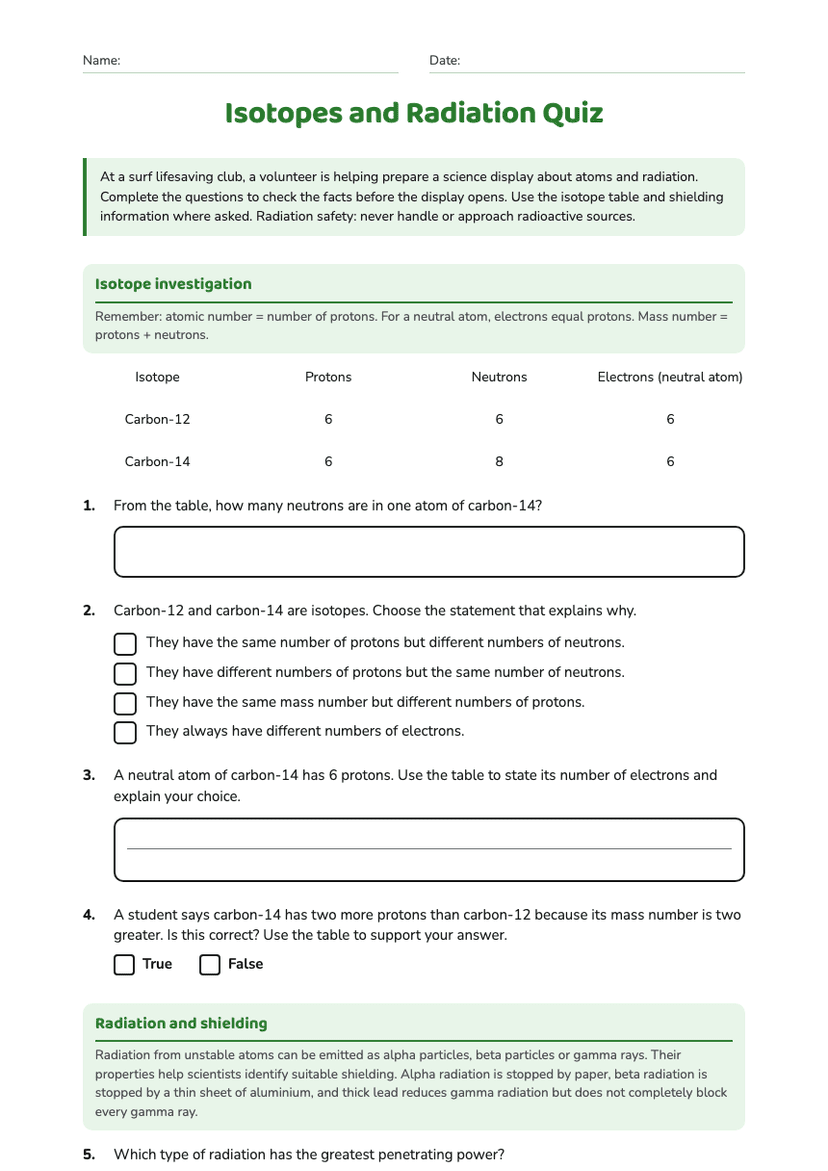
Isotopes and Radiation Quiz
Free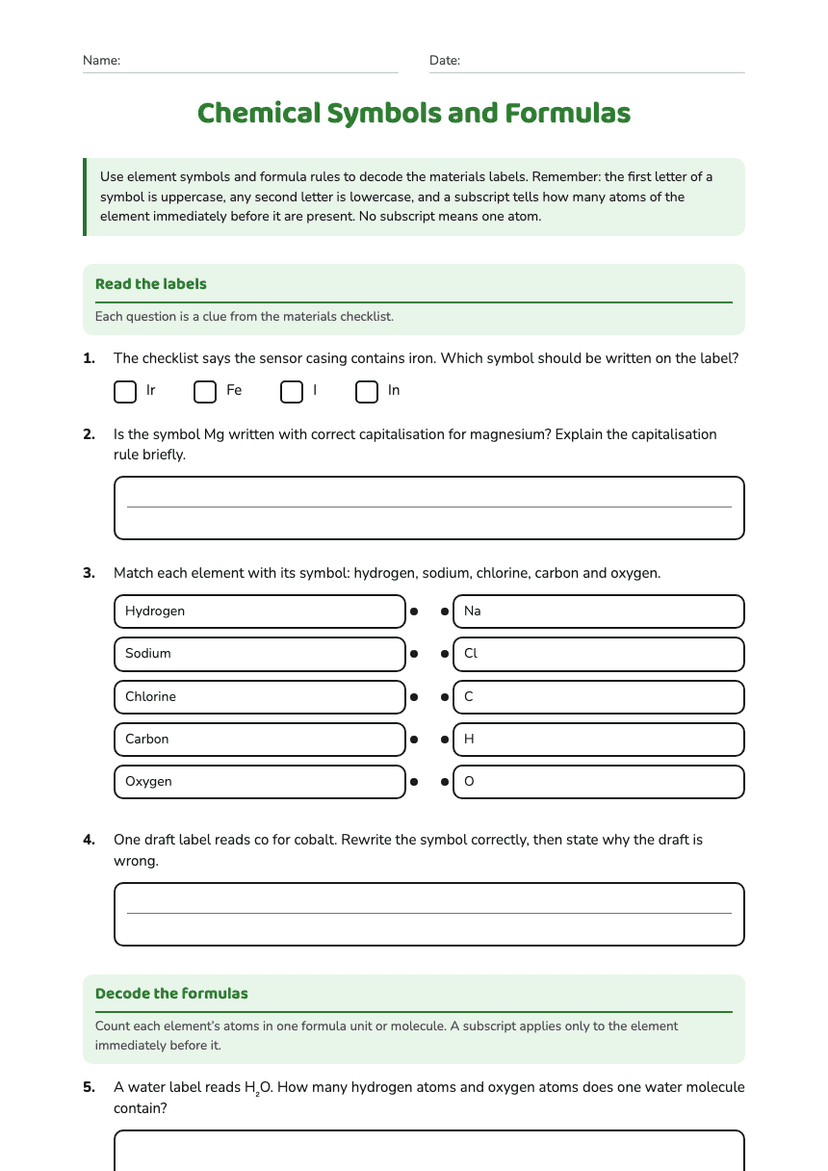
Chemical Symbols and Formulas
Free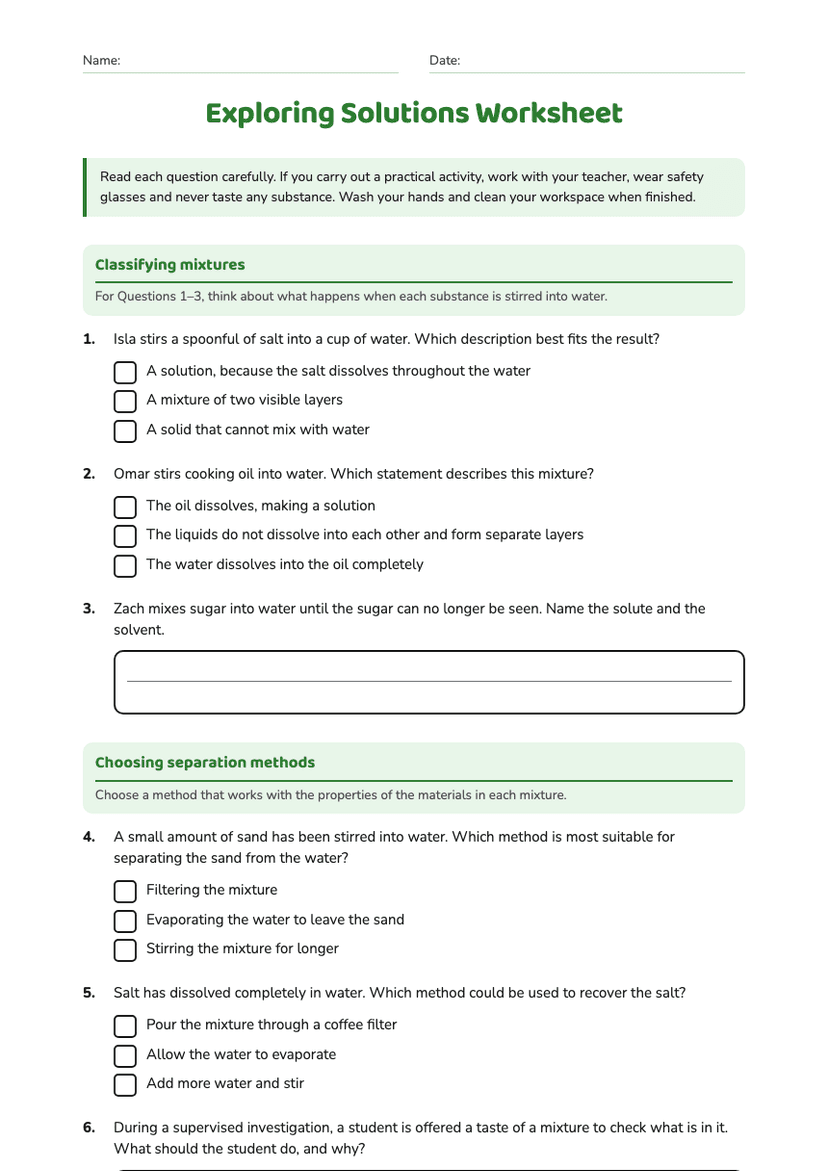
Exploring Solutions Worksheet
Free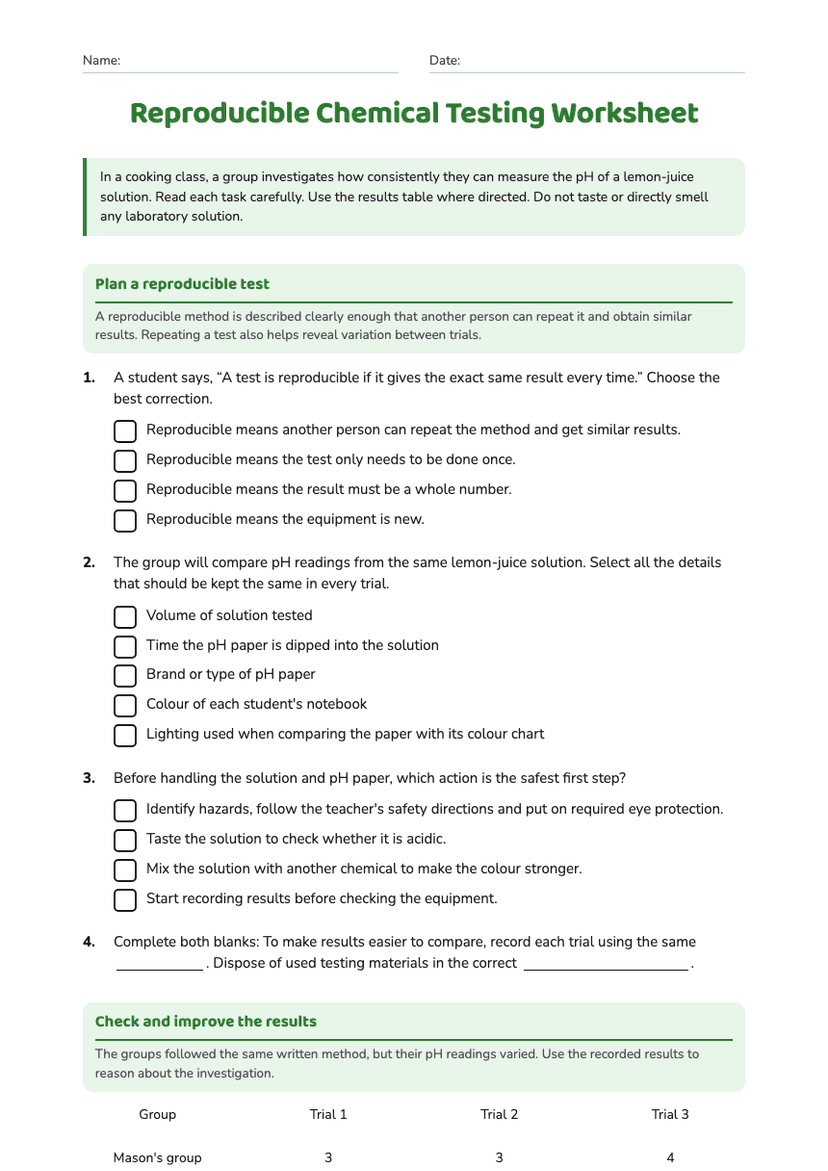
Reproducible Chemical Testing Worksheet
Free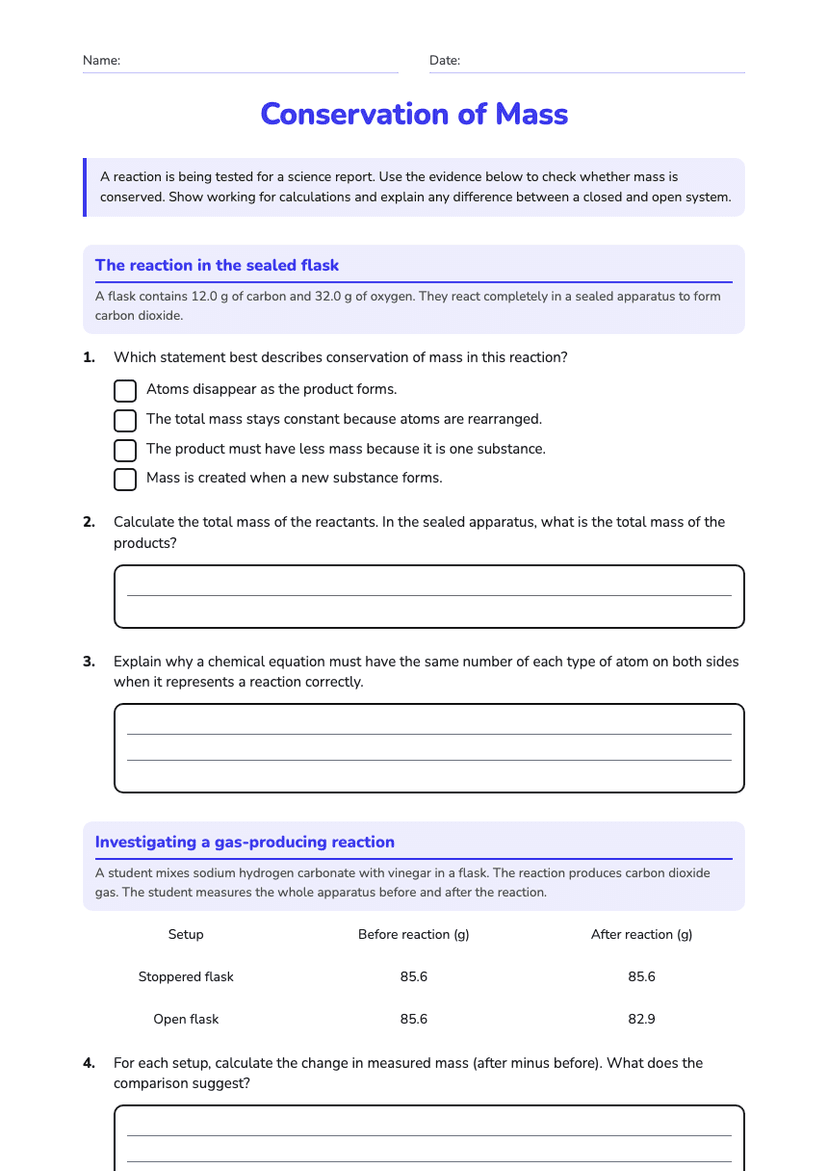
Conservation of Mass
Free