Visual Storytelling Storyboards
A free drama worksheet ready for your classroom. Open in Kuraplan to grab the print-ready PDF, customize it for your students, or generate a fresh version in seconds.
Visual Storytelling Storyboards
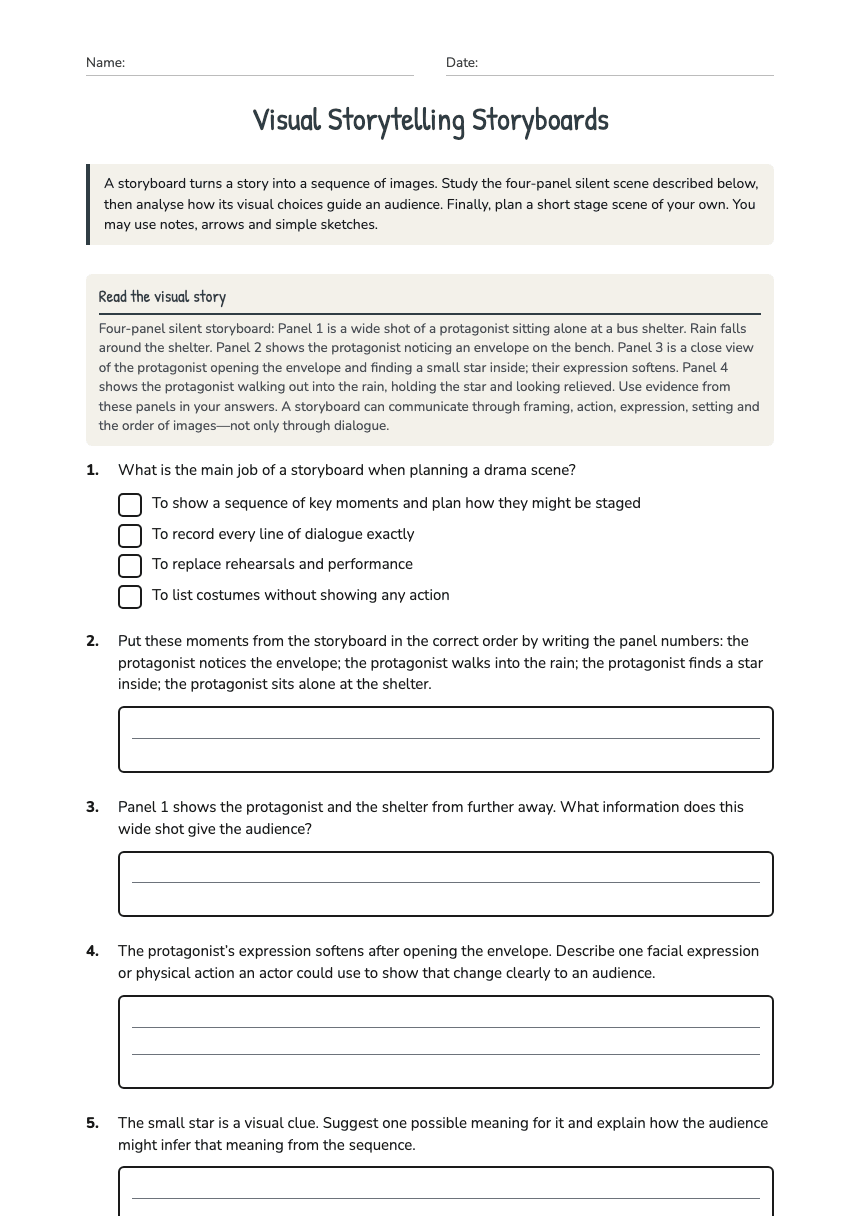
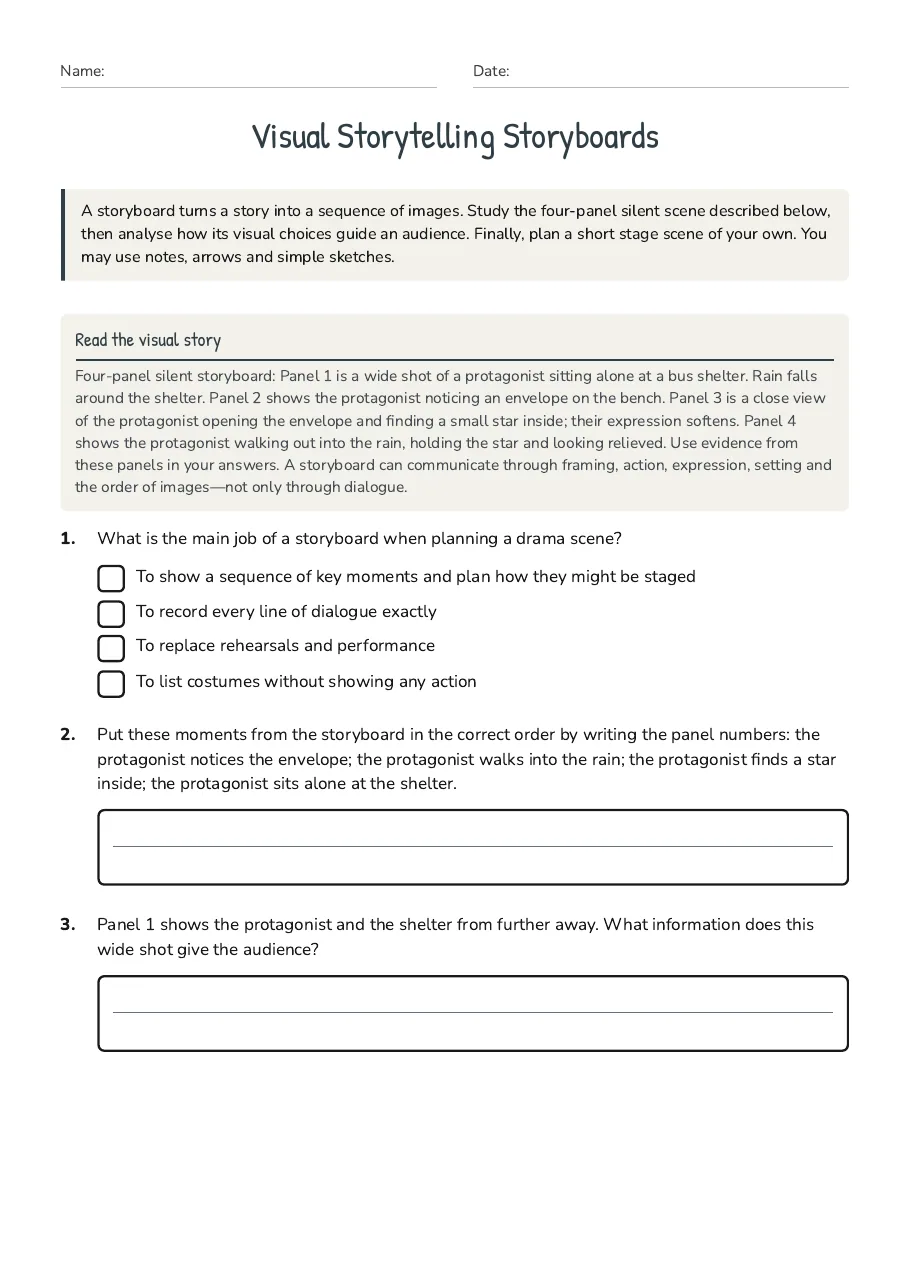
Read the visual story
Four-panel silent storyboard: Panel 1 is a wide shot of a protagonist sitting alone at a bus shelter. Rain falls around the shelter. Panel 2 shows the protagonist noticing an envelope on the bench. Panel 3 is a close view of the protagonist opening the envelope and finding a small star inside; their expression softens. Panel 4 shows the protagonist walking out into the rain, holding the star and looking relieved. Use evidence from these panels in your answers. A storyboard can communicate through framing, action, expression, setting and the order of images—not only through dialogue.
- To show a sequence of key moments and plan how they might be staged
- To record every line of dialogue exactly
- To replace rehearsals and performance
- To list costumes without showing any action
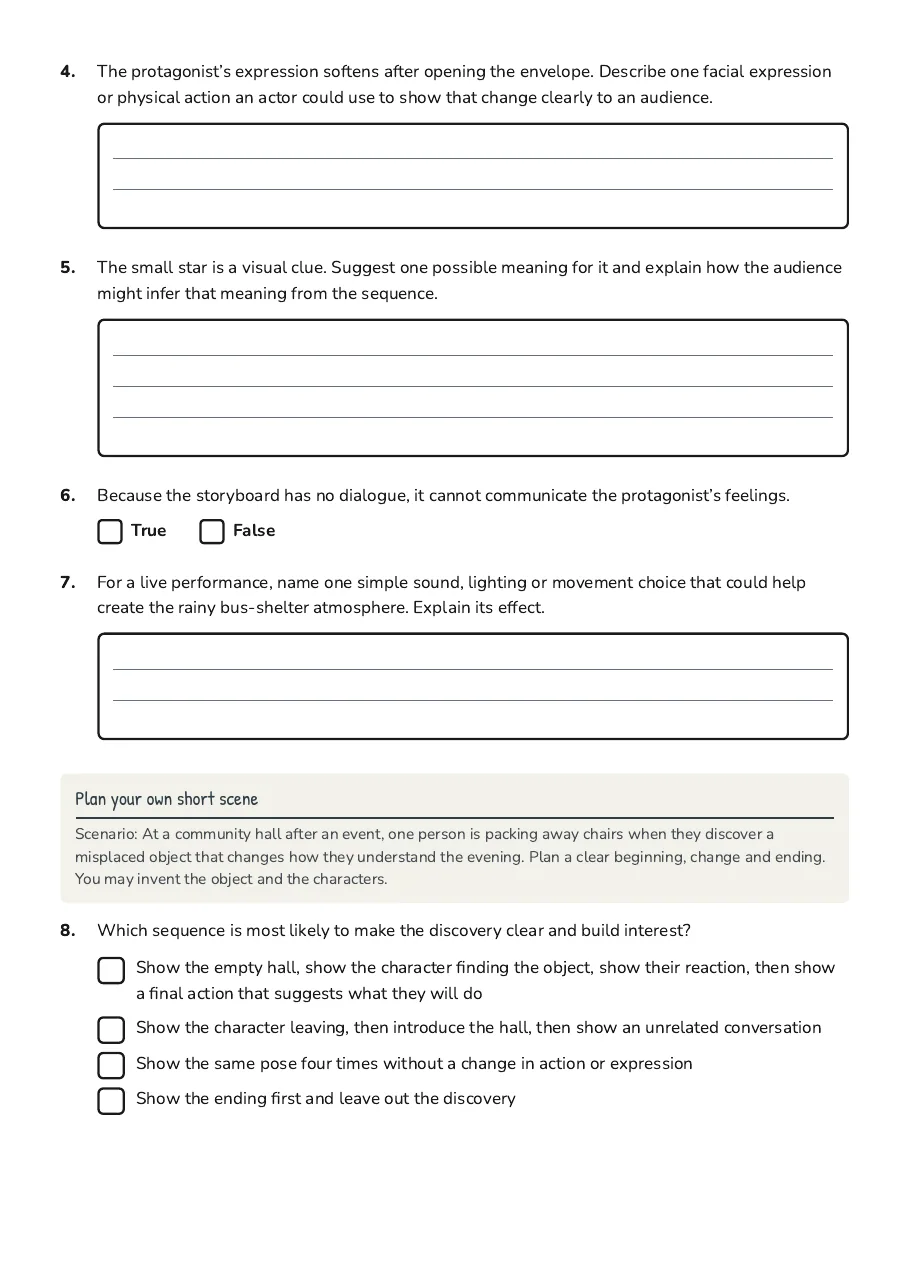
Plan your own short scene
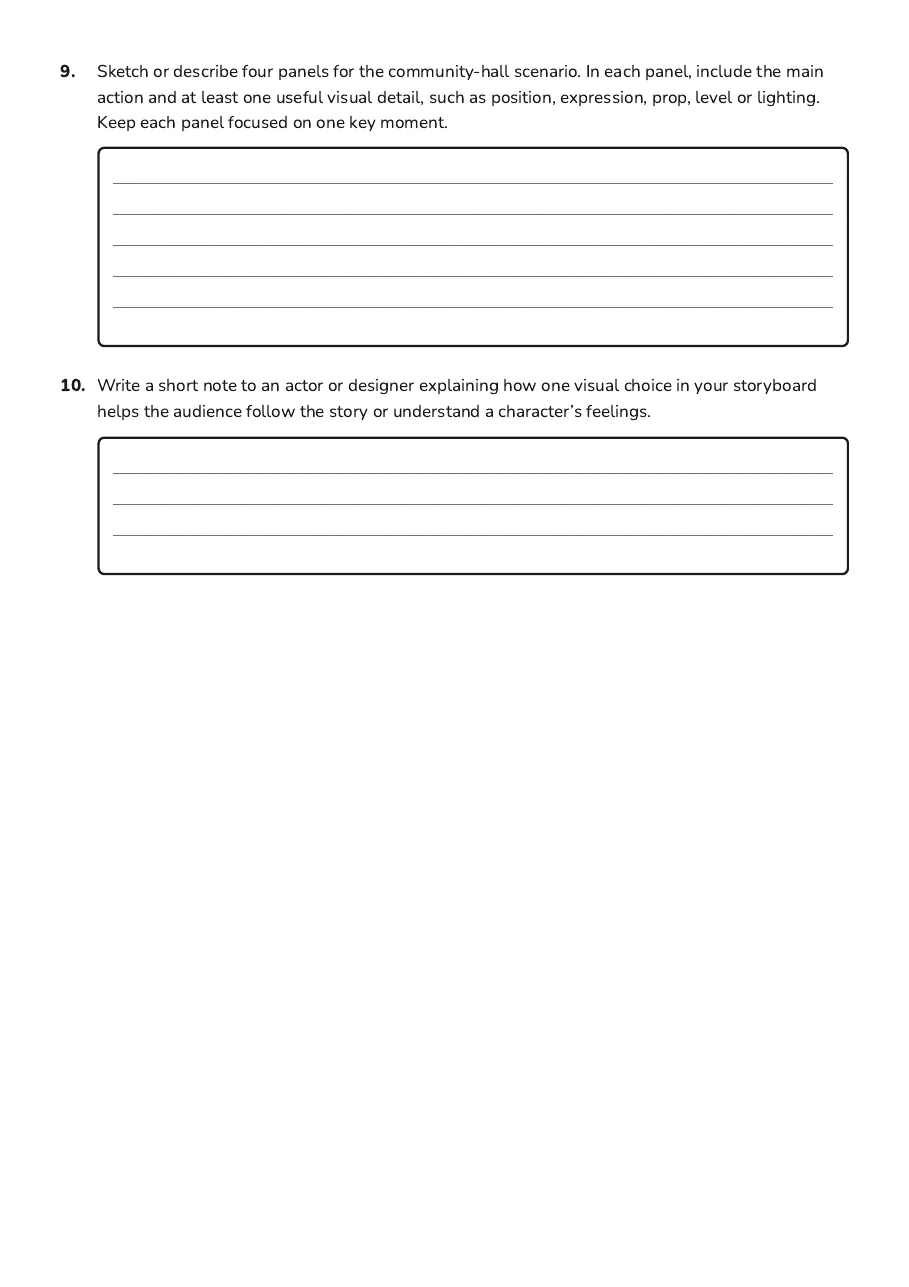
Scenario: At a community hall after an event, one person is packing away chairs when they discover a misplaced object that changes how they understand the evening. Plan a clear beginning, change and ending. You may invent the object and the characters.
- Show the empty hall, show the character finding the object, show their reaction, then show a final action that suggests what they will do
- Show the character leaving, then introduce the hall, then show an unrelated conversation
- Show the same pose four times without a change in action or expression
- Show the ending first and leave out the discovery
3 printable pages
Page 1
Page 2
Page 3
About This Worksheet
Free in Kuraplan
Sign up free, grab the PDF, and customize it for your class.
Print-Ready
Formatted for standard paper. Clean layout, easy to read.
AI-Generated
Created with Kuraplan's AI, designed for real classroom use.
For Teachers & Parents
Use in classrooms, for homework, tutoring, or homeschool.
Need a custom version of this worksheet?
Kuraplan's AI generates custom worksheets in seconds — differentiated for every learner, aligned to your curriculum.
Generate Custom Worksheets — FreeMore Drama Worksheets
Graphs and Data Visualization
Free
Data Visualisation Basics
Free
Storytelling and Writing Workshop
Free
Māori Storytelling Traditions
Free
Māori Storytelling and Treaty
Free
Interpreting Data Visualisations
Free
Artistic Storytelling Exploration
Free