Wellington Bush Ecosystem Impacts
A free science worksheet ready for your classroom. Open in Kuraplan to grab the print-ready PDF, customize it for your students, or generate a fresh version in seconds.
Wellington Bush Ecosystem Impacts
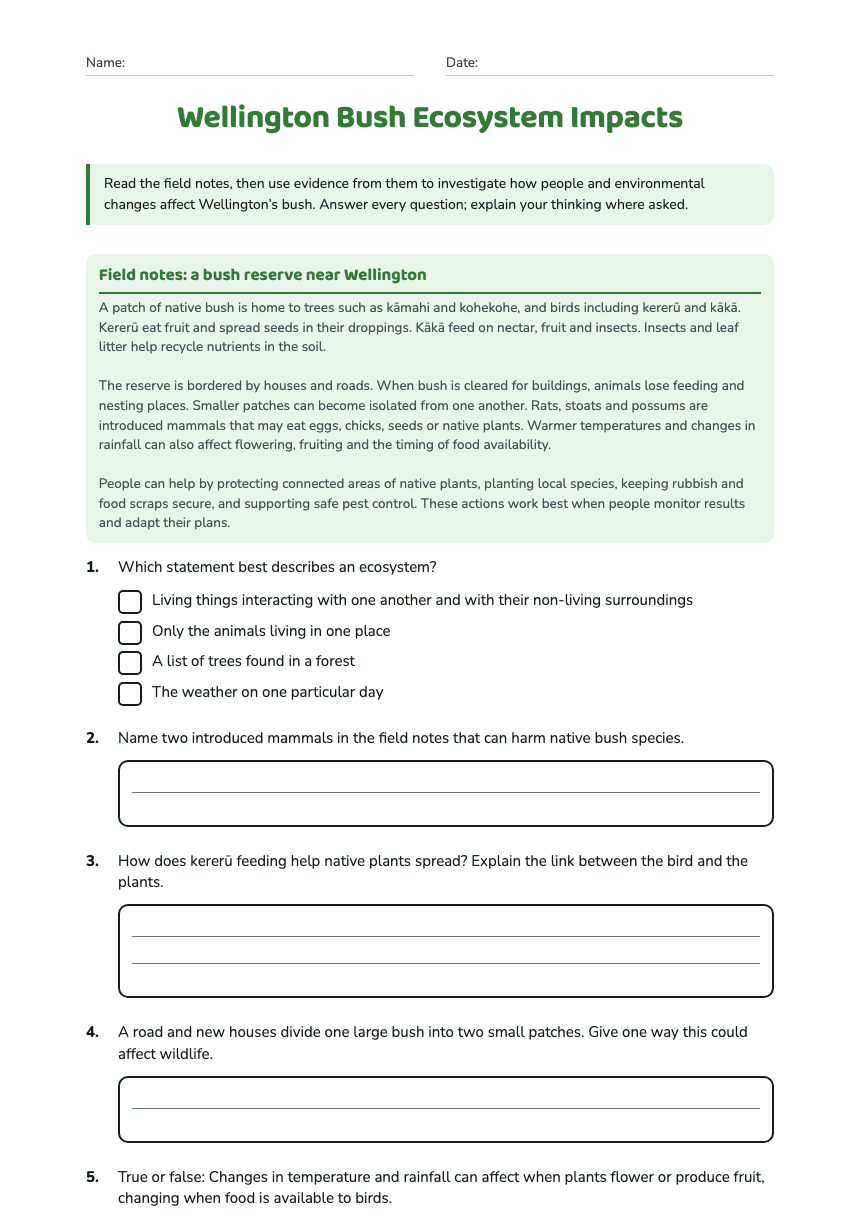
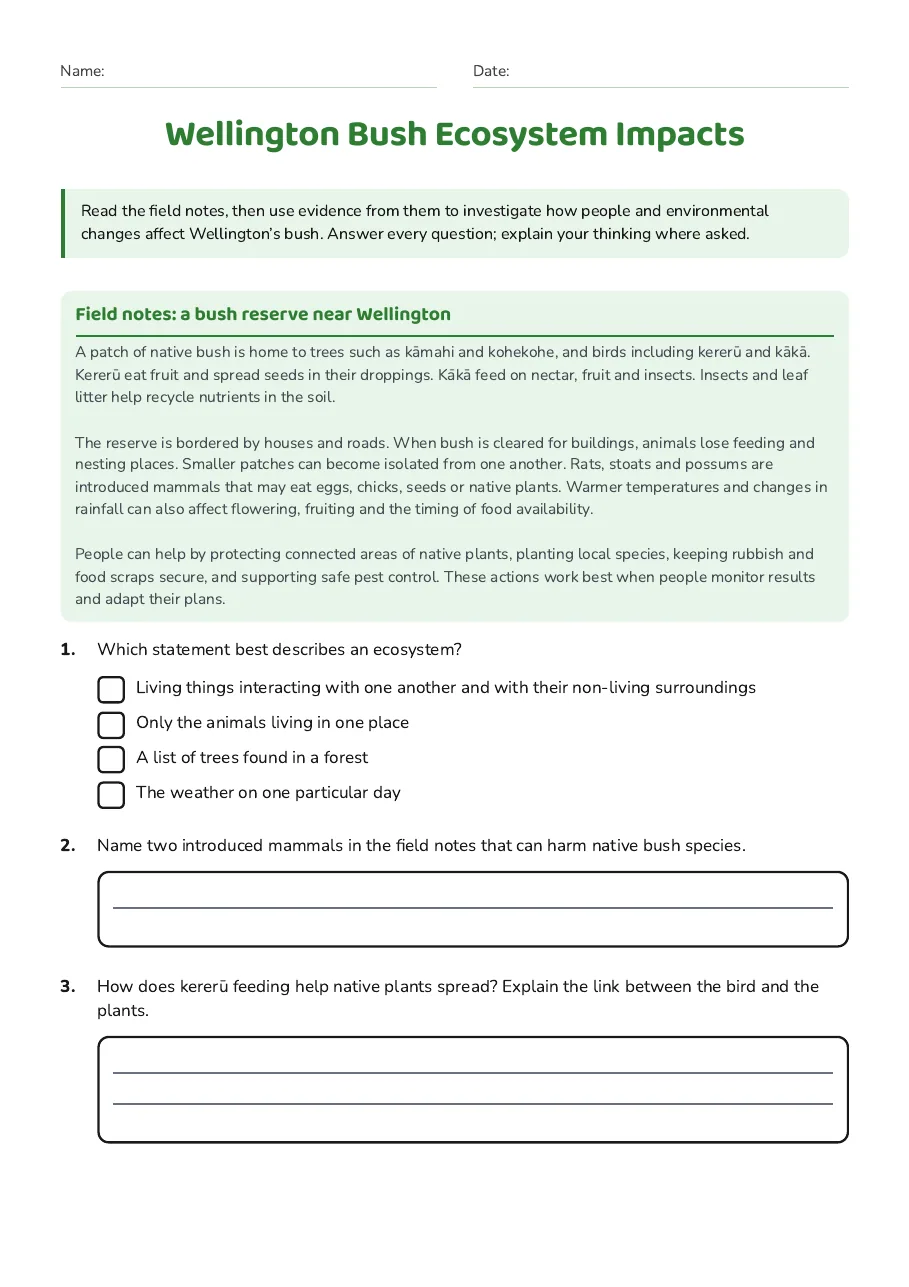
Field notes: a bush reserve near Wellington
A patch of native bush is home to trees such as kāmahi and kohekohe, and birds including kererū and kākā. Kererū eat fruit and spread seeds in their droppings. Kākā feed on nectar, fruit and insects. Insects and leaf litter help recycle nutrients in the soil. The reserve is bordered by houses and roads. When bush is cleared for buildings, animals lose feeding and nesting places. Smaller patches can become isolated from one another. Rats, stoats and possums are introduced mammals that may eat eggs, chicks, seeds or native plants. Warmer temperatures and changes in rainfall can also affect flowering, fruiting and the timing of food availability. People can help by protecting connected areas of native plants, planting local species, keeping rubbish and food scraps secure, and supporting safe pest control. These actions work best when people monitor results and adapt their plans.
- Living things interacting with one another and with their non-living surroundings
- Only the animals living in one place
- A list of trees found in a forest
- The weather on one particular day
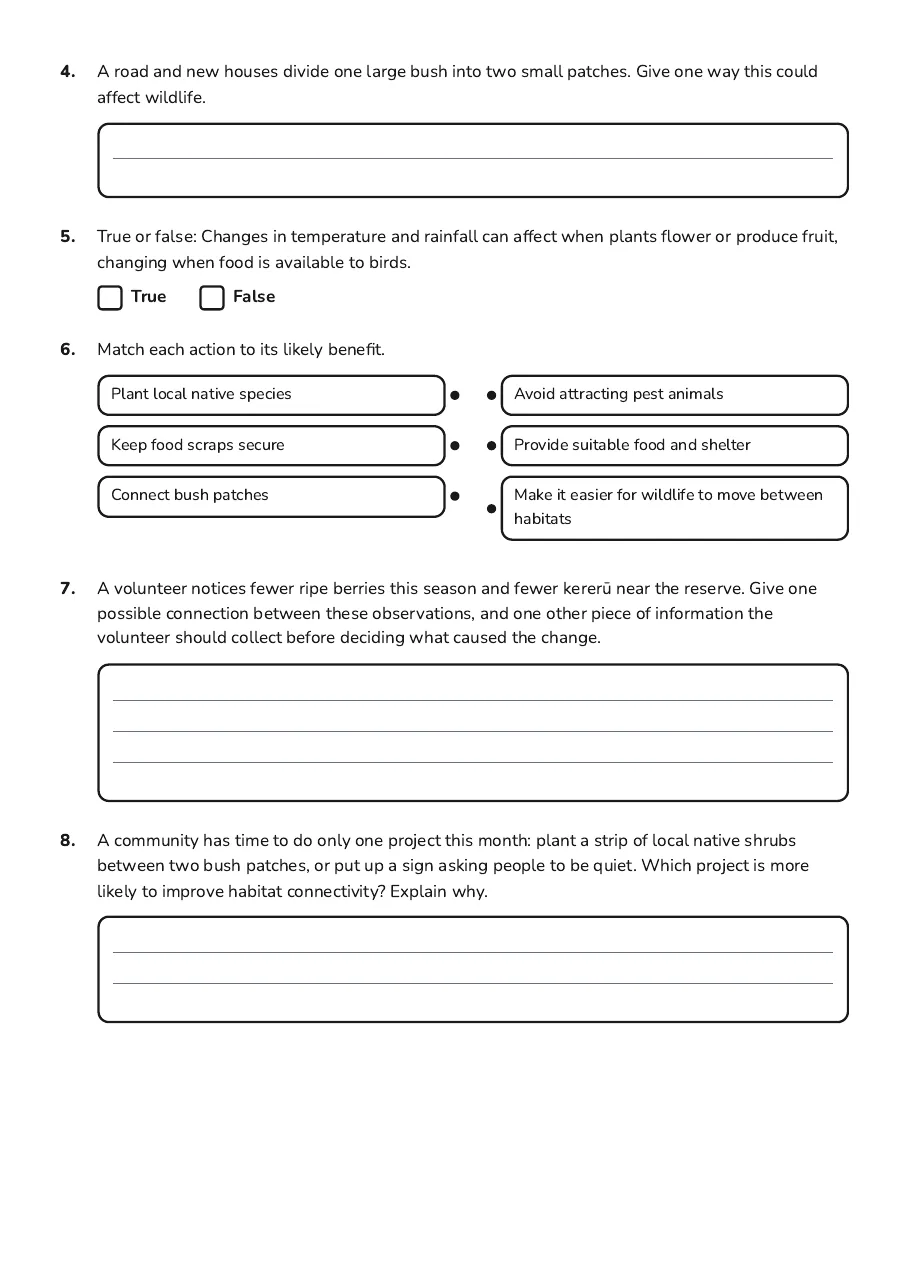
- Plant local native species
- Keep food scraps secure
- Connect bush patches
- Avoid attracting pest animals
- Provide suitable food and shelter
- Make it easier for wildlife to move between habitats
3 printable pages
Page 1
Page 2

Page 3
About This Worksheet
Free in Kuraplan
Sign up free, grab the PDF, and customize it for your class.
Print-Ready
Formatted for standard paper. Clean layout, easy to read.
AI-Generated
Created with Kuraplan's AI, designed for real classroom use.
For Teachers & Parents
Use in classrooms, for homework, tutoring, or homeschool.
Need a custom version of this worksheet?
Kuraplan's AI generates custom worksheets in seconds — differentiated for every learner, aligned to your curriculum.
Generate Custom Worksheets — FreeMore Science Worksheets
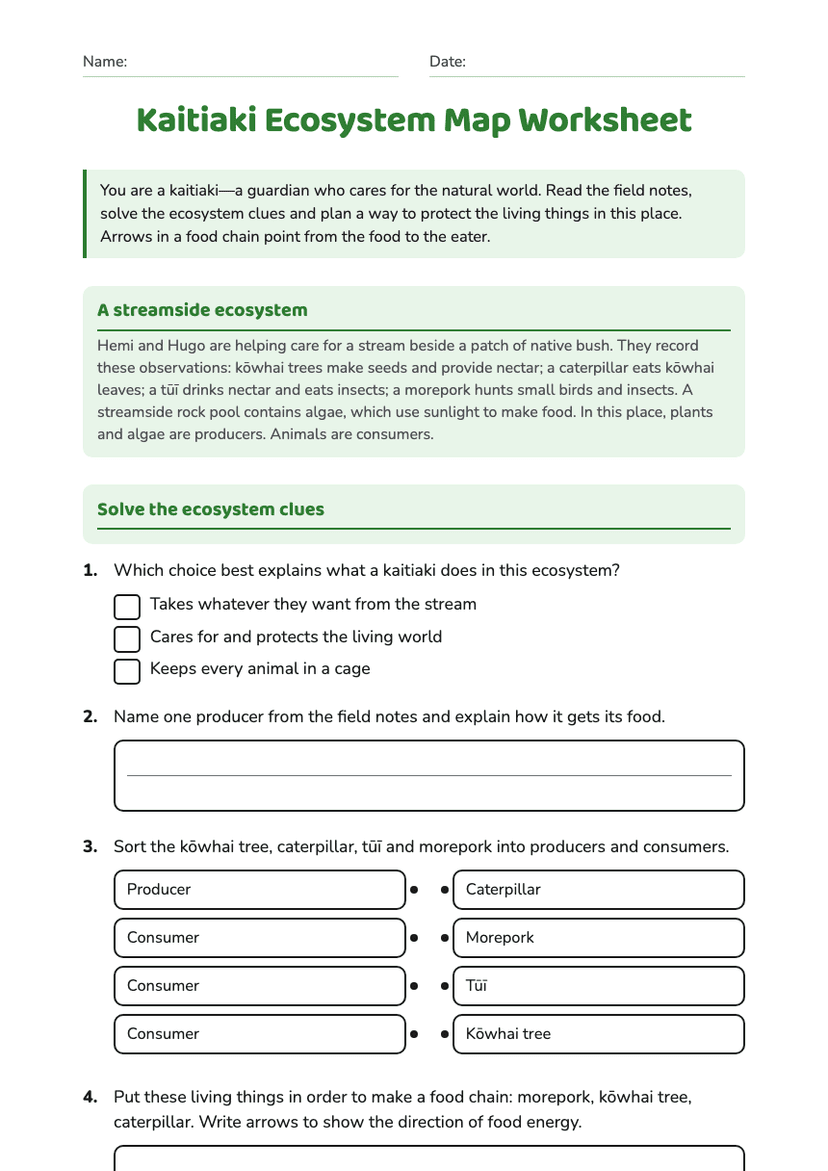
Kaitiaki Ecosystem Map Worksheet
Free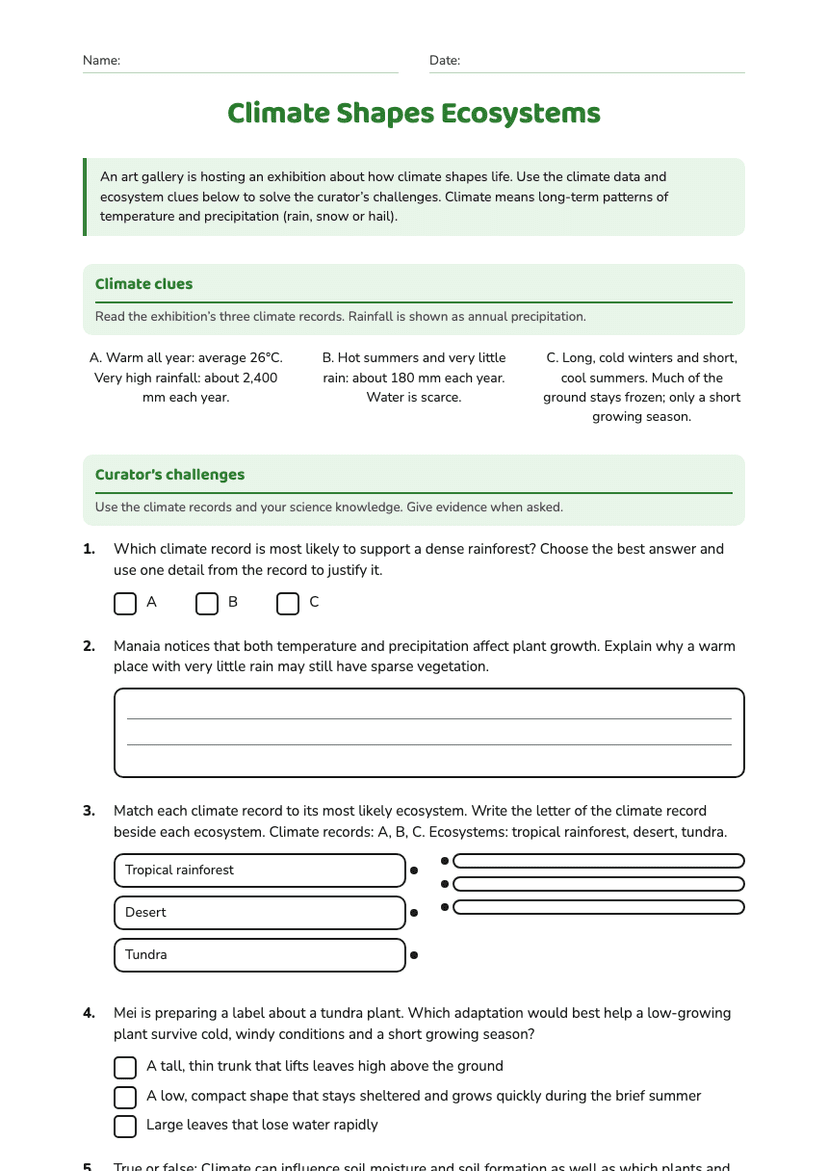
Climate Shapes Ecosystems
Free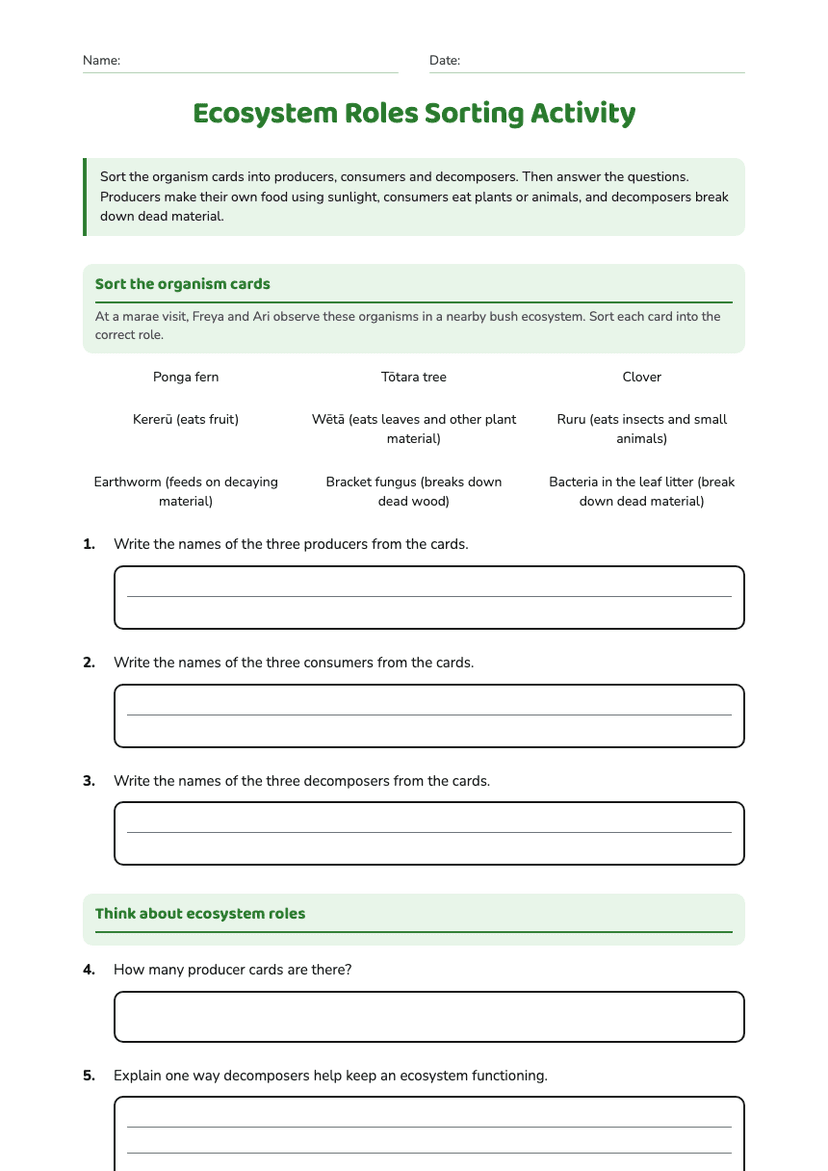
Ecosystem Roles Sorting Activity
Free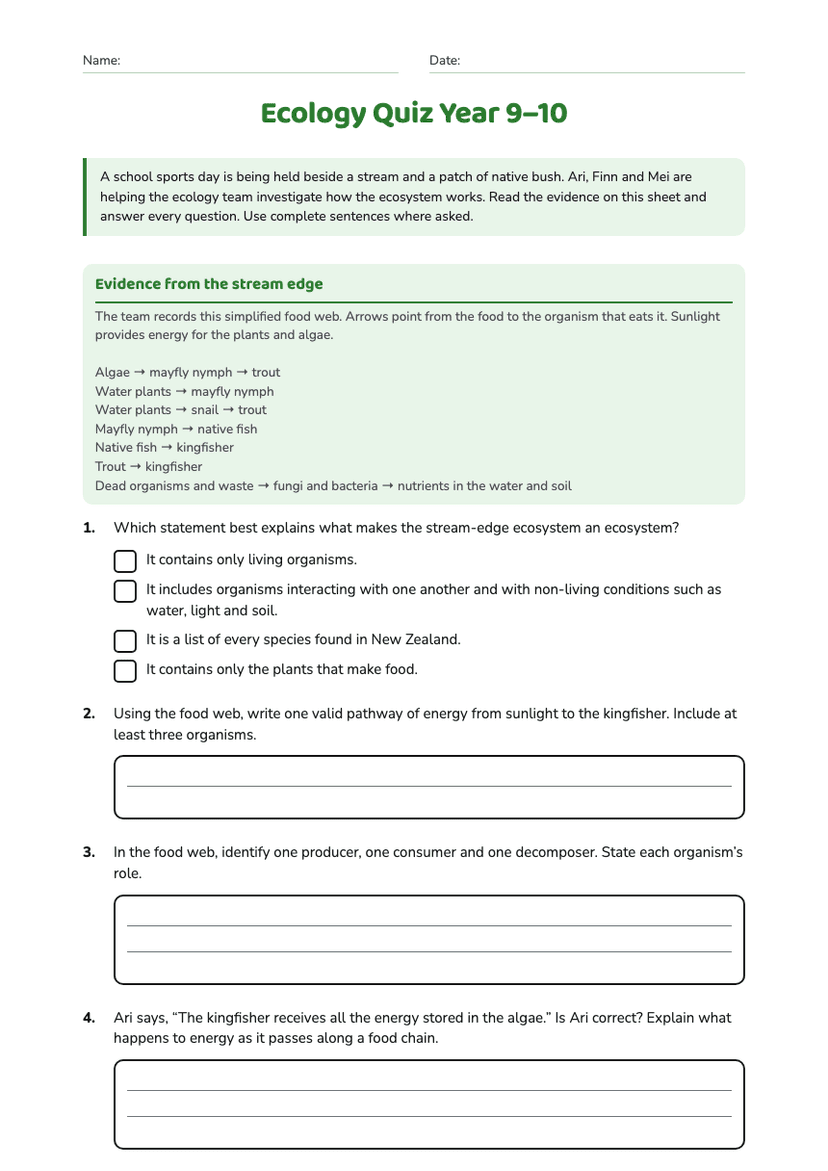
Ecology Quiz Year 9–10
Free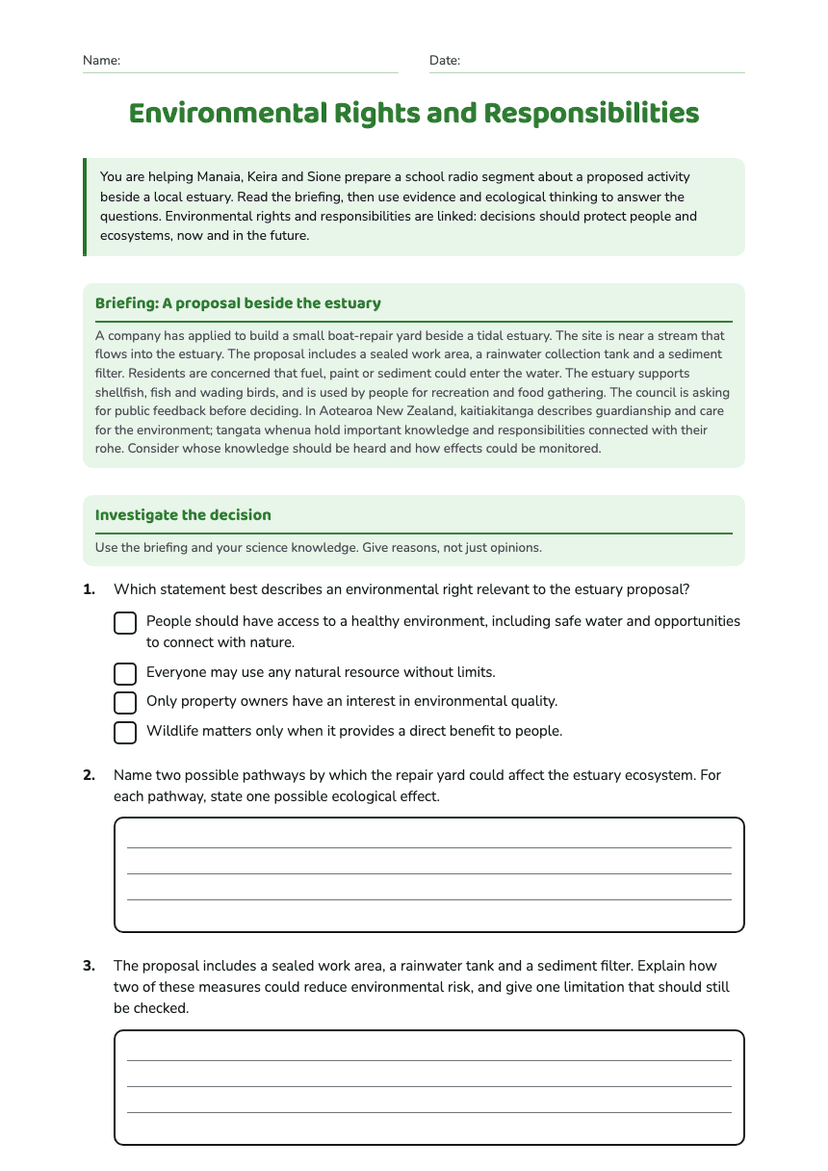
Environmental Rights and Responsibilities
Free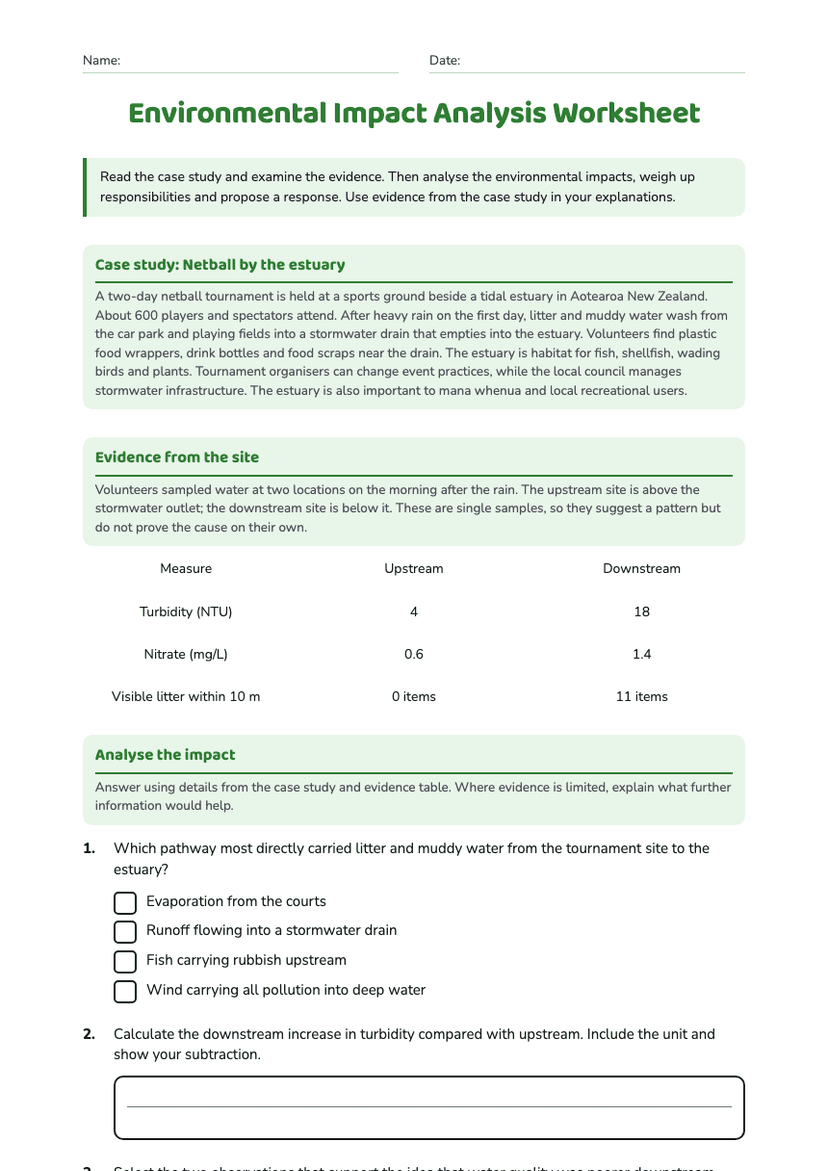
Environmental Impact Analysis Worksheet
Free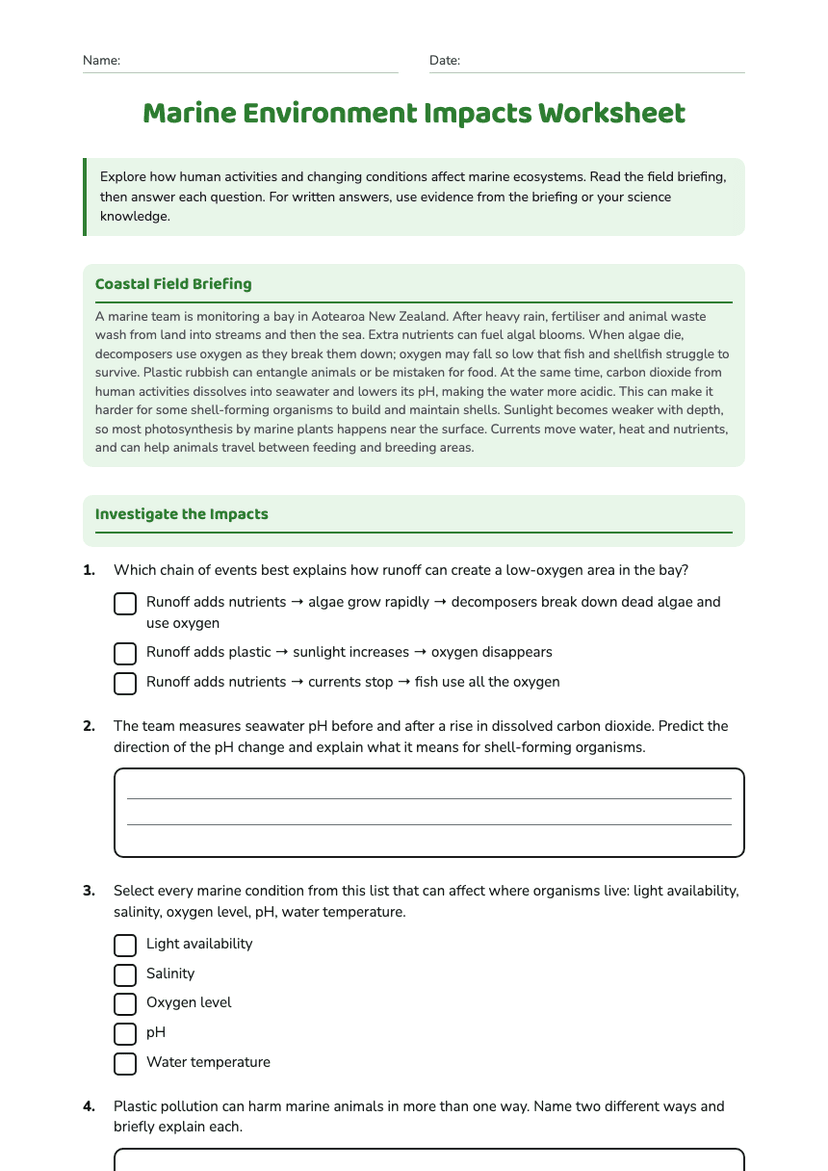
Marine Environment Impacts Worksheet
Free