Whānau in Māori Culture
A free te reo māori worksheet ready for your classroom. Open in Kuraplan to grab the print-ready PDF, customize it for your students, or generate a fresh version in seconds.
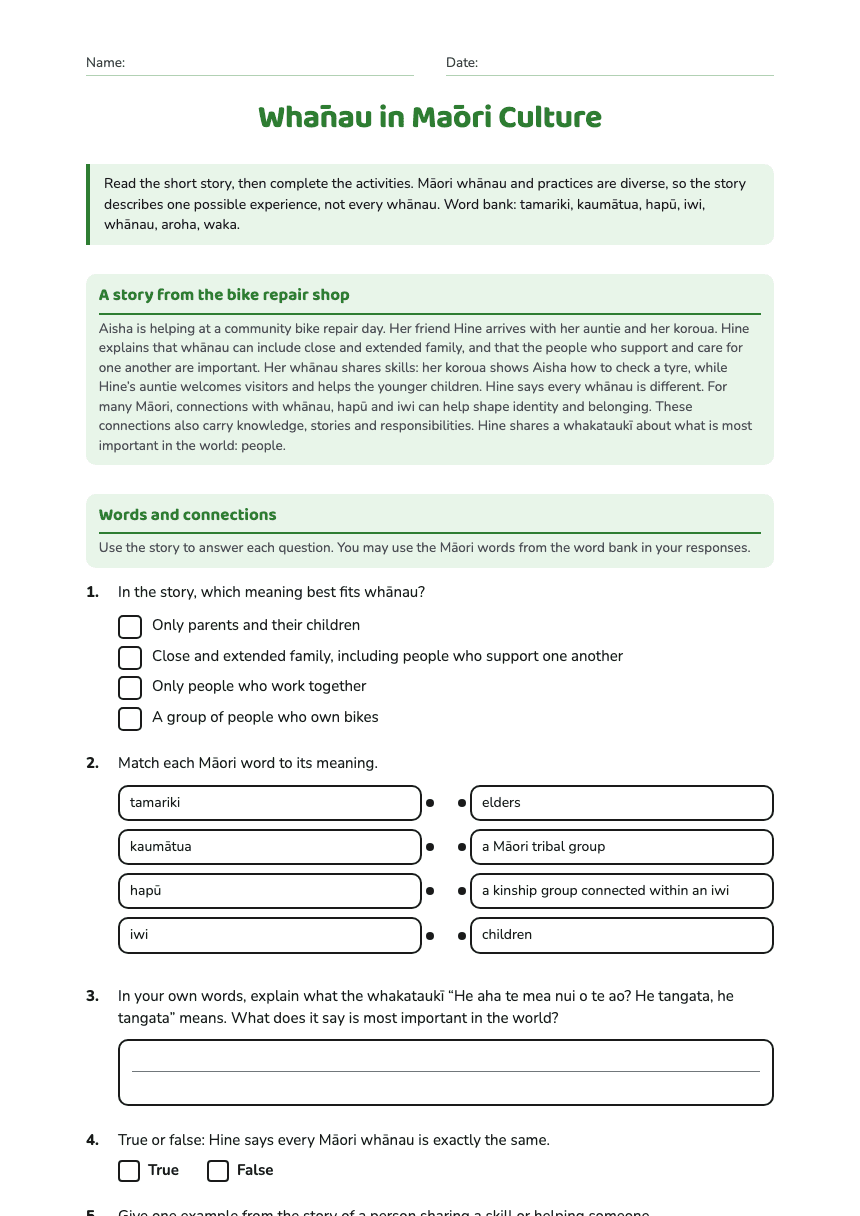
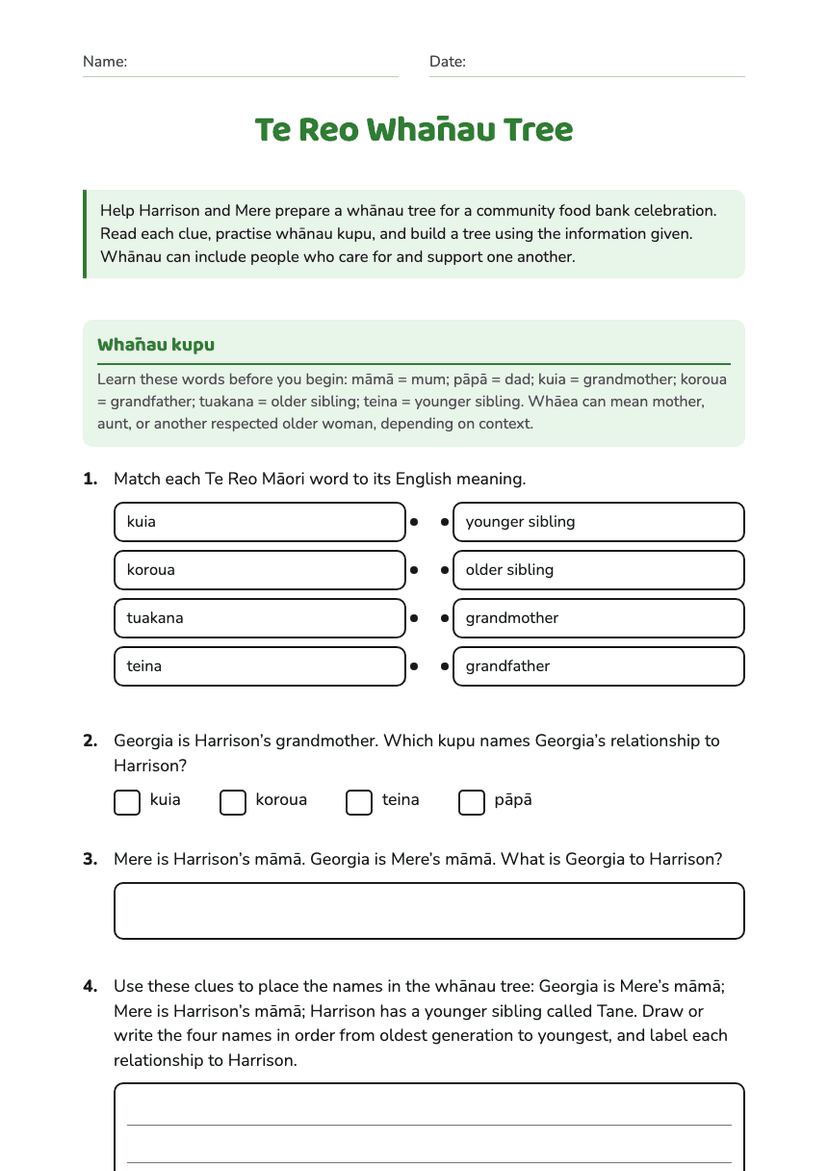
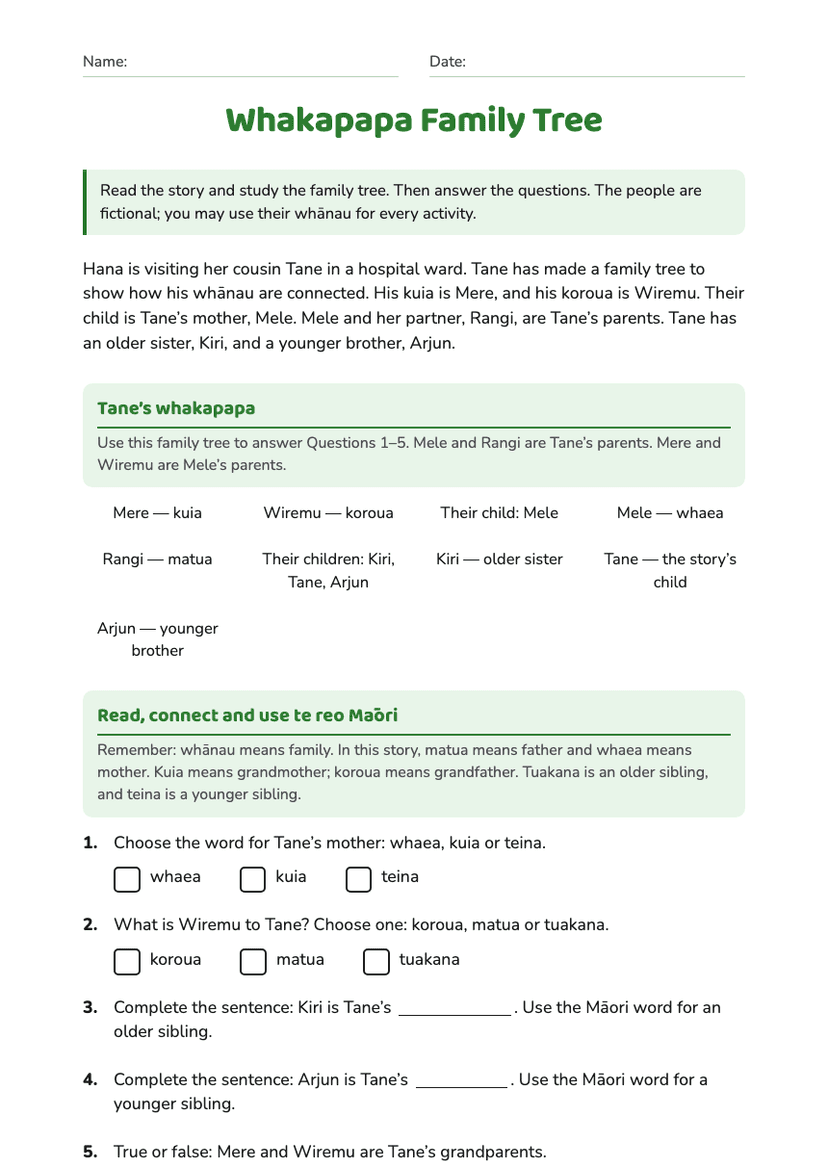
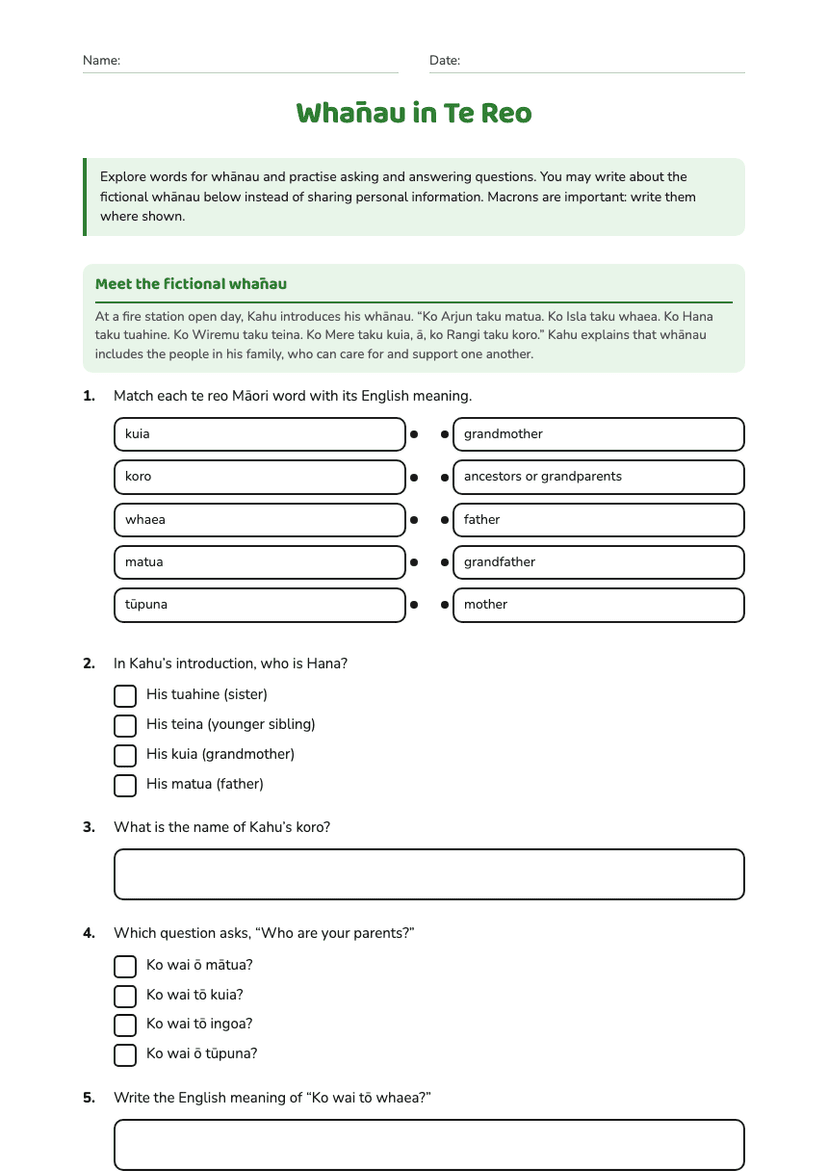
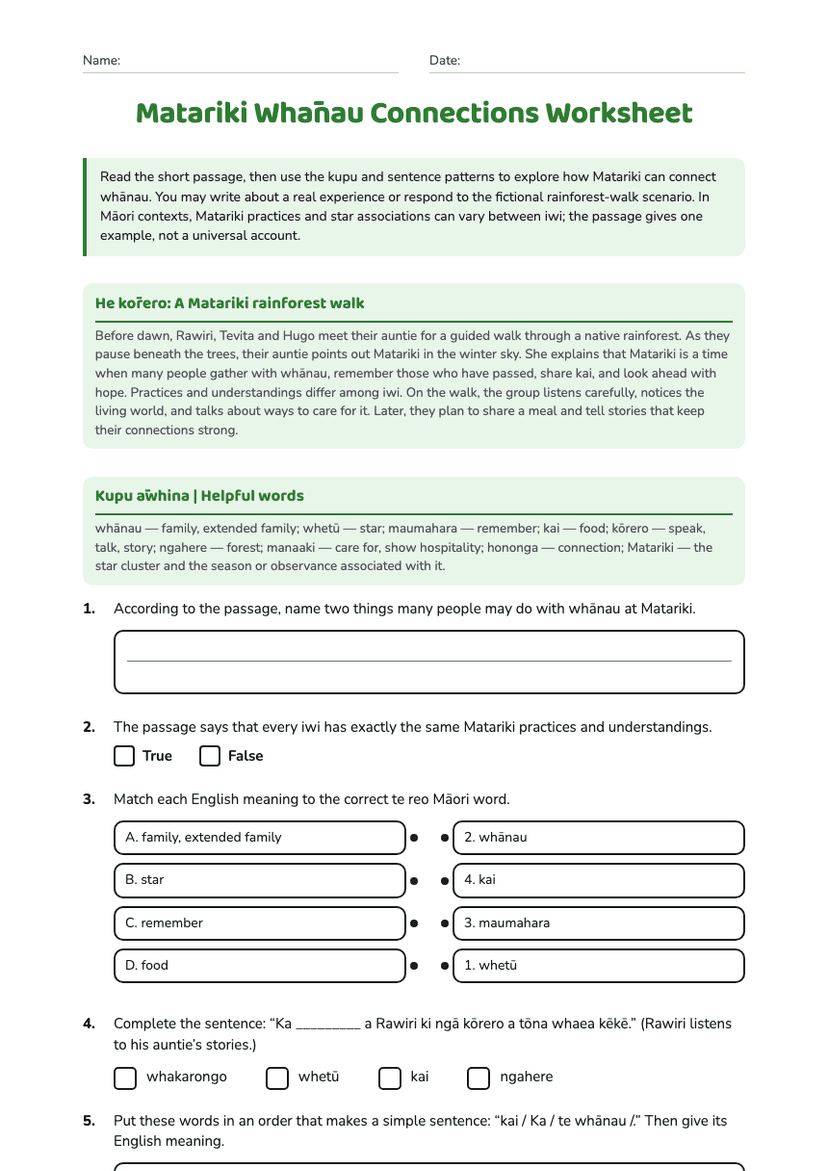
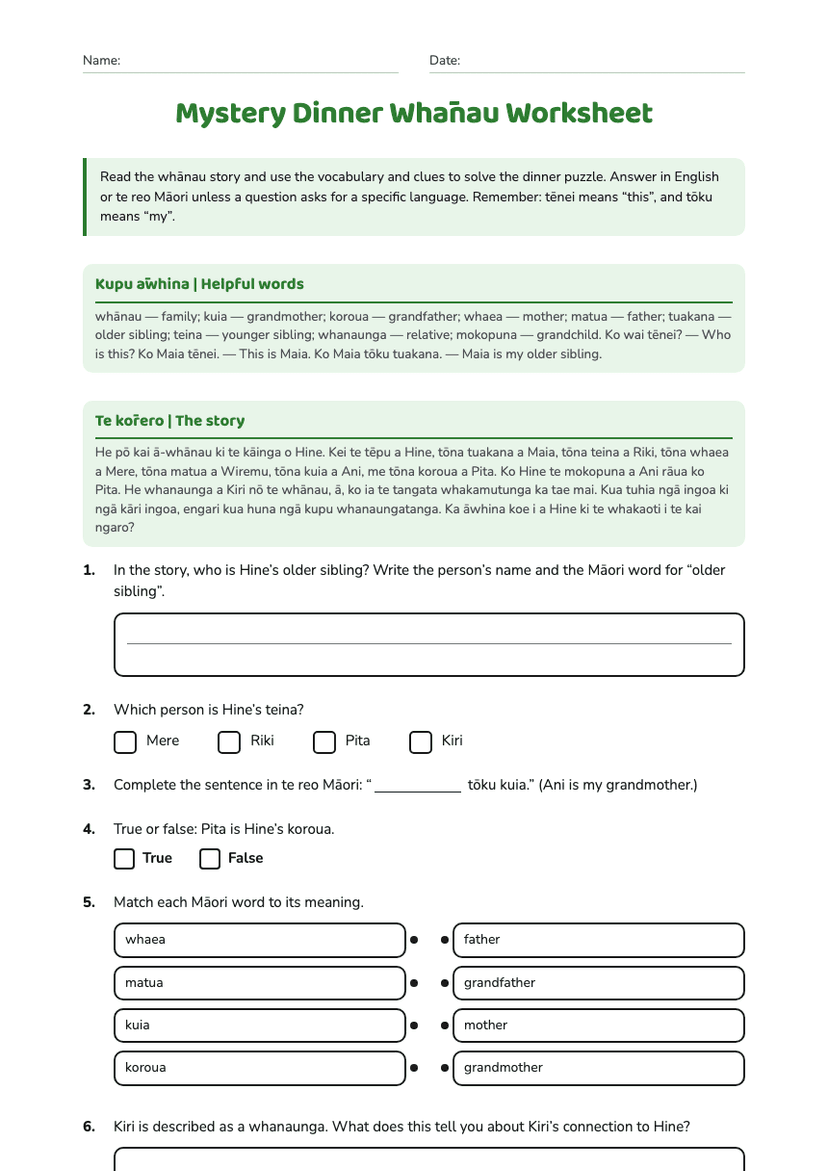
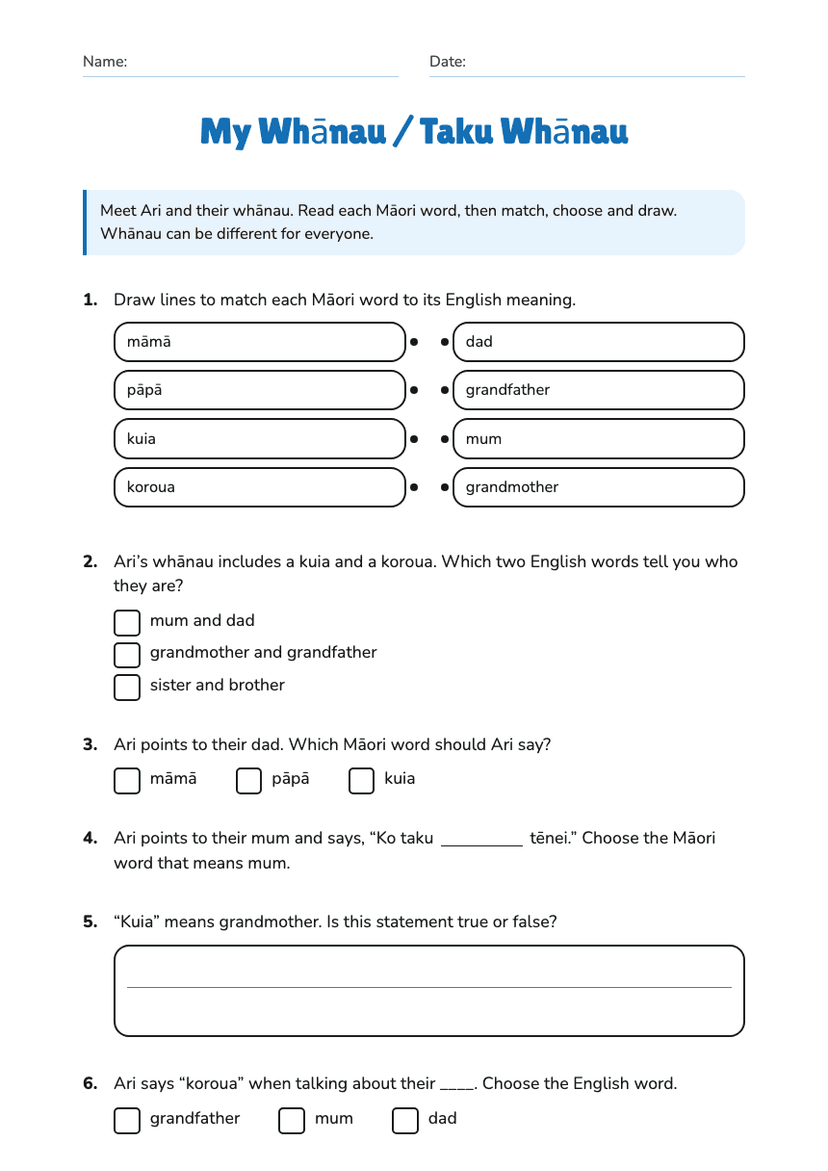
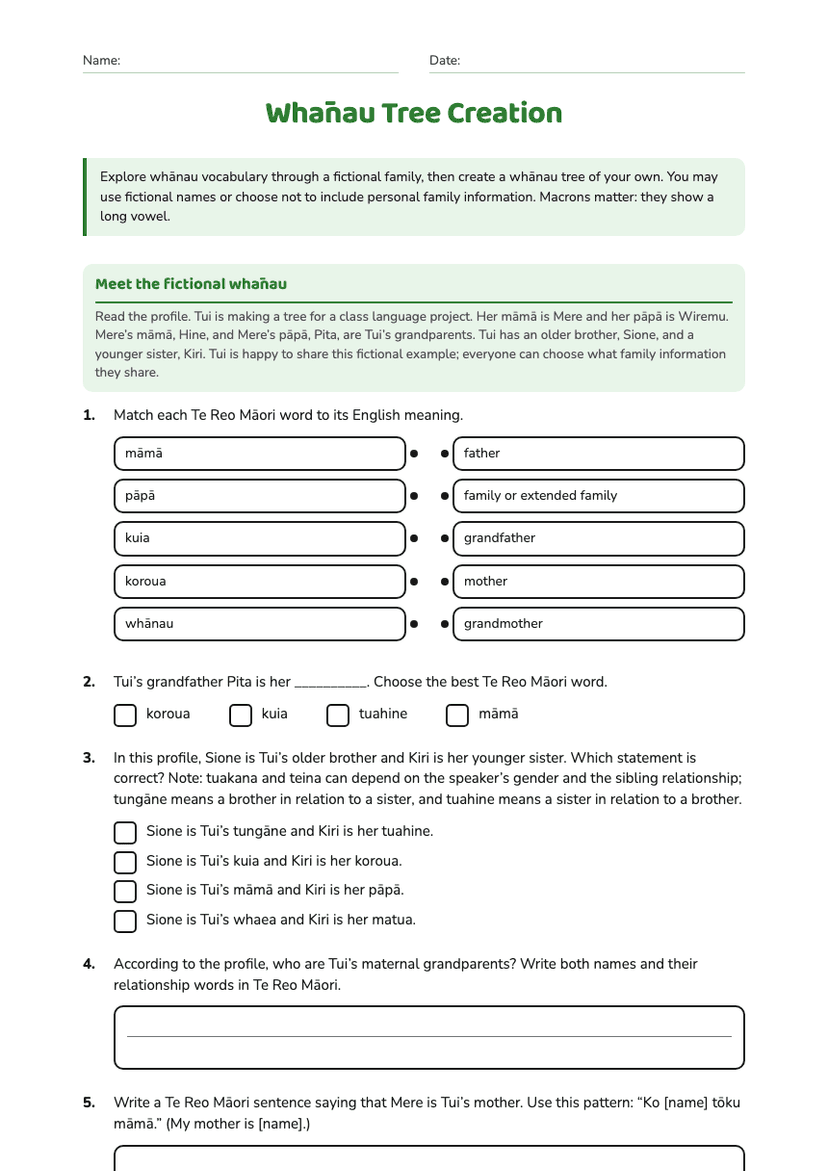
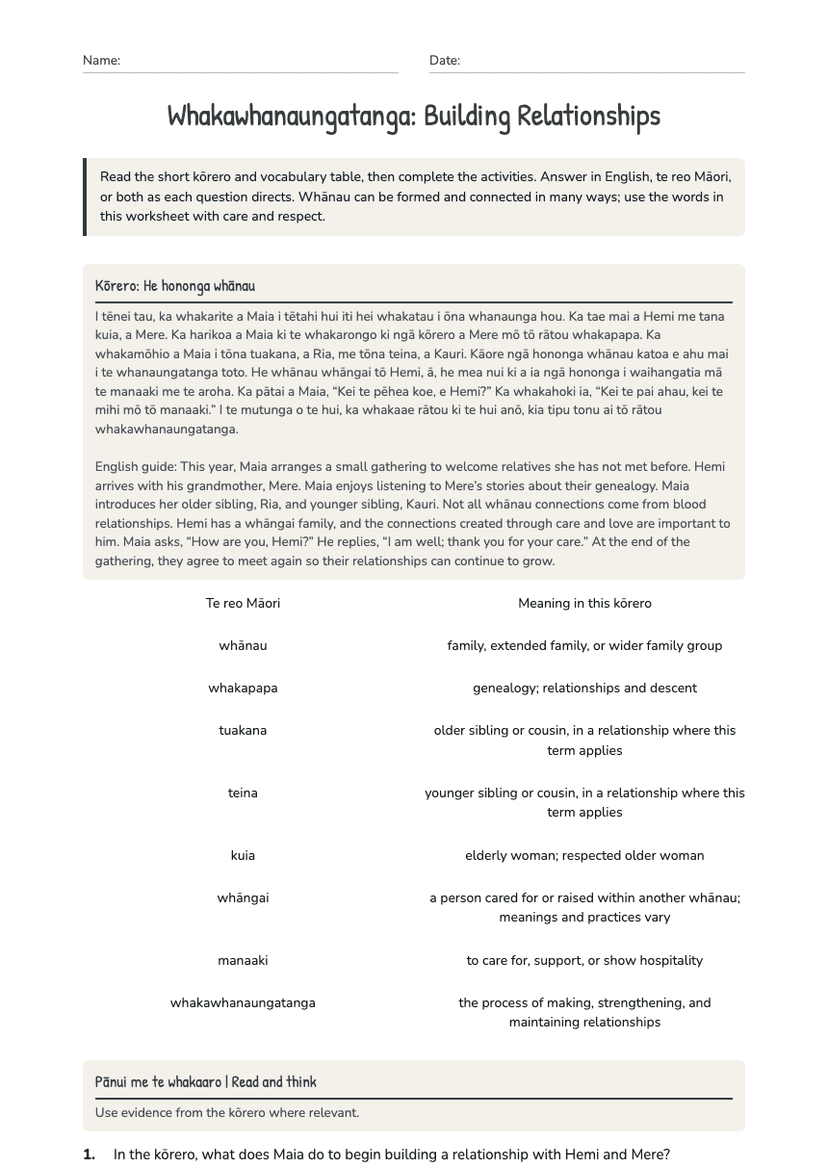
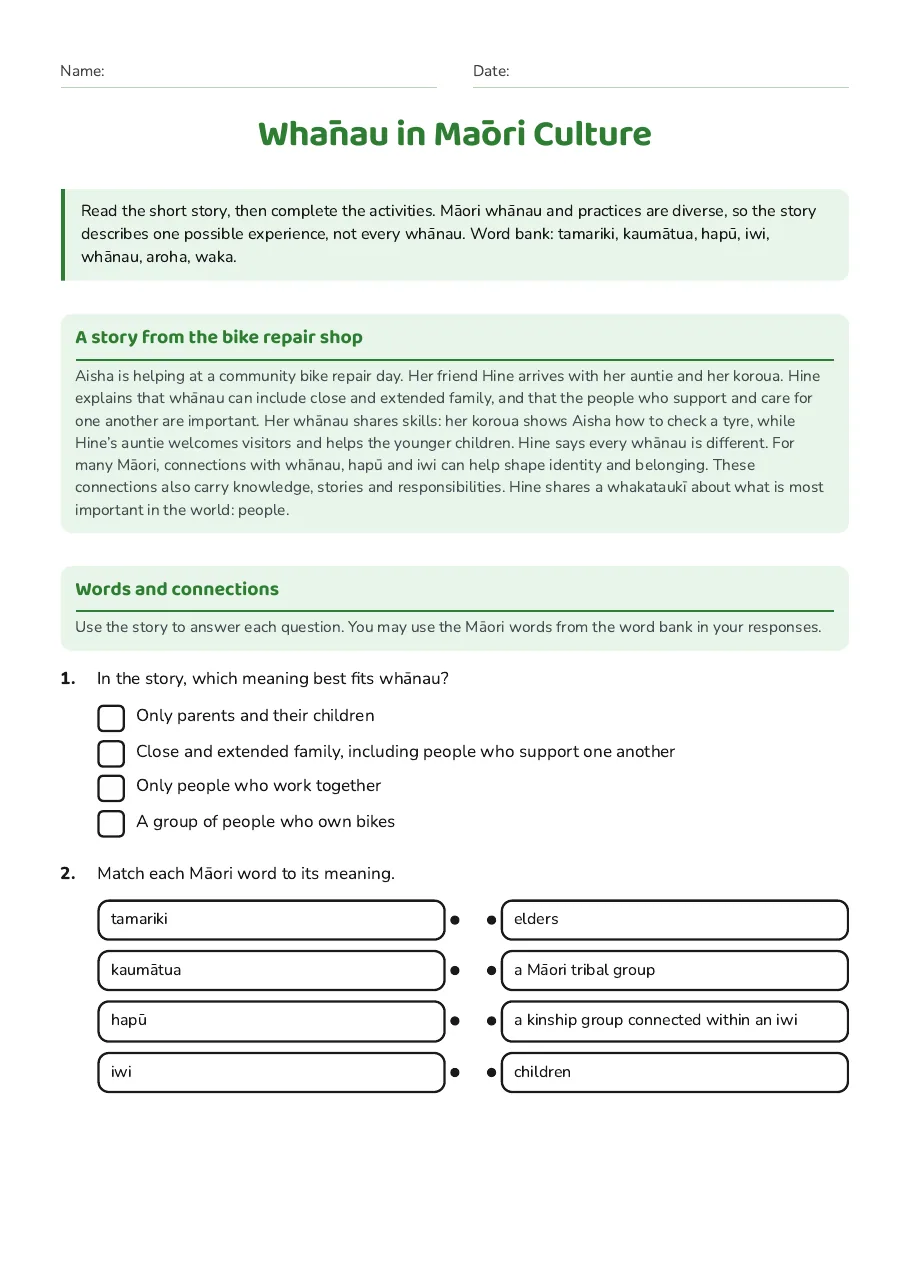
Whānau in Māori Culture
A story from the bike repair shop
Aisha is helping at a community bike repair day. Her friend Hine arrives with her auntie and her koroua. Hine explains that whānau can include close and extended family, and that the people who support and care for one another are important. Her whānau shares skills: her koroua shows Aisha how to check a tyre, while Hine’s auntie welcomes visitors and helps the younger children. Hine says every whānau is different. For many Māori, connections with whānau, hapū and iwi can help shape identity and belonging. These connections also carry knowledge, stories and responsibilities. Hine shares a whakataukī about what is most important in the world: people.
Words and connections
Use the story to answer each question. You may use the Māori words from the word bank in your responses.
- Only parents and their children
- Close and extended family, including people who support one another
- Only people who work together
- A group of people who own bikes
- tamariki
- kaumātua
- hapū
- iwi
- elders
- a Māori tribal group
- a kinship group connected within an iwi
- children
2 printable pages
Page 1
Page 2
About This Worksheet
Free in Kuraplan
Sign up free, grab the PDF, and customize it for your class.
Print-Ready
Formatted for standard paper. Clean layout, easy to read.
AI-Generated
Created with Kuraplan's AI, designed for real classroom use.
For Teachers & Parents
Use in classrooms, for homework, tutoring, or homeschool.
Need a custom version of this worksheet?
Kuraplan's AI generates custom worksheets in seconds — differentiated for every learner, aligned to your curriculum.
Generate Custom Worksheets — Free