World Cultures and Languages
A free social sciences worksheet ready for your classroom. Open in Kuraplan to grab the print-ready PDF, customize it for your students, or generate a fresh version in seconds.
World Cultures and Languages
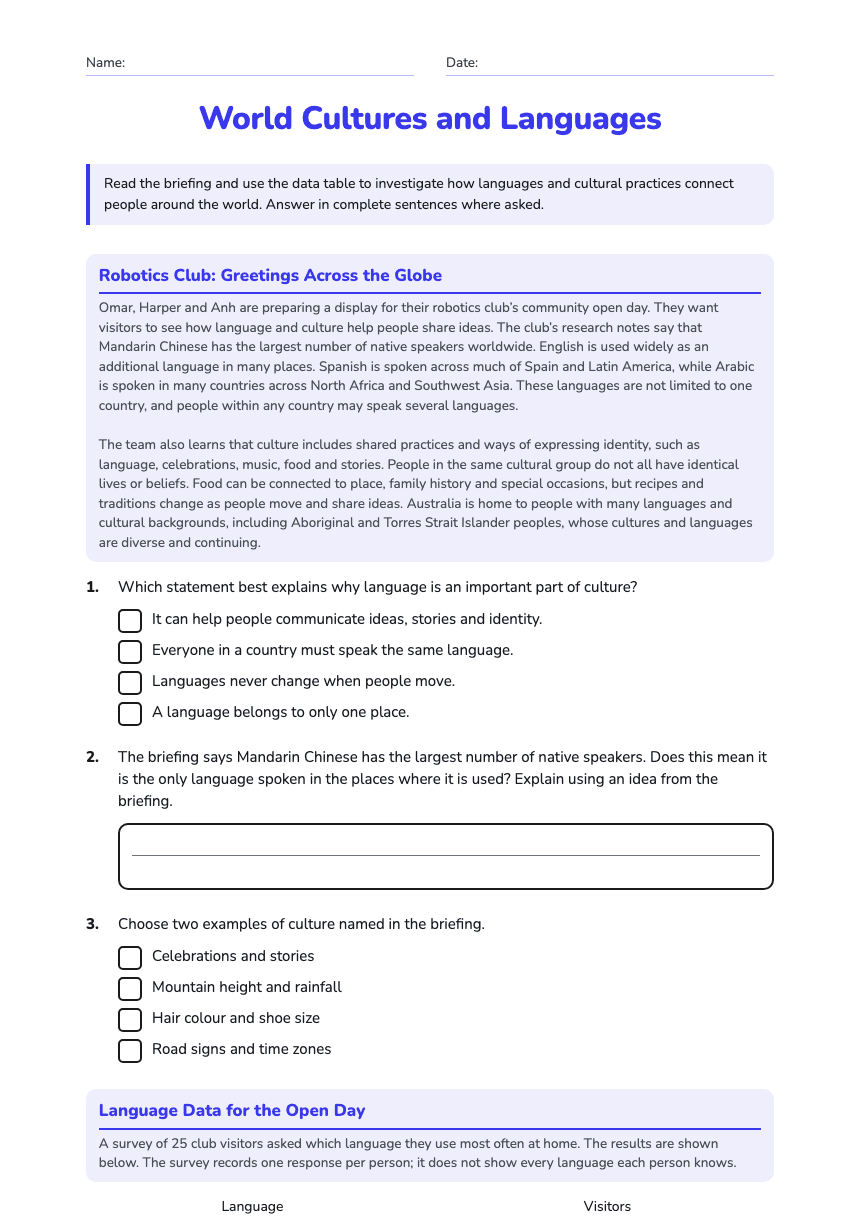
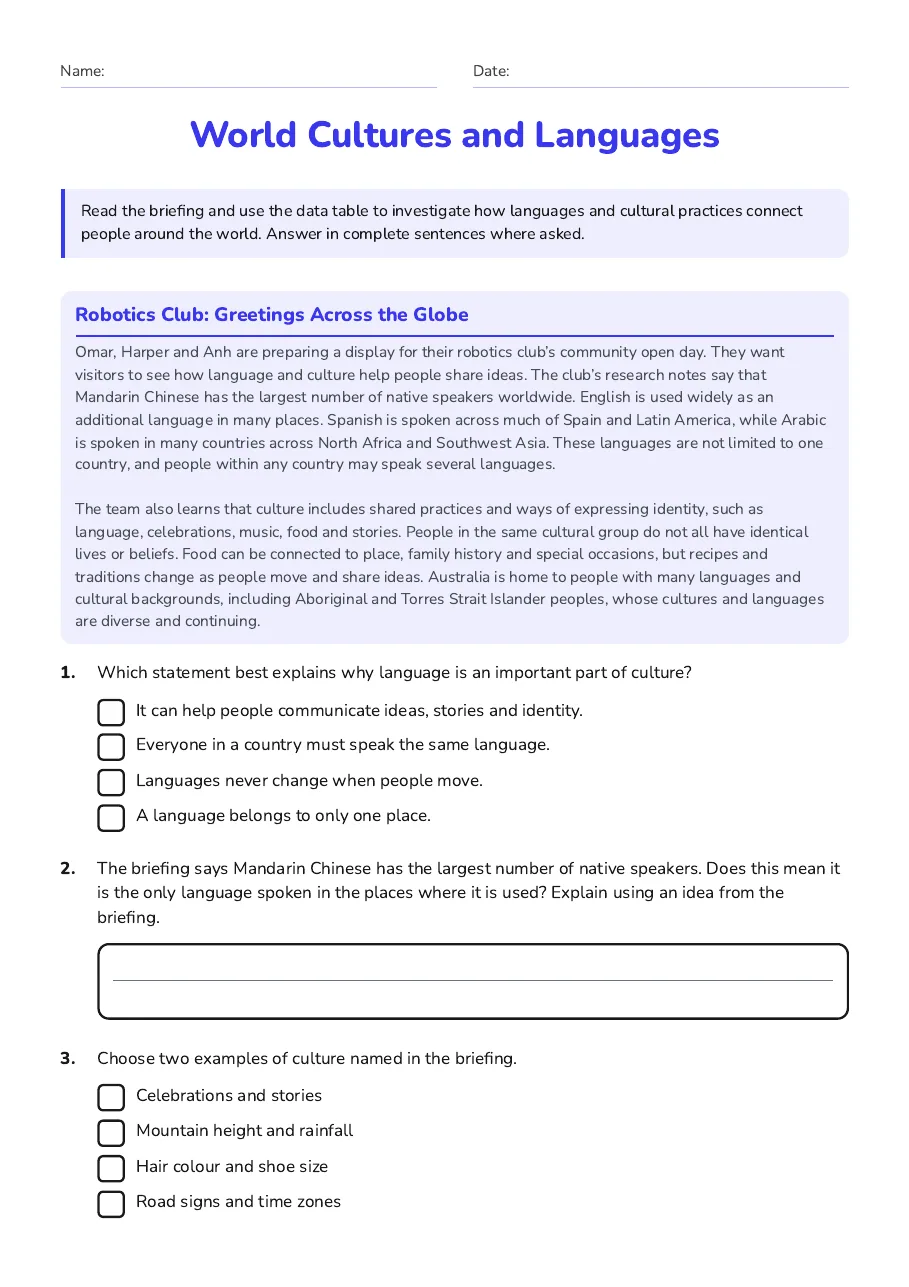
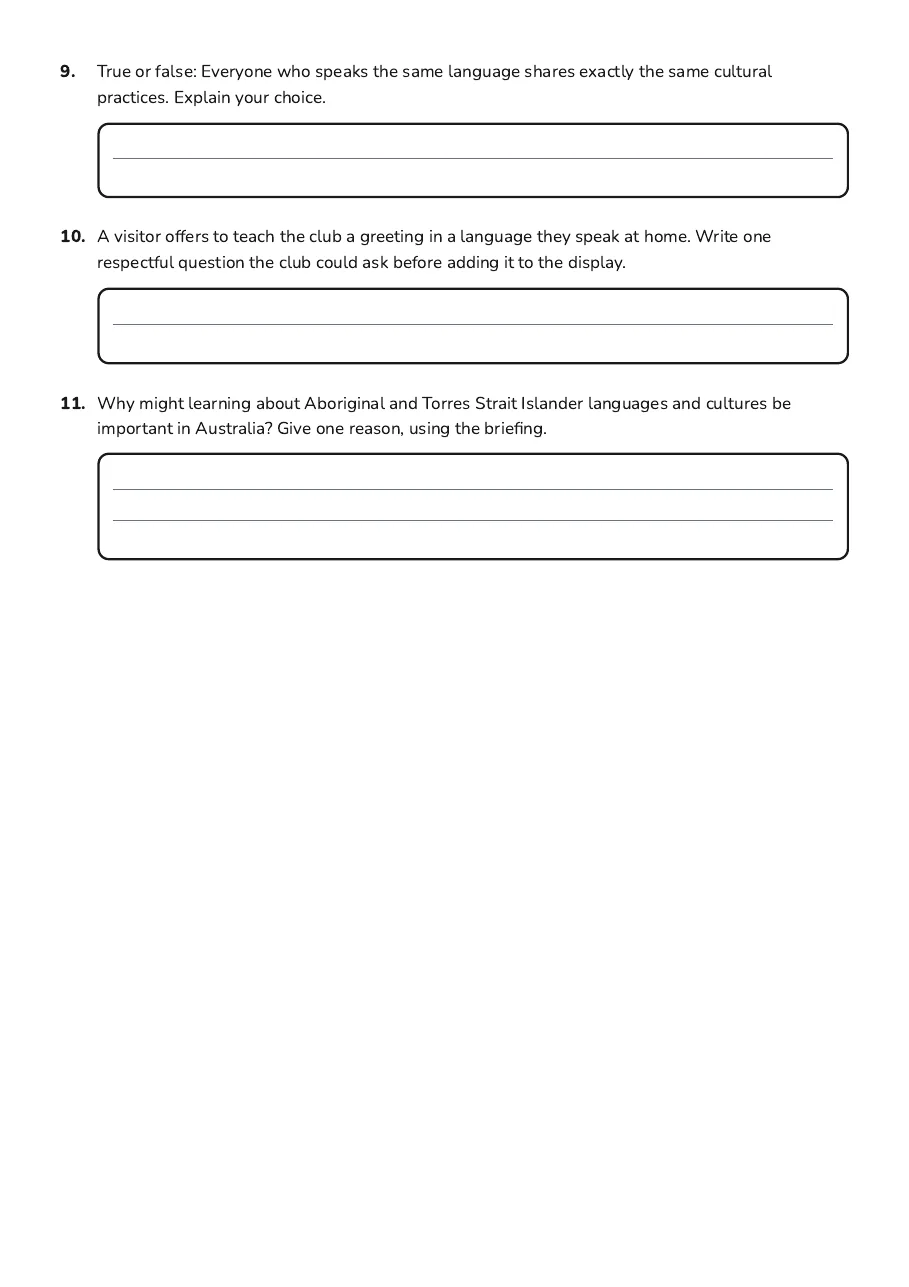
Robotics Club: Greetings Across the Globe
Omar, Harper and Anh are preparing a display for their robotics club’s community open day. They want visitors to see how language and culture help people share ideas. The club’s research notes say that Mandarin Chinese has the largest number of native speakers worldwide. English is used widely as an additional language in many places. Spanish is spoken across much of Spain and Latin America, while Arabic is spoken in many countries across North Africa and Southwest Asia. These languages are not limited to one country, and people within any country may speak several languages. The team also learns that culture includes shared practices and ways of expressing identity, such as language, celebrations, music, food and stories. People in the same cultural group do not all have identical lives or beliefs. Food can be connected to place, family history and special occasions, but recipes and traditions change as people move and share ideas. Australia is home to people with many languages and cultural backgrounds, including Aboriginal and Torres Strait Islander peoples, whose cultures and languages are diverse and continuing.
- It can help people communicate ideas, stories and identity.
- Everyone in a country must speak the same language.
- Languages never change when people move.
- A language belongs to only one place.
- Celebrations and stories
- Mountain height and rainfall
- Hair colour and shoe size
- Road signs and time zones
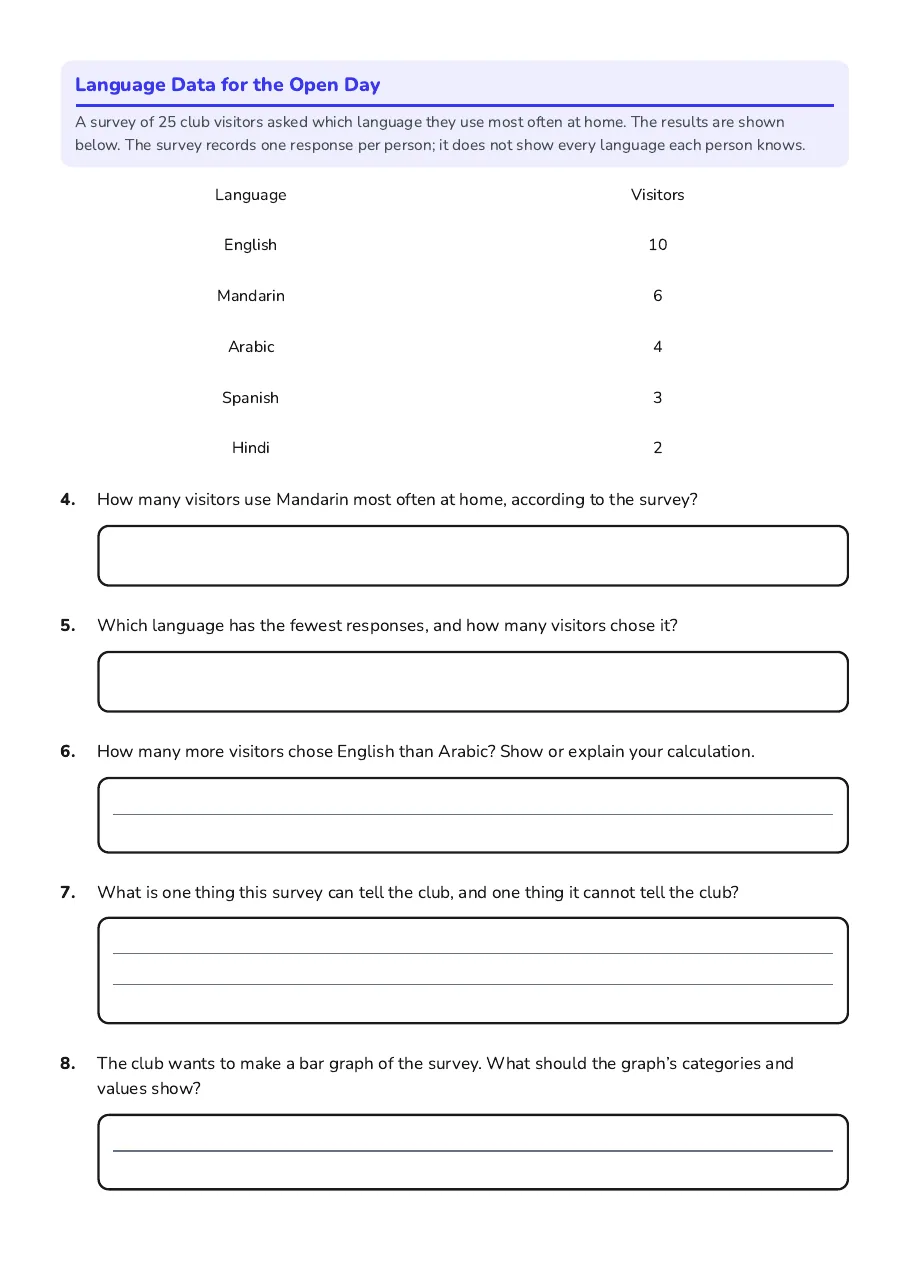
Language Data for the Open Day
A survey of 25 club visitors asked which language they use most often at home. The results are shown below. The survey records one response per person; it does not show every language each person knows.
Language
Visitors
English
10
Mandarin
6
Arabic
4
Spanish
3
Hindi
2
3 printable pages
Page 1
Page 2
Page 3
About This Worksheet
Free in Kuraplan
Sign up free, grab the PDF, and customize it for your class.
Print-Ready
Formatted for standard paper. Clean layout, easy to read.
AI-Generated
Created with Kuraplan's AI, designed for real classroom use.
For Teachers & Parents
Use in classrooms, for homework, tutoring, or homeschool.
Need a custom version of this worksheet?
Kuraplan's AI generates custom worksheets in seconds — differentiated for every learner, aligned to your curriculum.
Generate Custom Worksheets — FreeMore Social Sciences Worksheets
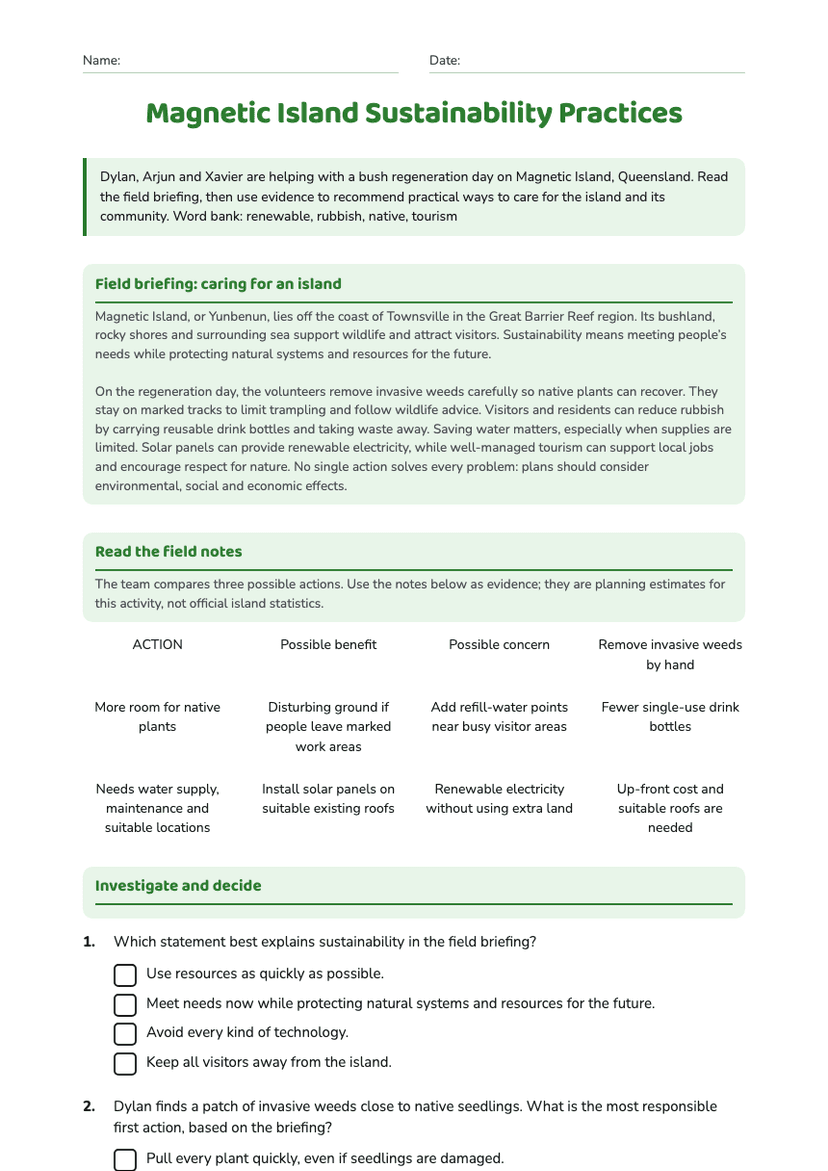
Magnetic Island Sustainability Practices
Free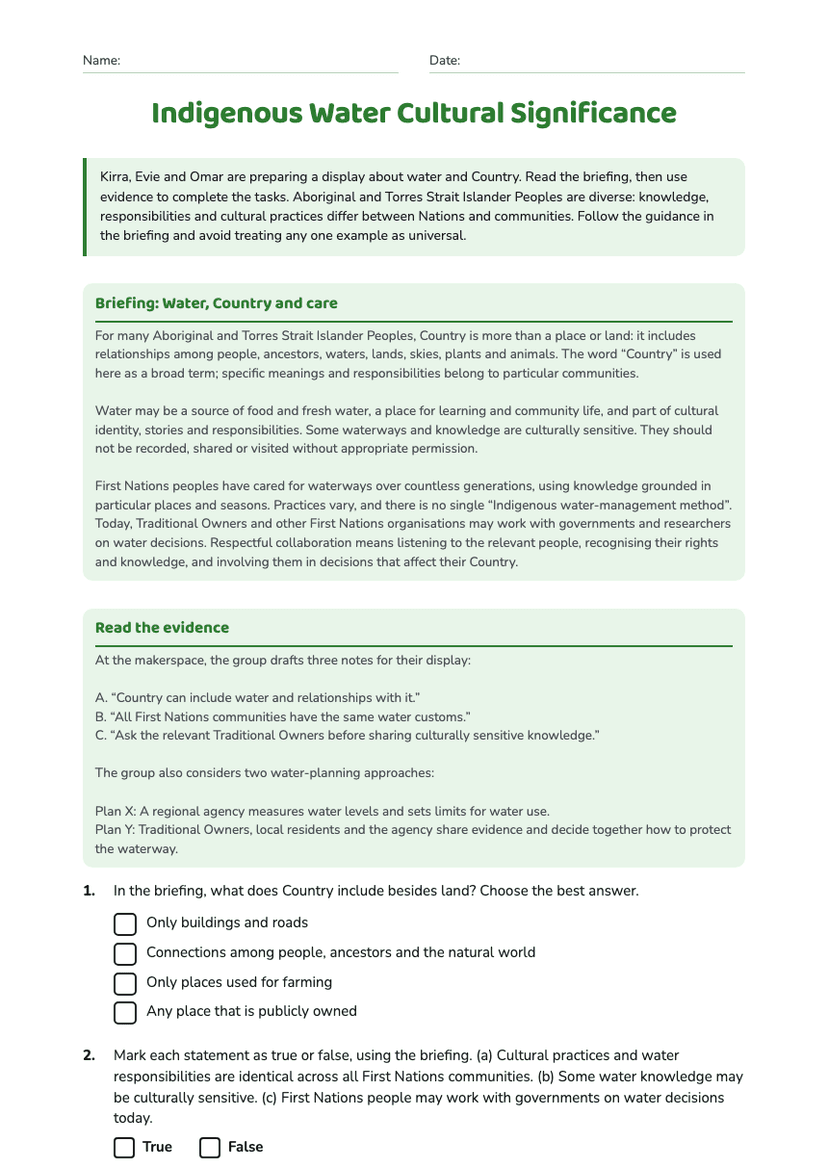
Indigenous Water Cultural Significance
Free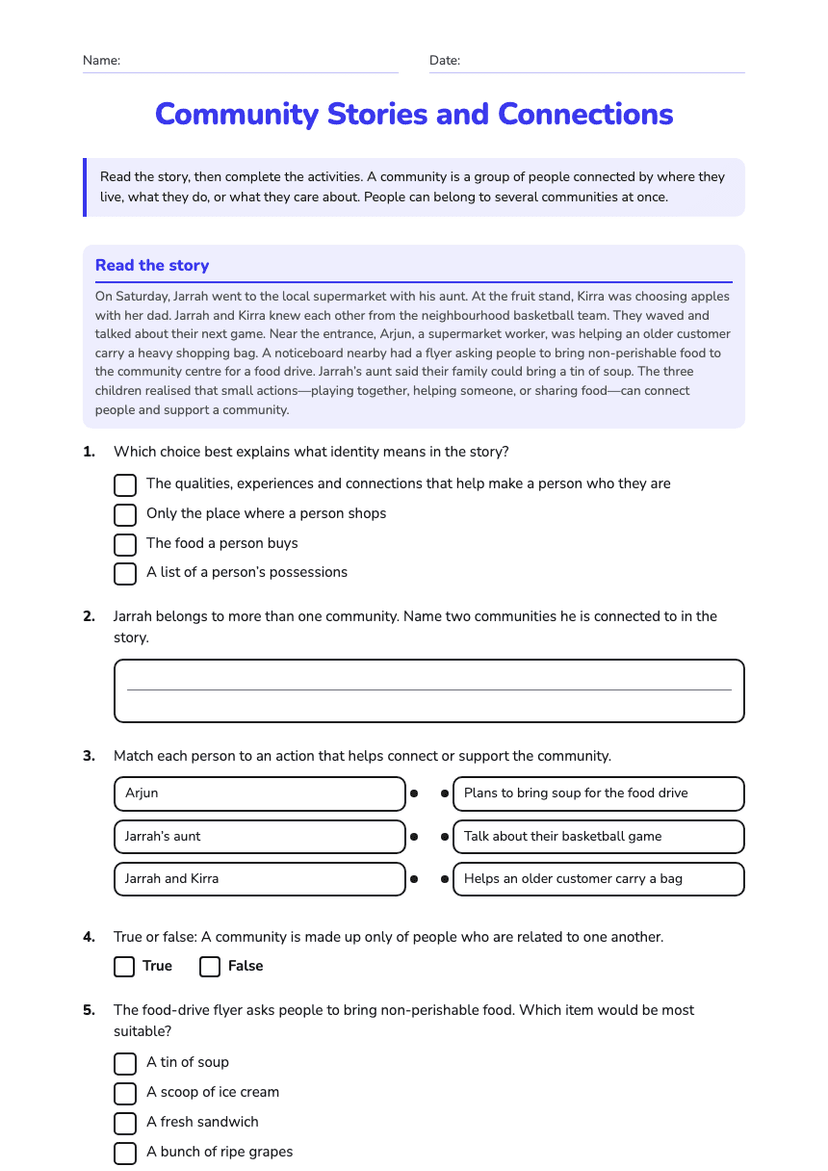
Community Stories and Connections
Free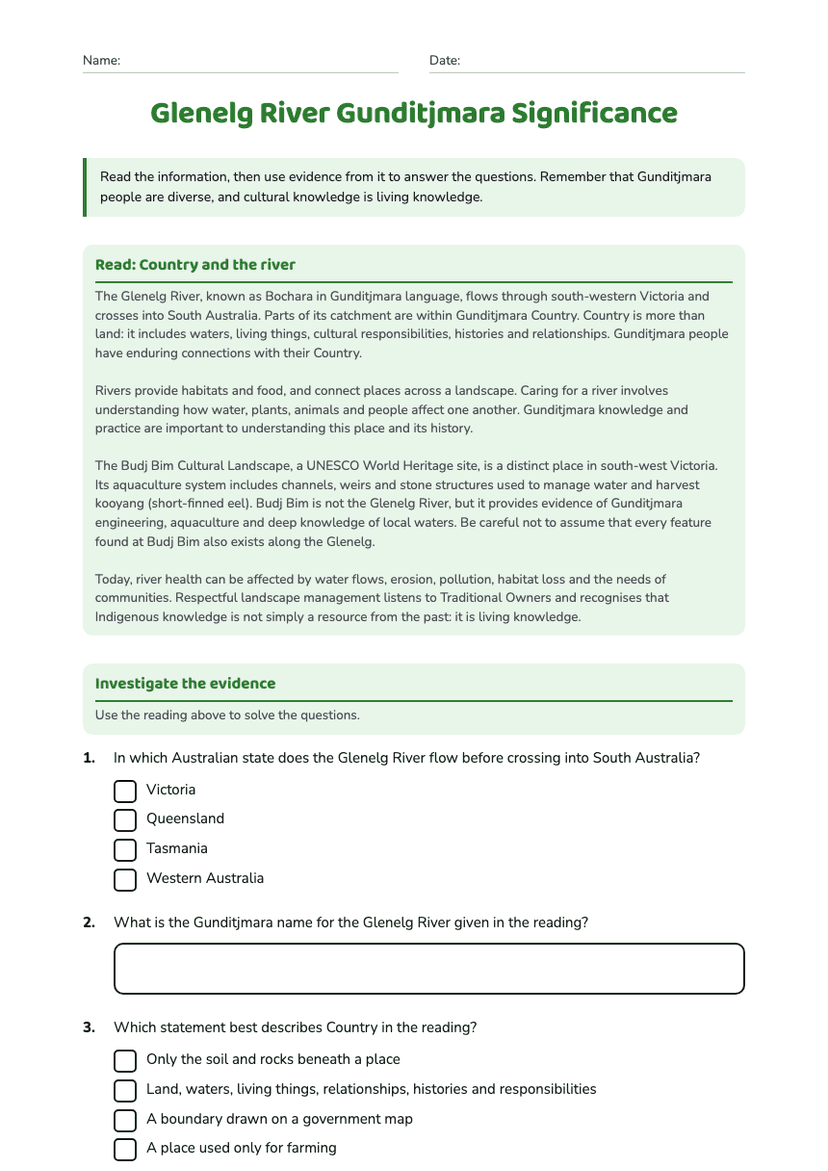
Glenelg River Gunditjmara Significance
Free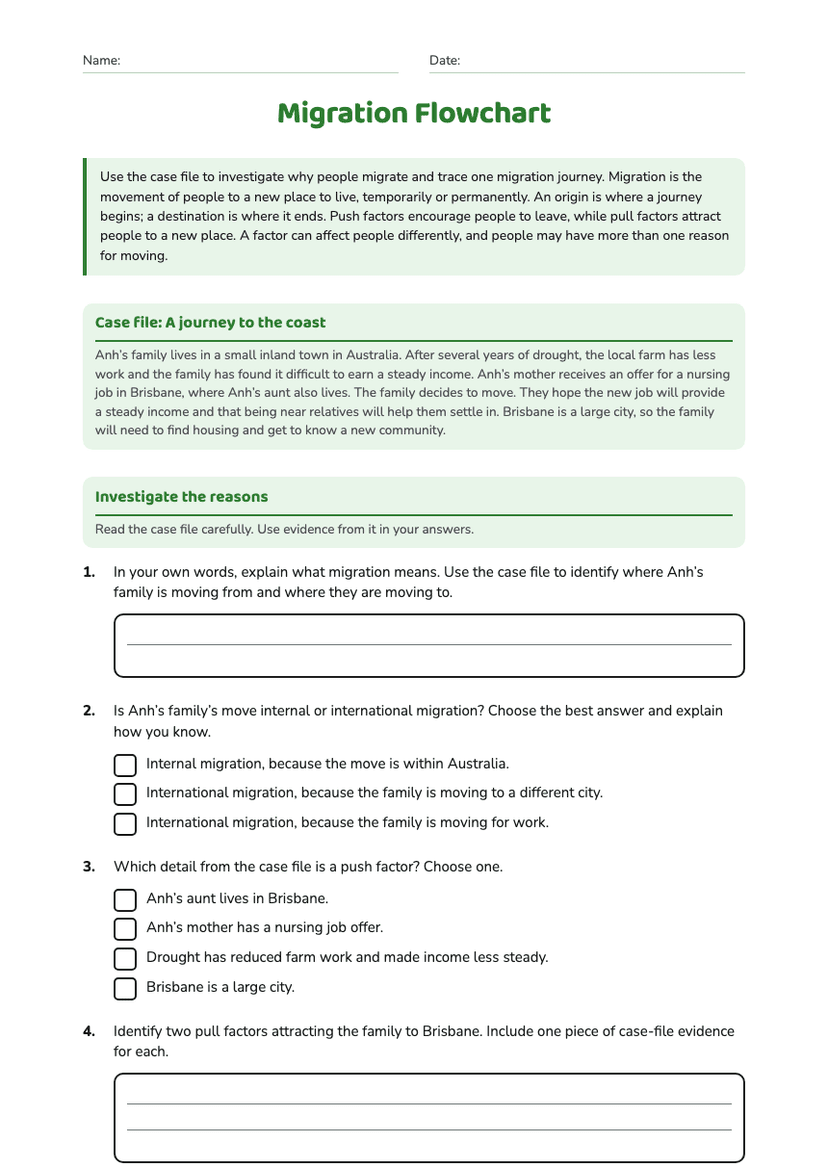
Migration Flowchart
Free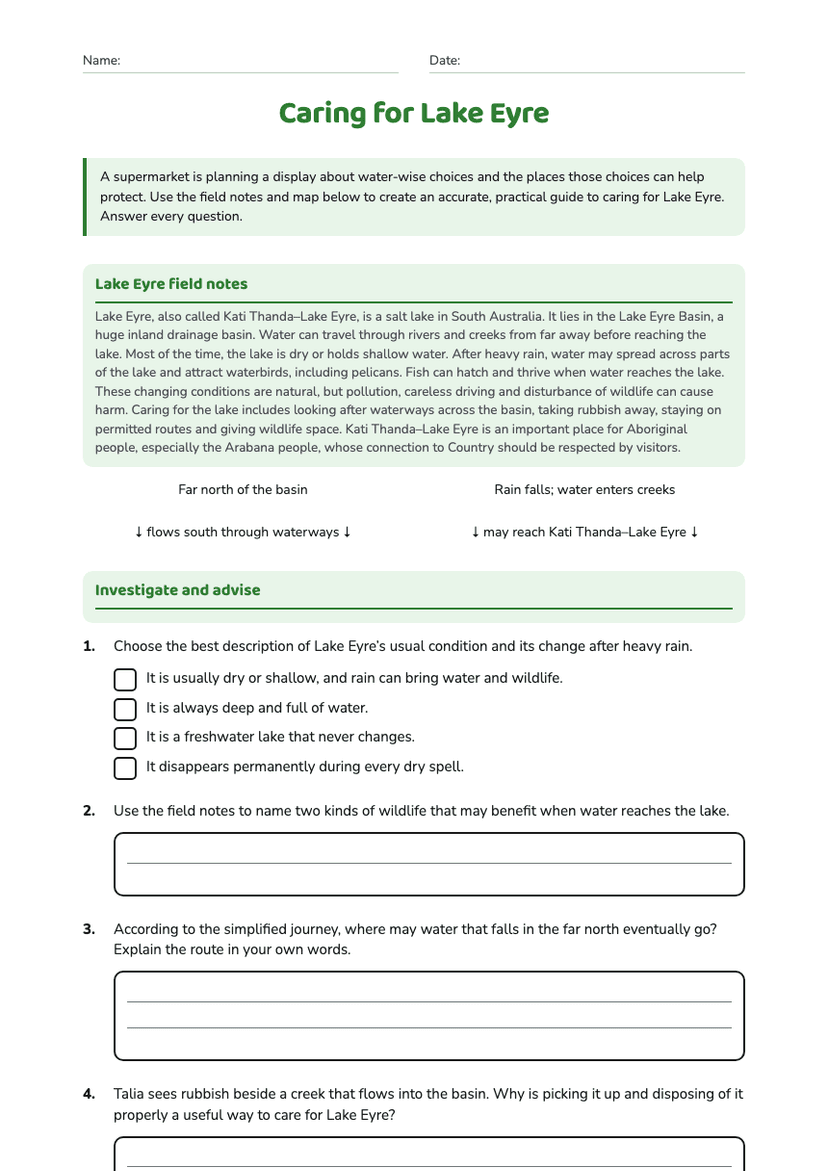
Caring for Lake Eyre
Free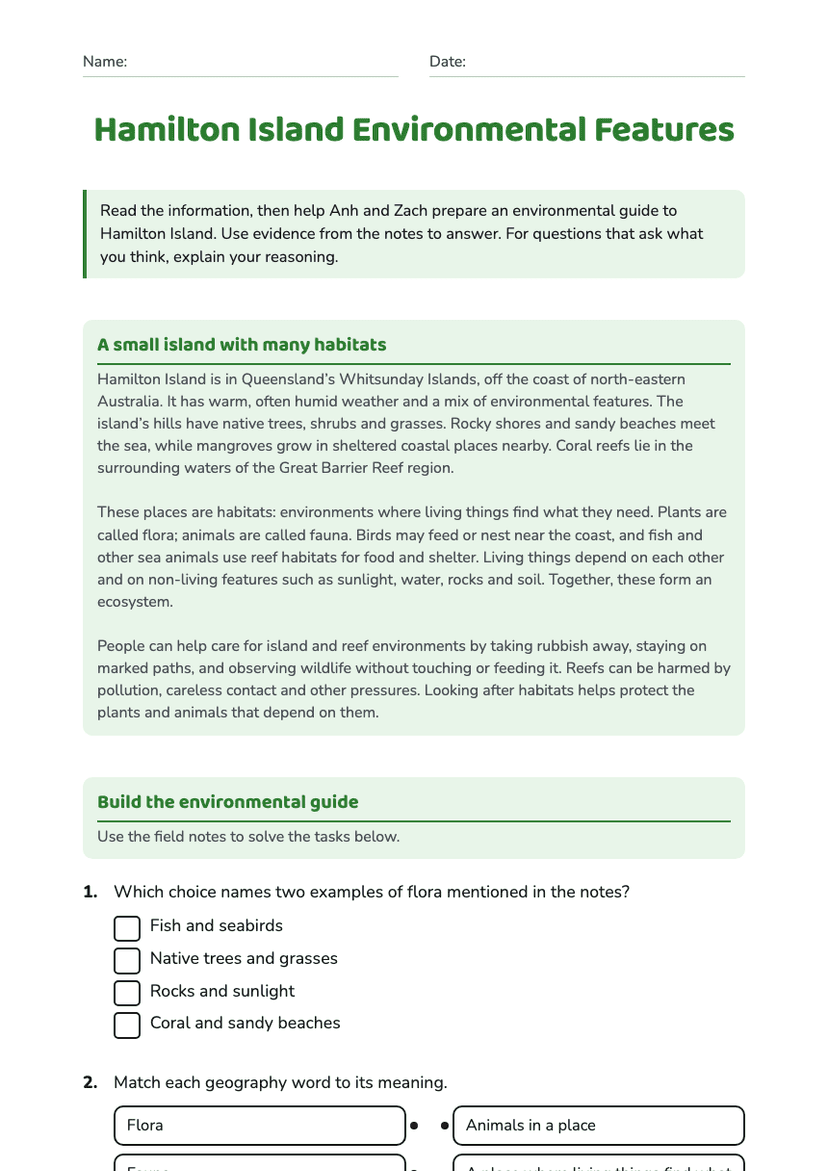
Hamilton Island Environmental Features
Free