World War II: Causes
A free social sciences worksheet ready for your classroom. Open in Kuraplan to grab the print-ready PDF, customize it for your students, or generate a fresh version in seconds.
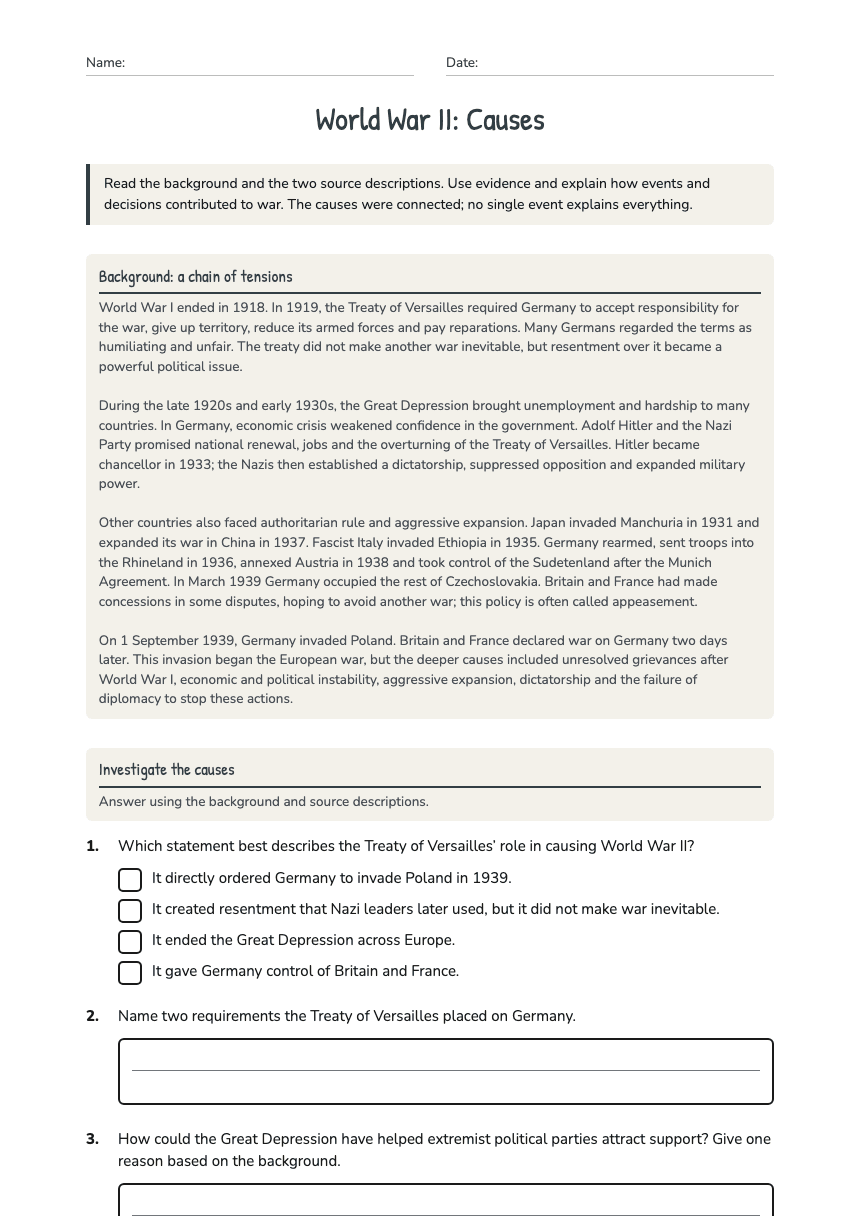
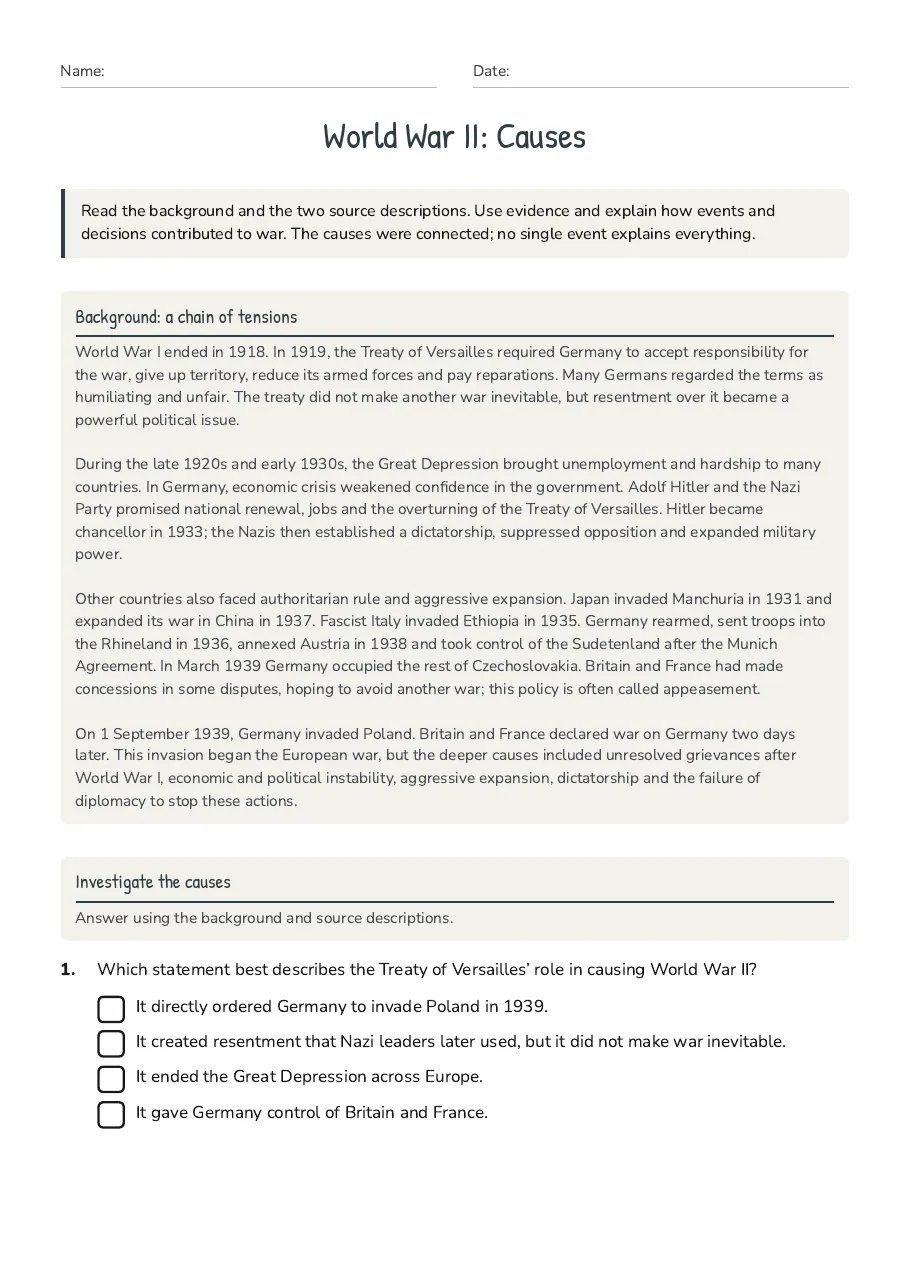
World War II: Causes
Background: a chain of tensions
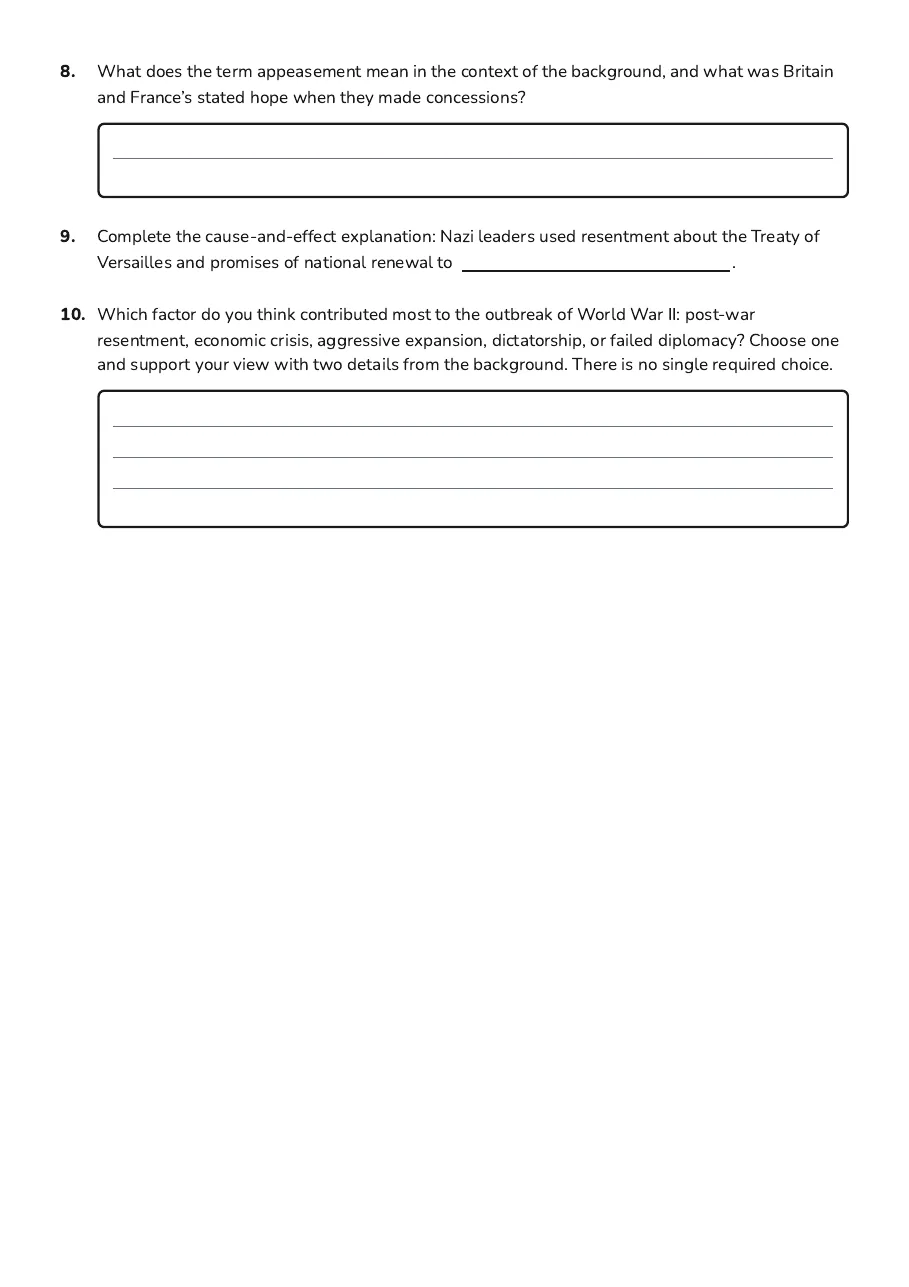
World War I ended in 1918. In 1919, the Treaty of Versailles required Germany to accept responsibility for the war, give up territory, reduce its armed forces and pay reparations. Many Germans regarded the terms as humiliating and unfair. The treaty did not make another war inevitable, but resentment over it became a powerful political issue. During the late 1920s and early 1930s, the Great Depression brought unemployment and hardship to many countries. In Germany, economic crisis weakened confidence in the government. Adolf Hitler and the Nazi Party promised national renewal, jobs and the overturning of the Treaty of Versailles. Hitler became chancellor in 1933; the Nazis then established a dictatorship, suppressed opposition and expanded military power. Other countries also faced authoritarian rule and aggressive expansion. Japan invaded Manchuria in 1931 and expanded its war in China in 1937. Fascist Italy invaded Ethiopia in 1935. Germany rearmed, sent troops into the Rhineland in 1936, annexed Austria in 1938 and took control of the Sudetenland after the Munich Agreement. In March 1939 Germany occupied the rest of Czechoslovakia. Britain and France had made concessions in some disputes, hoping to avoid another war; this policy is often called appeasement. On 1 September 1939, Germany invaded Poland. Britain and France declared war on Germany two days later. This invasion began the European war, but the deeper causes included unresolved grievances after World War I, economic and political instability, aggressive expansion, dictatorship and the failure of diplomacy to stop these actions.
Investigate the causes
Answer using the background and source descriptions.
- It directly ordered Germany to invade Poland in 1939.
- It created resentment that Nazi leaders later used, but it did not make war inevitable.
- It ended the Great Depression across Europe.
- It gave Germany control of Britain and France.
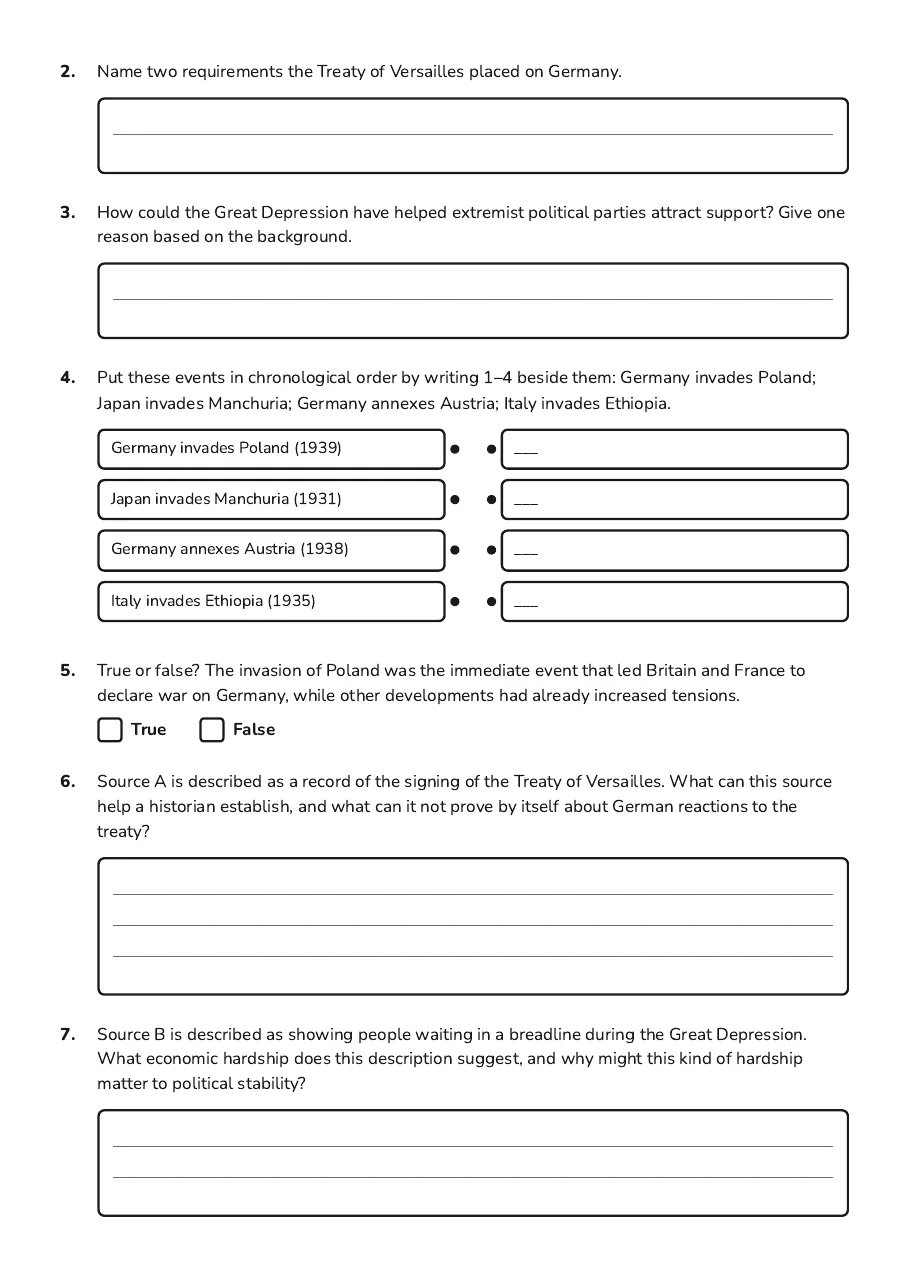
- Germany invades Poland (1939)
- Japan invades Manchuria (1931)
- Germany annexes Austria (1938)
- Italy invades Ethiopia (1935)
- ___
- ___
- ___
- ___
3 printable pages
Page 1
Page 2
Page 3
About This Worksheet
Free in Kuraplan
Sign up free, grab the PDF, and customize it for your class.
Print-Ready
Formatted for standard paper. Clean layout, easy to read.
AI-Generated
Created with Kuraplan's AI, designed for real classroom use.
For Teachers & Parents
Use in classrooms, for homework, tutoring, or homeschool.
Need a custom version of this worksheet?
Kuraplan's AI generates custom worksheets in seconds — differentiated for every learner, aligned to your curriculum.
Generate Custom Worksheets — FreeMore Social Sciences Worksheets
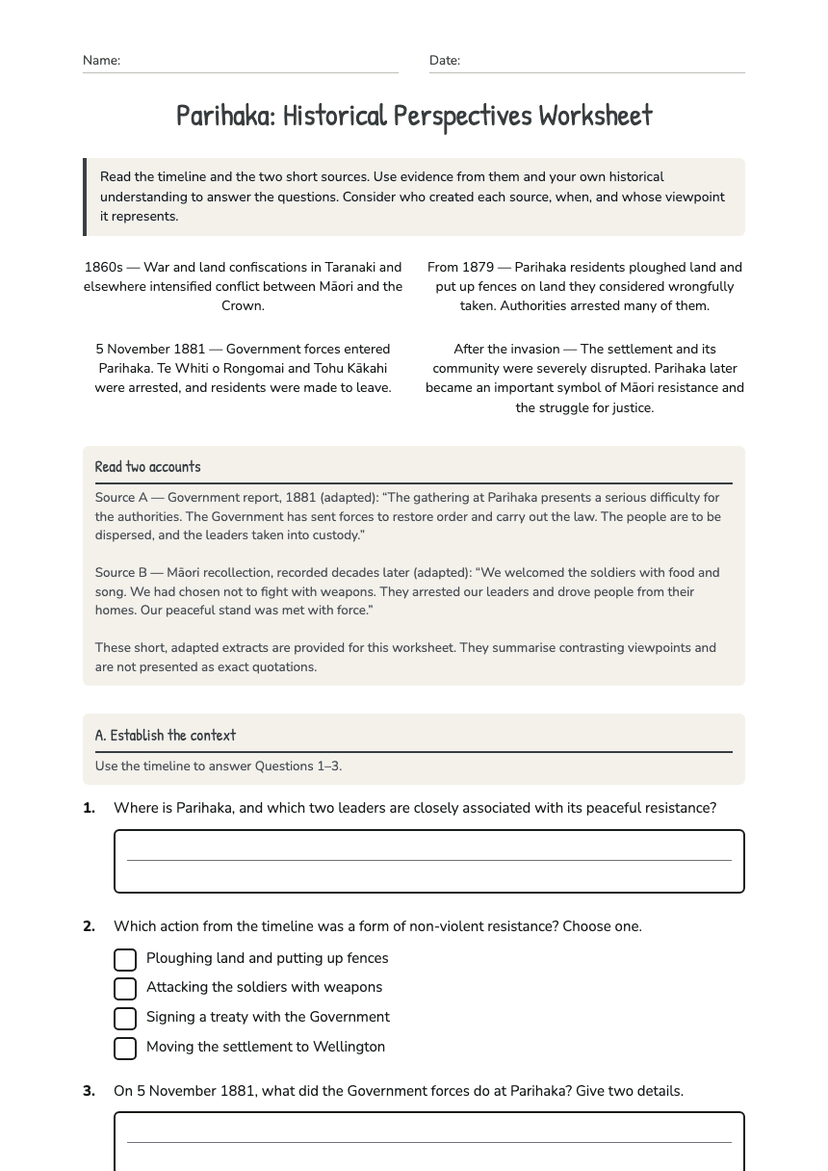
Parihaka: Historical Perspectives Worksheet
Free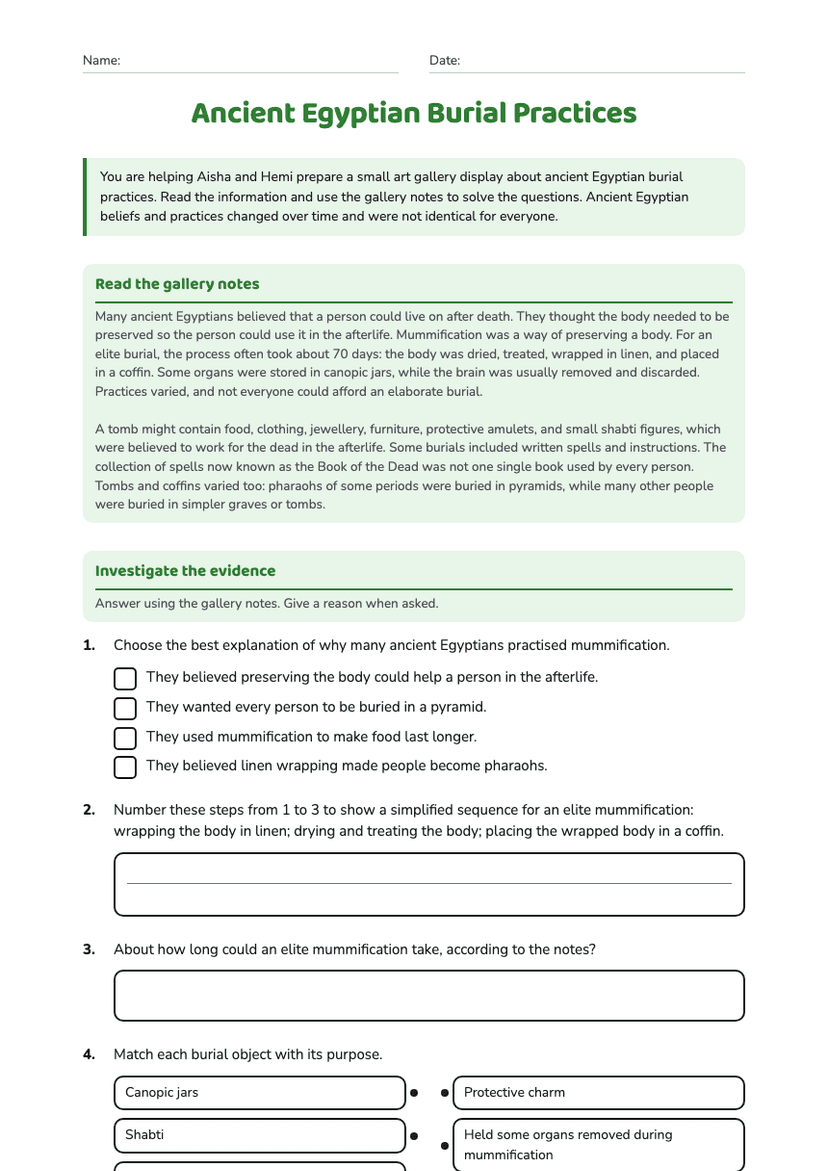
Ancient Egyptian Burial Practices
Free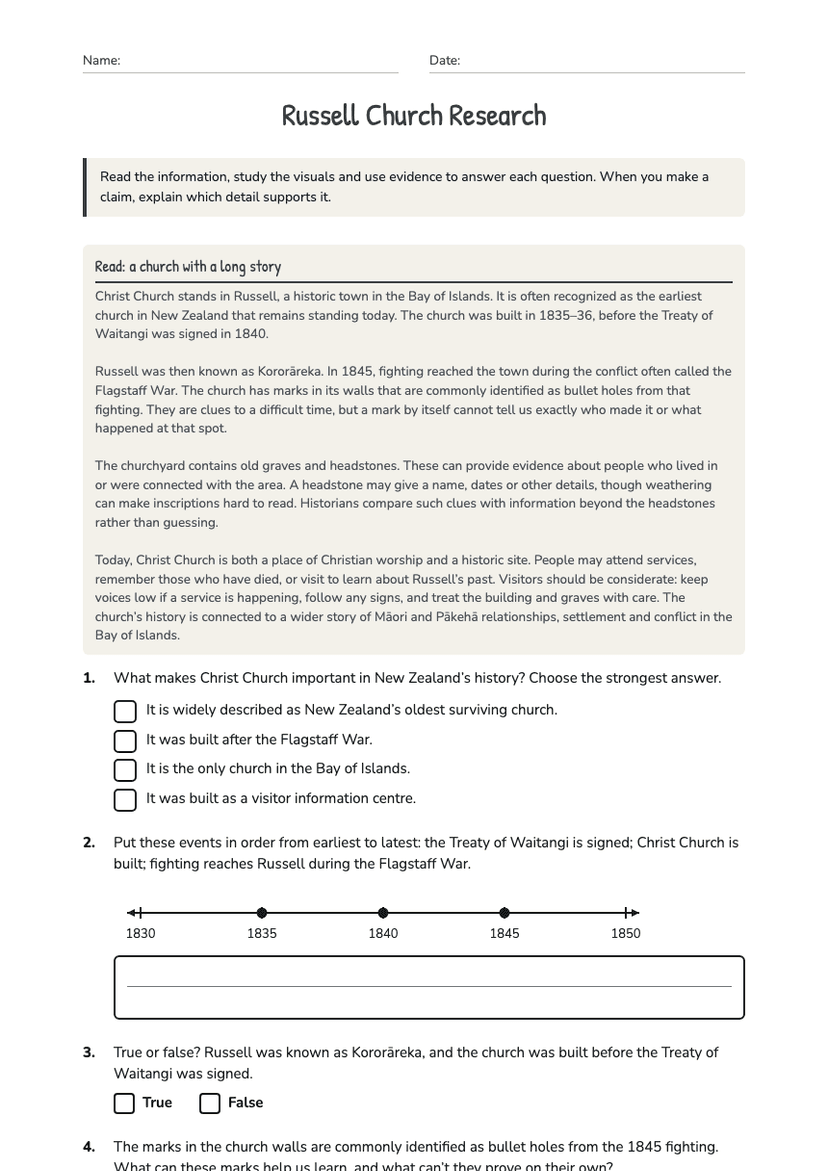
Russell Church Research
Free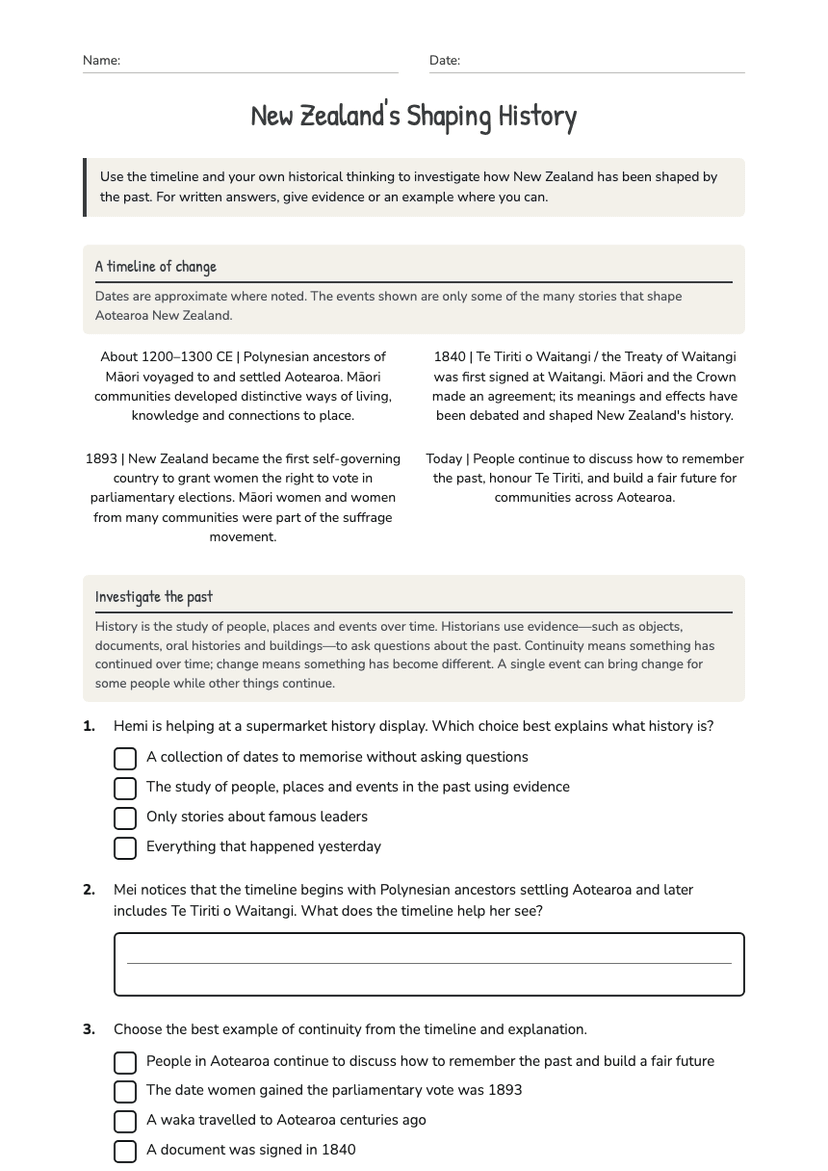
New Zealand's Shaping History
Free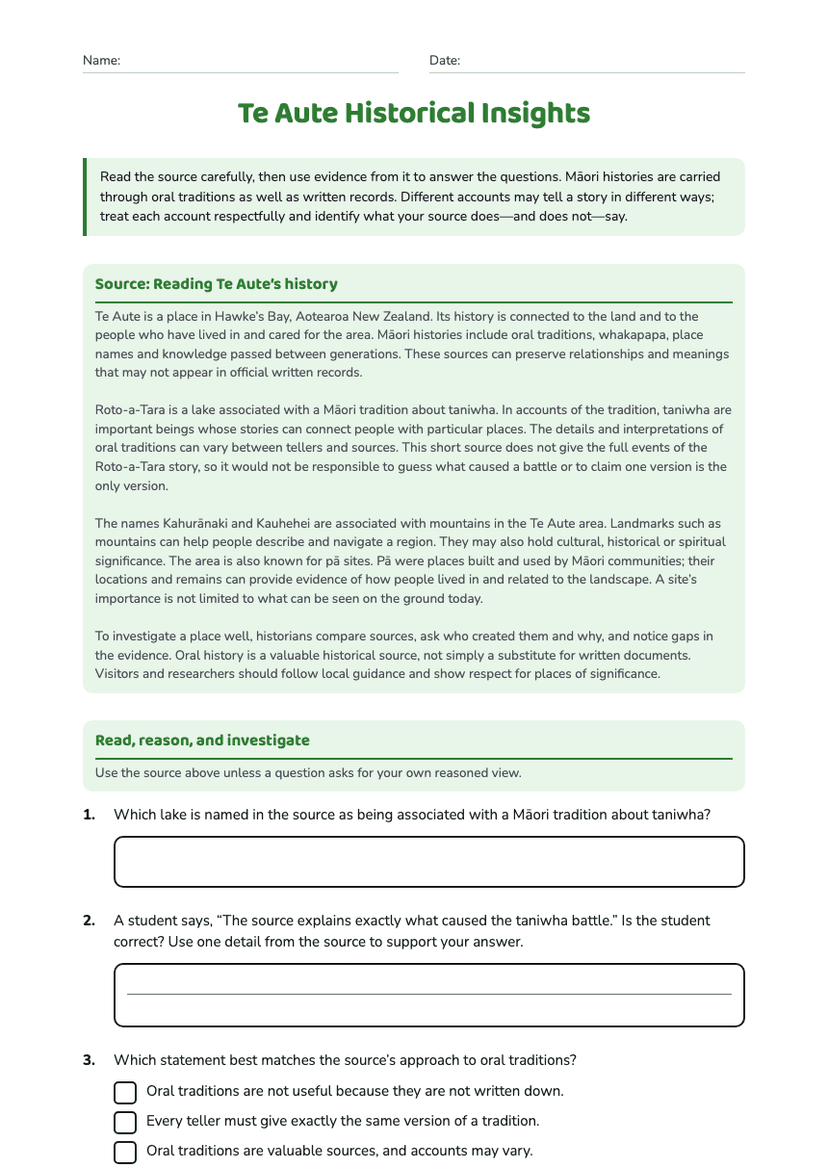
Te Aute Historical Insights
Free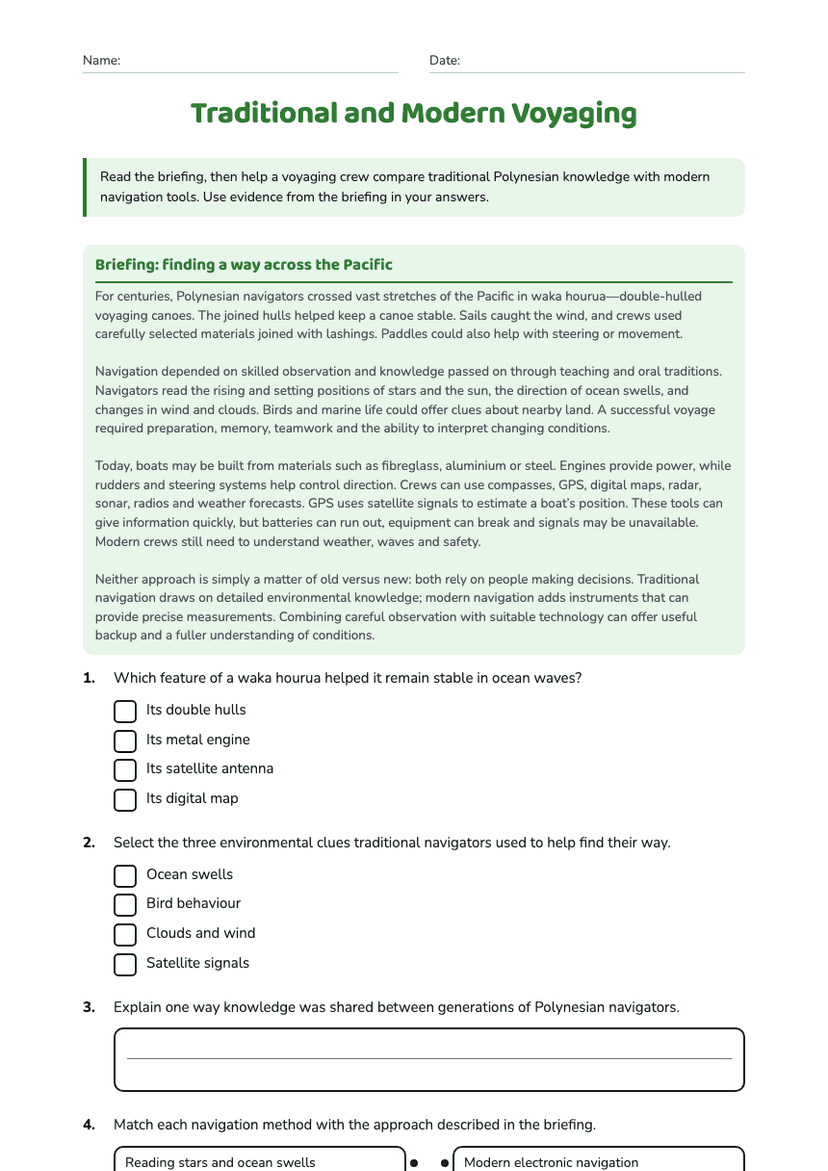
Traditional and Modern Voyaging
Free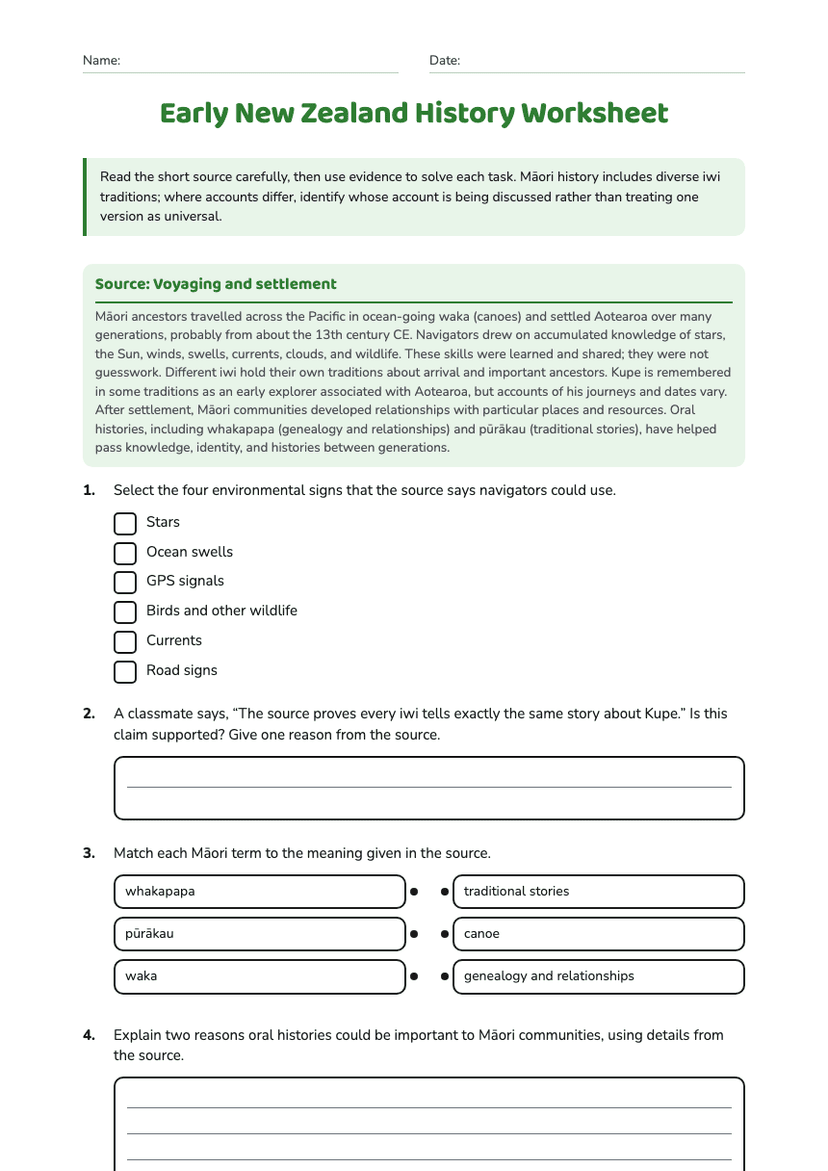
Early New Zealand History Worksheet
Free