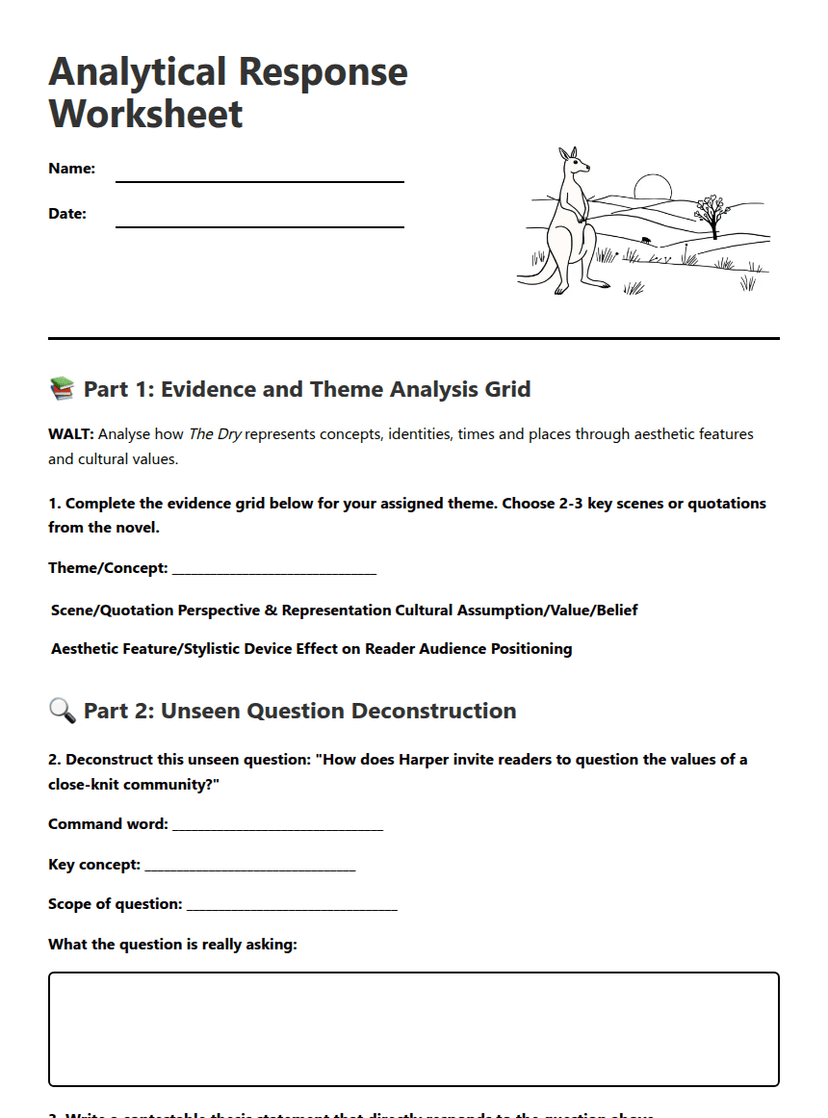
Analytical Writing Basics
A free english worksheet ready for your classroom. Open in Kuraplan to grab the print-ready PDF, customize it for your students, or generate a fresh version in seconds.
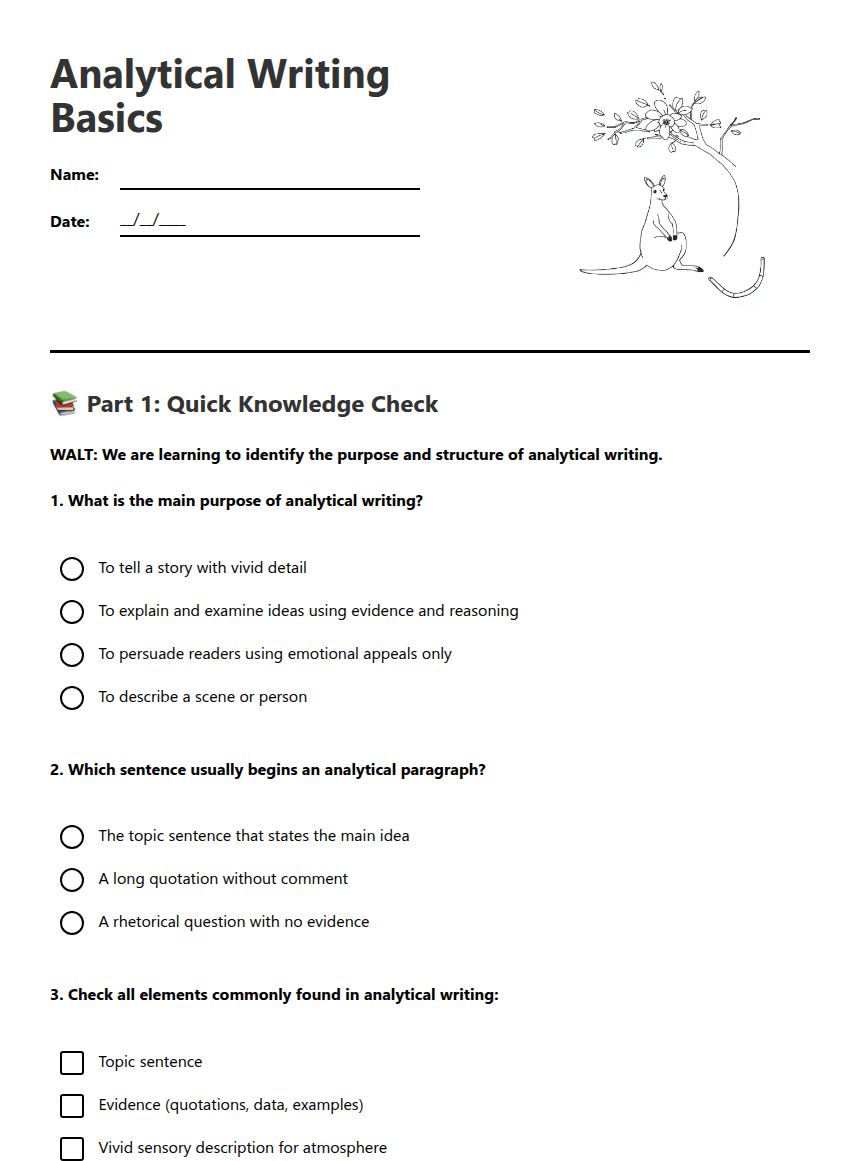
Analytical Writing Basics

📚 Part 1: Quick Knowledge Check
✏️ Part 2: Short Answers & Practice
Paragraph: 1) Climate change is altering coastal communities. 2) A 2020 report shows sea levels are rising by centimetres each decade. 3) Rising seas increase flood risk, which damages homes and local economies. 4) Therefore, planners must adapt infrastructure to protect communities.
Excerpt: "When factories spill into riverways, the ripple of consequences reaches families who rely on that water for food." — short article line
🚀 Extension & Differentiation
- Provide sentence starters for learners who need support (e.g. "The author argues that...").
- Offer a graphic organiser or oral response option for neurodiverse learners.
- For advanced learners: identify how paragraph structure supports an overall thesis and suggest an additional piece of evidence to strengthen the argument.
About This Worksheet
Free in Kuraplan
Sign up free, grab the PDF, and customize it for your class.
Print-Ready
Formatted for standard paper. Clean layout, easy to read.
AI-Generated
Created with Kuraplan's AI, designed for real classroom use.
For Teachers & Parents
Use in classrooms, for homework, tutoring, or homeschool.
Need a custom version of this worksheet?
Kuraplan's AI generates custom worksheets in seconds — differentiated for every learner, aligned to your curriculum.
Generate Custom Worksheets — FreeMore English Worksheets
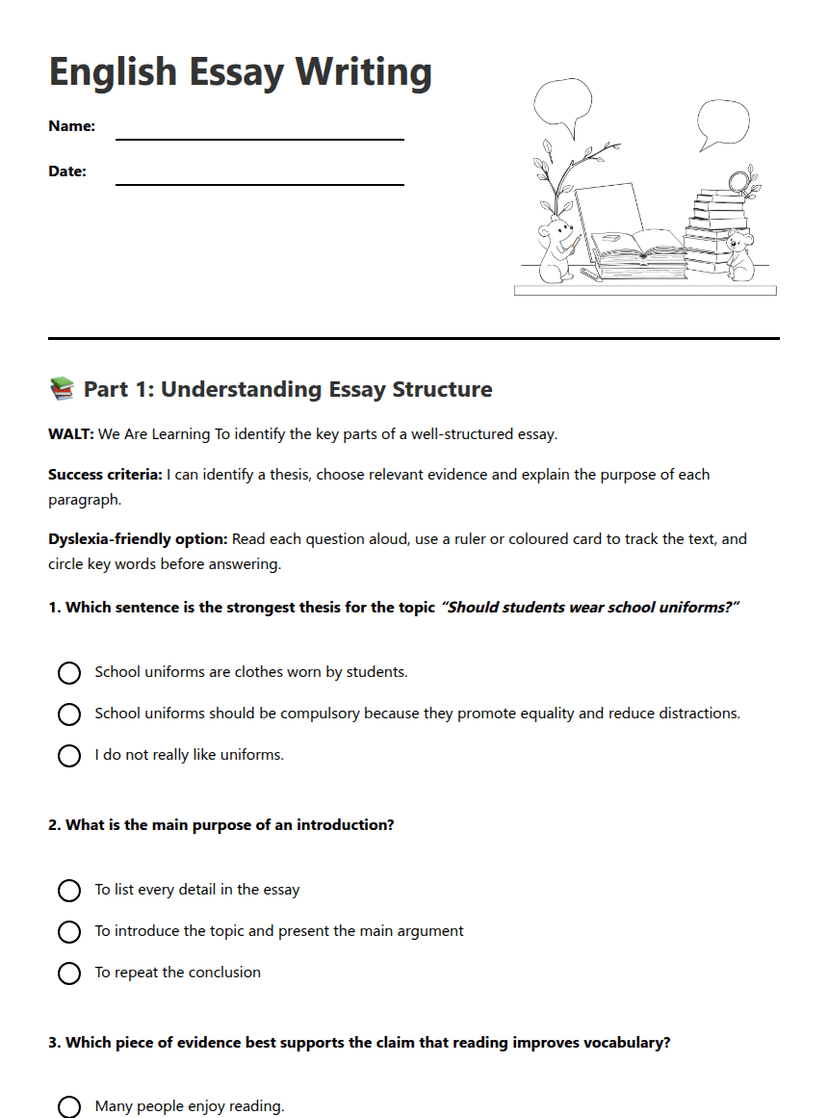
English Essay Writing
Free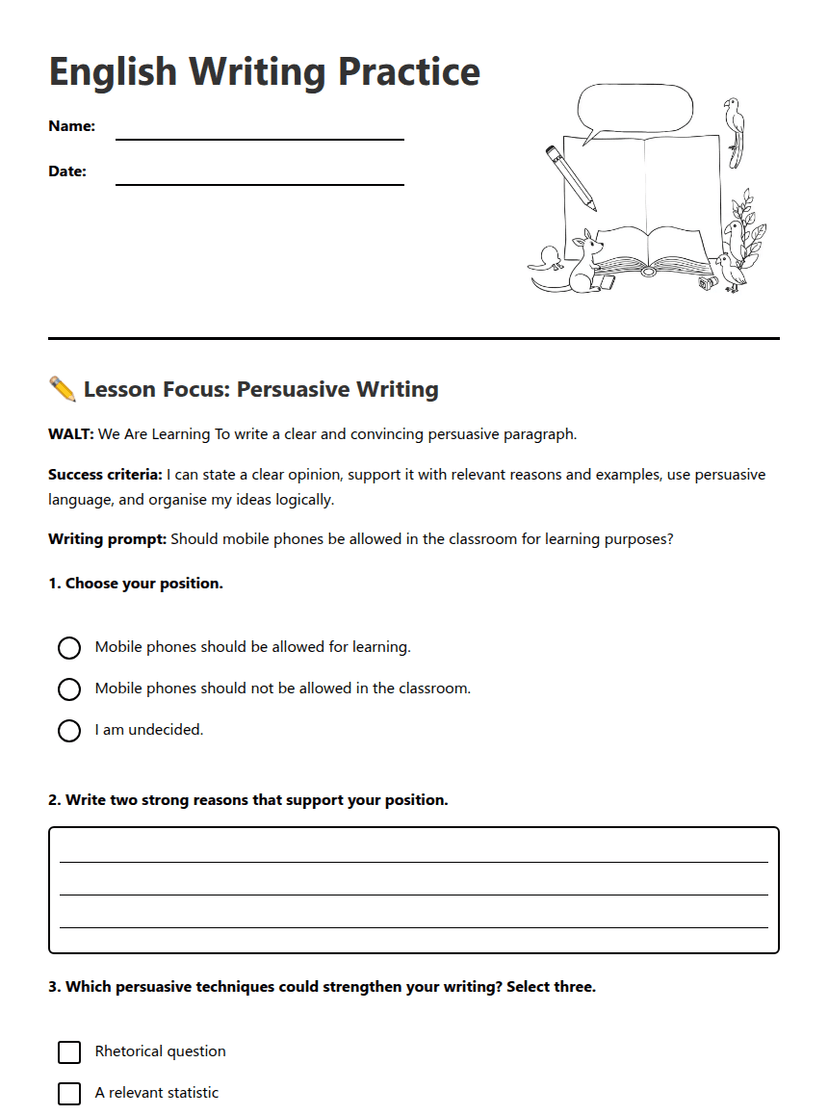
English Writing Practice
Free
Paragraph Builder: Connect and Explain
Free
First, Next, Last: Planting a Seed
Free
My Weekend News Worksheet
Free
My Weekend Life Skills
Free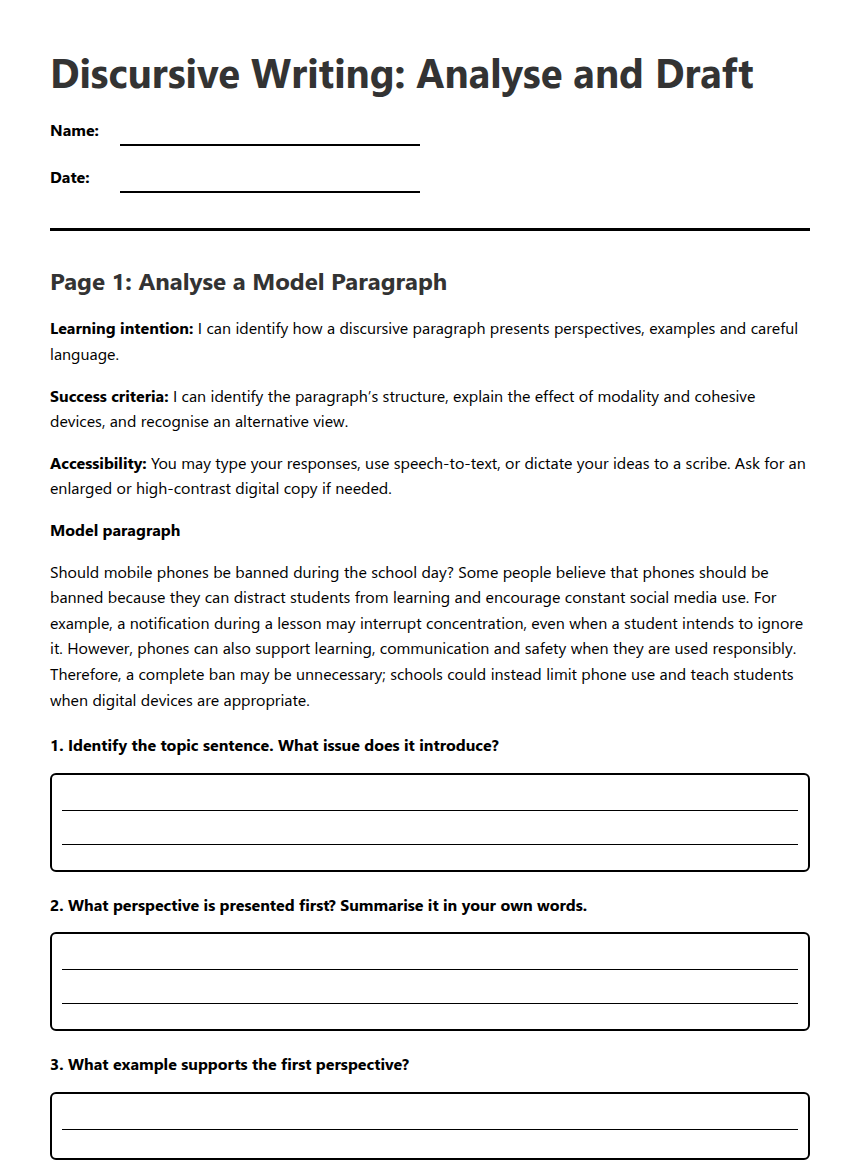
Discursive Writing: Analyse and Draft
Free