Ant Habitat Investigation
A free science worksheet ready for your classroom. Open in Kuraplan to grab the print-ready PDF, customize it for your students, or generate a fresh version in seconds.
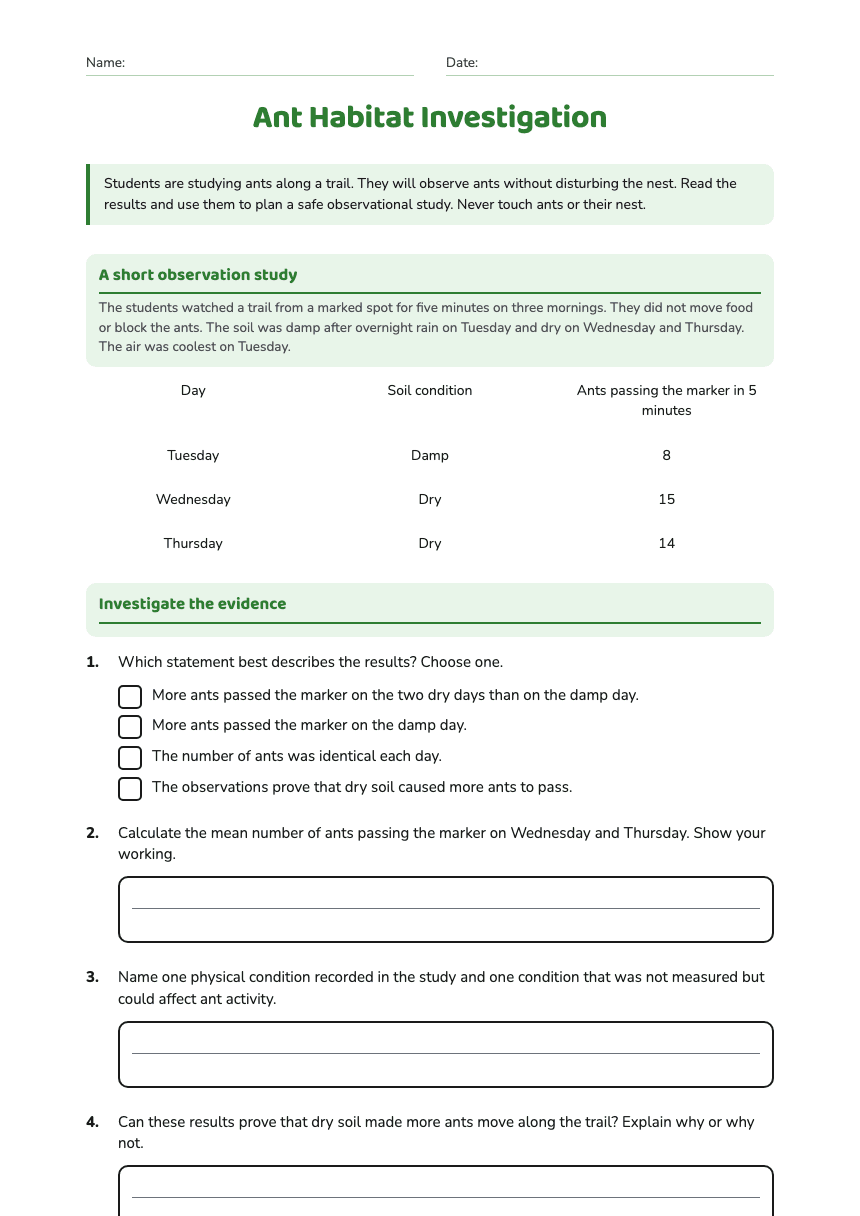
Ant Habitat Investigation
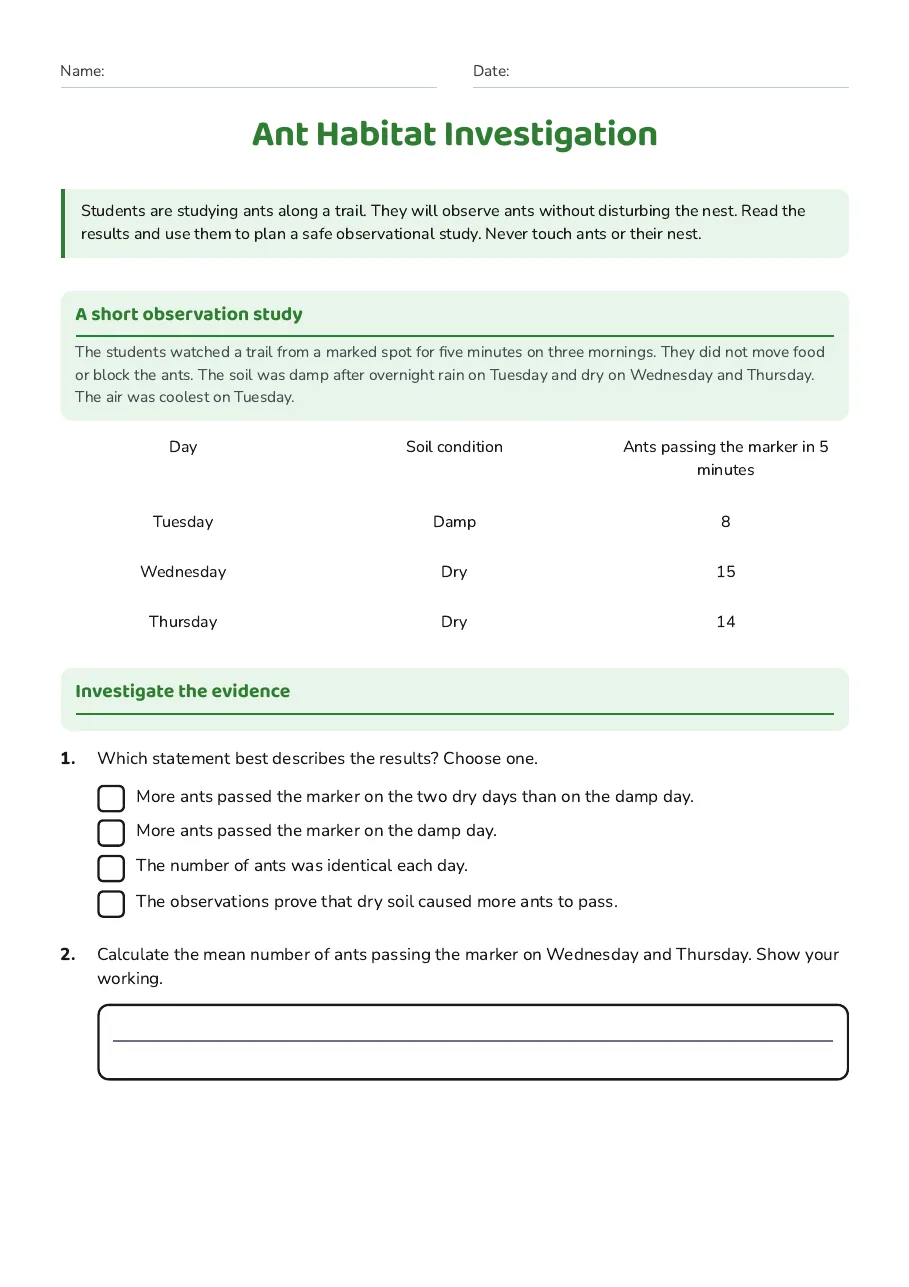
A short observation study
The students watched a trail from a marked spot for five minutes on three mornings. They did not move food or block the ants. The soil was damp after overnight rain on Tuesday and dry on Wednesday and Thursday. The air was coolest on Tuesday.
Day
Soil condition
Ants passing the marker in 5 minutes
Tuesday
Damp
8
Wednesday
Dry
15
Thursday
Dry
14
Investigate the evidence
- More ants passed the marker on the two dry days than on the damp day.
- More ants passed the marker on the damp day.
- The number of ants was identical each day.
- The observations prove that dry soil caused more ants to pass.
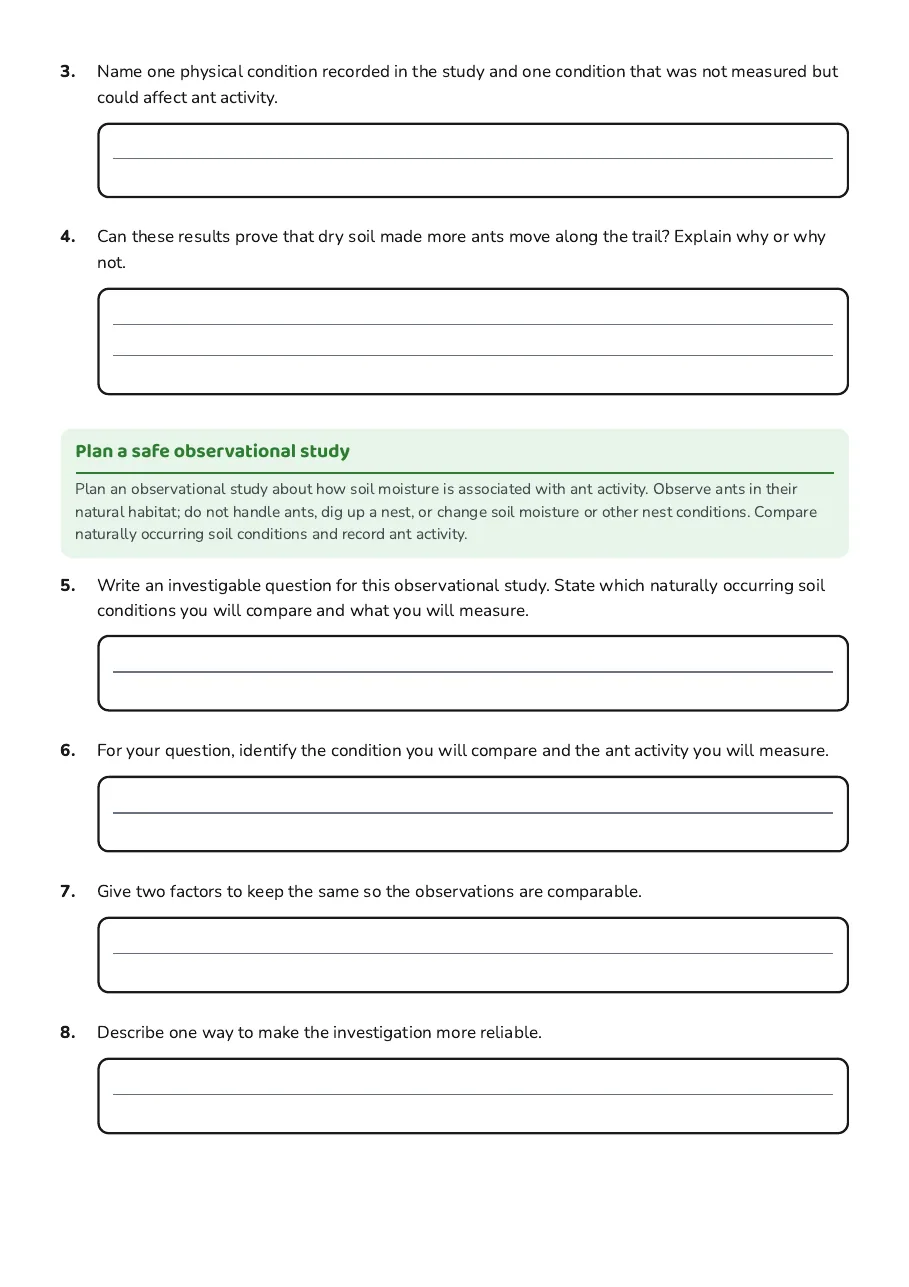
Plan a safe observational study
Plan an observational study about how soil moisture is associated with ant activity. Observe ants in their natural habitat; do not handle ants, dig up a nest, or change soil moisture or other nest conditions. Compare naturally occurring soil conditions and record ant activity.
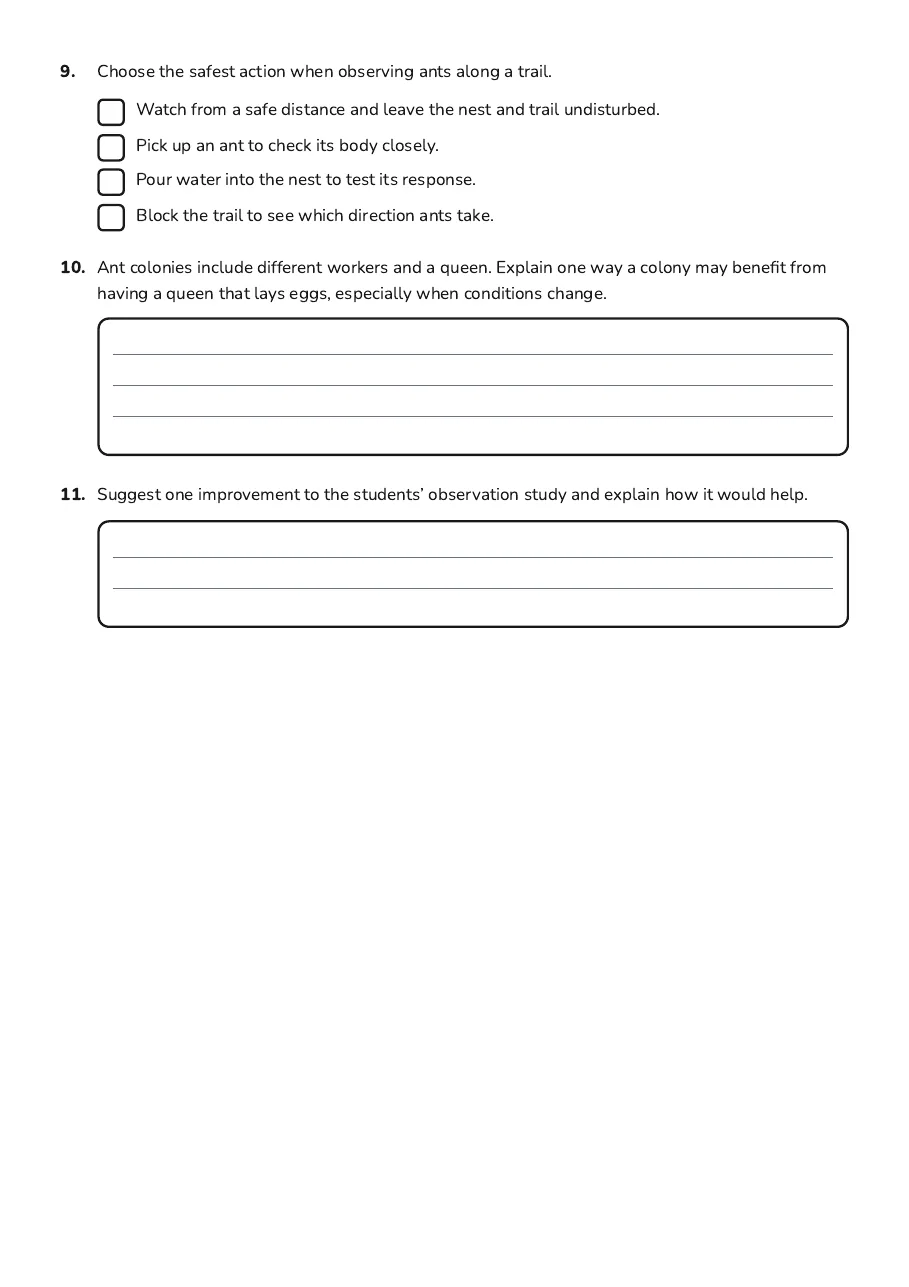
- Watch from a safe distance and leave the nest and trail undisturbed.
- Pick up an ant to check its body closely.
- Pour water into the nest to test its response.
- Block the trail to see which direction ants take.
3 printable pages
Page 1
Page 2
Page 3
About This Worksheet
Free in Kuraplan
Sign up free, grab the PDF, and customize it for your class.
Print-Ready
Formatted for standard paper. Clean layout, easy to read.
AI-Generated
Created with Kuraplan's AI, designed for real classroom use.
For Teachers & Parents
Use in classrooms, for homework, tutoring, or homeschool.
Need a custom version of this worksheet?
Kuraplan's AI generates custom worksheets in seconds — differentiated for every learner, aligned to your curriculum.
Generate Custom Worksheets — Free