Australian Human Rights Research
A free social sciences worksheet ready for your classroom. Open in Kuraplan to grab the print-ready PDF, customize it for your students, or generate a fresh version in seconds.
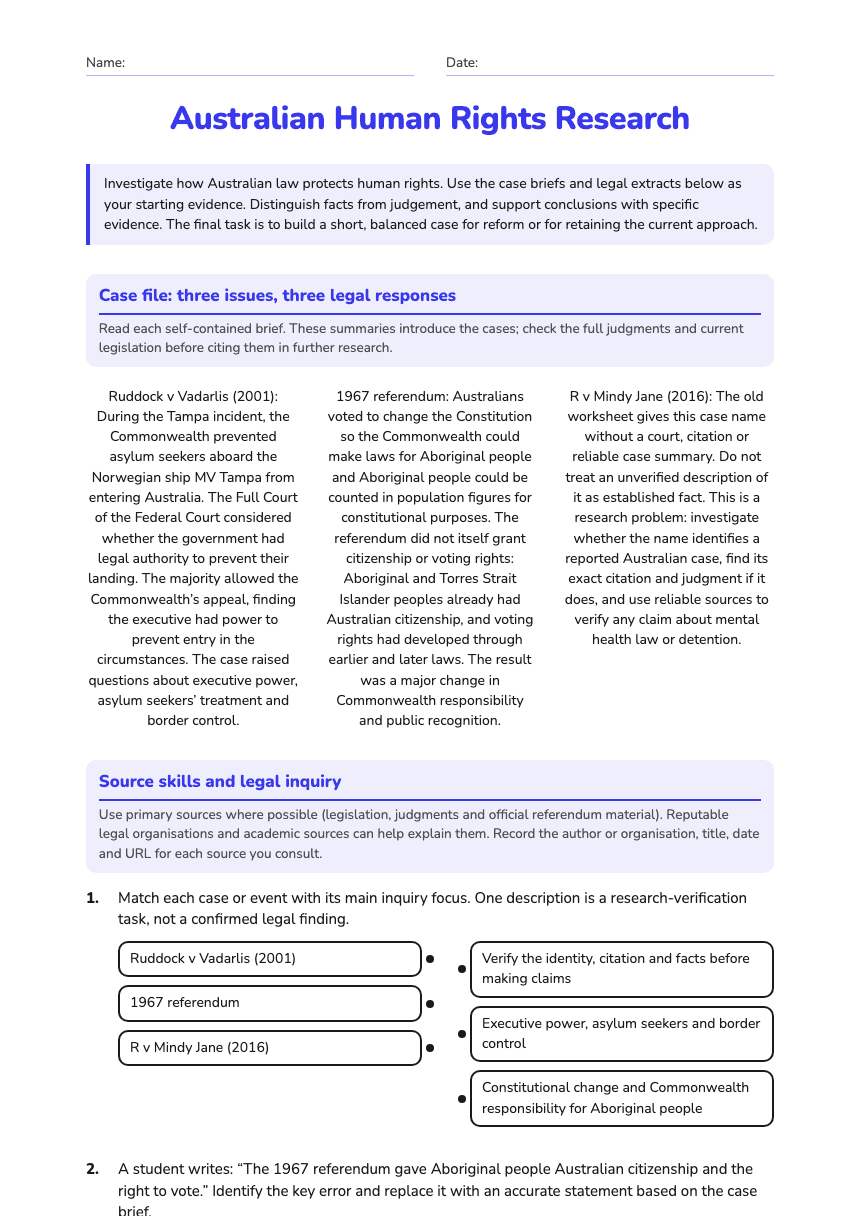
Australian Human Rights Research
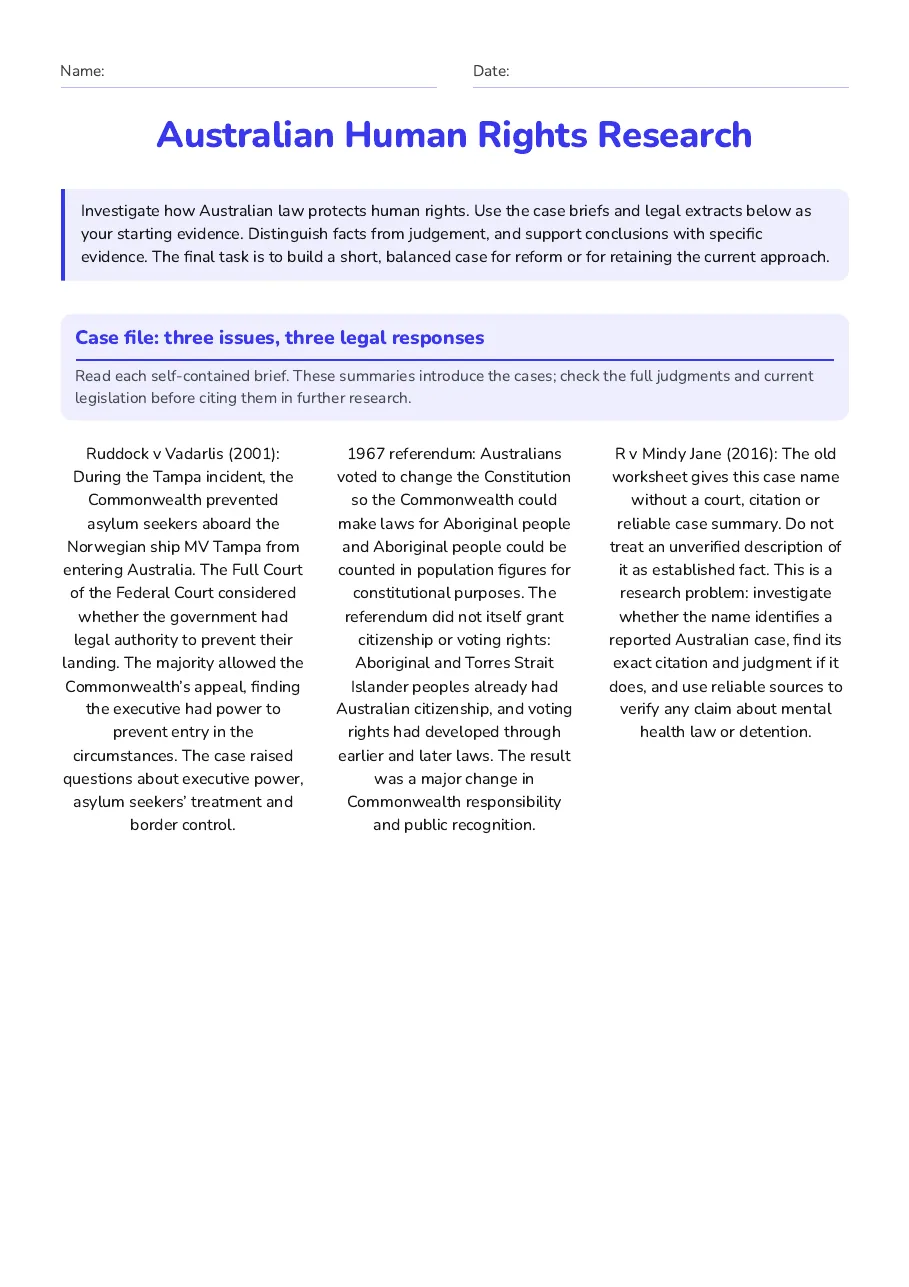
Case file: three issues, three legal responses
Read each self-contained brief. These summaries introduce the cases; check the full judgments and current legislation before citing them in further research.
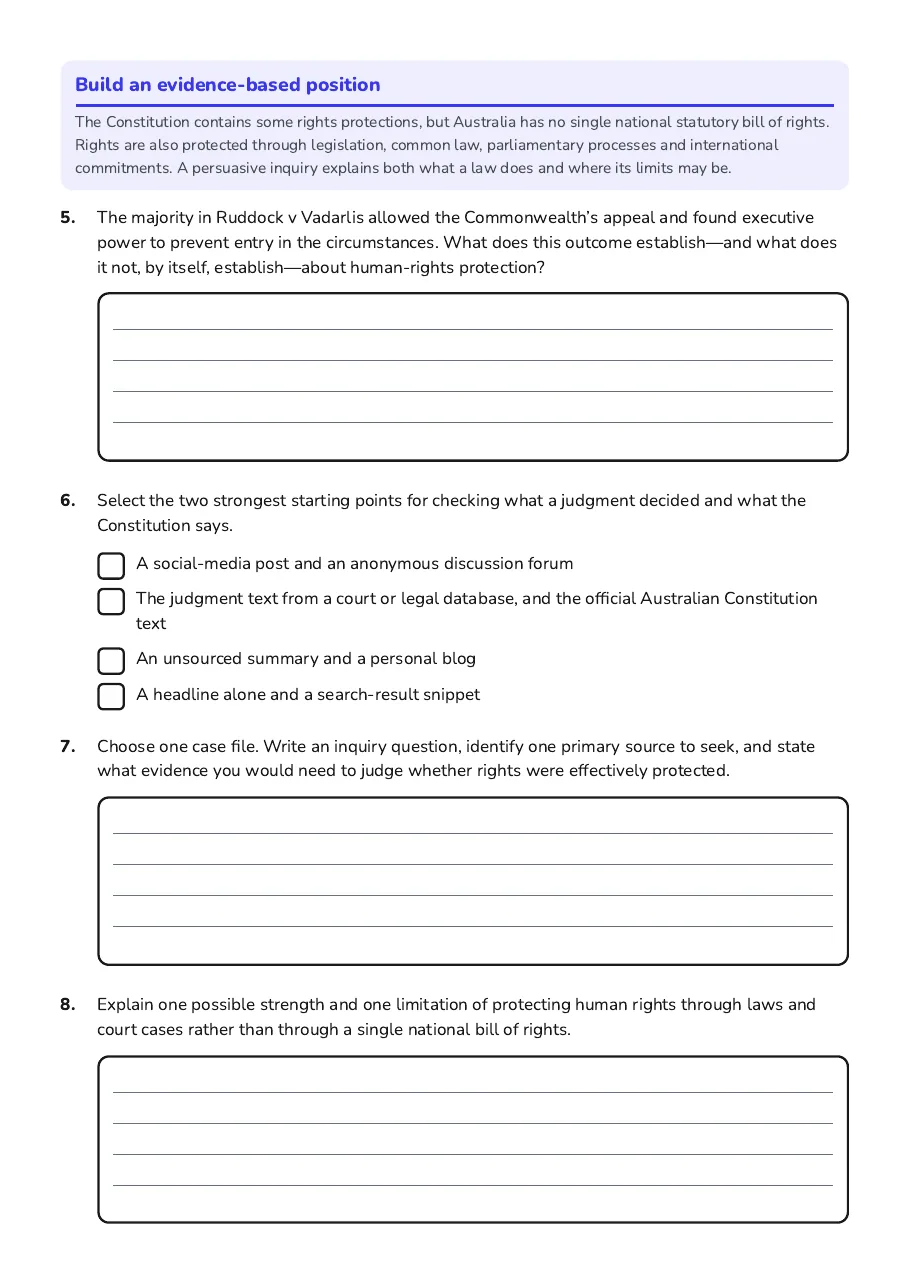
Ruddock v Vadarlis (2001): During the Tampa incident, the Commonwealth prevented asylum seekers aboard the Norwegian ship MV Tampa from entering Australia. The Full Court of the Federal Court considered whether the government had legal authority to prevent their landing. The majority allowed the Commonwealth’s appeal, finding the executive had power to prevent entry in the circumstances. The case raised questions about executive power, asylum seekers’ treatment and border control.
1967 referendum: Australians voted to change the Constitution so the Commonwealth could make laws for Aboriginal people and Aboriginal people could be counted in population figures for constitutional purposes. The referendum did not itself grant citizenship or voting rights: Aboriginal and Torres Strait Islander peoples already had Australian citizenship, and voting rights had developed through earlier and later laws. The result was a major change in Commonwealth responsibility and public recognition.
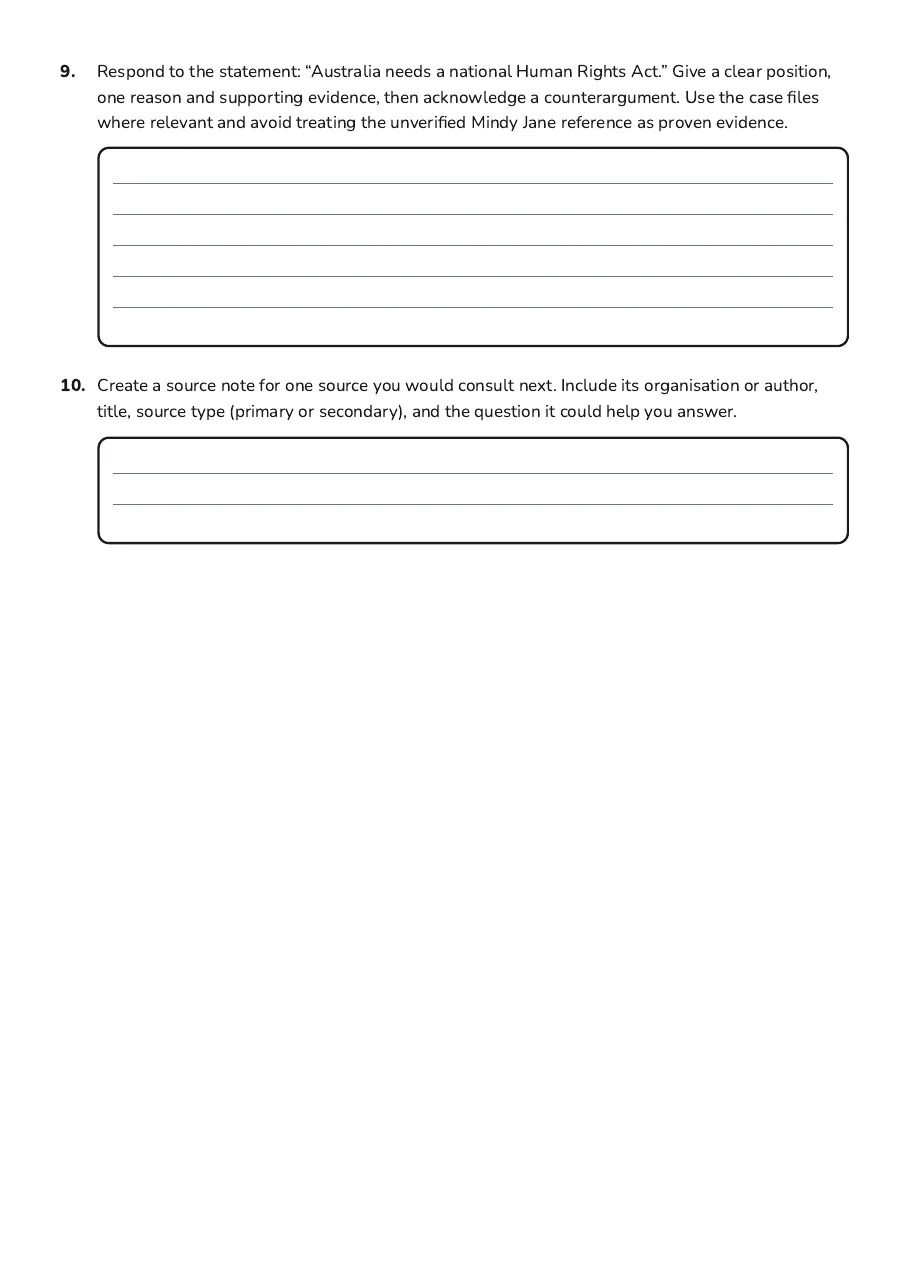
R v Mindy Jane (2016): The old worksheet gives this case name without a court, citation or reliable case summary. Do not treat an unverified description of it as established fact. This is a research problem: investigate whether the name identifies a reported Australian case, find its exact citation and judgment if it does, and use reliable sources to verify any claim about mental health law or detention.
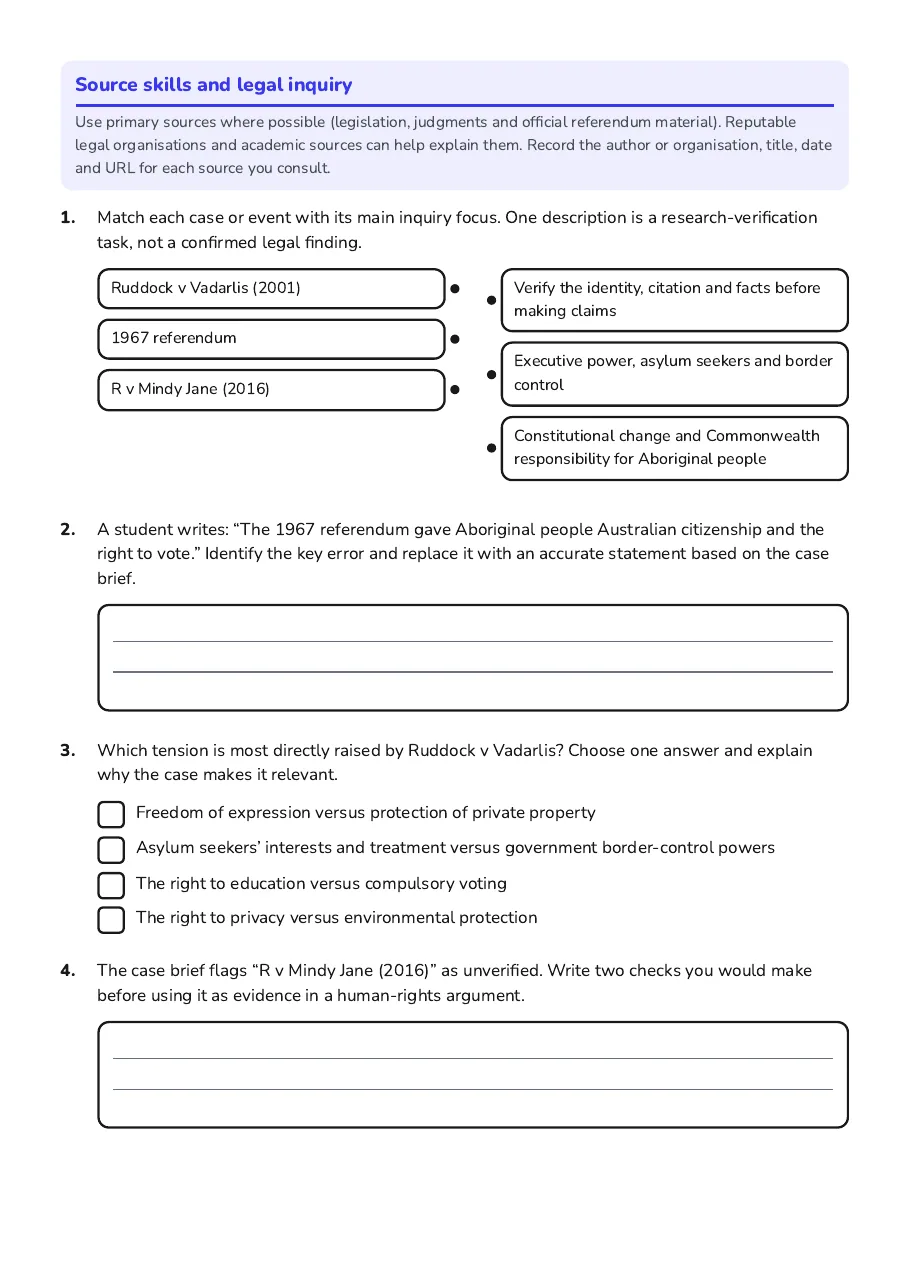
Source skills and legal inquiry
Use primary sources where possible (legislation, judgments and official referendum material). Reputable legal organisations and academic sources can help explain them. Record the author or organisation, title, date and URL for each source you consult.
- Ruddock v Vadarlis (2001)
- 1967 referendum
- R v Mindy Jane (2016)
- Verify the identity, citation and facts before making claims
- Executive power, asylum seekers and border control
- Constitutional change and Commonwealth responsibility for Aboriginal people
- Freedom of expression versus protection of private property
- Asylum seekers’ interests and treatment versus government border-control powers
- The right to education versus compulsory voting
- The right to privacy versus environmental protection
Build an evidence-based position
The Constitution contains some rights protections, but Australia has no single national statutory bill of rights. Rights are also protected through legislation, common law, parliamentary processes and international commitments. A persuasive inquiry explains both what a law does and where its limits may be.
- A social-media post and an anonymous discussion forum
- The judgment text from a court or legal database, and the official Australian Constitution text
- An unsourced summary and a personal blog
- A headline alone and a search-result snippet
4 printable pages
Page 1
Page 2
Page 3
Page 4
About This Worksheet
Free in Kuraplan
Sign up free, grab the PDF, and customize it for your class.
Print-Ready
Formatted for standard paper. Clean layout, easy to read.
AI-Generated
Created with Kuraplan's AI, designed for real classroom use.
For Teachers & Parents
Use in classrooms, for homework, tutoring, or homeschool.
Need a custom version of this worksheet?
Kuraplan's AI generates custom worksheets in seconds — differentiated for every learner, aligned to your curriculum.
Generate Custom Worksheets — FreeMore Social Sciences Worksheets
Community Project Planning
Free
Australian Law Reform Fact Sheets
Free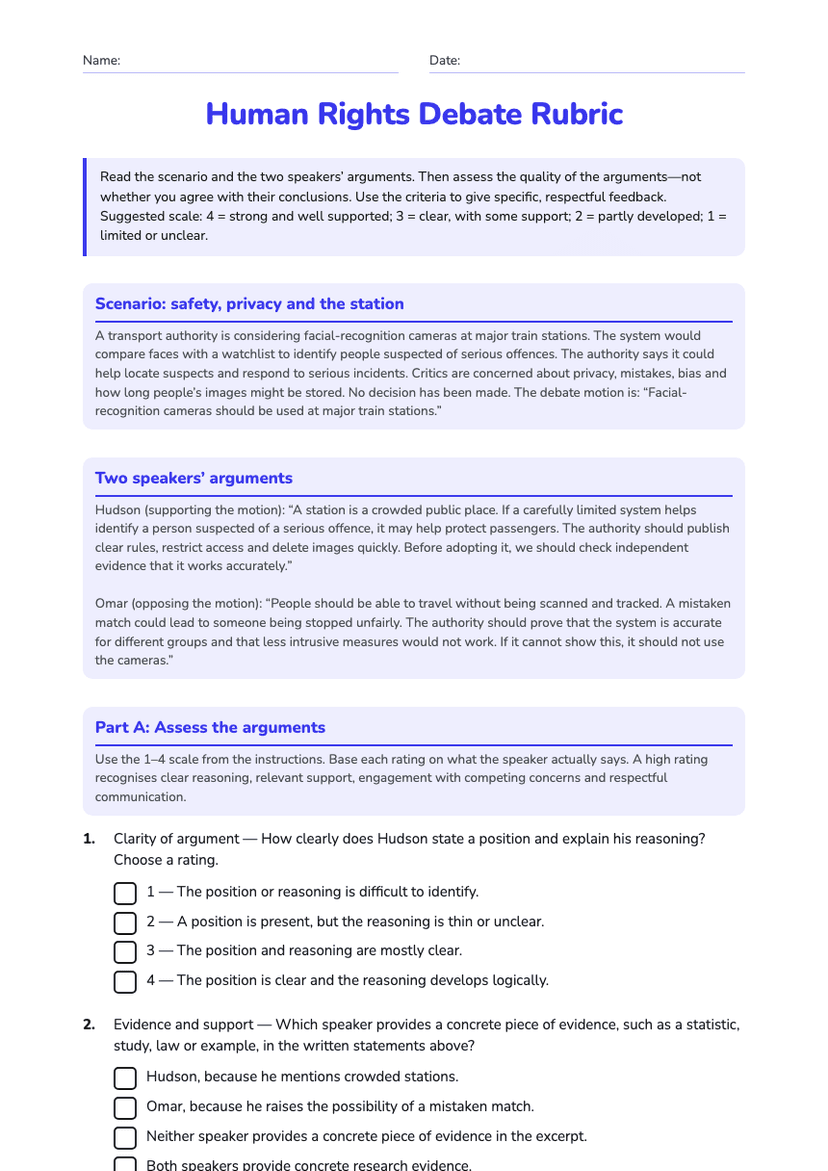
Human Rights Debate Rubric
Free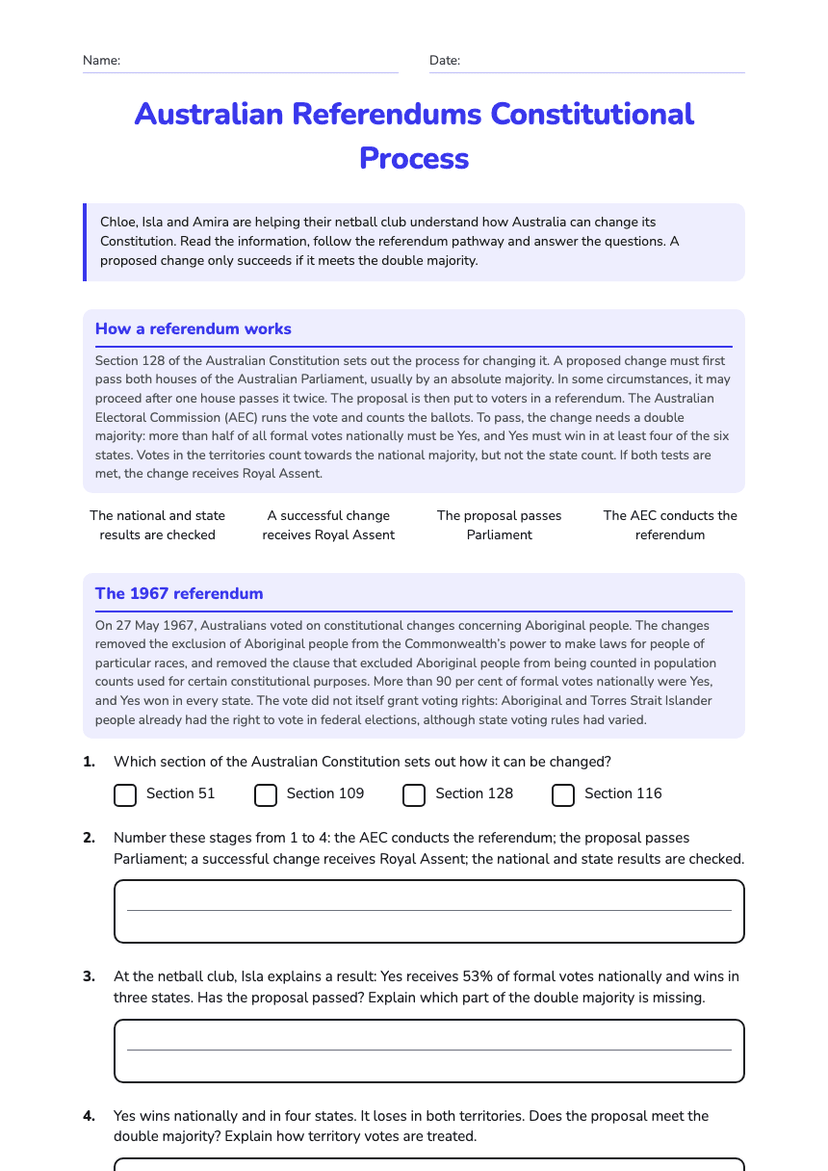
Australian Referendums Constitutional Process
Free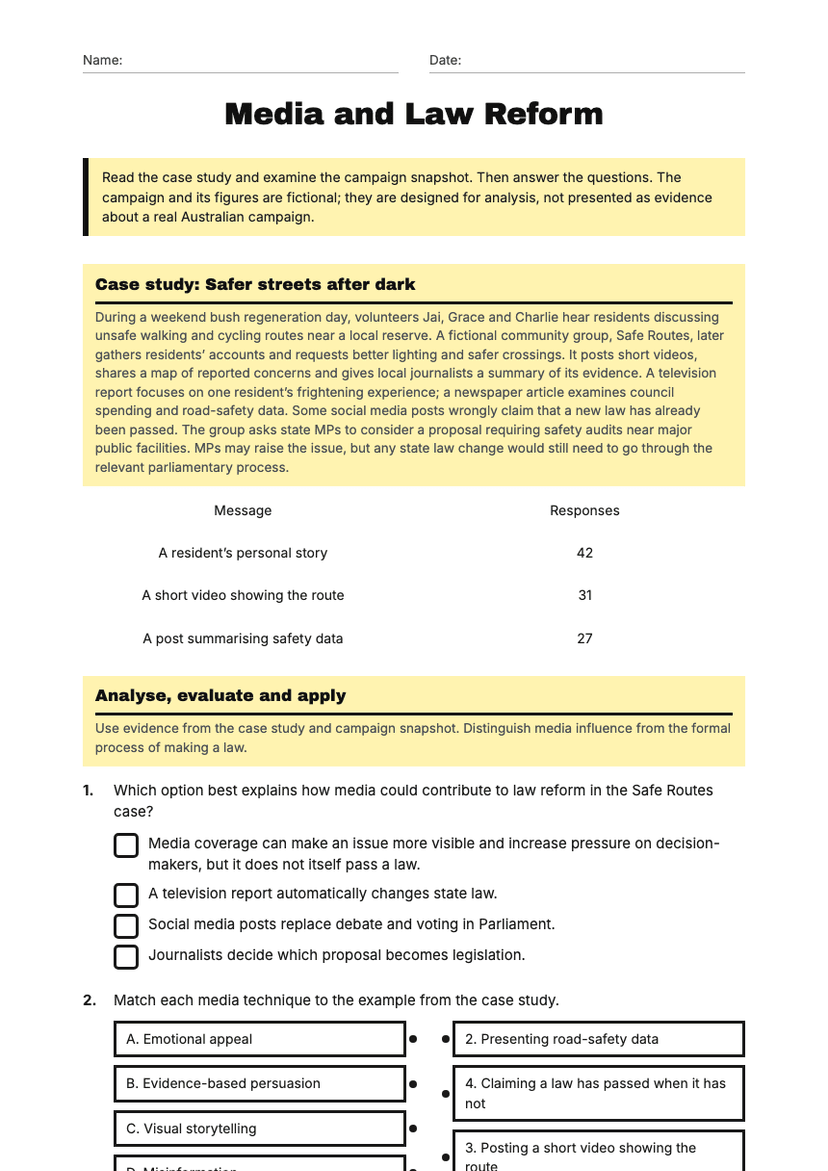
Media and Law Reform
Free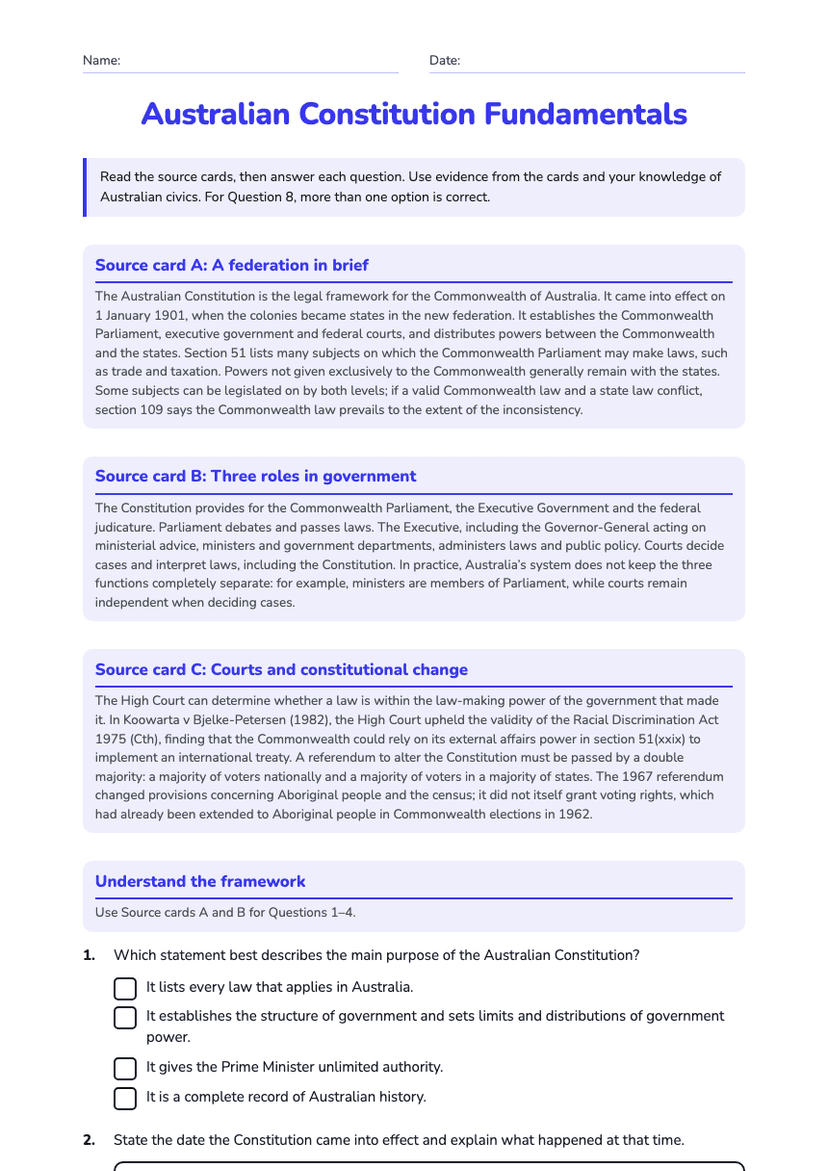
Australian Constitution Fundamentals
Free
Commonwealth Constitution Overview
Free