Biography Writing Guide
A free english worksheet ready for your classroom. Open in Kuraplan to grab the print-ready PDF, customize it for your students, or generate a fresh version in seconds.
Biography Writing Guide
📚 Part 1: Quick Check
✏️ Part 2: Plan & Write
Learning intention: I am learning to plan and write a clear, factual short biography that explains a person's life and impact.
Success criteria: I can (1) organise facts chronologically, (2) include at least one quotation or source, (3) use past-tense verbs, and (4) write a concluding sentence about the person's significance.
Exemplar (model):
Marian Clarke (b. 1960) grew up in Adelaide and loved science from a young age. After studying at the University of Adelaide, she became a marine biologist and led research projects across South Australia. Her work on coastal conservation helped protect local habitats and inspired community programs. Colleagues remember her as a generous mentor. Clarke's research continues to influence policy, and a coastal reserve was named in her honour.
Name and dates:
Early life / background (place, family, education):
Key achievements / career highlights:
Impact / legacy (why they matter):
Compliment:
Suggestion:
🧑🏫 Teacher Notes & Curriculum Links
Three-lesson writing program (overview)
Lesson 1 — Discover & Research Learning intention: identify reliable facts about a person. Success criteria: list 5 factual points and one reliable source. Differentiation: provide an information sheet or voice-recorded interviews for students who need support. Extension: research a primary source. Dyslexia-friendly option: short paragraphs, coloured overlays, increased line spacing.
Lesson 2 — Structure & Draft Learning intention: organise facts into a logical plan. Success criteria: create a 4-part plan (intro, early life, achievements, legacy) and write a clear opening sentence. Differentiation: sentence starters provided; peer scribe option. Extension: include a relevant quote and reference.
Lesson 3 — Edit & Publish Learning intention: revise for clarity and accuracy. Success criteria: correct tense, add one quotation or source, and produce a neat final copy. Differentiation: checklist and teacher conferencing; text-to-speech for proofreading. Extension: prepare a presentation about the person.
Differentiation strategies (brief)
Use sentence starters, templates, audio support, peer buddies, and allowed extra time. Offer choice of subject (local community member, historical figure, or contemporary artist) to increase engagement.
Extension activities
Write an extended biography (300+ words), create a timeline with images, or compare two biographies focusing on different perspectives.
Dyslexia-friendly reading options
Provide shorter paragraphs, larger spacing, sans-serif fonts, coloured backgrounds or overlays, audio versions of exemplar texts, and checklists for organisation.
Music program (3 lessons) — linked to South Australian Curriculum; for teachers with limited music knowledge
Lesson M1 — Rhythm & Story LI: use steady beat and simple rhythms to support storytelling. Activity: clap/voice a steady beat while reading a short biography excerpt; students create a 4-beat rhythm to represent a life stage. Resources: clapping, simple percussion (e.g. tambourines), recorded metronome app. Assessment: student demonstrates a steady beat. Dispositions: curiosity, confidence.
Lesson M2 — Soundscape for a Life LI: explore how instruments and voice create mood. Activity: in groups, choose two sounds (high/low; soft/loud) to represent early life and achievement; perform while a peer reads a paragraph. Resources: classroom instruments, phone/tablet for simple recording. Assessment: group presentation. Dispositions: collaboration, creativity.
Lesson M3 — Present & Reflect LI: combine voice and sound to present a short biographical vignette. Activity: rehearse and perform a 1–2 minute piece combining narration and soundscape; reflect on choices. Assessment: teacher checklist (clear narration, appropriate sound choices). Dispositions: resilience, reflective thinking.
Notes for non-musicians: use simple, repeatable patterns; allow students to lead performances; use apps with pre-made loops; focus on expression rather than technical skill.
About This Worksheet
Free in Kuraplan
Sign up free, grab the PDF, and customize it for your class.
Print-Ready
Formatted for standard paper. Clean layout, easy to read.
AI-Generated
Created with Kuraplan's AI, designed for real classroom use.
For Teachers & Parents
Use in classrooms, for homework, tutoring, or homeschool.
Need a custom version of this worksheet?
Kuraplan's AI generates custom worksheets in seconds — differentiated for every learner, aligned to your curriculum.
Generate Custom Worksheets — FreeMore English Worksheets
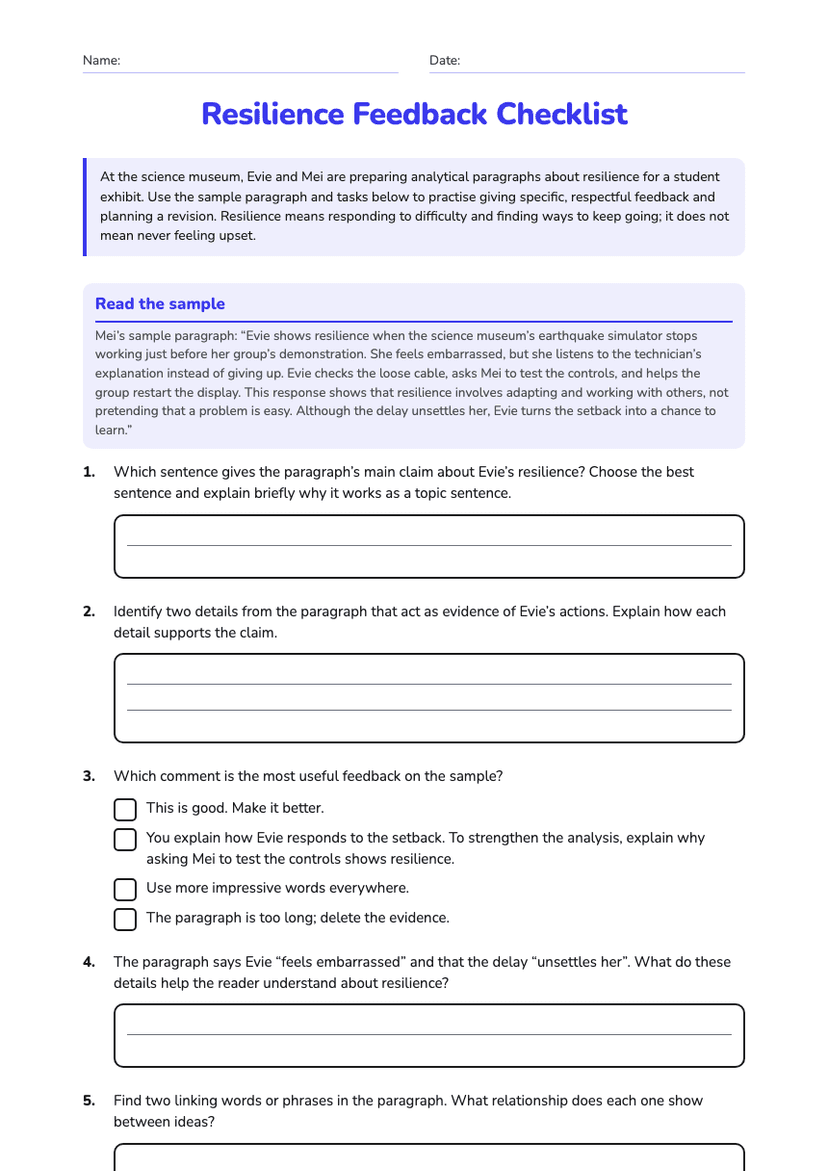
Resilience Feedback Checklist
Free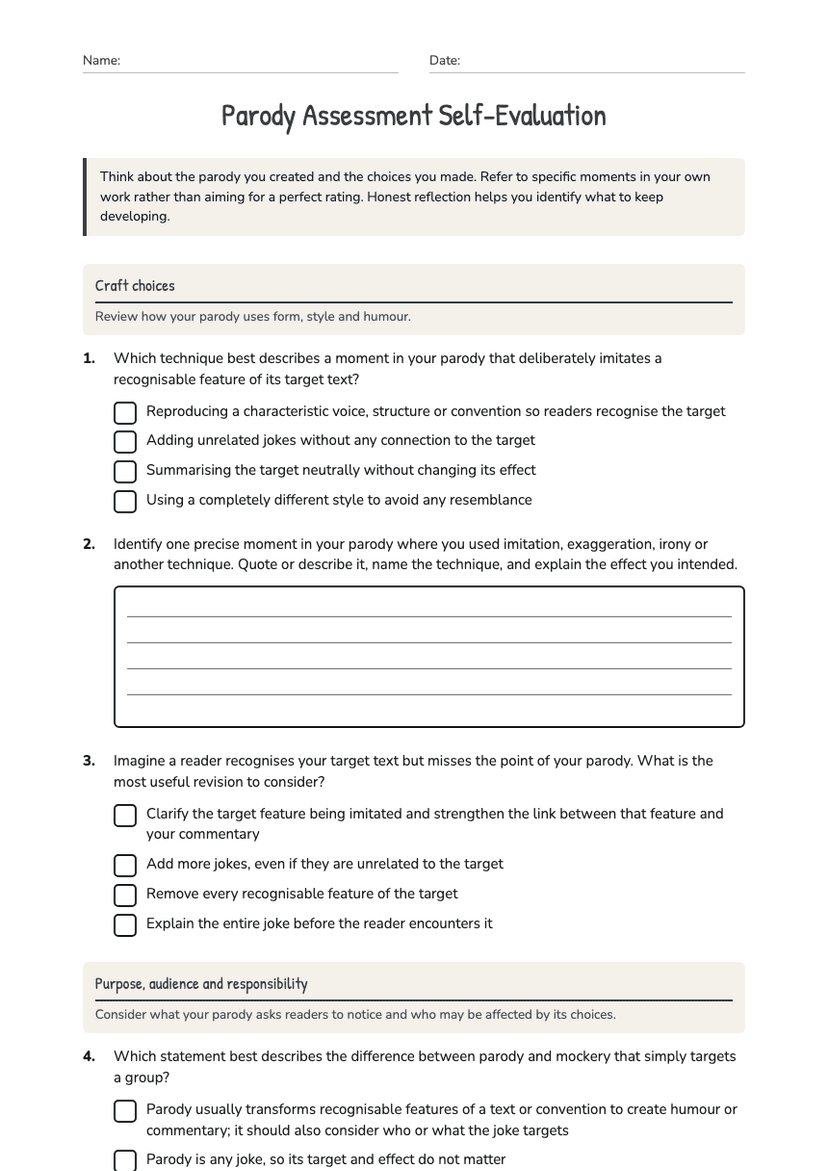
Parody Assessment Self-Evaluation
Free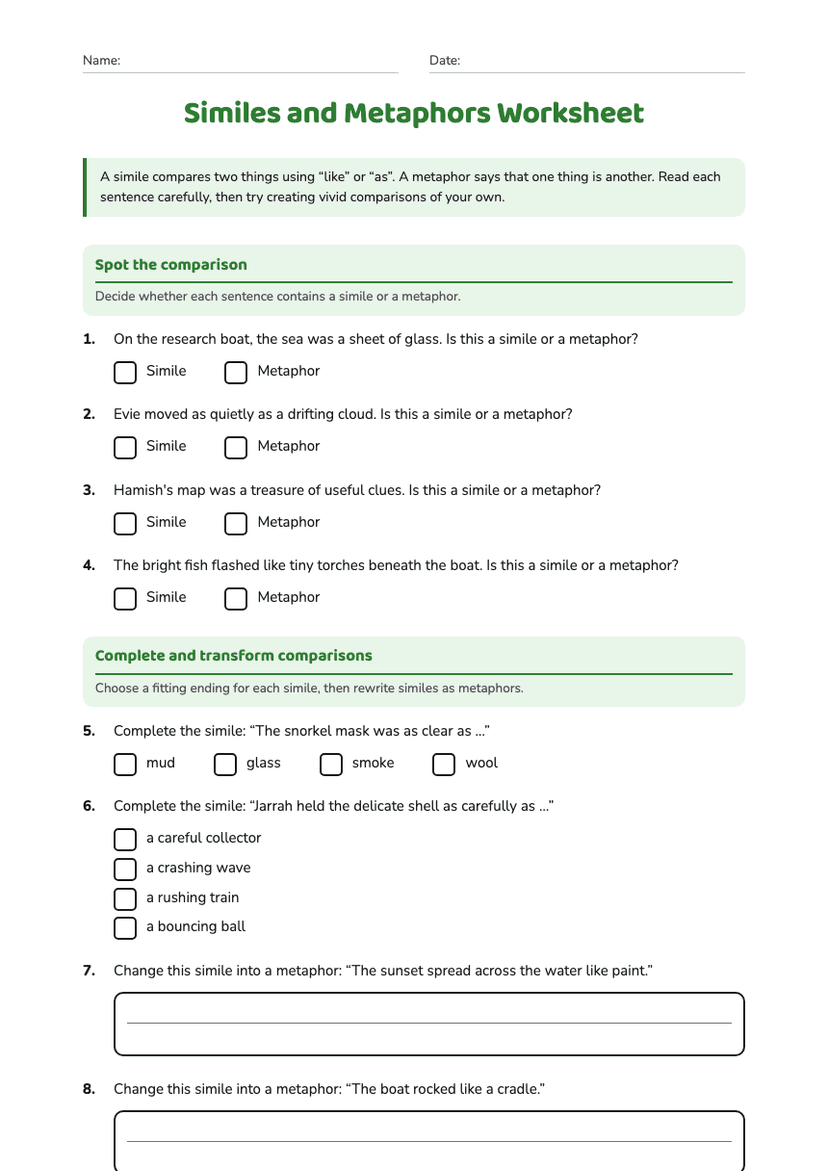
Similes and Metaphors Worksheet
Free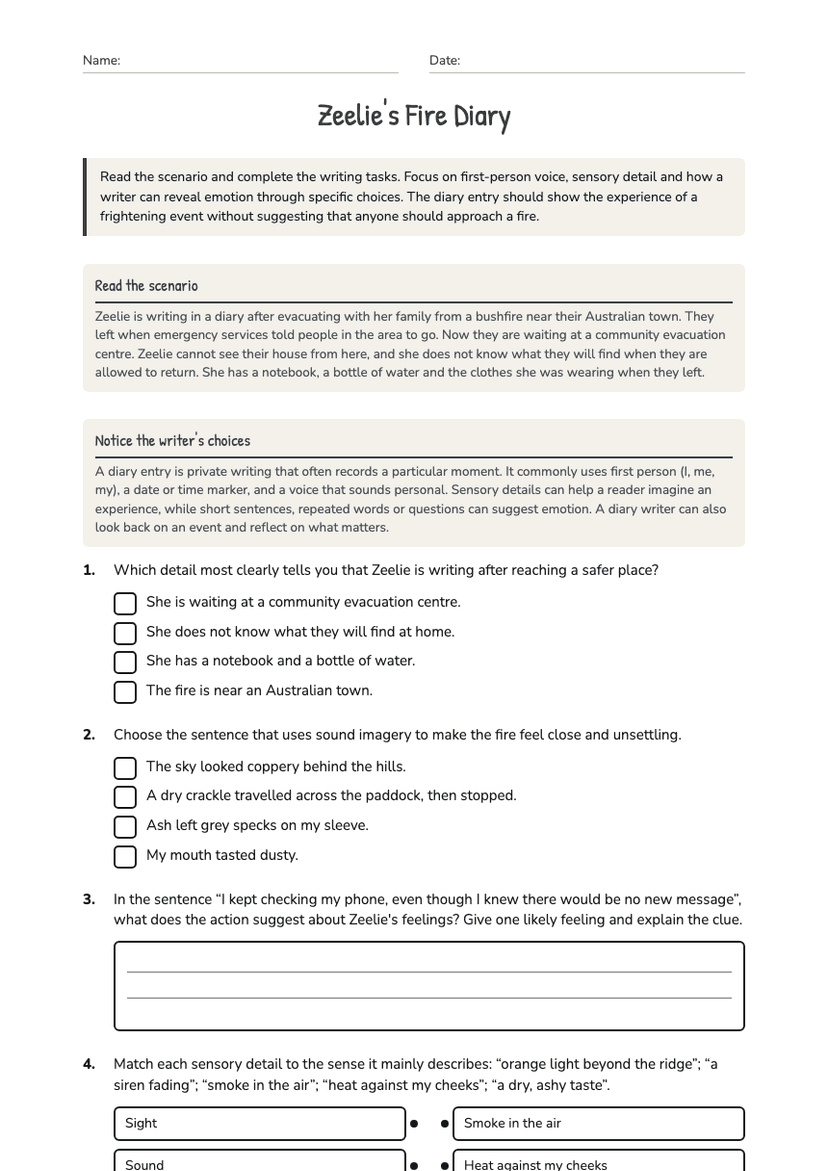
Zeelie's Fire Diary
Free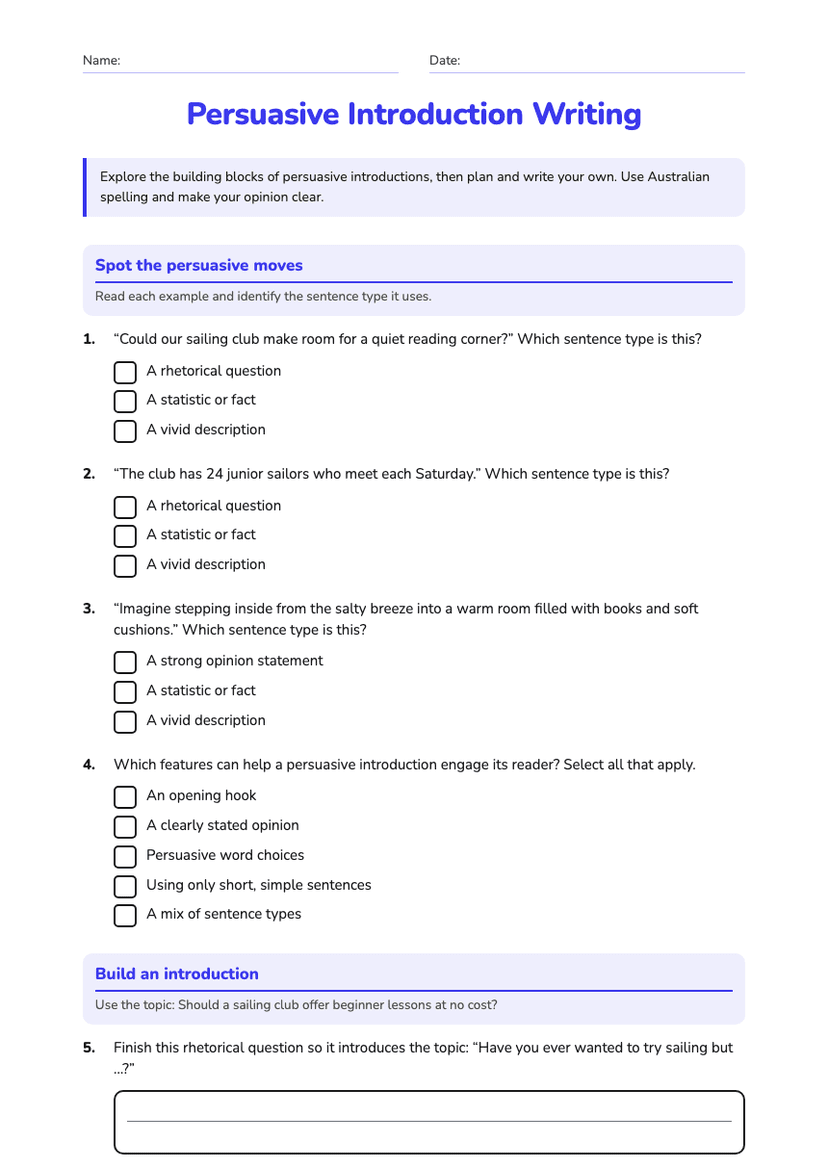
Persuasive Introduction Writing
Free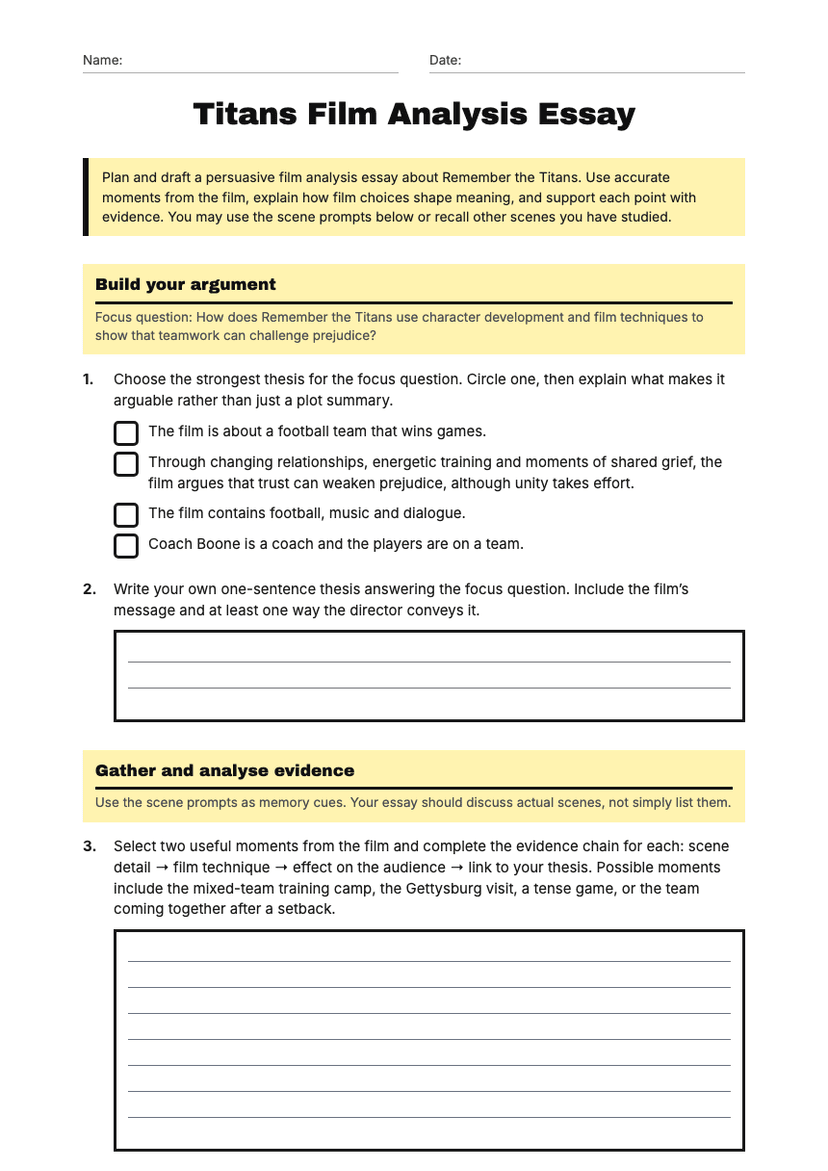
Titans Film Analysis Essay
Free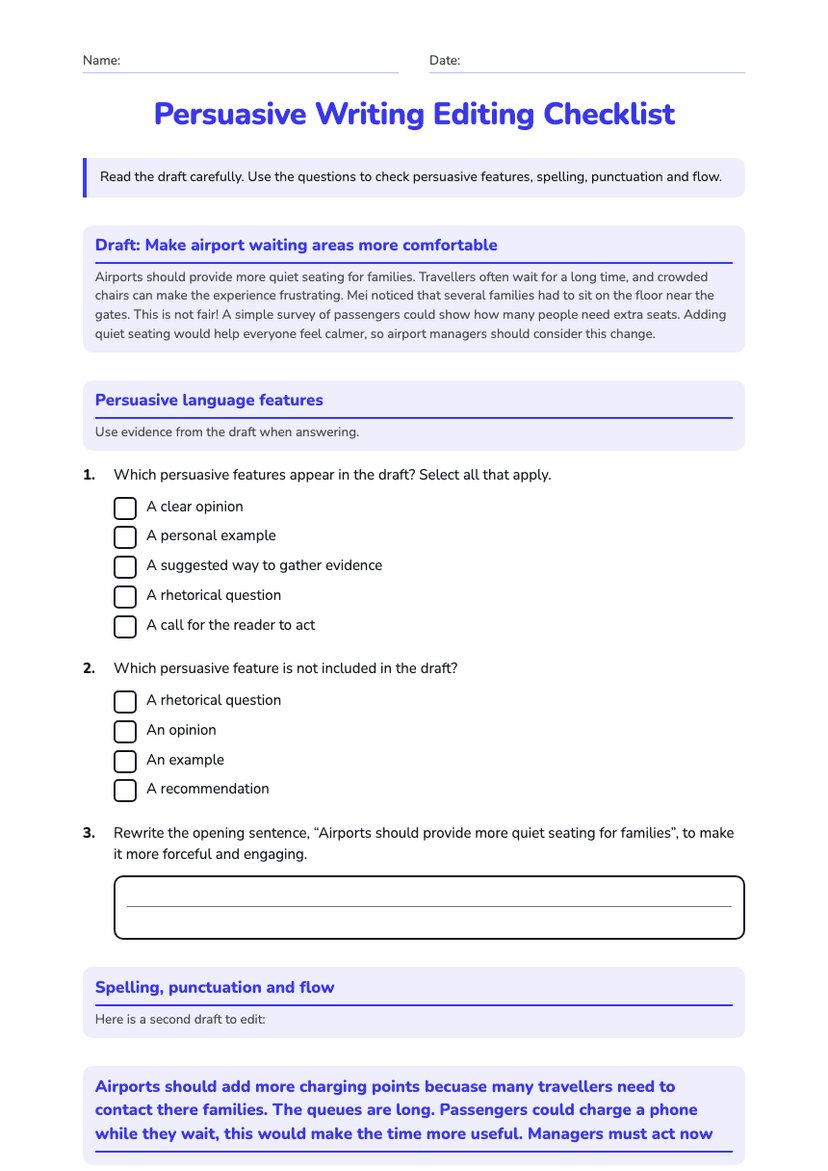
Persuasive Writing Editing Checklist
Free