Chemical Reactions Investigation
A free science worksheet ready for your classroom. Open in Kuraplan to grab the print-ready PDF, customize it for your students, or generate a fresh version in seconds.
Chemical Reactions Investigation
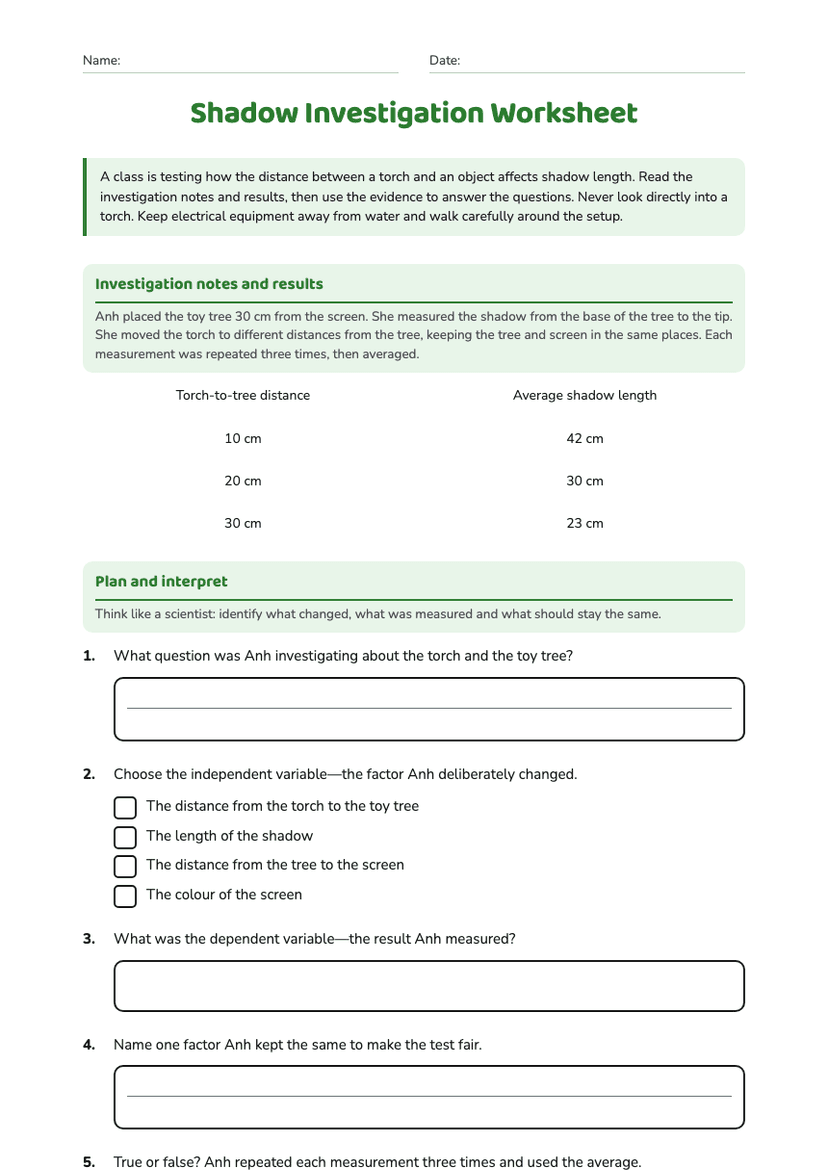
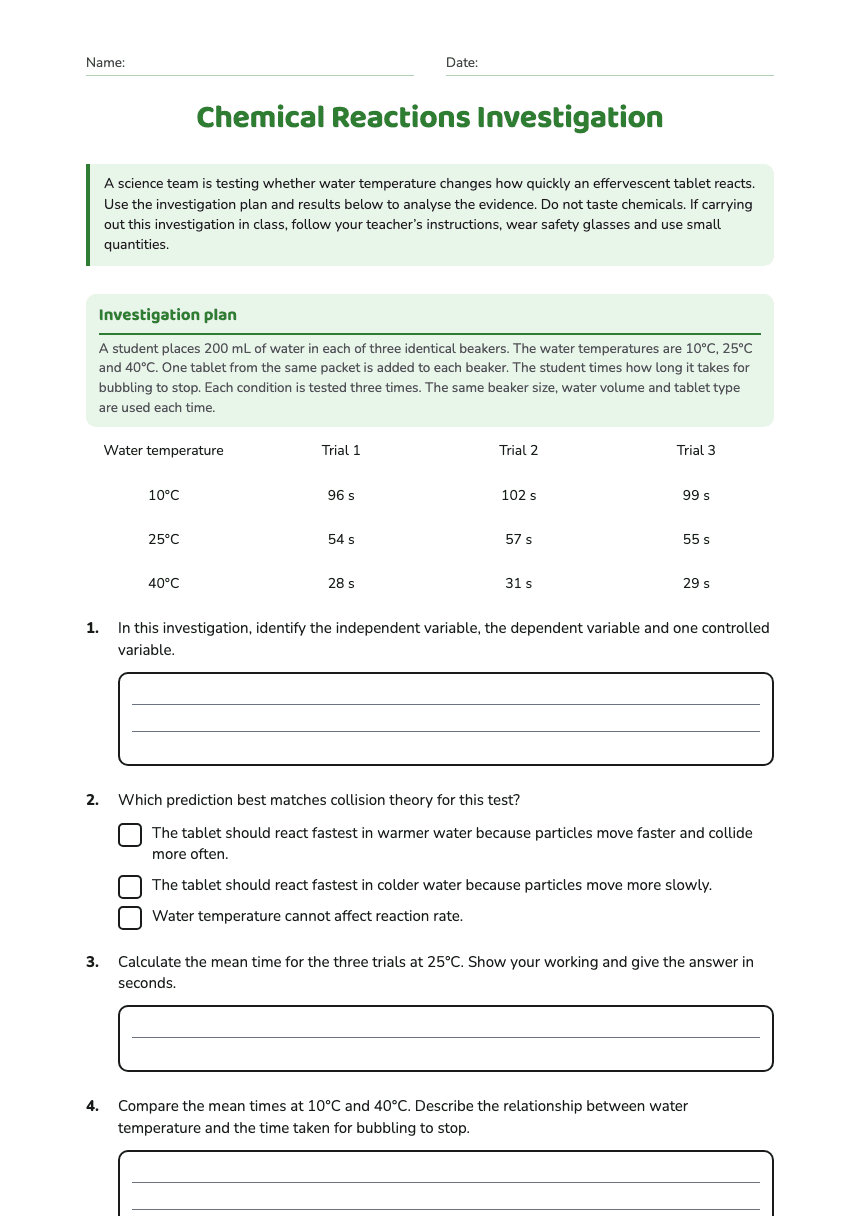
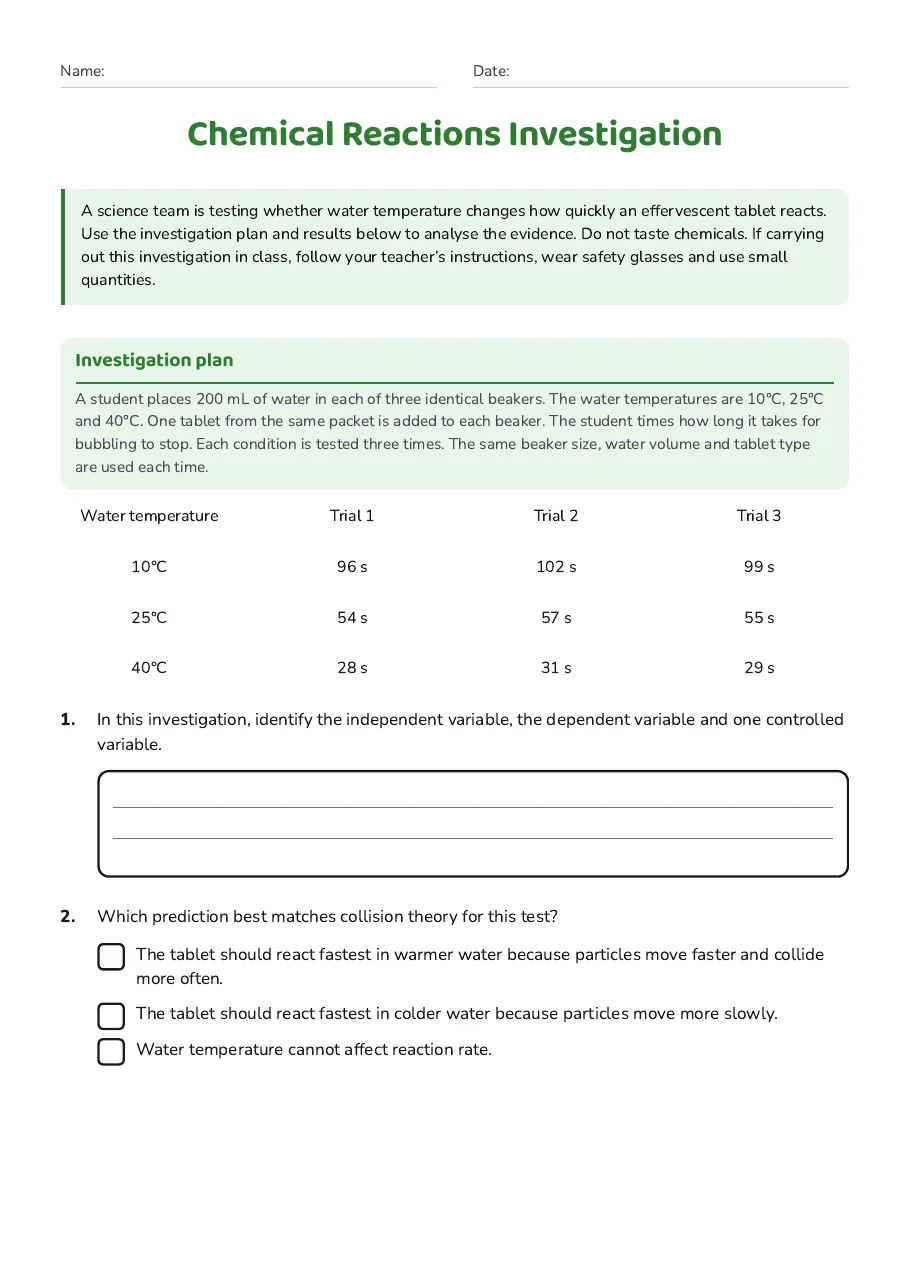
Investigation plan
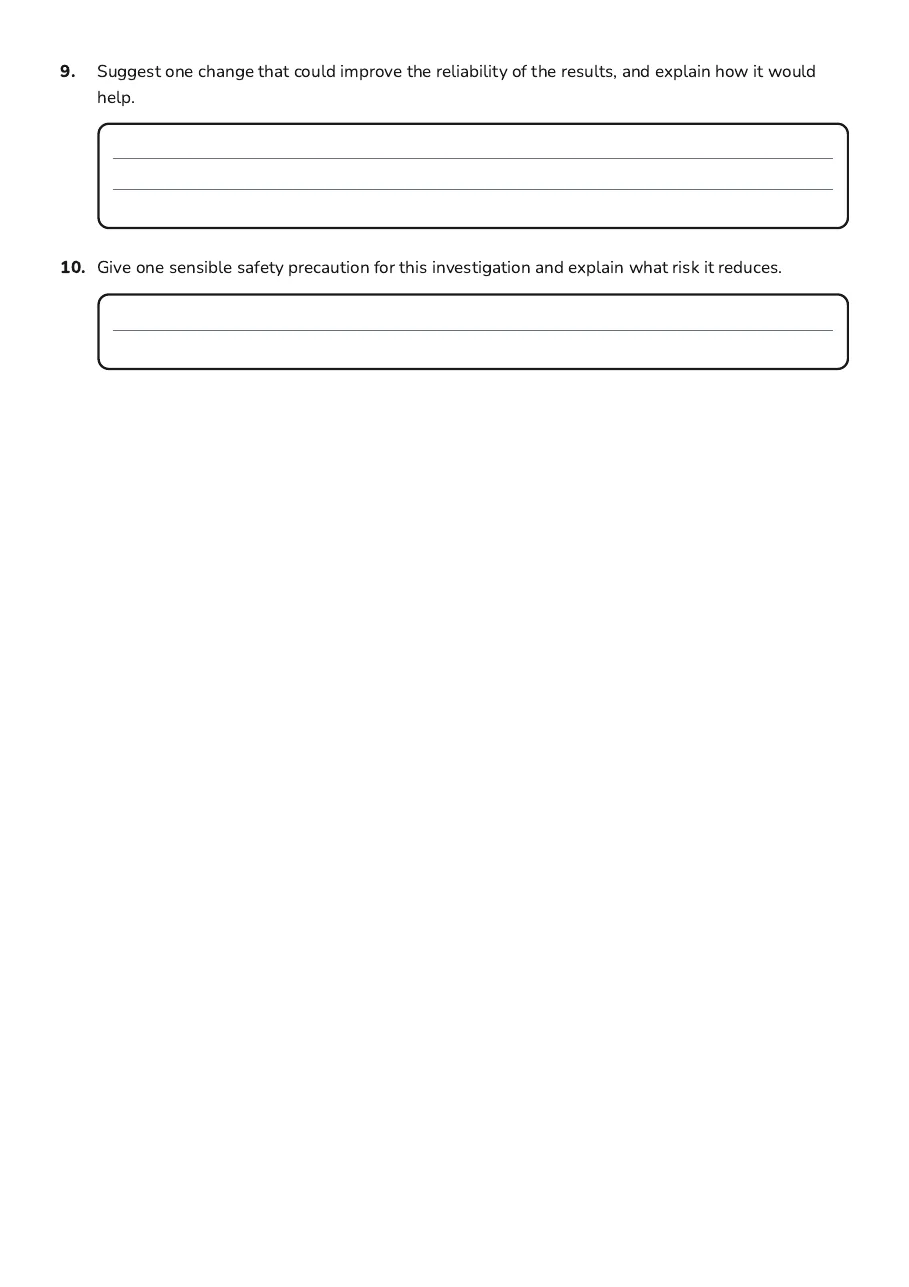
A student places 200 mL of water in each of three identical beakers. The water temperatures are 10°C, 25°C and 40°C. One tablet from the same packet is added to each beaker. The student times how long it takes for bubbling to stop. Each condition is tested three times. The same beaker size, water volume and tablet type are used each time.
Water temperature
Trial 1
Trial 2
Trial 3
10°C
96 s
102 s
99 s
25°C
54 s
57 s
55 s
40°C
28 s
31 s
29 s
- The tablet should react fastest in warmer water because particles move faster and collide more often.
- The tablet should react fastest in colder water because particles move more slowly.
- Water temperature cannot affect reaction rate.
3 printable pages
Page 1
Page 2
Page 3
About This Worksheet
Free in Kuraplan
Sign up free, grab the PDF, and customize it for your class.
Print-Ready
Formatted for standard paper. Clean layout, easy to read.
AI-Generated
Created with Kuraplan's AI, designed for real classroom use.
For Teachers & Parents
Use in classrooms, for homework, tutoring, or homeschool.
Need a custom version of this worksheet?
Kuraplan's AI generates custom worksheets in seconds — differentiated for every learner, aligned to your curriculum.
Generate Custom Worksheets — FreeMore Science Worksheets
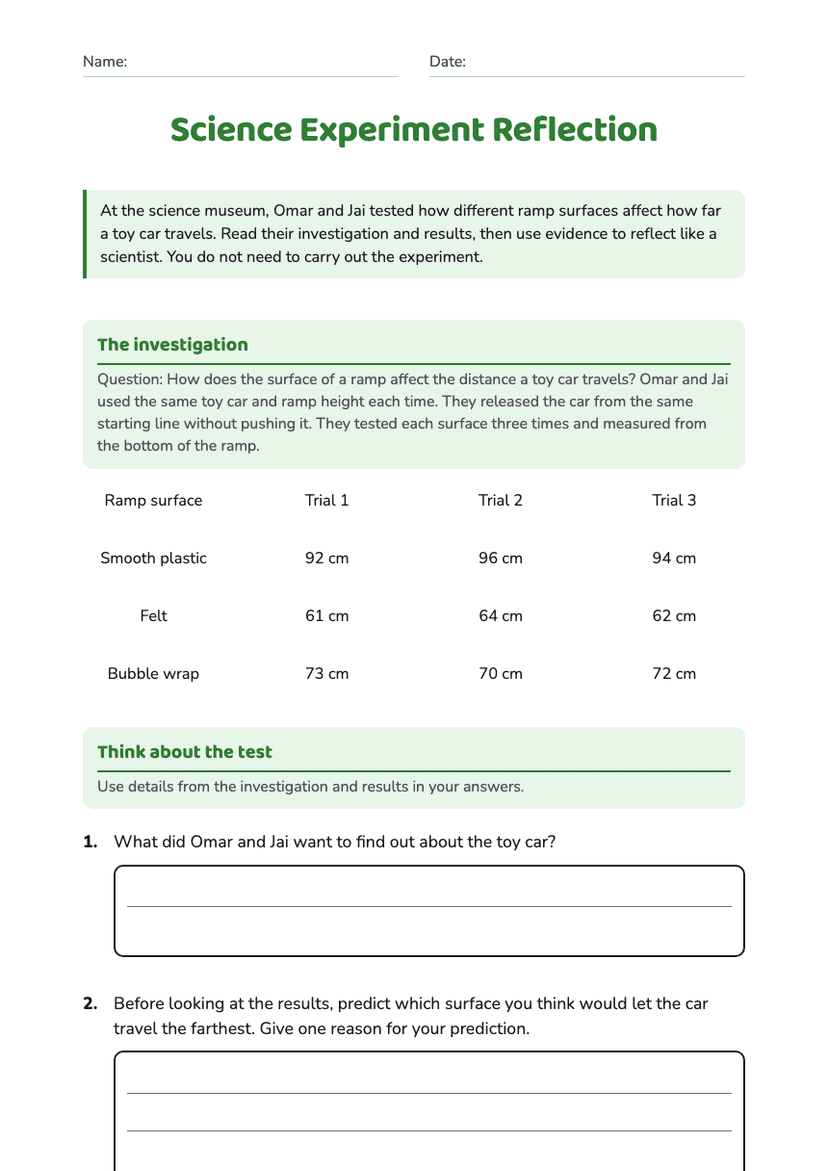
Science Experiment Reflection
Free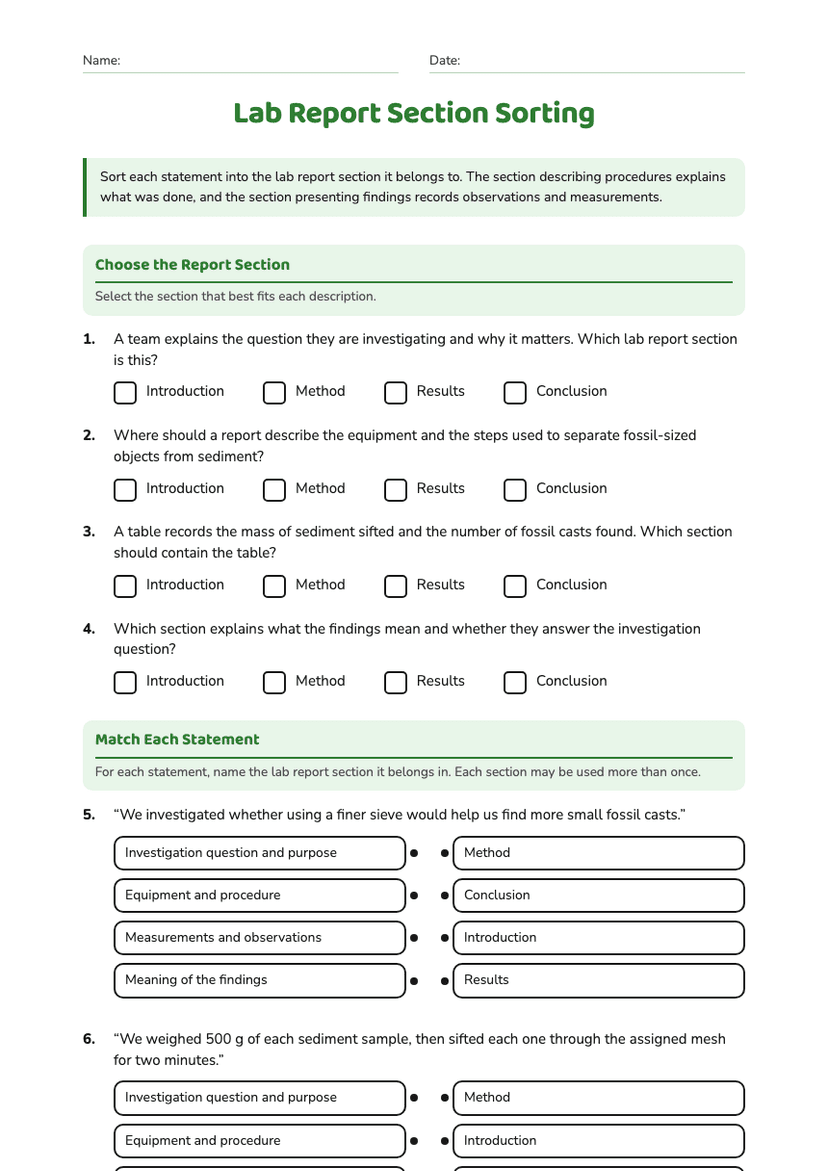
Lab Report Section Sorting
Free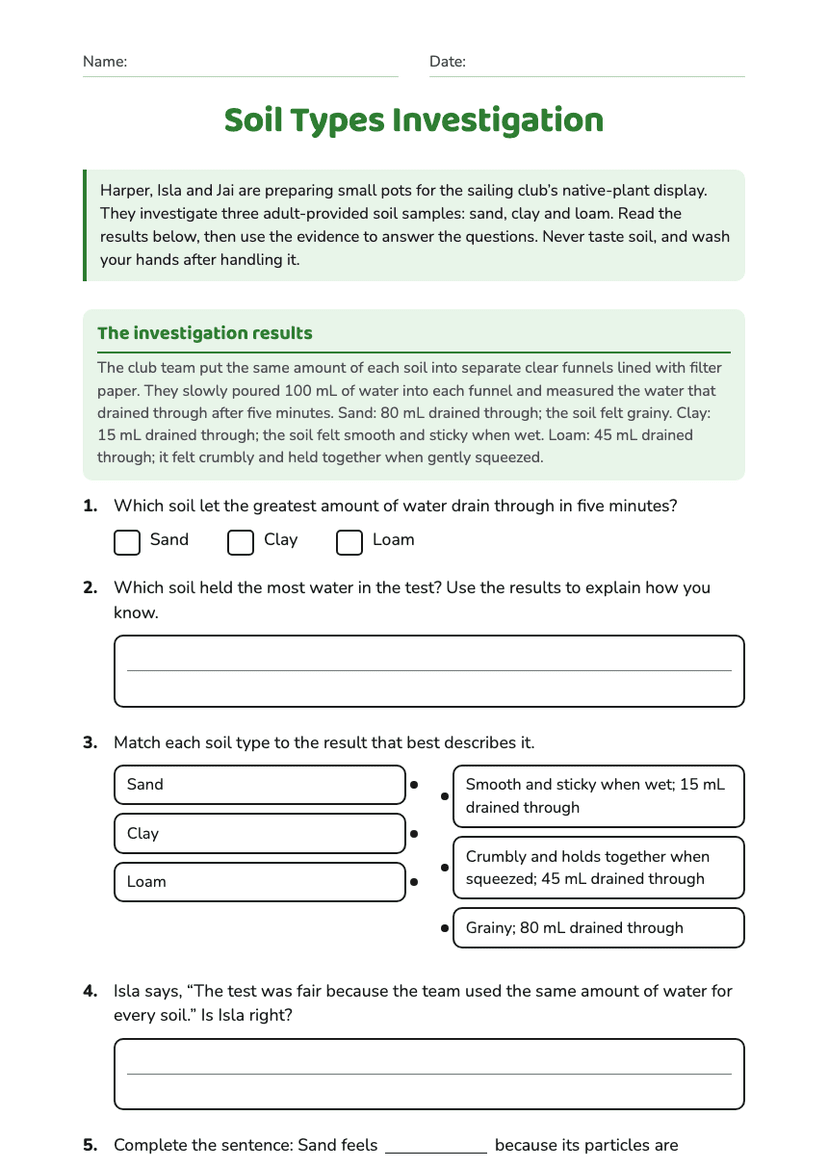
Soil Types Investigation
Free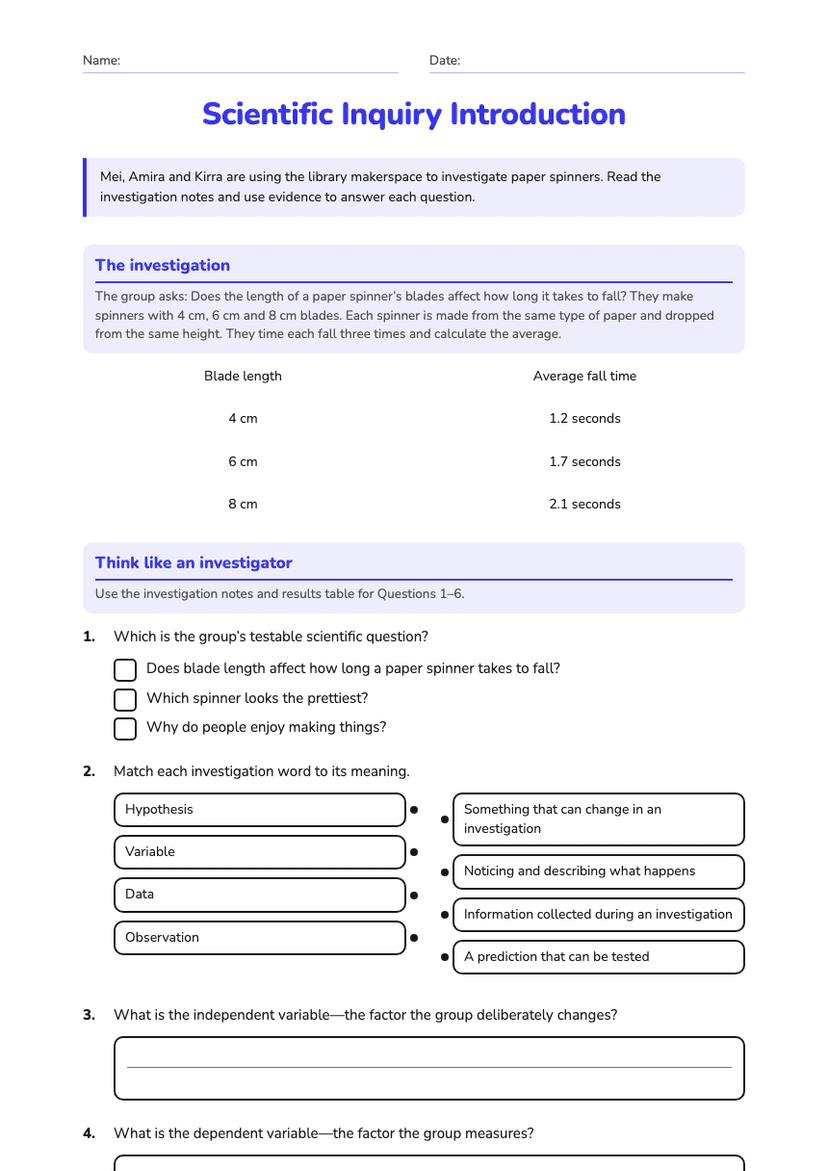
Scientific Inquiry Introduction
Free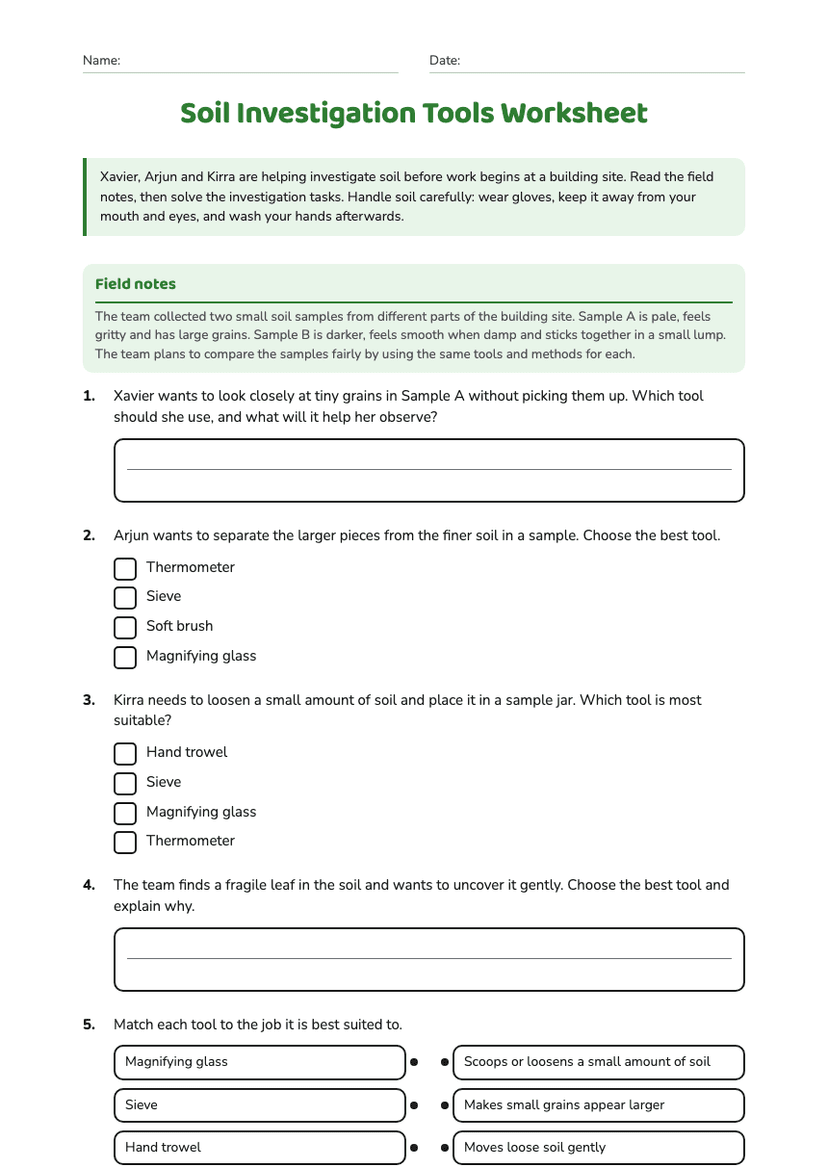
Soil Investigation Tools Worksheet
Free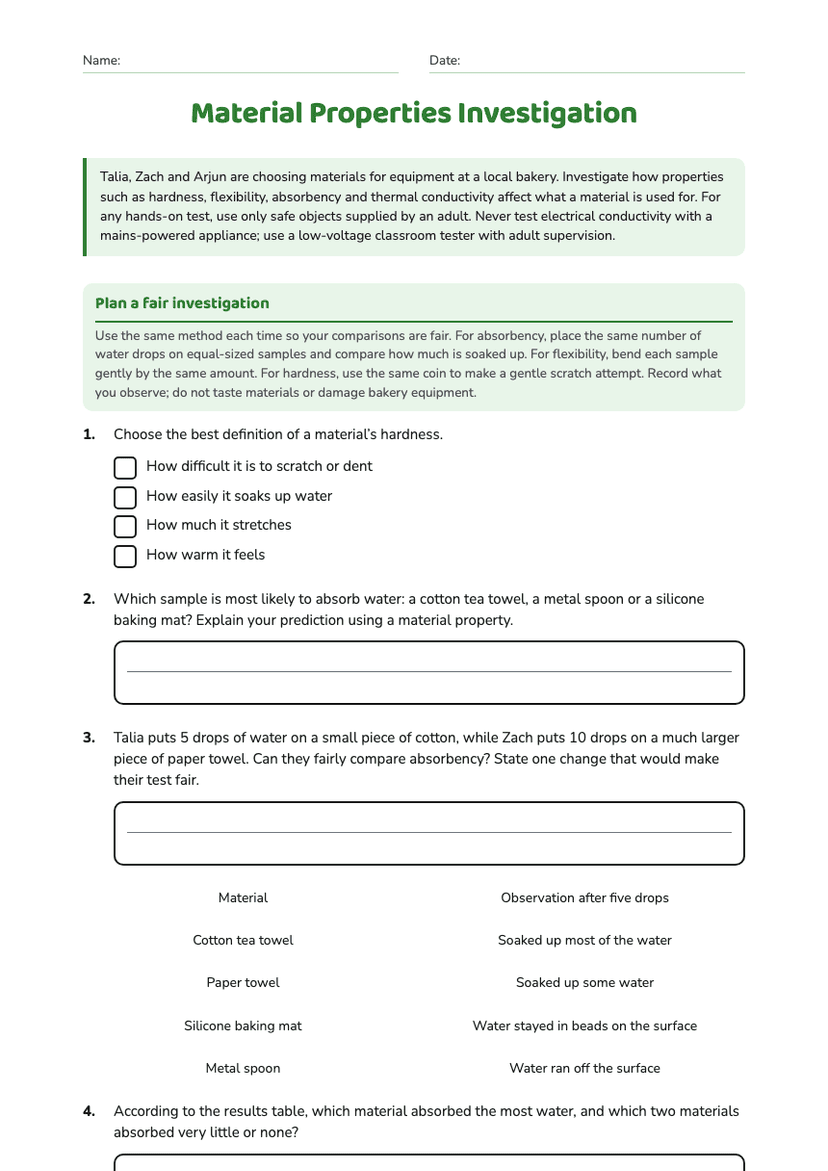
Material Properties Investigation
Free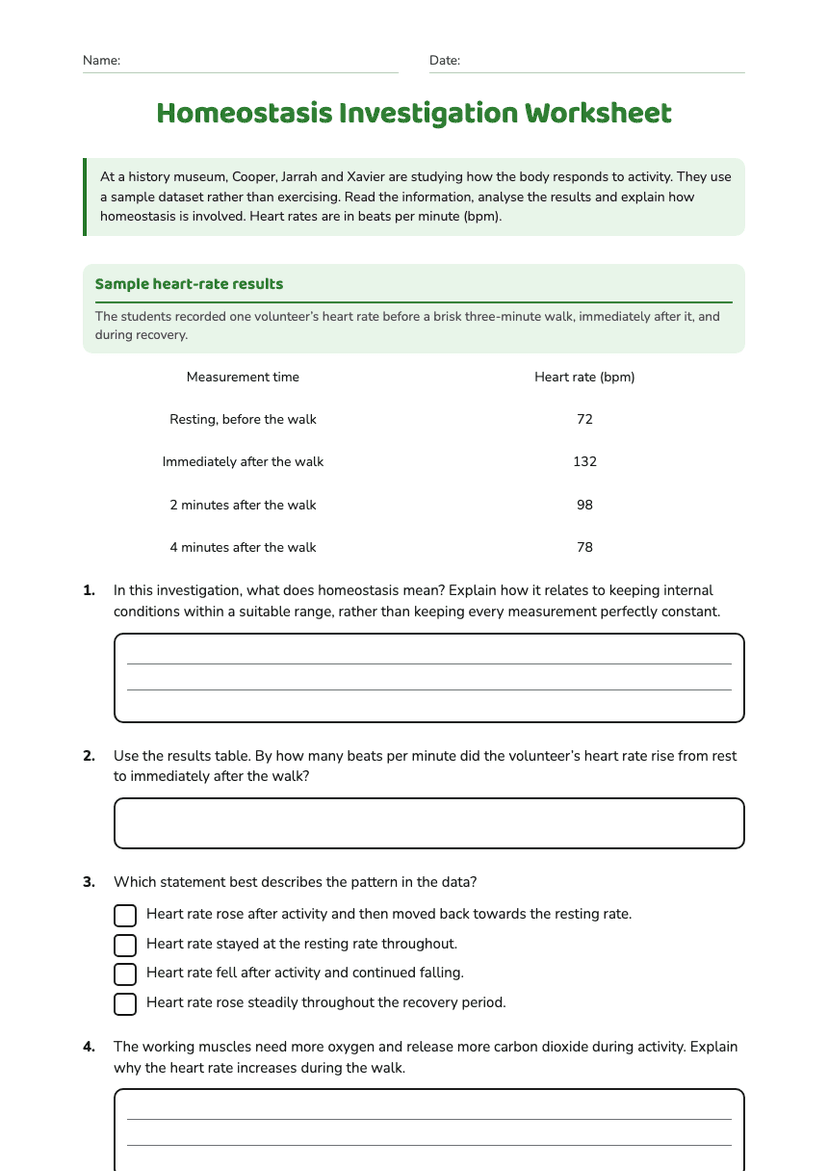
Homeostasis Investigation Worksheet
Free