Civic and Ethical Glossary
A free social sciences worksheet ready for your classroom. Open in Kuraplan to grab the print-ready PDF, customize it for your students, or generate a fresh version in seconds.

Civic and Ethical Glossary
📚 Part 1: Core Civic Terms
Legal, social or ethical entitlements that belong to individuals or groups. In Australia, these include fundamental freedoms such as freedom of speech, religion, and the right to a fair trial.
Example: The right to vote in Australian elections once you turn 18.
Duties or obligations that citizens have towards their community and society. These balance individual rights and ensure the common good.
Example: The responsibility to obey Australian laws and respect others' rights.
A system of government where power is held by the people, either directly or through elected representatives. Australia is a representative democracy.
Example: Voting for members of Parliament in federal elections.
Rules created by government that must be followed by all citizens. Laws protect rights, maintain order, and establish consequences for harmful behaviour.
Example: Traffic laws that require drivers to have a licence and follow speed limits.
A legal principle established by a court decision that guides future similar cases. Australian courts follow precedents set by higher courts.
Example: The Mabo v Queensland (1992) case established native title rights.
The power or right to act, speak, or think without restraint. In Australia, freedoms are protected but not absolute - they have reasonable limits.
Example: Freedom of speech allows you to express opinions, but not to make threats or spread hate speech.
Reasonable restrictions placed on rights and freedoms to protect others and maintain social order. These must be justified and proportionate.
Example: Speed limits restrict your freedom to drive fast but protect public safety.
🤔 Part 2: Ethical Frameworks
An ethical theory that judges actions by their consequences. The right action is the one that produces the greatest good for the greatest number of people.
Example: Supporting public health measures during COVID-19 because they benefit the majority, even if they limit individual freedoms.
An ethical theory that focuses on duties and rules. Actions are right or wrong based on whether they follow moral rules, regardless of the consequences.
Example: Believing that telling the truth is always right, even if it might cause harm in a particular situation.
The philosophical study of the nature of being and existence. In ethics, it focuses on the inherent dignity and worth of individuals as human beings.
Example: Supporting human rights because all people have inherent dignity, regardless of their circumstances or contributions to society.
✏️ Part 3: Application Activity
About This Worksheet
Free in Kuraplan
Sign up free, grab the PDF, and customize it for your class.
Print-Ready
Formatted for standard paper. Clean layout, easy to read.
AI-Generated
Created with Kuraplan's AI, designed for real classroom use.
For Teachers & Parents
Use in classrooms, for homework, tutoring, or homeschool.
Need a custom version of this worksheet?
Kuraplan's AI generates custom worksheets in seconds — differentiated for every learner, aligned to your curriculum.
Generate Custom Worksheets — FreeMore Social Sciences Worksheets
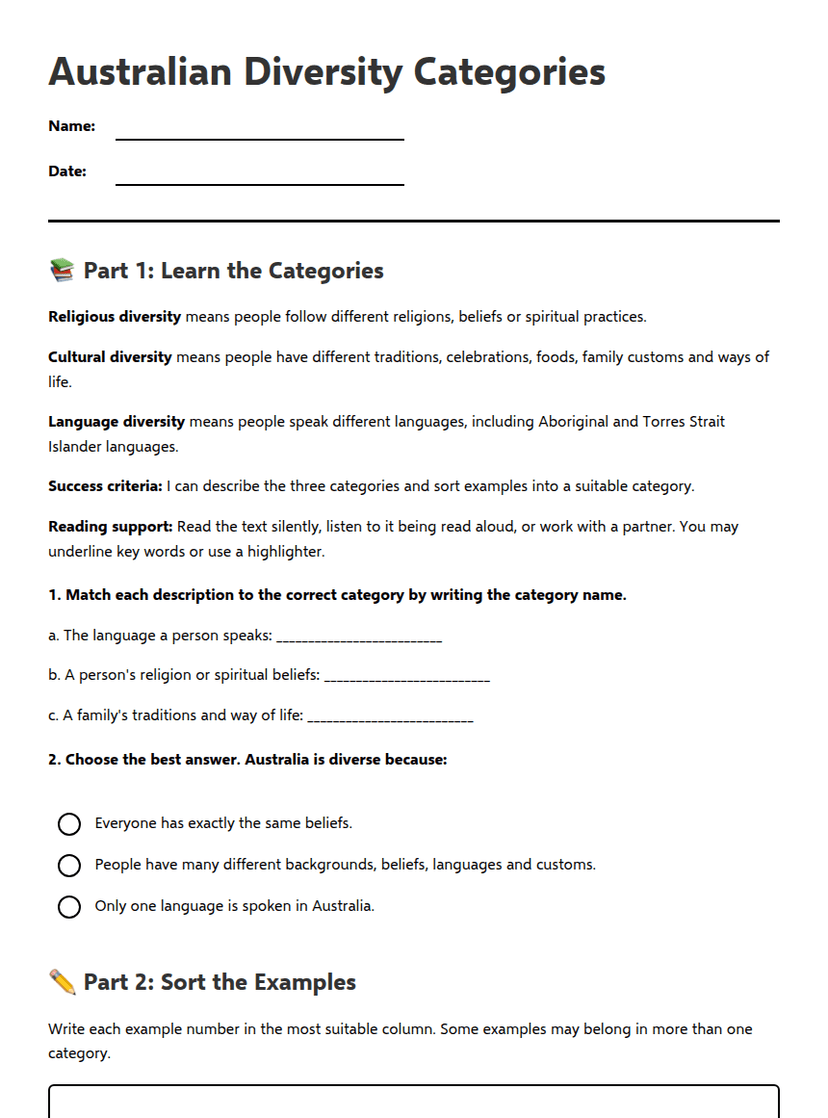
Australian Diversity Categories
Free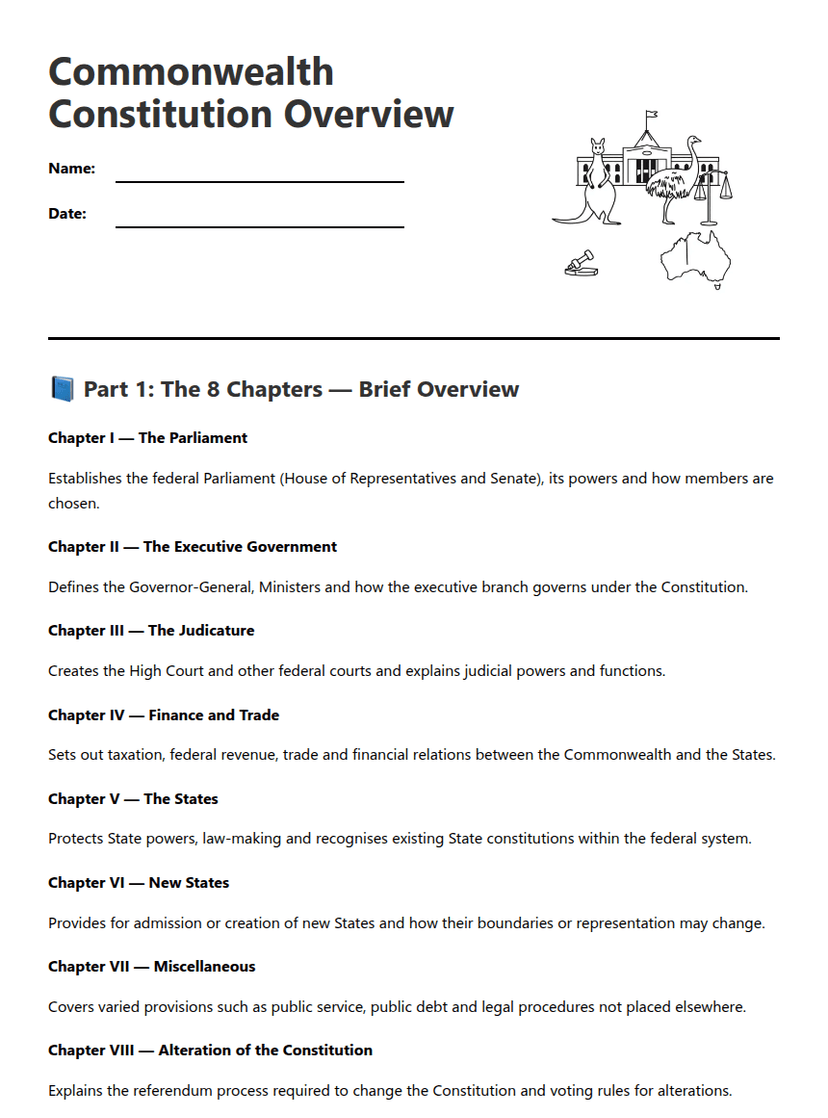
Commonwealth Constitution Overview
Free
Community Helpers Action Plan
Free
Acknowledgement of Country Exploration
Free
Democracy Benefits and Responsibilities
Free
Democracy in Action Diagram
Free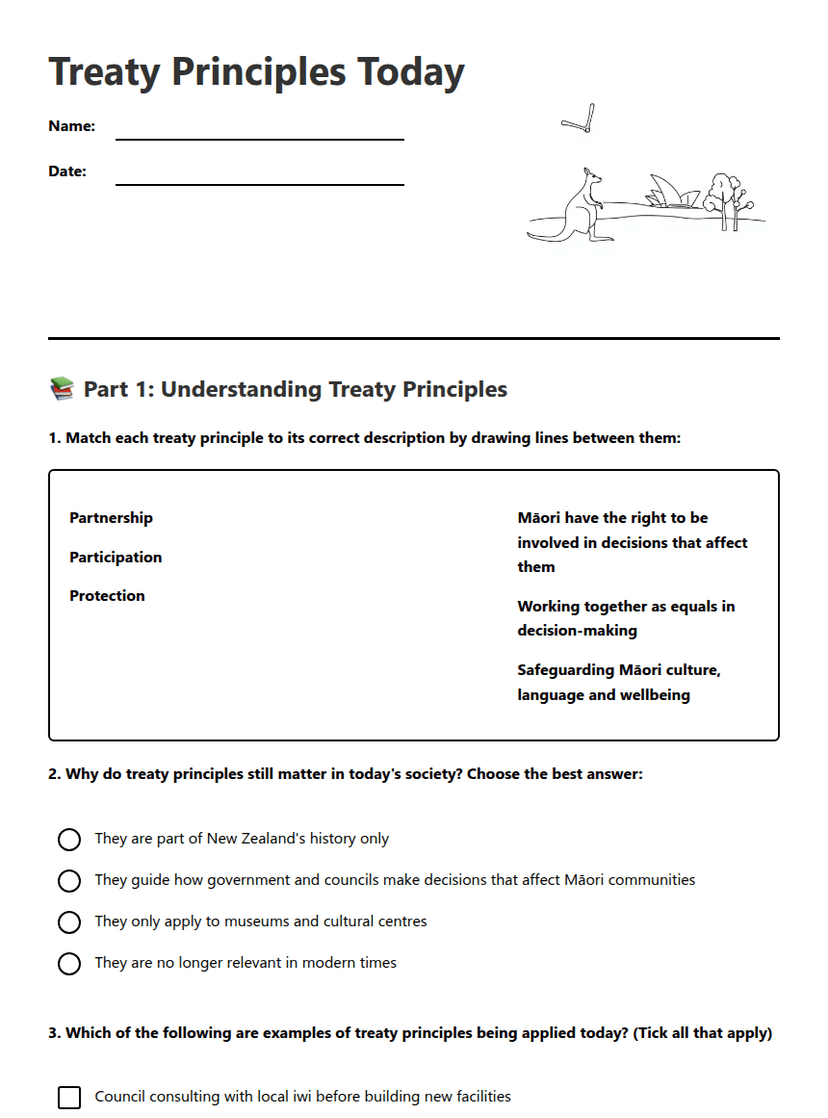
Treaty Principles Today
Free