Constitution and Communist Case
A free social sciences worksheet ready for your classroom. Open in Kuraplan to grab the print-ready PDF, customize it for your students, or generate a fresh version in seconds.
Constitution and Communist Case
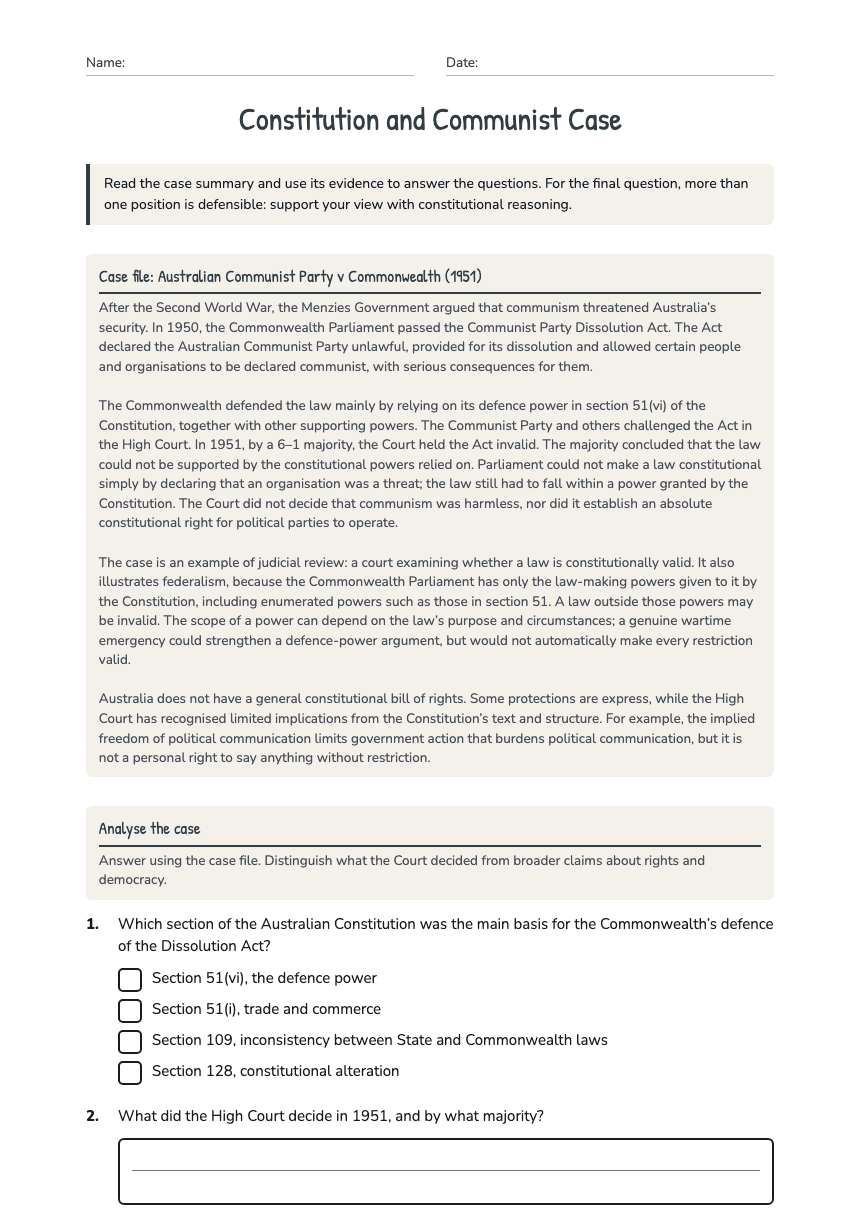
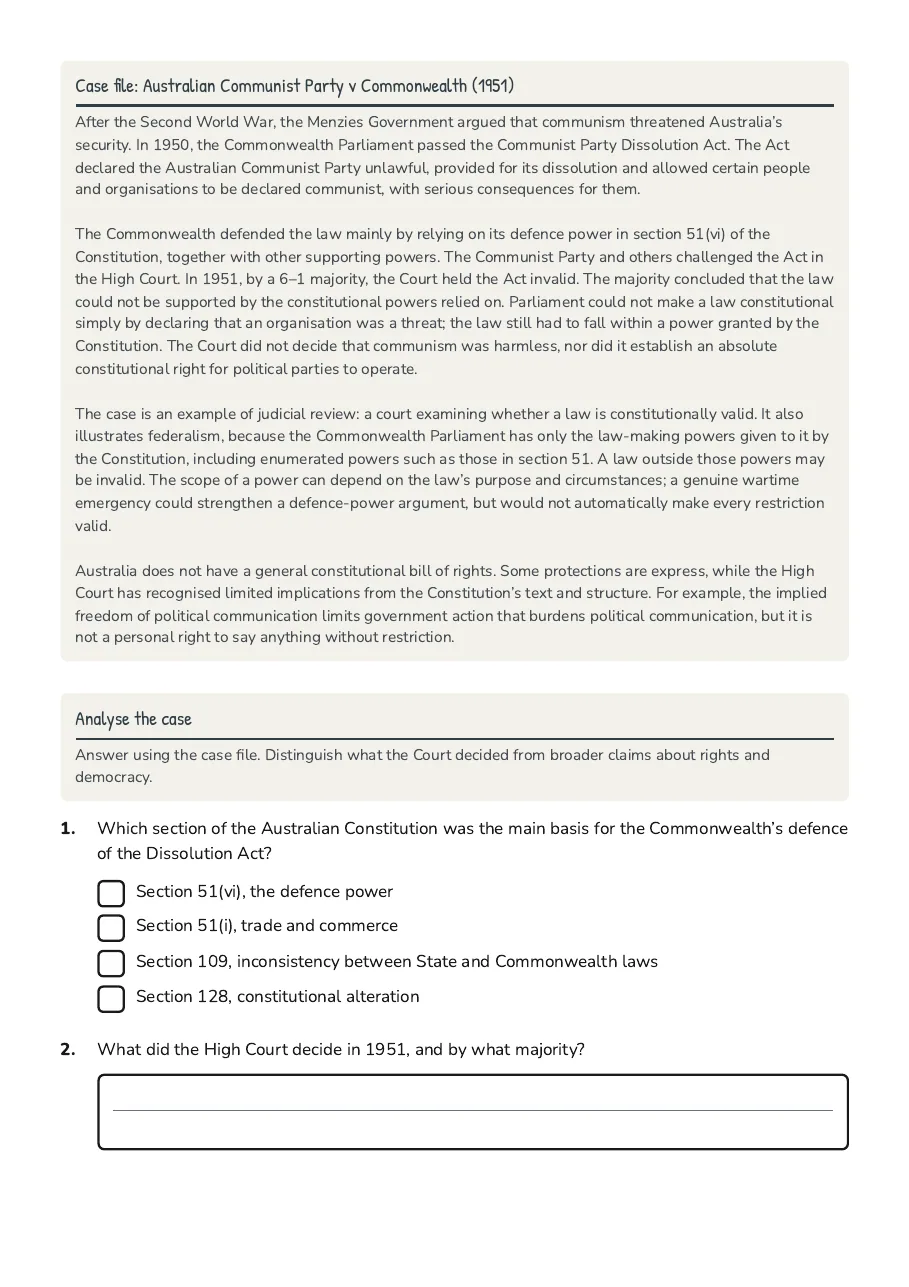
Case file: Australian Communist Party v Commonwealth (1951)
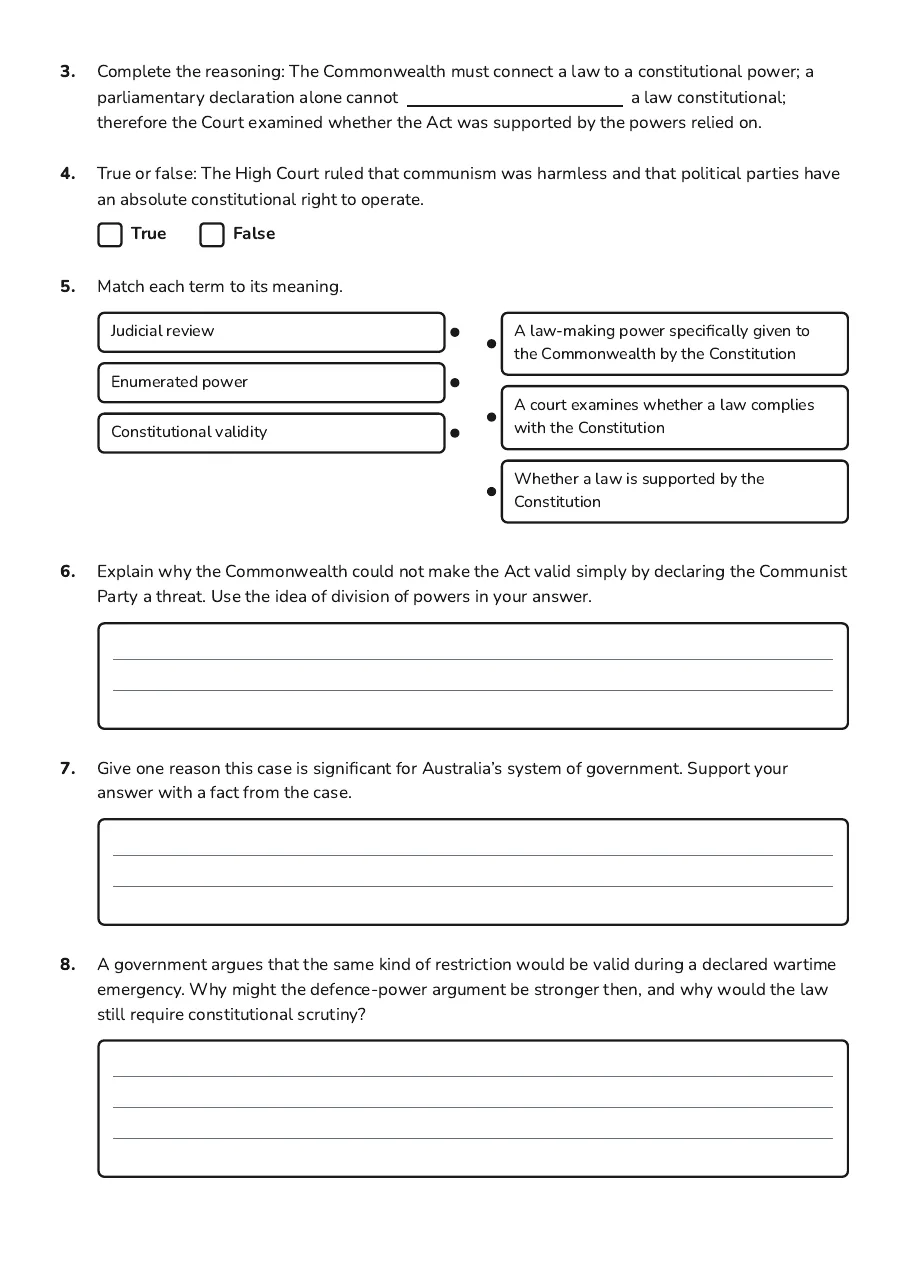
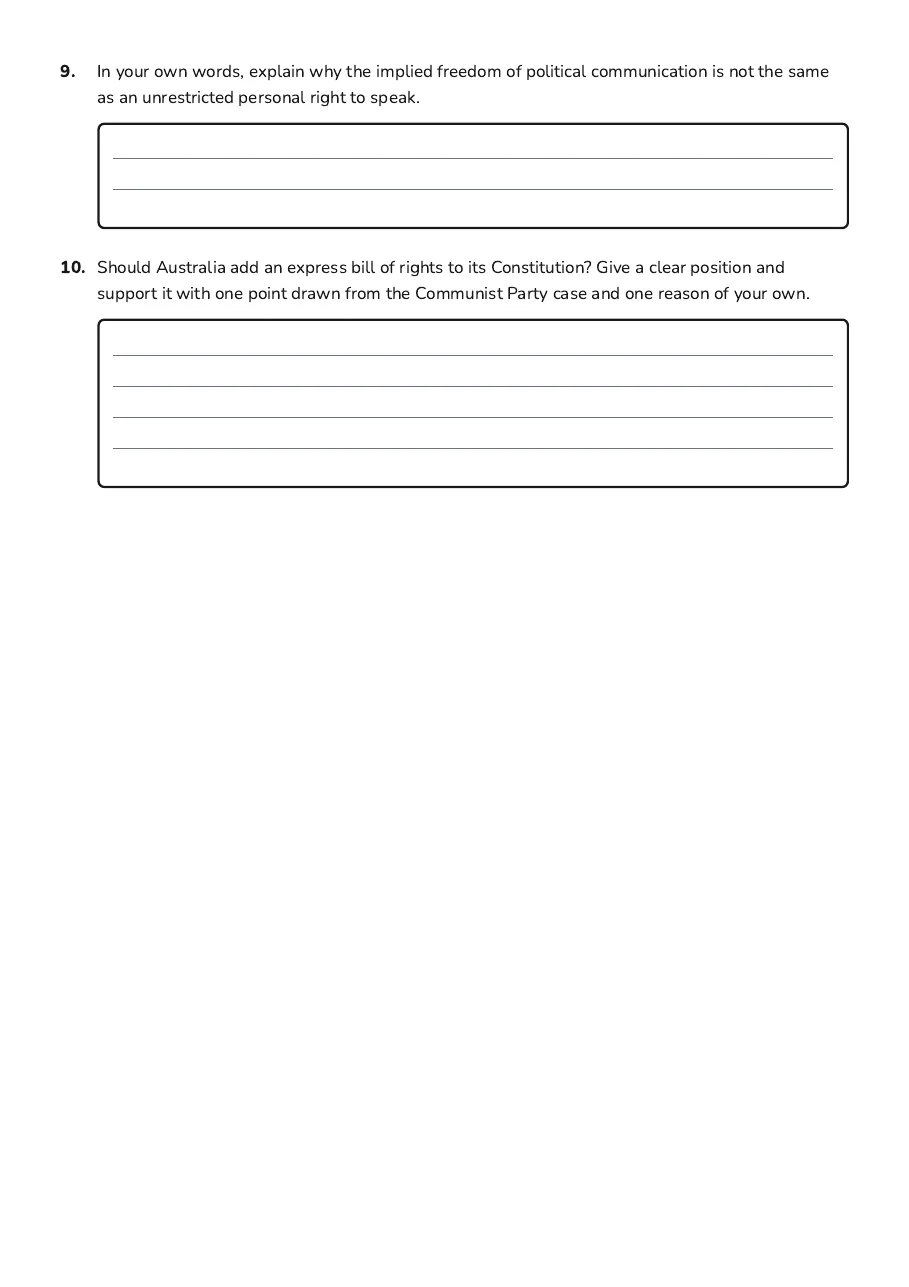
After the Second World War, the Menzies Government argued that communism threatened Australia’s security. In 1950, the Commonwealth Parliament passed the Communist Party Dissolution Act. The Act declared the Australian Communist Party unlawful, provided for its dissolution and allowed certain people and organisations to be declared communist, with serious consequences for them. The Commonwealth defended the law mainly by relying on its defence power in section 51(vi) of the Constitution, together with other supporting powers. The Communist Party and others challenged the Act in the High Court. In 1951, by a 6–1 majority, the Court held the Act invalid. The majority concluded that the law could not be supported by the constitutional powers relied on. Parliament could not make a law constitutional simply by declaring that an organisation was a threat; the law still had to fall within a power granted by the Constitution. The Court did not decide that communism was harmless, nor did it establish an absolute constitutional right for political parties to operate. The case is an example of judicial review: a court examining whether a law is constitutionally valid. It also illustrates federalism, because the Commonwealth Parliament has only the law-making powers given to it by the Constitution, including enumerated powers such as those in section 51. A law outside those powers may be invalid. The scope of a power can depend on the law’s purpose and circumstances; a genuine wartime emergency could strengthen a defence-power argument, but would not automatically make every restriction valid. Australia does not have a general constitutional bill of rights. Some protections are express, while the High Court has recognised limited implications from the Constitution’s text and structure. For example, the implied freedom of political communication limits government action that burdens political communication, but it is not a personal right to say anything without restriction.
Analyse the case
Answer using the case file. Distinguish what the Court decided from broader claims about rights and democracy.
- Section 51(vi), the defence power
- Section 51(i), trade and commerce
- Section 109, inconsistency between State and Commonwealth laws
- Section 128, constitutional alteration
- Judicial review
- Enumerated power
- Constitutional validity
- A law-making power specifically given to the Commonwealth by the Constitution
- A court examines whether a law complies with the Constitution
- Whether a law is supported by the Constitution
4 printable pages
Page 1
Page 2
Page 3
Page 4
About This Worksheet
Free in Kuraplan
Sign up free, grab the PDF, and customize it for your class.
Print-Ready
Formatted for standard paper. Clean layout, easy to read.
AI-Generated
Created with Kuraplan's AI, designed for real classroom use.
For Teachers & Parents
Use in classrooms, for homework, tutoring, or homeschool.
Need a custom version of this worksheet?
Kuraplan's AI generates custom worksheets in seconds — differentiated for every learner, aligned to your curriculum.
Generate Custom Worksheets — FreeMore Social Sciences Worksheets

Community Project Planning
Free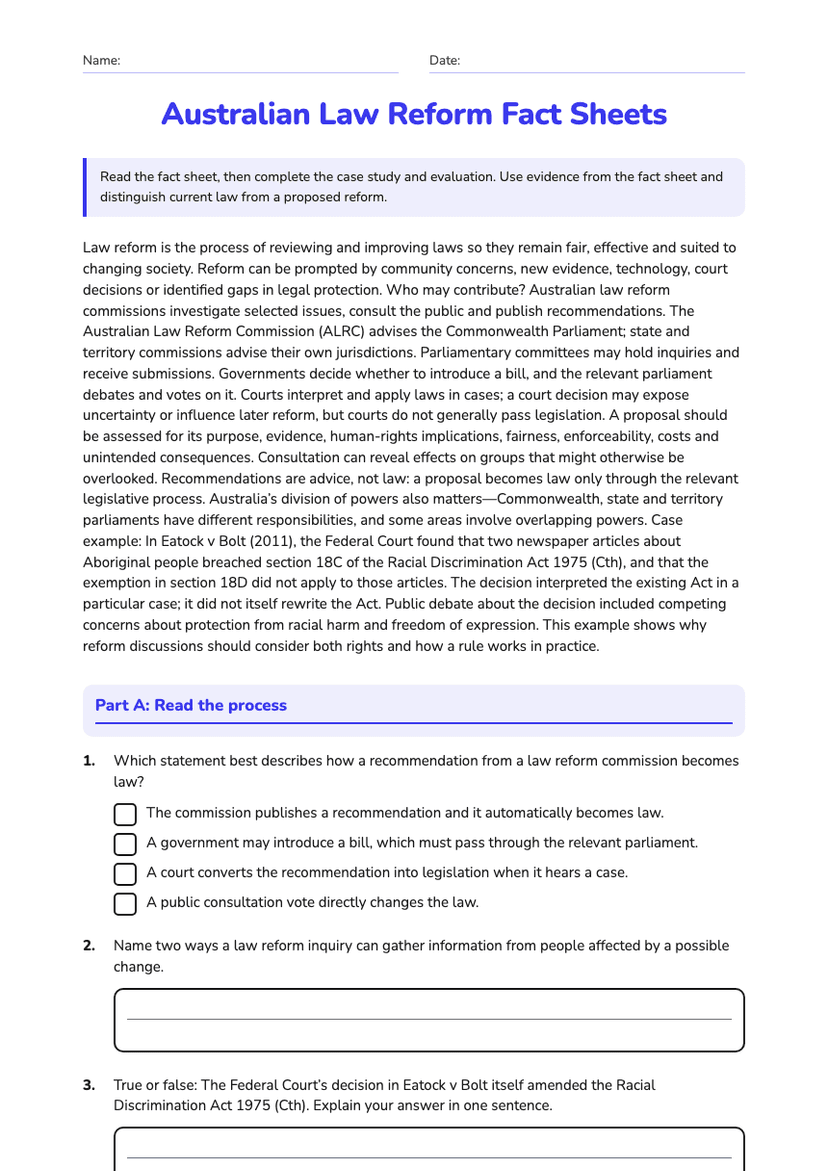
Australian Law Reform Fact Sheets
Free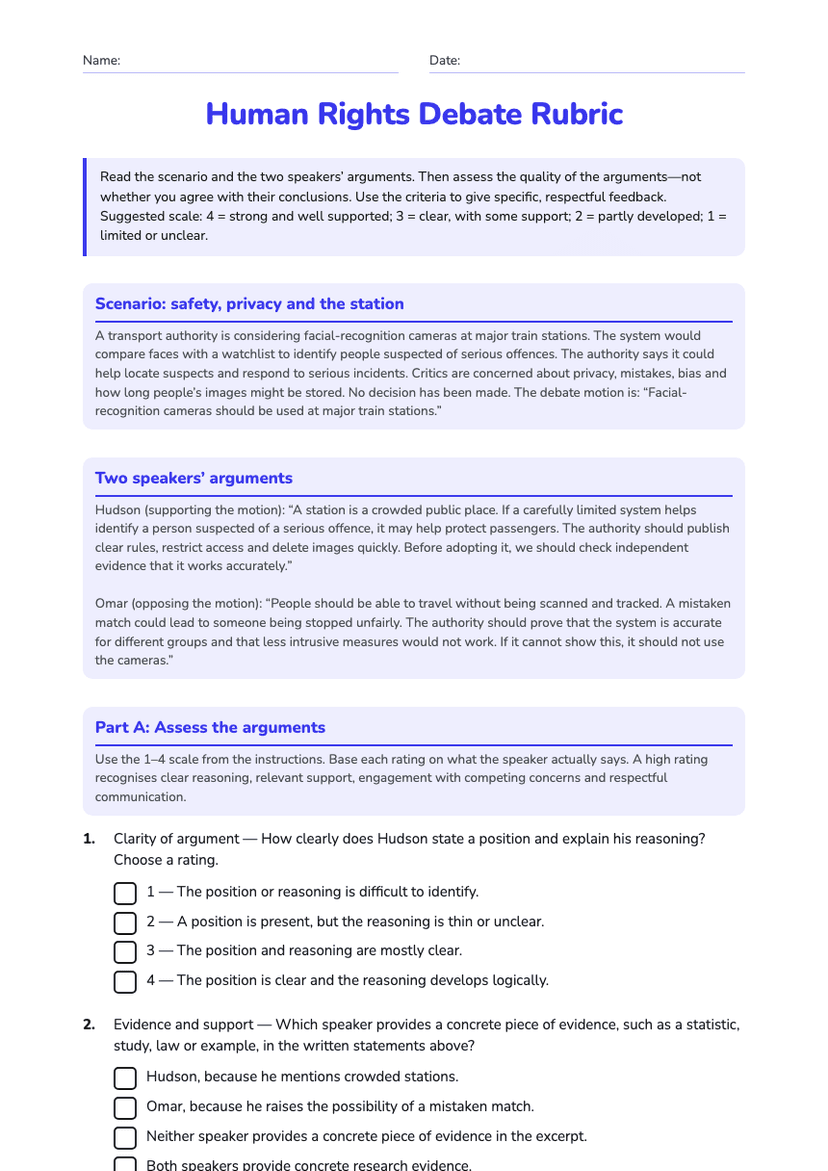
Human Rights Debate Rubric
Free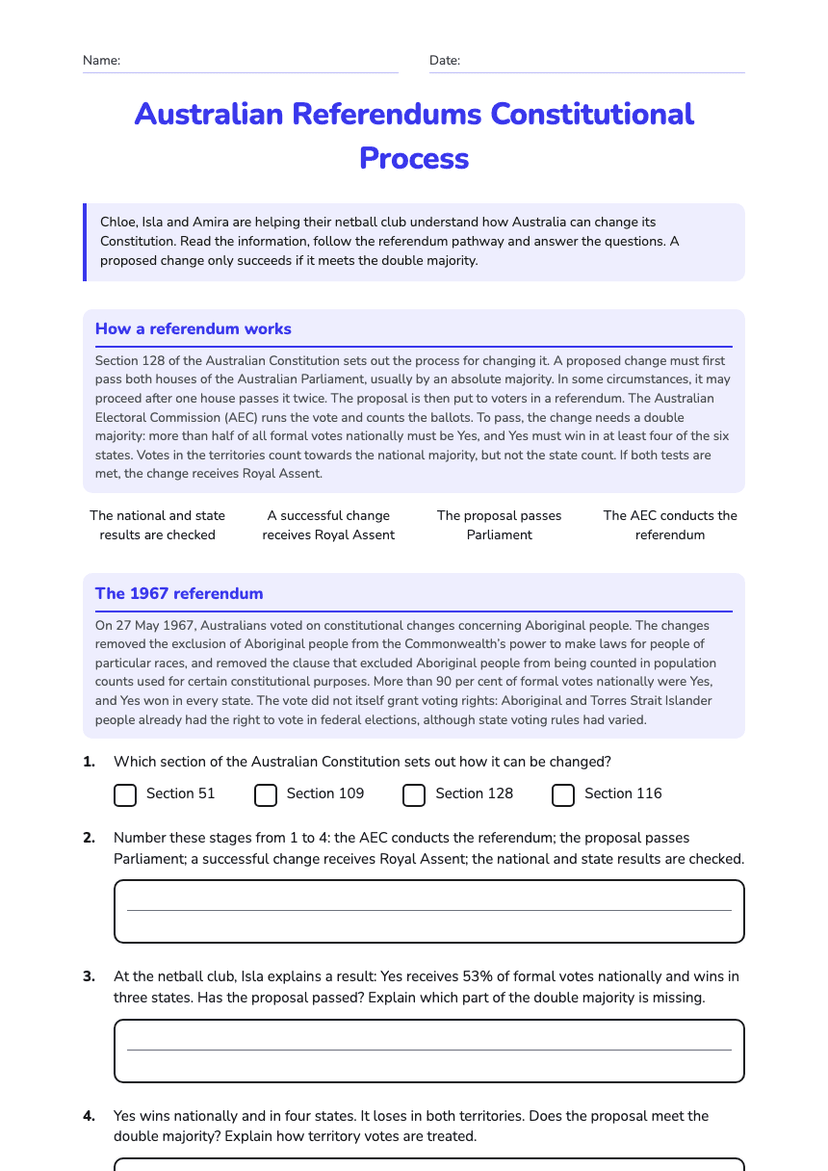
Australian Referendums Constitutional Process
Free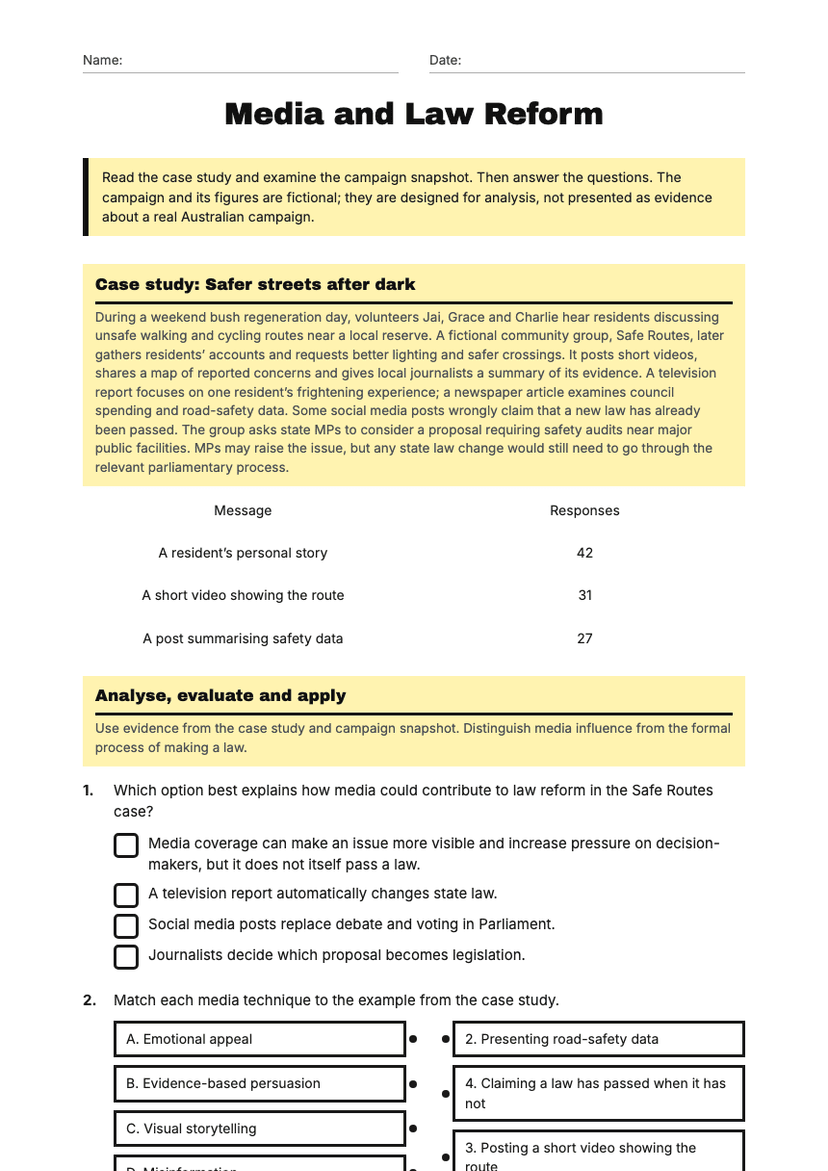
Media and Law Reform
Free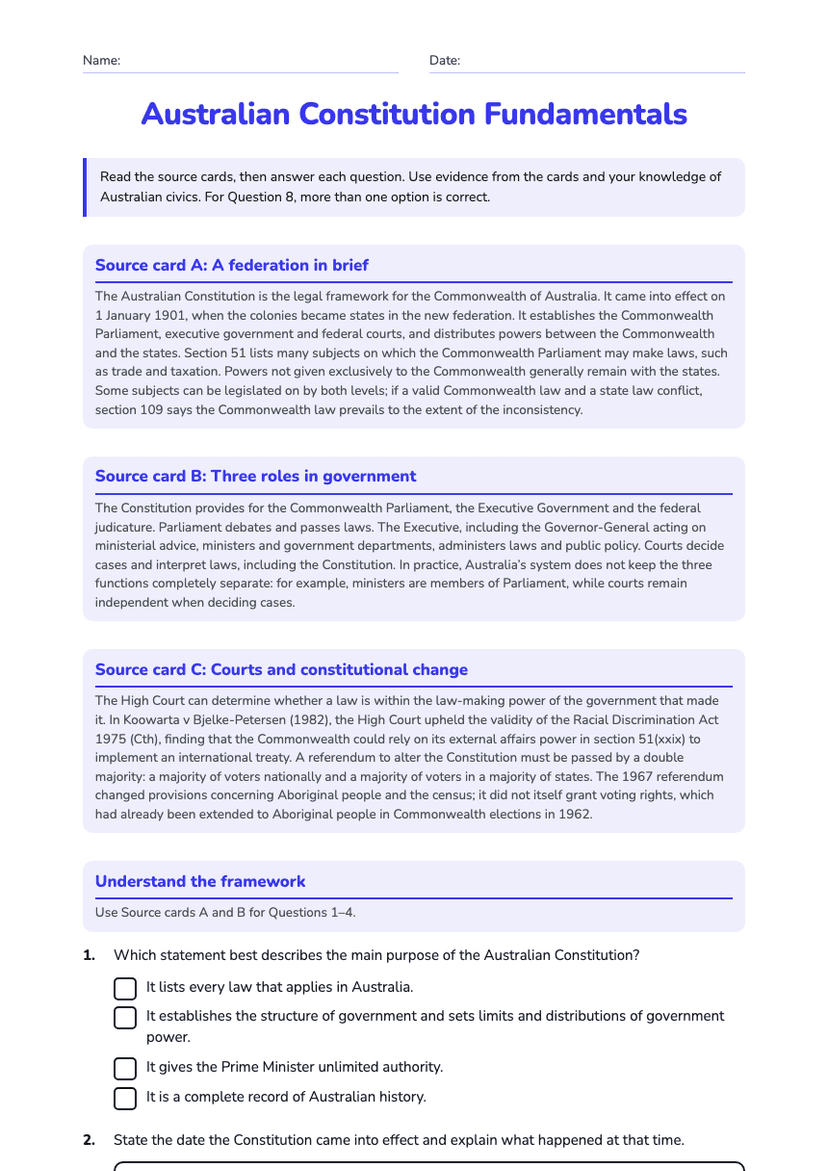
Australian Constitution Fundamentals
Free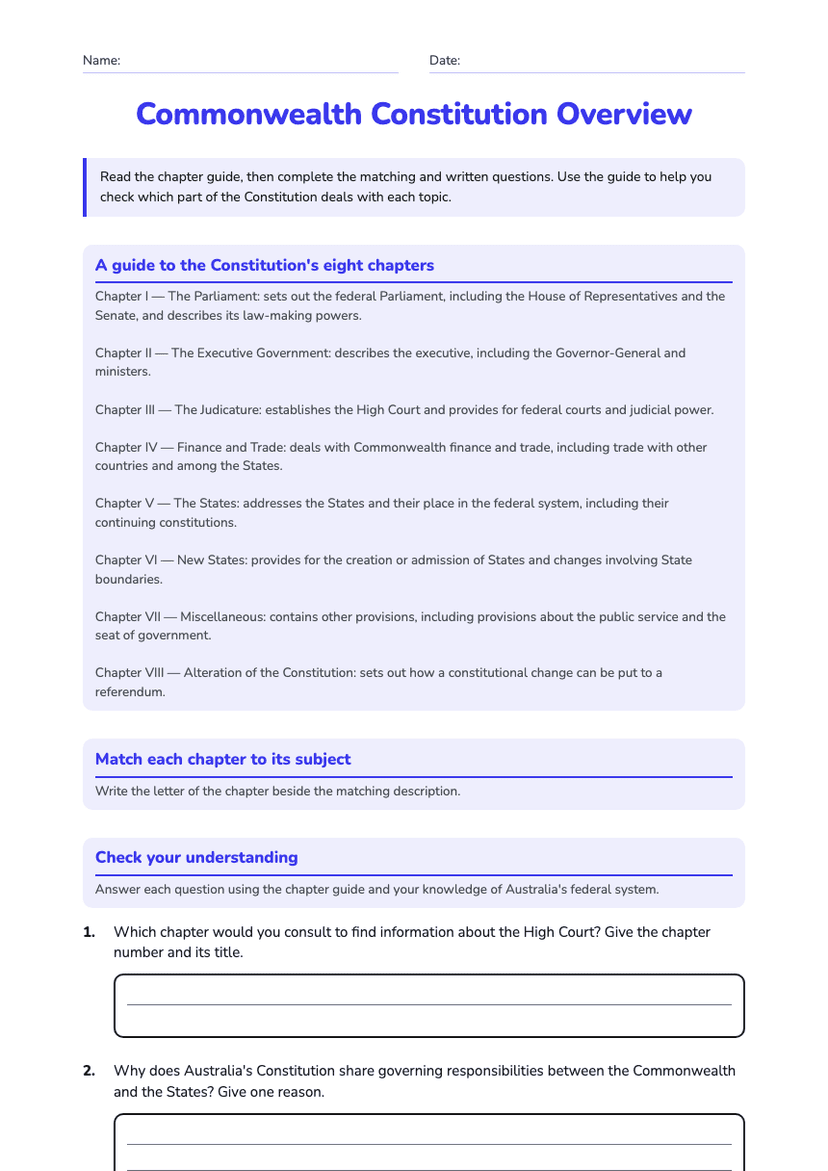
Commonwealth Constitution Overview
Free